|

|
|

|
Another name for the Little Grebe. 回 Vietnamese. Name of the national sport of Vietnam, in which players prevent a heavily weighted shuttlecock (fig.) from touching the ground (fig.) by kicking it in the air (fig.) using any part of their body, except the hands and forearms (fig.), with rules similar to takraw. Like the latter, da cau may be played formally on a rectangular court and over a net, as well as informally, with players standing in a circle (fig.). In China, the game is called jian zi. 回
1. The part of a pedestal between the base and cornice. 回
2. The lower part of a wall. 回 Thai. ‘Realm of the Thevada’ or ‘Divine Territory’. Name of a tropical forest garden and waterfall park in Chiang Mai's Mae Taeng (แม่แตง) district. Its main attraction consists of a spectacularly fashioned labyrinth-like tropical jungle with stunning trees, artificial waterfalls, caves and tunnels, as well as turquoise streams that meander through the complex, whilst an artificial fog creates a somewhat fairytale-like atmosphere. In the back of the complex is a shady Zen forest with a Japanese style feel, featuring paths lined with red lanterns, Shinto torih gates, and curved pedestrian bridges made from wood. At the center of the complex is a flower garden, whilst at the corners and edges are some retro vintage style buildings with toilets, a market with food and souvenirs, a coffee shop, and a restaurant. There is also a kids play garden, as well as an animal section with child friendly pets, such as dwarf goats, rabbits, and parrots (fig.). Also transliterated Daen Thewada and Dantewada, and in English usually referred to as ‘Land of Angels’. Compare with Himaphan. See also TRAVEL PICTURES and WATCH VIDEO. 回
Singhalese term for a relic, shrine, stupa or chedi. Also dagob. 回
Name of the Japanese God of Wealth and one of the Seven Gods of Fortune worshipped in Japan. READ ON. 回 See Japanese Emperor Oak. 回 Japanese high priest. Initially, the Japanese emperors had dual sovereignty, being both monarchs and sovereign pontiffs under the title of Dairo, and in fact worshipped by all their subjects as religious leaders, but after a civil war in 1150 AD, when there were two competitors for the throne, one assumed the ecclesiastical government, retaining the title of Dairo, whereas the other became the secular emperor, with the title Cubo, taking up absolute dominion over all civil and military affairs, making the latter the real monarch, and the former his high priest or dairo. From that time on, the dairo has been only at the head of religious matters. 回 Vietnamese-Chinese. ‘Great Viet’. The name of Vietnam from 1054 to 1400 AD and again between 1428 and 1804 AD, beginning with the rule of Ly Thanh Tong (Lý Thánh Tông), the third emperor of the Ly (Lý) Dynasty, who ruled between 1054 and 1072 AD, until the rule of Gia Long, i.e. Nguyen Phuc Anh (Nguyễn Phúc Ánh), the first emperor of the Nguyen (Nguyễn) Dynasty, who reigned from 1802 to 1820 AD. In 1400 AD, the founder of the Ho (Hồ) Dynasty, Ho Quy Ly (Hồ Quý Ly), had changed the country's name to Dai Ngu (Đại Ngu, 大虞), though it was renamed Jiaozhi (Giao-chỉ, 交趾 or 交阯) when the area in 1407 fell under domination of the Chinese Ming (明) Dynasty (1368 to 1644 AD), which lasted until 1427 AD. Afterward, Le Loi (Lê Lợi), the founder of the Le (Lê) Dynasty restored the kingdom as Dai Viet. Prior to 1054, the Kingdom was known as Dai Co Viet (Đại Cồ Việt, 大瞿越), i.e. ‘Great Buddhist Viet’, with Co (Cồ, 瞿) being derived from Gautama (Cồ-đàm, 瞿曇). 回 Thai name for a chrysalis, especially that of a silkworm, i.e. the silk pupa (fig.). A chrysalis (fig.) is the stage in the life of certain insects that go through a complete metamorphosis, known as holometabolism, and which follows the larval stage. It is best known and typical for butterflies, but there are also other insects that go through this stage, such as certain beetles, flies, ants, fleas, bees, etc. The name chrysalis derives from the Greek word chrysós (χρυσός), which means ‘gold’ and refers to the metallic golden colouration found in the pupae of many butterflies. Also called (tua) mai. These pupae of silkworms are fit for human consumption and considered a delicacy by some. In China, they are even sold impaled on skewers at food markets, a street snack known as zha can yong (fig.). 回
Sanskrit. A yogini or female divinity of low rank in Vajrayana Buddhism. READ ON. 回 Sanskrit. ‘Able’, ‘competent’ and ‘intelligent’. Son of Brahma and usually associated with the idea of creative power. Through his mother's side he is a one of the Adityas. His consort is Prasuti, with whom he has thirteen daughters. After some sinful acts in which Daksha mocked and dishonored a statue of his son-in-law Shiva, Sati, his daughter and Shiva's first consort, committed suicide. This enraged Shiva, who created the ferocious Virabhadra (fig.) and Rudrakali from the locks of his matted hair, called jata. Together with Bhadrakali (fig.), who arose from the wrath of Devi, they set out to wreak mayhem in which Daksha was killed. Shiva, however, later restored Daksha's life, with the head of a goat. 回 Sanskrit. Another designation for Sati, as the daughter of Daksha. 回 Tibetan. ‘Ocean of Wisdom’. High priest of the Tibetan Buddhists, and from the 17th century AD until 1959 also worldly ruler of Tibet. In Tibetan Buddhism he is considered an incarnation of the bodhisatva Avalokitesvara. 回
Thai. Name of a legendary Poh Khun, who is at Wat Thung Setthi (วัดทุ่งเศรษฐี) in eastern Bangkok's Suan Luang District, commemorated in a shrine together with Thao Wetsuwan (fig.), the guardian of the North, and Thao Hiran (fig.), an asura or demon considered to be a guardian angel to several royals of the past, as well as to the present Princess Sirindhorn. See also TRAVEL PICTURE. 回
Malay. ‘Resin’, ‘resin torch’ or ‘torch made from resin’. Name of a sticky substance gained from the Dipterocarpaceae family of trees, such as the Taengwood Tree, usually by tapping them. It has a variety of applications, including to make torches, as well as paraffin wax used in batik (fig.). Also known as dammar gum. 回 Thai. ‘Convenient progress’. Name of a canal that connects Bangkok with the province of Ratchaburi, via Samut Sakon, and where in the district of the same name each morning a floating market is held, akin to the one in the nearby district of Amphawa. The market long had a Santa Claus-like figure wearing a traditional Thai farmer's hat (fig.), dark sunglasses, a necklace with some amulets (fig.), and a single white glove, standing along the main entrance road saluting cars passing by (fig.) and touting visitors to park their vehicles and take a canal tour from the nearby Chanta Suwannoh (จันทสุวรรณโณ) wharf, in an area called Thung Setthi (ทุ่งเศรษฐี). With his long white beard, rare with Thai people, he was the first noticeable welcome sign for visitors. The iconic figure was such an attraction, that when he finally passed away, he was replaced with a large cardboard cutout standee greeting all visitors in perpetuation. Sometimes transcribed Damnun Saduak or Damneun Saduak. See also talaat nahm and MAP and WATCH VIDEO. 回
Damrong Rachanuphaap (ดำรงราชานุภาพ)
Name
of a
Krom Phraya,
who was
born on 21 June 1862
See malaeng poh. 回 Sanskrit-Pali term for the Thai word tamboon, i.e. the practice of merit making by giving, especially in religious context, both in Hinduism and Buddhism. Sometimes transcribed dahna and also pronounced daan or dahn. 回 Vietnamese. ‘Gourd string instrument’. An acoustical instrument, consisting of a trapezoidal sound box with a single string stretched lengthwise along the body of the soundboard and a movable bridge with a wooden handle or tremolo bar. READ ON. 回 Common designation for a tropical plant or shrub found in South, East and Southeast Asia, that –like Mimosa pudica (fig.) and the carnivorous Venus Flytrap– is capable of rapid movement, i.e. movement that is visible with the naked eye. However, rather than being moved by sunlight or on contact, the movement of its small, linear leaves is triggered by sound. And so, when exposed to music, it will move its leaflets in concert, seemingly making them dance, hence the name. This plant produces small, purple flowers, and reproduces using seeds. It has the botanical names Desmodium gyrans, Codariocalyx motorius, Hedysarum motorius and Meibomia gyrans, among a few others, and is also commonly known as Telegraph Plant and Semaphore Plant, referring to the movement of the leaves, which is reminiscent to the movement of the adjustable paddles of the semaphore telegraph. In Thai it is referred to as choy nang ram (ช้อยนางรำ). 回 Dandadhara (दण्डधार) Sanskrit. ‘Rod-bearer’ or ‘wielder of the sceptre’. A name given to Yama, the god of death. Interestingly, the word danda (दण्ड), also means ‘punishment’ and as such the name can also be translated as ‘he who exerts punishment’. 回 Sandstone mountain range on the border of Cambodia and Thailand, which ends dramatically on a cliff overhanging the Cambodian plains. Here the ancient Khmer temple Khao Phra Wihaan is situated at a height of 657 meters above sea level. The mountain range also features ancient Khmer rock carvings and near Surin province it houses the Prasat Ta Meuan temples. In Thai the mountain range is referred to as Phu Khao Phanom Dongrek. See MAP. 回
Name of an ethnic minority group of Tibeto-Burmese descent, living in Myanmar (fig.), i.e. mainly in the area near the Pindaya Caves (fig.) in southern Shan State. There are currently an estimated 100,000 people belonging to this tribe, and they are listed as a subgroup of the Bamar. The name Danu derives from the word donake, which translates as 'brave archers', and is hence related to the Thai word Thanu (ธนู), which means ‘bow and arrow’. It is said that in the 16th century the Danu were archers in the army of King Alaungpaya, and settled in the Pindaya area after they returned from wars in Thailand. Today, they are a agricultural people (fig.) and speak Burmese, with a slightly different accent, described as an archaic dialect of Burmese, and usually wear Burmese costume, though on special occasions they might wear traditional Shan-style dress (fig.). 回
Name for the Yao people in Vietnam, one of the 54 ethnic groups officially recognized by the Vietnamese government, and which are also known as Mien. Many speak the Iu Mien language, while others speak other languages and dialects. With a population of just under half a million, the Dao (pronounced Dzao) are the 9th largest ethnic group in Vietnam, with several subgroups. In Vietnam, the female traditional attire is indigo or black, with colourful embroidery, which like the headdress, differs in each of the subgroups, with a great diversity across Northern Vietnam. For example, the Red Dao in Sapa wear a black loose pair of trousers, that is richly embroidered with flower or star-like patterns, and a black jacket trimmed with embroidery, whilst on the head they wear a red turban-like piece of cloth, whereas the Dao of other subgroups and in other regions may wear a less colourful or much simpler outfit, with a different kind of headdress, which usually is either predominantly red or black, whilst the heads of the Dao Dau Troc women from the Lang Son and Thai Nguyen regions is completely shaven and covered by a distinctive bonnet in mostly indigo and red. In Vietnamese usually referred to as nguoi Dao (người Dao). 回
Thai. ‘Celestial body per day’. System in Thailand in which each day of the week corresponds with a certain planet, moon or sun, that is, the Sun for Sunday, the Moon for Monday, Mars for Tuesday, Mercury for Wednesday, Jupiter for Thursday, Venus for Friday and Saturn for Saturday. In Thai planets are often named after these days, e.g. Venus is ‘Dao Phra Suk’ and Friday is called ‘Wan Suk’. See also wan tua, thep prajam wan, Phra prajam wan, sat prajam wan and sih prajam wan. 回 Thai. ‘Glowing star’. Name for an ornamental plant that can grow up to one meter tall and with the botanical name Tagetes erecta. It bears globular orange flowers, though also other cultivars, such as plants with yellow flowers, exist. The plant originates from Central America and is commonly known as Mexican marigold, though it is also referred to as Aztec marigold and occasionally it may even be called African marigold. The plant is cultivated commercially for multiple purposes, including medicinal use, and in Indian culture the flowers are widely used in the making of garlands (fig.), both for decorative and ceremonial purposes (fig.). 回
Thai for ‘star’. 回 Thai. Name of a royal consort of King Chulalongkorn. She was the daughter of King Phra Chao Inthawichayanon (พระเจ้าอินทวิชยานนท์) of Lan Na, during the time that it was still an independent state. In 1883, amidst rumours that Queen Victoria wanted to adopt the princess in a British attempt to take over the Kingdom of Lan Na, Rama V proposed an engagement to Dara Rasami, to become his concubine. Hence, in 1886, she left Chiang Mai to enter the Grand Palace in Bangkok, where she lived for 23 years, until the king's death, after which she returned to her hometown in Chiang Mai, where she remained for the rest of her life. Being a supporter of rose cultivation, with a great affection for English roses, she was one day given a big hybrid, a thorn-free pink rose with a soothing scent. This rose became her favourite and she started to cultivate them in the garden of her palace, naming it Chulalongkorn Rose (fig.), after her late husband, who was born on a Tuesday, that has pink as its colour according to the sih prajam wan system. The princess was born on 26 August 1873 and died on 9 December 1933. Her full name and title is Chao Dara Radsami Phra Ratcha Chaya (เจ้าดารารัศมี พระราชชายา), and she is also referred to as Princess of Chiang Mai. See also dara and radsami. Also transliterated dara ratsami. 回 Thai designation for the Narcissus or Daffodil. READ ON. 回 General name for destructive demons, such as the Rakshasas, sometimes translated from Sanskrit as ‘tearers’. 回 A Muslim mausoleum or shrine. 回 Common name for a species of butterfly in the subfamily Satyrinae, i.e. the browns, and found in parts of Asia, including in Thailand. READ ON. 回 Common name for species of butterfly, with the scientific name Melanitis phedima and of which there are several subspecies, including Sahyadri Dark Evening Brown (Melanitis phedima varaha), Satpuda Dark Evening Brown (Melanitis phedima bethami), West Himalayan Dark Evening Brown (Melanitis phedima galkissa), Bengal Dark Evening Brown (Melanitis phedima bela), Myanmarese Dark Evening Brown (Melanitis phedima ganapati), and the Formosa or Japanese Dark Evening Brown (Melanitis phedima oitensis). Though the underwings are often dark, varying from a greyish-brown to amber-orange (fig.) or purplish-chocolate ground-colour with a number of usually whitish ocelli, colouring, shades and patterns of the wings do vary substantially per species and some are actually paler (fig.), whilst others are reminiscent of certain darker wet-season forms of the Common Evening Brown (fig.). Several of the above mentioned (generally female) subspecies have a dark, blackish spot, located centrally on the underside of the hindwing. In Thai, the Dark Evening Brown is known as phi seua sahyan sih tahn mai (ผีเสื้อสายัณห์สีตาลไหม้), i.e. ‘burned brown evening butterfly’. 回
Common name for a species of planthopper. READ ON. 回 Common name for a species of passerine bird, with the scientific designation Muscicapa sibirica. READ ON. 回 Common name for a species of songbird bird in the family Cisticolidae, and with the scientific designation Orthotomus atrogularis. It occurs from the region of the Indian subcontinent to Southeast Asia, including in Thailand, where it is known as nok krajib kho dam. It is similar to the Common Tailorbird (fig.), but has a faintly streaked lower face, a dark streaked throat and upper breast, as well as some yellow at the shoulders and a yellow vent. The top of the head is rufous, akin to the face of Ashy Tailorbirds (fig.). See also TRAVEL PICTURE. 回
Common name for a rare species of passerine bird in the thrush family, with the scientific designation Turdus ruficollis, and of which there exist two races, i.e. Turdus ruficollis atrogularis, which is commonly known as Black-throated Thrush (fig.), and Turdus ruficollis ruficollis, which is commonly referred to as Red-throated Thrush. These large thrushes have a plain grey back and rufous-buff underwings, with the male adult of the race Turdus ruficollis atrogularis having a black throat and upper breast, often speckled, whilst the male adult of the race Turdus ruficollis ruficollis has a brick-red throat and upper breast, and rufous colouring in the tail. Females and young birds lack the identifying bib of adult males, with females of the race Turdus ruficollis atrogularis having a black-streaked side-throat, and black scaled mottling on the upper breast, whereas females of the race Turdus ruficollis ruficollis have dark streaks on the side of the throat and on the chestnut upper breast, as well as a whitish submoustachial. The bill of both races is pale yellowish, with a dark tip. In Thai, this species is generally known as nok deun dong kho khem, whereas the two races may be specified as nok deun dong kho dam for Turdus ruficollis atrogularis, and nok deun dong kho daeng, for Turdus ruficollis ruficollis. 回 1. Sanskrit. Name of a demon, also known as Darukasura, i.e. the asura Daruka, used a boon given by Brahma to torment the world. When the suffering became unbearable, Shiva created Bhadrakali (fig.) from his third eye and she killed the demon. 回
2. Sanskrit. The charioteer and companion of Krishna, who attended him in his final days. 回 Japanese. Name for a round, Japanese, traditional doll, modeled after Bodhidharma, the founder of the Zen sect of Buddhism, and also known as Dharma Doll. READ ON. 回 Hindustani-Hindi. ‘Door’ or ‘gateway’. The word is the same in Kashmiri and Urdu where it is written in Nastaliq script, rather than the Devanagari script of Hindustani and Hindi. In Sanskrit it is known as douar, dwar or dvar and in Urdu it is also known as darwaazeh. Compare with dvarapala. 回 Punjabi. Name for the compulsory turban worn by Sikh, often over a patka, a scarf-like single piece of cloth or under-turban (fig.). It is sometimes transliterated dastaar and may also be referred to by its Hindi name pagri. 回 Sanskrit. Father of Rama, king of Kosala in the Ramayana, the Indian and original version of the epic. In the Thai version, the Ramakien, the father is called Totsarot but he is also known as Suddhodana. Also transcribed Dasaratha. 回 Datch Nih Kwahm Suk Muan Ruam (ดัชนีความสุขมวลรวม) Thai for ‘Gross Happiness Index (GHI)’. See Gross Domestic Happiness Index. 回 Datch Nih Kwahm Suk Muan Ruam Pai Nai Phrathet (ดัชนีความสุขฯ) Thai for ‘Gross Domestic Happiness Index (GDHI)’. 回 Datch Nih Kwahm Suk Muan Ruam Prachachaht (ดัชนีความสุขฯ) Thai for ‘Gross National Happiness Index (GNHI)’. See Gross Domestic Happiness Index. 回 Thai name for the Tavatimsa heaven. 回 Daw Gyam Phaya Su (ဒေါ်ဂျမ်းဘုရားစု) Burmese. ‘Lady Gyam Pagoda Group’. Name of a brick monastery in Inwa. READ ON. 回 Tibetan. ‘Crown’ or ‘head ornament’. Name for the Buddhist Ritual Crown. READ ON. 回 Designation for the Thailand-Burma Railway built by the Imperial Japanese Army during WW II. READ ON. 回 Thai. Name of a legendary Khmer envoy with the title of Phraya, who the Khmer emperor sent to Lavo in order to arrest the later Sukhothai King Phra Ruang, as the wit of this then tributary ruler of Lavo was deemed a danger to the power of the Khmer sovereign. Decho, the antagonist in this famous folk tale is sometimes described as an assassin, who was sent to kill rather than to arrest Phra Ruang. According to legend, Decho was able to travel underground by using magic powers and was hence nicknamed Khom Dam Din, i.e. ‘Ground submerging Cambodian’. However, when he emerged to deliver the Khmer King's message, legend says that he was turned into stone by Phra Ruang See also TRAVEL PICTURE. 回 deepastambha (दीपस्तम्भ) Sanskrit. ‘Lamp house’ or ‘lighthouse’. A free standing tower in front of a temple in India, also called manastambha (मनस्तम्भ) and oftentimes somewhat reminiscent of a pagoda. See also dipa. 回 Of this four-hoofed grazing animal in the family Cervidae, of which males usually have antlers, there are seven species found in Thailand, i.e. Burmese Brow-antlered Deer (fig.), Siamese Brow-antlered Deer (fig.), Hog Deer (fig.), Sambar Deer (fig.), Schomburgk's Deer and two kinds of Barking Deer (fig.), i.e. Common Barking Deer and Fea's Barking Deer. Species can best be distinguished by their size, colouration and the shape and size of the male's antlers (fig.). When represented in Buddhist art (fig.), deer usually refer to Mrigadava, the deer park where the Buddha delivered his first sermon, and in Myanmar, deer hide is used by gold beaters (fig.) as a wrapper in the production of gold leaf (fig.), used mostly as a Buddhist religious offering. In mythology, it is the mount of Phra Phareuhadsabodih, the god of Thursday (fig.), and of Ajita, one of the eighteen arahats (fig.). In Thai, deer are either called kwahng or mareuk (for males) and mareuki (for females). In Chinese, a deer is known as lu (鹿) and is a symbol for longevity, as well as a homonym for good fortune (祿). In South China it is pronounced liu, the same as the number six (六), which refers to heaven, earth and the four directions. See also THEMATIC STREET LANTERN (1), (2) and (3). 回
Thai. ‘Golden kid’. Thai name for the Chinese Immortal Golden Boy Jin Tong. 回 Thai. ‘Temple kid’. Term for young boys that live on the premises of a Thai temple and do minor household jobs for the monks and novices. In the past, the reason for becoming a temple kid was mainly to obtain a basic education, as it was often the only form of schooling available to upcountry peasants and it even used to be an obligatory requirement for attaining any higher education. Since the creation of the governmental school system the number of dek wat has declined sharply. Temple kids are traditionally no younger than eight years old and many of them are later ordained as novices. They can often be seen at the rear end of a row of monks and novices that are on alms begging round, to help carry the surplus of collected food offerings. 回
Common name for a species of Leaf Monkey or Lutung, with the scientific name Trachypithecus delacouri. READ ON. 回 Monument in Bangkok commemorating the change from an absolute to a constitutional monarchy in 1932. READ ON. 回 Common name for a species of crane, with the scientific designations Grus virgo and Anthropoides virgo. They have a mostly blackish head and head-sides, with long black feathers on the lower neck and breast. They have a grey crown, that runs centrally to the back of the nape, where it joins with the long white post-ocular tufts. Otherwise, they are mostly pale grey, apart from black under-tail feathers. Their eyes are reddish-brown, the bill is pale with dark grey at the base, and their legs and feet are greyish-black. To escape the cold winters in China, Demoiselle Cranes fly some 3,000 kilometers non-stop in seven days, crossing the Himalayas into India, where around 9,000 birds will stay for 6 months, many of them wintering in the Thar Dessert. In Thai, this bird is known as nok krarian lek. 回
den (đền) Vietnamese. A temple of a deified hero in Vietnam. It is likely etymologically related to the Chinese term dian, which in Mandarin is phonetically very similar in its pronunciation. See also chua. 回 West Indian Spanish from Swahili. Name of an infectious tropical viral fever transmitted by mosquitoes, i.e. Aedes aegypti, in Thai known as yung laai bahn, and Aedes albopictus, in Thai called yung laai suan. Infection is characterized by severe pain in the joints and muscular pains. Symptoms also include a high fever. Dengue is also known as dengue fever and by the epithet break-bone fever. To counter the spread of the disease, that has no vaccine nor a real cure, the government fights the problem at its source, i.e. by attacking the mosquitoes. They do this with a public information and warning campaign, as well as by destroying the mosquitoes and their larvae by spraying toxic fume. Since it are only the females that bite, scientists are considering releasing male genetically modified mosquitoes in the wild, which are programmed to suppress the females, i.e. when GM males mate with females, the latter would automatically die as a consequence. In Thai it is called khai sah. See also haemorrhagic fever, Chikungunya, and malaria. 回 A small tooth-shaped block used as part of a cornice. 回 Den Quan Thanh (Đền Quán Thánh) Vietnamese name of a den, i.e. a temple dedicated to a deified hero, in Hanoi. READ ON. 回 See krom thih din. 回 See Krommakaan Khonsong Tahng Bok. 回 See krom withayahsaat borikaan. 回 Common name for a showy flowering plant (fig.), with the botanical name Adenium obesumin. Though this evergreen originates from the Middle East and the regions of northern Africa, it is also commonly found in Southeast Asia, where it is used in penjing (fig.) and as a popular houseplant (fig.). It has a swollen basal stem, which in botanical jargon is known as a caudex; clustered leathery leaves, that are arranged spirally; and variously pink to red, funnel-shaped flowers, with a whitish blush at the centre, that may extend outwardly on the petals (fig.). It has a toxic milky sap which in certain places in Africa is used as an arrow poison for hunting. It belongs to the family Apocynaceae, which also includes the Plumeria or frangipani. In Thai, this plant is called chuan chom, which literally means ‘to invite admiration’ and ‘attractive’. In English, this plant is also known with a variety of other common names, including Impala Lily and Sabi Star, among others. 回
See baan mairoo rohy farang. 回 Thai for ‘month’ or ‘lunar month’, as well as for ‘moon’. READ ON. 回 Thai name for a plant of the genus Coix lachrymajob, of the family Gramineae. It has white seeds, called Job's tears, which are gained from its hard flower buds and are edible (fig.). It is an important economical crop in the province of Loei. In English known as tear grass. Also ton deuay. 回
Term for the residence or dwelling place of a deity, that is the main shrine in a Hindu temple. 回 Thai. ‘Coconut walking’. Name of a traditional Thai children's game, that utilizes a pair of coconut shells, known in Thai as ka-lah. READ ON. 回 Sanskrit. ‘Deity’. In Buddhism, the term refers to a superhuman being or god of an undetermined rank. They are believed to be thirty three in number, eleven for each of the three worlds of Buddhist cosmology. In Hinduism, it refers to any god or benevolent supernatural being. However, the term is etymologically related to the Persian word daeva as appears in the oldest texts of the Zoroastrian canon, where it refers to ‘wrong gods’ or ‘false gods’, i.e. ‘gods that are to be rejected’, as well as to the English term divine. Both in Buddhism and Hinduism, the devas are understood to be the opponents of the asuras, i.e. the nature gods. See also mandir. 回 Sanskrit. Name of a son of King Suppabuddha and his wife Pamita, who was an aunt of Siddhartha. Since he was also the brother of Yashodhara, he was both a cousin and brother-in-law of the Buddha. He was an evil monk who, unable to attain any stage of sainthood, became jealous and plotted to harm the Buddha. He first attempted to kill the Buddha by hiring a man to kill him. The murderer would than be killed by two other men, who in turn would be killed by four other men, who finally would be killed by eight other men. But the cunning plan failed as all the murderers, upon coming close to the Blessed One, scared out and took refuge in him. Devadatta then tried to kill the Buddha himself by hurling a huge stone at him, during a climb on Vulture's Rock, but the Buddha got only hurt on his foot. In his third attempt, Devadatta made a fierce man-killer elephant, known as Nalagiri, drunk with toddy and set it loose to charge the Buddha, who though calmed the elephant by radiating his loving kindness (fig.). Devadatta eventually died failing in his wicked plan and sincerely regretting his wrongful actions. In Thai he is known as Phra Thewathat. 回 Sanskrit. Literally ‘divine city’, a term derived from the words deva and nagara. It is the name for the alphabet used to write different languages of the Indian subcontinent, including Hindi, Sanskrit, Pali, etc. Its script is recognizable by a distinctive horizontal line that runs along the top of the letters, linking them together. It is written from left to right using an abugida writing system in which each letter represents a consonant that carries the inherent vowel ‘a’, whilst all other vowels, or the absence of vowels, require either modification of these consonants or have their own symbol. Also called simply Nagari. See also DEVANAGARI SCRIPT. 回
Sanskrit. Devas, male flying, heavenly creatures. In Pali called devaputta. 回 Sanskrit. ‘King of the gods’. A title often applied to both Indra and the Buddha. In Java and Cambodia, a cult of devaraja developed that claimed the king was an emanation of a god and would be reunited with that god after death. 回 Sanskrit. A female deity in Cambodian art. 回 Devawongse Varopakarn (เทวะวงศ์ วโรปการ) Thai. Name of a son of King Mongkut and the Father of Thai Diplomacy. READ ON. 回 Sanskrit. A goddess of undetermined rank, though if used in plural, it usually refers to all the gods, often in contrast to the asuras or demons. 回 Sanskrit. Title given to Parvati, the shakti or consort of Shiva, and a goddess with many forms, both good and bad. Her good forms are Uma ‘light’, Sati ‘the virtuous one’, Annapurna ‘the one who bestows good deeds’, Haimavati ‘born of the Himalayas’, Jagamata ‘mother of the world’, and Bhavani ‘the female creator’. Her terrible forms are Durga ‘inaccessible’ (fig.), Kali, Mahakali (fig.) or Shyama ‘black’, Chandi ‘fierce’, Chamunda, and Bhairavi ‘terrible’. Her mount is the lion. 回
See sayaek daang. 回 Devi Mahatmyam (देवीमाहात्म्यम्) Sanskrit. ‘Majesty of the goddess’. Name of a Hindu religious text, that describes the victory of the goddess Durga over the buffalo demon Mahishasura (fig.). The manuscript, composed around 400-500 AD, is one of the Puranas. Though the event of Mahishasuramardini is also found in the Mahabharata, in the latter Mahishasura is slain by Skanda. A ritual reading of the Devi Mahatmyam is part of the annual celebrations of Navaratri. The 5th chapter also relates the story of the demons Sumbha and Nisumbha. 回 Dhaka topi (ढाका टोपी) Nepali name for a type of brimless hat (topi), which is part of the Nepalese national dress (fig.). It is named after the type of design and fabric it is made of, i.e. Dhaka, which in turn is named after the capital of Bangladesh, where the typical design of the print originated from. Also known as Nepali topi. 回
Pali-Thai. The term can be translated as ‘right principles’, ‘scruples’, ‘rectitude’, ‘law’, ‘truth’, ‘reality’ or ‘righteousness’. In Theravada Buddhism, it refers to the teachings of the Buddha as found in the Tripitaka. It is part of the Trairat, together with the historical Buddha and the Sangha. It is often transcribed with a capital letter and in Sanskrit spelled dharma. In Thai tam, but when it refers to the Pali word it is pronounced thamma, and when on it own often as dham or tham, as in Sala Dham (fig.). The Sanskrit term dharma is sometimes translated as ‘cosmic order’. 回
1. Pali. Buddhist ‘Wheel of Law’ (fig.) that symbolizes the ongoing cycle of cause and effect in ones life, known as kam (karma) and resulting in perpetual reincarnation. This cycle can only be broken by reaching nipphaan (nirvana). The ‘Wheel of Law’ also symbolizes the Buddha's first sermon held in the deer park at Sarnath, setting in motion his philosophy. The turning of the wheel symbolizes the teachings of the Buddha which are spread endlessly, and if portrayed with eight spokes it symbolizes the Eightfold Path. The dhammachakka is also a classic mandala form, with its inner truth radiating out in all directions. If portrayed with twenty-four spokes, as in the Asoka pillar (fig.), it represents the hours in a day, whereas with 32 spokes, the sum of eight and 24 spokes, represents the lakshana, i.e. the 32 major marks of a Buddha as described in Buddhist literature. In art sometimes depicted with the presence of one (fig.) or more deer (fig.), and in Thailand it stands centrally on the Buddhist flag (fig.). The dhammachakka is the idiosyncratic mark of Yama, the Vedic god of death, who wears it as an ornament on his breast (fig.). In Sanskrit, the language of Mahayana Buddhism, the dhammachakka is known as dharmachakra (fig.) and takes a somewhat different form than the dhammachakka in Theravada Buddhism, i.e. at the outer edge at the end of each of the eight spokes, is often a lotus bud, or another ornament, such as a wishing gem, sometimes even in groups of three at ends of the horizontal and vertical spokes, making the shape of the Mahayana dharmachakra reminiscent to that of a ship's wheel. At the centre of the wheel is often an ananda-chakra (fig.). It is one of the eight auspicious symbols or Ashtamangala and is sometimes called the Wheel of Life. See also THEMATIC STREET LIGHT (1), (2), (3) and (4). 回
2. Pali. A mudra meaning the ‘turning of the Wheel of Law’, at which the Buddha's thumb and forefinger of either hand form a circle, with the remaining fingers curving outward. Often, the middle finger of one hand is left stretched upward, while the other fingers are slightly curved, which refers to the Buddhist Middle Path. A similar variant is known as vitarka, i.e. ‘exposition’, in which one or two hands are held up forward. Both mudras refer to the Buddha's first public discourse on Buddhist doctrine given to five ascetics or panjawakkih in a deer park in Sarnath, India. In iconography, often depicted in combination with the ‘Wheel of Law’ (fig.). However, artists and sculptors not always strictly follow the iconographic rules and hence over time and through space, sometimes inconsistencies in the hand and finger positions as described above, may occur (fig.). If two hands are used, then the thumb and index finger of one hand form a full circle, i.e. with the thumb and index finger touching one another, whilst the thumb and middle finger of the other hand form an open circle, i.e. with the thumb and middle finger not touching, whilst all the other fingers of both hands point upward. Whereas the three fingers represent ignorance, greed, and anger, the circle represents samsara, i.e. the perpetual cycles of birth, aging, death and rebirth, accompanied by suffering. In such case, the hand with the closed circle explains that one cannot break the perpetual cycles of birth, aging, death and rebirth if one still is attached to those three evils, i.e. ignorance, greed, and anger, whilst the hand with the open circle means that one can break out of samsara, once one is free of these three evils, which can be done by following the Buddhist Middle Path, i.e. the path of no extremes, avoiding emptiness and an acceptance of things as they are, which in Buddhist iconography is often, as in this mudra, represented by the use of the middle finger. In Sanskrit, known as dharmachakra. 回
Name of a Thai Buddhist tradition founded in the early 20th century by Luang Poo Sod (fig.), the abbot of Wat Pahk Nahm Phasi Chareun (fig.) in Bangkok. The tradition teaches and meditates on the principle that the atman, the concept of a universal soul or spirit, i.e. the true self of the Buddha is present within all beings and connected with nirvana. This belief is rejected by the majority of the Thai Theravada community, who have criticized it as contradicting the Buddhist doctrine of anatta, i.e. the non-ego, non-soul, or not-self, which is one of the most fundamental points in Buddhism which states that all existence and all worldly phenomena eventually have no substantial reality. In Thai known as Thammakaay. 回 Pali. ‘Defender of the Buddhist law’. In Vajrayana Buddhism they wage war against the demons and enemies of the faith, and have terrifying appearances. In Sanskrit dharmapala. 回 Pali. ‘Righteous monarch’. Buddhist ideology of classical kingship in which the selfless king (racha) who, though being a powerful world ruler (chakravartin), governs justly by the right principles of the Buddhist code (dhamma). To do so, he must uphold ten kingly virtues, i.e. (in Pali) dana (generosity, charity); sila (morality, a high moral character); pariccaga (sacrifice everything for the good of the people); ajjava (honesty and integrity); maddava (kindness and gentleness); tapa (restraint, austerity in habits); akkadha (avoidance of and freedom from hatred, ill-will, enmity); avihimsa or ahimsa (non-violence); khanti (patience, forbearance, tolerance, understanding); and avirodha (conciliation, non-opposition, non-obstruction). Those are akin to the ten merits or totsabarami which the Buddha embodied before attaining Enlightenment. Also transcribed dhammaraja and in Thai thammaracha (ธรรมราชา). See also POSTAGE STAMP. 回 Burmese name for the Indian-Mauryan Emperor Asoka. 回 Dhammayangyi Phaya (ဓမ္မရံကြီးပုထိုး) Burmese. ‘Delight of Righteousness Pagoda’. Name of the largest of all temples in Bagan. READ ON. 回 Dhammayazika Phaya (ဓမ္မရာဇိကဘုရား) Burmese. ‘Pertaining the Righteousness King Pagoda’ or ‘Pertaining the King of Law Pagoda’. Name of a Buddhist temple in Bagan. READ ON. 回 Dhammayazika Zedi (ဓမ္မရာဇိကစေတီ) Burmese. Another name for Dhammayazika Phaya, using the noun Zedi rather than Phaya, yet both referring to a pagoda or stupa, though these two designations may in Burmese also refer to both the tower-shaped structure itself, as well as the entire temple complex. 回 Pali. ‘Group adhering the dhamma’. Name of a Buddhist sect belonging to the Thai Sangha and which in Thai is called Thammayut. 回 Pali-Burmese-Mon. Name of the 16th ruler of the Hansawati Kingdom, who succeeded Queen Shin Sawbu and reigned from 1471 to 1492 AD. READ ON. 回 Sanskrit-Pali. ‘Wealth Protector’, but in Sanskrit also ‘Begging Bowl Receptacle’. Another name for the elephant Nalagiri, that attacked the Buddha when he was on alms round and hence carried an alms bowl (fig.). 回 Sanskrit for ‘bow’. See dhanus. 回 Sanskrit. ‘Bow’. The mighty bow that surfaced during the churning of the Ocean of Milk and was given to Vishnu's avatar, Rama. Sometimes transcribed Dhanush and also known as dhanu, of which the Thai word for bow, i.e. thanu (ธนู), derives. See also kaan ying thanoo and Indradhanus. 回 Sanskrit. Goddess of the earth, who witnessed the accumulated merits of the Buddha, during his confrontation with Mara, just before his Enlightenment. In Thailand known as Mae Phra Thoranee. In Thai, the name Dharani is pronounced Thoranee and refers to the personification of the earth. The word dharani is related to the Sanskrit root dhR (धृ), which means ‘to hold’ or ‘to maintain’. As such, Dharani is sometimes interpreted as ‘one that is sustained by earth’. Also transcribed Dharanee or Dharanih, and sometimes called Brah Dharani. 回 dharani (धारणी) Sanskrit. The word dharani derives from the Sanskrit root dhR (धृ), which means ‘to hold’ or ‘to maintain’, and literally translates as ‘that which supports’. It is a collection of sacred formulas, a type of ritual speech similar to mantras. They are considered to protect the one who chants them from harmful influences and misfortune. Also transcribed dharanee, dharanih, dhaaranee or dhaarani. 回 Sanskrit for dhamma, i.e. the teachings of the Buddha in Theravada Buddhism, and sometimes translated as ‘cosmic order’. In Hinduism, Dharma is the god of virtue, justice and morality, as well as of politics. In the Mahabharata episode on the Pandava Tribe, this deity is associated with (or known as) the god Yama, the Vedic god of death, where he is the the heavenly father of Yudhishthira with Kunti. 回 dharmachakra (धर्मचक्र) Sanskrit for dhammachakka. 回 dharmapala (धर्मपाल) Sanskrit for dhammapala. 回 Dharmasastra (धर्मशास्त्र) Sanskrit. Ancient book of the law in Hinduism. In Thai Thammasat. 回 Sanskrit. ‘Banner pillar’. Name for a kind of flag-mast of a deity in an Indian temple, used during festivities, when it is decorated with different types of flags to commemorate and celebrate that particular event (fig.), and said to be a spiritual medium between heaven and earth. It is a very common feature in most of the Indian temples, erected in a straight line from the main deity, just before the vahana of that deity, which is also in the same axial line. This tall, post-like structure is usually made of metal, or of stone with a metal covering, and has three horizontal boards and three vertical bars at the top. It is also associated with the Royal Banner or victory banner, one of the Ashtamangala, which symbolizes charity and the incorruptible official, as well as the Buddha's victory over Mara, known as maravichaya, with Tibetan tradition having eleven different forms of this banner, representing the eleven levels of the World of Desire. Also transliterated dhvaja stambha. 回
2. Sanskrit. An advanced stage of meditation, in Pali known as jhana. 回 Sanskrit. ‘Concentration’. A commonly seen mudra signifying ‘meditation’ with the Buddha seated in half or full lotus position with both hands resting on his lap, palms up and the right hand on top. In the Phra prajam wan system this Buddha image correspondents with Thursday. Also called samaddhi. 回
Sanskrit. According to Mahayana Buddhism there are five transcendental buddhas, four for the main directions and one for the zenith. They are often shown on mandalas and are usually portrayed seated in meditation, the most popular being Amitabha, the buddha of the western paradise, who in mandalas has a red complexion (fig.) and either performs a dhyana mudra or holds a lotus. The others are Vairochana (fig.), the principal buddha, who is white, may hold a wheel and is placed in centre of the other four dhyani buddhas; Akshobhya, the buddha of the East, who has a blue complexion (fig.), may hold a vajra or scepter, and whom is sometimes confused with Bhaisajyaguru, the Medicine Buddha (fig.); Ratnasambhava, the transcendental buddha of the southern universe, who has a yellow or golden complexion (fig.), performs a varada mudra, and on mandalas may hold a chintamani jewel; and Amoghasiddhi, the buddha of the North, who has a green complexion (fig.), is seated whilst performing an abhaya mudra with his right hand, and on mandalas usually holds a visvavajra, i.e. a double vajra (fig.). Also known as the Five Great Buddhas or the Five Jinas. 回 Chinese for ‘palace hall’, but also often translated as ‘temple’. READ ON. 回 Latin. Scientific name for a species of Long-horned Beetle. READ ON. 回 Digambara (दिगंबर) Hindi-Sanskrit. One of the two important sects of Jainism, whose followers consist of only males and whom live their lives completely naked, whereas male disciples of the other sect, called Svetambara, do wear at least a loincloth. The latter sect may also include females devotees. 回 Thai for ‘tin’, a metal of which Asia is the biggest producer in the world, with forerunners in Southeast Asia being Malaysia, Indonesia and Thailand, where it is found especially in southern Thailand. A tin mine features on the provincial emblem of Phang Nga (fig.), as well as on a postage stamp issued in 1969 promotion tin export from Thailand (fig.), whilst quarry-men mining for tin are depicted on the emblem of Yala (fig.) and on a Thai postage stamp issued in 2012 to commemorate the 150th anniversary of Ranong (fig.). Though since the eighties, tin production declined dramatically, Thailand still has an estimated reserve of about 170,000 tonnes. Tin toys, which were publicized on a set of six Thai postage stamps issued in 2010, are in Thai known as khong len dihbook (ของเล่นดีบุก), but are usually referred to as khong len sangkasih (ของเล่นสังกะสี), i.e. ‘zinc toys’ (fig.), of which each item is usually described more specifically according to its kind, e.g. reua sangkasih, i.e. ‘zinc boats’, which are in Thai also called reua pokpaek (fig.); wind-up toys, such as animals, called sat lomkheun sangkasih (fig.), and tricycle boys, known as dek saamloh sangkasih (fig.); etc. Also transcribed deebook or deebuk. 回 A term in architecture for a raised platform around an ablution tank, as well as a raised platform on a column of a mosque, from which prayers are chanted and the Koran is recited by the imam. 回 dikpala (दिक्पाल) Sanskrit. One of the eight listed guardians of the main and intermediate directions of the sky, who protect the world from demons. They are often depicted on Hindu temples facing different directions. Four dikpalas are guarding the cardinal points and another four the intermediate directions. 回 1. Thai for ‘pinnacle’ or ‘excellent’. 回 Chinese-Thai. Name for round chunks of a soft bread-like steamed dough filled with either savory or sweetmeat. They are made from wheat flower and are traditionally steamed in small round bamboo baskets called kheng (fig.). Often spelled dim sum and in Thai called sala pao. 回
Thai. ‘Red earth’, ‘red soil’. Name sometimes used for laterite, though officially laterite is called sila laeng. See also sila daeng. 回 Chinese. ‘Vessel’. Name for a type of ancient Chinese cooking cauldron with two looped handles and standing upon three or four legs, reminiscent of some types of incense burner (fig.), yet with a lid. There exist two forms, i.e. round vessels with three legs and rectangular ones with four legs. They were used for cooking, storage of food and wine, as well as for ritual offerings to the gods or to ancestors. They are one of the most significant type of vessels used in Chinese ritual bronzes and are often used as a symbol for authority and the quest for power, e.g. whereas the term ding ding (鼎鼎) means ‘great’ or ‘very important’, the Chinese saying wen ding (问鼎), means ‘to aspire to the throne’. 回 dinh (đình) Vietnamese. Village communal house composed of two parallel wings and often decorated with a dragon, unicorn, phoenix and tortoise, the four animals from Chinese paradise, associated with happiness, though those might also consist of a tortoise, dragon, hongse or (red) phoenix, and a (white) tiger. The dinh is where the guardian spirit of the village resides, and is a place of private worship as well as public ceremonies. In some ways it can be compared with the Thai sahn lak meuang. 回 Dinh Bo Lin (Đinh Bộ Lĩnh, 丁部領) Vietnamese-Chinese. Name of the first independent Vietnamese emperor following the liberation of the country from the rule of Imperial China in the late 10th century AD. READ ON. 回 Dinh Tien Hoang (Đinh Tiên Hoàng, 丁先皇) Vietnamese-Chinese. ‘First Dinh Emperor’. Posthumous name for the first Vietnamese emperor Dinh Bo Lin, used after his death and deification. In this name a temple in Hoa Lu, near Truong Yen Thuong village in Ninh Binh Province, is dedicated to this emperor. The city of Ninh Binh also has a large bronze statue of this emperor (map - fig.). See MAP. 回
Thai. ‘Japanese clay’. A colourful sticky substance that is capable of being moulded. It is similar to wet clay but remains flexible after hardening. In Thailand it is used in particular to mould ornamental imitation flowers (fig.) and miniature daily life utensils and foodstuffs (fig.), especially fruit (fig.). 回
Sanskrit for ‘light’ or ‘lamp’, especially an oil lamp made from clay, with a cotton wick dipped in vegetable oils, or in Indian clarified butter known as ghee, which reminds of the Tibetan butter lamp that was traditionally fueled with clarified yak butter. These clay oil lamps, similar to the northern Thai phaang pha theed (fig.), are widely used in Hindu temples, often together or in combination with larger, ornamental oil lamps made of brass (fig.), and during special Hindu festivals, such as Dipavali, which is commonly known as the Festival of Lights. Lights play an important part in Hindu rituals, such as in Aarti (fig.), a term that derives from the Sanskrit word Aratrika (आरात्रिक), which means ‘something that removes ratri (darkness)’, and in the course of time they became associated with the goddess Lakshmi. A special kind of lamp called dipa-Lakshmi shows the goddess in a standing pose and holding a lamp with one wick. There are also other types of lamps showing either Laksmi or Gaja Lakshmi, and lamps with five wicks are used in Shaiva worship as the number five is the is sacred to Shiva. Another kind of lamp used as a stand, has the image of a peacock, the mount of Sarasvati, the goddess of learning (who enlightens the mind), and yet another lamp used in Hindu rituals has the form of a tree and is called dipavriksha, which means ‘tree of lamps’ (fig.). The latter may also bear depictions of a deity, such as Ganesha (fig.). This is reminiscent of Burmese Arakan-style bronze oil lamps (fig.), that depict Dipankhara (fig.), the first of 27 buddha predecessors and whose name means ‘Lamp bearer’, holding a small oil receptacle (fig.). Sometimes transcribed deepa, as in deepastambha. See also Dipavali. 回
1. Thai. Name of a royal prince of the Chakri Dynasty in Thailand, i.e. the fifth yet only recognized son of King Vajiralongkorn. The name derives from the Sanskrit Dipankhara, and is pronounced as well as otherwise transliterated Thipangkon. 回 2. Thai name for Dipankhara, i.e. the first of 27 buddha predecessors. 回 Sanskrit. Another name for Dipankhara. 回 Sanskrit. ‘Lamp bearer’ (fig.). The first of 27 buddha predecessors, who pledges to the ascetic Brahman Sumedha (fig.), that he will one day become a buddha (fig.). Sumedha was an former incarnation of Siddhartha Gautama, who later became the historical Buddha. Sometimes transcribed Dipankara and also known as Dipankha. In Burmese-Arakan art and iconography, he is often represented as an oil lamp (fig.), i.e. standing upright while holding a small oil receptacle (fig.). In Thai, known as Dipangkorn, which is also pronounced as well as otherwise transliterated Thipangkon. See also Sumidha. 回
Hindi. ‘Row of lamps’. Indian Festival of Lights, i.e. a 5-day festival celebrated in Hinduism and Jainism, as well as by the Sikh, between mid-October and mid-November. It celebrates the triumph of light over darkness, i.e. good over evil, yet has different signification for each of the aforementioned religions. In Hinduism, it commemorates the return of Rama from his 14-year long exile, and his triumph over the demon Ravana, while in Jainism it marks the attainment of moksha by Mahavira, whereas in Sikhism, it celebrates the release from prison of the sixth guru. Also known as Diwali (Divali). See also Vijayadazaami and dipa. 回 Sanskrit-Hindi. ‘Tree of lamps’, ‘tree of lights’, or ‘tree lamp’. Lamp in the form of a tree and used by brahmin priests in Hindu rituals (fig.). When used decoratively, it may sometimes bear depictions of a Hindu deity (fig.). Also transcribed deepavriksha. 回
Latin-English name for an evergreen tree with a large straight trunk and which flowering season is from March to May. Its seeds have two wings which enables them to whirl down like helicopters. In North Thailand often seen on the side of the road. In Thai phluang. Also Dipterocarpus alatus. 回 Name of a museum in Bangkok, which opened its doors in the first half of 2008, after 5 years of preparations. It is housed in an ancient building in Italian architectural style, which formerly accommodated the Thai Ministry of Commerce. The museum's original permanent exhibit was titled Riang Khwaam Prathet Thai (เรียงความประเทศไทย), i.e. ‘Essays on Thailand’, and explored history of Thailand through various aspects, but in 2017 its permanent exhibit was rearranged and launched with the new title Thod Rahat Thai (ถอดรหัสไทย), i.e. ‘Decoding Thainess’, and aims to deconstruct the meaning of Thainess. In Thai, the museum was initially called Phiphithaphan Kaanrianroo Haeng Chaht (พิพิธภัณฑ์การเรียนรู้แห่งชาติ), though it later became known as Museum Siam (มิวเซียมสยาม), in English referred to as Museum of Siam. Visitors to the Essays on Thailand exhibit embarked on a journey through time from early Suvarnabhumi and Siam to present-day Thailand, covering every field and time period, including people, history, religion, war, agriculture, trade, politics, technology, etc. Guests visiting the current permanent Decoding Thainess exhibit are taken on a journey that analyses the concept of what it is to be Thai, on the hand of typical Thai objects and products. The account of Thailand and Thainess is given with the aid of displays, diaphragms, scale models and P. Learning, a system of play and learn (fig.). See also POSTAGE STAMP, MAP, and WATCH VIDEO. 回
Thai. Name at birth of Somdet Chao Phraya Borom Maha Prayoonwong. Often literally transliterated Dis Bunnag, though correct pronunciation is with t at the end, whereas the surname is correctly pronounced Boonnaak. See also Bunnag. 回 Thai term for a so-called Lunar Day, i.e. an auspicious day determined by the counting of days according to the lunar waning. 回 Symbol of Caodaism, i.e. the Cao Dai religion. It is a variation of the Eye of Providence, i.e. the all-seeing eye of God used in Christianity. It is often surrounded by rays of light and/or placed in a triangle (fig.), of which the latter in Christianity refers to the Trinity. 回
Annual event held in the province of Phetchabun on the 15th day of the waning moon in the 10th lunar month and in which the highly revered ancient Phra Phutta Maha Dhamma Racha Buddha image of Phetchabun is taken to the Pa Sak river to be immersed in the water for ritual bathing. The image was found in the Pa Sak river by a group of farmers about four hundred years ago and was taken to be housed in Wat Trai Phum. According to a legend the Buddha image had disappeared twice from the temple and was later found in the water. It was said that the Buddha image itself had wandered out of the temple. From that time onwards the local people have organized the Um Phra Dam Nahm Festival, in which they carry the image around town and place it under a tent at Wat Trai Phum so that Buddhists can pay respect to it by sticking gold leaf onto it. In the evening prayers are chanted and at night there are various kinds of entertainment. The next morning the image is taken to be immersed in the Pa Sak river by the local governor and traditional dances are performed to show respect to it. After the ceremony the water in the river is regarded as sacred and people will swim in it and take some water home. The Phra Phutta Maha Dhamma Racha Buddha image is then taken back to the temple where it resides to ensure seasonal rain. 回 Chinese. ‘Earth prison’ or ‘prison land’. Hell or the realm of the dead in Chinese-Taoist beliefs. READ ON. 回 Tae Chew name for the Chinese protection god of residences, land, homes and houses, in Chinese referred to as Tu Di Gong and in Vietnamese as Tho Cong (fig.). He is the Chinese equivalent of the Thai chao thih, the animist guardian spirit of the land, who lives in spirit houses called sahn chao tih (fig.). He is associated with Peung Thao Kong, who is worshipped as the Chinese protection god for residences, locations and dwellings, i.e. to protect and maintain the place of residence, especially for a neighbourhood, a community or a village. 回
A rectangular Bengali-style roof. 回 Common name for a genus of a parasitic plant, with a yellowish, slender, filament-like appearance, that reminds of spaghetti or noodles, especially of bamih (fig.), and known by the scientific designation Cuscuta. Worldwide, this genus has well over 100 species, found throughout subtropical and tropical regions. The botanical name for the species most frequently found in Thailand is Cuscuta reflexa, which is known by the common names Giant Dodder and Southern Asian Dodder. Because most species lack or have very low levels of chlorophyll, they cannot photosynthesize fully -though Cuscuta reflexa is able to do so slightly- they generally have a yellowish colour. Although some species are more orange to reddish-brown and occasionally, though rarely, they may be greenish. This parasitic vine grows fast and rapidly forms a dense mass of thin, apparently leafless stems, entwined in the host plant. In fact, many species do have leaves, but those are reduced to minuscule scales and barely visible from a distance. It germinates in the earth, then, after the part of the germinated seed which later grows into the root dies, it clings to its host, which may become completely overgrown and from which it drains sap, giving it the nickname Dracula of the Plants. In Thai, it is known as khreua bao kham (เครือเขาคำ), and in Isaan as (ผักไหม). In addition, it is also nicknamed foi thong (fig.). 回
A large, mildly venomous species of arboreal snake, with the scientific name Boiga cynodon. It can grow well over 2.5 meters and has a rather vertically flat body, with a pale yellow to light brown colouration and dark brown or black crossbars, that become more closely spaced and relatively thicker towards the tail. The head often has a strong yellow hue and typically, a black stripe extends from behind the eye to the base of the jaw. Melanistic specimens are relatively common and occasionally totally black forms occur. It prefers lowland areas and occurs in southern Thailand, as well as in Malaysia, Singapore, Indonesia and the Philippines. In Thai called ngu sae haang mah. 回
Thai-kham meuang term for ‘mountain’ used mostly in northern Thailand, comparable to the general Thai term khao, the Thai-Khmer name phanom used in Isaan, and the Phasa Pak Tai designation khiri used in southern Thailand. 回 Thailand's highest mountain. According to a sign on its summit, this mountain in Chiang Mai province is 2,565.3341 meter high (map - fig.). It is situated in a 482 km² National Park, known as Doi Inthanon National Park, which also features the Mae Ya, Mae Klang, Wachirathan and Siriphum waterfalls; the golden Phra Mahathat Naphamethanidon and the silver Phra Mahathat Naphaphonphumisiri Chedis, twin pagodas built by the Royal Thai Air Force in honour of the King and Queen to commemorate their fifth birthday cycles (map - fig.); the Bori Jinda cave; Hmong and Karen hill tribe villages; etc. Being an interesting place for ornithologists, the park also has a bird centre. The second highest mountain of the nation is Doi Pha Hom Pok (ดอยผ้าห่มปก) with an altitude of 2,297.84 meters. It is situated to the East of Mae Ai and North of Fang, also in Chiang Mai province. See MAP. 回
Thai. Name of a mountain village in Chiang Rai that was founded by former Chinese Kuomintang on land given to them after they arrived as refugees from China. READ ON. 回 Thai. Mountain in Chiang Mai on which Phuping summer palace is situated, and the famous Buddhist temple Wat Doi Suthep. It has an altitude of about 1,685 meters. The temple is built at a height of around 1,053 meters and the palace at approximately 1,373 meters. It is part of the Doi Suthep-Pui (ดอยสุเทพ-ปุย) National Park and beside some good places for bird spotting, it features hiking trails, waterfalls such as Mok Fah Waterfall (fig.), caves of which some have bats (fig.), and viewpoints. See MAP. 回
Thai. A 1,389 meters high mountain (doi) in Chiang Rai province, named after tung, i.e. long ceremonial banners made of cloth (fig.) and which are typical of the region. The mountain is known as the location of Wat Phrathat Doi Tung (fig.), as well as of Doi Tung Royal Villa, the former home of late Princess Sri Nagarindra, the Princess Mother. The villa was initially built as a summer residence and has an impressive botanical park. Today it is open to the public and houses a museum dedicated to the Princess Mother's life and work, which includes royal projects under her patronage, such as the Doi Tung Development Project for Sustainable Development, established to improve the quality of life of Thailand's ethnic minorities. See also MAP and WATCH VIDEO (1) and (2). 回
Thai for ‘flower’, also used generally as a prefix for any flower. 回 Thai. Northern Thai name for the Siam Tulip. 回 Thai name for the Chrysanthemum, a species of flowers with the scientific name Dendranthemum grandifflora, and of which there are many varieties. They originate from China and Japan, and in some parts of Asia, yellow and white chrysanthemums are boiled to make a kind of tea. These dried flowers can often be found on markets, sometimes pressed into flat, circular sheets. Chrysanthemum tea is said to have a wide variety of medicinal uses. Also known as benjamaht (เบญจมาศ) and sometimes transcribed dok kek huai, or similar. 回
Another name for dok gui chai. 回 dok gui chai (ดอกกุยช่าย, ดอกกุยไช่, ดอกกุ๋ยไช่) Thai for ‘garlic chives’, a small plant with thin, straight, onion-flavoured, tube-like stalks with tiny, white flowers and of the genus Allium, i.e. the onion family. In the wild it has the botanical name Allium ramosum, but cultivated it is bears the scientific designation Allium tuberosum roxb. Both its flowers and stalks are used as a garlic-like vegetable in Asian cuisine, and in Thailand, the stalks are the main ingredient in a dish called phad dok gui chai sai kung (ผัดดอกกุยช่ายใส่กุ้ง), i.e. ‘stir-fried garlic chives with prawns’ (fig.). Garlic chives are also consumed as a filling in steamed dumplings, that are made from rice powder and known as kanom gui chai (fig.). The flowering plant is nicknamed Chinese leek flower and Chinese chives flower, and in China it is called jiu cai hua (韭菜花). Also dok goo chai. 回
Thai name for the white, edible flowers of the Hummingbird Tree (fig.), a small tree with the scientific name Sesbania grandiflora, which are used in Thai and Asian cuisine, both cooked and raw. The crescent-shaped, flat, bean-like flower buds can frequently be seen for sale at fresh markets nationwide. Cooked they are mostly used in curries. Also known by the common names Vegetable Hummingbird, Sesban, and Agasta. 回
dok khao phansa (ดอกเข้าพรรษา) Thai. ‘Entering Buddhist Lent flower’. Name used in Thailand for the Weeping Goldsmith (fig.), as it is used as an offer in certain ceremonies during khao phansa, such as in the annual Flower Offering Ceremony during the Tak Baat Dokmai Festival at Wat Phra Phutthabaat in Saraburi. 回 Thai. ‘Cover flower’ or ‘overarching flower’. Term in kaan jad dokmai, that refers to any type of usually open flower that overarches the dok tum, the lowermost flower, that is suspended at the bottom of a garland, somewaht akin to a calyx. This crown-like flower sits in between and separates the dok tum and the bunch of stringed flowers, known as dok suam. It is part of the u-ba, the flower bunch, that hangs from garlands, called puang malai. 回 Thai for ‘flower’, ‘bloom’ or ‘blossom’. The term is used for any kind of flower, both real and artificial, as well as for floral designs. The term may be shortened to just dok (ดอก) and is usually specified with an appendix to indicate the kind of flower one is referring to, e.g. dok ngiaw, dok maijan, etc. It is also a prefix for the word for fireworks which are called dokmai fai or dokmai phleung (ดอกไม้เพลิง) in Thai, literally ‘light flowers’ or ‘fire flowers’. A khwaeng or sub district, part of the khet Prawet of Bangkok, is named Dokmai. 回 Thai. ‘Fire flower’ or ‘bloom of light’. Term for fireworks. READ ON. 回 Thai. ‘Sandalwood flowers’. Name for artificial flowers (dokmai) made of sandalwood (mai jan). READ ON. 回 Thai. ‘Sea flower’. Thai generic designation for the Sea Anemone, i.e. a group of predatory water-dwelling animals belonging to the order Actiniaria, and of which the English designation is coined on the Anemone, a genus of terrestrial flowers. 回
Thai. Name of dark orange to red flowers (fig.) from the Cotton Tree, a tropical tree known in Thai as ton ngiw (fig.) and with the botanical name Bombax ceiba. The tree blooms from January to February, and from around mid-February, when the flowers start to fall, the local people gather to collect them (fig.). The steamed or blanched petals of its flowers are eaten like a vegetable with nahm phrik. Coated with a dough made of corn powder, the petals are fried and eaten as a snack called dok ngiaw chub paeng thod (ดอกเงี้ยวชุบแป้งทอด). The filaments of the flower's stamen, without the petals or anther (fig.), are used as an ingredient to flavour food in Thai and oriental cooking. It is used to spice up a dish called nahm ngiaw which is typically eaten with kanom jihn and therefore also called kanom jihn nahm ngiaw. It is also used as an ingredient in a curry-like soup called kaeng som (แกงส้ม), perhaps named after the colour of the curry, or after the colour of the flowers, as som means ‘orange’. In China, dok ngiaw have long been an ingredient in Chinese herbal tea. They are said to be very nutritious and rich in calcium. Also referred to as dok ngiw. 回
Thai. ‘Love flower’. Thai name for the Crown Flower, which is also known as Giant Indian Milkweed, an up to four meter tall shrub with the scientific name Calotropis gigantea. It has clusters of waxy flowers that can be white (fig.) or purple in colour, and which consist of five pointed petals and a crown at the centre (fig.). This quadrangular, bell-shaped crown is typically used as dok suam to make u-ba, stringed flower bunches, which in turn are used to be hung from garlands, called puang malai, as well as in various other floral arrangements (fig.), such as with kreuang khwaen, net or frame-like arrangements of stringed flowers (fig.), used as ornaments to suspend at windows, doorways, gables, etc. These days also synthetic love flowers can be found (fig.). 回
Lao. An fern leaf-like ornament which surmounts temple roofs in Laos. It may be translated as ‘a bucket of flowers’ and could be compared with the Thai chofa. Ten or more flowers indicate that a king built the temple. 回 Thai. ‘Flower to dress, wear or put on’. A term for any type of flower that is used to make a bunch of stringed flowers, which in turn is used to suspend from a garland or with kreuang khwaen, decorative net or frame-like arrangements of stringed flowers (fig.), used to be hung up at windows, doorways, gables, etc. It is the middle, stringed flower part, between and attached to the garland, and above the lowermost, usually larger and colourful flower, that is suspended at the bottom and which is known as dok tum. As dok suam, most popularly, dok rak (fig.) are used. It is part of the u-ba, the flower bunch that hangs from puang malai. 回 Thai. ‘Golden flower’ or ‘flowers of gold’. Slang for a prostitute or for someone who is sexually promiscuous. A girls virginity or sexuality is often compared to a flower, like in the fact that in the Ayutthaya Period any woman, who was caught in an act of infidelity or adultery, was put to shame by being made to wear red hibiscus flowers, and in the expression dok mai ruang (ดอกไม้ร่วง) which means ‘fallen flower’ and refers to a girl who has lost her virginity. A golden flower hence refers to the fact that something precious is being offered, worth ‘its value in gold’. With a prostitute this would involve a transaction of valuable items, i.e. money. The Thai word for money is ngun, which literally means ‘silver’. This association of gold and silver is reminiscent of ton mai ngeun ton mai thong, the annual tribute of silver and gold trees, that vassal states in the past were required to pay to the ruling kings, as an indication of their loyalty. This practice developed into the silver and golden, wooden flowers and the silver and golden, cone-shaped phum dokmai flower arrangements, that people offer to royalty today and are put at their statues or pictures, as an indication of loyalty or ‘submission’. 回 Thai. ‘Knob flower’. Term in kaan jad dokmai, that refers to the lowermost, usually larger and colourful flower, that is suspended at the bottom of a garland. It is part of the u-ba, the flower bunch, that hangs from garlands, called puang malai. It is at the end of the string of dok suam, yet is separated from it by the dok khrob, a crown-like flower in between the dok tum and the bunch of stringed flowers. 回 Thai. Generic name for any kind of land grass, i.e. flowering plants belonging to the family Gramineae, which is also known as Poaceae, including large types that can frequently be seen growing along roadsides, and which might then be referred to as dok yah rim thahng (ดอกหญ้าริมทาง), i.e. ‘roadside grass’. Certain species, especially dok yah tong kong (ดอกหญ้าตองกง), known in English as bamboo grass and tiger grass (Thysanolaena latifolia), and nicknamed broom grass, are in Thailand used to make natural brooms called mai kwaat dok yah (fig.). Sometimes called just yah (หญ้า), i.e. ‘grass’. 回
Thai. Name for a rocky hill in Sukhothai province that is covered with various types of plants and vegetation, whereas the top consists of sharp rock. There is a short yet steep ropeway hiking trail to the peak along some rock formations that provide good grips and facilitate the climb. The summit offers a 360 degree view of the area and there is a gilded Buddha statue seated in the maravijaya pose. During the rainy season, local people tend to come here to look for bamboo shoots (fig.). See also TRAVEL PICTURES. 回
Common name for a species of moth, that cannot fly and has the scientific name Bombyx mori. It has a white, hairy body, with females being more bulky than males, for they are carrying the eggs. Furthermore, it has dark, feather-like antennae on the top of its head, and a wingspan of about 3 to 5 centimeters. The cocoons of its larvae, i.e. Mulberry Silkworms (fig.), and its pupae (fig.), are used in sericulture. Both silk, as well as the moths and their larvae, are known in Thai as mai, with the larvae sometimes being specified as non mai and the silk pupae as tua mai (fig.), with the latter in Thai also referred to as dakdae. The Latin designation Bombyx mori means ‘mulberry silkworm’, and refers to the main food source of this moth's larvae, i.e. the leaves of the white mulberry tree (Morus alba). 回
Common name for a 27.5 to 31.5 centimeters tall bird, with the scientific name Eurystomus orientalis. Adults are dark greenish-brown above and dark bluish-purple to turquoise below, with a darker breast, as well as faint light blue streaks on the throat. In addition, the subspecies Eurystomus orientalis abundus has a blacker crown, nape and head-sides. The bill is thick and reddish-orange, while the legs and feet are grayish-pink to red. In flight, a silvery-turquoise patch is visible on the wings. Juveniles are browner above and have only some or no turquoise at all on the throat. They have a mostly dark bill and the head is initially all-brown. It preys on insects and is most commonly seen as a single bird with a distinctive upright silhouette, perching on a bare branch high-up in a tree, which it uses as a base from where it hunts, often catching prey in flight. In English also commonly known by the names Oriental Dollarbird and Dollar Roller, and in Thai called nok takaab dong. It is related to the Indian Roller (fig.) and its name derives from the from the silvery, circular patches on the underside of its wings, thought to resemble the American silver dollar coin. See also WILDLIFE PICTURES (1) and (2). 回
See Dollarbird. 回 Thai. ‘Highland’ or ‘high ground’. It sometimes appears in place names, e.g. Don Meuang and Don Rak. It is also used as an abbreviated term for sandon, i.e. ‘bar’ or ‘sandbank’, as in Don Hoy Lot, meaning ‘Razor Clam Sandbank’. 回 Dona (दोन) Name of the brahmin sage, who after the Buddha's cremation divided the relics of the Buddha among eight warring kings. 回 Chinese. Name of an ethnic minority group in southern China, whose members live mostly in northern Guangxi (fig.), eastern Guizhou, and western Hunan provinces, while small pockets of Dong speakers also occur in northern Vietnam. The Dong are famed for their distinctive architecture, especially a unique kind of covered bridge known as Wind and Rain Bridge (fig.), the more famous one being that of Chengyang (map - fig.), whilst culturally they are renowned for their songs and music, which is played during festivities and to welcome guests into the village (fig.). According to custom, the Dong make oil-tea, a kind of greasy tea with rice, of which purportedly three kinds exist, i.e. a bitter tea, a sweet version, and sweet-and-sour variety, which are said to symbolize the three stages in life, i.e. youth, which is bitter since one is still immature and in need; adult life, which is sweet; and old age, which may be bitter due to physical problems, but which also has its memories, which are sweet. When pronounced Tong, the name means ‘ignorant’. According to their funeral traditions, the children have to provide their parents with a coffin before they pass away, in order that the parents can rest assure that they'll have a decent burial. Hence, houses of the elderly typically have one or two coffins stored inside the living quarters, or somewhere else close by. 回
Thai for ‘to pickle’, an ancient traditional method used to preserve foodstuffs, by soaking and storing it in vinegar or brine, or sometimes in oil or lemon juice for fruits and vegetables, a method called Indian pickle and in which the pickle also serves as a flavour enhancer. Other traditional methods of preserving fruits and vegetables include kuan (boiling and stirring), cheuam (boiled in syrup) and chae im (soaking in syrup). 回
Name of a large indoor marketplace in Hue. Its vendors sell anything from fresh and preserved foodstuffs to clothing and utensils. It is known in Vietnamese as Cho Dong Ba (Chợ Đông Ba). See TRAVEL PICTURE. 回
Chinese. ‘Winter worm, summer grass’. Name for Cordyceps sinensis, commonly known as caterpillar fungus or vegetable caterpillar (fig.). This parasitic fungus germinates in living organisms, often the larvae of certain moths, then kills the host, mummifies it and grows from the dead body. The fungus is used as a medicinal mushroom in Traditional Chinese medicine. The larvae live underground for many years before pupating, and are attacked by the fungus when feeding on roots. The dark brown to black, usually columnar mushroom grows out of the forehead of the caterpillar and emerges from the ground in spring or early summer, hence the Chinese designation. The mushrooms with the mummified caterpillar still attached are hand-collected and highly prized, but also highly priced. 回
Dong Duong (Đông Dương) 1. Vietnamese. The centre of Cham art and culture, which supplanted the city of My Son, from the time King Indravarman II built a Mahayana Buddhist monastery there, at the end of the 9th century AD, thus abandoning the religious traditions of his Shaivist predecessors. Dong Duong remained the locus of Cham art and culture for less than a century, and the sculptures of that period are collectively known as Dong Duong style. 回 2. Vietnamese term for Indochina. 回 Thai. ‘Floral Jungle’ or ‘Jungle of Flora’. Name of the sixth level in the series of seven falls of the Erawan Waterfall (fig.) at Erawan National Park (fig.) in Kanchanaburi Province. See MAP. 回
Dong Son (Đông Sơn) 1. Vietnamese. Decorated bronze drums of various types and sizes, produced for ritual purposes and considered the pinnacle of Southeast Asian art. In the past, these drums were exported all over Southeast Asia, and are evidence of ancient trade connections between the Red River Valley of northern Vietnam, where the drums originated, and other societies in the region, including China (fig.), Siam (fig.), Java, etc. The bronze drum's surface decorations are recognized as an icon of Vietnam's cultural heritage and the drum head is hence used as the national symbol of Vietnamese culture (fig.). Sometimes transliterated Dongson. See also klong mahoratuk. 回
2. A culture that produced high-quality bronze-work between 500 and 200 BC. 回 3. A village at the Ma river in Vietnam. 回 Thai. Name of a khet or zone in greater Bangkok, as well as the name of an airport, named after the zone or khet where it was built and which started operations on 8 March 1918 as an alternate for the Sanam Bin Sra Pathum airfield (fig.) in Bangkok's Pathumwan District. READ ON. 回 Thai. ‘Highland of Love’. Cemetery near the centre of Kanchanaburi where 6,982 allied soldiers are buried, all victims from WW II, most who died during the construction of the infamous Death Railway from Thailand to Burma. Unlike mass graves in which soldiers were in the past sometimes dumped, each soldier, whether a general or a private, has his own named grave, whilst the tombstones of unknown victims who fell are inscribed with the words Known Unto God, a text coined by the writer Rudyard Kipling, author of The Jungle Book, after he had pressed his only son Jack to join the army and whom died in action in WWI while his body was never retrieved. See also don and Chong Kai. See MAP and WATCH VIDEO. 回
Another term for bearing stone. 回 Chinese. Term for interlocking brackets used in ancient Chinese architecture and originally made from wood, though later also other materials were used (fig.). They form a structural and ornamental network that joins pillars and columns to the frame of the roof, both on the inside and the outside. In Buddhist temples and imperial palaces, their role is often more decorative than structural, and as such they are usually elaborately painted in bright colours and adorned with landscapes or motifs (fig.). They are fitted together by joinery alone, using a click and lock system, without the need of glue or nails, nor wedges. The concept is uniquely Chinese, but was adapted by some other nations. The Chinese regard it as an iconographic symbol of their culture and thus it nowadays also appears as a freestanding monument, often on a pillar with a historical reference (fig.). Besides its decorative purpose, a freestanding dougong column may occasionally also be functional, e.g. doubling as a lamppost (fig.). The architect of the China Pavilion at the 2010 World Expo in Shanghai is said to have been inspired by this traditional feature and building style, and assimilated it into the iconic pavilion (map - fig.). See also Kongming Lock. 回
Chinese. ‘Shaking the sky bamboo’. Term for spinning a Chinese yo-yo. See kong zhu. 回 A mythical, sometimes winged, reptile-like monster able to breathe fire. READ ON. 回 See kanom nuad mangkon. 回 Description for the eyes of a dragon, which are often portrayed protruding and globular. Hence, the term has also become an epithet or nickname used for anything that is reminiscent of their shape, such as the telescope eyes of certain goldfish (fig.), lamyai fruits (fig.), etc. In Chinese called longyan and in Thai known as tah mangkon. Compare also with the term tah phlohng used in Thai iconography. 回 Common name for a kind of freshwater fish, with the scientific designation Scleropages formosus, and that is distributed across Southeast Asia, where it is often found as an aquarium fish (fig.), believed to be auspicious due to certain of its features that resemble those of the Chinese dragon. Its habit consists of blackwater rivers, i.e. slow-moving waters that flow through forested swamps and wetlands. This species is also commonly known as Bonytongue, Asian Dragon Fish and Asian Arowana, and in Thai it is referred to as pla taphad (ปลาตะพัด) and pla arowana (ปลาอโรวาน่า). There are several kinds of Dragonfish, including the most common variety Green Arowana (Scleropages formosus); the Silver Asian (Scleropages macrocephalus), which resembles the much slimmer Silver Arowana (Osteoglossum bicirrhosum) from southern America, which widely occurs in Thailand, but only as a popular aquaria fish (fig.); the Red Tail Golden Arowana (Scleropages aureus - fig.), which in Thai is referred to as Arowana Thong Indonesia (อะโรวาน่าทองอินโดนีเซีย), i.e. ‘Indonesian Golden Arowana’; the Super Red Arowana (Scleropages legendrei - fig.), known in Thai as Arowana Nah Daeng Indonesia (อะโรวาน่าแดงอินโดนีเซีย), i.e. ‘Indonesian Red Face Arowana’; the Malayan Bonytongue, in Thai called Arowana Nah Thong Malaey (อะโรวาน่าทองมาเลย์), i.e. ‘Malayan Gold Face Arowana’; etc. See also POSTAGE STAMP. 回
See malaeng poh. 回 Tropical, turnip-like fruit of some species of cactus. READ ON. 回 A mythical creature in between a dragon and a horse, and used as a riding animal by Sut Saakhon in the story of Phra Aphaimanih (fig.). In the Chinese epic Journey to the West, it is the third son of the Jade Dragon and the mount of the monk Xuanzang, who is also called Tripitaka, and known by the name Yulong Santaizi (fig.). In Thai, it is known as mah nin mangkon or mah mangkon. 回 A Chinese dragon-deity, who is commonly regarded as the ruler of the oceans, and who is able to control the waters and the weather. He lives in an underwater crystal palace, from where he commands an army of sea creatures. He is usually depicted in stately attire, seated on a throne and wearing an emperor's ritual headdress (fig.), though he may also appear as a gush of water, such as a tornado over water. In the classical novel Journey to the West, four major Dragon Kings are described, each ruling a sea corresponding to one of the four cardinal directions. In Chinese, known as Long Wang. See also Na Zha and Taotie. 回
Common name for a genus of spiny millipedes with the scientific name Desmoxytes and belonging to the family of Paradoxosomatidae. There are 24 known species, which are mainly found in Southeast Asia and whereof nine occur in Thailand, including the Pink Dragon Millipede. In Thai it is called king keuh mangkon. 回 Name of a Chinese themed park in the city centre of Suphanburi featuring a giant dragon, whose belly houses the Dragon Descendants Museum (fig.), that displays a brief history of mankind and of China through time, and which begins with the birth of Pan Gu, the first ever living being and creator of all, who was born from a giant cosmic egg. He started creation using a chisel and hammer to separate the top and bottom part of the egg, thus creating heaven and earth, as well as yin-yang. The park also has a Mahayana Buddhist temple, with several statues of Taoist and other deities, as well as pagodas, and a Chinese-style shopping area with traditional houses and landscaped gardens. The compound also houses the local City Pillar shrine, a collection of various full-scale bronze martial art statues of the Shaolin fighting monks in different Kung Fu poses (fig.), and life-sized bronze statues of the 12 animals of the Chinese zodiac, features akin to those found at Anek Kuson Sala in Chonburi (fig.). See also EXPLORER'S MAP, TRAVEL PICTURES (1) and (2), PANORAMA PICTURES (1) and (2), and WATCH VIDEO. 回
A decorative column, usually small-sized and made of stone, specifically marble, granite, porcelain or terracotta, and carved or decorated with dragon bas-reliefs (fig.) and cloud scrolls. In Chinese iconography, clouds are considered auspicious and symbolize a desirable destiny, as the Chinese word for cloud is homophonous with the Chinese word for ‘luckiness’. It is a characteristic feature in Chinese palace and temple architecture, and usually lines staircases or tops balustrades of bridges (fig.) or those surrounding a building, although it can also be found in a larger size, used as a decorative support pillar inside a temple building, and with or without the decorative cloud scrolls (fig.). Some pillars depict only clouds and no dragons at all, and are hence referred to as cloud pillars. 回
Common name for a tropical epiphytic fern in the family Polypodiaceae, that is known by the botanical name Pyrrosia piloselloides. READ ON. 回 A decorative feature often found in Chinese palace and temple architecture, used to separate the main staircases leading to the complex. It consists of a large, flat slab, usually made of marble or granite, and carved with bas-reliefs depicting ascending dragons and clouds or cloud scrolls, and sometimes also fenghuang, the phoenixes or immortal birds from Chinese mythology (fig.), which are considered the female counterparts of the male dragons, and as such embody the female portion of the yin-yang principle. Represented together they thus indicate harmony. Staircase slabs are sometimes lined by decorative dragon pillars (fig.), and in the Forbidden City in Beijing (fig.) there is a 16.5 meters long monolithic slab said to weigh around 250 tonnes (fig.). 回
Epithet for the Phyllodium longipes, an evergreen, often multi-stemmed shrub native to southern China, Cambodia, Laos, Myanmar, Vietnam, as well as to Thailand, where it is known as klet plah and klet lin yai, meaning ‘fish scales’ and ‘long scaly tongue’ respectively. It grows up to two meters high and is recognized by its distinctive long, pendant scaly sepals, that enclose the white to pale yellow flowers (fig.). 回
One of several common designations for a kind of climber or ivy often found on tree trunks and with the botanical name Epipremnum pinnatum (fig.). 回 See tao mangkon. 回 See Wang Theptaroh Daen Mangkon Hom. 回 See bearing stones. 回 1. Nickname for the Cassia fistula, a tree known in Thai as rachaphreuk, for its long, tubular seedpods (fig.). 回
2. Nickname for the Moringa oleifera, a tree known in Thai as ma-rum, due to its elongated stick-like seedpods (fig.). 回 Laotian. A decorative border on a tubular skirt (called sin) in Laos. 回 1. Thai for ‘caterpillar’ (fig.), ‘worm’, ‘grub’, ‘bug’ and ‘weevil’, but also for ‘beetle’ (fig.), alongside malaeng pihk khaeng. With a size of up to 13 centimeters, the largest beetles in Thailand are the three-horned beetles, generally known in Thai as kwahng sahm khao, and in English commonly referred to as Atlas Beetles. They belong to the genus Chalcosoma, which includes the species Chalcosoma caucasus, Chalcosoma atlas and Chalcosoma mollenkampi. See also non. 回 2. Thai. Name for a two-stringed instrument made from bamboo, also called so duang. 回 3. Thai. A kind of a sweetmeat, made in the shape of a grub and filled with a jam-like paste of fruit, often pineapple. Also called kanom duang (ขนมด้วง). 回
4. Thai. A kind of animal snare or trap, made from a joint of bamboo. 回 duang din khob thong daeng (ด้วงดินขอบทองแดง) Thai. ‘Copper-edged Ground Beetle’. Thai name for the Red-bordered Ground Beetle. 回 duang din pihk phaen (ด้วงดินปีกแผ่น) Thai. ‘Plate-winged Ground Beetle’, ‘sheet-winged Ground Beetle’ or ‘flake-winged Ground Beetle’. Thai Name for the Violin Beetle. 回 duang kihm fan leuay (ด้วงคีมฟันเลื่อย) Thai. ‘Sawtooth pliers-beetle’. Generic name for any stag beetle within the genus Dorcus titanus, known in English as the Giant Stag Beetle (fig.). 回 duang kihm la-mang leuang (ด้วงคีมละมั่งเหลือง) Thai. Literally ‘yellow antelope pliers-beetle’. Name for a kind of stag beetle in the family Lucanidae, with the scientific name Hexarthrius parryi deyrollei. It is found in Thailand, and Malaysia. Derived from its Thai common name, it could in English be referred to as Yellow Antelope Beetle. 回
duang kihm rong kao (ด้วงคีมร่องเก่า) Thai. Literally ‘old grooved pliers-beetle’, yet sometimes described as ‘Old-sculptured Stag Beetle’. Name for a common, small-sized species of stag beetle with the scientific name Aegus chelifer chelifer, and that belongs to the family Lucanidae. Males are overall black, whereas females are slightly lighter, almost grey in colour. Its shield-like, protective wing caps, called elytra, have small grooves along the length, whereas its head and pronotum, i.e. the dorsal front part of the thorax, have tiny indentations that, due to light and especially in juveniles, may look somewhat like silvery spots. Its clawed legs are covered in multiple barbs and hooks. Like most stag beetles, the males have well-developed, distinctive mandibles, which in this species are strongly curved horizontally and which are much smaller in females, who have a somewhat wider and more oval shaped, yet smaller body. This species also possess two feather tipped geniculate antennae, i.e. that are bent in the middle (fig.). Though these beetles are generally around 2-3 centimeters long, some may grow to a length of nearly 4 centimeters. They occur in India, Bangladesh, Myanmar, Laos, Cambodia, Vietnam, The Philippines and in Thailand, where it can often be found in small gardens, even in Bangkok. 回
duang kihm yihrahf (ด้วงคีมยีราฟ) Thai. ‘Giraffe pliers-beetle’. Thai Name for the Giraffe Stag Beetle. 回 duang kon kradok (ด้วงก้นกระดก) Thai. ‘Tilted-ass beetle’. Name for a 6-10 millimeter small Rove Beetle, that belongs to the subfamily Paederinae, so named because these beetles’ haemolymph contains pederin, a potent toxin which is released when the beetle brushes against the skin. This toxic is highly irritating and can cause severe blistering of the skin. It is purportedly 12 times more potent than cobra venom and when it comes in contact with the eyes it could cause blindness. The species found in Thailand is known by the scientific name Paederus fuscipes. The Thai name is descriptive of this beetle's raised posterior. These beetles are black and orange-brown in colour, i.e. the head, frontal abdomen and posterior end are black, and the prothorax and the middle of the abdomen are orange-brown. They have three pairs of legs which are each coloured alternately orange-brown and black. 回
Thai for ‘Christmas beetle’, a beetle of the genus Anoplognathus, which includes several different species. The name Christmas beetle derives from Australia, because there they are abundant around Christmas, in the southern hemisphere's summer months. Christmas beetles have a glossy, often metallic elytra (the hardened forewings that give beetles their Thai name, i.e. malaeng pihk khaeng), pronotum (the dorsal front part of the thorax) and clypeus (the hardened body part that makes up the face), as well as clawed legs that are covered in multiple barbs. 回
Thai generic name for weevil, but also a prefix used in the Thai name for the rhinoceros beetle, which is fully known as duang kwahng ha khao and duang kwahng sahng neua (ด้วงกว่างซางเหนือ). 回 Thai. ‘Coconut beetle’. Thai name for the Asian Palm Weevil (Rhynchophorus ferrugineus), which is also commonly known as Red Palm Weevil. They are excellent fliers and are able to travel great distances, and are one of the most destructive insect pests of palm trees. Adults are a rusty red with black markings and around 3 centimetres long and have an elongated snout known as a rostrum. They are sexually dimorphic, with males having more and larger black markings and females being slightly larger and wider than males. Their larvae are thick (fig.) and larger than the adults. The grubs are considered a delicacy in Thai cuisine and are especially farmed for this purpose, becoming increasingly popular as commercial animals, with a trading price in 2022 as high as 500 baht per kilogram. The time to develop from egg to larval grub ready for consumption is about 30 days. In Vietnam, the Red Palm Weevil larva is usually eaten alive with fish sauce. WATCH VIDEO. 回
Thai. ‘Trunk beetle’. Generic name for any kind of weevil, a species of generally small beetles, which worldwide has over 60,000 genera in several families, mostly in the family Curculionidae, which members are also known as the true weevils or snout beetles (fig.), due to the rostrum, i.e. a trunk-like muzzle characteristic of most weevils. Many species also have geniculate, i.e. L-shaped, antennae with small clubs. In Thai Also called mod. 回
duang nguang khao (ด้วงงวงข้าว) Thai. ‘Rice weevil’. Name for a species of weevil (duang nguang), with the scientific designation Sitophilus oryzae, and a known pest that attacks stored rice (khao), i.e. khao san, as well as other stored cereal crops. It is very tiny, measuring only about 2 millimeters (fig.). Its colour is overall blackish-brown, with four vague, reddish-orange spots arranged in a cross, on the wing covers. Its body also has punctures, tiny indentations that, due to light, may look somewhat like whitish to silvery spots. The female rice weevil uses strong mandibles to make a hole into a grain kernel, where she then deposits a single egg and then seals. The larva develops within the grain, hollowing it out whilst feeding, and about two to four days later pupates and emerges. Females lay between two and six eggs per day and up to 300 eggs over their lifetime. Rice weevils may live for up to 2 years. Also known as mod khao san. 回
Thai. ‘Long-whiskered Beetle’. Generic name for any species of long-horned beetle in the family Cerambycidae, that also occurs in Thailand and and of which there are many varieties, including the species Macrochenus isabellinus (fig.), Diastocera wallichi tonkinensis (fig.), Macrotoma crenata, Meriodeda melichroos, Mesosa similis, Misphila curvinea, Monochamus punctifrons, Niphona rondoni, etc. 回 duang nuad yao kho malaai (ด้วงหนวดยาวคอม้าลาย) Thai. ‘Long-whiskered Zebra-necked Beetle’. Name for a kind of long-horned beetle, with the scientific name Macrochenus isabellinus (fig.) and belonging to the family Cerambycidae. It is mostly pale yellow with pink and has black dots on its elytra, whilst the prothorax and the head both have black stripes. Its long antennae and legs are greyish black. It occurs in mainland Southeast Asia en southern China. See also WILDLIFE PICTURES. 回
duang nuad yao ngao lang yon (ด้วงหนวดยาวเงาหลังย่น) Thai. ‘Long-whiskered Shaded Back Wrinkled [Bark] Beetle’. Name for a kind of long-horned borer beetle, with the scientific name Aeolesthes aurifaber and belonging to the family Cerambycidae. 回
duang nuad yao thahaan (ด้วงหนวดยาวทหาร) Thai. ‘Long-whiskered Soldier Beetle’. Name for the Diastocera wallichi tonkinensis, a kind of medium-sized long-horned beetle found in China, Laos, Vietnam and Thailand. See also WILDLIFE PICTURES. 回
Chinese. ‘Cut sleeve’. A slang term for ‘gay’ or ‘homosexual’, that derives from a story of the gay emperor Han Aidi (real name Liu Xin), who favoured the minor official Dong Xian. Their relationship is referred to as , duan xiu zhi pi (斷袖之癖) meaning ‘the passion of the cut sleeve’, after a story that one afternoon, after falling asleep for a nap on the same bed, the emperor cut off his sleeve rather than disturb the sleeping Dong Xian, when he had to get out of bed. In Pinyin duàn xiù. 回 Name a medium-sized herbivorous marine mammal with the scientific designation Dugong dugon. It is the only surviving species in the family Dugongidae, which belongs to the order of Sirenia, commonly referred to as sea cows due to their strictly herbivorous nature. The dugong is also known as Indian sea cow and in Thai it is called pha-yoon. Its closest modern relative, i.e. the Steller's sea cow (Hydrodamalis gigas), was hunted to extinction in the 18th century. The Dugong inhabits coastal marine waters from the western Pacific Ocean to the eastern coast of Africa. They are depicted on the backside of Trang's Coat of Arms and Local Heritage Coin (fig.), and it features in a sculpture in front of Trang's Provincial Hall (fig.). See also POSTAGE STAMPS. 回
Sanskrit. The first of the Four Noble Truths of Buddhism meaning ‘suffering, unhappiness, misery’. In Pali spelled dukkha. 回 Chinese. ‘Crouching beasts’ or ‘squatting beasts’. A name for Chinese Imperial roof decoration. 回 Chinese. ‘Multi-hearing deity’, ‘lord who hears all’ or the ‘god that hears everything’. Name of one of the Four Heavenly Kings, i.e. the King of the North. He is also King of the Yakshas and rules over the continent of Uttarakuru from his palace of crystal. He correspondents with the Indian lokapala Kubera or Vaisravana, and is actually the leader of the Four Heavenly Kings. Sometimes he is depicted alone, but represents all four. In Chinese tradition, his attributes are either an umbrella, which symbolizes his protection of the Dharma, or a Chinese halberd known as ji and a pagoda (fig.). Compare with Thien Khuyen, the Vietnamese Judge of the Heavens (fig.). 回
Sanskrit. ‘Inaccessible’. A form of Devi, Shiva's consort, who is usually portrayed with multiple arms and riding one of her vehicles known as vahana (fig.), i.e. a tiger (fig.) or a lion (fig.). In Javanese and Indian art, she is frequently depicted in her form as Mahishasuramardini, slaying the buffalo demon Mahishasura with divine weapons (fig.), and in Nepal she may be depicted with multiple arms, four heads and wearing a garland of human heads (fig.). 回
A fruit of the genus Durio of which different variations exist. READ ON. 回 Thai. Name of a hall in Chitralada Villa, the Royal Residence of King Bhumipon Adunyadet at Dusit Palace, usually referred to as Sala Dusidalai, and in English as Dusidalai Pavilion or Dusidalai Hall. 回 1. Sanskrit-Thai. ‘Satisfied’ of ‘fulfilled’. The term refers to the heaven above Mt. Meru where the bodhisattvas await their last existence on earth, prior to the anchern jut. It is one of the highest heavens in Buddhist cosmology, and the heaven in which the bodhisattva who would later become the Buddha was reborn, after gaining sufficient merit in previous lives. It is the last place where he stayed before being born as prince Siddhartha, as well as the heaven where the future Maitreya buddha dwells. In Hinduism it is the fourth heaven. Also Tusita and Tushita. 回 2. Sanskrit-Thai. A district in Bangkok with several places of interest, including Dusit Zoo, Vimanmek Palace and the present Royal Palace, which includes Phra Tihnang Amphon Sathaan, for one. 回 3. Sanskrit-Thai. Name of the Royal Palace in Bangkok, which includes Phra Tihnang Amphon Sathaan (fig.), where Crown Prince Maha Vajiralongkorn was born. Officially, the building is today no longer inhabited and has been used as a shrine for important statues and Buddha images, after his King Bhumipon Adunyadet took up residence in Chitralada Palace, the King's de facto primary residence and officially a part of the Dusit Palace. However, the palace was restored and when around 2014, the Standard (fig.) of Crown Prince Maha Vajiralongkorn can occasionally be seen flying from the flagpole in the inner court, there are rumours that he might have moved from his official residence, i.e. the Sukhothai Palace. 回 Dusit Maha Prasat (ดุสิตมหาปราสาท) Thai. Name of a Throne and Audience Hall, which is located within the compound of the Grand Palace in Bangkok. READ ON. 回 The oldest zoo of Thailand, created in 1895 by King Rama V, initially as his private botanical garden. It is built adjacent to Dusit royal palace, at a spot locally known as khao din wa-nah, which means ‘earthen forest hill’. It is about 118 rai large and forma an oasis of green in the capital, complete with a huge lake. On 3 January 1900, King Rama V presented the visiting prince Vladimir of Denmark with a teak tree and a stone inscription in his botanical garden, as a tribute to his visit to Siam (fig.). After the king's death, the garden was left unattended for many years, until March 1938, when the government under Phibun Songkram asked King Rama VIII permission to convert the domain into a public zoo. The young king, then still a student in Switzerland, consequently handed it over to the Bangkok City Municipality and in addition donated a number animals from the palace for public exhibition, including some Spotted Deer or Axis Deer (Axis axis), the offspring of animals brought back from Indonesia by King Rama V, when he visited Java in 1908. The Bangkok City Municipality administered the zoo until 1954, after which it was transferred to the state Zoological Park Organization, which also operates most other major zoos in the country. Today, the zoo is said to contain about 1,340 animals and attract 2.5 million visitors annually. It remains under royal patronage and members of the royal family have donated a number animals for public exhibition, including a unique white Barking Deer (fig.). In Thai known as Suan Sat Dusit, but by the local population usually called khao din, short for khao din wa-nah. Dusit Zoo closed definitely at the end of August 2018, when the area was allocated to a new project and a new zoo planned to open in Pathum Thani on land donated by the King. See MAP. 回
Common name for a species of passerine bird in the family Eurylaimidae and with the scientific designation Corydon sumatranus. READ ON. 回 A species of primate in the Cercopithecidae family with the scientific name Trachypithecus obscurus. READ ON. 回 Name of the first multinational corporation in the world, established in 1602 by the States-General of the Netherlands, to carry out trading activities in the Far East and South Asia. READ ON. 回 Sanskrit. The third of the four yugas. 回 Sanskrit. ‘Janitor’. A guardian of a temple entrance (fig.), often holding a weapon (fig.), usually a club or mace (gada). In Thai, the term for dvarapala is thawaanbaan, which derives from the Pali words thawaan and paan (ปาล), which mean ‘door’ or ‘gate’, and ‘to look after’ or ‘to guard’, respectively. The term thawaanbaan often refers to any of the giant or demon, i.e. yak guardians, found at entrances (fig.). The Four Heavenly Kings Si Tian Wang of Mahayana Buddhism and also found in Taoism, are considered Chinese-style dvarapala. In Bali, door guardians are fierce-looking and known as Bedogol (fig.). See also darwaza. 回
1. Thai. Name of a former kingdom in Thailand that existed between the 6th and 11th century AD and consisted of a number of loose small city states and populated by the Mon people. 回 2. Thai. Name of the art produced in the period between the 6th and 11th century AD in the Kingdom of Dvaravati. See also THEMATIC STREET LIGHT. 回
Sanskrit. ‘Twice-born’. Members of any of three upper castes, i.e. the three twice-born classes of the Brahman, Kshatriya and Vaishya, whereas members of the Shudra, the lowest class, are considered to have been born just only once and to have no second birth. Besides this, the term is also used for any Aryan. 回 Common designation of a free-standing evergreen shrub with the scientific botanical name Schefflera arboricola that grows to about 8 to 9 meter tall, and might cling to the trunks of other trees as an epiphyte. Its leathery leaves are shiny green and smooth on the upper surface and somewhat lighter and matte on the underside. The palmately compound leaves grow around the stalk in a circular fashion, with the top leaflets somewhat shorter than the ones at the bottom. This shrub bears berry-like fruits that grow on a cluster of oval druping branches, and change colour from yellowish-orange to reddish-violet as the fruits mature, and though inedible to humans, they may be consumed and spread elsewhere by various birds and other animals. In Thai, it is known as nuad pla meuk krae dahng (หนวดปลาหมึกแคระด่าง). 回
|
%20Sapa%209_small.jpg)
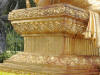
%201_small.jpg)
_small.JPG)
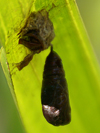

_small.jpg)
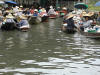
%20Pindaya_small.jpg)
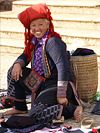
_small.jpg)
_small.jpg)
%201_small.jpg)
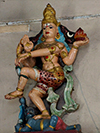
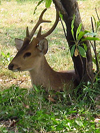
_small.jpg)
%20นกกระเรียนเล็ก%202_small.jpg)
_small.jpg)
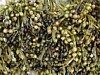
_small.jpg)
,%20Nepalese%20traditional%20hat_small.jpg)
%20BKK_small.JPG)

%201_small.jpg)
_small.jpg)
%20entrance%202_small.jpg)
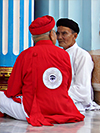
_small.jpg)
%20เครือเขาคำ,%20ผักไหม%204_small.jpg)
%20งูแส้หางม้า_small.jpg)
%20National%20Park_small.jpg)
%206_small.jpg)
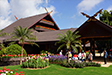

%20leek%20flowers%202_small.jpg)
_small.jpg)
,%20Vietnam_small.jpg)
%203_small.jpg)
_small.jpg)
_small.jpg)
%20ไหม_small.jpg)
%201_small.jpg)
%20pickled%20fruit_small.jpg)
_small.jpg)
_small.jpg)
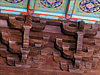
_small.jpg)
%202_small.jpg)
%20Cassia%20fistula_small.jpg)
_small.jpg)
%20Lucanidae%20stag%20beetle%202_small.jpg)
_small.jpg)
%20ด้วงก้นกระดก%202_small.jpg)
%20Christmas%20beetle%202_small.jpg)
_small.jpg)
_small.jpg)
%20ด้วงงวงข้าว,%20มอดข้าวสาร%203_small.jpg)

_small.jpg)
_small.jpg)
_small.jpg)
_small.jpg)
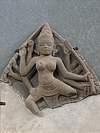
%20Dusit%20Zoo,%20Bangkok_small.jpg)

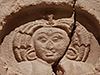
_small.jpg "Clashing Bamboo Dance")
