|

|
|

|
1. Thai. Old porcelain from China, with a blue pattern. Chinaware. Also china. 回
2. Thai. General term for antique. 回 Thai. ‘Design washed with water’. Term used for gilded lacquer. 回 Burmese. ‘Tea leaves’. Pickled tea leaves mixed with other ingredients served as a local delicacy in Myanmar, typically in a special lacquerware bowl known as laat hpaat khwat (fig.). In English, this snack is usually referred to as tea leaf salad. Pronunciation is rather la phet. See also cha. 回
Burmese. ‘Tea leaves bowl’. Name of a special lacquerware bowl used to serve pickled tea leaf salad known as laat hpaat (fig.). It consists of a footed platter, that can be closed off with a lid, and which is divided in different compartments, similar to a Japanese bento. Typically, the tea leaf salad is placed in a rounded section in the centre, which is surrounded by about 5 fan-shaped segments, that contain are used to serve other munchies, such as fried garlic, shredded ginger, peanuts, sesame seeds, broad beans, etc. There are several sizes, the larger ones are sometimes also used to serve food in restaurants (fig.). Pronunciation is rather la phet oat. See also cha and hsun ok or tiab. 回
Name of a species of bird in the Picidae family with the scientific name Picus vittatus. It is endemic to Southeast Asia, including Thailand, where it is called nok hua khwaan khiao pah phai, which translates as ‘green ax-headed bamboo forest bird’. This approximately thirty centimeter large bird has an olive green throat and upperparts, dark and white speckled wing tips and tail, white and dark scaly markings on the underparts and cheeks, and a maroon crown and nape (fig.), which in females is black. It lives in subtropical to tropical regions, in a variety of forest types, including mangrove, dry forest, and moist lowland and fog forests, where it feeds on insects and larvae living in tree trunks, as well as ants and termites. 回
A resinous substance from the Melanorrhea usitata, a tree that grows wild in the drier forests of northern Thailand and is similar to the sumac tree of Japan and China. Lacquer is a black, very durable, waterproof substance and highly functional. It is light, hard and flexible at the same time, and protects against mildew and insects. It is used mainly as a paint and varnish, as well as a primer for inlay, incision or carving of motifs, and as a background for decorative patterns (fig.), often applied in gold leaf and known as gilded lacquer. Whereas the black substance is in Thai called rak (รัก), named after the Thai name of the tree it is gained from, i.e. ton rak (ต้นรัก), the products coated with lacquer are known as kreuang kheun, which is Thai for lacquerware. 回
Products coated with a black substance commonly known as lacquer. Popular in ancient days were the lacquerware food containers used for offering food to monks. Those were often fashioned into a lotus shape and used as a double food container with compartments seperated by a tray. Food would be placed inside to offer to Buddhist monks. Lacquerware is light, hard and flexible at the same time, and protects against mildew and insects. In Thai kreuang kheun. 回
Common name of a colourful bird in the family Phasianidae, with the binomial name Chrysolophus amherstiae. Adult males are about 100-120 centimeters in length, with the long, black-barred, white tail accounting for most of it. Their plumage is somewhat reminiscent of that of the male Golden Pheasant (fig.), but with a black and silver head and mostly white belly. Furthermore, it has a black-scaled white ruff, a green mantle and breast, blue wings, as well as some yellow and golden orange plumage on its back and rump. Adult females (fig.) are much duller, with a mottled brown plumage all over, with fine barring and also very similar to the female Golden Pheasant (fig.), but with a darker head, bluish-grey legs and feet, and a barred vent. They feed on the ground, where they live on a diet of invertebrates, grain and leaves. Although they can fly, they prefer staying on the ground during the day, but roost in trees at night. Originally from Southwestern China and Myanmar, it has been introduced in Thailand, where it is known as kai fah lady or kai fah lady amherst. 回
A species of cactus with the botanical name Mammillaria elongata. READ ON. 回 Common name for a species of terrestrial orchid of the genus Paphiopedilum. READ ON. 回 Thai. An episode in the story of the last great incarnation of the Buddha called Mahachaat. 回 Laem Phrommathep (แหลมพรหมเทพ) Thai. ‘Peninsula of the god Brahma’. Name of a spit of land near the southern cape of Phuket island (map - fig.) known as a panoramic spot, popular for its sunset. Also Phrommathep and Laem Phromthep. 回 Thai. ‘Peninsula of Young Pines’. Name of a spit of land in Songkhla. READ ON. 回 Thai. Name of a spicy dish of minced underdone (rare) meat or fish, mixed with onions, vegetables, kreuang prung such as chili pepper and preserved fish sauce. It is eaten with rice and some green vegetables. 回
Thai. ‘Citizen's Courtyard’. Name of a large public square and events square in front of the Governor's Court or City Hall in Bangkok and usually referred to in English as the ‘City Square’. See TRAVEL PICTURE. 回 Lahn Phra Rachawang Dusit (ลานพระราชวังดุสิต) Thai name for the Royal Plaza in Bangkok, located in front of the Ananta Samahkom Hall (fig.) and at the end of Ratchadamnoen Avenue (fig.) in Bangkok's Dusit area and home to the equestrian statue of King Chulalongkorn (fig.), i.e. King Rama V. It is the place where on December 4th the annual Military Parade of the Royal Guards takes place, which is known as Trooping the Colour (fig.). 回 The Lahu are a hill tribe of whom the majority live in the northern provinces Chiang Mai and Chiang Rai (fig.). They are divided into subgroups named after the main colour of their clothes. Their pile dwellings are usually high in the mountains (fig.) were they settled at the end of the 19th century coming from Burma. Their dialect belongs to the Lolo branch of the Tibeto-Birman language group, of which the standard language is Lahu Na, a language also spoken by most other Lahu people outside Thailand (in Burma, Laos, Vietnam and China). The Thai name for these people is Mussur, a word derived from Burmese meaning ‘hunter’. Sometimes called Laho. MORE ON THIS. 回
Lahu. ‘White Lahu’. A subgroup of the Lahu. MORE ON THIS. 回 1. Lahu. ‘Black Lahu’. A subgroup of the Lahu. In Thai Mussur Dam. 回 2. Lahu. Standard Lahu language, belonging to the Lolo branch of the Tibeto-Burman language group and used by all Lahu subgroups and even by some other hill tribe peoples. The language is related to that of the Lisu. MORE ON THIS. 回 Lahu. ‘Red Lahu’. A subgroup of the Lahu. Pronunciation Lahu Nai-i. MORE ON THIS. 回
Lahu. ‘Black Lahu’. A subgroup of the Lahu. In Thai Mussur Dam. MORE ON THIS. 回 Lahu. ‘Yellow Lahu’. A subgroup of the Lahu. In Thai Mussur Kwi. MORE ON THIS. 回 Thai. ‘Flow back [to the] nest’. Name of the lowest level in the series of seven falls of the Erawan Waterfall (fig.) at Erawan National Park (fig.) in Kanchanaburi Province. The name might refer to the natural nest-shaped basins into which the water cascades. See MAP. 回
Name of the body of water beneath the Bridge of Troubled Water, the bridge in Buddhist belief over which the souls of the newly deceased must cross on their way to Diyu, i.e. the realm of the dead. The bridge, a test for Good and Evil, is guarded by demons (fig.), who either allow or forbid passage. Whereas the souls of the kind and benevolent dead are allowed to pass, those of the evil and wicked people will be pushed into the Lake of the Doomed. A reproduction of this mythological lake can be seen in Vietnam at Am Phu Cave in Da Nang's Marble Mountain of Water (fig.), and in Thailand at Wat Rong Khun (fig.) in Chiang Rai's Pah Oud On Chai district. In both places, the arms of the doomed can be seen sticking out from the surface as if calling for help. In Vietnam, the water underneath the Bridge of Troubled Water is called Am Dong Song (Âm Dương Sông), which means ‘Yin-yang River’, and in the Vietnamese version, those who do not know how to cross the slippery bridge, i.e. those who in life did not keep a good balance between yin and yang, fall in the water below, which is filled with poisonous snakes, crabs and other creatures, that will torture those who fall in. A treacherous body water that needs to be crossed to reach the Underworld is reminiscent of the rivers Styx and Acheron, i.e. the River of Woe, which form the border of hell in Greek mythology. 回
Thai. Traditional dance performances in Thailand, in which both men and women perform, unlike khon, in which all roles, including the female roles, are played by men. The themes may be short versions of the Ramakien or other folk tales. See also National Theatre. 回 Thai. A toy theatre with miniature puppets, called tukkatah ram thai (fig.), posing as male and female dancers and put in front of a shrine as an offer or veneration, i.e. as a more permanent form of kaebon, i.e. paid musical and dance performances at important religious shrines (fig.). 回
Thai. Name in Isaan for a rectangular device consisting of a wooden frame of about 2 meters by 5 to 8 meters, with on either side about 20 or more aligned pins of 10-15 centimeters each, used to wind long threads of yarn onto, in order to make them into the right size for looming. See also rahng khon (fig.). 回
Thai. ‘City pillar’. A pillar usually made of wood, believed to be the dwelling place of the guardian spirit of a city. This pillar is placed in a shrine called sahn lak meuang and represents the centre of town and the point from which distances between cities are measured (fig.). It is hence comparable to the Greek omphalos (ὀμφᾰλός), i.e. the ‘navel’ or ‘knob’ (i.e. ‘anything shaped like a navel’ or ‘belly button’), which in Ancient Greece represented the center of the world and in Delphi was symbolized by a linga-like knob. Whereas the word phalos (φᾰλός) seemingly has an etymological connotation to the Greek word phallos (φαλλός), i.e. ‘phallus’, the Thai lak meuang also typically takes a phallus-like shape. It is sometimes referred to as sao inthakhin, i.e. ‘barrier post’ or ‘guardian pillar’. Compare also with linga worship. See also Inthakhin Chiang Mai and WATCH VIDEO. 回
1. Sanskrit-Thai. ‘Mark, sign, symbol, characteristic’. In physiognomy the term refers to the features of the body that may be auspicious or inauspicious, but in general it refers to the auspicious signs of a great man, especially the 32 major marks described in Buddhist literature, from which the predestination of the Buddha may be recognized at birth. Sometimes transliterated lakshana. 回
2. Sanskrit-Thai. ‘Attribute, sign, symbol’. In iconography the term refers to the attributes of a deity. 回 Sanskrit. ‘Endowed with auspicious marks (lakshanas)’. Name of the younger half-brother of Rama (fig.) in the Indian epic Ramayana who, loyal to Rama, shared his 14 year long exile and assisted him (fig.) in the battle against Ravana (fig.). Lakshmana is allegedly the incarnation of Ananta, the naga seat of Vishnu (fig.). He has a golden complexion. In the Thai version of the story, called Ramakien, he is known as Phra Lak (fig.). 回 Sanskrit. ‘Mark, sign’. Goddess of beauty and good fortune (fig.), who surfaced during the churning of the Ocean of Milk seated on the waves on a lotus flower. She became Vishnu's consort and was incarnated with him each time he incarnated as one of his avatars on earth. For example, she was born with him as Sita, the wife of Rama, and as Rukmini, the principal wife of Krishna. The lotus is one of her attributes (fig.) and her mount is the elephant or owl, though she is sometimes associated with a lion (fig.). However, Vishnu has two consorts, the other one being Bhumidevi. One of them is also present during the Anantasayin, usually depicted sitting at the feet of Vishnu (fig.). Also known as Sri, Sri Mariamman and Padma. 回
Thai. ‘Fourth Pillar’ or ‘Marker Four’. Name of a khet in Bangkok, that was named for its location on the fourth milestone of Khlong Prem Prachakon, a major canal in eastern Bangkok, that connects the capital with Bang Pa-in in Ayutthaya province. Also spelled Lak Si. 回 Sanskrit. ‘Lord with a club’. Reputed founder or first teacher of the Pashupati sect and by some believed to be the 28th incarnation of the Hindu god Shiva as well as the originator of yoga. In art usually depicted naked with a phallus holding a club, prayer beads, a trident and a skull cup. 回 Sanskrit. ‘Playful seated position’. An asana or seated position with one leg bent and placed on the seat or throne, and the other hanging down. It symbolizes relaxation. 回
Sanskrit. ‘Recitation of the beloved one’. A Sanskrit text describing the traditional legend of the Buddha's life. 回 A form of Buddhism mainly practiced in Tibet and Mongolia, and which is also referred to as Tibetan Buddhism. 回 1. Thai for ‘antelope’ and ‘gazelle’. It is the vahana of Vayu, the Hindu guardian of the Northwest (fig.). 回 2. Thai for Burmese Brow-antlered Deer, alongside la-ong and la-ong lamang. 回 1. Thai. ‘Black antelope’. Name for the Blackbuck. 回 2. Thai. ‘Black antelope’. Name for a kind of entirely black stag beetle, endemic to Thailand and with the scientific designation Hexarthrius nigritus. Adult males grow between 4.3 and 7.5 centimeters in length and have large mandibles that are curved downwards and inwards in the front, with at the top an additional tooth that grows upward at an angle in only the larger males. Females have a body size of between 3.7 to 4.1 centimeters and much smaller mandibles. 回 Thai. An evergreen tree that can grow up to thirty meters high and has the Latin name Manilkara zapota. Its white sap is used to make chewing gum, whilst its sweet fruits of the same name, which may be egg shaped to globular (fig.) depending on the variety, have a taste reminiscent of marzipan. The outer skin of the fruits is rather velvet-like. In English known as sapodilla. 回
Thai. Name of a Thai province as well as its provincial capital. READ ON. 回 Name of a kind of ceramics from Lampang, that is made of kaolin clay, a soft white clay also called china clay. Its trademark product consists of bowls painted with rooster and floral motifs onto a plain, usually white to off-white, background, with the rooster being the logo of Lampang that also occurs on its coat of arms (fig.), a reference to its old name, i.e. Kukkut Nakhon, which means the ‘City of Cocks’. According to legend, a cock would in the past be placed at the city gate, in order to wake up the bodisattvas so that they could bless the city. With reportedly more than 2,000 ceramic factories Lampang has gained the epithet of Ceramic City. See also THEMATIC STREET LIGHT. 回
Thai. ‘Sea Sonneratia’. Name for the Mangrove Apple. 回 Another spelling for lamphu. 回 Thai. Name for a species of mangrove, with the binomial name Sonneratia caseolaris. It is one of four species of Sonneratia found in Thailand, the others being Sonneratia alba (fig.), Sonneratia ovate and Sonneratia griffithii. The district Banglamphu in Bangkok, sometimes spelled Banglamphoo, is named after this species of mangrove. The name is a compound of the words bang and lamphu, with the first word referring to a riverside village and the latter to this species of Sonneratia mangrove, and thus indicating an earlier presence of this tree in that particular area. Also transcribed lamphoo. 回 Thai. Capital of Lamphun province (map), a jangwat of the same name in North Thailand. READ ON. 回 Thai. ‘One with a big, sagging belly’. Term derived from Sanskrit and used in Hindu iconography to refer to someone with a big belly, usually a deity, such as Ganesha, who is worshipped as the god of wisdom and of various arts and sciences. A big belly is understood to be a characteristic of a wise person. With Ganesha, this wisdom derives from eating Motaka, a sweet made of flour and that represents great wisdom. See also mahothon. 回 Thai. Fruit tree (fig.) with the Latin name Euphoria longana and Dimocarpus longan, of the botanical family Sapindaceae. The sweet and succulent fruit has a glassy whitish pink color and sits in a light brownish peel. Its round pip is dark brown and smooth. It is an evergreen and can reach a height of twelve meters and grows in Thailand mostly in the North. Its in season from the end of July to August. It is believed that eating the fruit improves the body's energy. Lamyai can be enjoyed as a desert with syrup, sticky rice or tapioca. It can also be dried (fig.) and eaten as a fruit snack called lamyai ob haeng (ลำไยอบแห้ง), a specialty from the region of Lamphun which has some of the largest lamyai orchards in the country. The western name for both the tree and fruit is longan, which derives from the Chinese longyan and literally means ‘dragon eyes’. See also POSTAGE STAMP. 回
Lan Chang (ລ້ານຊ້າງ, ล้านช้าง) 1. Lao-Thai. ‘A million elephants’. Name of an ancient Laotian kingdom founded in 1354 by Fa Ngum, a grandson of Souvanna Khamphong, ruler of Xieng Dong Xieng Thong. It was one of the largest kingdoms in Southeast Asia, extending from the borders of China to Sambor below the Mekhong rapids at Khong Island and from the Vietnamese border to the western escarpment of the Korat Plateau. The kingdom's name was a reference to this vast area, as well as to its formidable war machine. Also transcribed Lan Xang. See also Laos. 回 2. Lao-Thai. Another name for the Mae Khong River used in Laos, which in Thai is spelled either Lahn Sahng (หลานซาง) or Lan Chang (ล้านช้าง). 回 Chinese. ‘Olive carving’. Traditionally ancient folk art in China, that consists of the skillful chiseling of olive pits into miniature carvings of historical themes and legends, while taking advantage of the natural shape of the olive nut, which often led to the nut being carved into a boat. Since Guangdong is rich in olives, the art of olive carving became a unique trade of the province, with the technique already consummate in the Qing Dynasty. Olive carvings are so elaborate, that the flanks are carved with inscriptions of prose and poetry, while the windows can be opened and closed with ease. Generally, this art form is also known as he diao (核雕), i.e. ‘seed carving’, ‘kernel carving’ or ‘nut carving’, yet this may also refer to the 3D relief engraving of nuts and pits of fruits other than olives, such as peach stones and walnuts, a variant which is said to date back to the Song Dynasty and having attained high recognition during the Ming Dynasty, when it was considered a fashionable possession by both the rich and high officials. 回
A Thai name for the Indochinese Water Dragon, alongside takong and king kah yak. 回 Thai name for Ceylon, nowadays Sri Lanka. See also Lanka. 回 Thai. A fruit tree with the scientific name Aglaia domestica and Lansium domesticum. It yields edible fruits with a thin yellowish skin and which in appearance resemble the longkong, though the skin of langsat tends to stick more to the fruit, making it harder to peel than the longkong. Its fruiting season is from June to August. See also look ko. 回 Langka Suka (लंकासुख, ลังกาสุกะ) Sanskrit-Thai. ‘Island of happiness’. Name of an early kingdom, that existed between the 2nd and the 14th century AD, and roughly stretched from present-day Songkhla in the South to Ratchaburi in the North. As such, it was incorporated into the Srivijaya kingdom as a tributary. The Srivijaya empire encompassed a much larger area and existed between the 7th and 13th century. By the 15th century Langka Suka was replaced by the much smaller Pattani sultanate. Also transcribed Langkasuka and sometimes Lankasuka or Lanka Suka. 回 Sanskrit. ‘Island’. Name used in the Ramayana for Ceylon. It was once the summit of Mt. Meru but was blown into the sea by Vayu, the god of wind, thus becoming an island. This gigantic city kingdom of great majesty was encircled with seven broad moats and seven strong walls. It was allegedly built of gold as a residence for Kubera, from whom it was taken by his half-brother Ravana, who made it his seat. Also Longka and Langka. 回
1. Thai. ‘A million paddies’. A former kingdom in North Thailand that flourished during the 13th and 14th centuries AD, with Chiang Mai at its centre. It consolidated its power in the northern regions by a pact between the three kings (fig.) of Chiang Mai, Sukhothai and Phayao, known by the names Mengrai, Ramkamhaeng and Ngam Meuang. Its Golden Age was brought on by Phaya Keua Nah (fig.) around 1367 AD and lasted until 1525. Today, the name is habitually used to refer to northern Thailand in general. It also has its own script known as Akson Tham Lan Na (อักษรธรรมล้านนา). Also spelled Lanna and Lahn Nah, See also Yonok, POSTAGE STAMP, TRAVEL PICTURE, PANORAMA PICTURE, WATCH VIDEO (1) and (2), and MORE ON THIS. 回
2. Thai. An art school from the period and region of Lan Na (North Thailand). See also THEMATIC STREET LIGHT. 回
Kayang name for a bird-like angel. 回 Name of a decommissioned war ship that once sailed under the hull code 714 and which today is made into a naval museum located at Khlong Jilahd (คลองจิหลาด) Pier in Krabi, from where ferry boats commute between the mainland and Phi Phi Island. The bow of this highly specialized Tank Landing Ship, has a large door that could open and deploy a ramp in order to unload vehicles. Parked on its deck today is a two-bladed Bell UH-1H Iroquois utility helicopter of the Royal Thai Police that is powered with a single turbo-shaft engine. Formerly known as the USS Stone County, the ship between 1945 and 1969 served the United States Navy and participated in many missions, receiving battle awards for service in the Korean and Vietnam Wars. In 1973, it was given to the Royal Thai Navy and renamed HTMS Lanta by King Rama IX after Koh Lanta, an island in Krabi, making it a symbol of local pride. Adjacent to the war ship museum is a memorial dedicated to Admiral Krom Luang Aphakon Kiatiwong, the 28th child of King Rama V with the title Prince of Chumphon, who is revered nationwide as the Father of the Royal Thai Navy and of whom statutes can be found nationwide, especially at naval bases and around Thailand's coastline. By the side of the statue is a retired LTV A-7 Corsair II light attack aircraft, and somewhat to the east of it are three large naga, i.e. mythical serpents, and a small statue of the monk Luang Poo Thuad (fig.). In front of this, semi-submerged in the sea at the mouth of the Krabi River, is a lone tree known as the Sacred Lucky Ten Tree, to which sailors reportedly pay respect on their way out to sea and give thanks upon a safe return. See also EXPLORER'S MAP, THEMATIC STREET LIGHT, and WATCH VIDEO. 回
See phakah krong. 回 Chinese festival held on the 15th day of 1st lunar month, and which coincides with the last day of Chinese New Year. On this day lantern parades and lion dances are held, and people traditionally eat a soup of glutinous rice balls served in boiling water, to celebrate the first full moon. In the early Tan Dynasty (618-907AD), the festival was called Shan Yuan Jie (上元节), referring to the first period of the year, and was traditionally celebrated as the birthday of the Heaven Officer, who blesses human luck. According to legend, the festival was initiated when a beautiful bird escaped from heaven and flew down to earth, where it was hunted by some village people. When the Jade Emperor (fig.) learned of this, he became very anger and ordered his troops to destroy the village with a storm of fire on the 15th lunar day. However, when the daughter of Jade Emperor heard of this imminent act of vengeance, she warned the villagers. A wise man who happened to pass by the village made the suggestion that on that day everyone should hang red lanterns around their houses, setup campfire on the streets, explode bamboo firecrackers and made fireworks, in order to make the Jade Emperor believe that the village was under fire. When the heavenly troops indeed reported this back to the Jade Emperor, the village was saved and from that day on, people on the 15th lunar day annually celebrate the anniversary of this event by carrying red lanterns on the streets and exploding firecracker and fireworks. See also Xia Yuan Jie. 回 Chinese. Name of one of the Eight Immortals (fig.). Although his age and sex are unknown Lan Tsai-ho is usually portrayed as a effeminate boy carrying a bamboo basket which contains a variety of flowers associated with longevity (fig.) and which can be used to communicate with the gods. His behaviour is out of norm and known for its bizarreness, e.g. he walks around with one foot bare and he likes to wear only shorts and thin shirts in winter whilst sleeping on the snow, but in summer he wears a thick jacket and long pants. He walks around singing and begging, though his songs, which were related to immortality, were unintelligible to ordinary mortals. When he has earned enough coins he strings them onto a necklace and then runs away through the streets, not caring if the string would break and the coins are lost, because when he has enough to eat he will distribute the rest of his money to the poor. Lan Tsai-ho may also be depicted as a young girl, a kathuy or an aged man. He is sometimes depicted riding an elephant (fig.). Also known as Lan Caihe (fig.) and sometimes transcribed Lan Ts'ai-ho. 回
1. Thai. Name of a wooden pole that can be carried across the shoulder, similar to a mai kaan haab, but with two pairs of legs for allowing it to stand. It is used for carrying bundles of rice from the field to the threshing ground (fig.), haystack, barn or silo. It may sometimes have the shape of a frame. 回
2. Thai for ‘spear’ or ‘lance’. 回 Thai. Name for a loft, a sky parlor or a roof-deck, especially of a Chinese style building, or a Chinese restaurant situated on an upper storey of a building. 回
1. Thai-Lao-Vietnamese. Name of the
inhabitants of
Laos,
numbering around 3,2 million, and with around 222,500 living in Thailand.
回
4. Thai. Name of a river in the northern Thai province of Chiang Rai. 回 See Lawachakaraat. 回 Chinese. Name for Lao Tzu, i.e. the founder of Taoism, in his deified form. READ ON. 回 Thai. ‘White alcohol’. Name for a locally distilled rice whiskey, a strong alcoholic beverage traditionally made from glutinous or sticky rice; look paeng (fig.), yeast mixed with a starter culture to assist the fermentation process; and water. Steamed sticky rice is mixed with the yeast and starter culture and kept in a fermentation tank (fig.) for three days to allow the starch in the rice to change to sugar. Then water, twice the amount of the rice, is added and a second fermentation takes of about five to seven days to be completed. After this the rice whiskey is distilled (fig.) from this substance, which is heated over a fire creating steam. On top of the distillation tank a convex metal vessel filled with water is placed. When the hot steam hits the cold vessel it liquidizes and attaches to the vessel to eventually slowly run to the curved bottom of the vessel from where it drips into a funnel-shaped spoon attached to a pipe that leads to a bottle which slowly fills up. In China, Thailand, Laos, Cambodia, Myanmar and Vietnam, often reptiles, such as snakes or lizards, or scorpions, or body parts of wild animals, such as tigers, are placed in jars filled with rice whiskey, as it is believed by some that soaking these things in the alcohol, will make the whiskey into an aphrodisiac and improve overall strength (fig.). 回
Thai. Name of the 24th King of the Lawachakaraat Dynasty that ruled the Kingdom of Hiran Ngun Yahng, as well as the father of King Mengrai (fig.), the first ruler of the Lan Na Kingdom. His wife was Nang Ua Ming Jom Meuang (fig.). 回
Thai. ‘Pigsty’. Place where pigs are kept. The term is used for both large pig farms and the more common smaller pig stocks in rural villages, where animals are often kept underneath pile dwellings for protection against the sun and rain. 回
Thai name for the Burmese Brow-antlered Deer, alongside lamang and la-ong lamang. 回 Thai name for the Burmese Brow-antlered Deer, alongside la-ong and lamang. 回 Thai name for the wise and faithful ruler in the Chinese story of the Three Kingdoms (fig.). He was a warlord at the end of the Han dynasty and founder of the Han kingdom of Shu (circa 200-263), later the Shu Han dynasty. In Chinese, he is known as Liu Bei (fig.) and later in life he was given the courtesy name Xuan De (玄德), which translates as ‘profound virtue’. 回 Thailand's neighbouring country to the northeast and west of Vietnam and with the official name Democratic Republic of Laos. Its covers an area of 236,800 km² and has 5,083 km of land boundaries with Burma, Cambodia, China, Vietnam and Thailand. The capital of Laos is Vientiane. In 1975, the Communist Pathet Lao took control of the government, ending a six-century-old monarchy. Initial closer ties to Vietnam and socialization were replaced with a gradual return to private enterprise, a liberalization of foreign investment laws, and the admission into ASEAN in 1997. It has a population of around 6 million of which 60% are Theravada Buddhist. The official language is Lao but also French and English are spoken, as well as various ethnic languages. The highest point is Phou Bia with 2,817 meter and the Mae Khong River (fig.) is an important waterway, which is thus represented in the blue band of the national flag of Laos (fig.). Its currency is the Kip, and natural resources are timber, hydropower, gypsum, tin, gold and gemstones. The old name of Laos is Lan Chang, which means ‘Million Elephants’. Akin to the official Thai name of Thailand, i.e. Prathet Thai (ประเทศไทย), also Laos is in full referred to as Pathet Lao. See also Lao and Thailand's Neighbours & Beyond. 回
Thai. Name of an ethnic group of about 34,000 people, spread out over Central Thailand. Their vernacular belongs to the Tai-Kadai (ไท-กะได) language family and they are descendants of Lao peoples, from the areas of Tonkin and from the East of Luang Prabang, whom during the 18th and 19th centuries were forcibly removed as slaves and corvée labourers, when their homelands were annexed by Siam. Most Lao Sohng were members of the Tai Dam (ไทดำ) ethnic group and many were used as guards for the royal courts, and to help control the powerful Chinese minority. Though originally devoted to animism, most now practice Theravada Buddhism. Often spelled Lao Song and also known as Lao Sohng Dam (ลาวโซ่งดำ), Tai Sohng (ไทโซ่ง) and Thai Song Dam (ไทยทรงดำ). 回 Chinese. Name of an influential Chinese philosopher in the 4th century BC, founder of Taoism and author of the Tao-te Ching. READ ON. 回 Thai. ‘Laotian Circle’. Name of an ethnic super-group of people from the lowlands of Laos, that includes several other groups, such as the Lao Khrang (ลาวครั่ง), Lao Phuan (ลาวพวน), and Laos Song (ลาวโซ่ง). Those found in Thailand, are said to have migrated from the area around Vientiane and settled in the lower plains of Thailand. Like many ethic minority groups, they live self-supporting lives, mainly through agricultural, the farming of animals and handicrafts. Each ethnicity has it own unique identity. 回 See Jungle Crow. 回 Common name for a kind of passerine bird in the family Phylloscopidae, and with the scientific designation Phylloscopus magnirostris. It is about 12.5 centimeters tall and has greenish-olive upperparts with a double pale wing bar and off-white underparts. It is similar to the Greenish Warbler (fig.), but has a stockier and darker or dark-tipped bill, and two wing bars, akin to the Two-barred Warbler, but the latter has more yellowish-green upperparts and its wing bars and supercilium are also more yellowish. It is more commonly found in India and Myanmar, but rather unusual for Thailand. 回
Name of a species of katydid, a large, tropical, grasshopper-like insect (fig.), in the family Tettigoniidae, which worldwide has well over 6,000 species. The name katydid is an onomatopoeia and derives from the male’s repetitive call, i.e. Katy did. In general, katydids are also known as long-horned grasshoppers and bush-crickets. The Large Brown Leaf Katydid somewhat resembles a dead leaf and is known in Thai as takkataen phung phluy, i.e. ‘pot-bellied grasshopper’. 回
Common name for a fairly large species of bird, with the scientific name Coracina macei. There are several subspecies found throughout South and Southeast Asia, including Coracina macei siamensis, which is found in Thailand, Coracina macei rexpineti, which is found in Myanmar and northern Indochina, and Coracina macei nepalensis, which is found in northern India and Nepal. These birds are mostly pale grey, with a stout black bill and blackish lores, a pale grey breast and whitish vent. Whereas the male has no barring below, the female is barred from breast to vent. Large Cuckooshrikes can grow to a size of about 30 centimeters tall. They are mostly insectivorous and prefer to dwell in topmost branches of the upper canopy, generally in open, broadleaved forests and pine forests. In Thai, this bird is known as nok khih thao yai (นกขี้เถ้าใหญ่), i.e. ‘large ashes bird’ or ‘large ashy [grey] bird’. 回
Common designation for a species of civet with the scientific name Viverra zibetha. It can be found in South, East and Southeast Asia, from Nepal and India in the West to China in the East, down to Indochina, including most of mainland Southeast Asia. It is brownish gray, with two white and three black bars along the neck, a black and white banded tail, a white snout, and black paws with retractable claws. This civet is solitary, territorial, nocturnal and omnivorous, though feeds mostly on small mammals and other carnivorous food, such as birds, fish, frogs, and snakes. In Thailand, the Large Indian Civet is known as chamot phaeng haang plong (ชะมดแผงหางปล้อง), with haang plong literally meaning ‘segmented tail’ and referring to the banded tail. With a body size of 75-85 cm long, excluding the 38-46 cm tail, Viverra zibetha is the largest of all civets in Thailand. See also Small Indian Civet (fig.). 回
Common name for a ca. 28 cm tall bird in the Timaliidae family and with the scientific binomial designation Pomatorhinus hypoleucos. READ ON. 回 See Burmese Ferret-badger. 回 A sediment of red or brown clay, produced by crumbling rocks. Laterite is soft when first dug up but becomes hard when exposed to the air. It was once frequently used as a building material for religious buildings and palaces in Thailand and Cambodia. Due to its colour it is in Thai sometimes called din daeng (red earth) or sila daeng (red stone), though officially it is known as sila laeng. See also TRAVEL PICTURES. 回
See rubber tree. 回 Common name for a kind of small, circa 27 centimeters tall dove, with the scientific designation Streptopelia senegalensis. Above, it is earthly-brown, with a lilac-pink head and neck, and grey patches on the shoulders, while its wing feathers are darker. It has a broad collar of black spots on the fore-neck, while the underparts are white and rufous, with grayish flanks, and a white tip to the outer tail feathers. See also WILDLIFE PICTURES. 回
One of Sita's two twin sons in the Ramayana, neither of whom were recognized by their father Rama until they were fifteen years old. The other son was Kusa. 回 Old name of Lopburi. Also transcribed Lawo. 回 Thai. Name for a tribe in northern Thailand, who inhabited the country before the migration of the Thai. See also Thai Lu. 回 Thai. Dynasty that from the 7th through 13th centuries AD ruled the early Meuang or Kingdom of Hiran Ngun Yahng in present-day northern Thailand. The dynasty started in 638 AD with King Lao Chong (ลาวจง), after this tribal chief in the area gained the support of the King of Lavo, and it ended in 1298, after the 24th reign with King Lao Meng (fig.), when the latter's son King Mengrai (fig.), became the first ruler of the Lan Na Kingdom. The dynasty is also referred to as Lao Chong Dynasty, and in Thai known as Lao Changkaraat, Rachawong Lao Chong (ราชวงศ์ลาวจง) and Rachawong Lao (ราชวงศ์ลาว). 回 Lawkananda Zedi (လောကနန္ဒာစေတီ) 1. Burmese. ‘Joy of the World Pagoda’. Name of a Buddhist temple near Bagan. READ ON. 回 2. Burmese. ‘Joy of the World Pagoda’. Name of a Buddhist temple in Sittwe. READ ON. 回 Burmese. ‘Spirit of the World’ or ‘Nat of the World’. Name of a deity in Myanmar, who is revered by the Burmese as a celestial peacemaker and guardian spirit of the universe. According to legend, one day, when Law Ka Nat was making the rounds of his realm, he came upon Kethayaza Chinthe Min (fig.), i.e. the Flying King Lion, in battle with the Flying Elephant over some food. Hence, to put an end to their hostility Law Ka Nat started to sing and dance, while playing a rhythm on his small cymbals. Upon hearing the soothing music and voice, the two combatants calmed down and stopped their fight, and their resentment and animosity vanished, as the fire of their wrath was extinguished. In Myanmar, Law Ka Nat is considered the symbol of the visual arts, as well as the patron of the performing arts. He is usually depicted seated on a giant lotus leaf, whilst holding a pair of small ching-like hand cymbals (fig.) with his feet. He wears a crown-like headdress, is clothed in royal attire, and is sometimes described as being depicted in a dancing posture. He is often represented in the company of an elephant and a lion. A wood sculpture of Law Ka Nat is portrayed on the former banknotes of 75 Kyat, that were issued by the Union of Burma Bank on 30 September 1985, in order to commemorate General Ne Win’s 75th birthday. His name could also be transcribed Lokanat, which is reminiscent of the Thai term lohkkannaht, thus associating him with the Buddha. He is also known as the Loka Byuha Nat. See also nat and TRAVEL PICTURE (1) and (2). 回
Lawkataraphu Phaya Kyee (လောကသရဖူဘုရားကြီး) Burmese. ‘Great Pagoda of the Crown of the World’. Name of a Buddhist pagoda in the northwestern part of Ava. It has a large pagoda, of which the top part is gilded, topped with a hti (fig.), i.e. an ornamental part in the form of a lacy umbrella crowning the spire of a Buddhist stupa, as well as a nga myat na, i.e. a flag-shaped ornament in English usually referred to as the vane (fig.), while in the centre, all around the stupa, are depictions of demon-like figures called balu pan gai (fig.). It was renovated in 2017. See MAP. 回
Law Ka Teu Kaung Hpaung Daw U Myat Swa Phaya (လောကထွဋ် ခေါင်ဖောင်တော်ဦး မြတ်စွာဘုရား) See Hpaung Daw U Pagoda. 回 Laykyun Setkyar (လေးကျွန်းစင်္ကြာ) Burmese. ‘Four Islands Corridor’. Name of the 129.5 meter tall Buddha image at the Maha Bodhi Ta Htaung monastery in Monywa (map - fig.). The image itself is actually 116 meters tall and the base another 13.5 meters. See MAP. 回
Le (Lê) The dynasty that ruled Vietnam from 1427 to 1789 AD, the golden era of art. 回 1. Thai. ‘Style’ or ‘Grace’. Name of a painting by the Thai artist Sawat Tantisuk (สวัสดิ์ ตันติสุข). It was depicted on a Thai postage stamp issued on 2 August 2013 (fig.) as part of a set of eight stamps on contemporary art in the third series of commemorative stamps to mark the 2013 World Stamp Exhibition, which was held at the convention hall of Siam Paragon in Bangkok between 2 and 14 August 2013. 回
2. Thai for ‘style’ or ‘grace’, as well as for ‘to proceed gracefully’, as in pahng leelah. 回 Name of a species of sea turtle with the scientific name Dermochelys coriacea. It is the largest of all living turtles and third largest of all reptiles. It can weigh up to 700 kilograms, and with front flippers than can grow up to 2.7 meters. It gets its name from its unique, ridged shell which consists of a layer of rubbery skin, strengthened with thousands of tiny bone plates. Though leatherbacks also eat seaweed, fish, crustaceans, and other marine invertebrates, jellyfish make up the biggest portion of their diet, and in order to trap their food and keep it from coming out, as well as to protect them from sea jelly venom, the inside of their mouths are covered in dozens of spikes, called papillae, from their teeth all the way down to their esophagus and into their anterior part of their gut. Sea turtles swallow a lot of seawater while eating. As they eat, their stomach fills up with food and seawater. They then expel all the water and the spikes trap food and keep it from coming out. The papillae are thus a kind of anti-vomiting spikes that basically act as reverse filter. As such, these hard spikes are a major problem if a sea turtle accidentally ingests plastic, as it often gets stuck. See POSTAGE STAMPS (1) and (2). 回
Name of a local myth from Songkhla. READ ON. 回 Legend of the Five Floating Buddha Statues See Tamnaan Luang Pho Loy Nahm Hah Phi-Nong. 回 See jing lehn duang. 回 Hindi. ‘Skirt-bodice’. The favourite bridal gown in India, especially in the North. It is usually made a silk or another quality fabric, and heavily decorated with embroidery, whilst the brides will additionally decorate themselves with bridal make-up, jewellery, and apply mehndi (fig.) to their hands and feet. Sometimes transcribed lahanga choli and also known as ghaghra choli (fig.). 回 Chinese. Name of a Chinese empress, who was the wife of Huang Di (fig.), the legendary Yellow Emperor (fig.). According to an ancient legend she discovered silk at the age of fourteen, when a silkworm's cocoon fell into her tea cup. Trying to extract it from her drink she began to unroll the thread from the cocoon, resulting in the discovery of the silk thread and the start of sericulture. It is said that she was a daughter of the Xi Ling Shi, the ‘West Mountain clan’, a family branch of the Shu Shan clan which was related to the tribe of emperor Huang by marriage. Shu used to mean ‘wild silkworm’, but it was later domesticated by the Shu-Di people and the Shu-Shan clan became the Can-Cong clan, with can (蚕) meaning ‘silkworm’ in Chinese. Her native place was probably in ancient Can Ling county (present-day Diexi in Maoxian county). Because the deities on Minshan Mountein are all horse-headed and snake or dragon-bodied, she was also known as the horse-headed lady. There are however also records saying that Leizu was from Yanting county, where there are many sites and legends about her, hence it is possible that she later moved there. It is also said that she invented the silk reel and silk loom and later became known as the Chinese goddess of silk Can Shen (蚕神), literally the ‘goddess of the silkworm’. 回 Vietnamese. Name of the Dai Co Viet emperor, who reigned from 980 to 1005 AD, as the first emperor of the Le Dynasty, which followed the Dinh Dynasty founded by Dinh Bo Lin. The Emperor Le Hoan is posthumously referred to as Dai Hanh (Đại Hành). 回
Another name for the Common Emigrant. 回 Common name for a nymphalid butterfly found in South and Southeast Asia. It is brown, with dark and lemon-yellow spots and lines on the upperside of the wings, as well as a number of orange-black, eyespots, that when sitting on a tree trunk resemble the eyes of an owl emerging from a tree hollow, and serve to deceive potential predators. The underside is a dull brown, with numerous wavy lines and spots in varying shades of brown and black, as well as some vague, faded eye-spots. In the rainy season, the form and markings are more distinct and vivid, and the wing shape is a little more rounded, against the dry season form, when the markings are more obscure and paler, especially on the underside, and the wing margin is more angular and jagged. 回
Large animal of the cat family Felidae, with a black-spotted yellowish orange or all black coat, and seen in profile it has a rather angular head. Leopards with an all black coat are also referred to as Black Panthers (fig.). It is the smallest member in the genus Panthera (fig.) and is distributed both in Asia and Africa. Its binomial scientific name is Panthera pardus, yet there are eight subspecies, the one native to mainland Southeast Asia being Panthera pardus delacouri, the second largest cat in the region, after the Tiger, and known by the common name Indochinese Leopard. In Thai Leopards are called seua dao (fig.), literally ‘starry tiger’, though Black Panthers are called seua dam, i.e. ‘black tiger’ and the Indochinese Leopard is known as seua dao indojihn (เสือดาวอินโดจีน). See also TRAVEL PICTURES (1) and (2). 回
Common name for a small wild cat with the size of a domestic cat (Felis domesticus) and the scientific name Prionailurus bengalensis (fig.). It is found in Southeast Asia, including in Thailand (fig.), Myanmar, Laos, Cambodia, Vietnam, Indonesia, the Philippines, Malaysia, southern China and some parts of India. Leopard Cats are nocturnal and feed on a variety of small prey, ranging from lizards, birds, and small mammals to eggs and insects. In Thai, it is called maew dao. 回
Common designation for a butterfly, with the scientific name Cethosia cyane euanthes. READ ON. 回 Common name for a moth with the scientific designation Zeuzera pyrina. It is widely distributed and known particularly for its destructive larvae, that bore into the stems and branches of a variety of shrubs and deciduous trees. They feed internally by eating the heartwood for up to 3 years before emerging to pupate under the bark. They can be a pest of fruit production. Adult moths have a fluffy white thorax marked with six black spots and pale wings, with numerous black spots and blotches. In Thai, it is only known by its generic name phi seua non jo mai. 回
Common name for a species of carpet shark, with the scientific name Stegostoma fasciatum (fig.) and also commonly known as Zebra Shark. It is found throughout the tropical Indo-Pacific, where it dwells in shallow waters to a depth of around 62 meters, and is hence often found in coral reefs and sandy flats. Adult Leopard Sharks grow up to 250 centimeters in length and have a distinctive cylindrical body, with five longitudinal ridges, and a pattern of dark spots on a pale greyish-brown background. Immature Leopard Sharks, under a length of 90 centimeters, lack the distinctive longitudinal ridges and their pattern consists of vertical whitish stripes on a dark background, hence the name Zebra Shark. As they mature the ridges become more noticeable and spots appear along the sides of the whitish stripes, which eventfully will vanish altogether. Leopard Sharks are nocturnal, hunting for food during the night, while they spend most of the day resting motionless on the sea floor. Despite its fearsome name, this slow-moving fish is harmless to humans, although it could bite if harassed. And, though listed as vulnerable (fig.), it is caught by commercial fisheries across most of its range. In Thai, it known as pla chalaam seua dao. See also POSTAGE STAMP. 回
Thai. Literally ‘fingernail’, but in cultural context it refers to eight long, usually golden aluminum finger pieces that are used in northern style Fingernail Dances, called Fon Lep (fig.). They are slightly bent outward and are said to replace the candles from the Fon Thian, the Candle Dance. Sometimes they have an extra extension with a red pompom at the tip, what possibly represents the flame of a candle. In southern Thailand, usually silver-coloured, aluminum lep are worn by Manohra dancers (fig.). 回
Thai. ‘Lady fingernails’. Thai name for the Rangoon Creeper. 回 French-English. Term used for a law that criminalizes acts of disrespect or insult on the King or any member of the monarchy or regency, as well as anyone of the royal entourage, including royal pets, and in Thailand a serious crime according to Section 112 of the Thai Criminal Code that supplements Article 8 of the Thai Constitution. READ ON. 回 Common name of a large wading bird, with the scientific name Leptoptilos javanicus and belonging to the stork family Ciconiidae. It is between 122 to 129 centimeters tall and has a wingspan of about 210 centimeters (fig.). The head and yellowish neck are bare, and the bill is pale, long and thick (fig.). It has vinous-tinged head-sides, and the legs and slightly webbed feet are light grey. The upper body and wings of non-breeding adults are black, whilst the underparts are whitish, though in the breeding season males will develop dark oval spots near the median covert tips and thin whitish edges to the lower scapulars (fig.), as well as redder head-sides. Their habitat consists of freshwater wetlands, such as marshes and pools in and near open forest, as well as swamp forest and mangroves, and sometimes mudflats and rice paddies. In Thai called nok takrum. See also Greater Adjutant. See also WILDLIFE PICTURES (1) and (2). 回
Common name of a semi-large, crow-like bird, with the scientific name Centropus bengalensis. It belongs to the Cuculidae family and is found in South and Southeast Asia, including Thailand, where it is known as nok krapoot lek (นกกระปูดเล็ก). Adults are about 38 centimeters tall, and appear similar to the Greater Coucal, i.e. overall glossy black, with chestnut brown wings, and ruby red eyes, but are different by their size and pale streaks on the head, neck and upperparts. They also lack the short, protruding, hairy feathers between the bill and chin, which are typical in the Greater Coucal (fig.). The bill and legs are blackish. Juveniles have rufous-brown upperparts with whitish-buff streaks and blackish bars. Their underparts are buff with broad dark bars, and the bill is blackish above and yellowish-grey towards the base. Like the Greater Coucal, Lesser Coucals are weak fliers, that clamber in vegetation and the undergrowth, or walk on the ground searching for food. They hunt for prey that consists of large insects, frogs, lizards and small snakes, which they catch and kill using their powerful bills. Lesser Coucals are mostly solitary, only rarely seen in pairs. 回
Common name of a species of bird, with the scientific designation Chloropsis cyanopogon and found in Southeast Asia, from Myanmar and Thailand to Malaysia and Indonesia, including also Singapore and Brunei. Its natural habitat is subtropical or tropical moist lowland forests. The male's plumage is of a chartreuse-lime colour with a black breast and face, and a slim blue throat patch under a black beak. Males have a yellowish lower border around the black breast, whereas females have no black throat nor face, but are overall green, with a golden-green forehead and a small blue malar band. Both sexes are similar to those of the Greater Green Leafbird (fig.), though they have a smaller bill and with a body length of about 16-19 centimeters they are somewhat smaller in size. Females lack the eye ring and yellow throat visible in females of the Greater Green Leafbird, and the yellowish lower border around the black breast with males, stands more out in the Lesser Green Leafbird, though it is absent in certain subspecies. Like all leafbirds, the Lesser Green Leafbird imitates the songs of other bird species. In Thai it is called nok khiao kahn tong lek. See also Golden-fronted Leafbird (fig.). 回 Name of an even-toed ungulate, the smallest known hoofed mammal. Despite its name it is neither a mouse nor a deer. It is shy, secretive and nocturnal, but can be found throughout Southeast Asia. Adults have a size of about 42 cm and weigh around 2 kg on average. It has no horns and dissimilar from real deer it also lacks the antlers which are characteristic of stags. The colour of its fur is reddish orange-brown with a characteristic, white inverted, chevron pattern on the throat and upper chest. The Lesser Mouse-deer belongs to the Tragulidae family and in Thai it is called krajong noo, meaning ‘mouse chevrotain’. Males have protruding canines. They often reside in the proximity of rocks, hollow trees and in the undergrowth of dense vegetation, usually near water, where they feed on leaves, shoots, fruits and sometimes fungi. The difference with the Greater Mouse-deer can best be observed by the lack of dark shades around the nose, eyes and ears (fig.). Also called Lesser Malay Mouse Deer and Lesser Oriental Chevrotain. See also krajong, krajong kwai and krajong lek. 回
Name of a small breeding duck commonly found in South and Southeast Asia and named whistling duck because of its call, a slightly shrill whistle. This species often shares its habitat with the Cotton Pygmy Goose. It has a buff head with a distinctive yellow orbital ring and a long, dark grey to black bill, which is slightly hooked at the tip. It plumage is brown with chestnut patches on the wings and tail and has rather long legs. It has the scientific name Dendrocygna javanica, but is also known as Indian Whistling Duck, Lesser Whistling Teal and Lesser Tree Duck, because it sometimes nests in tree holes. Its diet consists of mostly water plants, nibbling on their seeds and shoots, but they also eat insects and aquatic invertebrates. In Thailand, where it is the most widespread of all of the four species of ducks breeding in the country and found wherever there are ponds and marshes (fig.), it is called pet daeng, meaning ‘red duck’. A male and female Lesser Whistling Duck are depicted on a postage stamp which was issued in 1996 as part of a set of four stamps on ducks found in Thailand (fig.). 回
Le Htat Gyi Kyaung (လေးထပ်ကြီးကျောင်း) Burmese. ‘Four-storey School’ or ‘Four-storey Monastery’. Another name for Le Htat Gyi Phaya (fig.). 回 Le Htat Gyi Phaya (လေးထပ်ကြီးဘုရား) Burmese. ‘Four-storey Pagoda’. Name of a pagoda located in the present-day district of Inwa towards Hanthawaddy, south to southeast of the ancient city of Ava (fig.). It was built by King Nyaung Yan in 963 AD and was destroyed by fire in 1020. The special chamber built to house the temple's principal Buddha image, dates from the reign of King Thibaw Min, the last king of the Konbaung Dynasty. The pagodahas today all but collapsed, yet the remaining part is still richly decorated with stucco bai sema-like ornaments that resemble lotus petals and each once bearing the image of a yaksha, the guardians of temples (fig.), in bas-relief, though some are today damaged. It is also known as Le Htat Gyi Kyaung and sometimes transliterated Lay Htat Gyi. See MAP. 回
leuang kiri boon (เหลืองคีรีบูน) Thai. ‘Yellow mountain blessing’. Name for a subtropical, evergreen shrub with a soft stem which grows up to 120 centimeters tall and bears zygomorphic (yoke-shaped), long-throated, short-lived white flowers, that emerge from overlapping, bright yellow bracts on racemes. It has the botanical name Pachystachys lutea and in English it is called Golden Shrimp Plant or Lollipop Plant. See also Shrimp Plant. 回
Biological term used for an abnormal condition of reduced pigmentation in animals, sometimes referred to as partial albinism, which causes white, pale, or patchy colouration, and that is reportedly caused not by a lack of pigment, but rather by a reduced deposition thereof in skin or feathers. 回
Thai name for linga. Also ling. 回 Thai for Lu Tong-pin, one of the Eight Immortals. Also transcribed Leua Thong Ping. 回 Thai-Chinese. An ancient Chinese linear measure or unit of length known in English as a Chinese mile and equaling about 500 meters. 回 See Mainland Serow. 回 Chinese. ‘Third Lotus Flower Crown Prince’. Title given to the Taoist child-deity Nezha, after he was deified. In English, the title is usually shortened to Third Lotus Prince (fig.). 回 Chinese term used to refer to all types of facial make-up used in Chinese opera. READ ON. 回 Latin-scientific name for the River Heliodor. 回 1. Name for the scripture hall, i.e. the building in a temple complex where Buddhist manuscripts are kept and which are usually stored in lacquered scripture cabinets in order to protect the palm leaf manuscripts from insects, humidity, etc. In Thai kown as ho trai. 回 2. The name given to two separate buildings, located on either side and in front of the main entrance to a Khmer temple, or the entrance to an enclosure. There is however no certainty that they were actually used as libraries. 回 Name for decommissioned train carriages that have been renovated and turned into stationary railway wagons with a library for the local community, such as the one in front of Hua Hin Railway Station (fig.) in Prachuap Khirikha, and the one adjacent to the old water tower of Hua Lampong Train Station in Bangkok (fig.), situated in a small park on the compound of the Railway Police, a division of the Royal Thai Police. The latter consists of two carriages that on the outside have been adorned with colourful paintings, one with characters and animals typical to Thai rural life; the other with the national flags of the members states of ASEAN and cartoons of people dressed in the different traditional costumes of those countries. The interior of the former is designed as a reading room whereas the latter has racks with books and magazines. On the inner walls of both carriages are some old photos from the past and on the compound is some discarded railway equipment. For this reason, the compound of the park is sometimes referred to as the Railway Outdoor Museum. See also MAP. 回
Thai-English name for a composite organism that grows on the surfaces of trees and rocks and consists of two or more dissimilar organisms that form a symbiotic relationship to produce a new vegetative body. READ ON. 回 Another common name for the Chinese Bulbul. 回 Thai. A rather outdated form of song and dance drama, with themes about kings, queens and court, played by a folk performing group, usually a touring troupe or travelling theatre, which is hired to perform at village festivals or annual Buddhist fairs, as well as at private houses, e.g. to celebrate an ordination or a cremation ceremony. However, sometimes likar may also be staged as a paid performance inside a makeshift enclosure, before a paying audience. It can be performed both day and night. Likae performers often improvise their dialogues and lyrics, following the scenario provided by a story-teller and is accompanied by a pih phaat orchestra that plays traditional music. It originated either in the late Ayutthaya Period or at the beginning of the Rattanakosin period and was formerly played by men only, though performers thickly apply make-up (fig.), lipstick and often also fake eyelashes, making them look quite feminine (fig.). Present-day actors of likae niyom (popular likae) dress in colourful, glittery costumes, adorned with imitation gemstones, and besides fake jewelry, they wear long white socks and some kind of headdress. Thai likae shares similarities with the Khmer yike theatre and its roots can be traced back to Muslim religious recitals. The word likae peculiarly comes from the Persian word sikaer which in term derives from the Arab word sikru and means ‘reading verses of praise’, a recall of Allah, the God of Islam. Old texts mention that Shi'ite Muslims from Persia brought the chanting of likae to Siam in the reign of king Phra Phutta Leut La (Rama II), where it was recorded as yike (yikae/yikay), the name now still used in Cambodia. In southern Thailand there is a form of likae popular among Muslims and known as likae pah (ลิเกป่า), likae bok (ลิเกบก) or likae ram manah (ลิเกรำมะนา), which is played with just three performers, who wear different kinds of costumes and are accompanied by musicians playing instruments that include klong ram manah, ching and pih. Also transliterated ‘likay’ and sometimes ‘like’. 回
Popular name for a tree of the citrus family. This family has several species and theire varieties, including the Citrus aurantifolia and Citrus medica. Its fruit is like a yellow lemon commonly found in the West but green, more acid, smaller and rounder. The Southeast Asian lime is actually almost spherical when compared to the yellow lemon. It is used in cooking and a fresh lime segment is often served with fried rice dishes. It is a good source of Vitamin C and is said to relieve cough, heal sore throats, drive out phlegm, cure swollen and bleeding gums, prevent stroke and cure constipation. Southeast Asia is its original habitat. In Thai lime is commonly called manao, but it has many other names depending on the variety, e.g. kaffir lime is known as makrud (fig.), citron-like species are called som ma-ngua (fig.), etc. 回
Common name for a butterfly, with the scientific designation Papilio demoleus, and found in many parts of the world, including South and Southeast Asia. The name derives from this butterfly's principal food-plant, i.e. lime (fig.). Above, the wings are black with irregular whitish spots, both large ones and smaller ones, as well as a reddish-orange spot on each of the hind-wings (fig.). On the underside, its wings are white, with black margins and a black-and-white chequered pattern, some orange-buff smudged spots, and a single eyespot on each of the hind-wings. This species of butterfly (fig.) has a wingspan of about 6.5 to 7 centimeters and can commonly be found in open country, usually around flowers, but seldom near water. Despite its common name, it lacks any tails. Its body is white, with a black band above and black lines along the length of the abdomen, while its antennae are black, and its legs black with white. Also commonly known as Common Lime Butterfly, Small Citrus Butterfly, Chequered Swallowtail, Dingy Swallowtail and Lemon Butterfly. See also WILDLIFE PICTURES. 回
Thai-Chinese. Name of the sister of Lim To Khieng, a Chinese immigrant who married a local Pattani girl and converted to Islam. Lim Ko Niau however sailed from China on a sampan to try and sway her brother to forsake Islam and return to his homeland. In a negative response he demonstrated his faith and in 1578 started the construction of the Masayid Kreu Se (fig.). His sister then put a curse on the mosque, saying it would never be completed. After a final failed attempt to persuade her brother she eventually hanged herself from a nearby cashew nut tree and from grief her brother was unable to finish the mosque which to this day remains uncompleted. The tree from which she hanged herself has been enshrined at her grave (map) and her wooden image is carried around annually in a local procession. 回
Common name for a bird with the scientific designation Megalaima lineata (fig.). This barbet is a familiar figure in deciduous forests, secondary vegetation and open woodlands and is overall green, with a pale yellowish straw head and breast, streaked with brown. It has a bare yellowish orbital eye ring and its legs and large bill are yellowish-orange, with several black protruding hairs between the bill and the forehead, typical with barbets. Its diet consists of both fruit and insects. Though largely absent from Isaan, it is a resident bird throughout most of Thailand and occurs as far westward as northeastern India and southern Nepal. It is very similar to the Brown-headed Barbet (fig.), which is endemic throughout the Indian subcontinent, including Nepal (fig.) and Sri Lanka. In Thai, it is called nok prodok thammada (นกโพระดกธรรมดา), which translates as ‘common barbet’. See also WILDLIFE PICTURE. 回
Thai. ‘Sky tongues’. Local name for the fruits of the Indian Trumpet Tree (fig.), which is known in Thai as pheh-kah, among other, local names. The seed pods are edible and have a high content of bioflavonoids, which have since long been used in local traditional folk medicine, mainly as a remedy against cough, bronchitis and wheeze. 回
Thai for ‘monkey’ or ‘ape’. When reffering to the monkey-warriors of the Ramakien (fig.), usually the Pali term wahnon is used. 回 Thai name for linga. Also leung. 回 Sanskrit. ‘Emblem, gender, symbol’. A representation of a phallus, the symbol of the creative power of Shiva. READ ON. 回 Thai. Another name for ling wok phu khao. 回 lingam (लिङ्गं) Sanskrit. ‘Mountain emblem’. A mountain peak in the form of a linga. 回 Thai. ‘Short-tailed monkey’. Name for the Pig-tail Macaque, a kind of monkey of the genus Macaca (fig.) with a short, thinly furred or naked pig-tail and with the scientific designation Macaca nemestrina (fig.). This species of macaque is often trained and used for picking coconuts at coconut palm plantations (fig.). In Thailand, it occurs on the southernmost peninsula and is thus also called Southern Pig-tailed Macaque or Beruk (fig.), distinguishing it from the Northern Pig-tailed Macaque, genus Macaca leonina, a genus which traditionally has been considered a subspecies (fig.). It may also be confused with a different species, named Stump-tailed Macaque or Bear Macaque (fig.). As the name suggests, Pig-tailed Macaques are distinguished by a short thin tail, that is carried sticking up over the back (fig.), whilst male adults are recognized by their muscular physique and large size, almost twice that of females. Their fur may vary from grayish brown to reddish, with a distinctive cap of dark short hairs on the crown. The bare skin of their face is pinkish brown, with a bluish tint above the eyes. Their hands and feet are grayish pink with some fur at the top and dark brown nails. In Thai also known as ling kang. 回
ling urang utang (ลิงอุรังอุตัง) Thai name for the Orang Utan. 回 Thai. ‘Avicennia monkey’. Name for the Crab-eating Macaque, a monkey or macaque of the genus Macaca irus. It has a long tail, with a length that equals up to ten centimeters more than the size of its head and body together, measuring somewhere between 40-65 centimeters (fig.). Its coat is brown with some grey and the fur on its head is short and sticks upward, reminiscent of a kwan. It is a social animal that lives in large groups and can be found all over Thailand. It feeds on plants, insects and crabs, hence its English common name. Its favoured habitat is a small tree called sahaem of which in Thailand exist three species, all within the genus of Avicennia, a genus of mangrove, hence its name in Thai. Due to its long tail it is also called Long-tailed Macaque and in 1821, Sir Thomas Raffles gave the animal also the scientific name Macaca fascicularis, in which the latter is Latin for ‘a small band’. See also WILDLIFE PICTURES (1), (2) and (3), TRAVEL PICTURE, and WATCH VIDEO (1), (2) and (3). 回
Thai name for the Stump-tailed Macaque, a monkey with the scientific name Macaca arctoides. This species of Macaque, also known as Bear Macaque (fig.), has a dark brown fur with long shaggy hair (fig.). They have an extremely short, hairless tail and a bare red bottom. Their hairless facial skin, which extends to the forehead, is pink to red and darkens to near-black as they grow older. They typically have canine teeth, which are longer in adult males, as they are important in establishing their dominance within social groups, that may consist of as many as 50 individuals. They spend most of their time on the ground, feeding on grasses, seeds, buds, insects and small animals, but will also climb trees to pick fruit or shoots. They are found in subtropical and tropical broadleaf evergreen forest, in different habitats at different elevations, usually living in dense evergreen rainforests below 1,500 meters and subtropical evergreen forest between 1,800 and 2,500 meters, depending on the amount of rainfall in the area. They range from Northeastern India and southern China into Peninsular Malaysia, including Bangladesh, Myanmar, Vietnam and Thailand. 回
Thai name for the Rhesus Macaque, a monkey with the scientific name Macaca mulatta. Its semi-long fur is grayish brown and it has a hairless, pink face and pink ears, and a reddish tint in the area of its bottom. Besides the former description, it somewhat resembles the Crab-eating Macaque (fig.) or Long-tailed Macaque, but with a medium-length tail, less than half the size and measuring only 20-23 centimeters (fig.). Its distribution in Thailand is mainly in the North and the northern part of Isaan. In the wild they live in troops comprising a mixture of males and females and may be found in grasslands, woodlands, as well as in mountainous regions, up to an altitude of 2,500 meters. Rhesus macaques, derive their name from the Greek word Rhesos (Ῥῆσος) which has historical associations with mythology and ancient literature. In ancient Greece, Rhesus was a mythical Thracian king mentioned in the in Iliad, who fought on the side of the Trojans in the Trojan War, and the name likely became associated with these monkeys due to their presence in areas historically linked to ancient Greece, whilst the term rhesus might have been attributed to these monkeys during the era of European exploration and colonization of the Indian subcontinent. Due to its relatively easy upkeep in captivity, this species of macaque is well-known to science and it has given its name to the Rhesus factor, one of the elements of a person's blood group. It is named in this way due to the discovery and identification of the Rhesus factor in the blood of rhesus macaques. In the mid-20th century, a protein antigen was identified on the surface of red blood cells in rhesus macaques. This antigen was later found to be similar to the one identified in humans. The discovery of this protein antigen in humans led to the establishment of the Rh blood group system in human blood typing. Individuals who have the Rh factor are classified as Rh-positive, whereas those who lack the Rh factor are classified as Rh-negative. The discovery of the Rhesus factor in rhesus macaques, and its subsequent identification in humans, led to the use of the term Rhesus blood group or Rh blood group to describe this system. The Rhesus macaque has been used extensively in medical and biological research, and was launched into outer space during test flights of NASA. Unlike some other macaques, they are ineffective swimmers and have even been found drowned. Note that the word wok (วอก) may also be used synonymous for ‘monkey’ and is often used in the Chinese zodiac, either simply as wok or as pih wok instead of pih ling (ปีลิง), to refer to the ‘Year of the monkey’. See also WILDLIFE PICTURES. 回
ling wok phu khao (ลิงวอกภูเขา) Thai name for the Assamese Macaque, a species of macaque with the scientific name Macaca assamensis. The Thai designation is a composition of the name ling wok, Thai for ‘Rhesus Macaque’, and phu khao, which means ‘mountain’. The name could thus be translated as ‘Mountain Rhesus Macaque’. This refers both to the fact that it is an upland species living in semi-deciduous and montane forests, and usually found at an altitude between 500 and 3,500 meters, and that it somewhat resembles the Rhesus Macaque, though larger and with a darker face, longer hair and a grey area around its bottom, rather than red. It occurs throughout much of southern and Southeast Asia, including India, Nepal, southern China, Laos, Vietnam and Thailand. Its is mainly arboreal and its diet includes leaves, buds, invertebrates, fruits and occasionally small animals, such as lizards. In Thai also known as ling ai ngiya and in English also called Assam Macaque. Two subspecies are recognized, i.e. the Eastern Assamese Macaque (Macaca assamensis assamensis) and the Western Assamese Macaque (Macaca assamensis pelops). 回
Chinese for ‘mushroom of immortality’. See hed lin jeu daeng. 回 A transom or girder resting on two vertical posts, usually decorated with narrative scenes or ornamental motifs. In Khmer temples the lintel can be found above doorways and window openings, directly under the fronton. In Thai called thablang. 回
In Hinduism, the lion is the mount of the goddess Devi, who is also known as in many other forms and by numerous other names (i.e. Uma, Parvati, etc.), and of the god Manjushri (fig.), who in Chinese Buddhism is referred to as Wen Shu (fig.). In Buddhism, it is also the protector of the dhamma, and in that way often seen as symbolic guardians at temple entrances in North Thailand and Myanmar, usually in pairs. Together with the bull, the elephant and the horse, it is also one of the four animals, that represent the four stages in the life of the Buddha (fig.). In Thai called singh. 回
Common name for a species of monkey, found only in southwestern India and with the binomial name Macaca silenus. This rain forest dweller is overall dark brown to black and is characterized by a black hairless face surrounded by a silver-grey mane, and a long black tail with a tuft at the end, similar to that of lions, with the tuft of males being more developed than that of females. 回
See mahk daeng. 回 Common name for a shrub or small tree, with the botanical designation Bixa orellana, and also known as Annato, Urucum, and Achiote. The ripe fruits of this sun-loving tree grow in clusters and are usually bright to deep red, though there are also rarer, pale yellowish and green fruiting plants, yet all fruits turn brown when ripening and are dark brown after having expelled their seeds. These seeds have a reddish membrane that yields a yellow to orange or red dye, which is used in numerous commercial and industrial processes. For example, as an industrial dye it is used in cosmetics to make lipstick for one, and in cuisine it used as a food additive, to colour rice, as well as certain cheeses, such as Cheddar and Gouda, amongst others. The shrub originates from Central and South America and historically, the indigenous peoples there have used the seeds and plant for body paint. In the 17th century, it was introduced in Southeast Asia by the Spanish. In Thailand, it is known as kham saet (คำแสด) or kham ngo (คำเงาะ). The latter name is reminiscent of ngo, the Thai name for rambutan, a fruit tree with certain similarities on first sight and which name means ‘hair’, referring to the hairy red rind of the fruits, which also grow in clusters (fig.). 回
Chinese. ‘Beneficial thing’ or ‘profitable item’. Another name for the money that is put in red envelopes or hong bao. 回 Chinese. ‘Immortal official of market profits’ or ‘lucky money immortal official’. It is the name of an informal god of wealth, more accurately the ‘official of the god of benefit’ and the deity that accompanies other Chinese wealth gods. He is also one of the Wu Lu Cai Shen or ‘five path wealth gods’, namely the god of the northern direction. Li Shi means ‘profit from transactions’ and Xian Guan means ‘immortal official’. He is a deity that takes on a specific role in the promotion of trade and the accumulation of commercial wealth. Amongst the Chinese it is the custom to stick his image on the inside of the entrance door of shops and business premises as the deity who calls in mercantile profits. His full name is Li Shi Xian Guan Yao Shao Si. See also Cai Shen. 回 Li Shi Xian Guan Yao Shao Si (利市仙官姚少司) Full Chinese name of Li Shi Xian Guan. 回 A formerly nomadic hill tribe that arrived partly in Thailand via Chiang Mai at the end of the 19th century. The Lisu language belongs to the Yi or Lolo branch of the Tibeto-Burman language group and probably originated in Tibet, though the core of the population lives mainly in the North of the Southern Chinese province Yunnan, west of the Salween river. This area is also home to the Yunnan Snub-nosed Monkey, a rare species of monkey, which has inspired this tribe's legend, as the Lisu people believe it to be related to their ancestors, and refer to it as the Wild Man of the Mountain. Today Lisu women are more often seen in traditional dress than the men (fig.). Also Liso. MORE ON THIS. 回
Chinese. Name of one of the Eight Immortals (fig.), who is generally depicted as an old man holding a crutch and a calabash (fig.). The name Tieh-kuai is a compound of tieh (拐) meaning ‘strong’, ‘solid’ or ‘iron’, and kuai (杖), short for kuai zhang (拐杖) which means ‘crutches’. In literature, Tieh-kuai is hence referred to as ‘Iron Crutch’. In his calabash he carries a magical medicine that can cure any illness and never empties which he dispense to the sick. According to legend, he initially was a handsome man, but one day his spirit travelled to heaven to visit some immortals and on his return he found that his body had been cremated. He thus had to take another body and the only one available was that of an old and poor beggar with a lame leg, who had just died of starvation. Having been a student of Lao Tzu before, the founder of Taoism gave him a strong crutch that would never break and ordered Li Tieh-kuai to travel to many lands to cure the sick and to alleviate their pain. Due to his association with medicine, an iron crutch, his symbol, can now still be found hanging outside some traditional Chinese apothecaries. Although benevolent to the sick and the needy, he is also known to be grumpy and bad-tempered. His mount is a lion (fig.). Also transcribed Li Te-guai and Li Tie Guai. 回
Common name for a 51-54.5 centimeter large bird, with the binomial name Microcarbo niger. Non-breeding adults are mostly blackish, with greyer scapulars and wings with black feather-edges. In addition, it has a whitish chin and a greyish stubby bill, with a longer upper mandible of which the tip is bent downward (fig.). Like the Indian Cormorant and the Great Cormorant, it has dark grey to black legs and webbed feet. In flight, the bird appears relatively short-necked, small-winged and long-tailed. In the breeding, adults are overall black, with a bluish to greenish gloss on the head, neck and underparts, and silvery-white streaks on the crown, ear-coverts and nape, as well as a black bill. Though able to dive to considerable depths, they usually feed in shallow water, taking in a variety of fish. The Little Cormorant is a lowland breeder, though it may occur in areas with altitudes up to 1,450 meters. Its habit consists of various freshwater wetlands, as well as estuaries and mangrove forests. In Thai, this bird is called nok kah nahm, which literally translates as ‘water-crow’. See also WILDLIFE PICTURES. 回
Common name of a wading bird, with the scientific name Egretta garzetta. This 55 to 65 centimeters large, white bird has a mostly blackish bill, blackish legs and yellow feet (fig.), although during the breeding season the feet may turn reddish yellow and the subspecies Egretta garzetta nigripes has blackish feet. Breeding adults also develop long nape-, back- and breast-plumes, and the facial skin becomes reddish in colour. Their habitat consists of various open freshwaters (fig.) and coastal wetlands, as well as cultivation. In Thai, it is called nok yahng pia (นกยางเปีย) or nok krayahng pia (นกกระยางเปีย). See also Intermediate Egret and Great Egret. See also WILDLIFE PICTURES, TRAVEL PHOTOS, and WATCH VIDEO. 回
Common name of a small water bird, with the scientific designation Tachybaptus ruficollis, and which is also commonly known as Dabchick. In breeding plumage adults are predominantly dark brown above, with a chestnut coloured neck, cheeks and flanks, a black bill, and a yellow gape. In non-breeding plumage, the rufous is replaced by a brownish-grey wash (fig.). Immature birds are similar to adults in non-breeding plumage, but with a dark-striped head-side and a yellow bill with a small black tip (fig.). See also WILDLIFE PICTURES (1) and (2). 回
Common name of an up to 48 centimeters tall wading bird, with the scientific name Butorides striatus. The subspecies that prevails in Southeast Asia is Butorides striatus javanicus and adults are overall grey, with a black crown, nape and cheek-stripe, some whitish streaks on the breast, and a small white patch behind the eyes, which are yellow. The skin of the lores is yellow with black, and its legs, feet and lower mandible are yellowish-orange. When seated, the bird's rather long neck is usually retracted in a hunched posture, though when feeding or in flight, this heron's neck may be partly or totally outstretched (fig.). In addition, the feathers of the black crown and nape can be raised (fig.). Little Herons feed on small fish, frogs and aquatic insects. They do this by standing motionless in shallow water or at the water's edge, waiting to ambush prey, sometimes even tricking it by using bait, e.g. by dropping a feather carefully on the water surface and picking any fish that comes to investigate (fig.). Also known as Striated Heron and Mangrove Heron, and sometimes referred to as Green-backed Heron, a designation reflected in the Thai name nok yahng khiaw (นกยางเขียว), which can be translated as ‘green heron’, ‘green bittern’ or ‘green egret’. 回
1. Name of a neighbourhood near Chinatown (fig.) in Bangkok which is for a large part inhabited by people of Indian descent and which besides a commercial area with typical Indian shop houses, restaurants and a bazaar known as Phahurat Market, is also home to a large Sikh temple known as Gurudwara Sri Guru Singh Sabha (fig.), which seems squeezed into the many narrow alleys that at times remind of Old Delhi's Chadni Chawk area (fig.). WATCH VIDEO. 回
2. Term commonly used to refer to neighbourhoods or districts in various cities around the world where there is a significant presence of the Indian community. These areas typically feature a concentration of Indian shops, restaurants, cultural institutions, and vibrant street life. Little India neighborhoods often serve as cultural hubs that reflect the traditions, cuisine, and lifestyle of the Indian diaspora. WATCH VIDEO. 回
Common name for a species of butterfly in the family Nymphalidae and with the scientific designation Cyrestis lutea. READ ON. 回 Common name for a small, 16 centimeters tall wading bird, with the scientific name Charadrius dubius. It has a greyish-brown back and wings, a white belly and breast, and a black band around the neck. The head is white, with a black pattern and a pale greyish-brown crown, whilst the bill is blackish. It has a distinctive yellow eye-ring and short yellow legs. Its habitat consists of muddy areas near freshwater, where it feeds on insects and worms. It is a close relative of the Red-wattled Lapwing (fig.). In Thai, this plover is known as nok hua toh lek kha leuang, i.e. ‘small, big-headed, yellow-legged bird’. 回
Chinese. Name of a commoner and local sheriff in his birthplace of the Han Kingdom, who after the death of China's first Emperor Qin Shi Huang Ti, emerged as the new leader of a unified China and became the first ruler of the Han Dynasty under the name Emperor Han Gao Zu (高祖). READ ON. 回 Chinese. Name of a benevolent warlord in the late Eastern Han Dynasty, who founded the state of Shu Han in the Three Kingdoms Period and became its first ruler. After he was defeated by his main enemy Cao Cao (曹操), the warlord who controlled the Han central government and the figurehead Han Emperor Xian (献), he sought refuge under Liu Biao (刘表), the ruler of Jing Zhou (荊州). To rebuilt his strength, Liu Bei and his two most loyal generals Kuan U (fig.) and Zhang Fei (fig.) went to see the accomplished strategist Zhu Ge Liang (fig.) to recruit him to their cause, by visiting him three times, thus showing their sincerity and eagerness (fig.). In Thai, he is known as Lao Pie. 回
Chinese. Name of a male deity who is an informal Chinese wealth god in Taoism. His forehead is covered with short hairs and he rides a toad, his personal pet, called chanchu. It conveys him to any place he wishes to go, but occasionally it would escape down a well, and Liu Hai would then lure it out with a line baited with gold coins (fig.). Often depicted with a beckoning hand and with stringed coins. Also known as Liu Hai Chan and Hai Chan Zi. See also Cai Shen. 回
1. Chinese. ‘Coloured glass’. Modern Chinese decorative artworks made from glass, that are tinged in one or more wax-like colours (fig.), using an improved, two thousand years old technique and casting method, that originated during the Western Zhou Dynasty, and which was initially used to make glass earrings. Liuli is made from a combination of glass and lead dioxide, and the raw materials are first melted into various kinds of [mostly] coloured glass at temperatures above 1,400 degrees Celsius, with the best results in translucency and refractive quality of the glass being reached at a mixture of at least 24% lead dioxide, making it heavier and also softer. Then, the gluey solution is cleaned and poured into molds for cooling. Afterwards, the furnace temperature is brought down to less than 1,000 degrees Celsius, and fired up for at least another 15 days, in order to craft the glass into fine works of art. The term liuli was coined in the Buddhist sutra The Light of Liuli, where it signifies the elimination of greed and desire, illumination of the spirit of Buddhism, and the dissemination of the glory of the Buddha. It is also used in modern production of religious statues (fig.), including Buddha images (fig.). Liuli is a product of prime quality and its development is quite complicated, containing dozens of processes and taking at least around two months to finish. The intricate production process of liuli has a low success-rate and it is hence superior in price and quality to ordinary glass or crystal products. In English, it is referred to as Liuli Crystal Glass. 回
2. Chinese. ‘Coloured glaze’ or ‘Ceramic glaze’. 回 Thai. A kind of fish trap used to catch fresh water fish in shallow water areas. It is made from bamboo or rattan with a hole to let the fish in. It is placed between a fence of sticks that guide the fish to the opening of the trap. There are three different kinds of lod, that is to say, the lob yeun (standing trap), lob non (lying trap) and lob kung (shrimp trap). See also saab, son, sai and sang. 回
Name for a species of heliconia which flowers resemble a lobster's claw. There are two kinds: the Expanded or Small Lobster Claw and the Hanging or Big Lobster Claw, also nicknamed Fishtail Heliconia (fig.). The former includes the genera Heliconia stricta and Heliconia latispatha, while the latter includes Heliconia rostrata, Heliconia velutina and Heliconia bihai. 回
1. Thai. The capital of Loei province (map), 520 kms North of Bangkok and situated in the far Northwest of Isaan has a population of around 22,000. READ ON. 回 2. Thai. Name of a river in northern Thailand and one of tributaries of the Mekhong River. It originates at the Phu Luang plateau and for a while forms the border between Loei and Phetchabun provinces, then flows across Loei town and eventually merges with the Mekhong River in the amphur Chiang Kahn (เชียงคาน). 回 Thai. Name of a percussion instrument from southern Thailand, that consists of a cylindrical section of bamboo called krabok (fig.), which is attached to a thin yet long bamboo stick, that is curved at either end and serves both as a handle and as a stand. One end of this bowed stick is placed on the ground while the other is held by the musician, who plays the instrument by rhythmically beating the bamboo cylinder, which is suspended in between the two ends, using a wooden stick. 回
Thai-Sanskrit. ‘Metal’, as in Lohaprasat. 回 Another transcription for luohan. 回 Thai transcription for luohan guo. 回 Thai-Sanskrit-Khmer. Structure with a spire in metal. There were initially only three Lohaprasat buildings in the world. READ ON. 回 Thai. ‘Swing festival’ or ‘swing ceremony’. A former annual brahman festival held in honour of the Hindu god Shiva in which participants had to swing to catch a bag of gold tied to a fifteen meters high bamboo pole. It was held in the second lunar month, from the morning of the third day until the evening of the ninth day of the new moon. Due to the large number of victims that fell off the swing the festival was eventually prohibited during the reign of Rama VII. See also trihyampawaai and MAP. 回
Thai for ‘world’ or ‘earth’. In Burma, usually transliterated lawk. Also phop and phiphop. 回 Thai. ‘The great one of the world’. A name for the Buddha. Also spelled Lokanat. See also Law Ka Nat. 回 Thai. ‘Floating crystals’ or ‘floating orange jasmine’. Name of a traditional Thai dessert, a kind of fruit salad floating in syrup, served with crushed ice and topped with some jasmine flowers. Popular fruits used for loi kaew are any kind of som (oranges), lychees, sa-la or ra-kam, look taan, lamyai or longan, rambutan, mayong. The name derives from the fact that one of its ingredient for the syrup is scented jasmine water, i.e. water obtained by floating jasmine flower buds on its surface to absorb the scent. This is boiled with a little salt, sugar, and some pandan. 回 Thai. ‘Floating flower arrangement’. Annual festival in Thailand held on the full moon of Yi Peng, the second lunar month according to the northern Thai calendar and the twelfth lunar month of a regular calendar year. A floating flower arrangement made from the folded leaves of a banana plant (fig.), flowers, candles and incense sticks, and called krathong (fig.) is put to the water and pushed away to honour the goddess of water Mae Khongkha. It is generally believed that by giving an offering to the water goddess, one is forgiven for all pollution caused in the past year when using water for personal purposes. Each krathong is decorated with burning candles and incense sticks causing the water to be illuminated by thousands of floating lights. The festival is celebrated most exuberantly in the North, especially in Chiang Mai (fig.) and Sukhothai, where every year colourful parades takes place (fig.). In the Sukhothai parade (fig.) each jangwat displays its own krathong as well as the elected Miss Krathong. This procession goes on in traditional dress (fig.) and within the old city (fig.). Other events are the election of the annual Miss Krathong and a sound-and-light show telling the history of this early kingdom with the ancient city ruins as a backdrop. According to the phra rachaphithi sip song deuan Loi Krathong has nothing to do with any kind of ritual or ceremony, neither Buddhist nor Brahmin, though there would be an association with the use of kohm loy, floating lanterns that the early kings of Sukhothai sent off in the air, a practice still in use today (fig.). There are several local adaptations of this ancient festival throughout Thailand, often with their own designations, especially in northern Thailand, such as in Chiang Mai where it is referred to as Yi Peng, and in Tak, where the local variation is called Loi Krathong Sai Lai Prathip Phan Duang or simply Loi Krathong Sai (fig.). In addition, it is also referred to as Water Candle Festival, Candle Festival and Festival of Lights. In China, a similar tradition takes place during the Spirit Festival and sometimes on other occasions, such as during Qing Ming and Gui Yue, when people set lotus shaped lanterns adrift on the water at sundown (fig.), a tradition also known as Water Lantern Festival. Its equivalent celebrated in Myanmar is known as Tazaung Daing and marks the end of the rainy season, as well as the end of the Kathin season. Loi Krathong may also be spelled Loy Krathong. See also POSTAGE STAMPS, THEMATIC STREET LIGHT and WATCH VIDEO. 回
Loi Krathong Sai (ลอยกระทงสาย) Name for the local adaptation of the annual festival of Loi Krathong in Tak, in which halved coconut shells are used as krathong, rather than the usual floating flower arrangements or vessels made from banana plants. Originally, the halved coconut shells were filled with small balls formed from the latex of Yang trees mixed with wood chips, that are placed at the bottom of the coconut shell and lit, though now they are usually filled with candle wax and a thick wick at the centre, which is fixed into the wax. These special krathong, known as krathong sai (fig.), are often decorated in the form of flowers and floated on the Ping River in the city centre of Tak at regular interval, forming long rows of flickering lights on the water. With Loi Krathong being celebrated in honour of the goddess of water Mae Khongkha, the coconut lights are reminiscent of the tiny lights set afloat daily on the Ganges River in Varanasi during a ritual known as Aarti (fig.), as well as of the coconut candles (fig.) burned during the Hindu festival of Vijayadazaami (fig.). In full, the festival is called Loi Krathong Sai Lai Prathip Phan Duang. See also POSTAGE STAMPS. 回
Loi Krathong Sai Lai Prathip Phan Duang (ลอยกระทงสายไหลประทีปพันดวง) Thai. Full name for Loi Krathong Sai, which is an adaptation of the nationwide festival of Loi Krathong as celebrated in Tak. 回 Sanskrit. ‘World, region, or sphere (of a deity)’. A classification of the universe, which denotes the three spheres of existence that comprise the whole universe. In general the triloka or ‘three worlds’ are heaven or paradise, earth and hell. Other categorizations mention seven and twenty-two worlds, united in the ‘Egg of Brahma’ and referring to the several sections within each main division. In Thai called lohk. 回 See Lohkkannaht and Law Ka Nat. 回 Thai. ‘Order of the World’. Name for a poem, also referred to as Khlohng Lokanit (โคลงโลกนิติ), i.e. ‘Sonnet on the Order of the World’. The poem, written in the form of a proverbial verse, is about the truth of the world and the truth of life. It was composed in 1831 AD by Somdet Krom Phraya Decha Disorn (เดชาดิศร), a poet of the Rattanakosin Period, as a stone inscription at Wat Phra Chetuphon. However, scholars believe that it was transcribed and composed from existing verses dating back to the Ayutthaya Period as part of Pali and Sanskrit texts that appeared in various scriptures, and in 1885 AD, another version is understood to have been composed by Noi Acharayangkun (fig.). The poem is often revered as an immortal treasure of literary wisdom, celebrated as the epitome of immortal proverbs, and has hence been selected by the Ministry of Education to be a reading passage in textbooks for Thai students across generations and has been listed as one of the essential books that Thai people should read. One verse of the poem appears underneath a sketch from the hand of Princess Maha Chakri Sirindhorn (fig.) and which was published on a postage stamp issued in 2024 (fig.). 回 Sanskrit. ‘Guardian of the world’. In Hindu mythology there are eight lokapalas presiding over the four points of the compass and the four intervening directions. Indra protects the East (fig.), Yama the South (fig.), Kubera or Vaisravana the North (fig.) and Varuna the West (fig.). The intervening directions are guarded by Ishana (Shiva - fig.) or Prithivi in the Northeast, Agni protects the Southeast (fig.), Surya or Nairriti the Southwest (fig.), and Vayu the Northwest (fig.). In Buddhism there may be four, eight, ten or fourteen lokapalas. Also called dikpala and ‘ashtadikpalas’, literally the ‘(eight) guardian(s) of the sky’. In Thai called lokaban and in Burmese usually referred to as Satu Lokapala (fig.), a term related to the Thai-Pali word jatulohkabahn. 回
Sanskrit. ‘Lord of the world’. A form of the bodhisattva Avalokitesvara, who was at the centre of a prevalent cult in ancient Cambodia. He is represented on the towers of the Bayon temple and appears frequently in Khmer bas-reliefs. During the reign of Jayavarman VII Buddhism in the Khmer empire consisted principally of the worship of a triad made up of the Buddha, Lokesvara and Prajnaparamita together with the tantric deity Hevajra. They are symbolically represented by three majestic monuments, namely Preah Khan commemorating Lokesvara, Bayon in honor of the Buddha, and Ta Prohm dedicated to Prajnaparamita. 回
1. Branch of the Tibeto-Birman language group, of which the standard language is Lahu Na, a language also spoken by most other Lahu people outside Thailand. e.g. in Burma, Laos, Vietnam and China. 2. Ethnic group and a subgroup of the Yi found in Thailand. 回 Chinese for ‘dragon’. In Hokkien and Tae Chew, pronounced leng, as in Wat Leng Hok Yi. See also Wolong. 回 Name for a species of beetle in the Scarabaeidae family, with the scientific designation Cheirotonus parryi. READ ON. 回 Common name for a small butterfly with several scientific names, including Spindasis lohita and Cigaritis lohita, and found in South Asia and Southeast Asia. Its common name derives from the pattern of the wings of this butterfly, which comprises of several silver lines broadly edged with dark red to black, on a pale yellow background. In addition, this species has two pairs of white-tipped wing-tails, as well as an orange area with one large and one smaller black spot on the hindwings, which at first glance is easily confused for the forelegs, head and antennae of the butterfly. Its corpulent body is pale with bands that do not meet at the bottom, their colour dark red to black, usually corresponding to the broad edges that border the silver lines on the wings. In 2001, this striking butterfly was depicted on one of a set of four Thai postage stamps featuring butterflies (fig.). 回
A Thai traditional sport in which several teams vie with each other in a rowing race with a longboat, called reua yao in Thai. It reflects the way of life of people who live near the river and takes place in many regions of Thailand, after the Buddhist festival of thod kathin, when water levels are at their highest. This is a period in which local people are free from labour in the fields and have time to make merit (tamboon), and are enticed into boat races for fun. Longboat races are divided into several categories, including races with 41-55 paddlers, races with 31-40 paddlers and races with fewer than 30 paddlers. Each round two teams come out against each other, competing for the fastest time. In Thai called gaan khaeng reua yao. 回
See muan mayao. 回 Long-headed Toothpick Grasshopper Common name for an insect in the family of grasshoppers and with the scientific name Achurum carinatum. READ ON. 回 1. A communal one-room building with a large balcony, built on stilts in the jungles of Borneo, and used by a number of local riverine and hill-dwelling ethnic tribes, such as –and especially– the Iban (fig.), though nowadays it is also copied, modernized and adjusted by certain nature resorts, leaving only the balcony and an inner corridor along one side for communal use, whilst the rest –along the other side– is divided into a row of private living quarters (fig.). It is also called Borneo Longhouse and is locally known as rumah panjai, and in Malay as rumah panjang. Also spelled Long House. 回
2. A kind of long communal building, of which −until the eighties− dozens could be found in the Central Highlands of Vietnam, and that accommodated the families of daughters and granddaughters of an extended matrilineal family, especially of the ethnic E De and Mnong (M'nong) people (fig.). 回
Name for Langka as used in the Ramakien. 回 Thai. Tropical fruit, resembling the lamyai, but with its flesh in segments and usually a little more sour and its peel a lighter color. The fruiting season is from August to October. In appearance the fruit is comparable to the langsat, but the skin of longkong is more easy to peel off. Its botanical name is Aglaia dookkoo. See also look ko. 回
Subgroup of the Karen in Thailand, mainly living in the hills around Mae Hong Son and originally from Burma. In Thai called Kariang Koh Yao or Kariang Sai Koh and they are sometines referred to as the giraffe necks. One of their subgroups in Thailand is known by the name Kayang. Also spelled Long Neck Karen and Longneck Karen. MORE ON THIS. 回
A species of whip snake with the scientific name Ahaetulla nasuta. Like all other whip snakes, a genus of which four members occur in Southeast Asia, Long-nosed Whip Snakes have a distinct elongated head, with eyes that have horizontal pupils, and are viviparous, i.e. they give birth to living young. In addition, Long-nosed Whip Snakes have a relatively long, pointed snout, terminating in a dermal appendage. Its colouration varies from tan to grey and yellow, though it is most commonly dark green above and light green below, whilst sometimes a checkered pattern of blackish-brown and white bars on the anterior back is present (fig.), similar to its cousin, the Oriental Whip Snake, which is also know as the Asian Vine Snake (fig.). This snake is diurnal and arboreal, and feeds on lizards, birds and frogs. They normally live in forests and agricultural areas in trees and among vegetation, but they have also be found on roads, where they easily become a victim of traffic (fig.). It is mildly poisonous. Long-nosed Whip Snakes occur in Thailand north of the Isthmus of Kra, and also in Indochina, India, Sri Lanka, Bangladesh, and Myanmar. Also commonly known by the name Green Vine Snake, and in Thai called ngu khiaw pahk naeb, meaning ‘green clamping-mouth snake’. It is very similar to the Oriental Whip Snake (Ahaetulla prasina) and either species is often mislabeled. See also WILDLIFE PICTURES (1) and (2), and WATCH VIDEO. 回
Chinese. ‘Dragon Girl’ or ‘Dragon Woman’, but usually translated as ‘Dragon Daughter’. She is the daughter of the Dragon King (fig.) of the East Sea. According to legend, his third son was out for a swim in the sea in the form of a carp and was captured by fishermen. Unable to transform into his dragon form, he was going to be sold on the market. When Kuan Yin, the goddess of mercy, learned of his predicament, she gave Shan Cai (fig.) some money to buy him and set him free, but the boy was outbid by other people in the crowd. Afraid that the fish would be butchered, he begged the fish seller to spare its life. Kuan Yin then interfered and shouted to the ridiculing crowd that a life should belong to one who tries to save it, rather than to the one who tries to take it. Thus Shan Cai was able to return the carp (fig.) to the sea. As a gesture of gratitude, the Dragon King wanted to send a precious pearl to Kuan Yin as a gift, which his daughter volunteered to deliver. After offering the pearl, Long Nu decided to stay with Kuan Yin and became her acolyte (fig.). In art, she is often depicted in pair with Shan Cai (fig.), sometimes at the side of Kuan Yin. See also Yu Nu. 回
See
See reua hahng yahw. 回 Common name for a species of passerine bird, with the scientific name Pseudochelidon sirintarae. The Long-tailed Broadbill is about 25 centimeters tall and has an overall green plumage, with a yellow face, a black crown with yellow and blue patches, and a blue tail. Sexes are the same, but the crown of juveniles is dark green rather than black. In Thai, this species is known by the name nok phaya pahk kwaang haang yao (นกพญาปากกว้างหางยาว) and it is depicted on a Thai postage stamp issued in 1975 as part of a set on Thai birds (fig.). 回 Another name for the Crab-eating macaque. 回 Common designation for a bird with the scientific name Pericrocotus ethologus, which is found in South and Southeast Asia, including in Thailand, where it is known as nok phaya fai phan neua (นกพญาไฟพันธุ์เหนือ), i.e. ‘northern species phaya fire bird’. Males have a black head and black upperparts, and red underparts. In addition, the long tail, rump and wings also have patches of red. It is similar to the Scarlet Minivet (fig.), but has a longer tail and a red line on the tertials that is connected to the red patch on the wings, making the red patch U-shaped. In the Scarlet Minivet the red on the tertials is unattached and forms an additional patch, whereas in the Short-billed Minivet, the red patch has the form of a cartoon thunderbolt. Females are similar, but the red colour is replaced by yellow and the black head by a grey-olive crown, whilst the lower face and chin are also yellow. The female has no line on the tertials, hence the yellow patch on the black wings is also thunderbolt-shaped. See also Short-billed Minivet (fig.). 回
Common name of a passerine bird with the scientific designation Lanius schach. It is a member of the family Laniidae, commonly referred to as shrikes. It has a pearl grey head and mantle and a black mask extending from the forehead, through the eye, to the ear coverts. Its tail is very long with rufous edges, whereas the underparts are white with rufous flanks (fig.), giving it also the name Rufous-backed Shrike. The beak and legs are nearly black and with the eastern variety Lanius schach tricolour (fig.) also the head, from the eye mask up to the crown and nape, is black (fig.). This race (fig.) is hence sometimes called the Black-headed Shrike (fig.). It preys on lizards, large insects, small birds and rodents and, like other shrikes, it is notorious for its habit of impaling their bodies upon a sharp point, such as a thorn. Thus secured, it allows the shrike to tear the flesh into smaller-sized pieces with its strong, hooked beak, whilst hoarding in the meantime, forming a larder that serves as a food cache for future consumption. Because of this behaviour, shrikes are sometimes called butcher birds. In Thai the Long-tailed Shrike is called nok ih-seua hua dam, meaning ‘black-headed shrike’, a term in English used only for the Lanius schach tricolour. See also WILDLIFE PICTURES. 回
Chinese for ‘Dragon King’. 回 See duang nuad yao thahaan. 回 Chinese. ‘Dragon sun’. Slang expression for ‘gay’ or ‘homosexual’. In addition to the meaning ‘sun’, the word yang also stands for the masculine, active principle of the universe, as in yin-yang (阴阳), yin being the female principle. Besides this, Long Yang was the name of a historical lord who was the gay lover of the king of Wei, hence the etymology behind it. Long yang is also the name of a place in Shanghai, as well as of the international Asian gay association which has gatherings in Bangkok too. In Pinyin, spelled Lóng Yáng. Other Chinese words for gay are duan xiu, tóng xìng (同性) literally ‘same sex’ and tóng xìng ‘ài (同性爱) which means ‘same sex love’. Other related idioms and terms include fen tao, nan feng and nan se. 回 Burmese. Name for a long, Burmese-style sarong that runs from the waist to the feet (fig.). It is kept in place by folding the surplus fabric over at the front of the waist, either with or without making a knot, similar to the Thai kaangkaeng le (fig.), yet without the use of a waistband. It is similar to the Thai pah nung, and likewise, when working or playing sports, such as chinlone (fig.) or takraw (fig.), the front end of the longyi is brought up and fold between the legs to the back, where it is stuck behind the belt (fig.), giving the wearer more freedom. The longyi can also be wrapped in the form of a doughnut-shaped pad which is used as a cushion and balancing tool to help carry loads on the head (fig.). 回
1. Thai name for the fragrant fruit a tree with the botanical name Diospyros decandra, in English known as Gold Apple. In Thai, the fruit look chan is alternatively spelled ลูกจันทน์ or ลูกจัน, and due to this similarity in name, the tree's fruit is in Thai often referred to as the fruit of the Sandalwood Tree, which in in Thai is called ton mai chan (ต้นไม้จันทน์), whereas the Diospyros decandra (fig.) is in Thai usually referred to as ton chan (ต้นจันทร์, ต้นจัน or ต้นจันทน์). To add to the confusion, the name look chan is additionally used for nutmeg (fig.). The Gold Apple is very similar in shape, colour and overall appearance to the persimmon (fig.), a fruit in the same family of Ebony trees and in Thai is known as phlab and maphlab, and with the scientific name Diospyros kaki. The Thai popular candy kanom saneh jan (fig.) is made from −and made to look like− the Gold Apple. Besides the alternate spellings mentioned above, the fruit is also known by the names in (อิน), chan-in (จันอิน), chan-in-chan-oh (จันอินจันโอ), chan look hom (จันลูกหอม or จันท์ลูกหอม), chan khao (จันขาว), and look in (ลูกอิน). Sometimes transliterated look jan. See also ton jan and jan-in. 回 2. Thai. Name for a style of Buddhist monk's alms bowl. It is a small, low-rimmed alms bowl with a somewhat compressed shape and is usually referred to as baat song look chan (บาตรทรงลูกจันทร์), i.e. ‘Gold Apple-shaped alms bowl’. This style of alms bowl has been in use for around 90 years. 回 3. Thai name for the nutmeg (fig.), the fruit from a tree with the botanical name Myristica fragans, which in Thai is called ton chan thet or ton jan thet. 回
Thai name for small-sized balls, made of a mixture of wheat flour, tapioca flour (cassava starch), salt and any kind of finely pulverized meat, e.g. pork, beef, chicken, fish, shrimp, etc. They are of a light colour and most commonly boiled and served in noodle soups (fig.) and sometimes in certain curries and tom yam, but they may also be eaten as a snack, typically fried or grilled and put on a stick, like satay (fig.), and poured with, or dipped in, a spicy sweet-and-sour sauce (fig.). These fried satay-like snacks of look chin are also available coated with a dough, making them golden-brown and crisp when fried. This snack is known in Thai as look chin chub paeng tho (ลูกชิ้นชุบแป้งทอ) or in short, look chin chub (fig.), pronounced look chin choob. A specialty at Talaat Roi Pih, i.e. the ‘100-Year Old Market’ in Suphanburi, is a giant look chin (fig.). 回
Thai name for the immature inner seeds of the Arenga Palm fruit (Arenga pinnata), in Thai known as ton taaw (ต้นตาว/ต๋าว), which are widely consumed as a dessert, after being boiled in sugar syrup. They are also made into canned fruits and are somewhat reminiscent of the inner fruit seeds of the nipa palm, known in Thai as look jahk (fig.). 回
Thai. Job's tears, the edible seeds of a plant of the genus Coix lachrymajob from the family Gramineae, which in English is known as Tear Grass (fig.). The seeds are gained from the flower buds that are opened by crushing their hard skin. The white content of the bud can be eaten either fresh or cooked, and mixed with sticky rice powder it is used to make sweetmeats. On markets it is often sold in dried form. It is similar to khao fahng and is also called deuay, deuay hin, madeuay and mateuay, and the Karen hill tribe people call it penih, whereas its Khmer name used by some in eastern Thailand is sakuy. 回
Thai. Term for ‘ducklings’, i.e. baby ducks, as well as for ‘baby chicks’. The term is an onomatopoeia, i.e. a name coined on the animal's natural, distinctive call. Also transcribed look jeab and look jiab. 回 1. Thai. ‘Crystal’ or ‘crystal children’. Northern Thai name for young boys that are ordained as novices during the northern Thai Poi Sang Long ceremony. This is contrary to tradition elsewhere in Thailand, where candidate Buddhist monks and novices are called buatnaag, naag or naga, and once ordained phra or sahmmanaen. Young people that ordain are considered to gain merit in favour for their parents, not for themselves. It is understood that in doing so, the children pay off a debt towards their parents for giving birth and for raising them. All parents therefore expect their children to ordain at some point in life, as ordaining children bring priceless merit onto their parents, as valuable as a ‘crystal’. See also poi. 回
2. Thai. ‘Glass ball’, ‘crystal’. It may refer to any glass or crystal, ball-shaped object, such as a glass marble or a paperweight. 回 look kalapaphreuk (ลูกกัลปพฤกษ์) Thai. ‘Fruit of the Pink Cassia’. Though named after a tree with botanical name Cassia bakeriana (fig.) and commonly also known as Pink Shower Tree or Wishing Tree, it actually refers to a kind of riyan prooythaan, i.e. a monetary gift in the form of a coin that is wrapped in a package skillfully handmade from a colourful ribbon and fashioned in the form of a fruit. They are typically used at charity events or festivals, and in a folkloric tradition known as prooythaan (fig.), i.e. literally ‘to scatter food’ and in a broader sense ‘to sprinkle alms’. These fruit wrappers that contains money, are typically green and in the form of lemons, but sometimes other colours or fruits, such as durians, are created. The look kalapaphreuk are traditionally thrown into the crowd of visitors during certain Buddhist events, such as in a buatnaag ordination ceremony called buat (fig.), etc. Alternatively, coins are stuck inside real fruits. 回 Thai for ‘top’ or ‘spinning top’, i.e. the toy spinning on a point when set in motion. There are many types, but the one used in Thailand is the kind known in India as bambaram, that consists of a wooden top with a pointed nail, and in which motion is produced by pulling a string to get the starting spin. It is considered a traditional Thai children's game, though the top and the rules are similar to the game as played in India. In the Thai version, players have to toss their tops simultaneously into a circle marked out on the floor and as these clash with each other they must try to push the tops of other players out of the circle. If a top doesn't spin, or ends up outside of the ring, that player loses. In Japan, spinning tops have been popular for hundreds of years and are called koma (独楽). The country has a whole array of spinning tops, most of which are rotated by the finger and thumb, including some very distinctive models that are available nowhere else. The Japanese seem to have acquired an expertise greater then anywhere else and have made the game into a popular Japanese performing art known as kyoku koma (曲独楽), in which skilled masters are able to run a top back and forward on the blade of a samurai sword that is less than a millimeter thick, or capable of spinning a top on the fine edge of a folding fan. See also POSTAGE STAMPS (1) and (2). 回
See Sala Look Khun. 回 Thai. Name for a fruit similar to longkong (fig.) or langsat (a kind of longkong), but with creamy to orange flesh of fruit. It has a soft texture and a sweet citrus-like flavour. It is typically eaten with a dip that consists of a mixture of salt, sugar and pounded dry chilies. Also known as Isaan longan. 回 Thai. ‘Garuda claws’. Name for the fruit from a kind of ornamental plant. The woody fruit has two distinctive hooks, that look like pointed teeth and resembles the skull of a small rodent or snake. In Thai culture it is revered as an amulet that protects against snake bites, and is often decked with gold leaf. It occurs in two natural colours, i.e. light beige and dark brown (fig.). Since these fang-like hooks are also reminiscent of claws, they are in Thai are called look lep krut, i.e. claws of the mythological bird Garuda. 回
Thai name for the large, brown beans of the Archidendron jiringa (Archidendron pauciflorum), also known as Pithecellobium jiringa (Pithecellobium lobatum), a tree native to Southeast Asia. Though mildly toxic due to the presence of djenkolic acid (a sulfur-containing, non-protein, amino acid), these beans are consumed in southern Thailand, as well as in Indonesia, Malaysia and Myanmar (fig.), mainly as an ingredient in curries. The tree and beans are also known by a variety of other names, including jengkol (เจ็งโกล), pha niang (พะเนียง), khao daeng (ขาวแดง), cha niang (ชะเนียง), cha iang (ชะเอียง), niang nok (เนียงนก), yiring (ยิริง), yong (หย่อง), yiniking (ยินิกิง), etc. 回
Thai. Large round stones buried in the ground underneath the bai sema (fig.), marking the boundary of the consecrated area of a Thai temple on which the bot or ubosot is built. In total nine stones are used: one beneath the centre of the bot, and one at each corner and between the corners, in the centre of each side. The burial spots of the last eight are marked above the ground by bai sema. They can only be seen when on display (fig.) prior to the burial, when the local community is given the opportunity to make merit by attaching gold leaf on them. Look nimit are reminiscent of the large round fruits (fig.) of the sala tree, a holy tree in Buddhism, said to be the tree under which the Buddha was born and which is nicknamed cannonball tree. See also nimit. 回
look prakob samunphrai (ลูกประคบสมุนไพร) Thai. Name for a herbal ball with a grip, made from linen and containing medicinal herbs and aromatic plants. It is steamed and then applied to the body as a hot compress in a particular form of traditional massage, known as prakob. Sometimes called look prakob samunphrai phaen boraan, i.e. ‘traditional herbal massage compress’. 回
Thai. Name for a pulley, i.e. a grooved wheel for a rope to pass over, set in a block and used for changing the direction of a force. Traditionally, often as part of wooden houses on the countryside, they were made of carved wood. In weaving, loom pulleys carved from wood and often decorated with mythological figures, are used to raise and lower the heddle bar on a traditional hand loom (fig.). Also called rok and sometimes transcribed luhk rawk. 回
Thai. Term for a young male who satisfies the homosexual desires of another male. The term may sometimes also be used for and effeminate man or boy. See also kathoey. 回
Thai.
‘Tiger cub’. Name for members of the Thai Scouting organization founded in 1911 by
Rama VI.
Initially, the king on 6 May 1911 founded the
Wild Tiger Corps, in order to
train government officials, as well as civilians on military drills, with the
conviction that such a training would instill a sense of discipline and loyalty
to the country, the monarchy and religion. After less than 2 months, the
organization on 1 July 1911 was transformed into the Thai scouting organization,
officially known as
Kha-na Look Seua Haeng
Chaht.
Most schools have scouting as a discipline in their syllabus (fig.). As a consequence boys and girls can often be seen in their scouting uniforms on ordinary schooldays.
The Thai Boy Scout's motto on their logo reads:
sia chihp yah
sia sat,
i.e. ‘Lose [your] Life Don't Lose [your]
Honesty’ or ‘Waste [your]
Life Don't Waste [your] Promise’, which is usually translated as ‘Better to Die
Than to Lie’
(fig.).
From
28 December 2002 to 8 January
2003, Thailand hosted the 20th World Scout Jamboree (fig.), an international event
hosting 30,000 Scouts from all over the world. The
20th World Scout Jamboree was
held at a Royal Thai Navy base in Sattahip
in
Chonburi,
and was commemorated with a set of two Thai postage stamps (fig.).
Khaay Phetcharat
in
Saraburi
(fig.),
is a 125
rai
(20 hectares) scouting campground
under royal patronage, that has the capacity to host up to 1000 Scouts. In 2011, the centenary of the establishment of the
Thai scouting organization
was also commemorated with a Thai postage stamp (fig.),
as was the 50th anniversary in 1961 (fig.),
and the 60th anniversary in 1971 (fig.).
Thai. Fruit of the sugar palm, each measuring about 10 to 18 centimeters in diameter. They grow in clusters and have an attractive dark chestnut husk, often with a sunburst effect, gradually changing to a yellow-golden colour towards the top. Inside sit three pale-white, translucent, jelly seed sockets, covered with a thin, creamy white skin (fig.). The fruits can be made into sugar, as well as be eaten fresh. The endocarp is used to make chao taan cheuam. 回
Thai. ‘Angel child’. Name for a kind of doll, also referred to as tukkatah look thep, which is used as a new kind of talisman. READ ON. 回 1. Thai. ‘Offspring of the field’. Popular kind of Thai-style country music. See also Suraphon Sombatcharoen. 回 2. Thai. An animal born wild, as opposed to a domesticated animal. 回 look tihn pet nahm (ลูกตีนเป็ดน้ำ) Thai for the extremely poisonous pong pong seed, the fruit of a small to medium-sized tree with the botanical name Cerbera odollam. See also Suicide Tree. 回
Thai name for rattan fruits. The structure on the skin or coat of these small, globular fruits, which are edible, is somewhat reminiscent of that of the cap or cupule on acorns. Rattan fruits are however not grown commercially, but harvested from the wild and hence also referred to as look waay pah, i.e. ‘wild rattan fruits’. Due to this the fruits are not commonly found on markets but rather consumed by local people who live close to the forest, such as hill tribe people, and especially the Karen. Their taste is described as sour, akin to citrus. Some species of rattan fruit exude a red resin called dragon's blood, which was used as a dye for violins, among other things. 回
Thai for ‘wild rattan fruits’. See look waay. 回 Thai. Edible fruit from a shrub-like vine with the botanical name Willughbeia edulis, that is found in the wild and for sale on forest markets in Isaan. Since it is seasonal, it is only available for about one month each year, around March-April, when it is collected from the forests of Ubon Ratchathani province. The skin is greenish-orange to wholly orange when ripe, and is easily removed, revealing the orange fruit of flesh, which is soft and juicy. The flesh is sweet-and-sour and inextricably attached to the seeds, characteristics somewhat reminiscent to passionfruit. It is typically eaten with nahm pla. The roots of the plant can be used as a red dye. The plant is also known as kuy (คุย) and the fruits as look kuy (ลูกคุย). Whereas the Thai name yahng pah (ยางป่า) literally means ‘wild rubber’, the common name used in the west is gedraphol. 回
1. Thai. Name of a Thai province as well as of its capital city (map), located in Central Thailand, 153 kms North of Bangkok. READ ON. 回 2. Name given to the art from Central Thailand during the Khmer period, from the 11th to 14th centuries AD, and during the booming days of Lopburi, between the 10th and 13th centuries AD. Its characteristic is a mixture of Khmer, Pala and local styles. 回 3. Name of a river that runs through Lopburi and Ayutthaya. 回 See Wat Phra Siwa Chao. 回 Technique used in bronze casting, different from the one used in China and the West, but similar to those in the other Indianized countries of Southeast Asia. 回
Thai. Name for a traditional dessert that originates from Indonesia and consists of green, often worm-shaped (fig.), jelly-like, rice flour dumplings, eaten with coconut milk and syrup made of palm sugar. The green colour is usually derived from pandanus leaves. A Singaporean adaptation, known as lod chong Singapore (ลอดช่องสิงคโปร์), uses rice noodles instead and may add red beans, sticky rice, grass jelly, creamed corn, and crushed or shaved ice as optional extras, in addition to the base ingredients. In Thailand, the local variety is similar to the original one from Indonesia, but may alternatively be referred to as lod chong Thai (ลอดช่องไทย), to distinct it from the Singaporean version, which is also available locally and actually an OTOP product of Samut Songkhram. In Indonesia, Singapore and Malaysia, it is known as cendol (chen-doll). See also POSTAGE STAMPS. 回
See salahk kin baeng. 回 Thai-Pali name of a mythological creature from Himaphan forest, that has the body of a lion and the feet of a bird of prey, i.e. with clawed feet rather than paws. It is usually depicted brownish in colour. Also transcribed Lo To or Loto. 回 A pink, white (fig.) or pink-white flower of the family of water lilies (fig.), and sacred among the Hindus. READ ON. 回 Designation for the asana or ‘seated position’ in iconography, in which the legs are crossed on top of each other with the feet resting on the opposite thigh, the sole of the feet up. Burmese Buddha images with a bhumisparsa mudra are usually seated in this position (fig.), whereas Buddha images with the same mudra in Thai style, are usually seated in a half lotus position (fig.). Sometimes called yoga position. See also phanaeng choeng, vajrasana (fig.), and padmasana. 回
Name of one of the most popular and influential Mahayana sutras and fully known as Sutra on the White Lotus of the Sublime Dharma. It contains the final teaching of the Buddha, said to be complete and sufficient for salvation. 回 1. Name of a Baha'i temple in Delhi, India (fig.), which is shaped in the form of a giant lotus, and which is not dedicated to one single religion, but instead invites people of all faiths to come in and pray. 回 2. Name of a Buddhist temple in Udonthani, Thailand, which is officially known as Phutta Uthayaan Wat Pah Dong Rai. Its ubosot is built in the form of a giant lotus located in a small lake (fig.). 回 Common name for a species of frog in the Ranidae family, with the scientific designation Rana rugulosa. It grows between 6.5 and 8.5 centimeters long and its skin is pale yellowish to reddish-brown, with whitish toes, and darker, olive to brown spots on the back. In Thai, it is called kob nah (กบนา), i.e. ‘field frog’, named after its habitat, though it is locally also known as kob nah isaan (กบนาอีสาน), i.e. ‘Isaan field frog’, as well as kob neua (กบเนื้อ), i.e. ‘flesh frog’ or ‘meat frog’, referring to the fact that it is also eaten, especially by people living in Isaan and upcountry. In English, it is also commonly called Rugose Frog. 回
Chinese. Name of one of the Three Star Gods, together with Shou and Fu, which in Thai are known as Hok Lok Siw (fig.). In iconography, he is always depicted with a long beard that usually sways to the left, whilst wearing a hat and often also holding an imperial scroll. He is the symbol of prosperity, wealth, fame, rank and progress in work. 回
1. Thai term that means ‘royal’, ‘capital’, and ‘revered’. 回 2. Thai. A non-hereditary title or bandasak, higher than a Khun and lower than a Phra. 回
Luang Ahwut Sikhikorn (หลวงอาวุธสิขิกร) Thai. A Thai Army Captain, who in 1912 took an aviation course in France. Afterward, he received a proper Air Force rank and was at the same time promoted to Group Captain. He took his aviation training course together with Army Lieutenant Thip Ketuthat (fig.) at Mourmelon-le-Grand (fig.), a military airfield in northern France, flying a Nieuport 11 trainer monoplane (fig.). They were sent to France together with Army Major Luang Sakdi Sanyawut (fig.), who received his initial training at Villacoublay (fig.), a military air base near Paris, and learned to fly in a Breguet Type III biplane (fig.). Of both aircrafts replicas are on display at the Royal Thai Air Force Museum in Bangkok (fig.) and the planes are depicted on the first two postage stamps of a double set of 8 postage stamps each (fig.), issued in 2012 to commemorate the 100th anniversary of theses pioneer's initial training, which eventually led to the establishment of the Royal Thai Air Force. The trio became known as the Founding Fathers of the Royal Thai Air Force, sometimes referred to as the Parents of the RTAF. He is also known as Long Sinsuk (fig.). 回
1. Thai. ‘Revered father(s)’. Venerated, respected monk(s) in Thailand. Their images can often be seen in temples, and some are considered arahats. To some of these monks, the Phra saksit, special spiritual powers are ascribed. See also POSTAGE STAMPS. 回
2. Thai. ‘Revered father’. Term used by laymen to address monks. 回 3. Thai. ‘Revered father’. Title used in front or as part of the name of certain highly revered Buddha images. 回 Thai. Name of a revered Buddhist monk who in 1973 died whilst meditating and was consequently preserved in the samahti pose. This mummified monk is put on display in a glass box at Wat Khunaram, a Buddhist temple on Koh Samui (fig.), as a reminder of the transience of human existence, though one could argue that mummifying ones remains and putting them on display rather demonstrates an attempt to try and extent ones transitory nature. The mummified oddity is worshipped as a kind of full body relic and the temple is nowadays included as one of the island's tourist attractions. 回
1. Thai. ‘White Revered Father’. Nickname of the Phra Phuttamethi Sammakon Buddha image located in Bangkok's Sammakon Community (fig.) in Saphaan Soong district, which is cut from white marble (fig.). 回 2. Thai. ‘White Revered Father’. Name of the principal Buddha image in the wihaan at Wat Tha It in Angthong and which dates from the Ayutthaya Period. 回 Thai. Name of a revered Buddhist monk associated with Wat Banrai (fig.), a Buddhist temple in Nakhon Ratchasima. READ ON. 回 Thai. Name of a venerated Buddhist monk associated with Wat Asokaraam (fig.), a Buddhist temple in Samut Prakan, which he founded and named after the Indian-Mauryan Emperor Asoka (fig.), and where his remains are kept in a golden coffin after his demise in 1961. Also transliterated Luang Po Lee. 回
Luang Pho Loy Nahm Hah Phi-Nong (หลวงพ่อลอยน้ำ ๕ พี่น้อง) Thai. ‘Five floating Luang Pho brothers’. See Tamnaan Luang Pho Loy Nahm Hah Phi-Nong. 回 Thai. Name of a revered Buddhist monk from the Rattanakosin Period, who was the abbot of Wat Bang Khlan, a Buddhist temple in Phichit. READ ON. 回 Luang Pho Prathan Phon (หลวงพ่อประทานพร) Thai. Name of a type of Buddha image seated in the pahng prathan phon pose (fig.). It is found in many places around the nation, including at the Phra Pathom Chedi in Nakhon Pathom and at Wat Phanan Choeng in Phra Nakhon Sri Ayutthaya. See also POSTAGE STAMP and MAP. 回
Luang Pho Sethi Nawakoht (หลวงพ่อเศรษฐีนวโกฏิ) Thai-Pali. ‘Revered Father Ninety Million Millionaire’. Name of a Buddha image. READ ON. 回 Thai. ‘Great revered father’. Name sometimes given to certain important of highly revered Buddha images, such as the principle image of Wat Bang Phli Yai Nai in Samut Prakan (fig.), the 19 meter tall gilded Buddha statue of Wat Phanan Choeng in Phra Nakhon Sri Ayutthaya (fig.); a Mahayana-style Buddha image enshrined in a cave-like replica cliff at Wat Laksi Raht Samohson in Samut Sakon; the Buddha statue of Wat Kanlayanamit Woramahawihaan, which is also known as Phra Phutta Trai Rattananayok (fig.), as well as by its Chinese name Sampokong (ซำปอกง), and which was for a long time the tallest seated Buddha image in the capital, a record since mid-2020 broken by the giant 69 metre tall Phra Phutta Thammakaya Thep Mon Buddha image (fig.) of Wat Pahk Nahm Phasi Chareun (fig.); and the Buddha statue of Wat Jong Kham in Mae Hong Son (fig.). 回 Thai. Title of respect shown to elderly relatives (often grandfathers), while in the Buddhist monkhood. Whereas luang is a non-hereditary title, poo is the Thai designation for a paternal grandfather, and one famous highly revered monk is known as Luang Poo Thuad (fig.), with thuad being a term for ‘great-grandfather’. See also Thai Family Tree and POSTAGE STAMPS. 回 Luang Poo Oon Chakro (หลวงปู่อุ่น ชาคโร) Thai. Name of a senior monk whose original name was Oon Plooksakun (อุ่น ปลูกสกุล). He was born on Tuesday 3 October 1922, in the Year of the Dog (fig.), in Maha Sarakham Province, where he was ordained as a Mahanikaya monk in 1942 at Wat Tan Riang (วัดตาลเรียง), a temple in Kosum Phisai (โกสุมพิสัย) District. He was a disciple of the Venerable Phra Ajaan Man (fig.), i.e. Man Phoorithattoh, a Thera or ‘Elder’, i.e. a senior Buddhist monk who has been in the priesthood for more than ten years, and whose name derives from Phoorithatta (ภูริทตต), which means ‘Dispenser of Wisdom’. He studied with Phra Ajaan Man at the forest temple Wat Pa Ban Nong Phet (วัดป่าบ้านหนองผือ) until the latter's death on 11 November 1949, after which he went on a thudong (fig.) pilgrimage in the Phoo Phaan (ภูพาน) mountain range to make merit for his late teacher. Though he studied for just one year with Phra Ajaan Man, he is credited for having recorded the latter's sermons in his personal diary, hence safeguarding them for future generations. He is remembered in a small museum in Udonthani. WATCH VIDEO. 回
Thai. Name of a senior monk, who is fully known as Phra Mongkon Thepmuni. He was the abbot of Wat Pahk Nahm Phasi Chareun (fig.) from 1916 until his death in 1959. This influential monk founded the Dhammakaya tradition, revived the temple, and besides teaching meditation to monks, nuns and laypeople alike, he also built a school for Pali studies, which became a leading institute of the country. After his death, his body was not cremated, but kept in a gilded coffin in a special hall of the temple, which up to present is an important place for visitors to come and pay their respects. The temple have also several statues of this monk, as well as a wax image. The Luang Poo Sod Naga Park (fig.) in Prachinburi, is named after this former abbot. Also transliterated Luang Pu Sodh. WATCH VIDEO. 回
Luang Poo Tai Hong Kong (หลวงปู่ไต่ฮงกง, หลวงปู่ไต้ฮงกง) Thai name for a Chinese monk (Luang Poo), who lived during the Song Dynasty and who is worshiped as a deity that favours all living creatures. Little is known of him, but it is believed that he was a pilgrim who came to China from a foreign country. He collects and takes care of the bodies of the deceased who have no relatives and is also known to repair roads and construct bridges where needed. One day, a deadly disease broke out in a certain area, killing many. Part of Luang Poo Tai Hong Kong's duties was to perform the holy sprinkling ceremony at funerals, a ritual known in Thai as Phittih Phrom Nahm Mon Sop. One seriously ill person asked the monk to have nahm mon or holy water sprinkled on him before he died, a similar practice known in Thai as rod nahm mon (fig.). The monk granted him his wish, but after being sprinkled with the holy water, the patient was miraculously cured and a shrine was built in honour of the monk. Later, many additional shrines were built throughout the nation and abroad, and to date these shrines, called Sahn (Sala) Luang Poo Tai Hong Kong, provide free funeral services and coffins (fig.) for those who have no relatives or who can't afford it, as a continuation of the intentions of Luang Poo Tai Hong Kong. In Thailand, the Thai-Chinese philanthropic foundation that looks after this free service is sponsored by donations from people who want to make merit, i.e. tamboon. In Tae Chew, Luang Poo Tai Hong Kong is also known as Chow Seu (โจวซือ), which is sometimes transcribed Zhou Sue. WATCH VIDEO. 回
Luang Poo Thiang (หลวงปู่เที่ยง) Thai. Name of a highly venerated Buddhist monk who was a former dean, abbot and kejih at Wat Muang Chum in Kanchanaburi. After his death his body was mummified and put on display in a glass casket at this temple. This Luang Poo was fully known as Phra Kruh Chanthasarophat (จันทสโรภาส). See also mummified monk. 回
Thai. ‘Great-grandfather Luang Poo’. Name and title of a highly venerated Buddhist monk from the 16-17th century AD, who lived in the Ayutthaya Period. In full, he is known as Phra Ratchamunih Samihraam Khunoopamahjaan (พระราชมุนีสามีรามคุณูปมาจารย์), and he is also known as Poo Samihramoh (ปู สามีราโม) and Somdet Chao Pha-ko (สมเด็จเจ้าพะโคะ), yet he is usually referred to as Luang Pho Thuad. He was born at Ban Suan Chan (บ้านสวนจันทร์) in the amphur Sathing Phra (สทิงพระ) of Songkhla Province on 3 March 1582 AD and passed away on 6 March 1682 at the age of 100. He was the abbot of Wat Chang Hai (วัดช้างให้) in Pattani, and is said to have performed miracles, including turning sea water into fresh potable water in an instance, by putting his foot in the sea and reciting an incantation. Another legend says that when his mother was in labour, a powerful thunderclap occurred, to herald the birth of this saint-to-be. He has a magical crystal ball (fig.), which —as legend has it— a king cobra spat out on him when he was a baby. Hence, he is often portrayed with this magical crystal ball in his lap and sometimes seated on a cobra snake (fig.), both referring to this legend. Today, large statues of this immortal monk can be found nationwide (fig.), such as at Wat Huai Mongkhon (fig.) near Hua Hin in Prachuap Khirikhan Province, at Phuttha Uthayaan Maharaat (fig.) in Ayutthaya, and the statue (fig.) at Wat Don Sak (fig.) in Surat Thani. Amulets created with his image are believed to hold a great protective power, and traditional amulets from Wat Chang Hai are very much desired and sought-after. He had a boy child disciple named Ai Khai (fig.), who is also known as Tah Khai and whose statue can sometimes be found in the vicinity of Luang Poo Thuad memorials. See also POSTAGE STAMPS (1) and (2). 回
Thai. Name of a revered Buddhist monk, who is formally called Somdet Phra Phuttajaan Toh Phrommaramsi. READ ON. 回 Luang Sakdi Sanyawut (หลวงศักดิ้ ศัลยาวุธ) Thai. A Thai Army Major, who in 1912 took an aviation course in France. Afterward, he received a proper Air Force rank and was at the same time promoted to Air Marshal. He took his aviation training course at Villacoublay (fig.), a military air base near Paris, and learned to fly a Breguet Type III biplane (fig.), a French aircraft named after the early aviation pioneer and aircraft designer Louis Breguet, who first manufactured it in 1910. Luang Sakdi Sanyawut was sent to France together with Army Captain Luang Ahwut Sikhikorn (fig.) and Army Lieutenant Thip Ketuthat (fig.), who both received their initial training at Mourmelon-le-Grand (fig.), a military airfield in northern France, flying a Nieuport 11 trainer monoplane (fig.). Of both aircrafts replicas are on display at the Royal Thai Air Force Museum in Bangkok (fig.) and the planes are depicted on the first two postage stamps of a double set of 8 postage stamps each (fig.), issued in 2012 to commemorate the 100th anniversary of their training, which eventually led to the establishment of the Royal Thai Air Force. The pioneer trio became known as the Founding Fathers of the Royal Thai Air Force, sometimes referred to as the Parents of the RTAF. He is also known as Sunih Sawanprathihp (fig.). 回
Luang Sathon Rajayukta (หลวงสาทรราชายุตก์) Thai name of Chai Sua Yom, a wealthy Chinese immigrant and businessman, who as the owner of an engineering company in 1895 engineered the digging of a canal connecting the Chao Phraya River to the Wat Hua Lamphong Canal in order to help improve public transportation inside the city. For his work, he was bestowed the title Luang Sathon Racha Yutka by King Rama V, and the canal became thus known as the Sathon Canal. Although the canal had not been used according to intended purpose for decades, the name Sathon, usually transliterated Sathorn, has come to identify the stretch through which it ran, including the roads that run along its northern and southern edges and which have become a major transportation link between Bangkok's Phra Nakhon side and Thonburi. Chai Sua Yom had a mansion built along the canal's northern side, south of and adjacent to the modern-day Maha Nakhon Building (fig. - map). In the 1920s, with the owner’s fortune in decline, the property changed hands and was converted into the up-market Hotel Royal. From 1948 to 1999, it was leased out and became the Embassy of the Soviet Union, and later the Russian Federation. Nowadays, it is a hub of up-market F&B establishments and the former Luang Sathorn Mansion (fig. - map) is today popularly known as the House on Sathorn. Also referred to as simply Luang Sathon and usually spelled Luang Sathorn. 回 See kaangkok sawan. 回 Name for a tropical and subtropical annual vine, with the scientific name Luffa cylindrica. Its gourd-like fruit is grown to maturity and used as a natural bath sponge (fig.) after being processed to remove everything but the network of xylem (woody tissue - fig.). If harvested before maturity it can be eaten as a vegetable (fig.). Also known as vegetable sponge, luffa sponge, loofa, loofah, Chinese okra and sponge gourd. Also spelled loofah and in Thai known as buab, rangbuab, yaibuab and sangbuab. See also angle luffa. 回
See Sala Look Khun. 回 Sanskrit. The park near Kapilavatthu in present-day Nepal (fig.), where prince Siddhartha, the historical Buddha was born, and which today is home to the Maya Devi Temple. See MAP. 回
Thai for Lumbini. See also Suan Lumphini. 回 See Suan Lumphini. 回 Thai. Term for a flat cylindrical shaped container with a lid, which is used either to keep dry food and is then referred to as lung ahaan (ลุ้งอาหาร), or to keep perfumed clothing. It is often decorated, e.g. inlayed with of mother-of-pearl. There is one particular kind of lung that has features similar to a phaan. See also POSTAGE STAMPS. 回 1. Chinese term for Buddhist arahats, comparable to Immortals, who are called xian. Sometimes called lohan. 回 2. Chinese name for the Flowerhorn, i.e. the Flowerhorn cichlid, a kind of fish with a distinctive hump on the forehead of male adults, which resembles that of Shou, the Chinese god of longevity (fig.), who in Thai is known as Siw, and who is a member of the Three Star Gods, Hok Lok Siw (fig.). These fish belong to the family of Cichlidae, but are artificial hybrids, that do not exist in the wild and were first produced in Thailand, Malaysia, and Taiwan, by crossbreeding both existing species of cichlids with other hybrids, around the end of the second millennium. Today there are many different varieties and breeds, and they are much sought-after by fish hobbyists worldwide. The radar-shaped or golf ball-like protuberance on the head of adult male Flowerhorn cichlids can reach huge proportions (fig.) and is either of one colour, or has a pattern of coloured lines on the hump (fig.), usually a kind of an extension of its body colour, making it look somewhat like a large or external brain. Besides the hump, which is mostly made up of fatty deposits and officially known as kok or nuchal hump, males differ from females (fig.) by a much thicker and more pronounced mouth, and longer anal and dorsal fins (fig.). In Thai, this species of fish is called pla moh sih. 回
Chinese. Literally ‘luohan fruit’ or ‘arahat fruit’, but sometimes referred to as ‘monkfruit’ or ‘buddha fruit’. Designation for the herbaceous fruit of an up to 5 meter long perennial vine with hearth-shaped leaves, known by the botanical names Siraitia grosvenorii, Momordica grosvenorii and Thladiantha grosvenorii, and native to southern China and northern Thailand. This globular fruit is about 7 centimeters in diameter, with a smooth yet hard, khaki to green-brownish shell, covered with fine hairs. It contains an edible pulp and numerous seeds. All components are extremely sweet and, believed to invigorate the yin, they are used in traditional Chinese medicine for a variety of ailments, including heat stroke, phlegm, cough, constipation and diabetes. The fruits are first dried and then the constituents are infused in boiling water to extract a medicinal drink. The fruit extract is purportedly almost 300 times sweeter than sugar and has been used as a natural sweetener and substitute for caloric sugar in China for many centuries, due to its sweetness and lack of high calories (only 2.3 kcal/g). Like the luohan or arahats, this fruit is associated with longevity. In Thai, the Chinese name is usually transcribed lohan guay. 回
Compass used to ascertain the auspicious orientation of buildings by someone involved with geomancy. See also feng shui. 回
Chinese. ‘Bamboo reed’. Name for a bottle gourd-shaped wind instrument, similar to the sheng (fig.), but with larger, semi-long to long reeds or bamboo pipes. It is also used by several of hill tribes in northern Thailand, who often dance and swing the instrument from side to side while playing. Due to the multiple pipes, its sound is polyphonic. The instrument's body can also be made from hardwood, instead of using a gourd. The Hmong people call it gaeng, a word reminiscent of the Thai word kaen, which is a similar wind instrument from Isaan made from reed (fig.). 回
Chinese. Name of one of the Eight Immortals (fig.), said to be the most unrestrained of them all. Although Chung-li Chuan (fig.) is regarded as the official leader of the group, many consider Lu Tong-pin the informal, de facto leader. He is believed to be born around the 8-10th century AD (some sources claim 796 AD) and was of princely descent. While still a student he met a fire dragon who gave him a magic sword with which he could conceal himself in heaven. One day, he visited a tavern and met with Chung-li Chuan. While Chung-li Chuan warmed up a pot of wine (some sources speak of a pot of millet), Lu fell asleep and saw the whole future of his life in a dream. He dreamt that he would enjoy good fortune for a long time but then would run out. He dreamt that he took the imperial exam, excelled and thus was awarded a prestigious office. He married the daughter of a prosperous household who bore him a son and a daughter and was promoted to be the prime minister. But, his success and good fortune attracted jealousy of others and he was slandered and falsely accused of corruption which caused him to lose his office. His wife then betrayed him, his children were killed by bandits, and he lost all his wealth. As he was dying on the street in the dream, he woke up. The characters from his dream were actually played by Chung-li Chuan, in order to make him realize that one should not put too much importance on transient glory and success. As a result, Lu Tong-pin became convinced of the worthlessness of earthly ambition and decided to renounce the world. He followed Chung-li Chuan into the Ho Ling Mountains in order to seek the Tao and achieve immortality, eventually becoming a Xian. In art he is usually depicted dressed as a scholar whilst holding a jamajurih and bearing a sword on his back (fig.). His benevolence is represented in the Chinese proverb ‘the dog bites Lu Tong-pin’ which means to repay kindness with unfriendliness due to an inability to recognize goodness. Also transcribed Lu Dongbin, Long Dongbin and Lu Tung Pin, sometimes called Lu Yan and nicknamed Shun Yang Tzu. His mount is a tiger (fig.). In Thai he is known as Leu Thong Ping. 回
Common name of a rare ground dove, with the scientific name Gallicolumba luzonica. This small bird (fig.) is slate grey, but due to the fact that it is iridescent, it can appear to be a bluish-purple or bottle-green, depending on the light. The belly and under-wing areas are buff to chestnut, and the breast is white, with a bright red colour at the centre, as well as a reddish hue extending down the belly, making it appear to be wounded. Its common name derives in part from this patch, whereas the name Luzon refers to the island in the Philippines, where this species is endemic. Sexes are very similar, with the size of males being slightly larger and their red patch more distinct, whilst some sources claim that additionally the irises of females tend to be more purplish. In Thai it is called nok phiraab ok daeng luson. 回
Chinese. Name of a Chinese writer-poet, who lived between 733-804 AD. He is the author of the Cha Jing (茶经), i.e. the ‘Sutra of Tea’, the world’s first book on tea culture. This three-volumes scripture resulted from Lu Yu's long-term study on planting, cultivating and processing tea. The book also describes his theory on how to taste and judge tea, which has become an important element in Chinese tea culture. Due to his unprecedented contribution Lu Yu later became known as Cha Xian (茶仙), the ‘Immortal of Tea’; Cha Sheng (茶圣), the ‘Saint of Tea’; or Cha Shen (茶神), i.e. the ‘Spirit (god) of Tea’ (fig.). See also tea ceremony. 回
Sweet subtropical fruit with a thin reddish rind and juicy white flesh of fruit. It has the scientific name Litchi chinensis and, in Thailand, grows mainly in the northern regions, at the beginning of the rainy season (June). The Chinese word for lychee is li (荔) which has the same sound and tone as the word li (力), meaning ‘power’ or ‘strength’ and which character is used three times underneath the ‘grass radical’ (used for meaning and without pronunciation) in the word for lychee. The English name then, is derived from lizhi which consists of the characters li (荔) for ‘lychee’ and the classifier or measure word zhi (枝), meaning ‘branch’. With reference to the word li meaning ‘power’ and since lizhi sounds the same as lishi (利事), a ‘profitable item’ and lishi (利市), ‘market profit’, lychees are seen as Chinese symbols of power and profit, and hence regularly found in art and as artefacts (fig.). Also spelled litchi. In Thai, known as linchee (ลิ้นจี่). 回
Common name for a species of Jewel Bug with the binomial name Chrysocoris stolii. It is very similar to the Rainbow Shield Bug, also known as the Green Jewel Beetle, a species of Jewel Bug with the binomial name Calidea dregii (fig.). In Thai, its is known as muan linchee (มวนลิ้นจี่). 回
Common name for a species of giant Stink Bug, with the scientific designation Tessaratoma papillosa. READ ON. 回 Common name for a species of large fruit bat in the family Pteropodidae and with the scientific designation Pteropus lylei, which is found in Thailand, Cambodia and Vietnam. Apart from a golden-brown upper back, chest, throat and lower body, which varies from a deep dark-brown to a brighter yellowish-brown, this medium-sized flying fox is mostly blackish. It has a large eyes (fig.) and a long dark muzzle, and the shape of its head is somewhat reminiscent to that of a fox, hence the name. It has a wingspan of about 90 centimeters, and while the wings are blackish, in flight (fig.) they may appear dark pinkish-brown, depending on the light and the background. The wings each have a clawed thumb at the top, which is used for climbing, scratching, and to draw food to the mouth. When resting or sleeping, the bats hang upside-down from tree branches, with their wings wrapped around the body (fig.), like an oversized butterfly cocoon (fig.), yet on a hot day, they frequently flap either one or both wings to cool off, or unfold them like an umbrella (fig.). In flight, they drag their legs legs parallel behind their bodies, but when landing they turn into an upright position and will spread the legs, ready to grab a tree branch. Upon landing they almost simultaneously fall into their typical head-down position (fig.). The Lyle's Flying Fox is a species of limited distribution, that forms large colonies high up in trees, usually in or near areas inhabited by people, such as cities and villages, where they are protected and free of persecution. Lyle's Flying Foxes roost by day and at dusk they radiate out into rural areas in search for food. Yet, these fruit-eating bats do sometimes raid fruit orchards, hence putting themselves at risk of being killed by fruit farmers, who consider them to be pests. Around March/April, the female bats give birth to usually only one young, and will carry their young (fig.), even during short flights (fig.). However, when they go on their nightly foraging trips, they leave their young at the roost. Sadly, sometimes the inexperienced young let go and fall to their death (fig.). See also WILDLIFE PICTURES. 回
Vietnamese. Name of the Dai Co Viet Emperor, who reigned from 1009 AD to 1028 AD, founded the Ly Dynasty, and declared Hanoi his capital. 回
Vietnamese. Name of the Dai Co Viet Emperor, who reigned from 1028 to 1054 AD. He was the son of Ly Thai To (fig.) and had to fight off several of his brothers who challenged his throne. He is considered one of the greatest rulers in Vietnamese history, who reformed both the monarchy and the government, developed basic bureaucratic infrastructures, invaded the kingdom of Champa and defeated its Cham King Jaya Sinhavarman II. In Hanoi, he had the iconic One Pillar Pagoda (fig.) built, which is said to represent a lotus flower in a lotus pond. 回 Vietnamese. Name of a 16 year old, Thailand-born, Vietnamese revolutionary, who rebelled against French colonial occupation and was executed for it by the French on 21 November 1931, a month short of his 17th birthday. He is today revered as a revolutionary martyr, with a street named after him in Saigon and a statue, in a roadside public park south of West Lake in Hanoi. 回
|
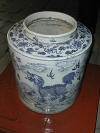
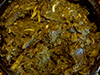
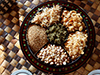
%20นกหัวขวานเขียวป่าไผ่_small.jpg)

%201_small.jpg)
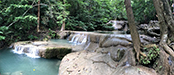
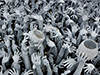
_small.jpg)

_small.jpg)
_small.jpg "sand paintings")
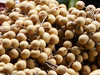
%201_small.jpg)

_small.jpg)

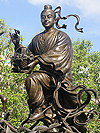
_small.jpg)
2_small.jpg)
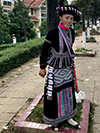
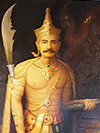
%204_small.jpg)
_small.jpg)
_small.jpg)
_small.jpg)
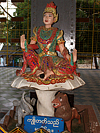
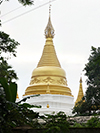
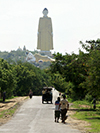

_small.jpg)
_small.jpg)
%20ผีเสื้อแพนซีสีตาล_small.jpg)
%20เสือดาว_small.jpg)
_small.jpg)
_small.jpg)
_small.jpg)
%20long%20fingernail%20Thai%20dance_small.jpg)
%201_small.jpg)
%20นกกระปูดเล็ก_small.jpg)
%20กระจงหนู_small.jpg)

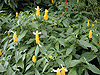
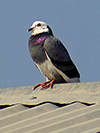
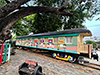
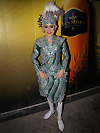
%203_small.jpg)
_small.jpg)
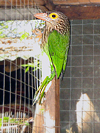
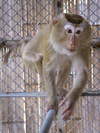
%20ลิงแสม_small.jpg)
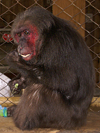
%20ลิงวอก_small.jpg)
%20ลิงวอกภูเขา_small.jpg)
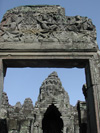
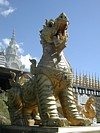
%201_small.jpg)
%20Annato,%20Urucum,%20Achiote%201_small.jpg)
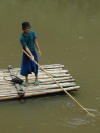
%20Iron-Crutch%20Li%203_small.jpg)
%201_small.jpg)
_small.jpg)
%201_small.jpg)
%201_small.jpg)
%201_small.jpg)
_small.jpg)

_small.jpg)

_small.jpg)
_small.jpg)

,%20Borneo_small.jpg)
_small.jpg)
%201_small.jpg)
%201_small.jpg)
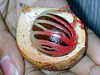
%20Thai%20meat%20or%20fish%20balls_small.jpg)
%20immature%20inner%20seed%20of%20Arenga%20Palm%20fruit_small.jpg)

%203_small.jpg)
%201_small.jpg)
_small.jpg)
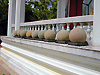

%20pulley_small.jpg)
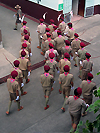
%201_small.jpg)
%20green%20jelly-like%20rice%20flour%20dumplings_small.jpg)
_small.jpg)
_small.jpg)
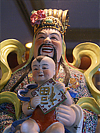
_small.jpg)

_small.jpg)
_small.jpg)
_small.jpg)
_small.jpg)
%20Chow%20Seu%20(โจวซือ)_small.jpg)
_small.jpg)
_small.jpg)
_small.jpg)
,%20flowerhorn,%20luohan,%20cichlidae_small.jpg)
%20หล่อฮั้นก๊วย%202_small.jpg)
_small.jpg)
_small.jpg)
%20นกพิราบอกแดงลูซอน%201_small.jpg)

_small.jpg)
%201_small.jpg)