|
paang (ปาง)
See
pahng.
回
Pacific Reef Egret
Common name
for a large wading bird, with the binomial designation Egretta sacra.
READ ON.
回
pad (พัด)
Thai.
‘Fan’. Of old an utensil of the Far East. See also
punka.
回
pad bai kapho (พัดใบกะพ้อ)
Thai.
A small, round to heart or
lotus-shaped fan, with a short handle, and woven from
the dried leaves of the fan palm.
READ ON.
回
pad bai laan (พัดใบลาน)
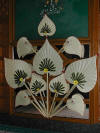
Thai. Fan made of the leaf of a
species of palm called Corypha lecontei, which is similar to the sugar palm or
ton taan.
In
China,
similar palm-fans known as
bajiao shan, are often exquisitely decorated
with typical Chinese patterns and designs, and used as decorative items (fig.).
It is an
attribute of
Phra Malai and
Shin Thiwali.
回
pa daek (ປາແດກ)
Lao for
pla daek.
回
pad daam jiw (พัดด้ามจิ้ว)
Thai. A folding fan
(fig.).
Traditionally made in
Chiang Mai in North Thailand and usually painted with scenes of Thai landscapes or ornamental motifs.
The folding fan originated in Japan
in the 8th century and was taken to
China
in the 9th century by a
Japanese monk who had brought some folding fans to China as an offer to the
Emperor. See also
fan.
回
_small.jpg)
paddy
Name for rice in the husk, before
threshing it, as well as for a field where rice is grown.
回
Paddyfield Pipit
Common name for a small passerine bird in the pipits and wagtail family
Motacillidae, and with the scientific designation Anthus rufulus.
READ ON.
回
pad lek (พัดเหล็ก)
Thai for ‘iron fan’. See
tessen.
回
padma
(पद्म)
Sanskrit. ‘Lotus flower’,
i.e. a
pink lotus. White, red and blue lotuses are called differently, i.e.
pundarika,
kamala, and
utpala, respectively.
In general, the lotus is a symbol in Indian culture associated with purity, creativity and fertility,
and the padma or pink lotus is generally reserved for the highest deities and
the
Buddha himself. In
Buddhism,
it is a symbol of
Enlightenment. In
iconography
the lotus is often used as a pedestal for
Buddha images
or a base for Hindu
deities. See also
pathum and
Padma.
回
Padma
(पद्म)
Sanskrit. Another name for the Hindu goddess
Lakshmi, in her form as
‘mother of the earth’. See also
padma.
回
_small.jpg)
Padmapani
(पद्मपाणि)
Sanskrit. ‘Lotus in the hand’. The
bodhisattva
Avalokitesvara in his appearance as creator, depicted with many small figures that emerge from his body and represent all beings, gods, and buddhas over whom he has the power to create. See also
Radiating Avalokitesvara.
回
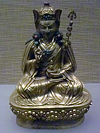
Padmasambhava
(पद्मसम्भव)
Sanskrit. Name of a
deity considered to be an emanation of the
Amitabha
Buddha and worshiped in
Vajrayana
Buddhism and
Lamaism. He is also
known as
Guru
Rinpoche, among many other
appellations.
回
padmasana
(पद्मसन)
Sanskrit. ‘Lotus throne’. The seated pose of a divinity (asana) with crossed legs forming a circular space resembling an open
lotus. See also
pathum and
padma.
回
Padong (ปะด่อง)
One of the subgroups of the
Longneck Karen in Thailand, originally from Burma. They live principally in the province of
Mae Hong Son.
回
padwaanlawichanih (พัดวาลวีชนี)
Thai. ‘Royal
Fan and Yak's
Tail’ or ‘Royal Fan and
Fly Whisk’. Part of the Thai royal regalia or
kakuttapan.
These are symbolic items that the king uses to ward off any peril that may
befall his people. During the reign of king
Rama I the fly
whisk was made from yak hair, but this was changed during the reign of king
Mongkut
(Rama IV),
replacing it with the tail-hair of a
White Elephant,
a tradition that still lasts today.
回
pad yot (พัดยศ)
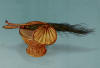
Thai. ‘Fan
of rank’. A kind of fan attached to a stick
and used in certain religious and in royal ceremonies.
READ ON.
回
Pae Kong
(แป๊ะกง)
Thai-Chinese. Another name for the Tae Chew
deity
Peung Thao Kong (fig.).
回
_small.jpg)
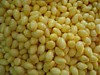
pae kuay (แป๊ะกวย,
แปะก๊วย)
Thai-Chinese
name for
the
Ginkgo biloba
(fig.),
as well as for it seed, i.e. a kind of a semi-large bean
with a hard nut-like shell (fig.).
When peeled it is of a yellowish colour and used in soups as well as in
rice
dishes. In English the seeds are known as ginkgo nuts, after the tree they grow on.
This tree, which is found in China, is a unique species
of tree, with no close living relatives and thus classified as a single species
in its own family, i.e. Ginkgoaceae. Ginkgo nuts are often seen for sale in bulk
on markets around
Bangkok's
Chinatown. Also spelt pae guay.
回
paeng dinsoh phong (แป้งดินสอพอง)
Thai. Name for marl powder, a type
of powder that is made from limestone which is fired into a white clay and then
dissolved in water and filtered to create a fine powder. When mixed with water,
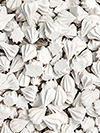
it becomes a cream-like consistency that can be applied to the face and body (fig.).
It is used during
Songkraan as
a long-standing
tradition to show respect to elders and for fun during the water festival.
Dinsoh phong also has skin-nourishing properties and provides a cooling effect,
making it a refreshing relief during Thai new year, which coincides with the
peak of Thailand's hot season. During Songkraan, marl is typically sold in dried
form shaped into small rosette-like swirls or rocks (fig.).
回
paengman (แป้งมัน)
Thai name for
tapioca starch, starch of the
cassava.
回
pae
riyan (แปะเหรียญ)
Thai. ‘To paste coins’ or ‘to stick coins’.
Name for a kind of tradition or form of
tamboon
in which worshippers or visitors to certain places of worship, leave or stick
coins onto an object of reverence (fig.),
such as a
Buddha image
(fig.),
or an object in its vicinity. Also transliterated pè rian or similar.
回
_small.jpg)
Paet Riw (แปดริ้ว)
Thai. ‘Eight lines’ or
‘eight stripes’. A nickname for
Chachengsao (fig.),
that derives from a story which relates that the city's river (fig.) once teemed with giant snake-head fish that
needed up to eight cuts (paet riw -
fig.) on each
side, to make it into sun-dried fish.
回
paga (ਪੱਗ)
Punjabi
name
for
the Hindi term
pagri,
meaning ‘turban’.
回
Pagan
(ပုဂံ)
1. For 230 years the capital of
Burma and the city of Burma's Golden
Era,
between the 11th and 13th centuries AD. Its earliest edifice dates from the late ninth century and it was probably founded in 849 AD by the Burmese who lived on the irrigated
rice lands of the Mandalay region
(fig.), after the collapse of the earlier
Pyu
Period. The city was eventually abandoned subsequent to the invasion of Kublai Khan in 1287,
and in 1297, the remaining regime was toppled by the three brothers who
co-founded the
Myinsaing
Kingdom. There are still around 2,217
pagodas among the remains of another 2,000 temple ruins,
as well as
the Bagan Archaeological Museum (map
-
fig.).
Originally, the walled city had twelve gates, but the western and northern parts
of the city wall were washed away by the
Irrawaddy River
(fig.)
and the
Tharabha
Gate, i.e. the main gate of the east wall, is today the only
near-intact gate of the old city (map
-
fig.).
Among the more important monuments and places of interest are
Alodawpyi Phaya
(map
-
fig.),
Ananda Phaya (map
-
fig.),
Buphaya (map
-
fig.),
Dhammayangyi Phaya (map
-
fig.),
Dhammayazika Phaya (map
-
fig.),
Gu Byauk Gyi Zedi Myinkaba
(map
-
fig.),
Gu Byauk Gyi Zedi Wetkyi-in (map
-
fig.),
Htilominlo Phaya (map
-
fig.),
Kyaukgu Umin (map
-
fig.),
Lawkananda Zedi (map
-
fig.),
Maha Bodhi Phaya (map
-
fig.),
Mahazedi
Pagoda (map
-
fig.),
Mahuna Phaya (map
-
fig.),
Myazedi Phaya (map
-
fig.),
Nan Phaya Kyaung (map
-
fig.),
Nathlaung Kyaung (map
-
fig.),
Ngakywenadaung (map
-
fig.),
Kyauk Sa Ga Gyi Phaya (map
-
fig.),
Phaya Thonzu
(map
-
fig.),
Pitaka Taik (map
-
fig.), Pottery Hill (map
-
fig.),
Pya Tha Gyi Phaya (map
-
fig.),
Sabbannu Phaya
which is also known as
Thatbyinnyu Phaya (map
-
fig.) and its
Tally Temple (map
-
fig.),
Shwegugyi Phaya (map
-
fig.),
Shwezigon Phaya,
Bagan
(map
-
fig.),
Sulamani Phaya
(map
-
fig.),
Tantkyitaung Zedi (map
-
fig.),
Gawdawpalin Phaya (map
-
fig.), Thambula Temple (map
-
fig.),
Mingala Zedi (fig.),
Tabatkya Zedi (map
-
fig.),
Shwesandaw Phaya (map
-
fig.)
and
Tuyintaung Zedi (map
-
fig.).
See also
Pegu and
Hongsawadih.
See MAP.
回
%201_small.jpg)
2. Art style
from the period and region of Pagan, and amply on display at the Bagan
Archaeological Museum in Old Bagan (map
-
fig.).
回
3. Name of
the 9th King of the Konbaung
Dynasty of
Burma,
who reigned from 17 November 1846 to 18 February 1853, when he was forced to
abdicate by his
half brothers
Mindon Min
(fig.)
and
Kanaung
(fig.),
in favour of the former. To avoid confusion with the Burmese capital described
above, he is usually referred to as Pagan Min (ပုဂံမင်း), i.e. ‘King Pagan’.
回
Pagan
Min (ပုဂံမင်း)
Burmese for ‘King
Pagan’.
回
pagoda
1. A temple, religious or sacred tower,
usually in a tapering shape and consisting of several stories, and found in
Burma,
China,
Vietnam (fig.), Korea and Japan.
Its form is often octagonal, which corresponds to
the
Eightfold Path
in
Buddhism, and it usually has an odd number of stories, as this
corresponds with the
yang
principle of the
yin-yang
concept, i.e. the bright aspect, which relates to
Enlightenment
and thus in turn also to heaven.
Similar to and sometimes used as a translation for the Thai word
chedi,
along with the word
stupa.
It may also refer to an idol
found in such a temple or tower.
In Thai known as
tha.
回
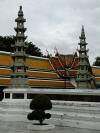
2. Idol found in such a temple.
回
3. In
Vietnam, a temple in
Mahayana Buddhism.
回
4. In
Myanmar,
term used generally to refer to a temple and its compound, that is any temple,
whether it has an actual pagoda,
i.e. a sacred tower (zedi
or
stupa),
or not. In this manner it is similar as described above, i.e. an idol found in a
temple. In Burmese referred to as
Phaya.
回
pagri (पगड़ी)
Hindi. ‘Turban’. Name of a shawl-like piece
of cloth, that is worn as a kind of headwear, manually wound around the top of
the head of men in India.
READ ON.
回
pah chok (ผ้าจก)
Thai. Name for
a kind of traditional cloth (fig.) from Central Thailand, which is produced by using
the
chok weaving technique (fig.). It is typically woven
from
silk or cotton, or from a
combination of both. Also transcribed phah jok.
回
_small.jpg)
pah gohng gahng (ป่าโกงกาง)
Thai name for
mangrove woods.
回
pah hahd siao (ผ้าหาดเสี้ยว)
Thai. Name for
a kind of fabric with different patterns, woven with the use of a supplementary weft
technique. It is a product from
Sri Satchanalai, where it is traditionally
woven by the
Thai Phuan.
回
pah kahsahwapad (ผ้ากาสาวพัสตร์)
Thai. The
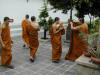
saffron −or alternatively, ochre to brown− coloured robe for Buddhist monks. Within the temple compound this robe covers only one shoulder, but when monks go outside they usually cover themselves completely (fig.). When working (fig.) they wear a lighter shirt called
angsa (fig.).
In both
Buddhism and
Hinduism, saffron and ochre are colours
that symbolize renunciation. Also
kahsahwapad. See also
traijiewon.
回
pahkaomah (ผ้าขาวม้า)
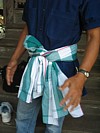
Thai. Multi-functional loincloth usually worn around the waist by farmers (fig.), when not used. It serves as a
sarong,
a loincloth for bathing in the open or as a headscarf but may also be applied as
an improvised bag and sometimes even to cook food in.
回
pah khit (ผ้าขิต)
Thai.
‘Khit cloth’. Name for an ancient type of hand-woven cloth
(fig.), which is produced in certain areas
of
Isaan.
It typically uses geometric patterns
in contrasting colors, usually a darker pattern over a light background, often
with the colours red, purple and
dark green. Formerly this style of cloth was used in the traditional household
dress of the area, like shoulder cloths, but also to make pillows that are
generally known as
mon khit, etc. In the
past it was customary for Isaan girls to learn to weave khit cloth before
getting married. There are
about 72 different patterns, each with its own specific designation. In 2004,
some of those patterns (fig.)
were publicized on a set of four Thai postage stamps (fig.).
回
%20Isaan%20hand-woven%20cloth_small.jpg)
Pahk Khlong Talaat (ปากคลองตลาด)
Thai. ‘Canal Mouth Market’ or ‘Market at the
Mouth of the Canal’. Name of the biggest wholesale and retail fresh flower
market in
Bangkok.
READ ON.
回
pahk nahm (ปากน้ำ)
1. Thai. ‘Water mouth’. Designation for the estuary of a river, as well as the
end or confluence of any other waterway, such as a canal, etc. Sometimes transliterated Paknam, as in
Paknam Incident.
回
2. Thai. Nickname for the city of
Samut Prakan,
which is located at the estuary of the
Chao Phraya
River. Sometimes transliterated Paknam, as in
Paknam Incident.
回
3. Thai. Name of a
tambon
in the
amphur
Sawankhalok,
in the province of
Sukhothai
(fig.).
See also POSTAGE STAMP.
回
pah krahb (ผ้ากราบ)
Thai. ‘Prostrating cloth’. A piece of cloth placed in front of an altar or
Buddha image for resting one's hands and head while praying.
This 25 by 50 centimetre
yellow cloth is mainly used by -especially newly ordained- monks and novices
and is often seen attached to their
traijiewon.
回
pah mai saket (ผ้าไหมสาเกต)
Thai name
for an ancient pattern on
silk cloth
from
Roi Et,
made (fig.)
with the
matmi
thechnique (fig.).
It is mainly pinkish to violet in colour and has a very detailed pattern, using
colours that usually include white and gold. Also transcribed pha mai saket and
sometimes called pah mai laai saket.
回
%20mudmee%20(ikat)_small.jpg)
pah leh laai (ป่าเลไลย์)
See
Parileyyaka and
pahng pah leh laai.
回
pahng (ปาง)
Thai. The attitude, position, pose or style of a
Buddha image, e.g. as used in the
Phra prajam wan system. Also
paang and similar
to the term
tha, yet the latter is
more frequently used to indicate
the attitude or pose in
traditional dance.
回
pahng bamphen
thukkarakiriyah (ปางบำเพ็ญทุกรกิริยา)
Thai-Rajasap.
‘The
pose of practicing suffering’ or ‘the attitude of observing mortification’. A style of
Buddha image in the attitude of mortification (fig.).
READ ON.
回
pahng chan samoh (ปางฉันสมอ)
Thai-Rajasap.
‘Position of eating the gall-nut
fruit’. Buddha image seated in the
half lotus position with his left hand in his lap and with his right hand placing the gall-nut fruit (samoh) in his mouth to eat (chan). The Buddha sits enjoying happiness under a tree during the seventh week after his
Enlightenment when in the morning
Indra offers him the samoh, the medicinal fruit of the gall-nut tree, a tree of the genus
Terminalia. An alternative pose referring to the same narrative is called
pahng rab (phon) samoh and shows the Buddha accepting the fruit with his right hand. Also pahng chan phon samoh.
回
pahng hahm phra kaen jan (ปางห้ามพระแก่นจันทน์)
Thai-Rajasap.
‘Position of stopping the
sandalwood
Buddha image’. Buddha image in a standing pose with a
abhaya
mudra corresponding to Monday in the
Phra prajam wan system. In this pose the left hand is raised with the palm forward as if making a stopping sign and it refers to a scene when the Buddha returned from
Tavatimsa
heaven. When the Buddha was away king Udayana had a sandalwood replica made of him which he erected in a large hall in
Sravasti. On his return this Buddha image greeted the Buddha in a miraculous manner, but the Buddha stopped this by raising his left hand ordering the image back to its place to enable it to serve as an example for the making of other images after his death. A variation of this is the abhaya mudra with the right hand raised, known as
pahng hahm yaht. Only in Thailand there exists yet another variation in which the Buddha has two hands raised in front of him with the palm forward (fig.), known as the pose of ‘calming the waters’, in Thai
pahng hahm samut.
回
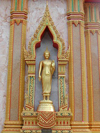
pahng hahm samut (ปางห้ามสมุทร)
Thai-Rajasap.
‘Position of stopping the ocean’ or ‘calming the waters’.
Buddha image in a standing pose with an
abhaya
mudra performed with two hands, a pose found only in Thailand. This pose correspond with Monday in the
Phra prajam wan system and refers to an episode where the Buddha calmed the flood waters of the Nairanjana River, a tributary of the
Ganges in North India. See also
pahng hahm yaht and
pahng hahm phra kaen jan.
回
pahng
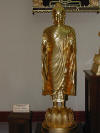
hahm yaht (ปางห้ามญาติ)
Thai-Rajasap.
‘Position of stopping the relatives’ or ‘calming the relatives’.
Buddha image in a standing pose with an
abhaya
mudra corresponding to Monday in the
Phra prajam wan system. In this pose the right hand is raised with the palm forward, as making a stopping sign. It refers to an episode where the
Buddha returning from
Tavatimsa
heaven after an absence of three months stopped a quarrel among his relatives over the rights for water of a river flowing through their land. He arbitrated between blood relatives, of both his father and mother, forcing them to make a compromise and share the water. See also
pahng hahm phra kaen jan
and
pahng hahm samut.
回
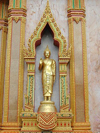
pahng hyieb lohk (ปางเหยียบโลก)
Thai.
‘Posture of stepping on the world’.
Name of a rather unique and rare
Buddha image
in a standing pose with one foot on a globe,
stepping on the
world,
subduing it.
回
pahng kho fon (ปางขอฝน)
Thai. ‘Position of requesting for rain’.
Buddha image in a seated or standing pose in which the right hand is held forward on chest level with the finger tips pointing forward or upward and the left hand is bent in front of the waist with the palm
upward as if forming a bowl. This pose is related to the
pahng song nahm pose and refers to a scene in which the Buddha calls for rain after a long period of drought.
In some images the head of the Buddha is lifted upward, as if looking at the sky
in anticipation of the coming rain (fig.). See also
gandharattha.
回
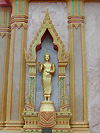
pahng leelah (ปางลีลา)
Thai-Rajasap.
‘Attitude of the
gracefully procession’.
Thai designation for a
walking Buddha.
Also spelled paang lihlaa. See
also
Leelah.
回
pahng nahg prok (ปางนาคปรก)
Thai-Rajasap.
‘Position of the overspreading
naga’.
Buddha image seated in meditation on the coiled body of the
naga
Muchalinda that uses its head as a cover against rain. This pose refers to a scene during the sixth week after
Siddhartha's
Enlightenment, when the naga king protected the
Buddha, who was
in deep
meditation under a
Taengwood Tree, against heavy rainfall by making a shelter with his multi-headed hood and lifted him above the flood waters by coiling its body under him. According to some old texts it coiled its body around the Buddha
(fig.). This pose corresponds with Saturday in the
Phra prajam wan system. Occasionally represented with the Buddha seated in a
bhumisparsa
pose (fig.),
a pose often found in
Myanmar (fig.),
where the overspreading naga is also
found depicted over a standing Buddha (fig.).
Besides this, it may also refers to
Vishnu, of
whom the Buddha is an avatar, and who is also often represented seated (fig.)
or reclining on the giant
snake
Ananta, e.g.
Anantasayin (fig.).
See also POSTAGE STAMP.
回
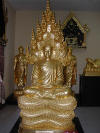
pahng pah leh laai (ปางป่าเลไลย์)
Thai-Rajasap.
‘Position of
Parileyyaka (pah leh laai) [forest]’.
Buddha image in a pose seated in western style with a monkey and an elephant in the front. This image corresponds with Wednesday during night-time in the
Phra prajam wan system. The pose refers to a scene in Kausambi during the tenth year after the Buddha's
Enlightenment, when the disciples were quarreling amongst themselves causing the Buddha to retire in the forest, searching for calm. A monkey then brought him honey to eat and an elephant, water to lessen his thirst. This pose is also called
Rahu (compare with Rahu
in the Indian
Phra prajam wan system -
fig.).
See also TRAVEL PICTURES.
回
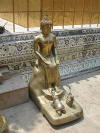
pahng pathom thetsanah (ปางปฐมเทศนา)
Thai-Rajasap.
‘Position of the first sermon’.
Name for
Buddha image
in a seated pose, that
symbolizes the
Buddha's first public discourse of his
doctrine which was given to five ascetics at
Mrigadava, a deer park in Sarnath,
edifying the
panjawakkih,
in
iconography
depicted with a
mudra or gesture
known as
dhammachakka
and
vitarka. The largest Buddhs statue in
the world portrayed in this position is situated in a giant hall at
Wat Phraphuttha Saengtham in
Saraburi
(fig.).
WATCH VIDEO (1)
and
(2).
回
pahng peut lohk (ปางเปิดโลก)
Thai-Rajasap.
‘Position of opening the world’.
Buddha image in a standing pose,
with the arms pendent alongside his body,
the forearms lifted slightly outwards and the palms turned forwards.
READ ON.
回
pahng phijahranah
chara tham (ปางพิจารณาชราธรรม)
Thai-Rajasap.
‘Position of meditating on the
dhamma of aging’.
Buddha image seated in the
half lotus position,
with both hands resting on the knees, the palms down. In English it is usually
called the Consider the Great Truth pose, but also referred to as the pose of
Considering Old Age. The pose relates to the final year of his life, when the
Buddha stopped at a place near Vulture's Peak, known as Veluvana. Aged eighty
and seriously ill, the Buddha preached to his disciple
Ananda on physical decay, explaining him the Law (Dhamma) of Old Age, i.e. that
sickness, old age and death are inevitable to all creatures, describing his body
as an old cart which must be repaired with
bamboo, and bundled up with
narrow strips of leather. The pose is confusingly similar to
pahng rab matoop yaht,
in which a
Buddha image seated in the
half lotus position, has both hands resting on the knees, the palms up.
回
_small.jpg)
pahng plong kammatahn (ปางปลงกรรมฐาน)
Thai-Rajasap.
‘Position of meditating (kammataan) on the cremation or disposal of [a corpse] (plong)’.
Buddha image in a standing pose with a walking stick hanging from his left hand and his right arm pointing downward, the hand slightly forward as if making a gesture, although the positions of the right hand and arm may vary slightly,
and sometimes he is holding the walking stick with his left hand (fig.),
rather than letting it hang from the hand. It refers to the scene in which the Buddha meditates beside the corpse of a girl in Sawatthi on the nature of phenomenal existence and its cessation. Afterwards he took the girl's shroud and made it into a monastic robe thus symbolizing the transience of life.
回
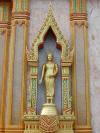
pahng prathan phon (ปางประทานพร)
Thai.
‘Position of giving a blessing’ or ‘blessing pose’.
Buddha image,
usually seated in western style, with one hand held up the thumb and index
finger touching or nearly
touching, while the other arm is held down with hand palm
up and the elbow in L-shape, a pose somewhat similar to certain depictions of
the
varada
mudra (fig.).
A famous Buddha image in this pose is known as
Luang Pho Prathan Phon (map
-
fig.),
and is found in many places around the nation, such as at the
Phra Pathom Chedi
in
Nakhon Pathom and at
Wat Phanan Choeng
in
Phra Nakhon Sri Ayutthaya.
Occasionally, Buddha statues
in the blessing pose may be seated in the
lotus position,
such as the
Maha Pathimakorn (มหาปฏิมากร) Buddha statue
at
Wat Phrathat Doi Saket
in
Chiang Mai.
回
_small.jpg "Balu-Simha motif")
pahng prathap yeun (ปางประทับยืน)
Thai.
‘Position of standing at ease’.
Buddha image
in a standing pose with both arms hanging passively alongside the body and the eyes downcast. In this pose the Buddha stands quietly before commencing his duties thus reflecting his complete awareness of what he is doing.
回
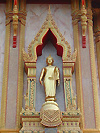
pahng proht Alavaka yak (ปางโปรดอาฬาวกยักษ์)
Thai.
‘Position of preaching to the
yak
Alavaka’.
Buddha image
in a seated pose, with the left hand on his lap and the
right hand raised
in front of the chest with the fingers folded, as in the preaching manner. It is
the Buddha image worshipped by people that are born in the year of the
rat.
回
_small.jpg)
pahng proht sat (ปางโปรดสัตว์)
Thai.
‘Position of preaching to living creatures’.
Buddha image as the guardian of animals,
in a standing pose with
the right hand raised and palm forward,
similar to the
abhaya
mudra, whilst
the other hand is raised and stretched outward with the palm up
(fig.).
The pose refers to a scene in the life of the Buddha when he stayed in a
mango
grove near
the city of Nalantha (นาลันทา)
and told Asiphanthabut (อสิพันธบุตร)),
a local headman, that he always extends loving-kindness to all living creatures
and taught the
dhamma
thoroughly, without any
prejudice to any human being, including people from other religions.
回
pahng rab matoop yaht
(ปางรับมธุปยาส)
Thai.
‘Position of accepting
rice
porridge’.
Fame for the pose of a
Buddha image seated in the
half lotus position,
with both hands resting on the knees, the palms up. It refers to the episode in
the Buddha's life before his
Enlightenment,
when he accepted milk-rice or rice
porridge from a young, rich and beautiful milkmaid named
Sujata.
The pose is confusingly similar to
pahng phijahranah chara tham, in which a
Buddha image seated in the
half lotus position, has both hands resting on the knees, the palms down.
回
_small.jpg)
pahng rab samoh (ปางรับสมอ)
Thai.
‘Position of accepting the gall-nut fruit’.
Buddha image
seated in the
half lotus position with his left hand in his lap and his right arm extended to accept (rab) the gall-nut fruit (samoh). The Buddha sits enjoying happiness under a tree during the seventh week after his
Enlightenment when in the morning
Indra offers him the samoh, the medicinal fruit of the gall-nut tree,
a tree of the genus
Terminalia. An alternative pose referring to the same narrative is called
pahng chan (phon) samoh and shows the Buddha placing the fruit in his mouth with his right hand. Also pahng rab phon samoh.
回
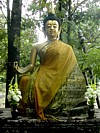
pahng ram peung (ปางรำพึง)
Thai.
‘Position of reflecting or thinking in retrospect’.
Buddha image in a standing pose with both hands crossed over the chest, meaning
‘contemplation’, ‘consideration’ or ‘retrospective thinking’. This pose refers to a scene in which the Buddha contemplates the subtle nature of
dhamma and ponders on how to reveal this to mankind. This happened after the visit of the two merchants Tapussa and Bhalika came to pay their respects. The Buddha considered that his teachings may be understood better by some than by others. He compared this with the image of
lotus
flowers,
of which some are already flourishing above the water while others are still below the surface awaiting their bloom. The pose of this image corresponds with Friday in the
Phra prajam wan system.
A variety exists in which
both hands are crossed over the
belly
rather than over the chest (fig.).
See also POSTAGE STAMP.
回
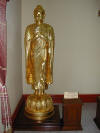
pahng saiyaat (ปางไสยาสน์)
Thai.
‘Position of sleeping or reclining’.
Buddha image in a reclining pose.
READ ON.
回
pahng samahti (ปางสมาธิ)
Thai.
‘Position of meditation’.
Buddha image in
the seated pose of concentration or meditation, similar to the
dhyani
mudra. It refers to a higher form of meditation and corresponds with Thursday in the
Phra prajam wan system, associated with teachers, lawyers and judges. See also
samaddhi.
回
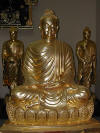
pahng song nahm (ปางสรงน้ำ)
Thai-Rajasap.
‘Position of having a bath’.
Buddha image
in a standing pose with a bathing cloth over the left shoulder and the right hand in front of the chest, as if throwing rain water over himself. The left arm hangs passively alongside the body. This pose refers to a scene that happened in
Kosala
district at
Sravasti, in India. After receiving many
meagre meals in his
alms bowl during a protracted period of drought the Buddha pitied the population and asked his disciples for a bathing cloth near a
lotus pond in the garden of Jetavana. When he started to walk in the direction of the pond it began raining and the Buddha washed himself with rainwater. See also
pahng kho fon.
回
pahng tawaai naet (ปางถวายเนตร)
Thai-Rajasap.
‘Position of dedicating (tawaai) [with] the eyes’.
Buddha image in a standing pose with the arms crossed in front of the waist, the right hand resting on the left. It refers to a scene just after the Buddha's
Enlightenment when he, according to legend, admired the
bodhi tree in gratitude for a whole week without even blinking his eyes (naet). During this event the Buddha was in a state of bliss in which he realized the triviality of all foregoing in his life and contemplated on the suffering of all living things, including the bodhi tree. This image corresponds with Sunday in the
Phra prajam wan system and its name may also be translated as
‘the open-eyed posture’. It is also known as the ‘position of standing in
pensive thought’.
回
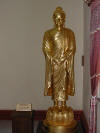
pahng thukkarakiriyah (ปางทุกรกิริยา)
Thai-Rajasap.
‘Position of mortification’ or ‘attitude of suffering’. A bearded
Buddha image
in a seated,
meditation
pose with a thin, emaciated body (fig.).
The image refers to a scene in which
Siddhartha and the
panjawakkih
practiced extreme asceticism
for six years in a place near the village of Uruvela. He tried to bring his body
and passions into subjection by self-denial but his extreme mortification almost
resulted in his death, following the idea of
Mahavira, who taught that anyone who
overcame his desires would be prepared to fast to death (fig.),
hence he consumed just one grain of rice per day, until
Suchada eventually offered
him a bowl of milk-rice porridge, thus ending his six years of asceticism.
Afer this, he concluded that
there is a
middle path
between austerity and worldliness and abandoned his mortification. Also called
pahng bamphen
thukkarakiriyah.
回
_small.jpg)
pahng um baat (ปางอุ้มบาตร)
Thai-Rajasap.
‘Position of carrying the
alms bowl (baat)’.
Buddha image in a standing pose holding an alms bowl with both hands. This image corresponds with Wednesday during daytime in the
Phra prajam wan system. This pose refers to the first morning in
Kapilavasthu on the Buddha's first visit to his father's palace. In the early morning he went to beg for food among the subjects of his father since nobody had actually invited him for breakfast, although they had received him the night before and had prepared breakfast. Tradition however does not allow mendicant monks to ask for food but eat whatever they are offered by believers.
回
_small.jpg)
pah nung (ผ้านุ่ง)
Thai.
‘To
wear a cloth as a lower garment’. Name
for a traditional
sarong-like
garment for both women and men, especially in the past.
READ ON.
回
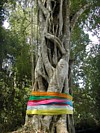
pah phrae mongkhon (ผ้าแพรมงคล)
Thai name for a piece of
‘silk’ cloth in several different colours used in elemental worship and tied
around objects, either to worship or for protection, such as the bow of a boat
or a tree, the latter two often in order to worship or appease
naang mai,
i.e. female spirits that inhabit
trees. In spite of its name this cloth is usually not made of silk
(phrae)
but is rather of a
synthetic fabric. See also
hom pah
and
TRAVEL PICTURE.
回
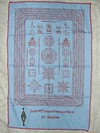
pah prachiad (ผ้าประเจียด)
Thai. Piece of cloth with
yan numbers and
sacred script, used as a charm to make someone invulnerable. Often red but appears also in others colours.
Also known as
pah yan. See also
prachiad.
They are often placed above door lintels to bless anyone entering or leaving the
house. In Nepal and Tibet, similar pieces of cloth are used as
prayer flags. They
are put out in the open and the wind will send the prayers written on them out
in the world, a principle similar to the Tibetan
prayer wheel.
回
pah
sompak (ผ้าสมปัก)
Thai name for a kind of royal
sarong-like
garment, similar to the traditional
pah nung, but of a high,
brocade-like
quality and given to the nobles according to their position.
READ ON.
回
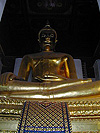
pah thip (ผ้าทิพย์)
Thai.
‘Celestial or heavenly cloth’. Ornament or decorated piece of cloth hanging in front of a pedestal. It is part of the pedestal and made from the same material. Usually with seated Buddha images or other seated deities.
回
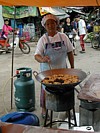
pah thong goh (ปาท่องโก๋)
Thai-Chinese. Name of a wok-fried pastry which, prior to consumption, is usually dipped in soya milk (nahm
tao hoo), sweet and sour milk, or coffee. When fried the dough becomes of a golden colour and swells into a quaint curved x-shape.
Sometimes translated as Chinese donut.
WATCH VIDEO.
回
pah tihn jok (ผ้าตีนจก)
Thai. Piece of cloth with a decorative pattern,
woven with
silk and
used as part of skirt-like dress. The pattern often has embroidery, made
with golden or silver braid or tinsel in the form of a thread, which is woven
with intervals, resembling falling rain. Also transcribed pha teen chok, or
similar. See also
pah nung.
回
pahtimohk (ปาติโมกข์)
Thai. The code of 227 precepts for a Buddhist monk. See also
Buddhist precepts.
回
pahto (ပုထိုး)
Burmese. Architectural term used for a
stupa
with a vaulted base, as found in early
Bagan
style temples, especially so-called
gu or
cave temples, such as
Pahtothamya Gu Phaya
(fig.). It is
pronounced pahtu or pahtoe,
rather than patho, what the given transliteration suggests.
回
Pahtothamya Gu Phaya (ပုထိုးသားများဂူဘုရား)
Burmese. Name of a temple in Old
Bagan.
READ ON.
回
pah wai (ผ้าไหว้)
Thai. Cloth or clothes offered by a groom to his parents in law, after a wedding ceremony.
回
pah yan (ผ้ายันต์)
See
pah prachiad.
回
pah yok (ผ้ายก)
Thai name for
brocade.
回
pai (ไพ)
Thai. An obsolete coin equal to three
satang.
回
paifang
(牌坊)
Chinese.
‘Memorial archway’ or ‘signboard archway’. Name of a traditional Chinese-style
architectural edifice in the form of a decorated archway.
READ ON.
回
paijayon (ไพชยนต์)
Thai. Name for
Indra's abode, banner and vehicle.
回
Painted Bronzeback
Another
designation for the
Common Bronzeback.
回
Painted Copperleaf
See
hoo plah son.
回
Painted Jezebel
Common name
for a medium-sized butterfly, with the binomial name Delias hyparete.
READ ON.
回
Painted Stork
Common name for a large wading bird, with the scientific
designation Mycteria
leucocephala.
READ
ON.
回
pa-kahrang (ปะการัง)
Thai
generic designation for
‘coral’, i.e. both solitary and colonial
marine invertebrates that develop from coelenterate organisms and consist of a
deposit of calcium carbonate, with the coelenterate animal producing a
calcareous skeleton and polyps. Over time the coral develop into coral rocks and
coral islands, thus creating a coral reef. There are many different kinds, each
with its own varieties, including
Sea Whips or Sea Fans
(fig.),
Brain Corals
(fig.),
Flower Pot Corals (fig.),
Mushroom Corals
(fig.),
Flower Corals
(fig.),
Bubble Corals (fig.),
Common Lettuce Corals, etc.
回
pa-kahrang dokmai (ปะการังดอกไม้)
Thai
name for
Wonder Coral.
It is a compound of
pa-kahrang and
dokmai,
and can thus be translated as
‘flower coral’.
回
pak kae salak (ผักแกะสลัก)
Thai. The
culinary art of sculpturing
vegetables
into shapes and reliefs, usually in order to adorn banquets. It is
related to
fruit carving, which
is known in Thai as
ponlamai kae salak
(fig.),
though both arts are similar and their terms are often used interchangeably,
and
they
are very often practiced together (fig.).
Most commonly, larger-sized vegetables are
used, such as
pumpkins,
East Asian white radishes (fig.),
and
carrots.
Besides being merely decorative, the carved vegetables may in certain cases also
have a practical use, e.g. a carved
pumpkin, that
is hollowed out and used as a bowl
to
serve food
(fig.).
Also transcribed phak gae salak.
See also POSTAGE STAMPS.
回
_small.jpg)
Paknam Incident
A military engagement that took place during
the
Franco-Siamese War
near
Samut Prakan,
and is named after this city located at the estuary of the
Chao Phraya
River.
READ ON.
回
pak pao (ปักเป้า)
1. Thai. A ‘female’ kite that fights the
chula (fig.), the
‘male’ kite, during kite contests. The aim is to try and eliminate each others kite in the air. The pak pao has a diamond shape. See also
kite flying fights.
回
%20Thai%20female%20kite_small.jpg)
2. Thai for
‘globe fish’, ‘balloon fish’ or ‘puffer’ of the genus Tetraodon.
回
paksah (ปักษา)
Thai-Pali for
‘bird’, particularly used in literature, next to
paksi
and
paksin, all with the same meaning.
Mythological compound creatures with some features of a bird, often carry one of
the above designations in their name, e.g.
Kabin Paksah,
Kraison Paksah,
Asurapaksi,
Theppaksi,
etc.
回
paksi (ปักษี)
Thai-Pali for
‘bird’. Also transcribed paksih or paksee. See also
paksah.
回
paksin (ปักษิน)
Thai-Pali for
‘bird’. See also
paksah.
回
pak tob chawa (ผักตบชวา)
Thai for
water hyacinth.
回
Pak Thong Chai (ปักธงชัย)
Thai. ‘Victory Flag Planting’. Name of an
annual tradition in the
amphur
Nakhon Thai (นครไทย)
in
Phitsanulok,
which is hence also known as the
Nakhon Thai Flag Flying Festival. On the waxing moon of the 14th of the 12th
month, usually around November, the district organizes a big fair to celebrate
and display the unity of its people, who will parade specially made flags
through the village and then hike up Khao Chang Luang Mountain where they will plant
them on the summit. This is depicted on a Thai postage stamp issued in 2018 to
promote tourism in Phitsanulok (fig.).
回
Pala
(पाल)
1. Dynasty that ruled over the Bihar and Bengal regions in northern India, between the 8th and 12th centuries AD.
回
2. Name given to an art form between the 8th and 12th centuries AD from the North Indian empire of Bihar and Bengal.
回
paladkik (ปลัดขิก)
See
pladkik.
回
pa-ladkik
(ปลัดขิก)
See
pladkik.
回
palanquin
Indian style sedan chair with a hood and concealing curtains. Also
yahnamaht and
yahnumaht. See also
saliang and
kaanhaam.
回
Pale-chinned Flycatcher
Common name for a kind of Flycatcher, with the scientific designation Cyornis
poliogenys and a common resident in Nepal, below altitudes of 455 meters. It is about 18 centimeters large and has a
greyish head and a well-defined pale creamy throat. The breast is creamy-orange
and at the flanks, these colours merge with the whitish belly. Its upperparts are grey, which is darker on the sides.
回
%201_small.jpg)
Pale Grass Blue
Common name for a very small, about 26 to 30 millimeter-sized butterfly.
READ ON.
回
Pale Orb Weaver
Common name
for a small spider, with the scientific designation Araneus mitificus and which
is found in many countries of South, East, and Southeast Asia. READ ON.
回
Pali
An ancient language derived from Vedic
Sanskrit and used in the sacred texts of
Theravada or
Hinayana
Buddhism, contrary to Sanskrit which is used in
Mahayana
Buddhism. Pali
is the language of the Tipiṭaka, which is the sacred canon of
Theravada
Buddhism and contains much of the
Buddha's
speech. Closely related to Sanskrit, both languages are sometimes used
interchangeably between these religious sects.
Pali texts were originally recorded in Sinhala, the official script of Sri
Lanka, as well as in other scripts, such as
Khmer
and Burmese. Later also Mongolian, Thai and
Devanagari,
through to a Romanized form,
have been used.
回
palladium
1. A sacred image upon which protective and supernatural powers are bestowed.
回
2. Rare white metallic element used as a catalyst and in jewellery.
回
Pallas's Squirrel
Another name for the
Mountain
Red-bellied Squirrel.
回
Pallava
A Hindu dynasty in Southeast India that flourished between the 4th and 8th centuries AD usually classified as post
Gupta, from the 6th to 8th century AD, a significant period in art history.
回
palm hahng mah jing jok (ปาล์มหางหมาจิ้งจอก)
Thai for
‘Foxtail
Palm’.
回
Palong (ปะหล่อง,
ပလောင်)
Name of a hill
tribe people in Thailand, that originally come from Burma's
Shan
State (fig.).
READ ON.
回
Pa-mah (พม่า)
Thai name for
Burma, which
derives from
Bamar,
i.e. the name of the dominant ethnic group in
Myanmar, which is
Thai is similarly known as
Chao
Pa-mah.
回
Panaspati
(पनस्पति)
Sanskrit.
‘Lord of the jungle’ or ‘lord of the wilderness’. A form of
Shiva who offers protection against the dangers and demons of the jungle.
The term also refers to either a composite winged animal head or a
mythical animal that combines the
body of
Nondi
(Shiva's bull), the wings of
Hamsa (Brahma's
swan) and the head of the
Garuda
(Vishnu's
vehicle), sometimes assumed to be the same as
Brahmanaspati. In
Thailand, as well as in
Mon
Dvaravati
art, it is occasionally depicted as
the vehicle of the
Buddha
and referred to as
Phra Phanatsabodih, which translates as ‘King
of the Forest’ or ‘Lord of the Jungle’.
Sometimes equated with
kala,
kala face
or
kirtimukha.
回
Panax pseudoginseng
Latin. Scientific name for
ginseng.
回
pan chang (盘长)
Chinese name for the
Chinese Knot.
回
panda
Large, bear-like, black and white mammals native to
China and Tibet.
READ ON.
回
pandan
Common name for
Pandanus ordorus.
回
pandanus
English-Latin. Large genus of trees with around 600 species, found from East Africa to Australasia and the Pacific.
READ ON.
回
Pandava
(पाण्डव)
The tribe who fought with the
Kauravas in the battle at Kuruksthera. Their leader was
Pandu
and his descendants are hence known as the Pandavas. Whereas Pandu remained
childless, he was given an offspring through his wives and the gods. The names
of the Pandavas are
Yudhishthira,
Bhima,
and
Arjuna,
who were begot by
Kunti (कुन्ती) with
Dharma
(also known as
Yama),
Vayu,
and
Indra,
respectively,
and the twins
Nakula
and
Sahadeva, who
were born from
Madri (माद्री) with the
Ashwin
Twins.
All five brothers were married to the same woman, i.e. Draupadi (द्रौपदी),
with whom each had a son of his own. See also
Bhima Swarga.
回
pandita (पण्डित)
Sanskrit. ‘Learned’ or
‘literate’, against apandita (अपण्डित),
which means ‘unlearned’ or ‘illiterate’. The original usage of the word refers
to a
Hindu, usually a
Brahman
priest, who has memorized a substantial portion of the
Vedas, together with the corresponding
rhythms for chanting them. Over time its usage changed, first referring to scholars
and learned or wise men, especially those skilled in
Sanskrit,
Hindu law, religion, philosophy or even music, and today the word has become an
honorary title conferred on experts with special knowledge of or skill in any
subject or field. Both the English word pundit and the Thai word
bandit
are derived from it. See also
Vithura Chadok.
回
Pandu
(पाण्डु)
Sanskrit. ‘Whitish’.
King of Hastinapur and leader of the
Pandava tribe.
He had
two wives, i.e. Madri (माद्री), a princess of Madra (माद्र) Kingdom, and Kunti
(कुन्ती). One day,
he accidently shot a
sage with an arrow while hunting in the forest, having mistaken him for a deer.
Hence, he was
cursed with a spell that prevented him of making love to his wives, save he
would die.
Remaining childless, Kunti begot three sons
by the gods, i.e. with
Yama,
Vayu,
and
Indra,
while Madri bore a twin son from the physicians to the gods, i.e. the
Ashwin
twins,
the sons of
Ashwini.
Whereas the gods were the actual fathers of Pandu's offspring, Pandu is
recognized as the
earthly father of
his sons, who are together known as the
Pandavas.
回
pangkaan tang phra prajam wan (ผังการตั้งพระประจำวัน)
Thai. Plan used in the Hindu
Phra prajam wan system indicating the order and direction of the different gods, including
Rahu and
Ketu.
The system sometimes follows the
navagrahas
or nine planets and may hence be different
from temple to temple. The position of the statues will therefore be made clear
with a map or plan.
回
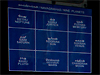
pangolin
Generic common name of a
–usually– nocturnal, scaly mammal, of the genus Manis, of which there
exist several species, with four of them found in South, East and
Southeast Asia, i.e. the Sunda Pangolin (Manis javanica -
fig.), also known as the
Malayan Pangolin or Javan Pangolin; the Chinese Pangolin (Manis pentadactyla);
the Indian Pangolin (Manis crassicaudata); and the Philippine Pangolin (Manis
culionensis), which is also known as Palawan Pangolin or Malintong. Both the
Sunda Pangolin and the Malayan Pangolin are endangered species (fig.), especially due
to a high demand from
China, where
their scales are
used in Chinese traditional medicine,
notwithstanding that it is today totally illegal and despite all the
scientific evidence that these scales have no therapeutic
value whatsoever. Due to their many scales, pangolins have often been compared
to walking pine cones or artichokes. When it sleeps or feels threatened it curls
up into a ball. This state of defense has led to its common name, which is said
to derive from the Malay word pengguling, a term used for things that can be
rolled up. Pangolins feed on ants and in order to do so, they have extremely
long and sticky tongues, as well as strong claws that help them to remove bark
or break into
termite mounds, etc.
回
Pangpond (ปังปอนด์)
Thai.
Name of a popular Thai cartoon character, which was invented and created by Pakdih
Saenthawihsuk (ภักดี แสนทวีสุข).
He is presented as an ordinary boy, with large round eyes and 3 strands of hair
on his head, and always wears blue shorts and a wine red T-shirt with a large white
Thai letter P (ป) on it, i.e. the first letter of his
name. He has a lively imagination and a hyperactive
personality. His curiosity often gets him into trouble, but he always finds a
way out. He owns a dog called
Big (บิ๊ก)
and has a girlfriend named Na-moh (นะโม).
In 1989, he first appeared in the Thai comic weekly
Maha
Sanook,
but now is published in his own comic book. Since 2002, he also features in animated 3D
comic movies and in 2003, Pangpond was chosen as the mascot on a set of four postage stamps
issued to
mark the Thai
National Children's Day
(fig.).
回
Pan
Gu (盘古)
Chinese. Name of the
first living being and creator of all in
Chinese mythology, who slept in a black egg until he was born and started
creation.
READ ON.
回
panhtain ngo (ပန်းထိမ်ငို)
Burmese for ‘Weeping
Goldsmith’.
回
panjanatie (ปัญจนที)
Sanskrit-Thai. The five great rivers of India. See also
Sapta Sindhava.
回
panjawakkih (ปัญจวัคคีย์)
Sanskrit-Thai. The five ascetics
to whom the
Buddha
gave his first sermon (fig.)
and who eventually became his disciples. The head of these five ascetics was
Ajnata Kaundinya.
He was ordained a Buddhist monk by the Buddha and hence became the first ever
monk in
Buddhism.
See also TRAVEL PICTURES (1),
(2) and
(3).
回
pansa,
phansa (พรรษา)
1. Thai-Pali.
‘Rainy season’. Period from June to October that coincides with
Buddhist Lent when the
monks retreat in their temples to study and meditate, and refrain from traveling to prevent destroying young vegetation and new life that blooms in this period. According to tradition many young boys are ordained as novices (naen) or monks (phra) for the duration of this period. See also
khao pansa and
owk pansa.
Similar term for the seasonal wet
monsoon include
phansa reudoo (พรรษฤดู) and phansakaan (พรรษากาล), but is also known by other
terms, such as
reudoo fon
and
nah
fon.
回
2. Thai-Rajasap. ‘Year’ or ‘age’. Respectful term used when
speaking to or of royalty and monks, in order to indicate age.
回
pan saai lohk (ปั้นทรายโลก)
Thai.
‘World sand sculpting’. Name of an international art form, that consists
of making sculptures from sand and which in Thailand is practiced especially in
Chachengsao,
where the sculptures usually represent characters and themes from
Buddhism
and the
Ramakien,
as well as from Thai folklore. Sand sculptures are also on display at
Bangkok's
Buddhist Art Garden House, which is known in Thai as
Ban Suan
Phuttasin
(fig.).
回
%20world%20sand%20sculpting%201_small.jpg)
panta (พันตา)
Thai.
‘Thousand eyes’. A name for the god
Indra.
Also transliterated Phan Tah.
回
Panthaka (पन्थक, ปันถกะ)
Sanskrit-Thai. Name of
one of the eighteen
arahats, and the elderly brother of
Chudapanthaka.
READ ON.
回
panwatsa (พันวรรษา)
Thai. A king who lives for a thousand years, like the king from the story
Khun Chang Khun Paen. See also
Somdet Phra Pan Pie Luang.
Also transliterated Phanwatsah.
回
Panya Nanthaphikku (ปัญญา นันทภิกขุ)
Thai.
‘Monk with the Wisdom of
Ananda’. Designation of a Buddhist monk
(Phra
pikku) from
Pattalung
Province.
READ ON.
回
Pa-oh (ပအိုဝ့်)
Burmese.
Name of an ethnic group in
Myanmar, which are also known as
Taungthu and Black
Karen.
READ ON.
回
Paowanasoon (เปาวนาสูร)
Thai. Name of an
important
yak
character
from the
Ramakien,
who is fighting on the side of
Totsakan.
READ ON.
回
papaya
A small kind of tree with the scientific name
Carica papaja that grows to a height of 7.5 meters. The unripe fruits are used as the main ingredient in the popular Thai dish
somtam.
When ripe the fruits turn orange
and resemble the honey melon. Also called
melon tree,
pawpaw and in Thai
malako.
回
_small.jpg)
Papaver somniferum
Latin.
‘Sleep-inducing poppy’. A
50 to 150 centimeter tall plant in the botanical family Papaveraceae,
from which
opium and morphine are extracted.
Each plant normally yields 3 to 8 opium pods (fig.) and its flowers may vary in colour
from white-pink to red-purple. In Thai known as
ton
fin.
回
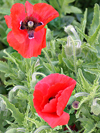
paper mulberry tree
A deciduous tree with the scientific name
Broussonetia papyrifera,
which bark is used to make paper. In Thai, it is commonly known as
ton sah,
ton poh sah and
ton poh krasah.
See also
mulberry
and
White Mulberry.
回
Paphiopedilum concolor
Latin-botanical name
for
a species of terrestrial
orchid of the genus
Paphiopedilum,
endemic to southern
China,
Myanmar,
Thailand, and
Vietnam.
READ
ON.
回
Paphiopedilum exul
Latin-botanical name
for
a
rare species of terrestrial
orchid of the genus
Paphiopedilum,
endemic to Peninsular Thailand.
READ ON.
回
Paphiopedilum sukhakulii
Latin-botanical name
for
a species of terrestrial
orchid of the genus Paphiopedilum,
endemic to Isaan.
READ ON.
回
Paphiopedilum villosum
Latin-botanical name
for
a species of terrestrial
orchid of the genus Paphiopedilum,
endemic to northeastern India, southern
China,
Myanmar
and Thailand.
READ ON.
回
Papyrus Sedge
See
kok ih-yipt.
回
Parable of the Snake, Elephant and Fox
An ancient Buddhist tale and
jataka with a
moral teaching on how pride, anger and greed will lead to an untimely death.
When an
elephant one day stopped
with its foot on a hole in which a snake had made its nest, it was arrogant and
didn't want to move on the snake's request, saying that since it was the largest
of all animals in the forest it didn't had to take orders from any other
animals. Hence, the
venomous
snake
became angry and bit the elephant in its leg. The giant died and fell over
crushing the snake in the process, thus both were killed. A fox that passed by
saw the dead elephant and wanted to eat it, but since it couldn't bite through
the thick skin, it entered the corpse though its anus. Once inside, the ravenous
fox ate so much that it became too fat to exit the corpse and thus also died
inside the elephant. As such, arrogance, rage and greediness led to their
premature demise. The story is depicted on one of the
550
glazed
terracotta
tiles on
Shwezigon Phaya
(fig.)
in
Bagan.
回
Parakeet Flower
See
Heliconia.
回
Paramanuchit Chinorot (ปรมานุชิตชิโนรส)
Thai. Name of the 28th
son of King
Rama I.
READ ON.
回
param phao sop (ปะรำเผาศพ)
Thai. ‘Body cremation pavilion’. Thai term for a crematorium. Also tee
plong sop and
Phra
Meru (Phra Mehn).
WATCH VIDEO.
回
Parasa Moth
Name of a species of slug moth in the family
Limacodidae. There are several subspecies, of which Parasa repanda,
with the
Thai name mot non nahm sen khob khao (มอธหนอนหนามเส้นขอบขาว),
Parasa pseudo repanda, and Parasa lepida are among the ones found in Thailand
and other parts of Southeast Asia.
回
Parasurama (परशुराम)
Name of the sixth
avatara
of
Vishnu,
described as a descendant of
Brahma
and apprentice of
Shiva.
His
attributes
includes an axe, which he
received after undertaking terrible penance to please Shiva, who in turn taught
him the martial arts, making him master of all divine weapons. He is also one of the Seven Immortals of
Hinduism,
referred to in Sanskrit as
Chiranjivi. Also transcribed Parasu-Rama
and Parashurama.
回
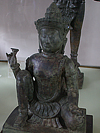
Pareinma Shin Mingaung (ပရိမ္မရှင် မင်းခေါင်)
Burmese. One of 37
nats that
belong to the official pantheon of spirits
worshipped in
Myanmar. During his life,
he was the 11th Century AD King Kyiso of
Pagan, and brother of
King
Anawrahta (fig.).
He was the usurper who together with his brother Sokkate forced their
stepfather, the 10-11th Century King Kunhsaw Kyaunghpyu, i.e. the later nat
Htibyuhsaung,
to abdicate and become a recluse. Later, Kyiso was accidentally killed by a hunter's
arrow while hunting for
deer. After
which his brother Sokkate
became king for a while, until he was
killed in a duel by Anawrahta for making his
mother one of his consorts.
See also LIST OF BURMESE NATS.
回
Pariah Kite
Common name for a bird of prey,
with the scientific name Milvus migrans
govinda,
i.e. a subspecies of the
Black Kite.
READ
ON.
回
parian (เปรียญ)
Thai. A graduate in theology.
回
parihataka (परिहाटक)
Sanskrit term for a ring worn around the arm
or leg. See also
keyuradhara.
回
Parileyyaka
Pali. Forest near Kausambi where two conversions took place. The first in the seventh year after the Buddha's
Enlightenment, concerning the
yaksha
Avalaka, a tyrannous monster of immense powers who terrorized an entire city, and four years later, the conversion of the bandit
Angulimala (fig.), the delinquent son of a
brahmin who entered into the service of an evil master. It is also the forest to which the Buddha retired on his own to find rest and where he enjoyed the company of a lone elephant and a monkey, of whom he received miraculous assistance, a scene often portrayed in
iconography and called
pahng pah leh laai (fig.). In Thai usually called
‘pah leh laai’,
but also ‘pah li laaika’, ‘pah li laaik’, ‘pah leh laaik’, ‘pah pah li laaik’ (pah li laaik
forest), and ‘pah pah leh laai’ (pah leh laai forest).
The name Parileyyaka is derived from the name of the elephant who waited on the
Buddha.
回
parinippahn (ปรินิพพาน, परिनिब्बाण)
Thai-Pali. Term for a state of complete bliss. With regards to the
Buddha, oblivious to worldly things,
i.e. when he passed away (fig.). See also
Mahaparinirvana.
回
parinirvana
(परनिर्वाणि)
Sanskrit. In
Buddhism the final
nirvana after death, when all rebirths cease.
The Buddha reached parinirvana
in 483 BC at
Kusinagara
in India, after he had gathered all his disciples to hear his final sermon.
After the Buddha's demise, the Parinirvana Temple (fig.)
was built at this place in order to commemorate the event, and Kusinagara became
an important place of worship for Buddhist pilgrims along the so-called Buddha
Trail in northern India and southern Nepal. See also
Mahaparinirvana.
回
parinyah (ปริญญา)
Thai for an academic degree. See also
education.
回
parinyah aek (ปริญญาเอก)
Thai for a doctor's degree or doctorate. See also
education.
回
parinyah toh (ปริญญาโท)
Thai for a master's degree. See also
education.
回
parinyah trih (ปริญญาตรี)
Thai for a bachelor's degree. See also
education.
回
Paris Peacock
Name of a large species of swallowtail butterfly, with the
scientific name Papilio paris.
READ ON.
回
Parkia
Tree
See
sa-to.
回
Parrot and Palm Garden
Name for a bird sanctuary in
Chachengsao's
Bang Talaat (บางตลาด) district, said to be the biggest parrot farm in
Thailand.
It consists of a large
domain set in a lush green natural
environment, with many
species of
parrots
(fig.)
and palms. Besides the over 2,000 species of
parrots, including some 80 rare breeds,
there are also other animals, such as
waterfowl,
goats
and
deer.
The Parrot and Palm Garden is known in Thai as
Suan Palm Farm Nok.
See MAP.
回
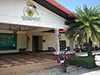
Parvati
(पार्वती)
Sanskrit. ‘Daughter of the mountain’. The
shakti of
Shiva in a serene form
(fig.) and mother of
Ganesha (fig.).
She is considered
to be the Hindu
goddess
of marriage
(fig.),
harmony, love, fertility, beauty, children, and devotion.
During Hindu weddings
(fig.)
and as part of the
bridal jewellery, the bride typically wears a
nose chain
(fig.),
known in Hindi as
naak shrinkhala,
in honour of Parvati. Also known as
Uma and
Devi.
回
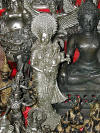
pasa
(पाश)
Sanskrit. ‘Lasso’. An
attribute of
several
Hindu
and
Mahayana
Buddhist deities,
including
Mahakala (fig.),
Ganesha (fig.),
who uses it to combat lust and desire, and also of the
tantric deity
Ushnishavijaya
(fig.),
as well as of
Phra Kaan Chai Sri, the deity responsible for
sending the souls of sinners to
hell. In Thai
called
buangbaat.
回
Pa Sak (ป่าสัก)
Thai. Literally ‘Teak
Forest’. Name of a
river that originates in the
Phetchabun
Mountain Range (fig.)
of
Dahn Saai (ด่านซ้าย),
a district of
Loei province famous for the annual
Phi Tah Khohn
festival (fig.).
It then flows through the provinces of
Lopburi
and
Saraburi,
and merges with the
Lopburi River northeast of
Phra Nakhon Sri Ayutthaya.
The latter in turn joins the
Chao Phraya
River near the
Pom Phet city fortifications (fig.),
which empties in
the
Gulf of Thailand
(fig.)
near
Samut Prakan.
Sometimes transliterated Pah Sak or Pasak.
WATCH VIDEO.
回
pashmina
A kind
of very fine cashmere wool, which is gained from a special breed of mountain
goat known as Changthangi or Pashmina Goat, which is indigenous to the
Himalayas, where it dwells at high altitudes. Typical
products manufactured from this very soft wool are shawls.
The ultra-fine cashmere fibers are purportedly several times finer than human
hair, and the best quality is allegedly gained from the goat's chin and neck.
Though there are blends of cashmere wool with other materials, such as
silk, the quality of all cashmere (usually labeled 100% pashmina)
is reportedly far superior.
回
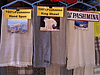
Pashupati
(पशुपति)
Sanskrit.
Shiva as the
‘Lord of wild animals’ or ‘lord of creatures’. In South India this form of Shiva is represented with four arms, with one hand in a blessing pose, the second opened to accepting an offer, the third holding an axe, and the fourth with a small deer leaping from it.
回
passionflower
Name of a plant of which worldwide around 500 species exist. Most passionflowers
are vines and grow in both the cooler mountains and the much hotter climate of
the tropical rain forest. Passionflowers have a wide variety of colourful
flowers (fig.), often perfumed and with additional sweet nectar glands on leaves,
petioles and sometimes bracts. Its fruits contain a juice with an unique aromatic
taste and smell. In Thai called
katakrok (กะทกรก), a name with a double
usage, notably
for the Passiflora caerulea or Passiflora edulis (fig.), as well as for the Olax scandens, a species of
plant belonging to another family. See also
passionfruit,
Bush Passionfruit and
Leopard Lacewing.
回
_small.jpg)
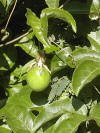
passionfruit
Tropical fruit
belonging to a plant
in the family of
passionflowers and
with the botanical name
Passiflora eduli (fig.), which in Thailand
is mainly cultivated in the North and Northeast.
Immature fruits have a thick, bright green skin, with small light yellow to white spots,
but when ripe the skin turns
reddish brown.
Their shape is somewhat reminiscent of that of certain
tomatoes.
Inside its thick rind, the passionfruit
has
multiple, dark-coloured seeds, that are covered with a
rather slimy fruit of flesh (fig.).
When still immature it is best eaten with a teaspoon and its sweet-and-sour taste perks up by adding a little salt.
Its fruiting season is from
September
to November. In Thai called
sawarot. See also
Bush Passionfruit and
THEMATIC STREET LIGHT.
回
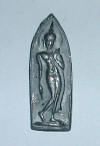
pata (पट)
Sanskrit.
‘Piece of cloth’. A commemorative plaque or tablet made from earthenware, stone or metal, bearing the depiction of a deity.
The name derives from earlier Buddhist cloth paintings. See also
votive tablet.
回
patak (ปฏัก)
Thai name for
a kind of goad, a long spiked stick (fig.) used for urging cattle or
elephants
forward. It is akin to the shorter
kho chang, the elephant hook used my
mahouts (fig.).
回
_small.jpg)
Pata Zoo
Name of a
privately owned animal zoo in
Bangkok, located on the top two floors, i.e. the sixth
and seventh floors, of the Pata Department Store on
Phra Pinklao Road.
READ ON.
回
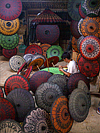
Pathein (ပုသိမ်ထီး)
Burmese name for small hand-painted
parasols and umbrellas, with a
bamboo framework, which is named after its place of origin, i.e. Pathein, a district of Ayeyawady in
Myanmar.
It is an
attribute of
U Shwe Yo (fig.).
See also
rom and
hti,
as well as TRAVEL PHOTOS (1),
(2) and
(3).
回
Pathet Lao (ປະເທດລາວ)
Laotian.
Full Lao name for
Laos.
回
Pathology and Forensic Museum
See
Siriraj Hospital Museum.
回
pathom (ปฐม)
Thai term meaning ‘first’
or
‘primary’.
回
pathum (ปทุม)
Thai. Collective name for both the
lotus and
water lily. See also
padma.
回
pathum unnahlohm (ปทุมอุณาโลม)
Thai. Name for the royal emblem of
King
Rama I,
which consists of an
unnahlohm,
i.e. an auspicious emblematic
sign used in
Buddhism
and similar to the
yan
sign (fig.),
over a background shaped in the form of a stylized
lotus,
a flower known as
pathum.
回
_small.jpg)
pathumah (ปทุมา)
Thai name for
the
Siam Tulip (fig.).
Also transcribed
pathummah. Compare
with
pathum.
回
pathummah (ปทุมมา)
An alternative
spelling for
pathumah.
回
Pathum Tham Thada (ปทุมธรรมธาดา)
Thai-Pali. ‘Holder of the
Dharma
Lotus’.
Name of a Buddhist monk in the reign of King
Mongkut
(fig.).
In 1857 AD, the King invited
this monk of Laotian
descent
and with the title of
Phra Kruh, who at that
time lived at
Wat Bowonniwet Wihaan Rachaworawihaan
(fig.),
to become the first abbot of the then
newly constructed temple
Wat Pathum Wanaraam Ratchaworawihaan
(fig.).
He is nicknamed Kam (ก่ำ).
回
_small.jpg)
Pathum Thani (ปทุมธานี)
Thai. ‘Lotus
City’. Capital of a province (map) of the same name in Central Thailand.
READ
ON.
回
patisotagami
Pali.
‘To go
against the current’.
Term used to describe the event in the Buddha's life, where he
floated a bowl upstream, against the current of the river Nairanjana,
in order to
affirm his thought, i.e.
if he was to gain Enlightenment. This episode is often
explained as an allegory, which signifies that
the Buddha's
knowledge and
teaching went
against all the teachings of his day. Also
spelled Patisothagami.
回
_small.jpg)
patjai sih (ปัจจัย ๔)
Thai. ‘Four factors’.
Term from Thai Buddhism which teaches
that four things are absolutely necessary for human
life, namely food, clothing, shelter, and medicine, and
that if humans have all four of these qualities, it is
considered sufficient for daily life.
回
Patjim (ปัจจิม)
See
Prajim.
回
patka
Term
that derives from the
Punjabi
paga
and which refers to an under-turban, i.e. a scarf-like single piece of cloth of about one
square meter, used by
Sikh
boys to wrap their
kesh,
i.e. uncut hair, which is knotted on
top of their head. The cloth, sometimes referred to as a child's turban, is tied over both the topknot and the head. It may
also be worn by adult Sikh men beneath their turban, usually in contrasting colours, or when playing sports.
See also
dastar and
pagri.
回
Patpong (พัฒน์พงษ์)
Thai-Chinese. A famous entertainment district in
Bangkok's Bangrak area, named after the Chinese
Patpongpanit family that owns much of the quarter's property. Immigrants from
Hainan, they purchased the land in the post-bellum years of WWII, when it was
little more than an undeveloped plot of land on the outskirts of the city.
Situated on the periphery of today's Sathorn's business district, between Silom and
Suriwong road, Patpong has become a redlight district consisting of two
alleys (Soi Patpong I and Soi Patpong II) with lots of nightclubs, go-go bars
and a busy night bazaar. The area is frequented by mostly foreign tourists. Also
transcribed Pat Pong, Phatphong and Phat Phong.
回
Pattalung (พัทลุง)
Thai. ‘City of
Elephants’. Capital of a province as well as the name of the province itself, on the east coast of the southern Thai peninsula 840 kms from
Bangkok.
READ ON.
回
Pattani (ปัตตานี)
Capital of a province (map) of the same name situated on the east coast of the Thai peninsula in South Thailand.
READ ON.
回
pattasihma (พัทธสีมา)
Thai. The territory or grounds belonging to a
wat or temple, usually demarcated by
Thai Buddhist flags called
thong thammachak (fig.),
often alternately with Thai National flags, known as
thong chaht.
回
Pattaya (พัทยา)
Thai. Popular seaside resort
(map) on the East coast of Thailand, in the province of
Chonburi
(map). Its name is
possibly derived from ‘thap phaya’, the army (thap) of a
phaya, referring to the troops of general
Taksin (later king Taksin) that were stationed in the area
(fig.). However, other sources claim that the name comes from the southwest wind which in Thai is spelled slightly differently and named
phat taya. Each year on April 19th it celebrates the
Pattaya Festival, a local extension and climax of the nationwide
Songkraan Festival. Also transcribed Phattaya.
See also MAP,
TRAVEL PICTURE (1),
(2) and
(3), and
WATCH VIDEO.
回
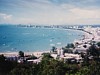
Pattaya Festival
Annual festival in
Pattaya on 19 April, usually celebrated as a kind of local extension and climax of the nationwide
Songkraan Festival.
回
pattisangkhon (ปฏิสังขรณ์)
Thai. To restore old temples, Buddha images (fig.) and palaces.
回
Paung Daw Oo Buddhas
See
Hpaung Daw U Buddhas.
回
pawpaw
A nickname for
papaya.
回
peach
The well-known round juicy fruit with downy
yellowish and pink skin, which is in
China regarded as a symbol of longevity.
The peach tree tends to flower quite early in spring, producing
pinkish flowers, which are abundantly spread over its branches (fig.).
Peach blossoms are considered so pretty that they frequently occur
as a subject in Chinese paintings and art. See
Peach of Immortality.
回
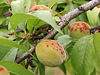
Peach of Immortality
In
China, the
peach (fig.) is a symbol of longevity.
Xi Wangmu
(fig.), Queen Mother of the West and mother
of the
Jade Emperor, has a magical tree that bears
peaches of immortality. Whoever eats from them will attain everlasting life.
READ ON.
回
peacock
Common name for a kind of large,
pheasant-like bird, of which males have bright and colourful feathers.
READ ON.
回
Peacock Pansy
Common name
for a nymphalid butterfly found in South and Southeast Asia,
and with the scientific name Junonia almana. On the
upperside, its wings are rich
orange-yellow, with buff outer margins. On the upper margin of the forewings
there are short perpendicular bars, with lateral jet-black marginal lines. Both
the fore- and hindwings have large ocelli, the ones on the forewings brownish and white-centred, with an outer black-buff ring, the ones on the hindwings dark
orange, with a black-white outer ring and a white centre as well as a larger,
off-centre black spot. On the underside, the wings are ochreous brown, with the same pattern as
above, but much paler. The antennae are dark brown with brownish-orange tips,
whereas the head is orange-brown, and the thorax and abdomen are blackish, with orange-brown
furry colouring. In
Thai, this species is known as
phi seua
phaensih
mayura
(ผีเสื้อแพนซีมยุรา).
See also WILDLIFE PICTURES.
回
%201_small.jpg)
pea eggplant
See
makheua phuang.
回
peanut plant
See
thua lisong.
回
Peanut Worm
Common name for a species of unsegmented
marine worm, with the scientific designation Sipunculus nudus.
READ ON.
回
pearl
See
khai muk.
回
pedah (पेड़ा)
A kind of spiced biscuit from India, made from sweetened
khoa (fig.)
with flavourings, such as
saffron and
cardamom (fig.),
and formed into balls or thick disc-like chunks. This sweet is originally from
of
Uttara Phrathet,
i.e. Uttar Pradesh. Also transcribed peda and pedha.
回
_small.jpg)
Ped Bluesman
Ped Bluesman, a rising blues guitarist and
singer from
Hua Hin,
who usually performs in venues across
Bangkok
and with his band called Ped's Band (formerly known as Hoochie Coochie Band)
mostly covers songs of famous blues artists, such as BB King, Stevie Ray
Vaughan, Buddy Guy, the Allman Brothers Band, Muddy Waters, etc.
回

Pegu
(ပဲခူး)
State
and Kingdom
of the
Mon before annexation by
Burma.
READ ON.
回
Pegu Medaw (ပဲခူးမယ်တော်)
Burmese.
‘Royal Mother
Pegu’.
Name of a
nat,
whom previously was a female
buffalo,
who is said to have raised a prince who got lost in the wilderness.
READ ON.
回
Peking Opera
A form of traditional Chinese theatre, that
surfaced at the end of the 18th century AD.
READ ON.
回
Penan
Name of an indigenous people of
Borneo, and their language.
READ ON.
回
peng (เป้ง)
Thai for
opium weight.
回
Penh
(ពេញ)
Khmer.
Name of a wealthy lady, who is
associated with the name of the
Cambodian
capital
Phnom Penh, as she
had a temple built on a 27 meter tall hill,
called
phnom in
Khmer,
in order to house a piece of wood from a candlenut tree which she in 1372 AD had found
floating in the Tonlé Sap River (fig.)
and that contained images of four
buddha's,
as well as an image of
Vishnu. The compound name of this venerated height,
located in the present capital, and of the lady who built the temple on its
summit was in 1434 AD chosen to be the name for the city when it was founded.
Today the lady Penh
has a personal shrine (map
-
fig.)
at this temple, which is known as
Wat Phnom (map
-
fig.),
as well as a bronze statue adjacent to the temple's compound.
回
penjing (盆景)
Chinese. ‘Miniature landscape’. Chinese term for the art of tray scenery, the growing of
miniature trees in trays (fig.), usually better known by its Japanese name
bonsai
(fig.).
In Thai, it is known as
khao mo, i.e. a form of a miniature garden
arrangement with rocks and stones in potted plants. See also
topiary
(fig.).
回
Pennywort
See
Asiatic Pennywort.
回
Pensajuba
(ပဉ္စရူပ)
Burmese. Name of a composite animal from
Burmese mythology.
READ ON.
回
Peony
Generic name
for plants in the genus Paeonia.
READ ON.
回
pepper tree
See
prik thai.
回
persimmon
A fruit from
China with the scientific name Diospyros kaki.
READ
ON.
回
pet daeng (เป็ดแดง)
Thai. ‘Red
duck’. Name for the
Lesser Whistling Duck.
回
petrified wood
Name for a
rare form of fossilization in which wood or an entire tree has been turned
completely into stone, due to an underground process known as petrifaction, in
which all the organic materials are being replaced with minerals (i.e.
permineralization), whilst the original structure of the wood is being retained.
A collection of this kind of fossilized wood can be observed at the
Northeastern Museum of Petrified Wood and Mineral
Resources, located in the
Isaan province of
Nakhon Ratchasima. In Thai petrified wood is known as saak deuk dam ban mai
klai pen hin (ซากดึกดำบรรพ์ไม้กลายเป็นหิน) or simply mai klai pen hin (ไม้กลายเป็นหิน).
回
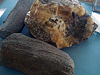
Peung Thao Kong (ปึงเถ่ากง)
Thai-Chinese
name of a
Tae Chew
deity who is also known as
Pae Kong (fig.).
Places where he is worshipped are known as
Sahn Peung Thao Kong
(fig.),
and he is worshipped as the protection god for places,
locations and dwellings, especially with regards to a neighbourhood, a community or a village,
whereas to protect and maintain the place of residence concerning
ones land, home or house, the deity to be worshipped is
Di Zhuia
(fig.),
i.e. the Tae Chew equivalent of the Thai
chao thih,
the animist guardian spirit of the land, in Chinese referred
to as
Tu Di Gong
and in Vietnamese known as
Tho Cong
(fig.).
A small altar dedicated to
Di Zhuia
may also be found in the Sahn Peung Thao Kong.
回
_small.jpg)
pewter
Name of a versatile metal alloy
primarily composed of
tin
along with elements like antimony, copper, bismuth, and occasionally silver,
which has been utilized for centuries across various applications. Its
composition enhances properties such as strength, malleability, and appearance.
Recognized for its malleability, pewter can be intricately shaped and crafted,
historically employed in the creation of household items, decorative objects,
and jewelry. Although other materials have replaced it for functional purposes,
pewter persists in artisanal crafts and decorative arts due to its distinctive
aesthetic and traditional charm.
Malaysia
is renowned for its pewter industry, with notable companies like Royal Selangor
leading the field. Pewter crafting in Malaysia dates back to the colonial era
when British settlers introduced the craft. Today, Malaysian pewter artisans
blend traditional techniques with modern designs, creating a range of products
such as tableware, decorative items, and souvenirs. Royal Selangor, established
in 1885, is particularly famous for its high-quality pewter products, which are
sought after both domestically and internationally.
回
phaak (พาก)
Northern Thai term for
tawak.
回
phaan (พาน)
1. Thai. A
usually golden or silver tray, cup, or bowl (khan)
with a base or pedestal. It is often
lotus-shaped and used as a platter,
especially for presenting gifts to royalty or monks, or to donate offerings to a
temple.
回
2. Thai.
Name of a
Phraya,
who was governor of
Nakhon
Sri Wichai,
i.e.
presentday Nakhon Chai Sri
(นครชัยศรี)
district in
Nakhon Pathom,
and whom ordered the capture of a clever wild
elephant
with a nice character, which he wanted to make into his
war elephant. Initially
it could avoid being caught, but due to the
ingenuity of three hunters, known as
Saam Phraan,
who dug a large pit on the path that the wild elephant regularly traveled on, it
was eventually captured.
回
phaang pha theed (ผางผะทีด)
Thai. Northern
dialect. Earthen oil lamp in northern Thai style. Its appearance differs
according to the craftsmanship of the maker and age, and some are reminiscent of
the
dipa used in
India (fig.). It is used to enlighten the
environment as well as an offering, similar to a lantern
or censer, by lighting it and place it decoratively in a temple or at any place
of worship during important religious holidays or festivals. Besides this it is
also used in daily life as replacement for an ordinary lamp, to illuminate
darkness during the night. To kindle a phaang pha theed, a coiled-up, cotton
cord is placed in the base of the lamp, as a wick, and
lubricated with
coconut oil, sesame oil,
groundnut oil or tallow. Sometimes called or
transcribed phaang pha teed, phaang pra theeb, phaang pra theet, phaang pha theet,
phaang pha teeb or phaang pra theep.
See also POSTAGE STAMP.
回
_small.jpg)
phaap sih sathon saeng bon phah kammayih
(ภาพสีสะท้อนแสงบนผ้ากำมะหยี่)
Thai. Name for
a style of painting, using fluorescent paint on black velvet, usually with a
mixture of bright green, orange, yellow and blue, though sometimes only one
colour is used. It is typically sold as souvenirs on street markets and classic
themes include picturesque landscapes, Thai village life, and elephants, and to
a lesser extend also figures from Thai or oriental mythology. These kind of
paintings are surely not for everyone's taste, though they are regularly found
in local style pubs and restaurants, usually under a black light (UV light) to
intensify the fluorescent effects of the paint.
回
_small.jpg)
phab
phiab (พับเพียบ)
Thai. ‘To fold full-fledged’. Term for a
pose in which one sits in a traditional Thai style, typically on the floor, with
the legs folded back to one side, the feet pointing backwards, a pose often seen
in Buddhist temples, where it is considered highly ill-mannered to point the
feet, the lowest and thus considered the least respectful part of the body,
towards the principal
Buddha image.
While seated on the floor in
Buddhist
temples, ones feet should therefore always
point away from the main Buddha image. The position is a variant of another sitting pose known as
phanaeng choeng, which means ‘to sit cross-legged’ and which is
typically used when seated in
meditation
(fig.).
回
Pha Daeng Nang Ai (ผาแดง นางไอ่)
Name of an epic folktale from
Isaan,
though thought to have originated in neighbouring
Laos.
READ ON.
回
Phad Jahmon (พัดจามร)
Thai. ‘Fly-whisk Fan’. Name of a kind of
kreuang khwaen,
i.e. net or frame-like, stringed
flower arrangements, that are used as a decoration to suspend at windows,
doorways, gables, etc. This
specific type is knitted in the form of a traditional fan that itself is shaped
as a closed
lotus bud. Though
its bases is made with
jasmine
buds (fig.)
and
white
dok rak
(fig.),
for the remainder it typically uses flowers with bright colours.
This type of flower
decoration is depicted on a Thai postage stamp issued in 2005 (fig.).
It is also referred to as
Phad Thai (พัดไทย),
i.e.
‘Thai Fan’, not to be
confused with the dish
phad thai
(ผัดไทย), which is spelled with pho
pheung
(ผ),
instead of with
pho
phaan
(พ).
回
phad thai (ผัดไทย)
Thai. Name of a popular dish made from flat
rice
noodles
stirred in a
wok (phad) with other
ingredients. To begin with the wok is heated up adding cooking oil, an egg that
needs to be scrambled with a fork and some chicken broth to soften the noodles
which are put in next. Then
soybeans
are added, followed by dried shrimps,
slivers of carrot, green shallots leaves, ground peanuts,
tamarind sauce, small cubes of fried
tofu
and some
ginger.
The dish is usually served with a whole fresh shallot and a slice of a
banana plant's flower bud
(fig.).
回
%202_small.jpg)
phad phrik thai dam (ผัดพริกไทยดำ)
Thai. Name of a dish with chunks of meet,
chicken or fish,
stir fried in a
wok (phad),
with black (dam) pepper (phrik thai),
fish sauce,
oyster sauce, and some other ingredients, typically also including sliced onion
and bell peppers, and served over
rice.
According to the choice of meet used, it is referred to by first mentioning the
name of the meet, e.g.
moo
phad phrik thai dam when
pork
is used,
pla
phad phrik thai dam if
fish
is used, etc.
回
phae
(แพะ)
Thai for ‘goat’, while a ‘sheep’
is called
kae. The goat, or alternatively the sheep (fig.),
is the eight animal sign of the
Chinese zodiac (fig.).
People born in the Year of the Goat
are said to be pretty calm individuals and nurturers, that enjoy taking care of
other people. The goat
features on many a Thai postage stamp,
including the
Songkraan Day
Postage Stamp, issued in 1991 (fig.),
and
the Zodiac Year of the Goat
Postage Stamp, issued in 2003 (fig.).
In
Vietnam, the
Arahat
Khan Mon La Han,
one of the
Eighteen Arahats
(fig.),
who is otherwise known as
Chudapanthaka
(fig.),
may be depicted
riding a
goat (fig.).
See also
TRAVEL PICTURES.
回
%201_small.jpg)
Phae Meuang Phi (แพะเมืองผี)
Thai. ‘Ghost
Land Grove’, sometimes translated as ‘Mysterious Land Grove’. Name of a 167
rai or
66 acres forest park, in Thai called
wanna uthayaan, located in
Phrae province.
The area consists of cliffs and columns, formed by subsidence and erosion of the
soil, leaving the crust of harder cements in stunning shapes, some resembling
giant mushrooms. According to legend, in the past no human nor animal dared to
pass through the area, as it was considered a land of ghosts (phi).
Though, one day a villager did pass by and discovered this natural treasure and
in 1981 the area was declared a national park. Today, the park features a
walking trail and several viewpoints (fig.).
Phae Meuang Phi is somewhat similar to the
Lalu soil
formations in
Sa Kaeo
(fig.).
See MAP.
回
%201_small.jpg)
phaen duang (แผ่นดวง)
Thai. ‘Astrological sheet’. Name for a small gold coloured metal sheet with
astrological
yan signs
distributed at temples or at certain ceremonies and intended to enhance good
fortune. One has to write ones name and date of birth on it (using a metal pin
or nail) and then
deposit it in a large box in the temple. Afterward they are melted and the cast into a
Buddha image,
thus allowing everyone to contribute in the
making of a new Buddha image. Also known as phaen duang yan maha
pohkkasap, what translates as ‘astrological yan sheet for
great wealth’ and if without the astrological signs
also referred to as
phaen thong kham.
回
_small.jpg)
phaen kra-yo (แผ่นกระยอ)
Thai. ‘Kra-yo
sheet’. Name for
rice wrappers, very thin sheets of a dough-like pastry,
which are used as wrappers for fresh
spring rolls, known in Thai as
popiya sod (fig.)
or popiya
Vietnam. The sheets are created by daubing the liquid mixture onto a
piece of linen cloth, which is stretched over a steaming kettle filled with
boiling water and covered off by a coin-shaped lid, allowing the dough to become
solid without drying out. After this short process, the soft sheets are
carefully taken off with a very thin spatula (fig.)
and sun-dried on large, grid-like frames made from bamboo (fig.).
The sheets are round and thin, and look somewhat like pancakes, though almost
transparent and white in colour.
回
%20spring%20roll%20rice%20wrappers%202_small.jpg)
phaen thong kham (แผ่นทองคำ)
Thai. ‘Gold
sheet’. Name for a small gold coloured metal sheet
distributed at temples or at certain ceremonies and intended to enhance good
fortune. One has to write ones name and date of birth on it (using a metal pin
or nail) and then
deposit it in a large box in the temple. Sometimes the
metal sheets have the shape of the leaves of a
bodhi tree
(fig.)
and are symbolically hung on a imitation tree at the temple. Afterward they are melted and the cast into
the image of an idol or a
Buddha image,
thus allowing everyone to contribute in its making as a form of
tamboon.
See also
phaen duang.
回
phaet sawan (แพทย์สวรรค์)
Thai.
‘Physician
of heaven’.
A designation of
Thanwantari,
one of the
avatars
of
Phra Narai,
who is considered to be a
health deity.
回
Pha Fang Daeng (ผาฝั่งแดง)
Thai.
‘Red Cliffs’.
Name of reddish-brown cliffs and rock formations situated
along the coast in
the southernmost extremities of
Prachuap Khirikhan
Province,
on the western seashore of the
Gulf of Thailand.
It has a beach which is only accessible during low tide. Located just off the
coast and visible from the beach is Koh Talu (เกาะทะลุ), a small island with an
arched rock formation and a beautiful seabed rich in corals and colourful fish.
WATCH VIDEO
and
VIDEO (E).
回

phah pah (ผ้าป่า)
Thai.
The robes offered to monks during a
thod phah pah ceremony.
See also
phum phah pah.
回
phah thung (ผ้าถุง)
Thai. A simple
sarong-like skirt somewhat like a tube skirt.
回
Phahurat Manihmai (พาหุรัดมณีมัย)
Thai. The first daughter (fig.) of King
Chulalongkorn
with his consort Queen
Saowapha
Phongsri. She was born on 19 December
1878, at
Phra Rachawang
in
Bangkok, but with poor health throughout her childhood, the princess died at
the untimely age of eight, on 27 August 1887. She is
portrayed on one of a rare set of unmarked
postage stamps of the Royal Family issued in circa 1893 (fig.).
回
_small.jpg)
phai (ไผ่)
Thai name for
bamboo. Also
mai phai.
回
phailin (ไพลิน)
Thai for ‘sapphire‘, a precious
gemstone known for its stunning blue color, although it can occur in various
other colours as well, such as pink, yellow, green, and purple. Sapphires are
valued for their exceptional hardness, ranking 9 on the Mohs scale of mineral
hardness, just below diamonds. This durability and their prized captivating
beauty make them ideal for use in jewellery.
See also POSTAGE STAMPS.
回
phai
nahm tao (ไผ่น้ำเต้า)
Thai. ‘Calabash
bamboo’. Name for Bambusa ventricosa, a species of
bamboo with bulbous culms (fig.), that won it
the nickname Buddha's Belly Bamboo, referring to the obese Chinese
Smiling Buddha
(fig.),
rather than the historical
Buddha.
This type of bamboo is native to Guangdong province in
China,
but is widely cultivated in subtropical regions around the world for its
ornamental features, for which it is also used in
bonsai.
The Thai designation is also based on the stem's bulbous shape, which is
considered as redolent of a bottle
gourd, called
nahm tao
in Thai. In Vietnamese, it is known as trúc đùi gà (fig.).
回
Phairoht Thanomwong (ไพโรจน์ ถนอมวงษ์)
Thai. Name of
the founder of
Ban Hun Lek (fig.),
an art project in which he transforms discarded parts of machines, trucks and
cars into imitations of robot-like figures, both in human and animal-like form,
as well as into futuristic mock vehicles.
See also TRAVEL PICTURES.
回
_small.jpg "Phairoht Thanomwong")
phakah krong (ผกากรอง)
Thai generic name of a
flowering plant, with the botanical name Lantana camara, and found in many
tropical and sub-tropical areas of the world. It
produces clusters of small flowers with salver-form
corollas, which vary in colour depending on the subspecies. The existing array
includes the Pink Caprice Lantana, with pink to
lilac and white flowers, each with a yellow core; the Spanish Flag, with red and
yellow flowers (fig.),
like the colours of the national flag of Spain;
Cloth of Gold, with clusters of yellow
flowers (fig.);
Lantana
camara blanca, with white flowers with a yellow centre;
etc.
In the wild, this species is very invasive, but it is also often found as an
ornamental plant in gardens, and its flowers are highly favoured by a variety of
butterflies.
回
%20ผกากรอง_small.jpg)
phak bung (ผักบุ้ง)
Thai for morning glory, swamp cabbage and
water spinach, i.e. a vine-like plant
(fig.), that grows plentifully in usually shallow, standing water, such as ponds, ditches and roadside canals.
READ ON.
回
phak bung fai daeng (ผักบุ้งไฟแดง)
Thai. ‘Red fire water spinach’. See
phak bung.
回
phak bung farang (ผักบุ้งฝรั่ง)
See
phak bung.
回
phak bung loi fah (ผักบุ้งลอยฟ้า)
Thai. ‘Sky-floating water spinach’. The morning glory flying vegetable. See
phak bung.
回
phak chih (ผักชี)
Thai for
‘coriander’, an aromatic plant which seeds,
known in Thai as
malet phak chih
(fig.),
are used in cuisine for flavouring.
回
phak kahd khao (ผักกาดขาว)
Thai. A
Chinese cabbage, with the scientific name Brassica
rapa subsp. pekinensis, and in English known as napa cabbage or celery cabbage,
yet it is in general simply referred to as Chinese cabbage, although that name
is also used for many other varieties. It is widely used in East Asian cuisine.
The somewhat rutted, elongated leaves, which are light green with white
petioles, sit tightly packed together in the cylindrical head,
with the tip of the leaves growing toward each other. In Mandarin, it is called da bai cai (大白菜), which means
‘large white
vegetable’, a term used to differentiate it from certain types of
phak kwahng tung,
which are called bai cai (白菜) or xiao bai cai
(小白菜), which means ‘white
vegetable’ and ‘small white
vegetable’ respectively.
回
%20ผักกาดขาว_small.jpg)
phak kahd khao plih (ผักกาดขาวปลี)
Thai. A
Chinese cabbage, similar to
phak kahd khao, but of a darker green colour,
softer and less rutted leaves, that are packed less compact together, and with
the tip of the leaves growing outward, rather than toward each other. Despite
these differences, it also is commonly referred to as napa cabbage and generally
as Chinese cabbage, but has also been given the name Won Bok. It scientific
designation is Brassica rapa, subsp. pekinensis, var. cephalata.
回
phak kahd khao kwahng
tung
(ผักกาดขาวกวางตุ้ง)
Thai. A
Chinese cabbage, with the scientific name Brassica chinensis.
It has broad green
leaves
and white petioles or stems, and is also known
as snow cabbage, bok choy (บอกฉ่อย), and in Thai
additionally as phak choy (ผักฉ่อย). There is smaller
version of the same vegetable, which is referred to as Shanghai bok choy, baby
bok choy or mini bok choy, and in Thai also as baby phak choy (เบบี้ผักฉ่อย)
or mini phak choy (มินิผักฉ่อย).
This smaller version is simply less-mature and the stems are pale green. In Mandarin, it is called bai cai (白菜), or xiao bai cai
(小白菜), which means
‘white
vegetable’ and ‘small white
vegetable’ respectively, with the latter term being used to differentiate it
from
phak kahd khao,
which is called da bai cai (大白菜), meaning ‘large
white vegetable’.
See also
phak kwahng tung.
回
_small.jpg)
phak kahd kiyaw kwahng
tung
(ผักกาดเขียวกวางตุ้ง)
Thai. A
Chinese cabbage, with the scientific name Brassica chinensis, with broad green
leaves
and green petioles. In Mandarin, it
is called bai cai (白菜), or xiao bai cai
(小白菜), which means
‘white
vegetable’ and ‘small white
vegetable’ respectively, with the latter term being used to differentiate it
from
phak kahd khao,
which is called da bai cai (大白菜), meaning ‘large
white vegetable’.
See also
phak kwahng tung.
回
_small.jpg)
phak kwahng tung (ผักกวางตุ้ง)
Thai.
‘Guangdong (Kwangtung) vegetable’, usually referred to as Cantonese vegetable.
READ ON.
回
phak salad kos (ผักสลัดคอส)
Thai name for
Romaine Lettuce or Cos Lettuce, a kind of lettuce that is tolerant of heat,
which sets it apart from most other
lettuces. It has
the botanical name Lactuca sativa var. longifolia, referring to its long, sturdy
leaves, that sit on thick, firm ribs. In the West, it is best known for its use
as the main ingredient in Caesar salads. In Thailand, it is eaten fresh in
salads, and an ingredient in certain dishes, such as phad phrik kaeng (ผัดพริกแกง),
kaeng jeud (แกงจืด), and phad phak ruam mit (ผัดผักรวมมิตร).
In addition, it is sometimes used as a replacement for
kha-nah, as well as different types of
phak kwahng tung.
回
%20Romaine%20or%20Cos%20Lettuce_small.jpg)
phak siang farang (ผักเสี้ยนฝรั่ง)
Thai. ‘Foreign
thorny plant’. Plant with
spider-shaped, white to pink-purple flowers (fig.), native to southern South America
and with the botanical name Cleome hassleriana. It is
an annual plant that grows to a height of 1,5 meter and has spirally arranged
palmate leaves. The flowers have four petals and six long stamens. In Thailand it is commonly cultivated as an
ornamental plant (fig.).
In English, it is known as Spider Flower and Spider Plant. See also
Spider Lily (fig.).
回
%20-%20cleome%20hassleriana_small.jpg)
phak thod yod (ผักทอดยอด)
Thai. ‘Peak fried vegetable’. An additional name for
phak bung, when stir-fried (thod) over a gas flame turned all the way up to its highest point (yod).
回
Pha Lak Pha Lam (ພະລັກພະລາມ)
Laotian. Name of the local adaptation in
Laos
of the Indian epic
Ramayana.
READ ON.
回
Pha Lam Sadok (ຊາດົກ)
Laotian. The
‘Chadok
of
Phra Ram’
or the
‘Jataka
of
Rama’.
Name in
Laos
of the local
version of the Indian epic
Ramayana,
i.e. the Laotian counterpart of the Thai
Ramakien,
and also known locally as
Pha Lak Pha Lam.
Pronounced Pha Laam Sadok and sometimes transcribed Pha Lam Xadok.
回
Phali (พาลี)
See
Bali.
回
phanaeng choeng (แพนงเชิง)
Thai term that
means ‘to sit cross-legged’. The pose is
typically used when seated, usually on the floor, in
meditation
(fig.)
and is thus represented in most sitting
Buddha images (fig.),
a style referred to as
lotus position.
See also
phab phiab and
Wat Phanan Choeng.
回
Pha Nahm Tok
(ผาน้ำตก)
Thai. ‘Waterfall
Cliff’.
Name of the third level
in the series of seven falls of the Erawan Waterfall (fig.)
at
Erawan
National Park (fig.)
in
Kanchanaburi
Province.
See MAP.
回
phanak phing (พนักพิง)
Thai for a ‘backrest’, the squab of a seat, like those typically used by monks in Buddhist
temples and which are commonly shaped in the form of a
bai sema (fig.).
See also
tammaht and
reua khem.
回
,%20backrest,%20squab%20of%20seat%202_small.jpg)
Phan But Sri Thep (พันบุตรศรีเทพ)
Thai.
The name and title of a lower palace
official with the duty of guarding the outer image hall. The title is one rank
below that of
Khun Chinnarat.
The title literally translates as ‘thousand children of angels’.
回
Phan Dinh Phung (Phan Đình Phùng)
Vietnamese. Name of a revolutionary who led
rebel armies against French colonial forces in
Vietnam in the 19th century.
READ ON.
回
phang (พัง)
Thai for a female
elephant (fig.). See also
Asian Elephant,
phlaay and
sihdoh.
回
Phang Nga (พังงา)
Thai. Name of a river, a provincial capital,
as well as of a province on the west coast of the South Thai peninsula, along
the Andaman Sea.
READ ON.
回
phangphon (พังพอน)
Thai for ‘mongoose’.
回
phaniad (เพนียด)
Thai.
‘Elephant
kraal’. A stockade or palisade formerly used to round-up wild
elephants
(fig.). It consists of a huge fence of wooden -usually
teak- logs planted in
the ground at an angle to keep the elephants in. There is an elephant kraal
still in existence today, in
Ayutthaya.
Chang
beer, one of the main brands
of beer in Thailand, of which the name means
‘elephant’,
has designed the entrance gates of its breweries in Ayutthaya
and in
Kamphaeng Phet
(fig.) in the form of an
elephant kraal.
See MAP (AYU)
and
MAP (KAM).
回
phanom
(พนม)
1. Thai-Khmer.
‘Mountain’. A term
that derives from the Khmer word
phnom and
which in Thailand is often used as part of a name for a temple, sanctuary or sacred place,
typically located on a hill, as in
Prasat Phanom Rung,
as well as in Thai place names, e.g.
Nakhon Phanom and
Wat Phrathat Phanom Woramahawihaan
(fig.).
The
Phasa Isaan
term is
comparable to the general Thai term
khao, the
name
khiri
used in southern Thailand, and the
designation
doi
used in northern Thailand.
回
2. Thai. Term for things that have
the shaped or are made to look like of a
phum (fig.)
or
lotus
bud (fig.),
such as raising both hands palm to palm (fig.),
as in the traditional
wai
(fig.).
As such it is also a synonym for
thephanom (fig.)
and
phranommeua (fig.).
WATCH VIDEO.
回
phanom
mahk (พนมหมาก)
Thai.
‘Betel mountain’.
Architectural term, used for a cone-shaped decorative element, reminiscent of
the egg or pear-shaped
betel arrangement known as
phum mahk
(fig.), as well as of the tallest container
of a
betel-set
(fig.), hence the name.
They are typically used in pairs and are often found at the entrance of a
sanctuary or at the foot of an altar, etc. They are often, though not always,
made in (or with elements of) a golden or
silver colour and are typically placed on a
phaan,
which in turn may be standing on a cushion. Smaller versions, folded from a
banana-leaf
and topped with a small flower or some other ornament, are referred to as
krathong dokmai
(fig.)
and are typically used to
accompany
toob thian phae
offerings (fig.). See also
phanom and
mahk.
回
_small.jpg)
Phanon
Mareuk (พานรมฤค)
Thai. Mythological animal from the
Ramakien,
living in the
Himaphan forest. It is half
monkey (phanon) and half deer (mareuk),
with the agility of a deer and the power to run faster
than any normal deer, but able to fully utilize its functional
monkey hands for grabbing objects and feeding. It
also has an exceptional sense of hearing and, like most monkeys prefers eating
bananas and
coconuts. In art it is usually depicted
with a greenish complexion. See also
Singh Phanon.
回
Phan Reuang (พันเรือง)
Thai. Name of one of the eleven
heroic leaders who in 1767,
at the end of the
Ayutthaya period,
fought the invading Burmese in
defence of the
Bang Rajan
camp in
Singburi.
READ ON.
回
Phan Thai Nora Singh
(พันท้ายนรสิงห์)
Name of the
coxswain (phan thai),
who in the
Ayutthaya
Period was in charge of the
navigation of the Ekkachai (เอกชัย)
Royal Barge.
READ ON.
回
Phanthumatiraat (พันธุมะติราช, พันธุมติราช)
Thai. Name of a legendary
king who appears in the northern Thai
legend of
Sih Hoo Hah Tah
(fig.),
a local mythological creature with four ears and five eyes,
that eats
red-hot charcoal,
which it defecates as pure gold. In the local legend of
Chiang Rai,
this ruler gives his royal daughter Simah (สีมา)
in marriage to
Ai Thuk Khata (อ้ายทุกคตะ),
the owner of this gold-producing creature, whom
as his son-in-law
also succeeded Phanthumatiraat after his death. He has a
statue at
Wat Phrathat Doi Khao Kwai Kaew,
a hilltop temple in Chiang Rai
associated with the legend.
This king of mythology is in Thai usually referred to with the royal prefix
phaya or
thao.
回
phanuat (ผนวช)
Thai-rajasap.
‘To ordain’, ‘to tonsure’ or ‘enter the Buddhist priesthood’. See also
buat,
buatnaag,
banpacha and
upasombot.
回
Phanurangsih Sawaangwong (ภาณุรังษี สว่างวงศ์)
See
Bhanurangsi Savangwongse.
回
Phap Van (Pháp Vân)
Vietnamese. Vietnamese-Buddhist goddess of
the clouds.
READ ON.
回
phasa (ภาษา)
Thai
for ‘language’.
回
phasa bai (ภาษาใบ้)
Thai
for ‘sign language’, a form of non-verbal communication that uses manual
expression, such as hand shapes, but also facial expressions, and body language,
in order to convey information and express thoughts. It is a means of
communication primarily used by deaf and hearing-impaired individuals, but may
also be used others in different contexts, such as for example military sign
language or international sign language that is generally understood by common
people. While there may be some international signs or gestures used in specific
contexts, sign language is not universal, and different countries and regions
often have their own distinct sign languages. It is also known as
phasa meuh, literally ‘hand language’.
See also POSTAGE STAMPS.
回
Phasa Isaan (ภาษาอีสาน)
Thai.
‘Northeastern Thai’. Dialect spoken in
Isaan or Northeast Thailand, a region more or less coinciding with the Korat Plateau covering an area from
Nakhon Ratchasima to the borders of Laos and Cambodia. See also
Phasa Thong Thin. Also called
Phasa Thai-Lao and Phasa Lao.
回
Phasa Klahng (ภาษากลาง)
Thai.
‘Central Thai’. The language spoken in Central Thailand as well as the official vernacular used in all other parts of Thailand.
回
phasa meuh (ภาษามือ)
Thai.
‘Hand language’. Another term used for
phasa bai,
i.e. ‘sign language’.
See also POSTAGE STAMPS.
回
Phasa Neua (ภาษาเหนือ)
Thai.
‘Northern Thai’. Dialect spoken in North Thailand, from
Tak
to the borders with Burma and Laos. See also
Phasa Thong Thin. Also
kham meuang and
Phasa Phaak Neua.
回
Phasa Pak Tai (ภาษาปักษ์ใต้)
Thai.
‘Southern Thai’. Dialect spoken in South Thailand, from
Chumphon
to the border of Malaysia. See also
Phasa Thong Thin.
回
Phasa Phaak Neua (ภาษาภาคเหนือ)
See
phasa neua.
回
Phasa Pheun Meuang (ภาษาพื้นเมือง)
Thai.
‘Native language’. A term used for ‘dialects’. See
Phasa Thong Thin.
回
Phasa Sanskrit (ภาษาสันสกฤต)
Thai for
Sanskrit.
回
Phasa Thai (ภาษาไทย)
The Thai language, Thai.
The official language of Thailand and mother tongue of the Thai people. It
belongs to the Tai group of the Tai-Kadai language family which are thought to
have originated in what is now southern
China and probably linked to the
Austroasiatic, Austronesian or Sino-Tibetan language families. Thai is, like
Chinese, a tonal and analytic language with a complex orthography, relational
markers and a distinctive phonology. Thai linguists recognize four dialects of which Central Thai is considered the official vernacular. The other dialects are Northern Thai, Northeastern Thai, and Southern Thai. See also
Phasa Thong Thin.
MORE ON
THIS.
回
Phasa Thong Thin (ภาษาท้องถิ่น)
Thai.
‘Dialect’. In Thailand linguists recognize four dialects of which Central Thai (Phasa Klahng) is considered the official vernacular. The remaining three dialects are Northern Thai (Phasa Neua or
kham meuang), Northeastern Thai (Phasa Isaan), and Southern Thai (Phasa Pak Tai). They are spoken in the areas that more or less coincide with the accepted partition of the country in regions (fig.), with East and West Thailand included with Central Thailand. All dialects belong to the Thai-Kadai language group and are strongly related to Laotian, Northern Thai, and Thai Lu, languages spoken in Laos; Shan and North Thai, spoken in North Myanmar; Nung and Tho, spoken in Northwest
Vietnam; Ahom, spoken in Assam; and Zhuang and Thai Lu, spoken in parts of South
China.
回
phasom set (ผสมเสร็จ)
Thai. ‘Mixed
[and] done’ or ‘completely mixed’. Name for the
Asian
Tapir. In short also called
som set, which could be translated as ‘done
well matched’. It is also known by the shortened name somset (สมเสร็จ).
回
Phatcharakitiyapha (พัชรกิติยาภา)
Thai.
Daughter of Crown Prince
and
Maha
Vajiralongkorn,
i.e. the
later
King
Rama X,
and Princess
Sohmsawalih, and the first granddaughter of
King
Bhumipon Adunyadet
and Queen
Sirikit Kitthiyagon.
She was born on Thursday 7 December 1978.
She graduated as a Doctor in the Science of Law at Cornell University in the
United States of America, and in 2012, she was commemorated on a Thai postage
stamp in her function as chairperson of the United Nations' 21st session of the
Commission on Crime Prevention and Criminal Justice (fig.).
Her personal flag consists of an orange field, i.e. the colour that
correspondents with her birthday according to the
sih prajam wan
system,
with the initials Ph. (พ) in orange and Ph. (ภ)
in yellow, bordered with white (fig.).
Her name is often transliterated Bajrakitiyabha.
回
Phat Phong (พัฒน์พงษ์)
See
Patpong.
回
Phattaya (พัทยา)
See
Pattaya.
回
phat taya (พัทธยา)
Thai. The southwest wind. See also
Pattaya.
回
Phaulkon
See
Constantine Phaulkon.
回
Phawanaphirat (ภาวนาภิรัต)
Thai-Pali.
Name of a 20th century senior with the title
Phra Kruh
and who is also known as
Luang Poo
Thim Isarikoh (ทิม อิสริโก). He was born in
Rayong
on 16 June 1879, in the reign of King
Rama V,
and passed away on 16 October 1975, aged 96. He was the abbot of Wat Lahaanrai (วัดละหารไร่) and is
known for introducing the amulet
Phra Kring
Chinabanchorn (ชินบัญชร).
See also POSTAGE STAMP.
回
phaya (พญา)
Thai
for ‘king’ or ‘potentate’. Compare with the Burmese term
Phaya.
回
Phaya (ဘုရား)
Burmese
for ‘Buddha’ or ‘Buddha image’, as well as for
‘god’,
‘stupa’ or ‘pagoda’. The
term can also be used as a respectful way to address monks, royalty,
or deity. Hence, the word is similar
in use to the Thai word
Phra
and is likely linguistically related to the Thai word
phaya.
However, though here the spelling phaya is used, it is often transliterated
bhurarr, whereas its pronunciation sounds rather like bhuya or phuya. Note that
in the official transliteration system an end -r is added to indicate a long
sound and that the Burmese letter for -r is also used for an -y, as in
yaksha
which is also known as raksha.
回
Phayak Kraison (พยัคฆ์ไกรสร)
Thai-Pali name
of a mythological creature from
Himaphan forest, that
has the body of a
lion
and the head, and often the stripes, of a Bengal
tiger.
Sometimes transcribed Payak Kraisorn.
回
phaya krarok dam (พญากระรอกดำ)
Thai.
‘Black squirrel king’. Name for the
Black
Giant Squirrel.
回
phayanaag (พญานาค)
Thai.
‘King of
snakes’
or ‘snake
king’,
or literally
‘naga-king’,
i.e. a mythological figure represented as half-human half-serpent,
as according to legend he can transform into a human during waxing moon and
transform back into a serpent on the waning moon, and believed to be a form of
Indra. Also referred to as
phayanagaraat, i.e. ‘royal king of
snakes’
(fig.). See also
Nakarin,
Kham Chanoht,
phaya and
naag.
See also TRAVEL PICTURE.
回
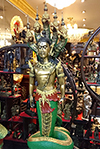
phayanagaraat (พญานาคราช)
Thai.
‘Royal king of
snakes’
or ‘royal
snake king’,
or literally
‘royal
naga-king’,
i.e. a mythological figure often represented as half-human half-serpent,
and believed to be a form of
Indra.
Also referred to as
phayanaag,
i.e. ‘king of
snakes’
(fig.).
He is often depicted with a goatee and his
attributes
can be a number of things, including a
vajra;
a green gemstone, referring to his role as guardian of minerals and gems; a
sword; and a
conch.
See also
Nakarin,
Kham Chanoht,
phaya,
naag, and
raat,
as well as
phet phayanaag.
See also TRAVEL PICTURE.
回
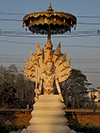
Phayao (พะเยา)
Thai.
Name of a Thai province (map)
and its capital city, situated in Northern Thailand.
READ ON.
回
Phayap (พายัพ)
The Northwest of Thailand. Generally understood to be the West of North Thailand (the province of
Mae Hong Son), rather than the North of West Thailand (the province of
Kanchanaburi). It is the direction of the compass guarded by the
lokapala
Vayu. See also
Udon,
Isaan,
Taksin,
Ahkney,
Horadih,
Prajim and
Burapah.
回
Phaya Ruang (พญาร่วง)
Thai. Name often used
for King
Ramkhamhaeng,
besides
Phra Ruang.
Also transliterated Phaya Ruwang
回
Phaya Sri Mukda Mahamuni Nihl Palanakaraat
(พญาศรีมุกดามหามุนีนีลปาลนาคราช)
Thai. ‘Mukda[han]'s
Green Royal
Mahamuni-protecting
Nagaraat’.
Name of a
giant statue of
a 120 meter
long
naga
or
phayanagaraat,
located on Mount Manorom (มโนรมย์),
a hilltop in
Mukdahan
and home to
the Buddhist temple
Wat Roi Phraphutthabaht Phu Manorom
(fig.).
See also TRAVEL PICTURES
(1),
(2),
(3)
and
(4),
and
WATCH VDO.
回
_small.jpg "Wat Roi Phraphutthabaht Phu Manorom")
Phayathai (พญาไท)
1. Thai. Name of a
khet
in
Bangkok. Also spelled Phaya Thai and
Phyathai.
回
2. Thai. Name of a former
palace,
located in
Bangkok, which was built in 1909 by
King
Chulalongkorn, in order to do some
farming and to organize the
Royal Ploughing Ceremony. After his
death in 1910, it served as a
residence for Queen Saowapha, his
consort and the mother of King
Rama VI.
The complex
consists of several buildings and halls, including Phimaan
Chakri
(พิมานจักรี), Sri Sut Niwaht
(ศรีสุทธนิวาส), Udom Wanaphon (อุดมวนาภรณ์), the
separate Thewarat Sapharom hall (เทวราชสภารมย์), etc.
Today, the complex belongs to the
Ministry of Defence and is part of the military Phra
Mongkutklao Hospital, which is named after the
sixth monarch from the Chakri Dynasty. Also spelled Phyathai and Phaya Thai.
See MAP.
回
%201_small.jpg)
Phaya Thani (พญาตานี)
Thai.
Name of a cannon with a length of 3
wah (6 meters) which stands in front of the Thai
Ministry of Defence in
Bangkok.
This large cannon was
confiscated by royal troops after the 1785 rebellion of
Pattani
against
Rattanakosin, and offered to
King
Rama I.
回
Phaya Thonzu (ဘုရားသုံးဆူ)
Burmese.
‘Three Deities’
or
‘Three
Pagodas’,
and sometimes translated as
‘Temple of
Three
Buddhas’.
Name of a Buddhist temple in
Bagan.
READ ON.
回
Phayre's Langur
See
Phayre's Leaf Monkey.
回
Phayre's Leaf Monkey
Common name
for a species of Leaf Monkey with the scientific name Trachypithecus phayrei and
found in South, East and Southeast Asia, including India, Bangladesh,
Myanmar,
China,
Thailand,
Laos and
Vietnam. Also called Presbytis phayrei and Phayre's
Langur, named after and commemorating Sir Arthur Phayre, a naturalist and the
first Commissioner of British
Burma. They have grey fur, a dark face
with white circles around the eyes and white skin at the mouth, and a long tail.
It is similar to the
Dusky Leaf Monkey (fig.), but
has a lighter fur. Like other Leaf Monkeys, Phayre's Leaf Monkeys are herbivorous, feeding
primarily on leaves, fruits and buds, and hence spend most of their lives in the
canopy of trees. In Thai it is called
kaang waen thin neua. See also
Grey Langur (fig.),
i.e. a species of Leaf Monkey previously considered a subspecies of the Phayre's
Langur.
回
_small.jpg)
pha-yoon (พะยูน)
Thai term for ‘dugong’.
回
Phayu (ผายู)
Thai. Name of the seventh King of
Lan Na,
who reigned between 1337 and 1355 AD.
READ ON.
回
phayu
(พายุ)
Thai for ‘storm’, a word that derives from
Vayu (fig.),
the name of the Vedic god of the wind and air. See also
phayuhayahtrah and
nahm thuam.
回
phayuhayahtrah (พยุหยาตรา)
Thai-rajasap
term that derives from Pali and means ‘to march or move in force’, and of a king
‘to proceed in state’ or ‘to move [an army]’.
The term is used in the
Royal Barge Procession,
for one. See also
phayu.
回
Pheasant-tailed Jacana
Common name
for a wader, with the scientific designation Hydrophasianus chirurgus. Both
sexes are similar, but with a body size of up to 31 centimeter females are
larger than males, which grow up to around 27 centimeter. In the breeding season
its body is blackish-brown, with white head and foreneck, and a yellowish-buff
hindneck. In the middle of the neck, along both sides, runs a black line that
divides the colours of the fore and hindneck, and which converge on top of the
crown. The short wings are mostly white, and it has a long, blackish tail. The
non-breeding plumage, this bird has a white body with dark brown upperparts. The
long, blackish tail has disappeared and the black line that runs along both
sides of the neck has expanded in width and length, and instead of converging on
top of the crown, it now leads to a black eyestripe above, whereas below it now
converges, creating a black breastband. The crown is black, the hindneck is a
darker yellowish-buff and now extends into a supercilium. The head underneath
the black eyestripe, as well as the foreneck are white. Like many waders, it has
long legs, toes, and nails, allowing this bird to walk on floating water
foliage. They are good swimmers and divers. Their favorite foods are insects,
small water animals and water plants. They can be found in swamps or lakes in
most parts of the Thailand, except in the West. In Thai, the Pheasant-tailed
Jacana is called nok ih-jaew (นกอีแจว). In 1997, this bird was depicted on the
first stamp of a set of four Thai postage stamps featuring waterfowl (fig.).
See also
VIDEO,
WILDLIFE PICTURES (1) and
(2),
and
TRAVEL PHOTOS.
回
_small.jpg)
pheh-kah (เพกา)
Thai name for
the
Indian Trumpet Tree.
回
phen (เพล)
Thai for the
hour between eleven and twelve in the morning, when Buddhist monks and novices
have their last meal of the day.
回
pherie (เภรี)
Thai. A kind of drum, more specifically a war drum.
回
phet (เพชร)
Thai for ‘diamond’. It often appears as a
prefix to names and compound word, and besides its literal meaning it is also
quite often used figuratively to symbolize strength or richness, or as a synonym
of
wichian, and thus in turn
as another description for
wachira
(fig.),
the sceptre and ancient royal symbol
of power, absolute truth and indestructibility,
which in Sanskrit called
vajra
(fig.).
回
Phetburi (เพชรบุรี)
Another pronunciation for
Phetchaburi.
回
Phetchabun (เพชรบูรณ์)
Thai.
‘Full Diamond’. Province (map)
and its capital city of the same name in North Thailand.
READ ON.
回
Phetchaburi (เพชรบุรี)
Thai. Capital city of the
jangwat Phetchaburi,
as well as a province (map) of the same name,
located on the Gulf of Thailand.
READ ON.
回
Phetcharatana Rachasuda (เพชรรัตนราชสุดา)
Thai. Name
of the daughter and only child of King
Rama VI.
READ ON.
回
phet phayanaag (เพชรพญานาค)
Thai.
‘Naga-gems’.
Name of colourful gemstones that have very little worth in gemology, but in
Thailand have value as a sacred object, and are named for the
phayanaag (fig.)
or
phayanagaraat (fig.),
who —as
the
king of
snakes
or
naga-king—
is considered the
guardian of minerals and gems. They are also sometimes referred to as naga eyes
and power stones. These gems are found inside stones that are known as
hin sila kohn (fig.)
and which are allegedly found in many river beds and in caves along the
Mekhong
River area. These stones or small rocks need to be
crushed and opened with a hammer in order to get to the semi-translucent prolate
rounded naga-gem which can be of any colour and sits loosely in a cavity in the
stone's core and clatters when shaken. They are believed to be sacred, to posses
mystical powers, and are said to protect their carrier from any peril of water.
They come in a variety of colours and the more rare are the amber, black, green
and blue ones, which may cost up to a tenfold the price of stones in another
colour. The translucent amber stones are alleged to occur naturally and can be
found along the banks of the
Mekhong
River in the area of
Mukdahan.
When jewelers put the naga-gems to the test by probing them with the
thermoelectric probe tip of a professional gemstone tester, the results on the
indicator are the same as they would be if one would be testing glass or plastic.
回
_small.jpg)
pheuak (เผือก)
1. Thai for the taro plant, a tropical plant
native to Southeast Asia and thought to have originated in the Indo-Malayan
region. It belongs to the Araceae family, which members are in Thai
generally referred to as known bon.
It has a tuberous root, which is used as a vegetable and a ingredient in other food,
e.g. as an ice cream flavor, for one. There are several species, but the most
common cultivated species is known by the botanical name Colocasia esculenta,
and also has several varieties.
Its bulbous root with a brownish pink colour is reminiscent of a
White Elephant,
which in Thai is accordingly called
Chang Pheuak (fig.).
Above the ground, the taro plant has a strong stem with a single green, rather
large, heart-shaped leaf, which like the leaf of the
lotus plant,
repels water. Its surface is covered with tiny, microscopic structures, that
hold aloft any droplets of water that fall onto it, keeping the surface almost
entirely dry, yet carrying away all the dust and bacteria. These leaves are in
fact self-cleaning and its surface structure has been imitated in certain
technical applications. In horizontal growing leaves, up to 2 percent of the
water that falls on the surface may remain there and are drawn together. The
stagnant drops of rainwater that gather on the leaves are a convenient drinking
source for birds and insects (fig.).
回
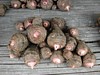
2. Thai term
used for albinism, especially used with albino animals, as in
chang pheuak,
kwai
pheuak,
ngu hao pheuak,
Thai names for a
White Elephant (fig.),
albino water
buffalo and an albino
Monocellate
Cobra
(fig.),
respectively.
回
3.
Thai term used for leucism, a condition at first
sight similar to and often confused with albinism, but which is characterized by
reduced pigmentation (fig.).
The main difference is that albinos typically have red eyes, due to the
underlying blood vessels showing through, whereas leucistic animals have
normally coloured eyes. The condition can also be
partial and is as such referred to by the term pied, i.e.
‘particoloured’, which in
animals is often black and white, e.g.
Pied Imperial-pigeon (fig.).
回
pheung (ผึ้ง)
Thai for
‘bee’.
回
phi (ผี)
Thai
for ‘ghost’, ‘spirit’, ‘spook’, ‘devil’, ‘jinn’, ‘genie’, ‘demon’ and
‘apparition’.
回
Phian Akkadhammo (เพี้ยน อัคคธัมโม)
Thai. Name of a
revered monk and cleric teacher
with the title of
Luang Pho.
Born in 1926, he was ordained on 4 August 1976 at the age of 41, and passed away
on 16 November 2017, aged 91. He was
a former abbot of
Wat Kreun Kathin in
Lopburi.
On
5 December 2005, on the occasion of the Birthday Anniversary of King
Bhumipon Adunyadet,
Luang Pho Phian was conferred the
name and honorary title of
Phra Kruh
Wimon Samanawat
and received
the
certificate of appreciation that comes with it on 17 December 2005, at
Wat Rai Khing (วัดไร่ขิง) in
Nakhon Pathom.
回
Phiang Din (เพียงดิน)
Thai.
‘Only Soil’ or ‘Just Earth’. Name of a small yet picturesque
waterfall in
Loei province,
in the vicinity of
Suan Hin Pha Ngam
(fig.).
WATCH VIDEO.
回
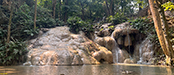
Phi Boong Tao (ผีบุ้งเต้า)
Thai. ‘Ghostly gourd mask’. Name of a mask made from a
calabash.
READ ON.
回
Phibun Songkram (พิบูล สงคราม)
Field Marshall and Prime Minister during WW II.
READ ON.
回
Phichai Dahb Hak (พิชัยดาบหัก)
Thai. ‘Victory
with a broken sword’ or ‘victory by slashing swords’. Nickname of a local hero
from
Uttaradit. Born in 1741 AD at Ban Huay Kha and
named simply Joy (จ้อย), he later in life was renamed Thong Dih (ทองดี) and
became
Phraya,
a military leader and influential partner of Phraya Tak, the later king
Taksin.
In 1773 AD, Posupala (Bo Supia), the Burmese Commander-in-Chief, led his troops
from
Vientiane
to capture Phichai, a local city South of Uttaradit. Consequently,
Chao Phraya Surasih (สุรสีห์)
and
Phraya Thong Dih
led the Siamese troops to defend the city against the enemy. In the courageous
hand-to-hand fight that followed at Wat Aka, Phraya Thong Dih used dual swords
as his weapons, and is said to have fought the enemy by slashing the two swords
so hard, that one of them actually broke (fig.).
In spite of this, he kept fighting vigorously, until he and his men drove the
enemy away and succeeded in averting the Burmese invasion. Following the event,
he was honoured with the name Phichai Dahb Hak, after the broken sword and the
city he had defended. His statue and
a small memorial museum in front of Uttaradit's Provincial Hall commemorate this
local hero (map
-
fig.).
回

Phichaiyaht (พิไชยญาติ)
Thai. Name of a
Chao Phraya
who was a member of the influential
Bunnag family and who
served under several
Chakri
kings, from
Rama I
to
Rama IV.
READ ON.
回
Phichit (พิจิตร)
Thai.
‘Beautiful city’.
Name of a
jangwat, i.e. a Thai
province and its provincial capital city (map) of the same name in North Thailand, situated 344 kilometeres to the North of
Bangkok.
READ ON.
回
Phichitmaan (พิชิตมาร)
Thai.
‘Conqueror of
Mara’ or
‘conqueror of demons’. A name for the
Buddha.
回
Phikhanesawora
See
Phra Phikhanesawora.
回
phikun (พิกุล)
Thai name for the
Star Flower Tree.
回
Philatelic Museum
Museum on the 2nd floor of
Bangkok's northern Metropolitan Postal Bureau, in Saphan Kwai district.
READ ON.
回
Philippine Violet
Common name
for a perennial shrubbery plant, with the botanical name Barleria lupulina.
It grows up to 90 centimeter tall and is popular for its medicinal value. The
root has anti-inflammatory qualities and is used for treatment of insect bites,
especially those from centipedes, whereas the leaves are used fresh to treat
herpes simplex. It has reddish-purple branches, narrow, purplish dark green
leaves, and tubular, bright yellow flowers, that bloom in clusters from a
purplish-brown strobilus (fig.).
Also commonly known as Hophead and Porcupine Flower, and in Thai called salet
phang phon (เสลดพังพอน).
回
Phimai (พิมาย)
1. See
Prasat Hin Phimai.
回
2. A small city situated about 60 kms Northeast of
Nakhon Ratchasima in the vicinity of the remains of
Prasat Hin Phimai
(fig.).
回
phiman (พิมาน)
Thai term for the
‘dwelling
place of an angel or deity’
or a ‘celestial residence’.
The word is used as part of compound names for a number of royal palaces in
Thailand, e.g.
Boromphiman
Palace in
Bangkok
(fig.)
and Varophat Phiman (วโรภาษพิมาน)
in
Ayutthaya's
Bang Pa-in (fig.).
Also transliterated phimaan.
回
phin (พิณ)
Thai.
Name a
traditional, three-stringed,
plucked
instrument,
that originated in
Isaan,
and which is also found in neighbouring
Laos.
It has a pear-shaped body and a neck, that typically ends in an upward bent
headstock, which is usually shaped in the form of
kanok-flame
or a
naga-head.
The neck has a fingerboard over which the
three
metal strings
run, which are usually plucked using a pick. This
lute-like
instrument is somewhat reminiscent of the four-stringed
krajab
pih
(fig.)
and it features in the logo of the
Revenue Department (fig.).
回
Phiphek (พิเภก)
Character from the
Ramakien. He was the chief astrologer from
Longka
and a younger brother of
Totsakan, his
parents being
Thao
Lastian (ลัสเตียน),
i.e. Asuraphong (อสุรพงศ์),
and
Nang
Ratchada (รัชฎา). He was driven from the city and thus offered his allegiance to
Phra Ram
(fig.).
After the latter eventually defeated Totsakan, he appointed Phiphek as the king
of Longka. He is portrayed with a
green complexion (fig.),
eyes of which the upper eyelid partly
covers the eyeball and which are known as
tah jorakae (fig.), and characteristically wears a golden crown with a bulbous tip,
that is usually decorated with pieces of blue mirrored glass. Hence, he is very
similar to
Mahothon,
another demon character from the Ramakien, who also has a green complexion and
equally wears a golden crown with a bulbous tip, but which has a somewhat
shorter and more bulging point, and which is decorated with pieces of dark green
mirrored glass
(fig.).
In addition, the later has wide open
eyes called
tah phlohng
(fig.),
rather than tah jorakae.
In the
Ramayana,
Phiphek is known as Vibhishana or Bibhishan.
回
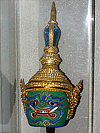
Phi Phi Islands
Name of an archipelago of six isles,
including the well-known Koh Phi Phi Don and Koh Phi Phi Le, i.e. the two
foremost islands.
READ ON.
回
phiphithaphan (พิพิธภัณฑ์)
Thai
for ‘museum’.
回
Phiphithaphan Hahng Khai Yah Berlin
(พิพิธภัณฑ์ห้างขายยาเบอร์ลิน)
Thai
name for the
Berlin Pharmaceutical Museum.
回
Phiphithaphan Meuang Nakhon Thai (พิพิธภัณฑ์เมืองนครไทย)
Thai.
A museum in Nakhon Thai District of
Phitsanulok
that displays objects, equipment and
weaponry from the reign of
Poh Khun
Sri Intaratit (fig.),
the first ruler
of the Kingdom of
Sukhothai
who
liberated the Thai people of the yoke of the
Khmer
and
reigned from 1238 to circa 1270 AD.
回
Phiphithaphan Silpa Thai Ruam Samai
(พิพิธภัณฑ์ศิลปะไทยร่วมสมัย)
Thai
name for the
Museum of Contemporary Art.
回
Phiphithaphan Thepsri Yantra (พิพิธภัณฑ์เทพศรียันตรา)
Thai.
Name for a museum in
Nakhon Pathom
that displays a mixture of colourful, both
large and smaller to life-sized statues of deities and characters form various
eastern religions, most notably from
Hinduism
and in specific from the Hindu god
Ganesha, to whom a single
hall alone dedicated to this
elephant-headed deity features 33 large
statues in various poses and colours, and with a variety of attributes and
sometimes
a
vahana
or consort. The museum has both an indoor and outdoor section with a
courtyard where a
brahmin
priest performs rites and blessings. Besides characters from religion it also
has a small Thai history section,
some
Khon
masks, i.e. traditional dance masks, and a garden with a pond, an
artificial cave and a waterfall. Besides the omnipresent Ganesha, characters on
display, include —yet, are not limited to—
Shiva (fig.);
Brahma (fig.);
Vishnu
(fig.);
Krishna (fig.);
Lakshmi (fig.);
Uma (fig.);
Radha (fig.);
Sri Mariamman or
Kali (fig. );
Mahakali (fig.);
Rahu (fig.),
a
legless demon, who as the
god of darkness is offered black flowers;
Garuda
(fig.);
Skanda or
Karttikeya (fig.);
the four guardian gods or
lokapala
Vaisravana,
Virudhaka,
Dhritarashtra, and
Virupaksa;
various
reusi or
hermits
(fig.);
Buddha images,
and some Chinese
Taoist
deities, etc. There is a room dedicated
to the half-human half-serpent
Nagaraat (fig.),
as well as a
separate air-conditioned room with wax images of famous Buddhist monks known as
Luang Pho
and
Luang Poo.
Many of the characters in the museum are displayed with
the typical attributes ascribed to them, whereas the Hindu deities may
additionally be depicted on or with an animal that represents their mount,
whilst some may be in the presence of their
shakti,
i.e. a consort. To a certain extent resembling a temple, the museum has
provided for visitors to worship and place offerings that can be obtained at the
museum's entrance.
WATCH VIDEO (1)
and
(2).
回
Phiphithaphan Waht Witthayawat
(พิพิธภัณฑ์วาจวิทยาวัฑฒน์)
Thai
name for the
Museum of Dentistry.
回
Phiphithaphan Witthayahsaht Lae Thong Fah Jamlong
(พิพิธภัณฑ์วิทยาศาสตร์และท้องฟ้าจำลอง)
Thai
name for the
Museum of Sciences and Planetarium.
回
phiphop (พิภพ)
Thai
for ‘world’ or ‘earth’. Also
lohk.
回
phi phraai (ผีพราย)
Thai. Name of
a very violent class of demons, primarily believed to be a kind of water ghosts
or water spirits. See also
Hohng Phraai.
回
phi pop (ผีปอบ)
Thai. Name of a kind of a
demon-like cannibalistic folk ghost or ghoul found only in
Isaan. It is said to eat only
human organs and never gets full or satisfied. It is believed that the spirits
of those who become such a ghoul are usually from people who in life practiced
occultism and were unable to follow its strict rules, violating certain
prohibited laws, such as using black magic and sorcery to hurt others. For their
frequent evil deeds they are punished by the spirit of the teacher of the occult
by being turned into such a ghoul. These type of ghouls are said to be
intangible ghosts that will possess the body of a sleeping person, whose liver,
kidney and stomach they will eat whilst their victim is asleep. Those who are
eaten will hence die without any external wounds, as if they are just sleeping,
a phenomenon known as laai tai (ไหลตาย), and which translates as ‘death flow’.
If in an Isaan village several such suspicious deaths occur, when villagers have
died for unknown reasons, the village will perform a ghoul exorcism ceremony, i.e. a kind of ghost hunt. In the eviction ceremony, locally known as siang khong (เซียงข้อง), the villagers use forked sticks to chase the ghouls
that reside in various places. When
they are able to capture the phi pop ghosts, they are locked inside an earthen
jar and burned. The jar will then be closed off with a white cotton
pah yan
cloth on which
in black
some sacred
yan
writings are scrabbled, and buried
somewhere outside the village. Sometimes a
cut off section of a
bamboo stem
called a
bong
is used to confine the ghosts
(fig.).
回
_small.jpg)
Phirap (พิราพ)
Thai. Name of
an
asura
or
yak
in the story
Ramakien,
who is
described as very powerful and mischievous. He was expelled by
Idsuan
and condemned to live only at Mount Atsakhan, where he later created his own
garden and planted a fruit tree known as Pawatong. One day, when Phirat was
absent,
Rama
(fig.),
Phra Lak
(fig.),
and
Sida
entered his garden to
rest and picked some fruit from the tree. Upon discovering this, Phirap's
servants tried to expel the trio, but Rama put up a fight and killed many of the
servants. When Phirap returned and discovered what had happened, he became very
angry, but upon seeing the beauty of Sida, he immediately fell in love. Using a
magic spell, Phirap then created a darkness, which he used as a cover to abduct
Sida. However, Rama shot an arrow to lift the darkness, and subsequently shot
and killed Phirap, with a powerful arrow called
Phrommat,
thus freeing Sida in the process. Phirap
is
often referred to as
Phra
Phirap, whilst his name
should be pronounced Phiraap. In
khon,
he is usually portrayed with a deep purple
complexion and wearing a golden crown with upward, elongated and pointed
ear-covers, though he may also be depicted wearing
a
kabang
(fig.),
i.e. a diadem-like crown (fig.). He is also known as Phairaap (ไภราพ), and in the past as Phairawa (ไภรวะ)
or Pharahwa (ไภราวะ).
See also LIST OF RAMAKIEN CHARACTERS.
回
_small.jpg)
Phisadet Ratchani (ภีศเดช รัชนี)
Thai. Name of a prince
of the
late
Rattanakosin
Period,
who was born on 1 January 1920
as the son of Prince
Phitayalongkorn.
READ ON.
回
phisamon (พิสมร)
Thai for ‘amulet’.
回
phi seua (ผีเสื้อ)
1. Thai for ‘butterfly’. Many species are endemic to Thailand, both daytime and nocturnal butterflies
(fig.). Nocturnal
butterflies or moths are called
phi seua klahng keun in Thai, which can be
translated as ‘night butterfly’ or ‘moth’. See also
phi seua kathoey.
回
2. Thai.
‘Butterfly’. Architectural term
for a triangular decorative element on a roof corner, usually with temple
buildings. Its symmetric design is reminiscent of a butterfly, hence the name.
回
%20triangular%20decorative%20element%20on%20a%20Thai%20roof%20corner_small.jpg)
3. Thai term for an ‘ogre’, a class of male
and female demons, as in
phi seua samut.
They are usually depicted holding, swaying or carrying a club, in Thai known as
a
krabong.
回
phi seua jon kah laai jud
(ผีเสื้อจรกาลายจุด)
Thai name for
the
Spotted Black Crow.
回
phi seua kathoey (ผีเสื้อกะเทย)
Thai name for gynandromorphic butterflies,
i.e. butterflies of any given species that have characteristics of both the male
and the female.
READ ON.
回
phi seua klahng keun
(ผีเสื้อกลางคืน)
Thai for ‘moth’, literally it translates
‘night butterfly’. Thailand has many species of
moth, including some very large ones, such as the
Giant Uranid Moth
and the
Atlas Moth.
Many moths have interesting wing markings, such as eyespots, known as ocelli,
reminiscent of owl's eyes, whilst other species are masters in camouflage,
camouflaging themselves to look like a dead leaf, or by curling up to resemble a
twig. Some smaller moths camouflage as bird droppings and yet others have an
upward bent abdomen (fig.).
回
phi seua klahng keun kahng kahw pak tai (ผีเสื้อกลางคืนค้างคาวปักษ์ใต้)
Thai. ‘Southern
bat moth’. Name for the
Giant Uranid Moth, species Lyssa
menoetius.
It is closely related to the
phi seua klahng keun kahng kahw thammada. See
also
kahng kahw
and
phi seua.
回
phi seua klahng keun kahng kahw thammada (ผีเสื้อกลางคืนค้างคาวธรรมดา)
Thai. ‘Common
bat
moth’. Name for the
Giant Uranid Moth, species Lyssa
zampa. It is closely related to the
phi seua klahng keun kahng kahw pak tai.
See also
kahng kahw
and
phi seua.
回
phi seua muan waan
(ผีเสื้อมวนหวาน)
Thai.
‘Queasy-sweet moth’. Name for any of the species of
Fruit-piercing Moth.
回
phi seua non jo mai (ผีเสื้อหนอนเจาะไม้)
Thai. ‘Moth (phi
seua) of tree-boring larvae (non)’.
Generic name for moths of the family
Cossidae, such as
Xyleutes persona
(fig.),
Xyleutes strix, Zeuzera pyrina (fig.),
etc.
Members
of this family are commonly known as carpenter moths or goat moths. The first
designation refers to the fact that the larvae of most species are
tree borers that infest
wood, in some species taking up to three years to mature,
whereas the latter name refers to the fact that they often have an
unpleasant smell. The Thai word phi seua literally means ‘butterfly’, but the
term is also generally used for moths, which specifically are called
phi seua klahng keun, i.e. ‘night butterfly’.
回
phi seua non
kah fahk thammada (ผีเสื้อหนอนกาฝากธรรมดา)
Thai. ‘Common
parasite-worm butterfly’. Name for the
Painted Jezebel.
回
phi seua
non khao sahn laai seua (ผีเสื้อหนอนข้าวสารลายเสือ)
Thai. ‘Rice caterpillar tiger butterfly’. Name for the ‘Common tiger’, a butterfly with the
scientific name Danaus genutia, which is commonly found throughout South and
Southeast Asia, from India and Sri Lanka, to Indonesia and Australia. Its wings, with a span of 75-95 mm, have an
orange to reddish-brown background colour, with darkened veins that are marked
with broad black bands, and black margins with two rows of small white spots.
Its body is black with white dots. Males have a prominent black-and-white spot on the underside of the hindwing.
There are several subspecies. Also called Striped Tiger.
回
%20ผีเสื้อหนอนข้าวสารลายเสือ_small.jpg)
phi seua
sahyan sih tahn thammada (ผีเสื้อสายัณห์สีตาลธรรมดา)
Thai. ‘Common
brown evening
butterfly’. Name for the
Common Evening Brown.
回
phi seua samut (ผีเสื้อสมุทร)
Thai. ‘Marine butterfly’. A class of demons living in water.
READ ON.
回
phi
seua saphai fah (ผีเสื้อสะพายฟ้า)
Thai. ‘Pale
blue sling bag
butterfly’. Thai
designation for the
Common Bluebottle.
回
phi seua yah (ผีเสื้อหญ้า)
Thai. ‘Grass
butterfly’. Name for any of the species of
Wasp Moths.
回
phi seua
yak (ผีเสื้อยักษ์)
Thai. ‘Giant
butterfly’. Name for the
Atlas Moth
(fig.).
回
phisiw (พีซิว)
Thai-Tae Chew name for
Bi Xie.
回
Phi Tah Khohn (ผีตาโขน)
Thai. ‘Ghostly vision masked dance performance’. Annual festival in Dahn Saai, in
Loei province.
READ ON.
回
Phi Tong Leuang (ผีตองเหลือง)
Thai.
‘Ghosts of the Yellow
Leaves’.
Local nickname for the
Mlabri
people, because due
to their speedy nomadic lifestyle, in which they never tend to stay in any given
place for very long and thus inhabit simple
bamboo huts thatched with leaves (fig.),
it is said that they abandon their dwellings as soon as the leaves turn yellow. See also
phi
and
tong.
回
Phitayalahp Phrithiyakorn (พิทยาลาภ พฤฒิยากร)
Thai. Name of a prince
of the
Rattanakosin
Period, who was born
on 7 November 1885
as
Prince
Thaniniwat Sonakun, a
grandson of King
Rama IV,
his father being the 62nd child of King
Mongkut.
He was a minister of justice, with the title of
Krom Meuan, and
President of the Privy Council,
succeeding Prince
Rangsit Prayoonsak (fig.) at
his death in
1951 and substituting as
Regent
for King Rama IX during the latter's royal
visit to Japan, Taiwan and the Philippines in 1963.
Prince Phitayalahp Phrithiyakorn passed away on 8 September 1974, aged 88.
See also POSTAGE STAMP.
回
Phitayalongkorn (พิทยาลงกรณ์)
Thai. Name of a prince
of the
Rattanakosin
Period, who was a philosopher and had the
title of
Krom Meuan.
The
prince was born on 10 January 1876 AD, as the son of
Phra
Ong
Chao
Yod
Yingyot (พระองค์เจ้ายอดยิ่งยศ), who in
the
reign of his cousin King Rama V
was
Uparacha or
Vice
King of
Siam
and as the eldest son of
Phra Pinklao,
and thus a nephew to King
Mongkut,
held
the title of
Front Palace.
He
was one of the most respected poets of the
Rattanakosin era and wrote under the pseudonym NMS (นมส). He resided in
Wang Pramuan
in
khwaeng
Silom,
in
Bangkok's
khet
Bangrak. His eldest daughter
was Princess
Wiphawadi Rangsit,
who inherited his gift for writing. Prince Phitayalongkorn passed away on 23 July 1945 from a
cerebral hemorrhage, aged 68.
He is known as the Father of Cooperatives in
Thailand.
See also POSTAGE STAMPS (1)
and
(2).
回
Phitsanulok (พิษณุโลก)
1. Thai. ‘World of
Vishnu’. A province (map) and its capital city of the same name in North Thailand.
READ ON.
回
2. According
to ancient sources, the original name of
Angkor Wat.
Due to the lack of a v-sound in the Thai language (see
Thai Alphabet), the name Phitsanu
became a cognate for the name
Witsanu,
which has a common etymological origin. In
early recordings, Angkor Wat was referred to as
Phreah
Pisnulok or
Phra
Phitsanulok,
i.e. the ‘World of
Vishnu’
(Vishnu-loka) and the name
Angkor Wat, in
Khmer actually
Angkor Vat and in Thai
Nakhon Wat, meaning
‘Capital
Temple’, ‘Temple
City’ or ‘City
of Temples’,
only became a popular designation later on, after its
‘rediscovery’
and popularization in the West, in the mid-19th century. The names Phreah Pisnulok
and Vishnuloka are also reminiscent of Paramavishnuloka, the posthumous title
and deified name of Suryavarman II, the founder of
Angkor Wat.
回
phittih (พิธี)
Thai
for ‘ceremony’.
回
Phittih Kohnjuk
(พิธีโกนจุก)
Thai.
‘Tonsure Ceremony’. A ritual ceremony in which a small tuft of hair, called
juk by the local population, is cut off
and shaved (kohn) when the boys reach the age of 11 or 13. Since 12 is a pair number and considered to bring bad luck the ceremony will not be performed at that age. The growing of the tuft of hair goes back on a centuries old belief that it should prevent children from becoming chronically ill.
The ceremony is reminiscent of the
buat
ceremony, which is performed on a person
entering the priesthood. The ceremony is generally regarded as a coming of age
and in the past, this tradition was also upheld by royalty. At the time of a
royal tonsure, a young prince destined for the throne would also be formally
invested.
This
Tonsure Ceremony and Investiture,
an elaborate form of the Thai topknot-cutting ceremony, is reserved for royalty
of phra ong chao (พระองค์เจ้า) rank and above, and is in Thai known as
Phra
Racha
Phittih
Sokan (พระราชพิธีโสกันต์). In Japan, the topknot of a sumo wrestler is cut off in
a hair cutting ceremony upon retirement, thus transforming the wrestler back to
civilian status.
Also spelt
Pittih Kohnjuk.
Compare with
Phittih Tham Khwan Deuan.
回
_small.jpg)
Phittih Phrom Nahm Mon Sop (พิธีพรมน้ำมนต์ศพ)
Thai.
‘Corpse holy water sprinkling ceremony’.
A ritual
performed by a monk
during a funeral ceremony, in which a
deceased is sprinkled with
nahm mon,
i.e. holy water. See also
rod nahm mon
and
Luang Poo Tai Hong Kong.
回
Phittih Sabaan Tong (พิธีสาบานธง)
Thai for
Trooping the Colour.
回
Phittih Suansanam Thahaan Rachawanlop (พิธีสวนสนามทหารราชวัลลภ)
Thai for the annual
Military Parade of the Royal Guards, in English often referred to as
Trooping the Colour.
回
Phittih Tham Khwan Deuan (พิธีทำขวัญเดือน)
See
Tham Khwan Deuan.
回
phlaay (พลาย)
Thai for male
elephant (fig.). See also
Asian Elephant,
phang and
sihdoh.
回
Phlaay Chumphon (พลายชุมพล)
1. Thai. Name of
a character in the
story
Khun Chang Khun Paen,
i.e. a child of
Khun Paen with Nang Kaew
Kiriyah (นางแก้วกิริยา), i.e. a daughter of the
Phraya
of
Sukhothai
and Nang Phen Chan (นางเพ็ญจันทร์).
The HTMS Phlaay
Chumphon, a submarine of the type
Madchanu once
used by the Royal Thai Navy (fig.),
was named after this character.
回
2. Thai. Name of a submarine, usually
referred to as the HTMS Phlaay
Chumphon, i.e. a U-boat of the type
Madchanu that was once
used by the Royal Thai Navy (fig.),
and which is named after a character
from the
story
Khun Chang Khun Paen.
回
phlab (พลับ)
Thai for
persimmon. Also called
phlab jien,
maphlab and
takoh.
回
phlab jihn (พลับจีน)
A Thai name for
persimmon.
回
phlabphlah (พลับพลา)
Thai. The
temporary quarters for a king, i.e. a royal pavilion. It is build especially for
the king when he has to attend, overlook, or take part in a ceremony, and
whereas
some pavilions may afterwards be dismantled, as is the case with royal
funerals held at
Sanam Luang
(map-
fig.),
some are conserved in their original place, e.g.
Rajakit Winitchai (map
-
fig.), while others have been relocated (map
-
fig.).
回
%201_small.jpg)
phlab phleung teen pet (พลับพลึงตีนเป็ด)
Thai.
‘Duckfeet lily’. Thai name for the
spider lily.
回
Phleng Chaht Thai (เพลงชาติไทย)
Thai.
‘Thai National Anthem’.
READ ON.
回
Phleng Kiat Tamruat Khong Thai (เพลงเกียรติตำรวจของไทย)
Thai. ‘Song of the honour of the Thai
Police’.
READ ON.
回
Phleng Sansaroen Phra Barami (เพลงสรรเสริญพระบารมี)
Thai-rajasap.
‘Song of praise to the grandeur’. The Royal Hymn
of Thailand.
READ ON.
回
phleng tanyong (เพลงตันหยง)
Thai. Name for
the music and lyrics that accompanies the Muslim traditional
rong ngeng
folk dances of southern Thailand. Although it initially consisted of only
vocals, an ensemble is nowadays composed of a violin and one or more small drums
known as
klong ram manah. Also called
phleng tonyohng.
回
phleng tonyohng (เพลงตนโหยง)
Thai.
Another name for
phleng tanyong.
回
phluang (พลวง)
Thai name for
dipterocarpus.
回
phnom (ភ្នំ)
Khmer. ‘Hill’ or ‘mountain’. The term often
occurs as part of a name for a
temple, sanctuary or sacred place located on a hill or mountain. As such, it
stands at the origin of the name of the
Cambodian capital
Phnom
Penh, which
derives from a small hill or phnom onto which summit a wealthy lady, called
Penh
(fig.), had a temple built, i.e.
Wat Phnom (fig.), in
which she placed a piece of wood from a candlenut tree with images of four
buddha's
as well as an image of
Vishnu, that she
in 1372 AD had found floating in the Tonlé Sap River (fig.). In Thai, the term is pronounced
phanom and equally
used in names for temples or sanctuaries, as in
Prasat Phanom Rung.
回
Phnom Penh (ភ្នំពេញ)
Khmer.
‘Hill of Penh’ or ‘Penh Mountain’. Name of the capital of
Cambodia,
which derives from a 27 meter tall hill,
called
phnom in
Khmer,
and a wealthy lady, called
Penh
(map -
fig.). The
latter had a temple
built
on the summit, i.e.
Wat Phnom (map
-
fig.),
of this hill in order to house a piece of wood from a candlenut tree which she
in 1372 AD had found floating in the Tonlé Sap River (fig.)
and that contained images of four
buddha's,
as well as an image of
Vishnu.
The compound name of this venerated height and of the lady who built the temple
on its summit was in 1434 AD
chosen to be the name for the city when it was founded.
Statues of lady Penh can today be found in and around Wat Phnom.
回
phoenix
Name often used in
English to refer to
a Chinese mythical bird which is actually called
fenghuang
(fig.)
in Chinese. It is often depicted
together with a
dragon
(fig.),
which is the symbol of the Emperor, and as such is the phoenix a
representation of the Empress (fig.).
In addition, it symbolizes peace and nobleness.
回
_small.jpg)
phohng phaang (โพงพาง)
Thai.
‘Ghost-like’. Name of a traditional Thai children's game, in which one
player is blindfolded and made to turn around three times. He is further
referred to as the ‘fish’.
The others hold hands and walk around him starting a question and answer rhyme,
chanting: ‘Catch me if you can; the
fish swims by, the fish is blind; catch me dead or alive; what will it be, a
dead or a live fish?’. If the answer
is a ‘dead fish’,
the other children can move around freely when the blindfolded player comes
around to chase them, but if it answers, a
‘live fish’, then everyone
else must freeze, and when caught, the ‘fish’
must guess who the person is and if he guesses right he will be replaced by that
unlucky person. In English, a equivalent of this game is known as Blind Man's
Buff.
See also POSTAGE STAMP.
回
phom (พ้อม)
Thai. Large, round,
cylindrical basket, used for storing unhusked
rice or unthreshed paddy. It is
woven from thin
bamboo strips and patched with earth.
It is usually about 120 centimeters wide and either of a similar height or
somewhat higher. It is typically kept in a shack with an elevated floor made
from bamboo, adjacent or close to the house.
See also POSTAGE STAMP.
回
_small.jpg)
phong choorot (ผงชูรส)
Thai name for
monosodium glutamate (MSG).
回
phop (ภพ)
Thai-Sanskrit word for
‘world’ or ‘earth’, used
besides the more common word
lohk.
Also
phiphop.
回
photduang (พดด้วง)
Thai.
A former currency in
Siam, which
–due to its specific shape– is known as
bullet money.
READ ON.
回
photisat (โพธิสัตว์)
Thai for
bodhisattva.
回
Photiyaan (โพธิญาณ)
Thai for
Bodhiyan.
回
phoykuan (โพยก๊วน)
Thai. Bill of exchange, especially the one circulating among Chinese businessmen in the Far East. See also
pih and
photduang.
回
Phra (พระ)
1. Thai.
‘Holy’ or ‘sacred’. Term used to express respect and used as a prefix before the names of kings or things associated with the monarchy or royalty, gods and objects of veneration,
including
Buddha images, e.g.
Phra Chao Naresuan,
King
Naresuan;
Phra Rachawang, royal palace;
Phra Chedi, a
stupa
or
chedi; etc. Generally used without changing the meaning of a word.
It is related to the words
Brahman
and
phreah, as
well as with
the Burmese term
Phaya.
回
2. Thai. A clergyman, monk or Buddhist priest, e.g.
Phrasong and
Phrasong Ong Chao. Also used for a saint
or hermit.
回
3. Thai. A non-hereditary title or
bandasak immediately below a
Phrya and above a
Luang.
回
4. Thai. The protagonist or hero in a story, e.g.
Phra Narai and
Phra Sang.
回
Phra Ajaan Man (พระอาจารย์มั่น)
Thai.
‘Determined Teacher Monk’.
Popular name for
Man Phoorithattoh
(fig.),
with the titles
Phra
and
Ajaan.
回
phraam (พราหมณ์)
1. Thai for
brahman.
回
2. Thai. A kind of
mango.
回
Phra Ahtit (พระอาทิตย์)
Thai name for the sun god, as well as the god of Sunday. He drives a chariot pulled by
seven horses, or alternatively, a
rajarot (fig.)
pulled
by
a
single mythological
lion
called
singh (fig.), and is the
lokapala
of the Southwest. He, together with the moon god
Chandra,
discovered the deceit of the demon
Rahu
when the
amrita was distributed. He is
also known by the name
Nairitti
(fig.)
and in Sanskrit he is called
Surya. His charioteer who
drives him
across the sky is called
Aruna. In the
Ramakien, he
is requested to slow down the seven horses that pull his chariot, in
order to gain time when
Phra Lak
(fig.)
was struck unconscious by the
magical
Mokhasak spear,
thus allowing
Hanuman
(fig.)
enough time to collect the
required herbs to break the spell.
See also
thep prajam wan.
回
Phra Angkahn (พระอังคาร)
1.
Thai. The god of war and the god of Tuesday. His mount is a
buffalo.
In a later
incarnation,
he was born as the monkey-warrior
Wisantrahwih (fig.).
Also transcribed Phra Angkarn. See also
thep prajam wan.
回
2. Thai-Rajasap. The ashes of royalty. Also
transcribed Phra Angkarn.
回
Phra Anyah Kohnthanya
(พระอัญญาโกณฑัญญะ)
Thai name for
Ajnata Kaundinya.
回
Phra Aphaimanih (พระอภัยมณี)
A Thai epic story in verse written by
Sunthorn Phu.
READ ON.
回
Phra Araam Luang (พระอารามหลวง)
Thai.
Name for a temple that a King or a member of the royal family had built or
restored. Also referred to as
Wat Luang. See also
Phra,
araam,
Luang and
wat.
回
Phra Attharot (พระอัฏฐารส)
Thai. Name for a large
standing Buddha statue depicted with an
abhaya
mudra, that was popularly built during the
Sukhothai period.
The name Phra Attharot is
understood to mean the ‘Buddha [that is] eighteen [sok
or cubits tall]’ or as the ‘Buddha [with the] eighteen [Buddhist virtues]’ , with attha
meaning ‘eight’ and related to ashta, as in
Ashtamangala,
while rot is understood to be a distortion of the word tot which
means ‘ten’, as in
totsabarami,
Totsachat, and
Totsakan. There
are reportedly currently six such statues, i.e. at
Wat Mahathat
(fig.)
and at
Wat Saphaan Hin
(fig.),
both in
Sukhothai;
at
Wat Phra
Sri Rattanamahathat
(fig.)
and at Wat Wihaan Thong (fig.), both in
Phitsanulok;
and at
Wat Chedi Luang
(fig.)
in
Chiang Mai.
See also TRAVEL PICTURE.
回
Phrabaht (พระบาท)
1.
Thai-Rajasap for the feet of a king or a prince. On 27 February 1982, after
gaining a decisive victory in military operations to suppress the insurgency of
the Communist Party of Thailand (CPT), King Rama IX, the then commander of the
Thai Army, visited his troops at Doi Phaya Phiphak (ดอยพญาพิภักดิ์) Operation
Base on Doi Yao (ดอยยาว) Ridge, in
Chiang Rai
Province, where in 1981 the final and decisive battle on the top of Doi Phaya
Phiphak was fought, which eventually led to the collapse of the CPT. On the
occasion of his visit, the King had a print of his bare feet cast into plaster,
in order to pay homage to the troops, who between 1968 and 1982 had carried out
multiple inspection and suppression operations against the CPT, after the latter
in 1954 had created as terrorist situation in the northern regions of Thailand,
that led to a guerrilla war that was fought mainly between the CPT and the
government of Thailand, and that lasted from 1965 until 1983, when the CPT
-after several military defeats and promises of amnesty by the Thai government-
abandoned the insurgency entirely, ending the conflict. The King's footprints
were later enshrined in a special footprint pavilion, within the compound of the
Mengrai
Maha Raj Military Camp, home of the
3rd Infantry Battalion, 17th Infantry Regiment, 37th Infantry Division. It was
later moved to a new pavilion known as
Sala
Roi
Phrabaht
which was erected for the auspicious occasion of King Rama IX's 80th Birthday
Anniversary on 5 December 2007. See also
baht.
回
2. Thai-Rajasap.
Title used as a prefix to the name of a king after
1782, in the
Bangkok or
Rattanakosin
period.
回
Phra Bodhisattva (พระโพธิสัตว์)
See
bodhisattva.
回
Phra Borom Maha Rachawang (พระบรมมหาราชวัง)
See
Phra Rachawang.
回
Phra Boromma Rachaanusawarih (พระบรมราชานุสาวรีย์)
Thai.
Name and prefix for any royal statue or memorial.
回
Phra Boromma Rachaanuyaht (พระบรมราชานุญาต)
Thai.
‘Royal Permission’ or ‘Royal
Assent’. See
Krut Trah Tang Hahng.
回
Phra Boromma Sahrihrikathat (พระบรมสารีริกธาตุ)
Thai. A
bone relic of the
Buddha,
or sometimes of
other
buddhas, i.e.
notable Buddhist monks
and saints.
They are sometimes preserved in bell-glass
displays or miniature
stupas,
but more likely enshrined
in a
chedi.
When the Buddha died, the
cremation of his body was conducted by
Ananda, one of his favourite followers. Seven
neighbouring rulers, as well as king Ajatasatru demanded that his relics were
divided amongst them. The residents of
Kusinagara, the place
in North India where the
Buddha
died,
initially refused
this and it almost led to a war. Through the advice and intervention of a wise
man, named Drona, calamity was averted and the relics were divided between the
eight countries. In addition, the ashes of the funeral pyre and an earthen jar
with relics were given to two more rulers.
Temples with Buddha relics in Thailand are
referred to as
Wat
Phrathat.
回
_small.jpg)
Phra Buddha
Sihing
See
Phra Phutta Sihing.
回
Phra Chadil (พระชฏิล)
Thai-Sanskrit. Name of a
reusi,
i.e. a hermit
(fig.),
in the epos
Ramakien.
He could show
Hanuman
(fig.)
and his army the way to
Longka in
their search of
Nang
Sida
(fig.),
the consort of
Phra Ram.
See LIST OF RAMAKIEN CHARACTERS.
回
Phra Chao (พระเจ้า)
1. Title of a prince in Thailand, e.g.
Phra Chao Look Yah Teh and
Phra Chao Naresuan.
回
2. In Thailand the prefix of a name or title of a monarch, e.g.
Phra Chao Taksin and Phra Chao Chakrapad,
where ‘Chakrapad’ means emperor and ‘Phra Chao’ is the prefix.
回
3. Thai. A god or deity, a divine being.
回
4.
Thai the prefix of a name or title of respected figure, as in
Phra Chao Tah.
回
Phra Chao Look Yah Te (พระเจ้าลูกยาเธอ)
Thai.
‘Prince, son of a king’.
回
Phra Chao Naresuan (พระเจ้านเรศวร)
See
Naresuan.
回
Phra Chao Seua (พระเจ้าเสือ)
Thai.
‘Tiger King’. Self-proclaimed title of
the cruel
Ayutthayan
King Somdet Phra Sanphet VIII of the
Ban Phlu Luang
Dynasty.
He ruled
for only five years, from 1703 to 1708 AD, and was infamous for his reign
of tyranny, terror and debauchery.
He was a cunning,
bullying schemer, who after the death of his predecessor, King Somdet Phra
Phetracha, had so terrorized the rightful heir to the throne, i.e. the king's
nephew Pichai Surin, that the latter gave it up in his favour.
He was born in
Phichit
and is also known by the names Suriyenthrathibodi (สุริเยนทราธิบดี) and Luang
Sorasak (หลวงสรศักดิ์).
回
Phra
Chao Tah (พระเจ้าตา)
Thai.
‘Respectful Grandfather’. Appellation of a
hermit
character from the story
Phra Aphaimanih by
Sunthorn Phu,
who in English is usually referred to as the Old Hermit.
He is also referred to as just
Phra
Reusi
and is depicted on the sixth of a series of eight Thai postage stamps issued in
2009 to publicize the story of Phra Aphaimanih as
a major literary work of the
Rattanakosin
Era
(fig.).
Also transliterated Phra Chao Ta. See also
Phra Chao
and
Thai Family Tree.
回
Phra Chao Taksin (พระเจ้าตากสิน)
King
Taksin.
回
phra chedi
(พระเจดีย์)
See
chedi.
回
Phra Chinnarat Bai Sema (พระชินราชใบเสมา)
Thai. Name given to a Buddhist
amulet
that is part of the five
Phra Yod Khunphon.
READ ON.
回
Phra Chom Klao (พระจอมเกล้า)
Thai
name for
Rama IV,
the fourth monarch of the
Chakri
Dynasty. He
is one of the Great Kings in Thai history referred to as a
Maha Raj
and as
such his statue (fig.)
is included in the monument at
Uthayaan Rachaphak
(fig.).
Also transliterated
Phra
Jom Klao and Phra Chom
Glao.
回
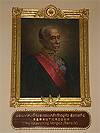
Phra Chuthathutrachatahn
(พระจุฑาธุชราชฐาน)
Thai. Name of the Royal
Summer Palace of King
Rama V
after his return from Europe, and who lived there between 1897 and 1901 AD. The
complex consisted of several separate buildings, including the main
teakwood
mansion
Phra
Thihnang Manthatrattanaroht,
Reuan Mai Rim Thalae
(fig.),
Reuan Wattanah (เรือนวัฒนา), Reuan Phongsri (เรือนผ่องศรี), Reuan Phirom (เรือนอภิรมย์),
and
Phra Chedi
Ubosot Wat
Atsadang Nimit (พระเจดีย์อุโบสถ
วัดอัษฎางคนิมิตร), named after
Atsadang Dechawut.
The palace was near the seashore and a special jetty, known as the
Sapaan Atsadaang (fig.),
was built to allow the royal family easy access. In 1901, after Koh Sichang was
invaded by the French, the main royal residence was taken apart, moved to
Dusit
in
Bangkok,
re-assembled and renamed
Vimanmek
(fig.).
The foundations on the ground at the location where this huge wooden mansion
once stood are still visible today. Reuan Wattanah today is a museum dedicated
to the history of the palace, the island, and the royal family, in particular
King
Chulalongkorn
(fig.)
and his son
Prince
Atsadang Dechawut
(fig.).
See MAP.
回
Phra Dabot (พระดาบส)
Thai. ‘Anchorite’. Another term for
reusi.
READ ON.
回
Phrae (แพร่)
Thai. ‘Propagate, spread’. Province (map) and its capital city of the same name in North Thailand, 551 kms to the North of
Bangkok.
READ ON.
回
Phra Hoo Yahn (พระหูยาน)
Thai.
‘Drooping
Ears Buddha’. A popular Buddhist
amulet that
originates
from
Wat Phra Sri Rattanamahathat in
Lopburi, and which
is cast from iron.
READ ON.
回
Phra Idsuan (พระอิศวร)
Thai
name for the Hindu god
Shiva (fig.),
especially when referred to in the
Ramakien
and in
khon
performances about
this epic, where he is represented
with a
khon mask
in the form of a human head,
with a white complexion
and wearing a golden
chadah-like
crown, with a peak which is somewhat inflated in the middle.
He is depicted on a 2013 Thai postage
stamp, as part of a set of eight khon masks
(fig.)
issued to commemorate the annual
Thai Heritage Conservation Day
by publicizing the national art of khon.
回
_small.jpg)
Phra In (พระอินทร์)
See
Indra. Also Phra Intra.
回
Phra Intra (พระอินทร์)
See
Indra.
Also Phra In.
回
Phra Isaan (พระอีสาน)
Thai for
Ishana.
回
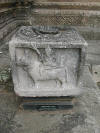
Phra Jan (พระจันทร์)
Thai. The god of
Monday and of the moon (fig.). He discovered the deceit by the demon
Rahu during the distribution of the
amrita,
together with Phra Ahtit, the god of the sun. His mount is a horse.
Sometimes transcribed as Phra Jantr, comparable to his Sanskrit name
Chandra
(fig.). See also
thep prajam wan.
See also
TRAVEL PICTURE and
THEMATIC STREET LIGHT.
回
Phra Kaan (พระกาฬ)
Thai.
‘Dark god’.
A
Hindu deity
associated with
the god of death, as well as with
any of the deities that are part of the post Vedic
Trimurti, i.e. the
divine
Hindu
triad
Vishnu,
Brahma and
Shiva, or any of their
respective
shakti.
The name is a Thai modification of
the
Sanskrit word
kala,
a term used to express time
and energy, death and creation, as well as the destruction of the universe and
which is personified as Kala or
Mahakala (fig.),
the Hindu god of time and
a form of
Shiva,
and as
Kali
or
Mahakali,
a form of his consort
Devi.
Both represent the terrifying destructive aspects of time, and it is Kala who
orders
Yama, the god of
death, who will die.
The Thai word for ‘time’
(kaan, กาล) is derived from it.
Note that the final consonant is written as
an ‘l’
(ล)
which in Thai at the end of a syllable or word is pronounced as an
‘n’,
whereas the final consonant ‘a’
in the Sanskrit name Kala is in fact unwritten yet an
‘a’ is
pronounced as in
Devanagari
script
each letter represents a consonant that
carries the inherent vowel ‘a’. In
Thailand, there are shrines named for Phra Kaan
in
Ayutthaya and in
Lopburi (map
-
fig.).
The latter houses
a ancient statue in Lopburi style and
with four arms (mostly damaged),
which was found without a head at the ruins of
laterite blocks
(fig.),
located behind the modern shrine. The statue is believed to represent either
Vishnu or
Avalokitesvara,
yet because it formerly had a black body it was named Phra Kaan. The now gilded
image was later on given a sandstone
Buddha
head in Ayutthaya style. Sometimes
transliterated Phra Kahn and Phrakaan. See also
Phra Kaan Chai Sri.
回
Phra Kaan Chai Sri (พระกาฬไชยศรี)
Thai. Name of
the servant of
Phra Yom, who is responsible for
sending the souls of sinners to hell. In Thai art, he is usually depicted as a
golden
Chaturbuja deity
wearing a
chadah
(fig.) and holding a sword, a wishing gem (fig.)
and a
pasa, while seated on his mount, i.e. a
winged mythological animal. Also transliterated Phra Kan Chai Si. The term Kaan
(กาฬ) in his name means
‘black
mark of death’.
See also
Phra Kaan.
WATCH VIDEO.
回
_small.jpg)
Phra Kaew (พระแก้ว)
See
Phra Kaew Morakot.
回
Phra Kaew Morakot (พระแก้วมรกต)
Thai name for the
Emerald Buddha.
回
Phra Kamphaeng Soom Ko (พระกำแพงซุ้มกอ)
Thai. Name of a popular and well-known Buddhist
amulet
from Thung Setthi (ทุ่งเศรษฐี),
a field in
Kamphaeng Phet.
READ
ON.
回
Phra Kaneht (พระคเณศ)
See
Ganesha.
回
Phra Kanthakuman (พระขันธ์กุมาร)
A Thai name for
Kanthakumara or
Subramaniam.
回
Phra Kathavarayan (พระกัตตะวรายัน)
Thai name for
Kathavarayan.
回
Phra Khattiyawongsah (พระขัติยะวงษา)
Thai.
Name of the first ruler of
Roi Et,
appointed in
1775 AD during the reign of King
Taksin
the Great (fig.).
He is nicknamed Thon (ทน) and was the son of
Thao
Jahn Kaew (ท้าวจารย์แก้ว), the leader of
Meuang Thong (เมืองท่ง)
and himself a high-ranking royal appointee.
Thon founded the now modern
city of Roi Et by bringing in evacuees from Meuang Thong to the new city's early
settlement, then known as Meuang Kum Rahng (เมืองกุ่มร้าง). He is considered a
great ruler as he was able turn Roi Et into one of the most prosperous cities in
the Northeastern region. A monument in his honour is erected in Roi Et's city
centre (fig.).
回
_small.jpg)
phra khi mah bintabaat (พระขี่ม้าบิณฑบาต)
Thai. ‘Monks
(phra) riding
(khi)
horses (mah) to go alms begging
(bintabaat)’. Term referring to the monks and novices of
Wat
Tham
Pah Acha Thong
(map
-
fig.)
in the
amphur
Mae Chan of
Chiang Rai
province. Every morning those clergymen set off on horseback rather than on foot
to go alms begging
in the neighbouring villages. The novices are mostly hill tribe children.
回

Phra
Klang (พระคลัง)
Thai. ‘Treasury
saint’. Name for the Thai god
of treasury, a kind of guardian angel that guards precious assets. He is
depicted in royal attire
and wearing a
chadah (fig.)
and typically holds a closed
lotus
flower in one hand and a sword in the other, or alternatively a bag of coins.
Also transliterated Phra Khlang. See also
Vayuphak.
回
,%20Thai%20god%20of%20treasury_small.jpg)
Phra Kring (พระกริ่ง)
Thai. A style
of small
Buddha image which rattles when shaken,
as it carries a relic or sacred object inside, after which the bottom at the
base is sealed off. This style of small Buddha image is produced by several
temples and the main temple hall at
Wat Somdet Phu Reua Ming Meuang in
Loei
(map)
houses a large sample, cast with the same features.
WATCH VIDEO.
回
Phra Krishna (พระกฤษณะ)
See
Krishna.
回
Phra Kritsana (พระกฤษณะ)
Thai name for
Krishna.
回
phra kruh (พระครู)
Thai. ‘Monk-teacher’ or ‘honorable teacher’. A monk whose main task is to teach, either to lay students (fig.) or novices and monks.
回
Phra Lak (พระลักษมณ์)
Thai. The
stepbrother of
Phra Ram,
i.e.
Rama in the
epic story
Ramakien. He is the son of King
Totsarot and
Samut Thevi, and was born as the
incarnation of
Ananta,
Vishnu's
naga throne (fig.).
Loyal to Phra Ram, he shared the latter's
14 year long exile and assisted him (fig.) in the battle
(fig.) against
Totsakan
(fig.).
In
iconography,
he appears identical to Phra Ram, but has a golden complexion (fig.). Hence, in scenes
without colouration, he can easily be confused for Phra Ram, but when depicted
together, Phra Lak is usually depicted in a lower, i.e. inferior position, or
further in the background.
回
,%20half-brother%20of%20Phra%20Ram_small.jpg)
Phra Lob (พระลบ)
Thai. Name of the
look-alike of
Phra
Mongkut,
the
son of
Phra Ram and
Sida in the
Ramakien.
He was
created
by a
reusi
or hermit, after it was at some point thought that Mongkut had disappeared.
Since he is a clone of Mongkut, he is in murals depicted with a green or
a white complexion, usually next to his original.
回
_small.jpg)
Phra Loh (พระลอ)
Thai. A story in verse about a handsome
prince, who was lured into a love affair
with two princess-sisters.
READ ON.
回
Phra Mae Kwan Im
(พระแม่กวนอิม)
Thai name for
Kuan Yin, the Chinese goddess of mercy. Depicted as a lady, she is the female form of the male
bodhisattva
Avalokitesvara, the personification of compassion from
Mahayana Buddhism. In Japan she is known as
Kwannon.
回
_small.jpg)
Phra Mae Naak Galyanih (พระแม่นาคกัลยาณี)
Another designation for
Naak Galyah.
回
Phra Maha Malah (พระมหามาลา)
Thai. Name for a kind
of royal hat made of golden
brocade.
It
is
cylindrical and tapering in shape, and topped with a Phra Kiew Yod (พระเกี้ยวยอด)
or Chula Mongkut (จุลมงกุฎ), i.e. a small
golden
chadah-style
coronet. It has a
broad brim and is adorned with the blond tail feathers of a
bird-of-paradise, a bird known in Thai as
nok
karawake.
This kind of hat is for a king only and appears on a
Thai postage
stamp issued in 2009 as part of a set of four
stamps featuring royal headgear (fig.).
In English it is referred to has the Gold Brocade Hat.
See
also
Phra Malah Biang,
Phra Malah Phet Yai
and
Phra Malah Sao Soong
(fig.).
回
_small.jpg)
Phra Maha Mangkhala Silawangsa (พระมหามังคละสีลวังสะ)
Thai-Pali.
Name of a
Phra Thera
monk and Buddhist scholar
(fig.)
of
the
Ayutthaya
Period,
who lived in
Chiang Mai
during the reign of King Phaya
Tilokarat
(1441-1487 AD).
He
is
accredited with writing
the Pali
prayer
Uppatasanti,
an ancient Buddhist prayer
for peace and calm. In
Kham meuang, i.e.
northern Thai dialect, this prayer is known as
Maha Santing Luang
(fig.).
回
Phra Maha Phichai Mongkut (พระมหาพิชัยมงกุฎ)
Thai. ‘Great Crown of
Victory’ or ‘Great Crown of Honour’. Part of the Thai royal regalia or
kakuttapan, consisting of a golden crown
(fig.) in the form of a
chadah.
It is worn by the kings of the Royal House of
Chakri on the day of their coronation, when they are invested with royal
power, which is symbolized by the crown. It weighs 7.3 kilograms and is said to
represent
Mount Meru,
the sacred golden mountain and
abode of the gods
in both
Hindu and Buddhist
cosmology. The crown thus also
epitomizes the god-like status ascribed to the purportedly divine
Thai monarch, who rules as a
dhammaracha.
回
Phra Mahathat
(พระมหาธาตุ)
Thai. Relic of the
Buddha
placed in a
stupa. Such a relic without a stupa is called
Phra Boromma
Sahrihrikathat.
Also transcribed Phra Mahataht, Phra Maha Taht, Phra Maha That and Phramahathat. See also
sahrihrikathat.
回
Phra Mahathat Chedi Phakdih Prakaht
(พระมหาธาตุเจดีย์ภักดีประกาศ)
Thai.
Name of the main pagoda building at Wat Thang Sai (วัดทางสาย), a royal seaside
hilltop temple in
Prachuap Khirikhan,
that enshrines a
relic of
the
Buddha.
It was initially established as a
Dhamma Practice Center and changed its status to that of a temple in 1989, whilst the
pattasihma ceremony for
the Phra Mahathat Chedi Phakdih Prakaht, which doubles as the temple's
ubosot,
was held on 22 April 2002. The compound also features a shrine dedicated to
Krommaluang Chumphon Khet Udomsak (ชุมพรเขตอุดมศักดิ์), i.e.
the
Prince of Chumphon
and Father of the Royal
Thai Navy (fig.),
as well as a giant Buddha statue, known as Kiti Sirichai (กิติสิริชัย), seated on a
large
lotus
pedestal.
WATCH VIDEO.
回
Phra Mahathat Kaen Nakhon (พระมหาธาตุแก่นนคร)
Thai.
Name of
a
royal
Buddhist temple on the southern edge of
the city of
Khon Kaen.
READ ON.
回
Phra Mahathera (พระมหาเถระ)
Thai-Pali.
Term used for the most senior Buddhist monks, who have been ordained
in the
Sangha
for
over 20
phansa
or
‘years’,
according to the
Puniyanusatti.
回
Phra Maha Ut (พระมหาอุตม์)
Thai. Name for an image or amulet of a
seated figure who covers his eyes with two hands.
READ ON.
回
Phra Mahesuan (พระมเหศวร)
Thai. Name of a Buddhist
amulet that
originates
from
Wat Phra Sri Rattanamahathat in
Suphanburi, and which
dates back to the
U-Thong
Dynasty.
READ ON.
回
Phra Malah Biang (พระมาลาเบี่ยง)
Thai. Name for a royal hat as worn by King
Naresuan and his generals in battle (fig.).
READ ON.
回
Phra Malah Phet Yai (พระมาลาเพชรใหญ่)
Thai. Name for a kind of royal hat, made
of black suede in the shape of half a
citrus fruit, including the tip at the top and with the brim rolled up into a
scroll.
It is decorated with diamonds in the form of a tiara. The top is decorated with
round diamonds, flanked on both sides with diamonds in an arabesque design, and
below the tiara is a decorative floral motif also made with diamonds.
This kind of hat
is somewhat reminiscent of the
Chinese name
yi shan guan (fig.)
and
appears on a Thai postage
stamp issued in
2009 as part of a set of four stamps featuring royal headgear (fig.).
In English it is referred to has the Grand Diamond Hat.
See
also
Phra Malah Biang,
Phra Maha Malah
(fig.)
and
Phra Malah Sao Soong
(fig.).
回
Phra Malah Sao Soong (พระมาลาเส้าสูง)
Thai.
Name for a kind of royal headgear (fig.), that
made of
suede in various colour according to the colours of the day (see
Phra prajam wan).
The crown, i.e. the portion of the hat that covers the top of the head, is
cylindrical and tapering in shape, and topped with a Phra Kiew Yod (พระเกี้ยวยอด)
or Chula Mongkut (จุลมงกุฎ), i.e. a small
golden
chadah-style
coronet,
whilst
one side
of the broad
brim is
folded upward.
The hat
is adorned with a golden rim and gold embroidery, as well as with the blond tail
feathers of a bird-of-paradise, which is known in Thai as
nok
karawake,
a name used for
both a
true and a mythical bird.
In
addition, it
is
bejeweled with precious gems according to the rank of the wearer. For instance,
a red-coloured gem is for a king whereas a yellow gem is for members of the
royal family of
Somdet
Chao Fah
rank. Although the hat exists in many colours, it is often portrayed in its
black form, e.g. on a Thai postage
stamp issued in 2009 as
part of a set of four stamps featuring royal headgear (fig.),
and King
Bhumiphon
wore it on the day of his coronation.
In English, it is referred
to has the
Felt Hat.
See also
Phra Malah Biang,
Phra Malah Phet Yai
and
Phra Maha
Malah (fig.).
回
Phra Malai (พระมาลัย)
Thai. Name of
a legendary Sinhalese
monk, who
visited the different places of
narok,
the Buddhist hell.
READ ON.
回
Phra Matchima (พระมัชฌิมะ)
Thai-Pali.
Term for Buddhist monks who have been ordained between 5 and 10
phansa
or
‘years’,
according to the
Puniyanusatti.
This rank past the junior level of
Phra Nawaka
and precedes the level of
Phra
Thera.
回
Phra Mongkhon Thepmuni (พระมงคลเทพมุนี)
Thai.
Another name of
Luang Poo Sod (fig.),
who was
the influential abbot of
Wat Pahk Nahm Phasi Chareun
(fig.)
from 1916 until his death in 1959.
回
_small.jpg)
Phra Nahtamunih (พระนาฏมุนี)
Thai. ‘Hermit-actor’ or ‘acting sage’. Another name for
Phra Paratamuni.
回
Phra Nakhon Khiri
(พระนครคีรี)
Thai. ‘City on the Mountain’. Name of
King
Mongkut's former summer
palace in
Phetchaburi,
located on top of a mountain that is
known as
Khao
Wang,
literally ‘Palace Mountain’ (fig.).
Today it is a
historical park with several ancient monuments,
such as the Wetchayan Wichian
Prasat
Throne Hall and an
iconic observatory, known as
Ho Chatchawaan Wiangchai
(fig.).
It is accessible by cable car and offers a panoramic view of the city below.
See also TRAVEL PICTURES (1) and
(2),
THEMATIC STREET LIGHT,
and
POSTAGE STAMPS.
回
Phra Nakhon Sri Ayutthaya (พระนครศรีอยุธยา)
The full name for
Ayutthaya, composed of
Phra (sacred),
Nakhon (city),
Sri (majestic), and Ayutthaya (undefeatable).
回
Phra Nang Chamadevi (พระนางจามเทวี)
See
Chamadevi.
回
Phra Nang Klao (พระนั่งเกล้า)
Thai name for
Rama III (fig.), the
third monarch (fig.) of the
Chakri
dynasty. See also
list of Thai kings.
回
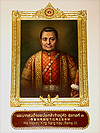
Phra Nang Phaya (พระนางพญา)
Thai. Name of a Buddhist
amulet
from Wat Nang Phaya (วัดนางพญา) in
Phitsanulok
(fig.).
READ ON.
回
Phra Narai (พระนารายณ์)
1. Thai name
for the Hindu god
Vishnu.
READ ON.
回
2. Another name for
Phra Naraiyamaharaat,
the King of
Ayutthaya from 1656, until his death during the
revolt of Ayutthaya, in 1688. See also
list of Thai Kings.
回
Phra Naraiyamaharaat (พระนารายณ์มหาราช)
King
Narai, ruler of
Ayutthaya from 1656 until his death during the revolt of Ayutthaya, in 1688. See also
list of Thai kings.
回
Phra Naresuan (พระนเรศวร)
See
Naresuan.
回
Phra Naret (พระนเรศ)
Thai.
Name of a Brahman-Hindu deity, who is worshipped in the military, especially in
the Royal Thai Navy. He is an important deity with regards to suppression and is
depicted with four arms, as well as with a crown of victory. He is usually found
in shrines next to
Phra Narai
(fig.),
a duo referred to as Phra Naret-Phra Narai (พระนเรศพระนารายณ์).
回
_small.jpg)
Phra Nawaka (พระนวกะ)
Thai-Pali.
‘New monk’ or ‘novice’. Term for new and
junior
Buddhist monks who have been ordained
between 1 and 5
phansa
or
‘years’,
according to the
Puniyanusatti. This
novice or beginner's level precedes the level of
Phra Matchima.
回
Phra Nirantarai (พระนิรันตราย)
Thai.
Name of the legendary
crime-busting
Buddha image which was
created in the reign of King
Mongkut
(fig.)
and
is housed at
Phra Pathom Chedi
(fig.) in
Nakhon Pathom.
The sacred image is
revered by
the
Royal Thai Police (fig.)
as its own spiritual idol. Also transliterated Phra Nirantaray and Phra Niran
Tarai.
回
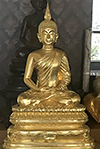
Phra Non Saen Riyan (พระนอนแสนเหรียญ)
Thai. ‘Hundred
Thousand Coins Reclining Buddha’. Name of
a circa nineteen meter long and three meter tall
reclining Buddha
at Wat Bang Noi (วัดบางน้อย)
in
Samut Songkhram.
The
Buddha image
is now covered with various old and new
Thai coins, said to number several 100,000, and of brass-like aluminium bronze, copper and nickel
alike,
making it
sparkle in gold, metallic brown and silver colours. Besides this, there are also
a few old and exceptional coins incorporated, the most valuable one said to be a
very rare 10
satang
coin from the reign of
Rama VI
with a depiction of this King. The image is the largest reclining Buddha in this
province and when the original one, believed to be over 300 years old, had
dilapidated, it was renovated by adding new layers over the remaining part of
the old image, in acts of
pae
riyan.
See MAP.
回
_small.jpg)
phranommeua (ประนมมือ)
Thai. The hands
brought together as a greeting or to pay respect.
See
also
wai
and
namadsakahn.
WATCH VIDEO.
回
Phra Paisarop
(พระไพศรพณ์)
Thai name for
Vaisravana. Also
Wetsuwan.
回
Phra Panjasingkhon (พระปัญจสิงขร)
Name of a
character from the
story
Ramakien, who is also known as Phra
Panjasihkohn (พระปัญจสีขร), whilst his name is in English also transcribed Phra
Panjasikorn. He has a white complexion and a thin,
kranok-shaped
moustache with ends that point upward, and he wears a
chadah-style
crown (fig.)
with a bulbous centre. He is depicted on a
2013 Thai postage stamp, as part of
a set of eight
khon masks
(fig.)
issued to commemorate the
annual
Thai Heritage Conservation Day
by publicizing the national art of
khon.
回
%20Phra%20Panjasihkohn%20(พระปัญจสีขร)_small.jpg)
Phra Paratamuni (พระภรตมุนี)
Thai-Pali. Name for a hermit or
reusi
that appears in
the
story
Ramakien.
READ ON.
回
Phra
Pathom Boromaha Kasatriyatiraat (พระปฐมบรมกษัตริยาธิราช)
Thai-rajasap.
Royal title meaning ‘First Great King’, a title usually given to any of the
founding kings of a dynasty. The title consists of the words
Phra,
Pathom
(First or Primary),
Borom,
Maha and Kasatriyatiraat (Raja-King).
Both the words Boromaha and Kasatriyatiraat are compound words or
kham samaht. The letter ‘m’ in Boromaha (consisting of
Borom and Maha) is in the compound word written and pronounced just once; and Kasatriyatiraat is a combination of the words
Kasatriya (derived
from
Kshatriya) and
Raat
(derived from
Raj),
hence our above transliteration.
WATCH VIDEO.
回
Phra Pathom Chedi (พระปฐมเจดีย์)
Name of a bell-shaped
pagoda, situated in the city of
Nakhon Pathom.
READ ON.
回
Phra Phanatsabodih (พระพนัสบดี)
Thai. ‘King of the Forest’ or ‘Lord
of the Jungle’. Name of a statue (fig.)
depicting the Buddha standing on
Brahmanaspati, a composite
animal with features of the animal mounts
or vehicles of the three main Hindu gods, thus having the beak of
Vishnu's
Garuda, the
horns of
Shiva's
bull, and the wings of
Brahma's
hamsa,
i.e. a sacred swan. The original
statue
dates
from the
Dvaravati Period
and depicts
the
Buddha
on top of
this
creature, which symbolizes the ascendancy of
Buddhism
over
Hinduism.
it was discovered around the year 1897 AD under the surface of the water in a
canal in Phanat Nikhom (พนัสนิคม),
a district in
Chonburi
Province, and it
was carved from
fine black stone had
a height of just 45 centimeters. After this was in 1931 inspected and
confiscated by the
Fine Arts Department for its historic
value, a stone replica three times the size of the original one was commissioned
in 1974 and enshrined at Ho Phra Phanatsabodih (หอพระพนัสบดี) in the very centre
of town. Afterwards, other replicas of the statue started to appear in the area,
especially in the provinces of
Chonburi
and
Chachengsao
(fig.).
See
TRAVEL PICTURE and
WATCH VIDEO (1)
and
(2).
回
Phra Phareuhadsabodih (พระพฤหัสบดี)
Thai. Name of
the god of learning and of the god of Thursday in the
thep
prajam wan system. Thursdays are related to knowledge and
people born on this day are said to have the qualifications of a teacher. This
thought comes from
Hindu
religion where Thursday is called Guruvar, the
Sanskrit name for Jupiter and a name derived from the word
guru
(teacher). His mount is a male
deer and he is teacher to all the other gods.
In a later
incarnation or
chaht,
he was born as the monkey-warrior
Malunthakeson
(fig.).
See also
Wan Kruh.
回
Phra Phikhanesawora (พระพิฆเนศวร์)
A Thai name for
Ganesha, which is
also transcribed Phra Phikanesuan.
回
Phra Phi Kaneht (พระพิฆเนศ)
A Thai name for
Ganesha. In Thai
khon
performances, he is
represented with a
khon mask
in the form of an
elephant's head, either with two tusks or with one tusk broken
off, and usually with a red complexion.
In
hun lakon lek he is
represented as a puppet with similar features, but without his usual potbelly (fig.).
He is depicted on a 2013 Thai postage stamp, as part of a set of eight
khon masks
(fig.)
issued to commemorate the annual
Thai Heritage Conservation Day
by publicizing the national art of
khon.
He is also known by a variety of other names, including
Phra Kaneht,
Phra Wikhanesuan,
Phra Phikhanesawora,
Phra Phinai,
Winayok,
Ekatanta, etc.
回
_small.jpg)
phra phim (พระพิมพ์)
Thai for ‘votive
tablet’. Sometimes
transcribed phrapim.
回
Phra Phinai (พระพินาย)
Another Thai name for
Ganesha.
Also transcribed Phra Phinaai or Phra Phinaay.
回
Phra Phirun (พระพิรุณ)
Thai. Name for the Thai god
of rain.
READ ON.
回
Phra Phleung (พระเพลิง)
Thai. ‘God of
fire’. A designation for
Agni, the Vedic god of fire.
Tawaai
Phra
Phleung, literally ‘to offer to the god of fire’, is an expression used during
cremation ceremonies and means ‘to cremate [somebody]’.
回
Phra Phong Suphan (พระผงสุพรรณ)
Thai. Name of a popular and well-known Buddhist
amulet
from
Wat Phra Sri Rattanamahathat
in
Suphanburi.
READ
ON.
回
Phra Phrom
(พระพรหม)
1. Thai name for the Hindu god
Brahma,
who in the
Ramakien is depicted with a
khon mask of a white human-like face wearing a golden
chadah-like
crown
of which at the centre of the peak are another four, smaller, white
human-like
faces,
which are positioned
back-to-back, as if one for every direction of the compass (fig.).
He is depicted on a 2013 Thai postage
stamp, as part of a set of eight
khon masks
(fig.)
issued to commemorate the annual
Thai Heritage Conservation Day
by publicizing the national art of khon.
回
%20khon%20mask_small.jpg)
2. Thai. The name of an
amphur in the southern province of
Nakhon Sri Thammarat.
回
Phra Phrom
Sih Nah (พระพรหม
๔ หน้า)
Thai. ‘Brahma with four faces’. A Thai name for Brahma when represented with a head with four faces (fig.).
回
Phra Phrot (พระพรต)
Stepbrother of
Phra Ram (fig.), and son of
King
Totsarot and
Queen Kaiyakesi, in the Thai epic story
Ramakien. He is the incarnation of the
chakra,
i.e. the weapon of
Vishnu, for one.
In
iconography,
he is usually depicted as a human with a brown complexion, often with a bow.
回
_small.jpg)
phra phum chao thih (พระภูมิเจ้าที่)
Thai.
Guardian spirits inhabiting a
spirit house
called
sahn chao thih
which is usually erected next to a
sahn phra phum.
They are the spirits who lived on the land before the house was built. The first
one will house the chao tih, the latter the phra phum and often also a
jawed.
回
Phra
Phut (พระพุธ)
Thai. The Thai deity of Wednesday and the god of speech and commerce.
As such, he is depicted on the
logo of the
Ministry of Information and Communication
Technology (fig.),
holding a book and a sword, the first symbolizing his knowledge in various
sciences, the latter symbolizing his sharp intelligence.
His mount
is an
elephant. See also
thep prajam wan.
See also POSTAGE STAMP.
回
Phra Phut (พระพุทธ)
Thai term or title used for any
buddha, the
Buddha
or a
Buddha image.
Also described and pronounced Phraphut, Phra Phutta or Phra Phutta.
回
Phraphut Chinnarat (พระพุทธชินราช)
See
Phraputta Chinnarat.
回
Phraphuttabaht (พระพุทธบาท)
Thai name for
Buddhapada,
i.e. the Lord Buddha's Footprint (fig.). It is also the name of a painting by the Thai
artist Phichai Niran (พิชัย นิรันต์),
which was depicted on a Thai postage
stamp issued on 2 August 2013 (fig.)
as part of a set of eight stamps on contemporary art in the third series of
commemorative stamps to mark the 2013 World Stamp Exhibition, which was held at
the convention hall of Siam Paragon in
Bangkok between 2 and 14 August 2013.
Also transliterated Phra Phutthabaht, Phra Phuttabaht, Phraphutthabaht, or
similar.
回
Phra Phutta Butyarat Chakraphan Phimon Manihmai
(พระพุทธบุษยรัตน์จักรพรรดิพิมลมณีมัย)
Thai.
‘Stainless jewel of the empire topaz-gem
Buddha image’. Name of an ancient
Buddha image, initially from the city of
Lavo and currently kept at
Phra Thihnang Amphon Sathaan
in
Dusit
Palace,
the official residence of the Thai monarchy, since recently inhabited by the
Crown Prince
Vajiralongkorn.
回
Phra Phutta Chao (พระพุทธเจ้า)
Thai name for the historical
Buddha.
Also Phra Phutta for a ‘buddha’.
回
Phra Phutta Chao Luang
(พระพุทธเจ้าหลวง)
Thai for a
‘late king’ or ‘deceased king’.
回
Phra Phutta Chinnarat (พระพุทธชินราช)
Thai.
‘Familiar Prince Buddha’. Important
Buddha image from the 14th century housed in
Wat Phra Sri Rattanamahathat in
Phitsanulok and cast by order of
King
Mahadhammaracha Lithai. It is generally considered one of the most beautiful Buddha images in the nation.
Compare with
Khun Chinnarat.
See MAP.
回
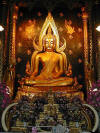
Phra Phutta Leut La (พระพุทธเลิศหล้า)
Thai name for
Rama II,
the second king of the
Chakri dynasty.
The name is often followed by the suffix
Noppalai,
a Pali word meaning ‘welkin’, ‘sky’, or ‘blue infinite’. This is a completion of
the word La which means ‘earth’. Hence he is fully called
Phrabaht
Somdet
Phra Phutta Leut La Noppalai and
translates roughly as ‘His Majesty the King, Perfect Buddha of the Earth and
Sky’.
The
guided missile frigate with
hull code FFG 462 (fig.),
of the
Royal Thai Navy,
is named after this King.
See also
list of Thai kings.
回
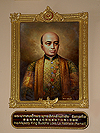
Phra Phutta Maha Suwan Patimakon (พระพุทธมหาสุวรรณปฏิมากร)
Thai.
Official name for the
Golden Buddha of
Wat Traimit
in
Bangkok.
回
Phra Phutta Maha Wachira Uttamopat Satsada (พระพุทธมหาวชิรอุตตโมภาสศาสดา)
Thai. Official name for the
Phra
Phuttaroop Khao Chee Jan
Buddha image.
回
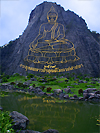
Phra Phutta Methi Sammakon (พระพุทธเมธีสัมมากร)
Thai. Name of a
Buddha image
on the shore of Lake
One in
Bangkok's
Sammakon (fig.)
Community in Saphaan
Soong district. This statue, cut from white
marble
and also referred to as
Luang Pho Khao,
i.e. ‘White
Revered Father’,
is depicted seated in the
pahng samahti
meditation
pose upon a gilded
lotus
base and underneath a
gilded
chattra-style
parasol.
See also TRAVEL PICTURE,
EXPLORER'S MAP
and
DIRECTIONS.
回
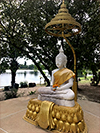
Phra Phutta Mettaprachathai (พระพุทธเมตตาประชาไทย)
Thai. Name of a large
bronze
Buddha image
located in a Buddhist compound
at Wat Thipsukhontharam (fig.),
in
Kanchanaburi.
The image has a height of 32 meters,
symbolizing the 32
lakshana,
i.e.
the auspicious signs of a great man,
especially the 32 major marks described in Buddhist literature from which the
predestination of a
buddha
may be recognized at birth,
and is Thailand's largest
Buddha image in a
standing pose. It
is in
the
Greco-Buddhist
Gandhara
style (fig.)
and is performing a
varada
mudra
(fig.).
The statue was
built in 2011-2012, in remembrance of the
sandstone Buddhas of Bamiyan in Afghanistan, which were destroyed by the Taliban
in 2001. The statue is guarded by the giants
Waiyawet
(fig.)
and
Subankhiri
(fig.). The compound also features a museum on the construction methodes of the
Buddha image, as well as on
Buddhism
in general, including on the
spread of Buddhism by the Indian-Mauryan
Emperor
Asoka,
and replicas
of Buddhist monuments from the major Buddhist places of worship in India (fig.)
and Nepal. The image's full name is
Phra Phutta
Metta Pracha Thai Trai
Lohkkannaht
Gandhararath
Anuson (พระพุทธเมตตาประชาไทยไตรโลกนาถคันธารราฐอนุสรณ์).
See also
MAP and
TRAVEL PICTURES (1) and
(2).
回
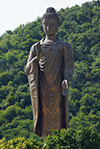
Phra Phutta Monthon (พระพุทธมณฑล)
Thai-Pali. ‘Buddha-circle’ or
‘Buddha-mandala’. Name of a
Buddhist compound in
Nakhon Pathom.
READ ON.
回
Phra Phutta Nawa Banphot (พระพุทธนาวาบรรพต)
Thai. Name for a
Buddha image
located on the summit of
Phu Reua mountain
(fig.) in
Phu Reua
National Park (fig.), in
Loei
province. During
the annual
Songkraan
festival,
the local residents of the
amphur
organize a procession in which they wear
Phi Boong Tao
masks (fig.)
and bring offerings to this Buddha statue, which is depicted
seated
in the
maravijaya
pose.
See MAP.
回
_small.jpg)
Phra Phutta Praphat Sunthorn Thama Phisan Sala Loi Piman
Worasantisuk Munin (พระพุทธประพัฒน์สุนทรธรรมพิศาล ศาลาลอยพิมาลวรสันติสุขมุนินทร์)
Thai. Name of the white standing
Buddha image at
Wat Sala Loi
(fig.)
in
Nakhon Ratchasima,
which is depicted in the
abhaya
pose with
two
hands raised
(fig.),
a
mudra
that refers to the story of
‘restraining the waters’.
回
Phra Phuttaroop (พระพุทธรูป)
Thai name for any
Buddha image, which derives from the
Sanskrit term Buddharoopa (बुद्धरूप),
which literally means ‘form of the
Buddha’.
回
Phra Phuttaroop Khao Chee Jan (พระพุทธรูปเขาชีจรรย์)
Thai. ‘Mount Chee
Jan Buddha Image’.
Name of a huge laser-carved Buddha image
finished with gilded plate attached to the bare side of
Khao Chee Jan (Khao Chee Chan) mountain
in the vicinity of
Wat Yahn Sangwarahrahm Woramahawihaan, in
the
tambon Huay Yai of the
amphur Sattahip in
Chonburi
province
(map). Its construction
was part of a royalty-initiated project
in 1996
to commemorate
the 50th anniversary of King
Bhumipon's
accession to the throne. The official name for the Buddha
image is
Phra Phutta Maha Wachira Uttamopat Satsada.
See MAP.
回
Phra Phutta Sayait (พระพุทธไสยาสน์)
Thai name for
a
reclining Buddha.
Also transcribed Phra Phuttha Sayait and Phra Phut Sayait.
回
Phra Phutta Sihing
(พระพุทธสิหิงค์)
Thai.
Name of an ancient
Buddha image in Singhalese style, cast in 1243 AD by the orders
of King Sihala (สีหฬะ) of
Langka.
READ ON.
回
Phra Phutta Sothon (พระพุทธโสธร)
Buddha image in the
Sothon Wararam Woriwihaan
Temple (fig.) in
Chachengsao, a
kuh bahn kuh meuang and one of the most sacred images in the country associated with
Luang Po
Sothon, a
Phra saksit who forecast the exact time of his own death.
It is one of the five floating Buddha
images mentioned in the
Legend of the Five Floating Buddha Statues,
known in Thai as
Tamnaan Luang Pho Loy Nahm Hah Phi-Nong.
回
Phra Phutta Thammakaya Thep Mongkhon
(พระพุทธธรรมกายเทพมงคล)
Thai. ‘Auspicious
Dhammakaya
Buddha
Deity’. Name of a
69 meter tall and —at the knees— 40 meter wide
Buddha image
in
Wat Pahk Nahm Phasi Chareun
(fig.),
i.e. the origin of the
Buddhist
Dhammakaya
tradition, after which this image is named
and which was founded in the early 20th century by this temple's abbot,
Luang Poo Sod
(fig.).
Construction of this giant
Buddha
statue started in 2017
and was completed in mid-2020.
WATCH
VIDEO.
回
Phra Phutta Trai Rattananayok (พระพุทธไตรรัตนนายก)
Thai. Name of the principal Buddha
statue in the main
wihaan
of
Wat Kanlayanamit Woramahawihaan,
a
first class
Buddhist temple of
royal
rank, located
on the west bank of the
Chao Phraya
River (fig.)
in
Thonburi.
It is circa
15.15 meter tall and
seated in
the
bhumisparsa
pose.
King
Rama III
had it cast
after the 19 meter
tall gilded Buddha of
Wat Phanan Choeng
in
Phra Nakhon Sri Ayutthaya
(fig.),
in May 1837.
It is also known as
Luang Pho Toh,
as well as by
its Chinese name Sampokong (ซำปอกง), and was for a long time the tallest seated
Buddha image in the capital, a record since mid-2020 broken by the
giant 69
metre tall
Phra Phutta Thammakaya Thep Mon
Buddha image (fig.)
of
Wat Pahk Nahm Phasi Chareun.
See also
Trairat and
nayok.
回
_small.jpg)
Phra Phutta Trih Lohk Seht (พระพุทธตรีโลกเชษฐ์)
Thai. Name of the principal
Buddha
image at the
ubosot
of
Wat Suthat in
Bangkok.
It was cast in the
Rattanakosin
Period and
is 4
wah
and 18
niw high, i.e. 8
meters and 37.494 centimeters, or 8 meters 37.366 centimeters to be exact. The
Buddha image is seated in the
maravijaya
pose.
See MAP.
回
%20Buddha%20image%20of%20Wat%20Suthat_small.jpg)
Phra Phutta Yotfa Chulalok (พระพุทธยอดฟ้าจุฬาโลก)
Thai name for
King
Rama I.
Sometimes transcribed as Buddha Yod Fa Chulalok. He is also called
Phra Pathom Boromaha Kasatriyatiraat,
a title meaning the
‘First Great King’ [of the
Chakri
dynasty]
(fig.).
He is one of the Great Kings in Thai history referred to as a
Maha Raj.
As such, his statue (fig.)
is included in the monument at
Uthayaan Rachaphak
(fig.).
The
guided missile frigate with
hull code FFG 461 (fig.),
of the
Royal Thai Navy,
is named after this King. See also
list of Thai kings
and
WATCH VIDEO.
回
Phra pikkasu (พระภิกษุ)
See
Phra pikku.
回
Phra pikku (พระภิกขุ)
Thai. A Buddhist monk or priest. See also
bhikku.
回
phrapim (พระพิมพ์)
Thai name for a
votive tablet.
Also transcribed phra phim.
回
Phra Pinklao (พระปิ่นเกล้า)
Thai. Name
of a younger brother of King
Rama IV, who was vice-king
or
uparacha. He has an
arboretum in
Chachengsao and a bridge
in
Bangkok (map
-
fig.)
named after him.
回
Phra pit tah (พระปิดตา)
Thai. ‘Buddha
covering the eyes’. Popular name for a
Phra Maha Ut
image or
amulet (fig.) which has the depiction of a seated figure shielding his eyes with both
hands.
回
Phra Pok Klao Bridge
Name of a bridge that was built
in 1982 on the occasion of the Bicentennial of
Bangkok.
READ ON.
回
Phra prajam wan (พระประจำวัน)
1. Thai. System of personal worship in Thailand in which each day of the week corresponds with a certain representation of a Buddha image.
READ ON.
回
2. Thai. System of worship in
Hinduism,
often in accordance with the
navagraha
or nine planets.
READ ON.
回
Phra prajam wan geut (พระประจำวันเกิด)
See
Phra prajam wan.
回
Phra Prakohntan (พระประโคนธรรพ์)
Thai. Name of
character from the
Ramakien.
READ ON.
回
Phra Prang Sahm Yod (พระปรางค์สามยอด)
Thai.
‘Three Spikes
Prang’. Name of a monument located in the amphur meuang of
Lopburi and which consists of three adjoining towers made from
sandstone and
laterite. Due to its
Bayon
style features, it is assumed that it was built during the reign of the
Khmer king
Jayavarman VII, when Lopburi was part of the Khmer empire.
It initially was a
Brahman-Hindu
shrine devoted to
the Hindu
Trimurti of
Vishnu,
Brahma
and
Shiva
(fig.), the divine triad
which is represented in the three towers. The towers can be accessed and each of
them individually houses a
Shivalinga.
In the 17th century, during the reign of king
Narai
the
Khmer shrine
was converted into a
Mahayana
Buddhist temple and a
wihaan
was built in front of it. In the central tower a
pahng nahg prok
Buddha image
(fig.)
was erected, whilst in the prang on
the right a statue of the
Phra Bodhisattva
was erected and in the tower on the left a sculpture of the female
bodhisattva
Prajnaparamita
(fig.)
was placed. Also transcribed Phra Prang Sam Yot.
See MAP.
回
Phra prathaan (พระประธาน)
Thai. The main or principal
Buddha image in a temple.
WATCH VIDEO (1)
and
(2).
回
Phra Racha Banlang Pradap Muk (พระราชบัลลังก์ประดับมุก)
Thai. ‘Royal Thone Decorated with
Pearl’. Name of a royal throne decorated with
mother-of-pearl.
It is housed inside
Dusit Maha Prasat
(fig.),
the oldest building in the compound of the
Grand Palace, which was commissioned
by King
Rama I.
The throne is surmounted by the Nine-tiered White Umbrella of State (fig.),
known as a
chattra or
chat.
回
Phra Rachalanjakon (พระราชลัญจกร)
Thai-rajasap for the personal seals used by monarchs, to stamp, impress or seal up
official documents and private papers. They can be divided into many division
and categories depending on style and usage, but in general there are three
types, i.e. the Royal Seal, the Privy Seal, and the Great Seal.
回
_small.jpg)
phra rachaphithi sip song deuan (พระราชพิธีสิบสองเดือน)
Thai. ‘Royal ceremonies during twelve months’. A literary work written by king
Chulalongkorn in which the traditional activities and ceremonies in each month are explained, starting from the
Sukhothai and
Ayutthaya
Periods until the
Rattanakosin
Period, and in addition some Buddhist rituals are clarified. For each month it describes one or more significant ceremonies as well as a number of less important rituals, plus any seasonal holidays.
See also
praphenih sip song
deuan.
回
Phra Rachawang
(พระราชวัง)
Thai.
‘Royal palace’. The residence of the king and the royal family during the
Rattanakosin
Period. It's construction was started by
Rama I on 6 May 1782 and it was aimed to recreate the glory of
Ayutthaya, the former capital which was destroyed by the Burmese in 1767, only 15 years after this event. Its site was originally occupied by a large Chinese community who the government had transferred to a place south of the city walls, an area today known as
Chinatown. During subsequent reigns the palace has been extensively modified and remodelled. The palace
complex (fig.) consists of several throne halls,
such as the
Chakri Throne Hall (fig.),
Dusit Maha Prasat
(fig.),
Phra Thihnang Mahison Maha Prasat
(fig.),
and
Phra Thihnang Siwalai Maha Prasat
(fig.), residential quarters and administrative offices,
such as the
Bureau of the Royal Household
(fig.),
as well as the Pavilion of Regalia, Royal Decorations and Coins (map
-
fig.), whilst an
adjacent palace temple was built to house the
Emerald Buddha. It was the religious and administrative centre of the Siamese
Kingdom until the end of the absolute monarchy, in 1932.
Also known as the Grand Palace. Its complete name is
Phra Borom Maha Rachawang. See
also
Phra Rachawang Deum.
See also
MAP,
QUADCOPTER PICTURE
and
POSTAGE STAMPS (1),
(2),
(3),
(4) and
(5).
回
Phra Rachawang Deum (พระราชวังเดิม)
Thai. ‘Former Palace’ or ‘Original Palace’,
but usually translated as the ‘OLd Palace’. It is the Thai name for the
Thonburi Palace, i.e. the
former royal residence of King
Taksin
in
Thonburi
(fig.),
now within the compound of the naval base of the Royal Thai Navy at Wichai
Prasit Fort (fig.).
回
Phra Ram (พระราม)
Thai name for
Rama
(fig.) or
Ramachandra, the seventh
avatar of the god
Vishnu, and the hero (fig.) from the Indian epic
Ramayana, in Thailand called
Ramakien. He was the son of king
Totsarot and queen
Kao Suriya. He was able to lift the
Molih bow and thus received
Sita in marriage.
Whereas as the avatar of Vishnu, he
may have a green complexion, as seen in the murals of
Wat Phra Kaew,
in murals on the
Khmer
Reamker, he has a white complexion. Yet, in
khon,
Phra Ram wears only a
chadah-style crown
(fig.)
and
no mask at
all,
or –alternatively– a khon-mask with a green face (fig.).
Then again, e.g. as in
puppetry, his complexion is white, but when he reverts to his divine form, referred to as
Phra Narai, he is depicted
with a purple complexion (fig.)
and usually in
Chaturbuja-style, i.e. with four arms (fig.).
He may also be depicted riding the
Garuda,
which in the Ramakien is known as
Suban,
and also called
Krut.
See also POSTAGE STAMPS
and
THEMATIC STREET LIGHT.
回
,%20hero%20of%20the%20Ramakien_small.jpg)
Phra Rod (พระรอด)
Thai. Name of a popular and well-known Buddhist
amulet
from
Wat Mahawan (วัดมหาวัน) in
Lamphun.
READ ON.
回
Phra Rot Meri (พระรถเมรี)
Thai name for
a Southeast Asian
folktale based on an apocryphal
jataka
saga.
READ
ON.
回
Phra Ruang (พระร่วง)
Thai. Title given to King
Indraditya of
Sukhothai
(fig.),
the father of
King
Ramkhamhaeng
(fig.), and as an
extension thereof the name of the dynasty that started with him. Nowadays, the
title is also often used to refer to King Rankhamhaeng, who as a member of the
Phra Ruang Dynasty is often called
Phaya Ruang or Phra Ruang. In
1238 AD, King Indraditya liberated the Thai
people from the yoke of the
Khmer,
prompting the Khmer King to sent an envoy to arrest him. According to legend, this emissary, called
Khom Dam Din, was able to travel underground very fast using magical powers. However, when he emerged to deliver the Khmer King's message, legend says
that he was turned into stone by Phra Ruang. King Indraditya died in 1268 AD.
Today, he is remembered with a monument
in the
amphur
Nakhon Thai, in
Phitsanulok
Province (fig.). Also
transliterated
Phra Ruwang. See also
list of Thai Kings
and
TRAVEL PICTURE.
回
Phra Ruang Lang Peun (พระร่วงหลังรางปืน)
Thai. A popular Buddhist
amulet
that originates from
Wat Phra Sri Rattanamahathat
in
Sri Satchanalai,
in
Sukhothai
Province, and which dates back
to the
Lopburi
Period.
READ ON.
回
Phra Ruwang (พระร่วง)
See
Phra Ruang.
回
Phra Saeng (พระแสง)
See
Phra Saeng Khan Chai Sri.
回
Phra Saeng Khan Chai Sri (พระแสงขรรค์ชัยศรี)
Thai. ‘Sword of State’, also known as the
‘Sword of Victory’ and a part of the Thai royal regalia or
kakuttapan. It symbolizes the king's power over
the army and his role as protector of the nation.
回
Phra saksit (พระศักดิ์สิทธิ์)
Thai. Certain Buddhist monks in Thailand to whom special spiritual powers are ascribed.
Often these
monks transfer their powers (saksit)
onto
amulets
and
votive tablets (fig.) which are consequently collected by devotees.
回
Phra Samasam (พระสัมมาสัม)
Thai.
‘The One Who Enlightened
Himself’ or ‘He Who Understood Rightly (or Correctly) by Himself’.
A name or title sometimes given to the
Buddha,
because he understood the
dhamma, that is to say,
the
Four Noble Truths,
without having studied it, nor by having heard it from others. Compare with
Mahamuni,
Mahalabamuni and
Saadsada.
回
Phra Samut (พระสมุทร)
Thai.
Name for
the Thai god of the oceans.
When
Phra Narai
(fig.)
incarnated as
Phra Ram
(fig.),
Phra Samut took the avatar of
Nilaraat (fig.),
in order to assist
Rama
in his battle against
Totsakan (fig.).
回
Phra Sang (พระสังข์)
See
Sangthong.
回
Phrasangkaraat (พระสังฆราช)
Thai term for the
Supreme Patriarch of the Buddhist church.
READ ON.
回
Phra Sangkatjaai (พระสังกัจจายน์)
Thai. Name of
a Buddhist monk, who was an
arhat during the
time of the Lord
Buddha.
READ ON.
回
Phra Sao (พระเสาร์)
Thai. The god of Saturday. His mount is a
tiger. See also
thep prajam wan.
回
Phra Sayaam Thewathiraat (พระสยามเทวาธิราช)
See
Siam Thewathiraat.
回
Phra Seua Meuang (พระเสื้อเมือง)
Thai. Name of
the deity in charge of protecting the country, both on land and in the water. He
watches over the military forces and troops, and keeps the Kingdom free of
foreign invasion. In art, he is depicted standing upright and wearing a
chadah
(fig.),
while holding a
gada
(mace) in one hand and raising a
chakra (fig.),
an emblem often used by the
Army (fig.),
with the other.
WATCH VIDEO.
回
_small.jpg)
Phra Siam Thewathiraat (พระสยามเทวาธิราช)
See
Siam Thewathiraat.
回
Phra Sian (พระเศียร)
Thai (rajasap).
Term for the head of a king (fig.),
a high-ranking royal, or that of a
Buddha image.
It is the most sacred part of a Buddha image and if a statue is damaged the head
would be set aside and still be worshipped, such as the head or
Phra Sian
of
Wat Mahathat
(fig.) in
Ayutthaya
(fig.),
which over time became encased by the roots
of a
banyan
tree (map
-
fig.).
In daily Thai speech and writing, the words hua (หัว) and
srisa (ศรีษะ) are also used for ‘head’, with the
former being the more casual form and the latter the more polite, whereas for
Buddha images also the term Phra Phak (พระพักตร์) is widely used, which means
and refers to the ‘face’ more than the head, but is often used interchangeably.
回
Phra Siwalih (พระสิวลี)
Thai.
Name of a venerated monk. He is the son
of princess Suppawasah (สุปปวาสา), daughter of the king of Kohliya
(कोह्लिया, โกลิยะ). From early on in her
pregnancy, when he was still in his mother's womb, Siwalih already caused a lot
of good fortune to his mother, due her adoration for him.
According to
legend he stayed in his mothers womb for
seven
years (compare with
Lao Tzu) and she was in
labour pains for seven
days, but immediately
after his
birth she started to
work again as usual. Later,
Siwalih ordained as
a monk with
Sariputta.
On the day of his
ordination, as soon as he got his hair cut off, with the very first cut of the
razorblade, he attained
Enlightenment,
as a result of his merit. And from the moment he had his head completely shaved,
he became an
arahan.
He
perfected his luck
factor,
caused a lot
of gain amongst his fellow monks and received
praise from
the Enlightened One, who said he was a champion in bringing luck.
It
is therefore
since long believed that
anyone who worships Phra Siwalih or a relic of him, will receive
peace in the
form of happiness and good luck.
Phra Siwalih
is
usually portrayed as a travelling monk, walking with a
klot (the
closed umbrella on his shoulder), a staff and a
yahm
shoulder bag.
In
Myanmar, he is known as
Shin Thiwali
(fig.),
and ususally portrayed holding a Burmese-style
pad bai lahn
or
pad yot,
i.e. an ecclesiastical
fan
used by monks (fig.).
Thailand has several large statues of this legendary monk erected all over the
nation, such as in
Wat Khao Noi,
a Buddhist hilltop temple in the seaside resort of
Hua Hin,
features a 21 meter tall statue of Phra Siwalih, whilst the giant statue at
Wat
Suk Kasem Thammikaram
(วัดศุขเกษมธรรมมิการาม) in
Angthong,
is with a height of 39 meters said to be the largest in the world
(fig.). See also
thudong
and
WATCH VIDEO (1)
and
(2).
回
Phra Somdet Wat Rakhang Khositaraam
(พระสมเด็จวัดระฆังโฆสิตาราม)
Thai. Name of a popular and well-known Buddhist
amulet
from Wat Rakhang Khositaraam Woramahawihaan in
Bangkok.
READ ON.
回
Phrasong (พระสงข์)
See
Sang.
回
Phrasong (พระสงฆ์)
Thai. Term for a Buddhist monk, of which
there are 350,000 in Thailand, assembled into the
Sangha,
the community of monks that follow the
Buddhist canon.
READ ON.
回
Phra song kreuang (พระทรงเครื่อง)
Thai. ‘Adorned Buddha’. A Buddha image decorated with royal attire and/or jewels, and commonly wearing a
chadah headdress. See also
adorned Buddha and
crowned Buddha.
回
Phra Song Meuang (พระทรงเมือง)
Thai. Name of
the deity responsible for watching over, as
well as maintaining the various governmental departments and ministries. He is
also in charge of protecting the welfare and happiness of the country's citizens.
In art, he is depicted standing upright and wearing a
chadah
(fig.),
while holding a sword in one hand and raising the
Sankha, i.e. the ‘conch of victory’ (fig.),
with the other.
WATCH VIDEO.
回
_small.jpg)
Phrasong Ong Chao (พระสงฆ์องคเจ้า)
Thai. A Buddhist member of the clergy, monk or priest. See also
Phrasong.
回
Phrasoot (ประสูติ)
Thai.
‘To beget, to give birth, to be born’, especially of a prince (rajasap). In religious context the term refers to the birth of the Buddha as prince Siddharta, which took place underneath a
sala tree (according to some sources under a
teak tree) in
Lumbini. In
iconography usually represented as
Maha Maya who holds the branch of a tree with her right hand (fig.) at times whilst an infant emerges from her side,
often in the presence of
Brahma
and/or
Indra
(fig.).
Immediately after his birth,
the newborn prince Siddharta is said to have
taken seven steps and that at each step
where he touched the ground a
lotus
blossomed (fig.). In iconography, the newborn prince is most commonly portrayed
standing upright while pointing to the sky with the index finger of his right
hand (fig.). Derived from the Sanskrit word
Prasuti and
sometimes transcribed prasut or prasuht.
See also
somphop,
sawankot
and
sinphrachon.
回
Phrasooti (प्रसूति)
Sanskrit.
Another transliteration for
Prasuti.
回
Phra Sri Ahn (พระศรีอารย์)
Thai. A future
bodhisattva who will save humanity.
回
Phra Sri Sakkaya Thotsaphonlayan Prathan Phutta Monthon Sutthat (พระศรีศากยะทศพลญานประธานพุทธมณฑลสุทรรศน์)
Thai. ‘Holy
Sakya Buddha with Full Force
Vision and Presiding Protector of the Buddha-mandala’. The
full, official name of the
Phra Phutta
Monthon image in
Nakhon Pathom.
回
Phra Suk (พระศุกร์)
Thai. The god of
Friday and of love and beauty. His mount is an ox.
See also
thep prajam wan.
回
Phra Suthon (พระสุธน)
Protagonist in the story
Manohra.
回
Phra Tha Kradahn (พระท่ากระดาน)
Thai.
‘Board Position
Buddha image’. Name of a Buddhist
amulet that
originates
from Sri Sawat (ศรีสวัสดิ์) in
Kanchanaburi Province, and which has artistic influences from the
Lopburi
Period.
READ ON.
回
Phrathat (พระธาตุ)
1. Thai. Relics of
saints and Buddhist monks, usually notable Buddhist monks.
They typically consist of small pieces of bone,
that are kept in bell-glass
displays or miniature
stupas. See also
atti,
Phramahathat and
that.
See also
Phra Boromma Sahrihrikathat.
回
,%20that%20(ธาตุ)%202_small.jpg)
2. Thai. Name for a
stupa
in
Isaan, or
−in general− for
a
pagoda
with a relic
of a saint or
Buddhist monk.
回
Phrathat Sri Song Rak (พระธาตุศรีสองรัก)
Thai.
‘Stupa
for the Love of Two’. Name of a
circa 17 meter tall
pagoda
located on the banks of the Man (หมัน)
River
in the amphur
Dahn Saai (ด่านซ้าย)
in
Loei
Province.
READ ON.
回
Phra Thep Withayakhom (พระเทพวิทยาคม)
Thai.
‘Angelic Incantation’.
Honorific
name of the noble
Buddhist monk
Luang Pho Khun.
回
Phra
Thera (พระเถระ)
Thai-Pali.
Term for senior Buddhist monks who have been ordained between 10 and 20
phansa
or
‘years’,
according to the
Puniyanusatti. They are beyond the level of
Phra Matchima
and precede the most senior and highest level of
Phra Mahathera.
回
Phra Thewathat (พระเทวทัต)
Thai name of
Devadatta.
回
Phra Thihnang (พระที่นั่ง)
1. Thai.
Term used for a hall or room in a royal palace, as well as for a mansion in a
royal palace or royal summer palace compound. See also
Phra Thihnang Anantasamahkom.
回
2. Thai.
‘Royal’.
回
Phra Thihnang Amphon
Sathaan (พระที่นั่งอัมพรสถาน)
Thai. Name of one of
the palace buildings within the
Dusit
area. It was built
in 1906 during the reign of King
Rama V,
who on
23 October
1910
passed away on the third floor of this edifice. The successive
kings
Rama VI and
Rama VII, who later resided in
Dusit Palace, consequently never lived on the third floor, but used only the
first two floors of the building, as they considered the third floor to remain
the restricted residence of Rama V.
When
King
Bhumipon Adunyadet in 1950 returned from his studies
in Switzerland, he took residence in Phra Thihnang Amphon Sathaan,
prior to his coronation and marriage
on
5 May
1950. It later
became the birthplace of three of his children, i.e.
Prince
Vajiralongkorn,
Princess
Sirinthon
and Princess
Chulaphorn Walailak.
Officially, the building is today no longer inhabited and has been used as a
shrine for important statues and
Buddha images,
such as
Phra Sayaam Thewathiraat
and
Phra Phutta Butyarat
Chakraphan Phimon Manihmai.
However, the palace was restored and when around 2014, the Standard (fig.)
of
Crown Prince Maha Vajiralongkorn can
occasionally be seen flying from the flagpole in the inner court, there are
rumours that he might have moved from his official residence, i.e. the
Sukhothai
Palace.
See MAP.
回
_small.jpg)
Phra Thihnang Anantasamahkom (พระที่นั่งอนันตสมาคม)
Thai. The
Ananta Samahkom Hall
(fig.), otherwise known as the Throne Hall in
Bangkok
(fig.), where
today
the national legislature assembles.
READ ON.
回
Phra Thihnang
Aphisek Dusit (พระที่นั่งอภิเศกดุสิต)
Thai. ‘Dusit
Coronation Hall’. See
Aphisek Dusit Throne
Hall.
回
Phra Thihnang
Chakri Maha Prasat
(พระที่นั่งจักรีมหาปราสาท)
Thai name for
the
Chakri Throne Hall.
回
Phra Thihnang Khoo Ha Khareuhaat (พระที่นั่งคูหาคฤหาสน์)
Thai. ‘Royal Hall Cavern Mansion’. Name of a
royal pavilion inside
Tham Phraya Nakhon,
a cave (fig.)
near
Khao Sahm Roi Yot
National Park (fig.)
in
Prachuap Khirikhan,
and a feature on this province's emblem (fig.).
The mansion is also referred to as
Phra Thihnang Khoo Ha Sawan, i.e.
‘Royal Heavenly Cave Hall’.
This edifice, a kind of
mondop-sala,
was built
in 1890 on the order of King
Chulalongkorn,
after his second visit to the cave and
today houses his statue. The front and back doorways of the pavilion are adorned
with pink curtains,
i.e. the
colour that corresponds to Tuesday
according
to the
sih prajam wan-system
and the day of birth of King
Rama V.
See also MAP
and
THEMATIC STREET LIGHT.
回
Phra Thihnang Khoo Ha Sawan (พระที่นั่งคูหาสวรรค์)
Thai. ‘Royal Heavenly Cave Hall’. Another
name used for
Phra Thihnang Khoo Ha Khareuhaat.
回
Phra Thihnang Mahison Maha Prasat
(พระที่นั่งมหิศรมหาปราสาท)
Thai. Name of a small, one-storied, royal
hall in
Phra
Rachawang, i.e.
the
Grand Palace
in
Bangkok, located
in Siwalai
Garden and bordering the
central court. At the front, it has and arched doorway
flanked by a double staircase, one on either side of the doorway, which lead up
to a grandstand-like balcony. It was built by King
Rama IV
to enshrine the ashes of King
Rama II,
though those were in the reign of King Rama V moved back to their original
place, i.e. the
Ho Phrathat Monthien, another group of
buildings within the
inner court of the Grand Palace. Today, the Mahison Hall houses some
Buddha images.
See also
Mahison Rachareuthay,
Phra Thihnang,
Maha,
Prasat,
POSTAGE STAMP,
QUADCOPTER PICTURE,
and
MAP.
回
Phra Thihnang Manthatrattanaroht
(พระที่นั่งมันธาตุรัตน์โรจน์)
Thai. The original name of
the
Vimanmek Mansion (fig.)
when it was still the main residence at Royal Summer Palace
Phra Chutathutrachatahn
(map
-
fig.)
on Koh Si Chang, i.e. before its relocation from the island to
Bangkok's
Dusit
Palace, as in 1901, after Koh Sichang was invaded by the French, the main royal
residence was taken apart, moved to
Dusit
in
Bangkok,
re-assembled and renamed. The foundations on the ground at the location where
this huge wooden mansion once stood are still visible today.
回
Phra Thihnang Phutthaisawan (พระที่นั่งพุทไธสวรรย์)
Thai. Name of a Royal Hall (Phra
Thihnang) formerly located
within the compound of the
former
Wang Nah
Palace, originally the residence of the
Krom Phra Rachawang Bowon Sathaan Mongkhon ,
and today part of the
National
Museum in
Bangkok.
It was built by the order of
Somdet Phra Bowon Raja Chao Maha Surasinghanat,
the first viceroy of the
Rattanakosin
period (fig.),
in order to perform royal religious rituals, and initially named Phra Thihnang Sutthahsawan (พระที่นั่งสุทธาสวรรย์). When the
uparacha
Surasinghanat
in 1787 went to
Chiang Mai,
he sent back the
Phra Phutta Sihing
Buddha image
(fig.),
to be placed in the Phutthaisawan Royal Hall (fig.).
The inside of the Royal Hall now still has a row of seats for members of the
Royal Family and high-ranking officials (fig.),
and the inner door panels at the rear of the hall (fig.)
feature on a Thai postage stamp issued in 2008 as part of a set of four stamps
on door guardians (fig.).
The outer door panels are all decorated with
gilded lacquer
(fig.).
See MAP.
回
_small.jpg)
Phra Thihnang Siwalai Maha Prasat
(พระที่นั่งศิวาลัยมหาปราสาท)
Thai. Name of a royal hall in
Phra
Rachawang, i.e.
the
Grand Palace
in
Bangkok, located
on the southeast side
of
Siwalai
Garden, i.e. the backyard of
Boromphiman Palace (fig.).
It was built in 1878 to
enshrine the statue of King
Rama V
as the then reigning monarch of the
Chakri
Dynasty. In 1918, King
Rama VI
had the statue moved to
Prasat Phra Thep Bidon (ปราสาทพระเทพบิดร) in the complex of the Temple of the
Emerald Buddha, to join the royal pantheon, and the Siwalai Hall remains empty
to this day.
See also POSTAGE STAMP,
MAP,
and
QUADCOPTER PICTURE.
回
Phra Thihnang Song Tham (พระที่นั่งทรงธรรม)
Thai.
‘Royal Hall to Attend a Sermon’.
Name of a
temporary ceremonial residence
used
by the King,
senior members of the royal family, and the Privy Council, when they attend
certain religious ceremonies, such as a cremation.
It is usually flanked on each side by a
Sala Look Khun,
the venue where senior government and palace officials are seated.
回
Phra Thihnang Suttaisawan Prasat
(พระที่นั่งสุทไธสวรรยปราสาท)
Thai. Name of a two-storey Royal Hall (Phra
Thihnang) in
Bangkok,
located on —and part of— the east wall of the
Grand Palace,
situated between the Thewa Phitak (เทวาพิทักษ์) and the Sakchaisit (ศักดิ์ไชยสิทธิ์)
gates. When
Rama I
had the royal palace built between 1782 and 1784 AD, it was originally called
Phlabphlah
Soong (สุทไธสวรรย), which may freely be translated as
‘Elevated Royal Tribune Pavilion’. On the upper floor it has a balcony
that gives out on the street from where the
King could watch over a parade or come out to greet his subjects. After
King
Mongkut
(fig.)
had the hall renovated in
1853, he renamed it to its current designation.
See also
QUADCOPTER PICTURE,
TRAVEL PHOTO,
POSTAGE STAMP,
and
MAP.
回
Phra Thutangkha Chedi (พระธุตังคเจดีย์)
Thai. Name of a Buddhist
pagoda-hall
located within the compound of
Wat Asokaraam (fig.)
in
Samut Prakan.
READ ON.
回
Phra Upakhut (พระอุปคุต)
Thai. Name
of a Buddhist deity, who is believed to protect and have
authority over all water.
READ ON.
回
Phra Wacharaton (พระวัชรธร)
Thai name for a style of
crowned Buddha
image
from
Vajrayana
Buddhism.
READ ON.
回
Phra Warun (พระวรุณ)
A Thai god and guardian of the West. Also
Varuna.
回
Phra Wet (พระเวท)
Thai name for
Veda.
回
Phra Wet Photisat (พระเวทโพธิสัตว์)
Thai for ‘Veda
bodhisattva’,
a designation for
Maha Chomphoo,
who in Chinese is called
Wei Tuo, who in turn is associated with
Skanda, the Hindu god of war.
回
Phra Wikhanesuan (พระวิฆเนศวร)
Another Thai name for
Ganesha.
回
Phra Witsanukam (พระวิษณุกรรม)
Thai
designation for the divine
architect of the Universe and the presiding Hindu deity of all craftsmen and
architects. He is one of three creator gods found in
Hinduism,
alongside the Vedic god
Prajapati
and the
Puranic
god
Brahma. His
name is mentioned at the end of the full official name for
Bangkok,
Krung Thep Maha
Nakon,
that ends with the words
Witsanukam
Prasit and translates as
‘built
by
Vishnukam’.
He is also regarded
protector or patron god of the arts (fig.), together with
Ganesha.
He also appears in the
Ramakien and
in
khon
performances, he is
represented with a
khon mask
in the form of a human head
with a green complexion and wearing
a diadem-like crown or a
chadah-like
crown with a black protuberance and a small golden peak, as well as a V-shaped
kranok-like
ornament over the ears (fig.).
He is depicted on a 2013 Thai postage
stamp, as part of a set of eight khon masks
(fig.)
issued to commemorate the annual
Thai Heritage Conservation Day
by publicizing the national art of khon,
as well as in small print on a stamp issued in 2020 as part of the seal of the
Ministry of Commerce, in
which he is depicted in a dancing pose (fig.).
His name may also be transcribed
Phra
Vishnukam.
回
Phraya (พระยา)
See
Phrya.
回
Phra Yod Khunphon (พระยอดขุนพล)
Thai.
‘Warlord's
Top
Buddha images’.
Collective name given to a set of five popular Buddhist
amulets, that
originated
in the past, going as far back as the
Lopburi,
Sukhothai
and the early
Ayutthaya
Periods, and which survived
up to
the present time, being continuously remade and worshipped throughout.
READ ON.
回
Phra Yom (พระยม)
Thai name for
Yama.
回
phreah
(ព្រះ)
A
Khmer word meaning
‘holy’ or ‘sacred’. It is related to the Sanskrit word
Brahman and the Thai word
Phra. Sometimes spelled
preah.
回
Phreah Bat Dambang Kranhoung (ព្រះបាត់ដំបងក្រញូង)
Khmer.
‘King [of the] Lost Rosewood Stick’
or ‘Lord [of the] Missing Rosewood Club’. An appellation for
Neak Tah Dambang Kranhoung
(fig.) after he lost
the magic club that helped him become a king.
回
phrenology
‘Cranial science’. See also
kwan.
回
Phrommachan (พรหมจรรย์)
Thai
for
Brahmacharya.
回
Phrommat (พรหมาสตร์)
Thai. Name for
the the powerful arrow of
Rama
(fig.),
which he used to shoot the
asura Phra
Phirap
(fig.)
and to behead
Atsakammalah, amongst
others.
It is the first of the three arrows in the royal emblem (fig.)
of King
Rama VII,
which are collectively known as
Prajadhipok
Saktitejana, and as part of the
emblem they also appear on his Privy Seal (fig.),
one of his royal seals, which in Thai are called
Phra Rachalanjakon.
Sometimes transcribed Phrommas, and pronounced Phrommaat.
回
Phrommathep (พรหมเทพ)
Thai. ‘Brahma
god’. Name of a spit of land near the southern cape of
Phuket island, a panoramic spot and popular during sunset. Also
Laem Phrommathep and Phromthep.
See MAP.
回
Phrommawihaan (พรหมวิหาร)
Thai. ‘Viharn
or abode of
Brahma’.
Term used in Buddhism to refer to the
Sublime Attitudes or the Sublime
States of Mind, which are described to number four in total. Cultivation of
these Four Sublime
Attitudes,
also known as the Four Immeasurables, has the power to cause the practitioner to
be reborn into Brahma
Loka, i.e. the
‘World or Realm of
Brahma’,
the abode of the Brahmas and
the highest of the celestial worlds, which
consists of twenty heavens and where the inhabitants are free from sensual
desires. In Sanskrit, known as
Brahmavihara.
回
Phrom Nakhon (พรหมนคร)
Thai. ‘City of
Brahma’. Name of a legendary
prosoporous city ruled by king Phrommathat, the fater of
Phra Sang in the story
Sangthong
(fig.).
回
Phrya (พระยา)
Thai.
A non-hereditary title or
bandasak, immediately below a
Chao Phrya, and above a
Phra. Often pronounced and transcribed as
Phya
or
Phraya.
Phichai Dahb Hak
(fig.)
was a famous Phrya.
回
phu
(ภู)
Thai. ‘Mountain’.
See also
phu khao.
回
phuang chomphu (พวงชมพู)
Thai name for the
Coral Vine, i.e. a species of creeper
(fig.) that belongs to the family Polygonaceae, and
with the botanical name Antigonon leptopus.
Alternatively known as
chomphu phuang.
See
also POSTAGE STAMP
and
TRAVEL PICTURE.
回
,%20phuang%20chomphu%20(พวงชมพู)_small.jpg)
Phuang Kaew Sih Chan
(พวงแก้วสี่ชั้น)
Thai. ‘Four-storey Crystal Cluster’. Name of
a kind of
kreuang khwaen,
i.e. net or frame-like,
stringed flower arrangements, that are used to suspend at windows, doorways,
gables, etc. It is knitted of mainly
jasmine buds
(fig.)
and white
dok rak (fig.),
jampah flowers
(fig.), and some red
roses or
dok
kulaab
(fig.). This type of
flower decoration is depicted on a Thai postage stamp issued in 2005 (fig.)
It is also referred to as
Phuang Ananyah (พวงอนัญญา),
i.e. ‘Unique Cluster’.
回
%20Thai%20floral%20decoration_small.jpg)
phuang malai (พวงมาลัย)
1. Thai. ‘Cluster of flowers’. A flower garland,
primarily made of fragrant jasmine and generally decorated with other colourful flowers.
READ ON.
回
2. Thai. ‘Cluster of flowers’. Name of an
orchid with the botanical name Rhynchostylis retusa and English
referred to as Foxtail Orchid. In Thai, it is also known as euang aairet
(เอื้องไอยเรศ).
See also POSTAGE STAMPS.
回
phuang manao (พวงมะนาว)
Thai. ‘A
cluster of
lemons’, i.e.
a garland, wreath or lei, made of lemons.
READ ON.
回
phuang sao (พวงสาว)
Thai. A wooden
tool consisting of small bobbin-like wheel for
silk thread to pass over. It is
fixed on a pair of poles that are placed over a bowl in which silk cocoons are
boiled (fig.)
and used to unwind the silk threads from the cocoons. From here they are reeled
onto a
nai
(fig.).
回
_small.jpg)
phuchong (ภุชงค์)
See
Puchong.
回
Phuc Loc Tho (Phúc Lộc Thọ)
Vietnamese name
for the
Three Star Gods,
who are in Chinese as
Fu Lu Shou (fig.)
and in Thai referred to as
Hok
Lok Siw
(fig.).
Also Phuoc Loc Tho (Phước Lộc Thọ).
回
Phuket (ภูเก็ต)
Province (map) and island (map) in the Andaman Sea facing the west coast of the southern Thai peninsula.
READ ON.
回
Phuket Gateway
Name of the
Tourist Information Centre in
Phuket which was
built to facilitate visitors coming to the island. It consists of a landscaped
garden with 29 large slabs of concrete, erected as pillars. The number of slabs
have a symbolical meaning, i.e. the number 2 represents the two
heroines of Phuket,
whereas the number 9 refers to king
Rama IX. The pillars have lists of
stories about Phuket on them which were provided by the Phuket Historical
Preservation Group. The centre also has a library and a mini theatre showing the
Phuket way of life and documentaries of Thailand. The highlight of however is
the
Ban Lae Chiwit Monument
(map
-
fig.), a sculpture that consists of a giant
tortoiseshell, surrounded by large eggs and which name translates as ‘Home And
Life’. It was created by professor emeritus Thana Lauhakaikul (ธนะ เลาหกัยกุล)
and reflects the turtle watching legend of Mai Khaw (Mai Kao) beach in the North
of Phuket island. Besides this, the tortoiseshell is a symbol for any ‘house’ or
‘home’, whereas the eggs stand for ‘life’ and ‘development’. The sculptor
intentionally did not create the tortoiseshell of any specific species of
tortoise, thus referring to all homes in general, rather than to the distinctive
leathery turtle that occurs on Mai Khaw beach and which in Thai is known as
tao
ma feuang (เต่ามะเฟือง). The shape of the
eggs also indicate generality, as their shape is round when seen from the back,
like the round eggs of tortoises, but oval when seen from aside. The Ban Lae Chiwit
Monument is similar to Sagittarius (fig.),
another sculpture of the same sculptor in
Lumphini Park,
in
Bangkok. Phuket Gateway
is located in Ta Chatchai, in the
amphur Thalahng, Mai Khaw sub-district, near the
Thep Krasatri Bridge (สะพานเทพกระษัตรี), that connects the island with the mainland
province of
Phang Nga.
In Thai it is called Pratoo Meuang Phuket (ประตูเมืองภูเก็ต).
回
phu khao (ภูเขา)
Thai. ‘Mountain’.
See also
phu and
khao.
回
Phu La (Phù Lá)
Vietnamese.
Name of an ethnic group that lives in the hills of northeastern
Vietnam, mostly
in Lao Cai Province and some in Ha Giang Province, as well as in
southeastern
China, where
they are incorporated into and classified as members of the
Yi ethnic group. Whereas
their population in
Vietnam is estimated to be at around 10,000, there are less
than 5,000 of them living in China. Besides increasingly speaking Vietnamese,
the Phu La also have their own language, which is
a branch of
the
Tibeto-Birman language group known as
Lolo.
回
phum (พุ่ม)
Thai for
pear-shaped arrangements, i.e. an egg-like oval body, which is rounded at the
bottom, but more pointed −almost cone-shaped− at the top, and which are used as offerings or
as architectural features. Its form derives
from that of a
lotus bud.
It can be
made of a variety of materials, even
rice. There exist several kinds and varieties, such as phum
khao,
phum dokmai,
phum mahk,
phum phah pah, etc. Some varieties, such as those made from
khao tok, i.e. puffed
rice, resemble a similar,
yet sphere-shaped, Vietnamese artifact made from white, tiny sea shells (fig.).
See also
THEMATIC STREET LIGHT (1),
(2), and
(3).
回
_small.jpg)
Phu Mahk Yahng (ภูหมากยาง)
Thai-Isaan.
‘Milk
Fruit Mountain’.
Name of a mountain in
Roi Et
province, that near its summit has a kind of Buddhist forest temple, that is
fully known as
Samnak Song Phu Mahk Yahng (สำนักสงฆ์ภูหมากยาง), and which
offers a stunning view of the valley below. The summit also has a
colourful
Buddha
statue with the
panjawakkih, i.e. the
five ascetics to whom the
Buddha
gave his first sermon (fig.).
The mountain also has a small cave where monks or visitors can retreat to
meditate in silence. See also
Milk Fruit
(fig.).
WATCH VIDEO.
回
phum dokmai (พุ่มดอกไม้)
Thai. Real
or replica flowers arranged in the shape of a pear, i.e. an egg-like oval body
which is rounded at the bottom, but more pointed −almost cone-shaped− at the
top, and which is used as an decorative object for offering (fig.).
It is often made from dried flowers, wax, silk, etc. It also exists as an
architectural element, made from more durable materials, such
as bronze (fig.).
A similar arrangement made from slices of
betel nut
is known as
phum mahk.
Its form derives
from that of a
lotus bud.
Also
phum.
See also POSTAGE STAMPS,
TRAVEL PICTURE,
and
THEMATIC STREET LIGHT (1),
(2), and
(3).
回
phum mahk (พุ่มหมาก)
Thai. A
phum or pear-shaped arrangement of sliced
betel
nut,
that is used as an offering in Buddhist temples and ceremonies, especially in
the more rural areas of Thailand. It is sometimes referred to by the name of the
tray on which this offering is placed, i.e.
mahk sum, an ornamental
phaan-like
tray, reminiscent of a
khan kaew,
though square in shape and
decorated with four
naga-figures,
one on each corner and their tails meeting at the top (fig.). See also
phanom mahk
and
phum dokmai.
See also THEMATIC STREET LIGHT.
回
%20cone-shape%20betel%20nut%20arrangement_small.jpg)
phum phah pah (พุ่มผ้าป่า)
Thai. A compound term made up of
the words
phum and
phah pah and
referring to a so-called robe tree or
money tree,
i.e. a symbolic tree put up to collect monetary donations to buy
robes to be offered to monks during a
thod phah pah or
kathin
ceremony.
回
phumriang (พุมเรียง)
Thai. A tree of the family
Sapindaceae, yielding black edible fruit. Also
cham ma liang.
回
Phu Pha Erawan (ภูผาเอราวัณ)
Thai.
‘Erawan
Rocky Mountain’
or
‘Erawan Mountain Cliff’. Name of the
seventh and highest level in the series of
seven falls of the Erawan
Waterfall (fig.)
at Erawan National Park
(fig.)
in
Kanchanaburi
Province. The name derives from
the multi-headed
elephant (fig.)
from
Hindu mythology
as it is said that the falling water
at this level breaks up over the natural obstacles while cascading down its path
and thus creates shapes of water that are reminiscent of the multiple trunks of
Erawan.
See MAP.
回
Phu Phrabaht (ภูพระบาท)
Thai.
‘His Majesty's Mountain’. Name
of a Historical Park
in
Udonthani
with unusual rock formations.
READ ON.
回
phurba (ཕུར་བ)
Tibetan for
kila.
回
Phu Reua
(ภูเรือ)
Thai. ‘Boat Mountain’. Name of a
National Park in
Loei
province, located in an
amphur
of the same name.
READ ON.
回
Phu Singh (ภูสิงห์)
Thai. ‘Lion
Mountain’. Name of a mountain
in
Beung Kahn.
READ ON.
回
Phut (พุทธ)
Thai for
Buddha.
See
Phra Phut.
回
Phu Thai (ผู้ไท, ภูไท, ผู้ไทย)
Thai.
‘Mountain-people’.
Name of
an ethnic group and their language.
READ ON.
回
phuthon (ภูธร)
Thai. A term rarely used and meaning ‘local’
or ‘localitiy’, which is sometimes translated
‘rural’ or ‘provincial’, as in Tamruat Phuthon (ตำรวจภูธร), i.e. ‘Provincial Police’,
a designation used for any unit of the
Royal Thai Police
(fig.)
outside of
Bangkok.
However, phuthon may also mean ‘king’, ‘monarch’ or ‘royal’, akin to the expressions
racha
and
kasat,
as well as ‘mountain’, akin to
khao.
Sometimes transliterated phuthorn or phoothon.
回
phutsah (พุทรา)
Thai name for the Chinese Date or Indian Jujube, a small berry-like stone-fruit of an oriental tree of the genus Ziziphus. Its flesh is creamy-white and crispy in some varieties, while grainy in others. It is sweet with a slightly sour taste or acidulous, depending on the variety.
They are also found in dried form, usually pitted (fig.).
The tree is a food plant for the larvae of the
Common Pierrot
(fig.).
回
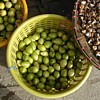
Phutta (พุทธ)
Thai for
Buddha.
See
Phra Phut.
回
phuttachaht (พุทธชาด)
Thai name for the Jasmine Vine, i.e. a species of
creeper that belongs to the
jasmine
family Oleaceae, and with the
botanical name Jasminum auriculatum.
See also POSTAGE STAMP.
回
Phuttagaya (พุทธคยา)
Thai name for
Bodh Gaya.
回
Phutthaphum (พุทธภูมิ)
Thai. ‘Buddha's land’. Name
in Thai
Buddhism used to refer to
the realm of death, into which one
enters after leaving
watthasongsaan, i.e.
the
cycle of life. In Buddhist temples, such as
Wat Rong Khun
in
Chiang Rai
and in the cave temple at the foot of
the Marble Mountains (fig.)
in Da Nang, this is symbolized by a
bridge that one has to traverse, crossing over a pool of hands, i.e. the Lake of
the Doomed, whose arms and hands surface from its depth, in a bid to try
reaching for help. Those, who enter Phuttaphum, will still be reborn and die
again, until they have reached
Enlightenment
and become a
buddha,
after which they will go to
nirvana.
回
phuttan (พุดตาน)
Thai designation for the
Cotton Rose, a shrub or small tree with the botanical name Hibiscus
mutabilis and of which the flowers turn three colours on the same day, changing
from white in the morning, to pink during noon, and red in the evening. This
unique feature is seen as analogous to the cycle of life and
the Cotton Rose is hence regarded
by the Chinese as an auspicious
flower that represents stability and fertility. It
was one of seven types of
dok maijan,
i.e.
sandalwood
flowers, used in the royal cremation ceremony of King
Rama
IX, in October 2017.
回
phuttaraksah (พุทธรักษา)
Thai. The ‘Buddha's cure’, the
‘Buddha heals’, the ‘Buddha guards’,
etc. Flowering plant of the genus Canna.
They grow in clusters (fig.) and their leaves are similar to those of the curcuma or
turmeric. It is often seen in Thailand, usually of yellow, orange-red, or pink colour.
The yellow variety (fig.) is the symbol of Father's Day in Thailand, celebrated
annually on the king's birthday, i.e. 5 December. The yellow variety is depicted
on a Thai postage stamp issued in 2003 (fig.).
In English, it is commonly known as Canna Lily, and its botanical name is Canna x
generalis.
回
Phuttasakkaraat (พุทธศักราช)
Thai. The Buddhist era in Thailand, Laos and Cambodia beginning on the first anniversary of the
parinirvana
of the
Buddha, in 543 BC. Usually abbreviated as
BE.
回
Phutta Sahtsanah (พุทธศาสนา)
Thai name for
Buddhism.
回
Phuttathaat (พุทธทาส)
Thai. ‘Buddha's
slave’. Name for a Buddhist
monk or
bhikku.
READ ON.
回
Phuttha Uthayaan Maharaat (พุทธอุทยานมหาราช)
Thai. ‘Maha Raj
Buddhist Park’
or ‘Great King
Buddha
Park’.
Name of a religious site in
Ayutthaya
that features a giant statue of
Luang Pho
Thuad, who is also referred to as
Luang Poo Thuad
(fig.),
and which is part of the Buddhist
temple
Wat Wachira Thammaram (วัดวชิรธรรมาราม -
fig.).
回
Phutta Witchalai (พุทธวิชชาลัย)
Thai. ‘Wisdom of the
Buddha’.
Name of
Bangkok's College of
Buddhism
and Philosophy in Bang Khen district, which is located adjacently to the
Buddhist temple Wat Phra Sri Mahathat Woramahawihaan (วัดพระศรีมหาธาตุวรมหาวิหาร
-
fig.). It is in English is
referred to as Buddhavijjalaya College and is associated with Bangkok's Rajabhat
University in Phra Nakhon district, whilst most its academic services in
projects related to Buddhism have since 2014 been reassigned to the Faculty of
Humanities and Social Sciences.
See MAP.
回
phu upatham (ผู้อุปถัมภ์)
Thai name for
‘patron’, ‘protector’ or ‘aider’, as well as for ‘adoptive parent’.
回
Phya (พระยา)
See
Phrya.
回
Picnic Incident
Name of an incident
that happened on 10 December 1636 in
Ayutthaya,
when a party of around a dozen Dutchmen went for a boat ride on the
Chao Phya
River. They became drunk and made a nuisance of themselves near one of the
ancient capital's holiest temples, Wat Worachet, which they disrespectfully
called Wat Boeretiet, what literally means ‘a boor's tit’ and was possibly used
jokingly to describe the pagoda-like
chedis
and
prangs,
both sacred Buddhist structures. Besides having sailed past the king's palace
and breached the palace safety regulations, they went on and behaved obstinately
and spitefully against all Siamese who crossed their path, scolding at some,
calling names to others. They even hit a servant of the prince and entered a
house to steal food from a sick Siamese. When King Prasat Thong (1629 to 1656
AD) learned about the incident, he was so furious he had all the Dutchmen
involved arrested and ordered trampled to death by
elephants
(fig.). As a consequence
the king also placed restrictions on the trading activities of the
Dutch East India Company.
The event is described in detail in the diary of
Jeremias van Vliet,
the acting director of the
V.O.C.
outpost in Ayutthaya at the time of the incident.
回
picture-wing fly
See
malaeng wan ponlamai.
回
Pied Bushchat
Common name for a 13 centimeter tall passerine bird in the
family Muscicapidae, and with the
scientific designation Saxicola caprata. Males are almost entirely black, except
for a white lower belly, rump, and elongated wing patch, while females are dull
brown and slightly streaked, with a rusty rump and flanks, a pale vent and
throat, and a black tail. Juveniles are similar to females, but they have a
scaly appearance on the underside. This species has a wide range, and besides
being found in South and Southeast Asia, it also occurs in West and Central
Asia. There are about 16 subspecies, many of them island forms, and the
subspecies occurring in
Thailand
is known as Saxicola caprata burmanicus, which is
also found in
Myanmar, India, South
China, and Indochina. In Thai, it is called nok
yod yah sih dam (นกยอดหญ้าสีดำ), literally ‘black grass-top bird’.
回
_small.jpg)
Pied Crested Cuckoo
Common name for a bird of the family Cuculidae and with the
scientific designation Clamator jacobinus. It is also commonly known as Jacobin
Cuckoo, or just Pied Cuckoo.
It is found in Central Africa, the southern part of the Middle East, and in
parts of South and Southeast Asia. Whereas it occurs in Sri Lanka and
parts of
Myanmar
year-round, in the northern parts of the
Indian subcontinent it only appears as a widespread breeding visitor in summer,
whilst in
Thailand
it is a rare winter visitor. Since it is in part migratory, the time of its
arrival in northern India heralds the start of the
Southwest monsoon rains. It is slim
and medium-sized, but with a rather broad, white-tipped tail. Above, it has
mostly black plumage with a distinctive white wing patch, whereas the underside
is overall creamy white. It also has a characteristic rear crown tuft or crest.
In Thai, this bird is known as nok kakkoo khao dam (นกคัคคูขาวดำ),
i.e. ‘black-and-white cuckoo bird’.
回
%20Cuckoo%20(Clamator%20jacobinus)_small.jpg)
Pied Fantail
A small bodied, insectivorous bird, with the scientific name
Rhipidura javanica, found in Southeast Asia and common in the lowlands of
Thailand. Its upperparts are dark grayish-brown to black (fig.) and its underparts are
white, with a broad black band on the breast (fig.). The head is blackish with a thin
white supercilium, i.e. an eyebrow-like stripe over the eye (fig.).
Its outer tail feathers are broadly tipped white and it has black hairs
protruding from between the bill and forehead, and to a lesser extend from
between the bill and chin. It can often be seen on the ground, hopping from one
spot to another, with its tail held upright, open like a fan. In Thai
called
nok
ih-phraed, often specified as
nok ih-phraed thaeb ok dam.
回
%20นกอีแพรดแถบอกดำ%207_small.jpg)
Pied Imperial-pigeon
Common name for a relatively large, pied species of pigeon
in the family of Columbidae, which is found in Southeast Asia, ranging from
Myanmar and
Thailand
to Java in the South and the Philippines in the East. It is
plain white, with black primaries, flight feathers and tail-tip. It dwells in
mangrove and coastal forests,
woodlands, plantations and scrub. Pied Imperial-pigeons feed on fruit, in
particular the fruit of nutmeg trees, giving it the nickname ‘nutmeg pigeon’. It
is highly nomadic and will travel long distances from its sleeping and nesting
sites to forage in the forests. In Thai it is known as
nok lum
phoo khao and
nok kalum phoo khao.
回
Pied Kingfisher
A small black and white
bird in the family of water kingfishers.
READ ON.
回
Pied Paddy Skimmer
Another name for the
Blackspot Widow.
回
pig
Bristly, omnivorous,
artiodactylous mammal with a broad snout, that often appears in Oriental
mythology, i.e. in
Hinduism a boar (varaha
or male pig) was an
avatar
of
the god
Vishnu; in Chinese
tradition
the pig is twelfth and last animal sign in the
Chinese zodiac
(fig.);
and
Zhu Bajie is a half-man half-pig character (fig.)
in the story of
Xiyouji,
better known as ‘Journey to the West’, who is also responsible for cleaning the
altars of Buddhist temples where boiled pig's heads are
frequently
offered (fig.).
Those born in the Year of the Pig belong to the element shui (水),
that represents water and correspondents to the colour black and the celestial
stems
ren (壬) and
gu (癸).
The pig is said to be witty and clever,
knowledgeable in law and philosophy, but is insubordinate to others. The Sun and
Venus are said to serve as the hands of
those born in the Year of the Pig,
meaning that they have to work hard and endure in order to get their work done,
whilst Saturn controls their minds, which causes them to be temperamental and
hot-headed, though quickly angered, they are also quick to get over it and they
do not easily hold grudges against others. Those born in the Year of the Pig
have a tendency to leave the place of their birth and settle elsewhere, and Mars
is said to be their seat.
The pig features on many a Thai postage stamp, such as the Zodiac Year of the
Pig Postage Stamp, issued in 2007 (fig.)
and the
Songkraan
Day Postage Stamp issued in 1995 (fig.).
It is also the mount of
Nang Rakasot Thewi,
i.e. one of the seven
Nang Songkraan,
namely the one who is celebrated if
Songkraan is on a Tuesday.
See also
Wild Boar,
boar,
sukon, and
lao moo.
回
pigeon pea
Common name for a plant with the
botanical names Cajanus indicus and Cajanus cajan, and in Thai referred as
thua rae
and
thua ma hae (fig.).
回
Pig Memorial
Name of a monument located along the Old
City Moat on
Rattanakosin Island,
adjacent to the
Pihkun Bridge (fig.). It was constructed in 1913 to commemorate the
50th birthday anniversary of Queen
Saowapha, who was
born on 1 January 1864 AD, though with the Thai New Year being in April, then
still considered the Year of the Pig according to the
Chinese zodiac,
which according to the Gregorian calendar was in 1863 AD.
In Thai, the monument is known as anusahwarih moo (อนุสาวรีย์หมู), though it is
officially called saha
chaht (สหชาติ),
which means
‘those who were
born in the same year’,
a name refers to the fact that it was commissioned by three of her
contemporaries, who were born in the same year, namely Prince
Narisara Nuwattiwong (who
designed the memorial), as well as
Phraya
Phiphatkosa (พิพัฒนโกษา) and Phraya Ratcha Songkhram (ราชสงคราม),
as a gesture of gratitude to the Queen. The monument is in cast-iron and was
initially erected standing atop a base made from big stone slabs pilling on top
of each other, which today has been replaced by a higher hill-like base made of
cement. See also
Varaha (fig.).
See MAP.
回
%203_small.jpg)
Pig-tail Macaque
See
ling hang san.
回
pih (ปี่)
Thai. General name for a flute of which there are many varieties,
such as the
pih chawah
(Javanese
flute -
fig.), pih
mon (Mon flute),
pih klahng (central flute),
pih nai (inner flute),
pih nauk (outer flute),
etc. See also
saranai,
pih phaat
and
bansuri.
回
pih (ปี้)
1. Thai. Originally counters
or gambling chips introduced to Thailand by Chinese gamblers during the
Ayutthaya
Period and
used in gambling houses. Later they were also used in business transactions and eventually became an official currency, until they were banned for commercial purpose by the government in 1875. They are usually made of
porcelain, but may also be of glass, horn, tin or brass. They are different in appearance and display motifs of animals and flowers and such on one side, and the Chinese character of the owner and its value on the reverse side. See also
bia,
phoykuan and
photduang.
回
%20Chinese%20porcelain%20gambling%20chips_small.jpg)
2. Thai. Name for a tab formerly carried by a Chinese to show that he had paid the poll tax.
回
pihb
(ปีบ)
A Thai name
for the
Indian Cork Tree,
besides
kasalong. Commonly it is also known as
Tree Jasmine, a designation also used for the
Radermachera ignea, which in Thai is known as
pihb thong.
Sometimes transcribed peeb or peep.
回
pihb (ปี๊บ)
Thai. Name for a somewhat large tin
or aluminum canister or container that takes the form of a squarish upright
elongated rectangular box, topped with a round lid. Though somewhat archaic, it
is still commonly used throughout Thailand to store food in bulk, often cookies
or candy, but also liquids, such as palm oil. These typically have no window, a
smaller lid to facilitate pouring, and may feature a small foldable handle on
top for easy carrying (fig.). It may a
plastic window on one side in order to see the content inside, or alternatively
may have an embossed or printed name, logo or label displaying the content it
holds. Candy or cookies stored inside, such as
khanom kha kai
(fig.),
for example, are typically classified as
khanom
pihb.
Discarded pihb are often made into dustpans by cutting them in half
diagonally and attaching a wooden stick for the handle. These are known as pihb
tak kha-ya (ปี๊บตักขยะ) and pihb kohng phong (ปี๊บโกยผง).
回

pihb thong (บีปทอง)
Thai.
‘Golden
pihb’.
Name for a tree with the botanical name Radermachera
ignea and, like the related
Indian Cork Tree,
also commonly referred to by the name
Tree Jasmine. In Thai, it is in addition called
kasalong kham.
Sometimes transcribed peeb tong or peep
thong.
回
Pihkun Bridge
Name of a walkway bridge over the Old City
Moat, connecting
Rattanakosin Island with
eastern
Bangkok, located
near the later built
Pig Memorial (fig.).
It was constructed in 1911 with the private funds of
Queen
Saowapha, a
consort of King
Rama V, in order to mark her 48th
birthday and her 4th birthday cycle, which coincided with the
Year of the Pig, and hence is in
Thai known as
Saphaan
Pihkun (สะพานปีกุน),
which translates as
‘Bridge of the
Year of the Pig’.
The bridge has four decorative posts, that symbolize four birthday candles, one
for each cycle of 12 years.
See MAP.
回
_small.jpg)
pih phaat (ปี่พาทย์)
Name of a kind
of music ensemble which features wind and percussion instruments which in Thai
are also known as rhythm tools. It includes two
pih,
i.e. the pih nai
or ‘inner flute’ and
pih nauk
or ‘outer flute’, as the chief instruments,
supported by the
ranaat ek
(fig.),
ranaat ek lek (fig.),
ranaat thum
(fig.),
ranaat thum lek (fig.),
kong wong yai
(fig.),
kong wong lek
(fig.),
the
tapohn
(fig.),
klong thad
(fig.),
and the
ching
(fig.).
In addition, it might also include a pair of
klong khaek (fig.),
krab (fig.),
a
jakae (fig.),
and
chaab, i.e. both the
chaab lek (fig.)
and chaab yai (fig.),
and sometimes
one or more
mohng (fig.). It is used to accompany
different royal and traditional ceremonies, as well as in theatre and dance
performances such as
khon,
lakhon,
nang yai,
etc. A set of 8 Thai postage
stamps issued in 1982, depict the Thai musical instruments that are typically
used in a pih phaat (fig.).
回
%20Thai%20orchestra%20or%20music%20ensemble%20with%20percussion%20instruments_small.jpg)
pilaster
A decorative column
that projects a little from the wall, usually on both sides of a doorway. Also
colonette.
回
Pileated Gibbon
Name of a kind of
gibbon, i.e.
a species of primate in the family
Hylobatidae, with the scientific designation Hylobates pileatus and also commonly
known as Crowned Gibbon (fig.).
Males and females exhibit sexual
dichromatism, i.e. have different fur colourations and marking patterns.
Males are black with a white ring around the
face,
whereas females (fig.) are creamy white-grey with
a blackish belly, face and head (fig.).
Whilst females have long shaggy hair on the sides and back of the head,
males have a ring of rather bristly
hair
around the crown, which sometimes, depending
on the light, appears to be greyish.
Pileated Gibbons are found in eastern Thailand, western Cambodia and southwest
Laos. They are diurnal, arboreal and feed predominantly on fruits, leaves and
small animals. Like other gibbons, they are monogamous.
回
pin (ปิ่น)
Thai. An ornamental
pin for a topknot. It also means [the one] ‘at the top’ and as such is an
epithet for the king, as in pin
kasat,
‘king of kings’. See also
pin phiphop and
pintoh.
回
Pindola
(ปิณโฑล)
1. Pali-Thai. Name of
one of the initial
sixteen
arahats, as well as one
of the later eighteen and who is considered
their
leader.
READ ON.
回
2.
Pali-Thai. Name of one of the candidates
for inclusion as the 17th or 18th
arahat,
often referred to as the second
Pindola,
to distinguish him from
Pindola
Bharadvaja
READ
ON.
回
pine
See
ton son.
回
pineapple
Fruit of the Ananas comosus.
READ ON.
回
pineapple bamboo hat
Epithet for a
cone-shaped traditional farmer's hat, that is hand-woven from
bamboo
with complex braiding, creating small pyramid-like
squares like those on a
pineapple.
回
pineapple guava
See
farang kee nok.
回
Ping (ปิง)
Thai. Name of a river in North Thailand that flows through
Chiang Mai and merges with the
Nan,
Yom and
Wang rivers near
Nakhon Sawan together forming the
Chao Phraya river. A name similar to that of the river Ping also occurs in the old name of Chiang Mai, that is Nopburi Sri Nakhon
‘Phing’.
See MAP.
回
_small.jpg)
Pindaya
(ပင်းတယ)
Burmese. Name of a town in
Myanmar's
Shan
State. The name
is believed to have derived from the legend of Prince
Kummabhaya (fig.),
who shot and killed an evil
giant spider with an arrow from his bow, and as a result made the
exclamation
pinguya,
i.e. ‘taken the spider’, which over time corrupted into the name Pindaya.
The region is famous for the
the Pindaya Caves (map
-
fig.),
i.e. three separate limestone grottoes, that
together contain over 8,000
Buddha images of different sizes and in a variety of poses and
mudras
(fig.).
回
pinguya
(ပင့်ကူးယူ)
Burmese. Exclamation
allegedly made by the legendary Prince
Kummabhaya (fig.)
when killing an evil giant spider and meaning
‘taken the spider’. It is thought that it over time corrupted and became the
name
Pindaya.
回
Pink Cassia
Another name
for the Pink Shower Tree, a deciduous tree that grows up to 12 meters and has
the scientific Latin name Cassia bakeriana. In Thai it is called
kalapaphreuk, and
look kalapaphreuk,
the name for its fruits,
may
also
refers to a kind of
riyan prooythaan, i.e.
a monetary gift in the form of a coin that is wrapped in a package skillfully
handmade in the form of a
fruit
using a ribbon. Besides this, both the
Thai and English name are often used generally for all cassia trees with pink
flowers, of which there are many different kinds, including the Cassia grandis
(horse cassia, in Thai
kalaphreuk),
Cassia javanica (Javanese cassia, in Thai
chaiyaphreuk),
Cassia agnes (in Thai sometimes confusingly called
rachaphreuk). In English, also called
Wishing
Tree.
回
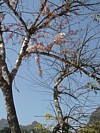
Pink Dragon
Millipede
Name
for a kind of bristly looking
millipede (fig.)
with a bright pink colour, which was given the scientific name
Desmoxytes purpurosea. It is only rather recently discovered in the
greater
Mae Khong area
and was first described in 2007 by scientists in
Thailand. It has glands
that produce cyanide as a defence mechanism and its bright complexion is
thought to act as a warning to potential predators. In Thai it is called
king
keuh mangkon chomphoo and it is sometimes referred
to as shocking pink dragon millipede.
回
Pink-headed Jewel Beetle
A species of metallic wood-borer beetle in
the family Buprestidae and with the
scientific name Chrysochroa buqueti rugicollis.
READ ON.
回
Pink-necked Green pigeon
A species of
bird with the scientific name Treron vernans and belonging to the family
Columbidae. It is found in Southeast Asia, from southern Myanmar to the Malay
peninsula, including
Vietnam, Cambodia and Thailand, to Sulawesi, the
Philippines and Borneo. Its habitat includes tropical and subtropical moist
lowland,
mangrove and montane forests. Both the male and female are
predominantly green with a yellow stripe in the wings, a yellow tinge on the
belly and mixed dark green and yellow thighs, but males have a grey head and
throat with a pinkish-purple upper breast and neck, and an orange lower breast.
They eat mainly fruits and their colourful plumage allows them to blend
perfectly in the foliage of fruiting trees (fig.). In Thai called
nok plao ko sih muang.
回
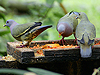
Pink Rain Lily
Common name for a tropical plant with the
botanical designation Zephyranthes rosea and also commonly referred to as Rosy
Rain Lily, Rose Fairy Lily, and Rose Zephyr Lily, and derive from the fact that
this small plant produces short-lived flowers only after seasonal heavy rains or
storms, with the name Zephyr referring to the Greek god Zephyrus (ζέφυρος), i.e.
the personification of the West Wind, who is associated with rainfall. The
plant’s funnel-shaped flowers have six bright pink petals with a green central
perianth tube and six yellow stamina.
回
_small.jpg)
Pink Skunk Clownfish
Common name for a species of
anemone fish, with the scientific designation Amphiprion perideraion.
READ ON.
回
Pink Tassel-flower
Epithet for the
Calliandra
surinamensis (fig.),
a shrub with tassel-like flowers that are white
with pink. This
up-to-three meter tall
shrub belongs to the family Fabaceae and is related to the
somewhat taller shrub Calliandra
haematocephala or
Red Powder-puff
(fig.),
which bears similar flowers, but which can be either white with pink or red. In
Thai, the Pink Tassel-flower is known as
jamajurih
(จามจุรี), a name also used for the
Rain Tree, alternatively called
East Indian
Walnut or Monkey Pod, i.e. a
large tree in the same family (Fabaceae)
and with similar flowers, but with the botanical names
Albizia saman, Samanea
saman, and Albizia lebbeck. To differentiate
the shrub from the tree, usually the
prefix phreuk (พฤกษ์) is added, whilst for the tree
the prefix
ton
(ต้น) is used. The tree is the
floral emblem of
the
Chulalongkorn
University, since the pink flowers represent Tuesday, the birthday of King
Chulalongkorn. In addition, as this tree sheds
its slimy pods
and leaves, and turns the ground below dirty and slippery, it serves as a
warning to students to tread carefully during examinations, in order not to slip
and fall, i.e. to fail.
回
pin phiphop (ปิ่นพิภพ)
Thai. ‘Lord of the
world’. A compound of the words
pin
and
phiphop.
回
Pin-striped Tit-Babbler
Common name for a small
yellowish-brown babbler with striped underparts and a rufous forehead and wings.
It has the binomial name Mixornis gularis and is also commonly known as known as
Yellow-breasted Babbler.
This
striking
passerine bird
is widely distributed, found in the undergrowth and
middle levels of forested habitats, from eastern India and Nepal downward to
Bangladesh and mainland Southeast Asia, and parts of Indonesia and the
Philippines. In Thai, it is known as nok kin malaeng ok leuang (นกกินแมลงอกเหลือง),
i.e. literally ‘yellow-breasted insect-eating bird’.
See TRAVEL PICTURES.
回
_small.jpg)
Pin-tailed Parrotfinch
Common name for a colourul species of
finch found throughout Southeast Asia, and with the scientific name Erythrura
prasina. Males are about 16 centimeters tall, are green above, with a blue face
and throat, and orangey-buff below, with some pinkish-red colouring in the
middle of the belly, and a bright red lower rump that extends into the tail,
which is also red. Their beaks are black and the legs and feet pinkish. Females
(fig.)
are similar, but have a much shorter tail and in all measure just around 12.5
centimeters in length. They lack the blue face and chin of the male and instead
have some pale powder-blue wash on the head sides. They also lack the red
colouring on the lower belly, which is rather washed-out buffish.
回
%202_small.jpg)
pintoh (ปิ่นโต)
Thai. A kind
of lunch box consisting of a stack with a number of cylindrical
containers, one placed above another and held together by wooden or metal slats,
that additionally form a handle on the top. There typically consist of three to
five containers, though just a single one also exists. InEnglish, it is sometimes
referred to as a tiffin
carrier or tiffin box, an expression that derives from an Indian word meaning a
‘light meal’ or ‘snack’. It is used for carrying food, usually light lunches
prepared for schoolchildren by their mothers, or occasionally for farmers to
take along when they go to work in the field. The different compartments are used
to separate the various items or different constituents of a meal, e.g. a curry, some
rice and a
dessert. The word pintoh could be translated as ‘to grow (toh) to the top (pin)’,
though the term likely derives from the Japanese
bento,
meaning ‘box lunch’. This probably refers to the stack in which the vessels are placed on
‘top’ of
each other and hence ‘grows’ to a certain height, although it might just as well
refer to the fact that children grow as they eat. Traditional pintoh are made
from wood, later models usually from metal (fig.)
and modern ones from stainless steel (fig.). Also transcribed pinto.
回
_small.jpg)
Pinya (ပင်းယ)
Burmese. Name of the
Myinsaing
Kingdom after the rebellion of
Athinkhaya
Saw Yun
(fig.)
and the consequent breakaway of
Sagaing. It
existed from 1313 to 1365 AD,
alongside the Sagaing Kingdom, with Pinya ruling over southern Upper Burma and
Sagaing controlling northern Upper Burma.
回
Pinyin (拼音)
Chinese. ‘Spell sound’. System of Romanized spelling for
transliterating Chinese. The system first came into being in the fifties, with
the aid of Russian scholars and thus initially rendered the Chinese characters in Cyrillic
script. Only when Sino-Soviet relations became deteriorated in the late fifties,
Pinyin slowly started to use Roman script. Pinyin was developed in order to do
away with the inconsistency of earlier conflicting transliteration systems made
by Westerners, that were usually based on Chinese topolects, rather than on
Mandarin. The local or regional dialects from which these foreign systems
derived often were Hakka, Hokkien or Cantonese, which are spoken in Fujian and
Canton respectively, the area to which foreigners were previously largely
restricted. The different foreign systems were also unconventional and
contradictory, as they were usually strongly determined by the native tongue of
the person writing out the transliteration, which for instance would be very different in
English then in French. Hence, the inventors and developers of
Pinyin aimed at standardizing the system for all alphabetical languages. Now
universally accepted as the official transliterating system, it claims to
indicate how a word should be pronounced in Putonghua, i.e. the ‘common speech’,
though it is not perfect and any student of Chinese would tell you that it falls
short to fully suit their need. Its
formal name is Hanyu Pinyin, with Hanyu (汉语) meaning ‘Chinese language’. Other
commonly spelling systems still in use today are Wade-Giles, named after its two
late nineteenth century creators, and Chinese Postal Map
Romanization, of which the former is more prevalent. The term Pinyin is related to
Pinyin Wenzi (拼音文字) which means ‘alphabet’ in Chinese. In Pinyin,
the word is spelled with diacritic punctuation marks that determine the tone,
i.e. pīnyīn.
回
pipa
(琵琶)
Chinese. Name
for a Chinese four-stringed lute, which has a pear-shaped body and a neck with
30 frets. The musical instrument is held upright and played with both hands
(fig.). The
strings are plucked with the right hand, sometimes holding a wooden plectrum, or
with several small plectra attached to the fingers. It is one of China's oldest
musical instruments, with a history of over 2,000 years. The pipa is named after
the sounds that the instrument produces and its designation is thus
onomatopoeic.
It is the main
attribute
of
Chi Guo Tian (fig.),
one of the Chinese
Four Heavenly Kings (fig.). Also spelled pih pah or peepaa.
回
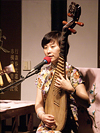
Piper nigrum
Latin name for the pepper tree. See
prik thai.
回
pisang tanduk
Malay-Indonesian. ‘Horn banana’. Name of a species of large
banana (fig.),
that occurs from Sri Lanka, to Indonesia and
Malaysia. They are mostly used
in cooking, especially to make fried banana chips, known
locally as pisang goreng. Commonly called plantain banana (fig.) and scientifically
known as Musa acuminata or Musa balbisiana, depending on the variety. In
Thailand, plantain bananas are known as
gluay glaay,
though usually nicknamed
gluay nga chang, i.e. ‘elephant tusk bananas’.
回
%201_small.jpg)
pitahaya
See
pitaya.
回
pitaka (पिटक)
Sanskrit.
‘Basket’. Term used to refer to any one of three parts or ‘baskets’ of the
Tripitaka, i.e.
Buddhist manuscripts written in
Pali
and used in
Theravada
Buddhism. They contain discourses of the
Buddha, as well as
exegetic texts, and a canon with rules on monastic discipline. They are
divided into three parts and separately known as
Vinay Pitaka,
Sutra
Pitaka, and
Aphitam
Pitaka. In Thai called
pitok.
回
Pitaka Taik (ပိဋကတ်တိုက်)
Burmese-Sanskrit. ‘Library of the
Pitaka’,
i.e. Buddhist manuscripts. Name of a brick hall
in the ancient city of
Bagan
used to keep Buddhist scriptures.
READ ON.
回
pitaya
Name for the
dragon fruit or pitahaya, which in Thai is known as
kaew mangkon.
回
pitcher plant
Generic name
for a tropical
carnivorous plant
of the genus Nepenthes.
READ ON.
回
pitok (ปิฎก)
Thai term that
derives from the Sanskrit word
pitaka, which can be translated as ‘basket’ and refers to any one of
three parts or ‘baskets’ of the
Tripitaka, which in Thai are known
as
Traipitok,
i.e. three sets of Buddhist manuscripts containing
discourses of the
Buddha, as well as
exegetic texts, and a canon with rules on monastic discipline. Also transcribed
pidok.
回
pit tah tih moh (ปิดตาตีหม้อ)
Thai. ‘Close the eyes and strike the pot’.
Blindfold pot-hitting. Name of a traditional Thai children's game from the past,
in which participants
must try to smash a terracotta cooking pot (moh)
with a a long stick, whilst having been blindfolded and spun around at least
once. Players may be cheered on by other team members, who shout instructions,
while
opponents might try to interfere by shouting false directions. Whoever cracks
the pot wins the game.
See also POSTAGE STAMP.
回
pit thong (ปิดทอง)
Thai. ‘To cover with gold’, especially applying
gold leaf to Buddha images and sacred objects. Usually gold leaf used in temples is of an inferior quality containing about 4% gold, whereas genuine gold leaf is made from pure gold.
回
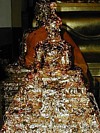
Pittih Kohnjuk (พิธีโกนจุก)
See
Phittih Kohnjuk.
回
pit viper
A subfamily of
venomous vipers, with the scientific name Crotalinae, found in Asia and the
Americas. These
snakes are characterized by the
presence of a heat-sensing pit organ located between the eye and the nostril on
either side of the head (fig.).
This highly evolved pit organ is a complex structure located in a cavity of the
upper jaw and consists of a membrane that divides the cavity into two sections
of unequal size, with the larger of the two facing forward and exposed to the
environment. The two sections are connected by a narrow duct, that can be opened
or closed by a set of surrounding muscles. By controlling this duct the snake
can balance the air pressure on either side of the membrane, which has many
nerve endings. When prey comes into range, infrared radiation falling onto the
membrane allows the snake to determine its direction and distance, enabling it
to strike accurately at any heat-radiating object, even if deprived of sight,
smell or hearing, as tests have revealed. The pit organ
of this nocturnal predator is thus of great value for hunting at
night. In Thai called
ngu pahk kraba,
literally ‘tray-mouth snake’. Also
spelled pitviper.
回
piyad (เปี้ยด)
Thai. Name of a
bamboo woven basket used in Northern Thailand to collect the grains when threshing
rice the traditional way. It is similar to the kraboong in the Central region, but rounder and shorter, with an edged round mouth and narrow square base, and a pair of ears for carrying rods. It is generally divided into three sizes: large (piyad luang), medium (piyad hahm) and small (piyad noi). Its shape may vary depending on local usage and preference, e.g. a piyad from
Nan and
Phrae provinces comes without an edged mouth and is sometimes called bung teep. Piyad
are at times woven in intricate patterns and varnished with rubber resin.
回
Piya Maha Raj (ปิยะมหาราช,
ปิยมหาราช)
Thai. ‘Beloved Great King’. A predicate for King
Chulalongkorn. Pronunciation Piya Maha Raat
and also transliterated Piya Maha Rach.
回
piyaw (เปี้ยว)
Thai name for
the calling crab or fiddler crab, a species of semi-terrestrial marine crab with
distinctively asymmetric claws and of which there are just under a hundred known
species, all belonging to the genus Uca, within the family Ocypodidae. Males
typically have a single, enlarged claw and its English common name, fiddler
crab, refers to the fact that when it feeds, using the smaller claw back and
forth to bring food to its mouth, it looks as if it is playing the other, larger
claw, like a fiddle. It is also known as calling crab, as this single oversized
claw with males, which can be either on the right or left side, is used to
signal, as well as in courtship to attract females, by waving it high in the air
and tap it on the ground. Besides this the large claw is also used for
protection. In Thailand they typically live among
mangrove
roots. Also called poo piyaw (ปูเปี้ยว), poo kaam daab (ปูก้ามดาบ) and poo kaam yao (ปูก้ามขาว), i.e. ‘long
claw crab’. See also
sand bubbler crab and
poo sahaem kaam daeng.
See also WILDLIFE PICTURES
and
THEMATIC STREET
LIGHT.
回
pla (ปลา)
Thai for ‘fish’.
READ ON.
回
pla bai (ปลาใบ)
Thai
common name for the Indo-Pacific Sailfish, a species of large marine
fish with the scientific name
Istiophorus platypterus.
It
has a large dorsal fin which it
can raise, reminiscent of the sail of a boat and from which it gets its
common name. It is dark blue above and silvery white below, and its
upper jaw is elongated, resembling a spear, similar to Atlantic Sailfish
(Istiophorus albicans), and other
billfish, such as
Marlin and Swordfish. In Thai, it
also known as pla kratohng thaeng rom (ปลากระโทงแทงร่ม) and pla kratohng
rom (ปลากระโทงร่ม), which loosely translates as ‘mustached
umbrella stabbing fish’. Since
Krabi means
‘sword’,
the Swordfish
became the symbol of this seaside province and features on the promenade along the beach
of Ao Nang Bay (fig.)
in the form of a large bronze of two
fishermen catching a
Sailfish,
a statue
reminiscent of a similar bronze at
Phi Phi Don (map
-
fig.), one of the
Phi Phi Islands (fig.),
whereas
the street lights at both these locations are also adorned with
Sailfish.
The Indo-Pacific Sailfish holds the record for the fastest swimming fish in the
world, reaching speeds of 90 kilometers per hour. It is nicknamed the Queen of
the Seas and is commonly found around the Phi Phi Islands in the Andaman Sea off
Krabi.
See THEMATIC STREET
LIGHT (1) and
(2), as well as
TRAVEL
PICTURES (1),
(2),
(3),
(4),
and
(5),
and
WATCH VIDEO.
回
_small.jpg)
pla beuk (ปลาบึก)
Thai name for a large kind
of catfish, generally
referred to as
Giant Catfish
(fig.)
and in Thai also
known
as
pla beuk yak.
See also
pla dook.
回
pla
beuk
yak (ปลาบึกยักษ์)
Thai name for the
Giant Catfish
(fig.).
回
Pla Boo Thong (ปลาบู่ทอง)
Thai. ‘Golden Goby’.
Name of a romantic love story.
READ ON.
回
pla chalaam hahng yahw (ปลาฉลามหางยาว)
Thai. ‘Long-tailed
Shark’.
Designation for the
Thresher Shark,
as well as a name also commonly used in English as a synonym for this
species.
回
pla chalaam waan (ปลาฉลามวาฬ)
Thai for ‘Whale
Shark’.
回
pla chon
(ปลาช่อน)
Thai. Literally ‘spoon fish’,
‘spade fish’ or ‘slice fish’. Name for the Striped Snakehead or Asian
Snakehead, a kind of freshwater fish.
READ ON.
回
pla daek (ปลาแดก)
Thai. A term
derived from the Lao
pa daek
and used in
Isaan for
pla rah.
回
pla dao (ปลาดาว)
Thai. Literally ‘starfish’, i.e. the marine echinoderm with five or more
radiating arms, which on the undersides have tube feet used for locomotion and
—in predatory species— for opening the shells of mollusks, and mostly with
suckers used to attach to surfaces. Some starfish have hard spikes on their
bodies and some species
are poisonous, yet in
China some species are used as food
and eaten fried on skewers (fig.).
Starfish are said to have anti-inflammatory properties and are hence also found
in dried form in traditional pharmacies all over Southeast Asia and the Far
East, where they are crushed and used as an ingredient in Traditional Chinese
Medicine to treat a variety of ailments, ranging from acute slow convulsion,
tetanus and epilepsy, to irritable bowl syndrome, hearth disease, and allergies
such as asthma. Since they are not real fish, starfish are by some referred to
as sea stars.
回
pladkik (ปลัดขิก)
Thai. A phallus, usually carved from wood,
typically mai khoon (ไม้คูณ), i.e. wood of the Casia fistula,
also known in Thai as
rachaphreuk, but also other wood or materials may be used, e.g. cast from bronze. It is comparable to the ancient
Roman fascinum which was used to ward off disease. They come in all possible sizes and smaller ones (fig.) are often worn by men around their waist hanging from a string or chain as an
amulet
or as a
talisman, and
depending on the purpose, it should be worn on the correct side accordingly,
i.e. left, right, front or back. It symbolizes the Hindu god
Shiva and is supposed to avert misfortune and trigger good luck - Shiva is
Sanskrit for
‘auspicious’. It is seen by some as a fertility symbol and thus comparable to the
linga
(fig.),
which is a
symbol of the creative power of
Shiva and symbolized in the hump on the
Zebu
(fig.)
bull
Nondi, i.e. the mount of
Shiva
(fig.). Some pladkik may have the figure of a
tiger, a monkey or some other animal, or even a lady, attached to it.
A pladkik with a monkey also refers to the linga, as the Thai word for monkey
sounds similar to the word for linga, namely ‘ling’. When with a tiger, it may
refer to the ‘tiger of desire’, knowing that in Sanskrit a tiger is called
viagra. Some may also have cabalistic writing and
yan signs carved on them.
In ancient Rome, people believed that phallic charms offered proof against the
evil eye. Such an amulet was called fascinum in
Latin, from the verb fascinare, meaning ‘to cast a spell’ which is the origin
for the English verb to fascinate, in the sense of ‘to paralyse someone with
fear’. Besides this the Romans carried amulets of hands in the fig gesture (mano
fico), a fist with the thumb pressed between the middle and index fingers, a
sign with a sexual connotation which, like the Thai pladkik, was often covered
with magical symbols.
The monks
Luang Pho
Ih (หลวงพ่ออี๋) of Sattahip and
Luang Pho Leua (หลวงพ่อเหลือ) of
Paet Riw
are well-known for their carving of pladkik. Somewhat larger, medium-sized
pladkik, are carried as an
attribute
by participants to the annual
Phi Tah Khohn
festival in
Loei
Province (fig.).
Part of the
Suan Traithep (สวนไตรเทพ), known in
English as Traithep Dream Forest (fig.), a theme park
in
Khon Kaen,
is
fashioned as a garden with large phalluses erected upright in a field
known as Thung Krajiew (ทุ่งกระเจี๊ยว), i.e. ‘Field of Cocks’
(vdo).
The
Erawan
shrine in
Bangkok
also features a
fertility corner, where people who long for
children come to offer wooden phalluses in order to facilitate pregnancy. Similarly, in Japan, large phalluses are found in specific fertility shrines and carried
around in Phallic Processions or Penis Parades during certain festivals, such as
the
Shinto Kanamara
Matsuri and Honen Matsuri or
‘Harvest Festival’, and represent fertility and sexual health. Alternative
transliteration and pronunciation paladkik and pa-ladkik.
回
pla dook (ปลาดุก)
Thai
for ‘catfish’, especially airbreathing catfish
belonging to the family Clariidae, which also includes the walking catfish, a
species of freshwater airbreathing catfish native to Southeast Asia and with the
scientific name Clarias batrachus. The latter is named after it's ability to
wiggle on land using its pectoral fins combined with the snakelike movements of
its elongated body. Airbreathing catfish are
characterized by a large
flat head with four barbels, an elongated body with long dorsal and anal fins,
and by the presence of
a
so-called labyrinth organ,
an extension of the gill plates, i.e. the bone that anchors the gills and which
consists of multiple folds covered with tiny blood vessels that take oxygen from
the air, allowing them to breathe atmospheric oxygen and enable them to survive
out of the water for extended periods. Pla dook native to Thailand are generally
overall blackish grey to greyish brown above, sometimes with paler spots or
markings and whitish underneath, as well as around the mouth and sometimes the
eyes. See also
pla beuk
and
WATCH VIDEO.
回
pla dook yak (ปลาดุกยักษ์)
Thai name for the
Giant Catfish,
besides the
names
pla beuk
and
pla beuk
yak (ปลาบึกยักษ์).
回
plaeng kaai (แปลงกาย)
Thai.
‘To transfigure the body’, as well as ‘to disguise’ or ‘to impersonate’. Term
used for a deity who splits his being and in part descends
from heaven to
incarnate on earth, while
the other self remains in heaven.
Also
known as plaeng tua (แปลงตัว) and sometimes referred to as baeng tua (แบ่งตัว),
literally ‘to split the body’.
Compare with the concepts of
avatar
and
arahitogami.
回
Plaeng Nah Sathit (แปลงนาสาธิต)
Thai.
‘Demonstration field’. Name of a green plot of land along
Sri Nagarindra
Road in
Bangkok's
khet
Bangkapi, created to introduce and
publicize upcountry-style farming to city dwellers.
READ ON.
回
plaew (เปลว)
Thai. A flame or tongue of flame. Also
plaew fai.
回
plaew fai (เปลวไฟ)
Thai. Tongue of flame, as used e.g. in the
kanok or
kranok design. Also
plaew.
回
pla fah (ปลาฝา)
Thai. ‘Capped
fish’.
Isaan
name for the
Asiatic soft-shell
turtle, which
in Thai is known as
taphaab
(fig.).
回
Plain-backed
Sparrow
Common name for a species of sparrow, with the
scientific designation Passer flaveolus. It
is between 13.5 and 15 centimeters tall and is found in mainland
Southeast Asia (fig.). Adult males (fig.)
have yellowish underparts, rufous-chestnut upperparts and a
distinctive black throat patch, as well as black wing streaks, bill,
tail tip and lores. Females are overall paler, have a pale
supercilium, and a pale bill with a black tip. Also called
Pegu Sparrow and in Thai known as
nok krajok tahn (นกกระจอกตาล).
See also WILDLIFE PICTURES.
回
%201_small.jpg)
Plain Earl
Common name for a butterfly found in South and
Southeast Asia, with the scientific name Tanaecia jahnu. Above, the male
is dark brown to
blackish, with a small, off-white edge on the forewings, and a
similar, yet much broader off-white band, on the lower part of the
hindwings. The darker colours of both the wings and body have a
slightly purplish shine, which is referred to in the Thai name
phi seua baron muang dam (ผีเสื้อบารอนม่วงดำ),
i.e. ‘purple-black baron butterfly’. Females are more dull and a
lighter brown, without any of the white with males.
回
%20ผีเสื้อบารอนม่วงดำ_small.jpg)
Plain
Flowerpecker
Common designation of a tiny bird in the
flowerpecker family, with the scientific name Dicaeum concolor. Both
sexes are similar, with greenish-olive upperparts and mostly pale
olive-greyish underparts, apart from the centre of the belly, and
sometimes the throat, which is creamy coloured. The sides of the
head are quite pale and the bill of adults is dark, whereas that of
juveniles is pinkish with a dark tip. Like other flowerpeckers, the
Plain Flowerpecker has a tubular tongue with a feathery tip, which
allows it to sip nectar, though it also feeds on berries, as well as
small insects. With a body size of 8.5 to 9 centimeters, it is the
smallest bird in Thailand, together with the Golden-bellied Flyeater
(Gerygone sulphurea) and some other species of flowerpecker, such as
the
Scarlet-backed Flowerpecker (fig.),
all with an identical size. In Thai it is called
nok kah fahk sih riyab. 回
Plain Lacewing
Common name of a
species of butterfly in the tribe Heliconiini and a subspecies of
the
Orange Lacewing
(Cethosia
penthesilea), with the scientific designation
Cethosia penthesilea methypsia, and known in Thai as
phi seua
katokrok sih khlam (ผีเสื้อกะทกรกสีคล้ำ).
See also
Leopard Lacewing (fig.)
and
POSTAGE STAMP. 回
Plain-pouched Hornbill
Common name for a species of
hornbill,
with the scientific name
Rhyticeros subruficollis.
READ ON.
回
Plain Prinia
Common name for a
species of bird, with the scientific name Prinia inornata.
Adults of both sexes are 13.5 to 15 centimeters tall, brownish-grey
to olive above, with a clear, whitish supercilium and whitish-buff
underparts. The bill is blackish, though often paler towards the
base, and the legs and feet are pinkish. Immature birds (fig.)
are described as warmer above and washed yellowish below (fig.). It is
insectivorous and is typically found in wet lowland grassland,
reeds, open woodland, scrub and on occasion in parks and gardens. It is also commonly
known as White-browed Prinia (fig.), and in Thai it is called
nok krajib yah sih riab.
It is sometimes described as a species of warbler, referred to as
Wren-Warbler and –akin to the
Streaked Fantail Warbler–
listed in the family
Cisticolidae,
which is unlike most other warblers, as those generally belong to
the family
Phylloscopidae.
See also WILDLIFE PICTURES (1),
(2)
and (3),
as well as
TRAVEL PICTURE.
回
%201_small.jpg)
Plain Tiger
Common name for a
species of butterfly, with the scientific name Danaus chrysippus and
belonging to the subfamily Danainae or Milkweed Butterflies, i.e. butterflies that
lay their eggs on various milkweeds on which their caterpillars feed.
There are several species spread over Asia (fig.), Africa and the
Mediterranean region, with the
subspecies
living in
Thailand
being the
Danaus chrysippus chrysippus, a
variety that has
several forms itself and also occurs in other parts of
Asia, as well as in the Mediterranean region and northern tropical
Africa.
Danaus chrysippus chrysippus
is a medium-sized
butterfly, with a wingspan of about
7–8 centimeters, with males slightly smaller than females,
but more brightly coloured.
It has tawny wings, with
black on the apical half of the forewing, white spots and a white
band. The hind wing has a thin border of a black enclosing series of
semicircular white spots, and three black spots around the centre (fig.).
In addition to the three spots, there is also a fourth spot, which
is white and broadly bordered with black
(fig.).
The white of this fourth spot is somewhat better visible on the
underside of the wings, which otherwise
are similar in pattern to the upper side, but less bright in colour.
The anterior part of the body is black with many white spots,
whereas the posterior is
tawny
with black (fig.).
See also WILDLIFE PICTURES.
回
%20ผีเสื้อหนอนใบรักธรรมดา%202_small.jpg)
Plain-throated Sunbird
See
Brown-throated Sunbird.
回
Plaintive Cuckoo
Common name for a
species of bird, with the scientific name Cacomantis merulinus.
READ ON.
回
pla kad (ปลากัด)
Thai. ‘Biting fish’. A fighting fish used in
illegal betting.
READ
ON.
回
pla
kooy (ปลาโค่ย)
Thai name for the koi, a hybrid species of fish
belonging to the family of Cyprinidae.
READ ON.
回
pla krahae (ปลากระแห)
Thai name for
the
Tinfoil Barb.
回
pla krathung hew (ปลากระทุงเหว)
Thai generic name for several species of
garfish, that belong to the families Belonidae (needlefish) and
Hemiramphidae (halfbeaks). Species found in the region
include the Slender or Banded Needlefish, the
Freshwater Needlefish, the
Pygmy
Halfbeak, the Forest Halfbeak, and the
Stripe-nosed Halfbeak (fig.).
回
pla meuk (ปลาหมึก)
Thai term that literally means
‘ink fish’, but which is also used for
many kinds of cephalopod, such as squid or cuttlefish, but not for all
cephalopods, excluding for example
the
Chambered Nautilus
(fig.),
which in Thai is known as
hoi nguong chang. The word meuk,
also called nahm meuk (น้ำหมึก) means
‘ink’,
and particularly relates to black ink, as well as to the ability of
many cephalopods to squirt a black watery substance, which is
referred to as ink. On Thai beaches, one can occasionally encounter
a cuttlebone that has been washed ashore
(fig.), i.e. a hard, brittle,
internal structure found in cuttlefish, which is composed chiefly of
a carbonate mineral known as aragonite, and has a chambered,
gas-filled shell used for buoyancy control. These cuttlebone are
commonly used as calcium-rich dietary supplements for caged birds.
Squid
or cuttlefish are
very similar but can be told
apart from their eyes, i.e. whereas squid have round pupils, those
of cuttlefish are W-shaped.
回
%20squid,%20cuttlefish_small.jpg)
pla moh (ปลาหมอ)
Thai name for fish in the
family Anabantidae, which are commonly known as climbing gouramies
or climbing perches,
due to their ability of terrestrial locomotion, i.e. to climb out of
water and crawl short distances. In order to do so, they possess a
so-called labyrinth organ, i.e. a structure in the head of the fish,
which allows them to breathe atmospheric oxygen. Hence, these fish
are commonly seen gulping at air at the surface of the water. Due to
this, this particular fish is also named in
a
Thai proverb.
回
pla moh sih (ปลาหมอสี)
Thai name for any fish from the family Cichlidae
in the order of Perciformes, which includes the commonly seen
intergeneric hybrid Flowerhorn, a
species of fish
also known as
luohan
(fig.),
as well as the elegant Balloon ram.
回
%20German%20blue%20ram,%20Asia%20ram,%20Dwarf%20butterfly%20cichlid_small.jpg)
pla ngun pla thong (ปลาเงินปลาทอง)
Thai. ‘Silver fish-gold fish’. Another name for
goldfish (fig.),
normally referred to as
pla thong. It derives from the fact that some
species of goldfish are not completely gold, i.e. red or orange, but rather gold
merged with silver, with the latter being their original natural colour. And,
whereas for Chinese people goldfish, are thought of as a prelude for
fortune, since there Chinese name jīnyú (金鱼) sounds
as jīnyú (金逾) or jīnyú (金余),
which means ‘surplus of money’ or ‘gold in excess’, for Thai people
the term silver fish-gold fish is rather reminiscent to the
silver and gold trees,
that they offer to the king.
回
plantain
Name for a large species of
banana. See
gluay glaay.
回
Plantain Squirrel
Name for a species of quick and agile tree squirrel that
occurs from Thailand, Peninsular Malaysia and Singapore to Sumatra, Java and
Borneo. This rodent belongs to the family Sciuridae and has the scientific
name Callosciurus notatus. It has a
20 to 30 cm long body with a similar sized tail. It is
greyish-brown with two stripes, cream and black, on the sides of its chestnut
belly. It is extremely adaptable, occurring in a wide range of habitats
including secondary and coastal forest,
mangrove, gardens, plantations, parks
and semi-urban areas. It feeds mainly on fruits, especially those planted by
man, but it will also eat insects such as ants and ant larvae, and bird's eggs.
It is also called oriental or tri-coloured squirrel and in Thai
kra-rohk
kahng laai thong daeng (กระรอกข้างลายท้องแดง). See also
plantain.
回
%20กระรอกข้างลายท้องแดง_small.jpg)
pla ob kleua
(ปลาอบเกลือ)
See
pla yahng kleua.
回
pla rah (ปลาร้า)
Thai. A kind of preserved fish, which is
habitually made into a putrid
chili paste called pla ra sab (ปลาร้าสับ
-
fig.) or
a chili sauce called nahm
phrik pla rah (น้ำพริกปลาร้า -
fig.). In
Isaan, it
is often mixed with
somtam
to make it more salty, a dish known as somtam Lao. It is usually
made from small fresh water fish which are mixed with bran and salt,
and left to ferment in an earthen jar for seven to eight months.
There is a saying that the flavour strongly increases if the fish is
fermented ‘until maggots appear’ (fig.). In Isaan, the practice is said to
be over 4,000 years old. The condiment is especially popular in
Isaan and Laos, where it is known by the names
pla daek
and
pa daek
respectively, as well as in some parts of
Vietnam
and
Cambodia. In
Laos
and some
parts of Isaan, it is
more like a thick, seasoned fish sauce that often contains chunks of
fish, and where the ingredients may also include some
pineapple. In
Thailand the term pla rah is also slang for ‘dirty’, as well as
‘uncouth’ and ‘sloppy’. In Cambodia, they use the
Khmer
term
prahok.
回
%201_small.jpg)
pla
salid (ปลาสลิด)
Thai. Name of a true native
fish
of
Thailand,
with the scientific designation Trichogaster pectoralis. It is a traditional
food fish, that is usually salted and sun-dried before being consumed with
rice,
commonly as deep fry fish.
READ ON.
回
pla som (ปลาส้ม)
Thai. ‘Sour fish’. Name for different kinds of preserved
fish,
such as
pla som fak.
Since there are several kinds ingredients may vary and apart from the fish they
may include salt, steamed
sticky rice,
garlic
and seasoning powder.
回
pla
som fak (ปลาส้มฟัก)
Name of a kind of
pla som,
consisting of fermented, shredded
fish,
mixed with
rice and wrapped in
banana leaves.
回
Plaster Bagworm
See
non plok.
回
pla taphian sahn (ปลาตะเพียนสาน)
Thai. ‘Woven barb-fish’. A
fish mobile (fig.),
i.e. a hanging artwork made with fish said to represent a kind of barb,
and woven or plaited either from
coloured or painted paper, from real
banknotes, or from another material. Most commonly palm leaves are used,
which in Thai are called
bai lahn, and
those kind are hence referred to as
pla taphian sahn bai lahn
(fig.).
Hanging them in ones home or business is believed to bring prosperity.
回
pla taphian sahn bai lahn (ปลาตะเพียนสานใบลาน)
Thai. ‘Barb woven from palm leaves’.
An artificial
fish woven from folded palm leaves
(fig.) called
bai lahn. The fish represents a barb, a
kind of miniature carp of the genus Puntius, which in Thai is called pla taphian.
Multiple fish are often made into a mobile, with some large fish above and
smaller ones, i.e. their offspring, that dangle below. Fish are symbols of
abundance and fertility and thus single palm leaf fish or
fish mobiles (fig.) are
placed in the doorways of homes and shops, and sometimes above a cradle, to
invite good fortune. The custom of making fish mobiles is said to originate from
Ayutthaya
Province, where it was introduced by Thai
Muslims, particularly the spice traders who
sailed in houseboats along the
Chao Phraya River. Sometimes they are
folded from banknotes and used to attract an abundance of money.
回
_small.jpg)
pla thong (ปลาทอง)
Thai for ‘goldfish’,
a domesticated freshwater fish in the carp family, which is popularly also
called
pla ngun pla thong, and
of which there are many breeds. It originates from a less colourful carp species
that is native to East Asia, that is known by the scientific designation
Carassius auratus, and which was first domesticated in ancient
China,
where goldfish are known as
jin
yu and considered symbols
of good luck that attract wealth. Species
popular as
aquarium fish are the Black Moor,
Butterfly Tail,
Bubble Eye,
Common Goldfish, Celestial Eye, Comet,
Curled-gill, Egg-fish,
Fantail,
Imperial Goldfish, Jikin, Lionhead, Lionchu,
Meteor, Panda Moor, Oranda (fig.), Pearlscale, Pompom, Ranchu, Ryukin
(fig.), Shubunkin,
Shukin, Tamasaba, Tosakin, Telescope Eye, Veiltail, and the Wakin. See
also
Flowerhorn
and
Koi Carp.
回
%20goldfish_small.jpg)
pla tihn (ปลาตีน)
Thai. ‘Footed fish’. Name for the
mudskipper, a small freshwater fish of the genus Periophthalmodon.
回
pla tu (ปลาทู)
Thai.
‘Mackerel’. Generic name for a species of sea fish, that belongs to the genus
Rastrelliger in the family Scombridae, which includes tuna fish. There are
several subspecies found in Thai waters, i.e. Short-bodied mackerel (Rastrelliger
brachysoma or Rastrelliger brachysomus
-
fig.),
known in Thai as pla tu san (ปลาทูสั้น) or pla tu tua san (ปลาทูตัวสั้น); Indian
mackerel (Rastrelliger kanagurta), in Thai called pla tu mohng (ปลาทูโม่ง)
or pla lang (ปลาลัง -
fig.); and Island mackerel (Rastrelliger faughni), in Thai named
pla tu pahk jingjok (ปลาทูปากจิ้งจก), which translates as ‘mackerel with the
mouth of a gecko’. Pla tu is often found on fish or food markets, where it is
sold either fresh
or prepared in small round
bamboo baskets,
known as
kheng,
in which the fish is steamed. They are recognizable by their yellowish fins, of
which some have black tips, and certain species
also by the sharp fin-like scales on either side of the tail. When steamed, the head
of the fish is often bent to an angle almost at right to the body, to allow it
to fit into the basket.
See TRAVEL PICTURES.
回
pla wahn (ปลาวาฬ)
Thai generic name for ‘whale’.
Also simply
wahn. See
also
Hin Sahm Wahn
(fig.)
and
Whales Monument (fig.).
回
pla yahng kleua (ปลาย่างเกลือ)
Thai. ‘Grilled
salted fish’. Name for a dish consisting of a fish covered in pounded salt and
then baked or grilled. It could be any type of large fish, but typically
tilapia and snake-head fish (fig.)
are used. Often the sides of the fish are slit (fig.) and herbs,
such as
lemon grass, are stuffed
in its mouth to enhance flavours (fig.). It is a dish generally found for sale on
markets. Also referred to as
pla ob kleua, meaning ‘baked salted fish’.
回
pla yong (ปลาหยอง)
Thai. ‘Fish that shivers of fear’. Name
for a recipe of shredded fish. It can be made of any kind of fish and is often
eaten with sliced bread, as a sandwich. The name derives from
moo yong (fig.), which
literally translates as ‘pig [hairs] that stand erect through fear’, and
is a term used for dry, shredded pork. Pla yong is an
OTOP
product of Mae Khlong district in
Samut Songkhram, for one.
回
pleuak khai wichit (เปลือกไข่วิจิตร)
Thai. ‘Artistic eggshell’. An art form
in which bird eggshells are decorated.
READ ON.
回
ple yuan (เปลญวน)
Thai. ‘Hammock’. A mat-like cot of rope network, cloth, canvas or woven
bamboo strips (fig.),
suspended above ground by cords at the ends, and used for sleeping or resting.
Literally it means ‘Annamese cradle’. The word Annamese (Yuan) means ‘Vietnamese’ and thus suggest a connection with this country, perhaps the fact
that during the
Vietnam conflict, the North Vietnamese Army and
Viet Cong forces
regularly employed jungle hammocks fabricated from scavenged or captured US
parachute cloth and shroud lines. Hammocks are widely found and used in many
varieties, all over Thailand.
回
_small.jpg)
plih (ปลี)
1. Thai name
for a
chattra
(fig.),
the multi-layered umbrella, when used as an decorative ornament on top of a
temple building (fig.),
such as a
bot, a
wihaan, a
chedi
(fig.), a
mondop, or even on top a
chadah.
With a chedi, the plih is located above the
plong shanai (fig.).
In
Myanmar,
this ornament is called
hti.
回
2. Thai. Short for
hua plih.
回
pling (ปลิง)
Thai for a leech living in freshwater, a bloodsucking invertebrate animal with the scientific name
Hirudinaria manillensis which belongs to the family Hirudinae. They were formerly often used medically, for bloodletting. Its bite is not painful but the leech will inject a blood-diluting and anti-styptic agent that prevents the blood from curdling, enabling the leech to suck blood easily. Its counterpart living on land has the Latin name
Haemadipsa interrupta and is in Thai known as
taak. However, the term
pling is occasionally also used for terrestrial leeches, but then usually the
suffix bok (บก),
meaning ‘land’, is added, i.e. pling bok (ปลิงบก).
回
pling thalae (ปลิงทะเล)
Thai for
‘sea cucumber’, a marine animal with an elongated body, that lives on the sea
floor and belongs to the class Holothuroidea.
READ ON.
回
plinth
1.
A support consisting of a square block at the base of a column.
回
2. Base or pedestal. The rectangular to round stand on which a statue is placed.
回
plong (ปลง)
Thai. ‘To dispose of’ or
‘to cremate’, especially of dead bodies.
回
plong borikaan (ปลงบริขาร)
Thai-Rajasap. To give away one's worldly belongings before one passes away, a term used especially with regard to Buddhist monks.
回
plong phom (ปลงผม)
Thai-Rajasap.
‘To have the head shaved’, especially of Buddhist monks.
回
plong shanai (ปล้องไฉน)
Thai.
Architectural term for the conical part of a
chedi, between the hemispherical or bell-shaped base with
the
chan astsadong, and
the
plih,
i.e. an ornamental spire in the form of an ornamental multi-layered umbrella
called
chattra.
At its base, the plong shanai usually has the form of a stack of rings that
decrease in size towards the top, though the last part towards the peak is
generally smooth, yet still tapering
(fig.).
回
%20top%20tapering%20part%20of%20pagoda_small.jpg)
Ploughing Ceremony
An ancient
brahman custom that marks the beginning of the
rice planting season. See also
raeknakwan.
回
Plum-headed Parakeet
Another name
for
Blossom-headed Parakeet.
回
Plum Judy
Common name of
a butterfly in the family Riodinidae, and with the scientific name Abisara
echerius. Above, males are rich maroon to purple-brown with a blue gloss, and
several black spots on the hindwing, all of them bordered on the outside with
white. Below, they are dull maroon-brown, with subterminal transverse pale bands
and also with spots, i.e. one group of
three and another group of two, which are black and bordered on the outside by a
white line, whist two pale circular spots separate the two groups of black and
white-bordered spots. The head, thorax and abdomen are also maroon-brown, though
somewhat pale on the underside, while the antennae are black with scattered pale
specks. Females are very similar, but hazel-brown and overall paler, and with
smaller spots. It is often found amidst foliage, repeatedly perching and taking
off again, whilst constantly changing orientation and the position of its head,
a characteristic that may help in recognizing this species from a distance.
回
_small.jpg)
Plum Mango
English name
for several similar varieties of fruit trees within the same genus, namely
Bouea
macrophylla, in Thai known as
maprahng (fig.); Bouea
oppositifolia, in Thai known as
mapring;
and Bouea burmanica,
in Thai known as mayong
(fig.).
There is yet another species with the binomial name Bouea microphylla, which in
Thai is also referred to as mapring, although it is considered a distinct
species.
回
%20มะปราง_small.jpg)
po (ปอ)
Generic Thai
name for fibre crops, such as the East Indian jute and kenaf, of which the bast
fibre, that is the fibre collected from the bark of the plant, is used as
sacking. See also
po kaew.
回
po ban (ปอบ้าน)
See
po khao.
回
po daeng (ปอแดง)
Thai.
‘Red jute’.
Designation of an up to 30 meters large tree, with the scientific specification Sterculia foetida, a name referring to Sterquilinus, the god of manure in Roman
mythology, due to its malodorous flowers. It has clustered leaves
and its fruits consists of large, reddish-orange, crescent-shaped seedpods,
somewhat reminiscent of the form of
krab (fig.),
that often grow in star-shaped clusters and usually hold about 10-12 dark,
oval-shaped seeds each. When ripe, they will burst open to release their seeds
and slowly change colour to brownish-orange to brown (fig.).
The pods often fall to the ground, but should not be touched unprotected, as
contact with bare skin may cause itchiness or irritation. When blossoming it
bears yellowish-pink flowers. Also known as
samrohng. This tree is similar and related to
the Sterculia pexa, known in Thai as
po khao, but the latter is smaller and has smaller fruits (fig.).
The Thai term
po means
‘jute’ and was given to Sterculia
trees as from the fiber extracts of the bark of certain species a jute-like
natural fabric is made.
回
%20Sterculia%20foetida%201_small.jpg)
poh
(โพธิ์)
Thai for
bodh. The perfect knowledge or
Enlightenment by which one can become a
buddha. Also called
bodhiyan and alternatively transliterated pho.
回
Poh Khun (พ่อขุน)
Thai.
Title of the sovereign or king during the
Sukhothai Period
(1238-1350). In the
Ayutthaya
Period
(1350-1767) the title for a monarch is
Somdet (Phra),
in the
Thonburi
Period (1767-1782) this has changed into Somdet
Phra Chao and in the
Rattanakosin or
Bangkok Period (after 1782)
it is Phrabaht
Somdet (Phra). These titles are used as a prefix to the monarch's name, which
may be followed by a suffix like
Maha Raj,
meaning
‘Great King’.
回
Pohng Deuad Pah Pae (โป่งเดือดป่าแป๋)
Thai.
Name of a hot spring
(fig.)
in Huay Nahm Dang National Park (fig.),
on the border of
Mae Hong Son
and
Chiang Mai
provinces, in Northern
Thailand.
回
Poh Sop (โพสพ)
Thai goddess of
rice, who also known as
Mae Kwan Khao and
Mae Poh Sop.
Thai people believe that her soul dwells within a
rice
plant. Thus, in order to please this goddess, rice farmers organize a ritual
known as Phithih Rap Khwan Khao (พิธีรับขวัญข้าว), literally the
‘Ritual to Welcome Kwan Khao’,
in which they convey their gratefulness to this goddess on four occasions: i.e.
at the time of ploughing; when they saw the rice; when they uproot and
transplant the
ton klah
rice plants; and at the time of
harvest, when they carry the rice to the barn.
The ritual often involves the use of
talaew being placed in or
at rice paddies (fig.).
This goddess is portrayed with ears of rice, sometimes in combination with a
kwak gesture. Also
spelled Pho Sop. There is a temple named after this deity in
Surat Thani's
Chaiya
district and there is a large
gilded statue of her at a roundabout in
Songkhla's Ranot district (fig.). See also
kwan and
khao,
POSTAGE STAMPS (1)
and
(2),
TRAVEL PICTURE, and
THEMATIC STREET LIGHT.
回
poi (ปอย)
Thai for a
‘tuft’,
‘tassel’ or a
‘lock of hair’.
In the
past, tufts were traditionally
left to grow on a child's head, to prevent
it from becoming chronically
ill, and was only removed at the age of adolescence, then considered to be
eleven or thirteen. However, in
some instances, as in the
Poi Sang Long
festival, the word may be understood
figuratively, referring only to the traditional age when
the tuft, also known as
juk,
was cut off during a traditional tonsure ceremony called
Pittih Kohnjuk,
after which one was considered an adult. Also called krajuk,
kwan,
kle,
bindu,
pomjuk and
molih.
回
Poi Look Kaew (ปอยลูกแก้ว)
Thai.
‘Crystal tuft’. Northern
Thai name for
Poi Sang Long,
the Buddhist ordination ceremony (buat)
of young boys (sahmmanaen)
in many parts of northern Thailand, also called
Poi Noi. The candidate novices are called
look kaew (fig.),
rather than
buatnaag,
naag or
naga, as is customary elsewhere in
Thailand. Look kaew means
‘crystal’ and refers to the fact
that ordaining children make merit for their parents, whereas
poi means
‘tuft’
and refers to their age, when they reach
adolescence.
回
Poi Noi (ปอยหน้อย)
Thai.
‘Small tuft’.
Another Northern
Thai name for
Poi Look Kaew, which in Thai is referred
to as
Poi Sang Long.
Noi means
‘small’ and may refer to the
fact that the candidate novices are in fact
children, whereas
‘tuft’
refers to their age, i.e. when they are considered adolescents. See also
poi and
look kaew.
回
Pointed Flatwing
Common name for a species of moth of the
family Uraniidae, with the scientific designation Micronia aculeata. It has a
wingspan of up to 5 centimeters. It is mostly white with some fuzzy, brownish
wavy bands, and a typifying black spot at the tail of the hindwing, reminiscent
of those on
Ornithospila lineata
(fig.).
回
_small.jpg)
Poi Sang Long (ปอยส่างลอง)
Thai.
‘Tuft-remitting
trial’. Thai name for
the
Poi Look Kaew or Poi Noi festival, that
is held annually in northern Thailand, especially in
Mae Hong Son
and in which young boys, referred to as
look kaew
(fig.)
and usually of
Shan origin, are ordained as novices during the school holidays, usually in the beginning of April,
though sometimes as early as February. The boys are dressed up princely and during the procession towards the temple, they
ride on horseback or are carried on grownups' shoulders, a symbolic reference to prince
Siddhartha, who abandoned his secular life on a horse (fig.).
The horses used are
Thai Ponies, which are referred to as
mah look kaew
(fig.).
During the ceremony, some boys will wear dark shades to symbolize their lack of
knowledge of the
dharma, the Buddhist
teachings. Children that ordain are considered to gain merit for their
parents, not for themselves. It is understood that in doing so, they pay off or
‘remit’ a debt towards their
parents, for giving life and for raising them. The word long means
‘trial’ and refers to the fact that
being a novice or monk is considered a testing period, in which one learns about
higher values and refrains from certain pleasures. Compare with
shinpyu,
buat
and
Buat Chang Had Siew
(fig.).
See also
poi.
回
po kaew (ปอแก้ว)
Thai name for
a species of plant commonly known as Hemp hibiscus, which is related to
roselle and likewise used for the
production of bast fibre. See also
po.
回
po khao (ปอขาว)
Thai.
‘White jute’. Designation of an up to 20 meters large tree, with the scientific specification Sterculia pexa, a name derived from Sterquilinus, the god of manure in Roman
mythology, due to the unpleasant smell of its flowers. It has digitate leaves, that grow usually clustered near the end
of thick, stumpy twigs. Its 6-7 centimeter large fruit, consists of
reddish-orange seedpods, that often grow from long drooping stalks in 3-5
star-shaped clusters and hold about 10 dark, oval-shaped seeds each. When ripe,
the seedpods will burst open to release their seeds and the colour slowly
changes to brown. When blossoming it bears bright yellow, orange or red flowers
in whorls of upright clusters. Also known as po ban (ปอบ้าน).
This tree is similar and related to the Sterculia foetida, known in Thai as
po daeng, but the latter grows
taller, and has larger and broader fruits (fig.).
The Thai term
po means
‘jute’ and was given to Sterculia
trees as from the fiber extracts of the bark of certain species a jute-like
natural fabric is made.
回
%20Sterculia%20pexa_small.jpg)
pok-ka-lok (ปกกะหลก)
Another name
for
pok lok.
回
Pokklao (ปกเกล้า)
Thai name for King
Rama VII, the seventh monarch of the
Chakri
dynasty. See also
Prajadhipok
and
King Prajadhipok Museum.
回
pok lok (ปกหลก)
Northern Thai
term for a wooden bell used to hang around the neck of large domesticated,
usually free-grazing animals, such as
Zebu
cattle and water
buffaloes. The bell has an elongated box-like shape, with two
or sometimes three long, wooden clappers, that are vertically lined up next to
each other on the inside, and stick extensively out from under the edge of the
bell. When the animals move about, the bell makes a wooden pok-pok sound, hence its name. Sometimes called
pok-ka-lok. See also
hok kwai.
回
%20elongated,%20box-shaped,%20wooden%20cattle%20bell_small.jpg)
Police
See
Royal Thai Police.
回
pomace fly
See
malaeng wih.
回
pomegranate
See
thabthim.
回
pomelo
Evergreen tree with a round crown belonging to the citrus family and with a height of between four and twelve meters. Its large fruits resemble enormous grapefruits thus giving them the Latin name
Citrus grandis (fig.). Cultivated throughout Southeast Asia for its refreshing sweet-sour taste and those of the finest taste in Thailand come from the region of
Nakhon Pathom, Chai Naat, and
Phichit. Sweet and strong pomelo is often eaten as a salad or enjoyed with syrup. Its season is from November until February. Also called shaddock and in Thai
som-oh.
回
Po Meuang (พ่อเมือง)
Thai. The sovereign of an ancient city state.
回
pomjuk (ผมจุก)
Thai.
‘Tuft of hair’. The growing of a tuft of hair on a child's shaven head, is based on a centuries old superstition and is to prevent children from becoming chronically ill. At eleven or thirteen years old the juk is cut off during a traditional tonsure ceremony called
Pittih Kohnjuk.
Also
brahmins
grow a small tuft of
hair at
the back of their head, in the bindu
chakra (‘circle
of drops’), a
part where it is believed that a fluid is produced which can become either
amrita, the
elixir of immortality,
or the poison of death.
Occasionally, a pomjuk is split up into
two strands of plaited hair (fig.).
See also
kwan,
krajuk,
juk,
poi,
kle,
bindu
and
molih.
回
pom kahng (ป่อมข่าง)
Thai. Previous name for
the Oriental Garden Lizard, which nowadays is rather called
king kah.
Its scientific name is Calotes versicolor and it belongs to the family Agamidae, though the name is also used in
Isaan for
the Calotes mystaceus, a similar species of lizard with a blue-green head,
commonly known as
Blue Crested Lizard (fig.).
回
Pom Maha Kaan (ปัอมมหากาฬ)
Thai. ‘Great
Black Fort’. Name of a three-storey, octagonal shaped fort, on the edge of
Rattanakosin island, alongside
Khlong Rop Krung, literally the ‘Canal
Encircling the City’. It is made from bricks coated with cement and measures 38
meters wide and 35 meters high, surrounded by a 4,9 meter high wall, measured
from the ground up to the top of the
bai sema battlements.
It has a two-tiered, cone-shaped roof, which is said to look like an inverted
lotus leaf.
There are 6 canons in the battlement cavities. It was declared a national
monument in 1949 and was at some point during the reign of
Rama IX depicted on the 10
baht
banknotes. It was built in 1783 and in 1982 it was renovated
by the Fine Arts Department. In English it is also referred to as the Mahakan
Fort. Despite its name, the fort is not black but overall white, and the
designation Maha Kaan is actually the Thai pronunciation for the name of the
black Indian god
Mahakala (fig.), i.e. the
personification of
kala
in a terrible form, who is associated with the destructive aspects of
Shiva,
as well as with one of the eight protectors of the law. Pom Maha Kaan is one
of 14 strongholds that in the past
defended the city and only one of two surviving, the other one being
Pom Phra Sumeru.
See also TRAVEL PICTURE and
MAP.
回
%20panorama_small.jpg)
Pom Meuang Chachengsao (ป้อมเมืองฉะเชิงเทรา)
Thai. ‘Chachengsao City Fort’, usually referred to as the
City Fortress. It was built in 1794, during the
reign of King
Rama III.
It is located along the current Maruphong (มรุพงษ์) Road,
which runs parallel with the Pakong River in the eastern part of the city.
See MAP.
回
_small.jpg)
Pom Phlaeng Fai Fah (ป้อมแผลงไฟฟ้า)
Thai. ‘Electrical Fire Fort’. Name of an old
fortress, located at the
tambon
Talat of the
amphur Phra Pradaeng,
in
Samut Prakan,
that in the past served as a military base at the mouth of the
Chao Phraya
River to guard the
advance by river to
Bangkok. Today, the area of the fortress has been developed into a recreational area, and only some parts of the fortress are still in good
condition. It is one of the many fortresses that were commissioned by King
Rama I
along the river, in order to protect the Kingdom. The upper part of the fortress
today still displays some old cannons.
See MAP.
回
%201_small.jpg)
Pom Phra Ahtit (ปัอมพระอาทิตย์)
Thai. ‘Phra Ahtit Fort’. Another designation for the
Pom Phra Sumeru, named after the
current street on which it is located, i.e. Phra Ahtit Road.
回
Pom Phra Chulachomklao (ป้อมพระจุลจอมเกล้า)
See
Chulachomklao Fortress.
回
Pom Phra Sumeru (ป้อมพระสุเมรุ)
Thai. ‘Phra
Sumeru Fort’ or ‘Mt.
Meru Fort’. One of two remaining forts that once defended
Rattanakosin, the other one being
Pom Maha Kaan. Out of
14 strongholds that were built to
defend the old city, Pom Phra
Sumeru was the northernmost, located in
Banglamphoo at the convergence of
Khlong Rop
Krung and the
Chao Phraya
River. It consists of a fortified wall with battlements and a tower where
armament, weapons, ammunition and gunpowder were kept. Over time it became
dilapidated, but in 1981 it was renovated by the Fine Arts Department, on the
basis of pictures dating back to the reign of king
Rama V, thus making it look exactly
as before, whilst improving its surroundings by making them into a public park
with a royal pavilion. Also pronounced Pom Phra Sumehn and
sometimes referred to as
Pom Phra Ahtit.
See MAP.
回
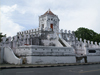
Pom Thung Setthi (ป้อมทุ่งเศรษฐี)
Thai. ‘Millionaire's Field Fortress’. Name
of an old fort in
Kamphaeng Phet.
READ ON.
回
pong lang (โปงลาง)
Thai. Name for
a xylophone-like percussion instrument which is played by either one (fig.) or two
musicians. It consists of a structure with 13 wooden logs
stringed together with a rope on both sides, with the lower pitch end attached
to a post and the other end hooked to the far end of an horizontal bar, near the
player's foot. If played by two performers, they sit on either side, one playing
the melody, the other playing the drone accompaniment. It is usually placed on a
stand and it is typically used in the
Isaan
region.
回
_small.jpg)
pong pong seed
See
look tihn pet nahm.
回
ponlamai dab klin (ผลไม้ด้บกลิ่น)
Thai
name for fruit which is preserved whilst absorbing and maintaining its aroma.
回
ponlamai kae salak (ผลไม้แกะสลัก)
Thai designation for
fruit carving.
回
poo (ปู)
Thai for
‘crab’.
回
poo
(ปู่)
Thai for
‘paternal grandfather’,
i.e. dad's dad. See
Thai Family Tree.
回
poochaniyawathu (ปูชนียวัตถุ)

Thai for
‘sacred object’ or ‘holy
item’.
回
Poo Chao Saming Phraay (ปู่เจ้าสมิงพราย)
Thai. Name of a
reusi nah seua
(fig.), i.e. a
hermit
with a
human body and the
head of a
tiger,
who appears in the narrative of
Phra Loh.
He is described to live on a mountain in a forest near
the city
Meuang
Song (เมืองสอง).
回
_small.jpg)
poo jeud (ปูจืด)
Thai for
‘freshwater crab’.
They are found all over Thailand, in a wide range of water bodies, from
waterfalls and fast-flowing rivers to swamps. Most are omnivores and primarily
nocturnal, emerging to feed at night.
Yet, several
species of freshwater crab are in Thailand eaten themselves, especially as an ingredient in
somtam poo.
Freshwater crabs that live in
rice fields
are also referred to as
poo nah.
In 1994, a set of four postage stamps were issued by Thailand Post depicting
some
striking and
rare freshwater crabs found in Thailand (fig.),
including the Waterfall Crab (Phricotelphusa limula), the Mealy Crab (Thaipotamon
chulabhorn), the Panda Crab (Phricotelphusa sirindhorn), and the
Regal Crab (Thaiphusa sirikit).
See also
poo pah chai len.
回
_small.jpg)
poo mah (ปูม้า)
Thai. ‘Horse crab’ or
‘bench crab’. Name for the Blue Swimming Crab, a large marine crab, with a
carapace that can measure up to 20 centimeters in width. The colour of females
is greenish grey with some shades of blue and marked with white blotches,
whereas males are more bluish allover and have longer claws. These crabs are
indigenous throughout the Indic and West Pacific Oceans, from Japan and the
Philippines throughout South, East and Southeast Asia. Though largely marine, it
also enters estuaries for food and shelter, especially when reproducing. Yet,
unable to tolerate low salinities for extended periods, it will eventually move
back to the sea, especially during the rainy
season when
mass
emigrations occur.
Blue Swimming Crabs are edible and can often be seen at
restaurants and on markets, usually still alive with their claws tied. Live blue crabs are
called poo mah pen (ปูม้าเป็น), in Thai. In English, these crabs are also known
as Blue Manna Crab,
Blue Crab, Flower Crab
and Sand Crab. Its binomial name is Portunus pelagicus.
See
also POSTAGE STAMP and
WATCH VIDEO.
回
_small.jpg)
poo
maphrao (ปูมะพร้าว)
Thai. ‘Coconut
crab’. Name
for
the largest land-living arthropod in the world, with the scientific name Birgus
latro.
This terrestrial crab can grow to a size of over one meter and is divided into
two sections, i.e. a hardened abdomen and a front section
that has ten legs. Though adults do not carry shells,
juveniles −akin to hermit crabs
(fig.)−
salvage snail shells to protect their abdomen, which in that stage is still soft.
Despite its name, the coconut crab only rarely feeds on coconuts, which take a
lot of effort to open in order to access the flesh,
hence
it primarily eats other nuts, seeds and fleshy fruits. It did, however, develop
a special technique to
open coconuts, which includes stripping the husk off the nut and accessing the
content via the three germination pores, which are the somewhat softer part of
the shell, which it bangs with its pincers until they split open. Being an able
climber, the crab may also drag a stripped coconut up a tree and drop it in
order to crack the shell. The coconut crab is found on islands across the Indian
Ocean and parts of the Pacific Ocean, but became extinct on islands with a large
human population, as well on the mainland, in part due to hunting for its meat.
In Thailand, there is evidence that coconut crabs have been spotted in the wild
at least twice, i.e. in 1983 by a group of fishermen on Koh Sih (เกาะสี่), an
island in the area of the Similan Islands, who captured it and which is today on
display at Phuket Aquarium; and in 1993, when a circa 1 kilogram weighing
species was spotted by a group of soldiers, who were guarding
Green Turtle
(fig.)
eggs on Koh Neung (เกาะหนึ่ง), an island part of the Similan Islands. After
this, there are no more known reports of coconut crabs being spotted in the wild
in Thailand. See also
sea coconut.
回
poo nah (ปูนา)
Thai. ‘Field
crab’.
Name for a species of medium-sized land crab, often found on mud flats and in
rice paddies (fig.),
where they are considered a pest. It is one of several species of crab that may
be used as an
ingredient in
somtam poo.
To keep up with demand they are now bred at specialized farms
and —though rarely— some people even keep them as pets (fig.).
回
_small.jpg)
poo pah chai len (ปูป่าชายเลน)
Thai. ‘Wetland
forest crab’.
Generic name for
any species of crab
living in
mangrove,
of which there are about thirty species found in Thailand, including several
kinds of
Fiddler Crab (fig.),
Red-claw Marsh Crabs (poo sahaem kaam daeng -
fig.), etc.
Some are quite colourful, whilst other are rather
dull, with camouflage colours that fit in with the local environment.
Most dwell on the muddy floors, where they live in burrows, yet some are able
climbers and can be founding climbing the buttress roots
of mangrove (fig.).
Some species might also be referred to as poo sahaem (ปูแสม), meaning
‘Avicennia
crab’,
with Avicennia
being a certain variety of mangrove.
回
%2010_small.jpg)
poo pan saay (ปูปั้นทราย)
Thai.
‘Sand molding crab’.
Name for
the
sand bubbler crab.
回
poo sahaem kaam daeng
(ปูแสมก้ามแดง)
Thai.
‘Red-claw Avicennia
(mangrove)
crab’. Name of
a tiny crab with the scientific name Chiromanthes eumolpe, that dwells on
mudflats near the sea. Its carapace (upper shell) is only
about 2.5 centimeters wide and rather square in shape. It
typically has red claws (kaam daeng) and lives in burrows which it digs on
shores near brackish or salt water, where it feeds on organic leftovers. In
English called Red-claw Marsh Crab. See
also
piyaw and
Sand Bubbler Crab.
回
_small.jpg)
poo se-shuan (ปูเสฉวน)
Thai for
‘hermit crab’, a species of decapod (ten-footed) crustacean, that belongs to the
superfamily Pagurideae, which encompasses six families and about five hundred
different species.
READ ON.
回
pooy kak (โป๊ยกั๊ก)
Thai name for
‘star anise’, a small native evergreen tree of southwest
China with the scientific name Illicium verum,
which star shaped fruits are widely used in Chinese and Indian cuisine. In
Thailand, it is used as one of several ingredients in phalo powder, an
ingredient to make a sauce called phalo (พะโล้), which in turn is used in dishes
such as
khai phalo. Also transliterated pohy gag.
回
%20โป๊ยกั๊ก_small.jpg)
Pooy Sian (โป๊ยเซียน)
1. Thai name for a plant or shrub, with the
botanical name Euphorbia milli and commonly known in English as Crown of Thorns,
Christ Thorn or Christ Plant. This succulent climber has large spines and
whitish-pink to red flowers. It grows up to about 180 centimetres tall and the
Tambon
Wat Phrik (วัดพริก), i.e. ‘Pepper Temple District’ in
Phitsanulok,
claims to be the home of the world's tallest Christ Plant.
回
_small.jpg)
2. A Thai name for the
Eight
Immortals
from
Chinese mythology.
回
Popa
Medaw (ပုပ္ပားမယ်တော်)
Burmese.
‘Royal Mother Popa’ i.e. the
Queen-Mother of Mount Popa (fig.). Name of a
nat,
whom previously was a flower-eating ogress called Me Wanna (Me Wunna -
fig.) and who had two sons
with
U Byatta (fig.), the royal messenger. Their sons, known as
Shwe Hpyin Gyi
and
Shwe Hpyin Nge,
jointly referred to as Taungbyone Min Nyinaung
(fig.),
i.e. the
‘Brother Lords’
(fig.), were executed on the orders of King
Anawrahta
when they
failed to place
a brick each at the
Taungbyone pagoda in order to
complete it,
as was ordered by the king,
thus
leaving some gaps. As a consequence, Me Wunna died of a broken heart and the
trio was later admitted in the pantheon of nats worshipped in
Myanmar.
In art and
iconography,
Popa Medaw is usually portrayed wearing a green dress and either one or two
demon-masks on top of her head (fig.),
while holding some
peacock-feathers in each hand, though when portrayed as Me Wunna, she usually holds some flowers instead. She is also often depicted with a
golden complexion. Pronunciation is Popa Medo and Me Wanna.
See also
Medaw and
LIST OF BURMESE NATS.
回
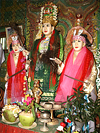
Pope's Pit Viper
A venomous and
dangerous
pit viper with the scientific name Trimeresurus popeiorum, yet sometimes
listed as Trimeresurus fucatus. It is found in northern India, Southeast Asia
and parts of Indonesia. As the confusion with the names may suggest, this
species of
snake is at times somewhat difficult to identify, due to the many exceptions
of its possible features. In general, the dorsal surface of this species is
medium green and the ventral scales pale green. The first row of body scales are
white or whitish, creating a body stripe or shine, which extends from the head
to the tail. Occasionally, this white stripe may have a reddish stripe
underneath. Males may also have a white post-ocular stripe, and if there is a
reddish stripe on the body, there is usually also one on the head, but unlike
those of the body, the red stripe will here be on top of the white one. The end
of the tail is brownish. It has a typical triangular head and its eyes are
generally greenish yellow in colour, though it may sometimes have red eyes.
As with all vipers, it has a heat-sensing pit organ located between the eye and
the nostril on either side of the head (fig.). Trimeresurus popeiorum is also called Pope's Tree Viper and Pope's Bamboo Pit
Viper, whilst Trimeresurus fucatus is also known as Siamese Peninsula Pit Viper.
In Thai this species is simply called
ngu khiaw hahng mai
thong khiaw, meaning ‘green burned-tail green-bellied snake’.
This species is often confused with similar species of the same genus, such as
Trimeresurus stejnegeri and Trimeresurus gumprechti.
See also WILDLIFE PICTURES.
回
%20งูเขียวหางไหม้ท้องเขียว%203_small.jpg)
Popinjay
Name of a species of semi-large butterfly, with the binomial name
Stibochiona nicea.
READ ON.
回
popiya (เปาะเปี๊ยะ)
Thai for ‘spring roll’, a Chinese-style fried pancake filled with vegetables and some
other ingredients. Although there are a number of varieties, in Thailand this
appetizer is usually made of
wun sen glass
noodles, finely shredded cabbage
leaves, grated carrots, some chopped black mushrooms,
soybeans,
and either minced pork or
tofu for a vegetarian version. This
is then
wrapped in a dough made of
sticky rice
flour and made into a roll which is sealed with egg white. Other ingredients may
include chopped shrimps, onions, celery, crabmeat and bean sprouts. Other,
especially Chinese varieties, may have red bean paste inside. It can be eaten
fresh (cold), steamed or deep-fried until golden brown and crisp. Fried it is called popiya thod and fresh popiya sod (fig.).
Fresh spring rolls are also known as summer rolls (fig.) and may use paen
kra-yo or edible
rice paper
as a wrapper, made of flour of white rice and
tapioca. It
is usually served as a starter with a dipping sauce. For fresh spring rolls this
is a salty soy or fish sauce mixed with chopped fried garlic, finely ground
fermented soybeans, sugar and served with some ground peanut and freshly minced
chili, whereas for fried spring rolls a sauce called
sot sri racha is used,
or alternatively a
sweet-and-sour sauce made from either rice vinegar or
lime (lemon) juice, fish sauce, sugar and water, and served with minced garlic,
chopped peppers and sometimes a shredded carrot. In
Vietnam, where spring rolls are
the national dish, they are called cha gio, literally ‘minced pork rolls’, a version in Thailand known as popiya Vietnam (ปอเปี๊ยะเวียดนาม) and the vegetarian version is called goi cuon, literally
‘mix
salad roll’.
There is however another,
lesser known variant of Vietnamese spring roll, with a similar concept, but with
a different filling and known as bo bia (bò bía), a name very similar to (and
perhaps the base for) the Thai name popiya. In China,
spring rolls are usually eaten during
Chun Jie,
the Spring Festival, hence the English name. In the Philippines and Indonesia
they are called lumpia, a name also used in Belgium and The Netherlands,
although those rolls are usually much larger in size. Also transcribed po pia.
回
2_small.jpg)
porcelain
See
kreuang thuay chaam.
回
porcupine
See
men.
回
Postal School
Educational institution founded by
Prince
Bhanurangsi Savangwongse
(fig.), a younger
brother of King
Rama V.
Since 1875, the prince had been publishing a
daily
newspaper
called Court, which was
intended for royalty and high officials. It had a local stamp
affixed for delivery services, which laid the groundwork for the
later use of Thai postage stamps and the Thai postal service in
general. The prince's experience in the
distribution of the Court, which was subtitled Khaw Rachakaan
(ข่าวราชการ),
i.e. ‘News of the service of the Crown’,
had led to his appointment as the first
Director-General of the Post Department. In
order to meet the growing demand for competent personnel to serve in
the rapidly expanding Thai Post and
Telegraphy organization, which officially started services on 4 August 1883,
after preparations that began in 1880, the prince in 1889 founded
the Postal School, with the aim to provide practical education in
the area of postal services and prepare expert government officials.
Both the school's centenary (fig.)
and its 120th anniversary (fig.)
were celebrated with commemorative
postage stamps.
Also known as the School of Postal Services and in Thai called
rohng rian praisanih.
See MAP.
回
_small.jpg)
pottery
Thailand has a tradition of pottery, stretching from the making of simple earthenware to complex designs, such as
benjarong,
celadon and
Sangkhalok pottery.
Archeological excavations in
Ban Chiang uncovered ornate earthen pots
with a typical rust coloured
whirlpool design painted on
a faded yellow background (fig.),
which is believed to date from around 3000 BC. Today, the island of
Koh Kret
(fig.) in the
Chao Phraya
River near
Bangkok
is still an active centre of pottery, run by
Mon people.
In addition, there is Dahn
Kwian
Pottery Village (fig.) in
Nakhon Ratchasima, and the province of
Ratchaburi,
which is famous for its
ohng mangkon
pottery (fig.). In Thai,
pottery (fig.) as a product is generally called
kreuang pan din pao, whereas the process of
making pots, i.e. exclusively vessels, jars, tubs and containers, but not any
other objects or figurines, is known as kaan
tham moh.
回
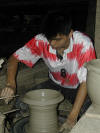
Pottery Hill
Name of
a minor elevation
in
Bagan
that offers a panoramic view
of the area and is a popular viewpoint, especially during sunset. It is largely made up of
shards of broken
pottery,
hence the name. From this place a number of monuments can be seen, the closest
and with the waning sun
being monument nº 820 (fig.),
which dates from the early 11th century AD, yet the most prominent, on the other hand,
is the larger yet more remote
13th century AD
Pya Tha Gyi Phaya
(fig.).
See MAP.
回
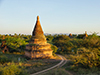
poultry basket
A semi-round
to square
bamboo basket with a large opening at the top and used to transport or
confine domestic fowl, such as chicken, ducks, geese, etc. It is made from thin
strips of bamboo, with the top part woven with spacious eyes as gaps for air-circulation. The large opening at the top can be blocked
with flat bamboo sticks, to prevent the animal from escaping. It is used
particularly by the northern hill tribe people. In Thai called
takra sai kai,
a name that also refers to a basket used to transport fighting cocks.
回
Powderblue Surgeonfish
A species of colourful tropical marine fish,
with the scientific name Acanthurus leucosternon.
READ ON.
回
prachiad (ประเจียด)
Thai.
An armlet used as an
amulet
or charm to make someone invincible
and
which may sometimes have
yan
inscriptions.
It is typically used in
muay thai
boxing, worn on the biceps
(fig.).
The concept is similar to that of the
mongkhon (fig.),
a
loop-shaped band worn on the head.
The practice of
wearing an arm ring around the biceps on the upper arm
comes from ancient India, where it is known by the Sanskrit term
keyuradhara
(fig.). Sometimes transcribed prajioud or prajied.
See also
pah prachiad.
回
_small.jpg)
Prachinburi (ปราจีนบุรี)
1. Thai.
Province (map) in East Thailand as well, as the name of its capital city, situated 135 kms East of
Bangkok.
READ ON.
回
2. Thai. Name of a small river in eastern
Thailand. It originates in the
amphur Kabinburi of
Prachinburi Province at
the confluence of three other rivers, i.e. the 132 km long Phra Prong (พระปรง)
River, the ca. 25 km long
Hanuman
River, and the Prajan Takhaam (ประจันตคาม) River. It then
flows to the
tambon
Bang Taen (บางแตน) in the
amphur
Ban Sang (บ้านสร้าง), where it joins the
Nakhon Nayok
River to become the
Bang Pakong River. 回
Prachuap Khirikhan (ประจวบคีรีขันธ์)
Thai. ‘Land of mountain chains’. Name of a province (map) and its capital city,
which is situated along an eight kilometer long bay (fig.) on the Gulf of Thailand.
READ ON.
回
pradakshina
(प्रदक्षिण)
Sanskrit.
‘Circumambulation’, i.e. the act of moving around a sacred object. A clockwise circular procession around a temple or an important shrine or
stupa with the temple or shrine at the right, as performed in Thailand during the festival of
Khao Pansa when worshippers circle the main sanctuary of a temple three times holding burning candles
or other offerings (fig.).
It is as a form of worship that derived from Hindu ceremonies in India and is
reminiscent of the Tibetan Kora, the pilgrim circuit around monasteries,
temples, lakes, mountains or anything holy in Tibet. In Thailand is called
thaksinahwat. See also
prasavya.
回
Pradit Phairo (ประดิษฐ์ไพเราะ)
Name of a legendary Thai musician
skilled in traditional Thai instruments and
classical Thai compositions.
READ ON.
回
Prae Roop
(ប្រែរូប)
Khmer. Present-day name of
a
Hindu
temple at
Angkor.
READ ON.
回
praet (เปรต)
Thai. A class of demons from hell,
said to be taller than a house, now and then appearing at night, and weeping at the top of their voices.
回
Prahlada (प्रह्लाद)
Sanskrit.
‘Joy’ or ‘happiness’. Name of the son of
Hiranyakashipu (fig.),
who was hated by his father for worshipping the god
Vishnu,
whom –in his third
avatar
as the boar
Varaha (fig.)–
had killed his brother,
Hiranyaksha
(fig.). Later, his father got himself also killed
by Vishnu, in his fourth avatar as
Narasimha,
a man-lion.
This scene is often portrayed in
iconography
as Hiranyakashipu being killed on the lap
of Narasimha, while Prahlada and his mother are sitting at his feet and watch (fig.).
回
prahok
(ប្រហុក)
Khmer term for a kind
of fermented fish. See
pla rah.
回
_small.jpg "pla rah (with maggots)")
prahsaht (ปราสาท)
See
prasat.
回
Prai Nah Bot (ปรายหน้าบท)
Thai.
‘Sow Before the Chapter’. Name of a character
used as
the preluder in
the lesser Thai
shadow play known
as
nang thalung.
The character represents the performer who recites the invocation, introduces what follows
and gives
comments on certain issues to the audience. He is usually depicted as a young
man carrying a flag or a
lotus
flower in his hand (fig.).
Pronounced Praai Naa Bot and also transcribed Praay Na Bot.
回
_small.jpg)
Praisanih Thai (ไปรษณีย์ไทย)
Thai.
‘Thailand Post’. Name of the Thai state enterprise, that provides postal and
financial services (fig.), some types of telecommunication service in and from
Thailand, and since 2011 it even has its own food delivery service, known as
Yummy Post (fig.).
It also issues a number of post related souvenirs and collectables, such as
various miniature letterboxes and figures of postmen with uniforms throughout
time (fig.). Until its privatization in 2003, it was part of the
Communications Authority of Thailand (CAT
- fig.), but now operates
(fig.)
in the form of a company (fig.). However, in its earlier form it was established in 1883
and the first post office was located in a building along the
Chao Phraya
River
(fig.).
In 2013, Thailand celebrated the 130
anniversary of
Thai Postal Services
by
organizing the World Stamp Exhibition in
Bangkok and by issuing a number
of commemorative stamps, including a stamp to
celebrate 130 years since the
first issue of a
Thai postage stamp on 4 August
1883
(fig.),
as well as a postage stamp (fig.)
to commemorate Thailand Post's 10th anniversary as a state company. As of 1986,
the Thailand Post Head Office (fig.)
is in
Bangkok's
Laksi district,
adjacent to the CAT offices. See also
General Post Office.
See also
TRAVEL PICTURE (1)
and
(2),
as well as
THEMATIC STREET
LIGHT.
回
Praisanihyakahn (ไปรษณียาคาร)
Thai.
Thailand's first
ever Post Office building
located at the banks of the
Chao Phraya
River, to
the South of the
Memorial Bridge (fig.),
near the mouth of
Khlong Ohng Canal, i.e. the southern part
of
Khlong Rop Krung (map
-
fig.). It was initially built in 1871,
as the residence of Phra Preecha Kolakan (พระปรีชากลการ), the former Prince of
Prachinburi,
who was later convicted of murder and executed on 24 November 1879, while his
assets were seized. When on 4 August 1883, the
Thai Postal Service was
established, the building's prime location at the river made it perfect to
become its first office building.
It
originally stood on a location nearby, but was relocated in order to make way
for the construction of the
Phra Pok Klao Bridge in 1982, which runs more
or less parallel to
the
Memorial Bridge
and was built on the occasion of the Bicentennial of
Bangkok.
See MAP.
回
Prajadhipok (ประชาธิปก)
Thai-Western name for
King
Rama VII
(fig.),
the monarch who in
1932 signed the very first
Thai Constitution
(fig.),
that would bring an end to more than seven hundred years of Absolute Monarchy.
His second name is
Sakdidet (ศักดิเดชน์) and in Thai, he is
usually referred to by the name
Pokklao.
回
Prajadhipok
Saktitejana (ประชาธิปกศักดิเดชน์)
Thai-rajasap.
‘Divines Arrows of Prajadhipok’. A set of three arrows
that is part of the royal emblem of King
Prajadhipok
(fig.),
and are said to represent
Phrommat, i.e. the powerful arrow of
Rama
(fig.),
which he used to shoot the
asura
Phirap;
Pralaivata, the Wind Arrow; and Agnivata, the Fire Arrow, which derives its name
from
Agni. This set of
three arrows also appears on this
king's Privy Seal (fig.),
i.e. one of his royal seals called
Phra Rachalanjakon. In common Thai, the three
arrows are referred to as Phra Saeng Son (พระแสงศร).
回
Prajapati (प्रजापति)
Sanskrit.
‘Lord of creatures’ or ‘progenitor’.
The Vedic god of creation. He is one of three creator gods found in the Hindu
tradition, alongside
Vishvakarma
and the
Puranic
god
Brahma.
But the term also means progenitor and in the
Vedas,
Indra
and other deities are termed prajapati. The term
later referred to Brahma and his ten mind-born sons, which were called
Brahmaputra,
Brahmarishi or Prajapati. These preside over
the secondary process of creation and are the progenitors of the humans (Manu,
literal:
‘to
think’),
the gods, the minor gods, the natural phenomena and animal life.
回
Prajim (ประจิม)
1. Thai. ‘West’ or
‘western’. The direction of the compass guarded by the
lokapala
Phra Warun (who is known in Sanskrit by the name of
Varuna). See also
Taksin,
Udon,
Burapah,
Ahkney,
Horadih,
Isaan and
Phayap. Also
Patjim and
Adsadongkot.
回
2. Thai. Name of the western wind. Also
Patjim.
回
Prajnaparamita
(प्रज्ञापारमिता,
ปรัชญาปารมิตา)
1. Sanskrit-Thai.
‘Traversed Wisdom’, usually translated as ‘Perfection of Wisdom’. The
bodhisattva of knowledge in
Mahayana
Buddhism.
With her attained wisdom as the highest merit she is considered the spiritual
mother of all
buddhas and the philosophical aspect of
Tara. Her
attributes are a book and a
lotus
(fig.).
In
Cambodia,
she is considered to be the female counterpart of
Avalokitesvara
(fig.)
and is hence in
Khmer
art usually portrayed
wearing the image of
Amitabha
in her headdress (fig.).
In
iconography, she is
furthermore
typically
depicted with a rather square face, thick
eyebrows, closing eyes and a slightly smiling face. She is sometimes represented seated on a
padmasana or lotus throne and with four arms
(fig.), of which the lower two are
usually in the
dhammachakka
pose. In Thai usually referred to as
Nang Prajnaparamita and in Pali called Panyaparami.
回
_small.jpg)
2. Sanskrit-Thai.
‘Perfection of Wisdom’. Name of one of the
Six Paramitas in
Mahayana
Buddhism.
回
prakam (ประคำ)
Thai name for
a string of beads used in
Buddhism, similar
to prayer beads used in other religions, such as Roman Catholicism,
Hinduism
and
Islam, where
they are known as rosary or chaplet, japa mala, and misbaha or tasbih,
respectively. It consists
of a rope with round -usually wooden- beads, and generally ends in a coloured
dangling tassel. It is worn around the neck or wrist by
Buddhist monks (fig.), as well as lay people and used during prayers or as a
talisman. Besides this it is also
an
attribute
of many
deities, such as
Huan Xi Fo
(fig.)
and
Brahma
(fig.),
who uses it to keep track of the universe's time and which symbolizes the
substances used in the progress of creation. In Sanskrit it is called
akshamala
and generally comprises of 50 beads, corresponding to the number of characters
in the Sanskrit alphabet, although numbers may vary and some have 108
beads, representing the 108 signs of a
buddha (fig.),
which are also
found on the soles of
the
Buddha
and thus
on
Buddhapada, footprints of the
Buddha
(fig.).
回
,%20string%20of%20beads%20used%20in%20Buddhism%202_small.jpg)
prakash, prakasha (प्रकाश)
Sanskrit term that can
be translated as ‘light’ and ‘brightness’, as well as ‘the very best of
something’. The term is also used for the
Sikh
opening
ritual in
gurudwaras, in which the
sacred Sikh scripture
called Guru Granth Sahib, i.e. the
second rendition
of the
Adi-Granth,
is carried from its overnight resting place to the temple's sanctum, at dawn.
回
prakob (ประคบ)
Thai. To
massage with a
hot herbal compress, called
look prakob samunphrai (fig.),
which contains medicinal herbs and aromatic plants.
It is used
to warm
and soothe the receiver's body.
Also called prakob phaen boraan, i.e. ‘massage with
a herbal compress in the traditional
manner’.
回
Prakrit (ปรากฤต,
प्राकृत)
Language group related to
Sanskrit and to which
Pali also belongs.
It means ‘ordinary’, ‘natural’, ‘normal’ or ‘usual’ and indicates the homely
speech or vernacular, contrary to the lingua franca or literary and religious
orthodoxy of
Cultured
Sanskrit.
回
prakuat (ประกวด)
See
kaan prakuat.
回
Prambanan
The largest Hindu temple in Java, known as
Candi Prambanan. It was built between 900 and 930 AD on the plateau of Prambanan. The central tower with a height of 45 meters has an almost vertical structure and is a symbolic representation of the cosmic mount
Meru.
回
pramong (ประมง)
Thai for
‘fishery’
or ‘fisherman’. The term is used for the fishing industry as well as for personal
fishing, both on sea and in fresh water. Thais use several methods of fishing,
including
cast nets (fig.),
chonsae
(fig.), large hand nets (fig.),
fish coops, which in Thai are
known as
soom pla (fig.), not so legal harpoons or
shamuak (fig.)
and even totally illegal, dynamite. In
China,
fishermen on the Li River use well-trained
Great Cormorants to catch
fish,
a local trade known as cormorant fishing (fig.).
Also spelled pamong (ปะมง) while the word
minakon is a synonym which may also be transliterated minagorn.
回
prang (ปรางค์)
Thai name for a
beehive-like tower monument
of
Khmer origin in the form of a closed bud of a water lily and built by order of a private distinguished
person. Derived from the Cambodian sanctuary tower and often seen in
architecture of the
Ayutthaya and
Bangkok
Periods.
Sometimes described as a corncob shaped tower or a rectangular
stupa. Compare with a
chedi. Also
Phra
prang. Pronunciation prahng.
回
praphenih (ประเพณี)
Thai for
‘tradition’, ‘custom’ or ‘festival’.
回
praphenih rap bua (ประเพณีรับบัว)
Thai. ‘Lotus
receiving tradition’. Ancient
custom held annually in
Samut Prakan,
on the day of the 14th lunar month. In the past, Bang Phli district was
inhabited by three peoples of different backgrounds, i.e. Thai, Laotian and
Raman.
While collecting lotus flowers to offer to the monks, these locals would also
give some lotus flowers to their neighbours in order to show kindness to each
other. The custom over time became a festival which today is accompanied by a water parade
of decorated boats. Besides a number of smaller boats, the parade in 2020 had a
total of eight main barges, each fashioned in a different theme and decorated with Thai
mythological characters and animals, as well as with a distinct figurehead of a
Thai or
Hindu
mythological character,
especially prominent
characters from the
Ramakien
and
Himaphan forest.
As the boats pass
slowly by, spectators throw lotus flowers
at them, especially at the first vessel which carries a
Buddha image
accompanied by
Brahmin
priests, who catch the flowers and pile them onto the Buddha image. Hence, the festival
is also known as praphenih yohn bua (ประเพณีโยนบัว), i.e. ‘lotus
throwing tradition’.
See also POSTAGE STAMPS,
TRAVEL PICTURES (1),
(2) and
(3), and
WATCH VIDEO.
回
praphenih sart deuan sip (ประเพณีสารทเดือนสิบ)
Thai. ‘Tenth
Lunar Month Festival’. Name
of
an autumnal religious festival during the tenth lunar month, in
which ancestors and deceased relatives are honoured and given
khanom lah
(fig.),
a traditional snack of
Nakhon Sri Thammarat
and one of five snacks used as a traditional offering to monks
and which represents the offerings of clothes to the spirits of the dead.
The tradition is deeply rooted in a blend of
Brahmanism
and
Buddhism,
and involves honouring ancestors and deceased relatives by dedicating merit to
their souls. This tradition occurs from the first to the fifteenth day of the
waning moon of the tenth lunar month, typically in September. The purpose is to
aid the souls in their release from hell and to seek blessings for oneself and
loved ones. The main rituals take place during the final three days of this
period, where offerings are made to express gratitude to the deceased.
It is exuberantly celebrated annually
at
Wat Mahathat Wora Maha Wihaan.
The offerings of snacks may vary slightly per location, but typically includes
any of the following: 1.
khanom lah
(fig.),
which represents the of clothes that the spirits of the dead wear in hell; 2.
khanom phong, which the
snack of puffed rice symbolizes a raft for the deceased, which they use
as a vessel to traverse the stream of suffering, sin, or
karma; 3.
khanom bah, which symbolizes
large, shinny,
sabah
sea
bean seeds
for the deceased to play a
tossing game;
4.
khanom dih sam, which
represents a pawn or money given to the deceased to serve as a resource to
facilitate their time in hell; and 5.
khanom kai pla,
or alternatively
khanom kong,
which represents a piece of jewelry, elevating the appearance of the deceased to
a more dignified state.
See POSTAGE STAMPS (1)
and
(2)..
回
praphenih sip song deuan
(ประเพณีสิบสองเดือน)
Thai. ‘Customs
or traditions (praphenih)
of the twelve months’. Practice of local customs which are traditionally held
monthly according to the twelve months of the annual calendar and based on the
phra rachaphithi sip song deuan.
The
Isaan
variant is called
hihd sip song.
回
Praphenih
Soh Thang Pan (ประเพณีโส้ทั้งปั้น)
See
Soh Thang Pan.
回
prasada
(प्रासाद)
Sanskrit-Pali for
prasat or
prahsaht.
回
prasat (ប្រាសាទ, ปราสาท)
Khmer-Thai. Palace for a king or god in which the tower in both religious and secular perspective represent mount
Meru, the abode of the gods in the clouds. In Thailand the term refers to the whole temple complex and in Cambodia there is the popular
prasat hin. The expression is derived from the
Pali-Sanskrit word
prasada meaning
‘ornamental construction
with a needle-like spire’, which itself is reminiscent of the Sanskrit word
prasha (प्राश), meaning ‘spear’. Also
translitereated
prahsaht. Compare
with
kutakhaan
and the Burmese term
pyatthat.
See also QUADCOPTER PICTURE.
回
prasat hin (ปราสาทหิน)
Khmer-Thai.
‘Stone palace’. A sandstone sanctuary in
Khmer style.
Prasat in Cambodia.
See also POSTAGE
STAMPS (1)
and
(2).
回
_small.jpg)
Prasat Hin Ban Phluang (ปราสาทหินบ้านพลวง)
Khmer-Thai. A sandstone sanctuary in the province of
Surin built on a platform of
laterite
and with several sculptured lintels in
bas-relief. The name could signify:
‘stone palace’ (phrasat hin)
‘house’ (ban) near ‘dipterocarpaceae trees’
(phluang).
回
Prasat Hin Meuang Tam (ปราสาทหินเมืองต่ำ)
Khmer-Thai. Name of an ancient Khmer-Hindu temple in the province of
Buriram.
READ ON.
回
Prasat Hin Phanom Wan (ปราสาทหินพนมวัน)
Khmer-Thai. Name of an ancient Khmer-Hindu temple in the province of
Nakhon Ratchasima (Korat).
It is the fifth largest
prasat
in Thailand, built in the 11th century AD,
and was later converted into a Buddhist shrine. The chief building consist of
several edifices that are connected by a corridor and built on platform of
laterite
and sandstone, that is 25.5 meters long and
10.2 meters wide, and at one end has a
prang
with 3 arched doors, each with a decorative
lintel.
Around the main platform is a courtyard with an elevated outer wall with 4
entrances, 54 meters wide and 63.3 meters long. There are two
baray, a
remote one to the north and
the other nearby to the east. The latter one is known as
sra
phleng (สระเพลง), literally
the ‘pool of music’.
See also
TRAVEL PICTURE (1) and
(2)
and
MAP.
回
_small.jpg)
Prasat Hin Phimai (ปราสาทหินพิมาย)
Hindu-Mahayana Buddhist sanctuary
(fig.) in
Nakhon Ratchasima
(fig.),
in the
amphur
Phimai. The construction of this
Khmer edifice
(fig.) in Angkorian style started under
King Jayavarman V in the late 10th century and was completed during the rule of
King Suriyavarman I in the first half of the 11th century. Hence the completion of this temple (fig.) happened even before the construction of
Angkor Wat. As part of the Khmer Empire Phimai was by then already directly connected to
Angkor by road.
Akin to many other edifices from the ancient Khmer Period, it has a
Naga-bridge
or
Sapaan
Naak (fig.),
which in Khmer is known as
Spean
Neak.
See MAP.
回
_small.jpg)
Prasat Meuang Phrao (ปราสาทเมืองพร้าว)
Khmer-Thai. Former name of
the
Khmer
sanctuary
Sadok Kok Thom
in
Sa Kaeo.
回
Prasat Meuang Singh (ปราสาทเมืองสิงห์)
Khmer-Thai. ‘Palace of the lion city’. Name of an
historical site in
Kanchanaburi,
located on the northern bank of the River Kwae (Kwai) Noi, in
meuang
Singh,
a sub-district of the
ampheu Sai
Yok (map).
The complex is surrounded by mountain ranges and is encircled with ditches and
ridges. It has a rectangular layout and six pools. In the ruins,
a stone
sculpture of
Lokesvara
was found
made in the
Khmer
Bayon
style
(fig.),
as well as a statue of a
Radiating Avalokitesvara
(fig.),
both dating from the 13th century AD.
They were removed and now stand in the
National Museum
in
Bangkok
(fig.).
The site of
Prasat
Meuang Singh was officially opened on 3 April 1987 by Princess
Maha Chakri
Sirinthon and is today as one of ten Historical
Parks in Thailand.
See MAP.
回
%20Kanchanaburi%201_small.jpg)
Prasat Museum
Private museum located in a lush
garden in the Bangkapi area, near
Samohson Krung Thep Krihtah, i.e. the ‘Bangkok
Athletics Club’. It features a collection of objects and replicas of famous Thai
architectural structures, from prehistoric times up to the
Rattanakosin
Period, such as Teuk
Farang
(ตึกฝรั่ง), i.e. the ‘Western Building’;
Tamnak Daeng (ตำหนักแดง) or ‘Red Palace’, which is a copy of the Red Palace
within the Bangkok
National
Museum; and Ho
Phra (หอพระ), i.e. ‘Sacred Hall’, which was copied from Wat Yai Suwannaram (วัดใหญ่สุวรรณาราม)
in
Phetburi.
In Thai, the museum is known as
Phiphithaphan
Prasat
(พิพิธภัณฑ์ปราสาท).
See MAP.
回
_small.jpg)
Prasat Phanom Rung (ปราสาทพนมรุ้ง)
Khmer-Thai.
Literally
Prasat
Phanom
Rung
means ‘Rainbow Hill Palace’, but it is
usually translated as ‘Palace on the Great Hill’. It is the name of an ancient
Khmer temple in the province of
Buriram,
situated at 383 meter above sea level and constructed between the 10th and 13th
centuries AD. It has many well preserved
bas-reliefs, including one showing
Anatasayin (fig.).
See MAP.
回
_small.jpg)
Prasat Preah Vihear (ប្រាសាទព្រះវិហារ)
Khmer name for
Khao Phra Wihaan, an
ancient
Hindu
temple built between the 9th and 12th centuries AD during the
Angkorian Period.
See MAP.
回
_small.jpg)
Prasat Satjatham (ปราสาทสัจธรรม)
Thai.
‘Sanctuary of Truth’. Name of a
prasat (an
ornamental construction with a needle-like spire)
made entirely out of wood. It is built on a 80
rai plot of land called laem rachawej beach near North
Pattaya, in the province of
Chonburi.
The building is around 100 meters wide and
equally
high, comparable to the height of a
modern apartment building with 20 floors. The area inside is 2,115 square meters.
Construction started in 1981 and it therefore is a new building with an
original
approach, trying to avoid imitating earlier
styles. It features many carvings with themes from
Buddhism and
Hinduism, as well as from mythology. The complex is enclosed by a
wall with battlements (fig.),
that are known in
Thai as
bai sema (fig.).
See MAP.
回
%20Sanctuary%20of%20Truth_small.jpg)
Prasat Sra Kamphaeng Yai (ปราสาทสระกำแพงใหญ่)
Thai.
‘Great walled pond sanctuary’. An 11th century
Khmer
sanctuary in
Sri Saket, which comprises of three
prang on the same pedestal,
oriented to the East. Whereas the middle and main prang is made of sandstone,
the two smaller ones are made of bricks. There are two
wihaan, one in front of each of the
smaller, brick prang. These structures on the inner court are surrounded by a
laterite gallery, with a width of 54
meters and a length of 62 meters. In the eastern
gopura, i.e. the main
entrance, a Khmer inscription reveals that this monument in the
Baphuon
style, was
initially devoted to the Hindu god
Shiva, but was converted into a
Mahayana Buddhist temple in the 13th
century.
See MAP.
回
%20Sri%20Saket%20(ศรีสะเกษ)%202_small.jpg)
Prasat Ta Meuan
(ปราสาทตาเมือน)
A centre consisting of three sites of
Khmer temple ruins in the South of the province of
Surin, in close proximity to the border of
Cambodia which are separately known as
Prasat Ta Meuan, Prasat Ta Meuan Tot
(Prasat Ta Meuan Toht), and Prasat Ta Meuan Thom.
Together, they are also referred to as Klum Prasat Ta Meuan (กลุ่มปราสาทตาเมือน),
i.e. ‘Prasat Ta Meuan Group or Cluster’.
The three monumental buildings have been portrayed on a set of Thai postage
stamps issued in 2009 to mark the annual Thai Heritage
Conservation Day (fig.).
回
prasavya
(प्रसव्य)
Sanskrit. Anti-clockwise procession around a temple, an important shrine or
stupa, keeping the buildings on the left.
In
Islam, this
form of circumambulation in counter-clockwise direction is performed around the
Kaaba (al-Ka'bah) in
Mecca. In Thailand,
it is called
uttarawat and
performed during royal funerals, such as that of the late King
Bhumiphon
in 2017. See also
pradakshina.
回
prasit
(ประสิทธ์)
Thai term for ‘to
accomplish’.
回
Prasuti (प्रसूति)
Sanskrit. ‘Childbearing’. Name of the daughter of Svayambhuva and Manu. She is
Daksha's consorts, with whom she
has
thirteen daughters, hence the meaning of her name. Also
transcribed Prasooti. See also
Phrasoot.
回
prathat fai (ประทัดไฟ)
Thai. ‘Firecracker’ or
‘banger’. Thai name for cluster of small explosive fireworks (fig.) on
a string, wrapped in usually red cardboard or hard paper casings. Li Tian (李畋),
a Chinese monk from Hunan province, is accredited with inventing firecrackers,
about a thousand years ago. In Chinese
tradition they were formerly used to scare off a mythical monster called
Nian, the same Chinese
word for ‘year’. For a long time, at the beginning of spring, the monster
terrorized the people of a certain Chinese village, but was eventually
frightened away with the loud noises of firecrackers. Chinese Lunar New Year,
called
Trut Jihn in Thai, today still
commemorates this defeat of evil and firecrackers are therefore an integral part
of the celebrations. Over time their loud noises evolved to the purpose of
creating a joyful holiday mood and they are commonly used during Chinese
holidays. In Chinese called
bian pao. See also
Guo Nian and
Golden Boy and Jade Girl.
回
prathom (ประถม)
Thai for elementary or primary school. In
the Thai educational
system, this
consists of
six years and is preceded by two years of
anubahn or kindergarten, and six years of
mathayom or high school, which is divided into
three years of junior high school and three years of
senior high school. See also
education.
回
%20school%20(ประถม)%201_small.jpg)
Pratityasamutpada (प्रतित्यसमुत्पादा)
Sanskrit. ‘Chain of Causation’, sometimes referred to as
‘Dependent Arising’. The name of
an important part of Buddhist metaphysics, that states that phenomena arise
together in a mutually interdependent web of cause and effect.
回
Pratu Tha Phae (ประตูท่าแพ)
Thai. ‘Raft Landing Gate’. See
Tha Phae.
回
prayag (प्रयाग)
Sanskrit.
Though it literally means ‘sacrifice’, it usually refers to any place of
confluence of rivers, especially the confluence of the
Ganges with
any of its tributaries. It is believed that
Ganga originally was a goddess who watered the
gardens of Heaven, but that her purifying powers were needed on Earth. Ganga
thus agreed to come down to help mankind, an event that according to Hindu
belief happened in a place known today as Gangotri, a mountainous town at a
height of 3,100 meters, in the Indian state of Uttarakhand. However, since the
impact of her descend could destroy the Earth,
Shiva was asked to intervene. To mitigate her descended, she
thus had to come through the
jata or matted hair of the god Shiva.
Though, this not only cushioned her fall, but also channeled her flow into
thousands of lesser streams. Hence, each prayag or confluence is now considered
an auspicious place to worship, as they are marking points where Ganga's waters,
once dispersed by the locks of Shiva, are reunited. Dev Prayag, located at the
confluence of two rivers, known only by their local names Alaknanda and
Bhagirathi, is the place where the Celestial River is for the first time
referred to by the name Ganges. Though many prayag are important places of Hindu
worship, some also have become important places of pilgrimage, such as Triveni
Sangam in the city of Allahabad, which was formerly called Prayag, where the
Ganges confluences with another holy river, i.e. the
Yamuna. In fact, the Hindi word sangam (संगम)
actually means ‘confluence’ and Triveni Sangam means ‘Confluence of Three
Rivers’, i.e. the Ganges and the Yamuna, as well as the invisible
Sarasvati, which is understood to
be either a former river that dried up, as mentioned in the
Mahabharata, or –according to the
scriptures of the
Rigveda–
a subterranean river that flows underground to unite with the other two rivers
from below, though the latter is by most interpreted to be either a myth or a
mythical river.
回
prayer beads
See
prakam.
回
prayer flag
A rectangular
piece of white or coloured cloth, with black woodblock-printed texts and images,
as used in Tibetan and Nepalese Buddhism.
READ ON.
回
prayer wheel
Name for a
spindle made from metal, wood or leather, inscribed with or containing prayers
or
mantras, used especially by Tibetan Buddhists.
READ ON.
回
praying mantis
See
takkataen tam khao.
回
Prayoonwong (ประยูรวงศ์)
Thai.
Name of a
Chao Phraya
who was a member of the influential
Bunnag family and who
served under several
Chakri
kings, from
Rama I
to
Rama IV.
READ ON.
回
preserved egg
See
khai yiew ma.
回
Prevost's Squirrel
Common name for a species of squirrel with the
scientific name Callosciurus prevosti, which is found in Thailand,
Malaysia and Indonesia. It has black upperparts and a black tail,
reddish-orange underparts, and white sides, whilst the lower face and
chin are rather greyish. Due to these three main coulors, it is also
commonly known as Asian Tri-coloured Squirrel, whilst its Thai name is
kra-rohk sahm sih (กระรอกสามสี),
i.e. ‘three- coloured squirrel’.
回
_small.jpg)
Pride of Burma
See
Asohk Ra-yah.
回
Pridi Banomyong (ปรีดี พนมยงค์)
See
Pridi Phanomyong.
回
Pridi Phanomyong (ปรีดี พนมยงค์)
Thai. Name of
a highly-revered Thai politician, who was a former three-terms Prime Minister and
a Senior Statesman of Thailand, as well as
the founder of the
Thammasat University.
READ ON.
回
prik
(พริก)
Thai for ‘pepper’ or
‘chili’.
Also transcribed phrik. See also
prik khee noo,
prik pon,
and
prik thai.
回
prik khee noo (พริกขี้หนู)
Thai. ‘Bird
droppings pepper’. Name for a small but very hot variety of
chili
pepper, in English known as the bird's eye pepper, guinea pepper, Thai pepper or
bird pepper, and with the scientific Latin name Capsicum frutescens. The chilis
change colour from green to orange and then red, when ripening (fig.) and they grow
pointing downward from the plant. Also transcribed prik
kee nu, phrik kih noo or similar, and the Thai name may also refer to a similar
cultivar of which the chilis grow pointing upward from the plant (fig.).
The shrub is referred to as
ton prik kee noo.
Also spelled phrik khi nu, or similar.
回
_small.jpg)
prik pon (พริกป่น)
Thai. ‘Pounding pepper’. Name for the
cayenne
or red pepper. Also phrik pon.
回
prik thai (พริกไทย)
Thai. ‘Thai pepper’. Name for the pepper tree that produces black pepper (fig.), a spice with a hot, sharp flavour. This kind of pepper is used both in dried form and fresh in certain curries, usually with the peppercorn still attached to its stem. Its Latin name is
Piper nigrum. See also
cayenne.
Also phrik thai.
回
Prince of Chumphon
See
Aphakon Kiatiwong.
回
Prince of Songkhla
1. Title of
Mahidol
Adulyadej, the father of king
Bhumipol Adulyadej. Also spelled Prince of
Songkla.
回
2. Name of the
first university of southern Thailand, established in 1967. Also spelled Prince
of Songkla.
回
Princess Maha Chakri Sirindhorn Anthropology Centre
Computerized research and information centre for anthropology located on Sirindhorn Road in Talingchan district. The centre was established
in 1991 by Silapakorn University as a non-profit academic institution, to mark the 36th birthday of princess Maha Chakri Sirindhorn, and in response to her wish that Thailand should have a centre for research and collecting material relating to anthropology, ethnology and archeology.
The central mission of the centre is to promote anthropological research in and
about Thailand, and to support Thai scholars in anthropology and the social
sciences. Consequently, the centre primarily focuses on serving the Thai
academic community and promoting Thai language scholarship.
回
Prisdang Chumsai (ปฤษฎางค์
ชุมสาย)
Thai. Name of
a Siamese prince and writer, and a diplomat during the reign of
Rama V. He was born on 23
February 1851 as the youngest son of Prince Chumsai, i.e. the fourth son of King
Rama III. He accompanied Rama V on
his first foreign trip to Singapore, where the prince stayed on to
study. Due to his excellent
performance, the king later sent him to England to study engineering, making him
the first known Siamese ever to enjoy a western education abroad. Later, Prince
Prisdang was appointed Siamese ambassador to Europe, which enabled Rama V to
establish a direct link with European governments, thus consolidating his own
power and bypassing other powerful players of his time, i.e.
Sri Suriyawongse
(fig.)
and other members of the
Bunnag
family. Prince Prisdang is remembered for his diplomatic activities in Europe
and for making the first proposal ever for a constitutional government, as early
as in 1885. However, this had enraged the king, who replied that the people were
not yet ready for such a transition, and the prince fell out of favour. Hence,
he went in exile and spend much of his later life in poverty, only returning to
Siam after the death of Rama V. Prince Prisdang passed away on 16 March 1935 in
Bangkok, almost three years after Thailand had become a Constitutional Monarchy
after all. For his role in helping Thailand to become a member of the Universal
Postal Union, which Thailand joined on 1 July 1885, the prince is commemorated
on a postage stamp issued on the annual National Communications Day in 2010 (fig.).
His name is pronounced Pritsadahng Choomsaai and may also be transliterated
Pritsadangk Jumsai.
回
prison
See
reuan jam.
回
Prithivi
(पृथिवी)
Sanskrit. The
‘wide one’ or the ‘extended one’. It refers to earth as well as its
personification as a god or goddess. As a goddess she is associated with
fertility and in the
Vedas she is
celebrated as the mother of all creatures and the consort of the sky. Often
depicted as a standing
bodhisattva
holding a bowl with seeds or flowers,
yet she also appears in the form of a cow, being chased and milked by
Prithu,
an
avatar
of
Vishnu. Prithivi
is also understood to be the essence of the element earth, i.e. Mother Earth,
and as such related to
Bhumidevi. The name is also
associated with
Shiva and is sometimes
transcribed Prithvi.
回
Prithu (पृथु)
Sanskrit. ‘Great’, ‘Important’, ‘Wide’ and
‘Clever’. An
avatar
of
Vishnu
mentioned in the
Vedas
and in the
Mahabharata.
He is described as an
ayonija, i.e. not born from the womb, and he became the first true
Kshatriya,
after healing some people of
their wounds. He is also known for chasing and milking the earth goddess,
Prithivi,
when she appeared in the form of a cow.
回
Proboscis Monkey
Name of a
sandy-brown arboreal primate, with a large belly and a distinctive, protruding
nose, which earned it the scientific name Nasalis larvatus.
READ ON.
回
pro hin (เปราะหิน)
Thai. ‘Youthful Concubine’. Name of a
perennial plant with the botanical designation Caulokaempferia saxicola and
which lasts for several seasons. It
can grow on rocks or on other plants and bears deep yellow flowers that grow in
clusters at the top of the stem, which is between 75 to 205 millimetres tall.
It is depicted on a postage stamp
issued in 2009 as part of a set of four stamps on wild flowers found in Thailand
(fig.).
Also known as Pro Phu Nuan (เปราะภูนวล).
回
prom
(ปรม)
Thai term meaning ‘greatest’,
‘excellent’, ‘whole’, ‘most extremely’. It is an adverb which is used in
conjunction with other words, as in
Prom
Rajatiraat,
i.e.
‘Greatest
King of Kings’.
See also
maha.
回
prooythaan (โปรยทาน)
Thai. Literally ‘to scatter food’
and in a broader sense ‘to sprinkle alms’. Term used for a Buddhist practice in
which monetary gifts in the form of coins, known as
riyan prooythaan (fig.),
are thrown into a crowd of visitors to an event, typically during a
buatnaag
ordination ceremony
called
buat (fig.),
or at a funeral. The coins
are wrapped in packages skillfully handmade from colourful ribbons or strapping
bands, often fashioned in the form of flowers, such as
lotus
flower buds, though also various other —often very unique and original— shapes
are nowadays created, such as fruits, that are separately referred to as
look kalapaphreuk
and
are typically green and in the form of
lemons,
but sometimes other
colours or fruits, such as
durians, are created.
WATCH VIDEO.
回
pro phu miang
(เปราะภูเมี่ยง)
Thai. A short-cycle plant, with the
botanical name Caulokaempferia alba.
It has
rhizomes and grows among grasses. It
blooms between between May and July, and bears white flowers that resemble
butterflies (fig.).
It is commonly found in Phu Mieng Wildlife Sanctuary in
Phitsanulok Province.
回
Proretineta vermacula
Latin. Scientific designation for a rare species of
cicada
found in northern
Vietnam. It has a black body
and bright yellowish orangey eyes, and at the back of the neck it has an
off-white to pale orangey band across the neck. The forewings are mostly black
with orange veins and some orange colouration at the base and off-white
colouration on the outer edges, while near the middle is also an off-white band
that runs across the breadth of either wings. It is somewhat similar in
appearance to the Orange Cicada, which is found in Indochina and
China,
and known by the scientific name Angamiana floridula, as well as to the Tosena
paviei, which occurs in the Indomalayan Realm or Ecozone, which includes most of
South and Southeast Asia, as well as the southern parts of East Asia.
回
Psyche
Common name
for a 2.5 to 5.3 centimeter small butterfly of the family Pieridae, with the
scientific designations Leptosia nina and Leptosia xiphia. It is found in South
and Southeast Asia, including in Thailand, where is called
phi seua
khao khrae (ผีเสื้อขาวแคระ),
which translates as ‘white dwarf butterfly’. Above, the wings are mainly white,
with a black spot and some black colouring on the apex of the upper forewing (fig.).
The underside of the wings is whitish with yellowish-greenish strigae, i.e.
patterns of thin lines, and minute dots (fig.).
The thorax and abdomen are whitish, the head is slightly brownish,
and the antennae are dark with a pale tip. The sexes are similar, but the black
markings on the upperside of the female's forewings are usually slightly
broader. This small butterfly's flight is rather weak and erratic, and its body
bobs up and down as it beats its wings.
See also TRAVEL PICTURES.
回
%201_small.jpg)
Puay Eungphakon (ป๋วย อึ้งภากรณ์)
Thai. Name of the a Thai
bureaucrat who played a central role in the shaping of Thailand's economic
development and in the strengthening of its system of higher education.
READ ON.
回
Puchong (ภุชงค์)
1. Thai-Pali-Sanskrit.
Name of a hermit, i.e. a
reusi
character, who appears in the
Ramakien. His
name means ‘naga’
or ‘snake’
and in
khon,
he is hence portrayed wearing a crown topped with the head of a naga. He has a
human face and a white complexion. He is usually referred to as Reusi Puchong.
回
_small.jpg)
2. Thai-Pali-Sanskrit
name for
naga.
回
Puff-faced Water Snake
A nocturnal, semi-aquatic species of
snake with the
scientific name Homalopsis buccata, commonly distributed in Southeast Asia,
including in Malaysia, Singapore, Borneo, Indonesia and Thailand.
It is a common
dweller of agricultural areas and can be found
in lowland areas, where its habitat consists of fresh water bodies, including rivers, forest streams, ponds, paddy fields,
swamps and canals.
It is nocturnal and feeds mainly on small fish and frogs. Adults may grow to a
length of 137 centimeters and have
a faded reddish brown body and tail, with grayish green, black-edged bands
above, whilst the belly is a whitish pale.
In juveniles the dorsal black-edged bands are much paler, and their colour may
vary from yellowish white to slightly orange-red, whilst the body and tail are a
darker brown and the belly is somewhat paler. In addition, they may have two
beige pale to white patches on the back of the head (fig.). Its large, broad head has dark patches on the snout and forehead, as well as a
dark streak that runs from the loreal scale, through the large reddish eye, down
to the cheek. In Thai, it is called
ngu hua ka-lohk,
meaning ‘cranium-headed snake’ and referring to the mask-like markings on its
head, which are somewhat reminiscent of a human skull, though the species is in
Thai also known as
ngu leuam oh.
回
%20งูหัวกะโหลก,%20งูเหลือมอ้อ%202_small.jpg)
Puff-throated Bulbul
Common name
for a bird in the family Pycnonotidae, with the binomial name Criniger pallidus.
This bulbul is characterized by almost complete chestnut-brown upperparts and
erect crest, a puffy white throat and yellowish underparts. The brightness of
the yellow suffusion on the underparts varies, but is never as bright as that on
the White-throated bulbul (Criniger flaveolus). Some birds with a very faint
yellow tinge are difficult to distinguish from the Ochraceus Bulbul (Criniger
ochraeus), except by voice and range. The Puff-throated Bulbul is a common
resident of Thailand, found in evergreen forests, from the foothills to an
altitude of 1,200 meters.
回
_small.jpg)
puja (पूजा)
Hindi. The devotion to a certain
Hindu deity by worshipping his or her image. The image of the deity is sprinkled with water, offerings are made and appropriate homage is paid.
Besides prayer, rituals of worship may include the offering of food, money or
even cigarettes, the burning of
incense,
the ringing of bells, the use of lights or oil lamps, etc. Compare with the Thai word
bucha.
回
pujari (पुजारी)
Hindi term for a
Hindu
temple priest. They are
generally recruited from the
brahmin
caste and
are responsible for performing all kinds of temple rituals.
回
Pukaam (พุกาม)
The ancient name for Burma used in Thailand, as well as the name of the present-day Burmese town of Pokokku. Also transcribed Pugaam.
回
pumpkin
See
fak thong.
回
Punchinello
Name for a
small butterfly, with the scientific name Zemeros flegyas.
READ ON.
回
pundarika (पुण्डरीक)
Sanskrit. ‘Lotus
flower’, i.e. a
white lotus. Pink, red and blue lotuses are called differently, i.e.
padma,
kamala, and
utpala, respectively. The white lotus
represents the state of spiritual perfection
or
Enlightenment.
In addition, it is associated with the White
Tara (fig.)
and proclaims her perfect nature.
回
pundra (पुण्ड्र)
Sanskrit. ‘Sectarian mark’. Name for a kind of
tilaka as
used by the followers of
Hindu religious sects. It is usually applied on the the forehead but may
be worn on other parts of the body as well,
especially on the torso. Pundra distinguish themselves from other tilaka, such
as the
bindi, by
the fact that they are worn only as a symbol to denote which sect one belongs to.
As such, most Hindu religious sects have their own
designs of pundra, e.g.
followers of
Vishnu
mark their
foreheads with a
urdhva-pundra, a simple U-shape
often with a red dot inside (fig.),
applied by hand using river clay mixed with sandalwood paste; followers of
Shiva
mark their foreheads or
chests (fig.) with
a
tri-pundra, three horizontal lines
(fig.) drawn with ashes, etc.
回
pungi (पुंगी)
Hindi. Indian flute-like wind instrument, also known as been (bihn), which is
made from a gourd and typically played by
snake
charmers, as to its sound snakes
are apparently attracted (fig.).
The pungi is somewhat reminiscent of the Chinese
hulusi (fig.).
回
Puniyanusatti (ปุญญานุสสติ)
Thai-Pali.
The system of names or terms given to Buddhist monks according to their level of
seniority, i.e. a ranking order depending on their
phansa,
i.e.
the years spent as an ordained monk, beginning with the level of
Phra Nawaka,
used for new monks and junior monks who have been ordained between 1 and 5
years, followed by
Phra Matchima (5
to 10 years), then
Phra
Thera (10 to 20 years), and finally to the
level of
Phra Mahathera, used for senior monks who have
been in the
Sangha
for over
20 years.
Note that in this system
temporary ordinations, such as during the
Buddhist Lent
period of
khao pansa, may
count as a full year if one stays ordained for a minimum three month period,
i.e. until
owk pansa.
Also transliterated Punyanutsati.
回
punji stick
One or more
spikes made out of wood or
bamboo, which are placed in a pit in the ground and
concealed by camouflaging it with natural objects, such as dead leaves, as a
kind of trap.
READ ON.
回
punka
(ပန်ကာ)
Burmese.
‘Fan’.
Term for a fan, which in its traditional
form consists of a framed rectangular piece of textile or a rug,
that is
attached to the ceiling and operated with a rope, making it swing back and forth
by pulling the rope, somewhat like a church bell. This archaic fan, in the past
usually reserved for the rich and royalty, was typically operated by a servant. Today, it can
still be found over a large
Buddha image
at the
Shwedagon
Pagoda in Yangon (fig.),
where visitors can gain merit by fanning the image.
回
%20A_small.jpg)
Punyanutsati (ปุญญานุสสติ)
See
Puniyanusatti.
回
pura
Balinese temple.
回
Purana
(पुराण)
Sanskrit. Ancient stories or legends,
based on pre-Hindu traditions. There are eight great Puranas and many lesser,
and they were composed between 300 AD
and 1000 AD, roughly from the
Gupta period
to the time of the arrival of
Islam
in India. Myths of
Vishnu and
Shiva
make up a large part of these stories.
回
puranakata
(ปูรณฆฏะ)
Thai term for a floral design that consists
of a vase with flowers and hence may also be referred to as
moh
puranakata. The design may have various
shapes often occurring as a flower vase pattern on walls, usually in the form of
a
bas-relief,
as a lattice or perforated pattern on
a screen or window (fig.), as well as
painted. It is sometimes believed to be associated with the Vase of Plenty,
another term for the
Treasure Vase or
Kalasa
found in
Buddhism,
especially in
Lamaism
(fig.).
In northern Thailand it may also be referred to as
Lan Na
lotus
flower pot design.
See also
ton mai ngeun ton mai thong.
回
,%20Myanmar_small.jpg)
purdah (पर्दा, پرده)
1.
Hindi-Persian.
‘Curtain’.
A designation from Hindi-Persian-English used to indicate the system of separation or isolation of Indian women; the harem system. Also purda. In Thai
wisut.
回
2.
Hindi-Persian.
‘Curtain’.
Partition curtain that hides women from the view of men, used to isolate Muslim or Hindu women in India.
The burqa (burka), an enveloping outer garment with a shuttlecock veil that
covers the entire body and face, with the exception of a small region around the
eyes which is yet oftentimes still covered by a concealing net, and which is
worn by some Muslim women in certain Islamic traditions, derives from this
principle. Also purda. In Thai
wisut. See also
hijab
and
zenana.
回
Purple Heron
Common name for a large wading bird in the family
Ardeidae and with the scientific designation Ardea purpurea. There are several
subspecies with the one living in Asia being Ardea purpurea manilensis. Adults
grow up to 90 centimeters tall and are overall grey in colour, with a darker
grey back, and brownish-maroon patches on the shoulders and the sides of the
neck. The throat is whitish with a chestnut wash and vertical black stripes. It has a
black crown and nape, and a narrow yellow bill, which is dark above. Its habitat
consists of reed beds or trees close to large lakes or other extensive wetlands.
In Thai, this wading bird is called
nok krasah daeng, i.e.
‘red heron’.
回
%201_small.jpg)
Purple Knight
See
baan mairoo rohy farang.
回
Purple Sage
See
Saeng Neon.
回
Purple Sunbird
Common name for a 10.5 to 11.5 centimeters tall sunbird, with the binomial name
Cinnyris asiaticus.
READ ON.
回
Purple Swamphen
A
bright, bluish purple marshbird, with a red bill and frontal shield, dark red
eyes, white undertail coverts, and brownish red legs, with huge feet
READ ON.
回
purple yam
An edible tuber or root vegetable of a plant,
with the botanical names Dioscorea alata and Dioscorea
rubella.
READ ON.
回
pu tou (襆頭)
Chinese. ‘Headcover’ or ‘headwrap’. An early
form of informal Han headwear that dates back as far as the Jin Dynasty and
which resembles a bandana or head scarf. It over time developed into several
other styles and variations, perhaps even the
zhan jiao fu tou, of
which the two elongated, horn-like projections on either side are
reminiscent of the loose ends of the bandana-like pu thou.
回
Puxian (普贤)
Chinese.
‘Universal worthy one’ or
‘universal virtuous person’. The
bodhisattva
of truth in
Mahayana Buddhism, who is also known by the Sanskrit name
Samantabhadra.
READ ON.
回
pwe (ပွဲ)
1. Burmese
term for a public function, communal event, mass celebration or festival. See
also
pwe taw.
回
2. Burmese. A classifier or measure word for
dishes and offertories. See also
pwe taw.
回
pwe taw
(ပွဲတော်)
1. Burmese
for ‘festival’. See also
pwe and sometimes
transliterated pwai tau, pvaito, pwe daw, or pweto.
回
2. Burmese. Term for meat and drink served
to royalty, as well as food offered to a spirit or
nat.
See also
pwe and
gado bwe.
Sometimes
transliterated pwai tau, pvaito, pwe daw, or pweto.
回
Pwo (โป)
A subgroup of the
Karen tribe in Thailand,
as well as in
Myanmar.
They are divided into two groups, i.e. the East Pwo, who live in the Burmese Kayin State and in western
Thailand, and the West Pwo, who
live in the Irrawaddy Division of Myanmar. In their own language, the Pwo call
themselves Mo Htee, which translates as ‘Mother
Side’.
回
pya (ပြာ)
Burmese for ‘ash’ or ‘ashes’.
回
Pya Tha Gyi Phaya (ပြာသာဒ်ကြီးဘုရား)
Burmese. ‘Great Tha Ash [Relic]
Pagoda’.
Name of a double cave-type brick monastery in
Bagan.
READ ON.
回
pyatthat
(ပြာသာဒ်)
Burmese.
‘Spire’.
Term for a multi-tiered, spire-like roof, i.e. an edifice, pagoda or
chedi in
Burmese style, with
multiple roofs, usually made from wood. The
pyatthat's vertical ornamental embellishments at corners and niches are known as
tuyin. Inside,
this type of edifice is often decorated with wood carvings of mythological figures, floral motifs and astrological symbols, or wooden engravings depicting the
Jataka. The design of the pyatthat is used in both religious and royal context, as can still be seen today in the
Royal Palace in Mandaley (fig.), emphasizing a clear link between state and religion. The typical shape most probably originated from the
chattra.
The term pyatthat is closely related to the
Khmer-Thai
term
prasat,
which in turn derives from the Sanskrit-Pali
term
prasada,
and refers to an
‘ornamental construction with a needle-like
spire’. Yet, in addition,
the Burmese word
pya
also means ‘ash’ or ‘ashes’, which makes it reminiscent to the Thai word
Phrathat,
a term that refers to relics of saints and
Buddhist monks.
回
Pygmy Damselfly
Common name
for a species of small damselfly, with the scientific designation Agriocnemis
pygmaea.
READ ON.
回
pyit taing daung (ပစ်တိုင်းထောင်)
Burmese. A tumbling kelly,
i.e. a
knock-about egg-shaped doll in Myanmar with a serene smiling face.
READ ON.
回
Pyu (ပျူ)
The earliest inhabitants of
Burma
on record, i.e. a Tibeto-Burman-speaking people, who founded the first
city-states in present-day Upper Burma, and that existed from circa the 2nd
century BC to the mid-11th century AD, i.e. approximately from the Bronze Age to
the beginning of the classical states period, when the
Pagan
Kingdom emerged.
回
Pyusawhti (ပျူစောထီး)
Burmese.
Name of a ca. 3rd
Century AD King of
Bagan
in Upper
Burma.
READ ON.
回 |