|

|
|

|
gaan khaeng reua yao (การแข่งเรือยาว) Thai for longboat race. 回 gaan nuat paen boraan (การนวดแผนโบราณ) Thai. ‘Massage according ancient plan’. Thai name for traditional massage. Also nuat paen boraan. See also prakob. 回 The recessed face of a pediment or fronton, situated between the two slanting roof edges and the horizontal tie beam. In Thailand, gable boards are the triangular parts on either end of the roof of important buildings, and are usually carved from wood. In temple and palace buildings, the gable board often has a carved motif, which is usually covered with gold leaf or decorated with glass (fig.) and glazed pottery, or made from cement. In traditional Thai buildings, the gable board is usually a decorated woodcarving with mythological figures, and on Buddhist temples it is usually a colourful bas-relief with symbols (fig.), characters or deities from mythology. Old and antique gable boards are often used as mural decorations in modern houses in eastern style (fig.). A gable board is are also known as a tympanum, and in Thai it is referred to as nahban (หน้าบัน). See also POSTAGE STAMPS. 回
Vietnamese. ‘Fruit’. Common name for the Spiny Bitter Gourd (fig.), which in English is sometimes referred to as the Gac fruit, and in Thai known as fak khao. In Vietnamese it is pronounced guc (geuk). Initially the fruit has a thick yellow skin with large spikes (fig.), but it becomes a dark orange upon ripening and the spikes wane. On the inside, ripe fruits have orange flesh of fruit and dark red aril surrounding the seeds (fig.), which in Vietnam is used as an ingredient to prepare a dish of sticky rice known as xoi gac xoi gac (fig.). 回
Sanskrit. A club or mace, one of Vishnu's attributes. It represents wind, one of the four elements, and as such it is used by Vishnu to create wind, by reeling it around in the air. Besides this, the mace is the main weapon of many a yak (fig.). In novel Indian iconography, the gada is often depicted with a globular, bulbous end. In Thai katha. 回
Burmese. An offertory or offering in Myanmar, that consists of hands of bananas and a single coconut, decoratively arranged in a basket or onto a tray, and typically used as an offertory to the nats. Also transliterated kado pwe. See also pwe taw and pwe. 回
Hmong name for a wind instrument, made from a bottle gourd and with multiple, semi-long to long reeds or bamboo pipes, as is used by certain hill tribes in northern Thailand, who often dance and swing the instrument from side to side while playing. Due to the multiple pipes, its sound is polyphonic. In China, this instrument is known as lu sheng (fig.) and comparable to the smaller sheng (fig.). The instrument's body can also be made from hardwood, instead of using a gourd. The word gaeng is somewhat reminiscent of the Thai word kaen, a similar wind instrument from Isaan made from reed (fig.), and which is possibly related, perhaps even also linguistically, as a cross between the words kaen and sheng. 回 Sanskrit word for ‘elephant’. It often occurs in compound words and names, especially for Ganesha. 回 Pali-Sanskrit. ‘One resembling an elephant’. A name for Ganesha. 回 Sanskrit. ‘Elephant fore-arm’. A compound made up of gaja, meaning ‘elephant’, and hasta, which has a variety of meanings, such as ‘fore-arm’, ‘hand’, ‘hand-writing’, ‘abundance’, etc. The term is used in Hindu iconography to refer to a pose, in which one holds one arm across the chest, with the wrist limp and the fingers pointed downward, as depicted with Nataraja when he crushes the dwarf-demon Apasmara (fig.), who represents ignorance, i.e. ignorance that makes one lose ones balance and which is thus countered by Nataraja, making a gajahasta. The term also occurs in yoga, where it used in reference to arm balance. In English, it is known as the elephant trunk pose. See also gajanasa. 回 Sanskrit. ‘Lakshmi (Sri) [with] elephants’. A representation of the goddess Lakshmi seated on a lotus base (fig.) and holding two lotuses (fig.), one in each hand (fig.), and flanked by two elephants, which are known in Pali as gaja. A similar representation, in which Lakshmi is doused with water by the two elephants is known as Abhisheka of Sri (fig.). 回
Gajamukha (गजमुख) Sanskrit. ‘With the face of an elephant’ or ‘elephant-faced’. An epithet for Ganesha. Also pronounced and spelled and Gajamuk. See also Gajamukhasun and Kodchamukha. 回 See Gajamukhasun. 回 Thai-Sanskrit-Pali name of an elephant-faced demon, who fought with the Hindu god Ganesha, was defeated and then disguised himself as a rat and ran away. However, Ganesha caught him and used him as his mount or vahana. The demon's name is a compound of Gajamukha and a form of the Thai word for asura, i.e. asun. Also transcribed Gajamukhasoon and Kodchamukhasoon. See also Akhuratha. 回 Sanskrit for ‘elephant trunk’, a compound made up of gaja, meaning ‘elephant’, and nasa, of which the English words nose and nasal are derived. The term is also used in Hindu iconography to refer to the elephant trunk pose, a pose in which they one holds one arm across the chest, with the wrist limp and the fingers pointed downward, as depicted with Nataraja (fig.). In some literature referred to as gajahasta, i.e. ‘elephant fore-arm’. 回 Pali. A mythological lion with the head of an elephant (fig.). Its name is a compound of gaja (elephant) and singha (lion). There are two kinds which in Thai have different names: one is called Kodchasih (fig.), the other Takkatoh (fig.). The difference between the two is that the Takkatoh has a goatee and furry hair on the top of its head. There is also a Gajasingha with a body covered in scales (fig.), features reminiscent of the Kraison Naga. See also THEMATIC STREET LIGHTS (1) and (2). 回
galamplee (กล่ำปลี, กะหล่ำปลี) Burmese name for the Garuda (fig.), which in Myanmar is part of the system of an animal-per-day, which in Thai is known as sat prajam wan, and in which it represents Sunday (fig.). Also transliterated Galone or Galon. 回
Thai. Name of one of the seven guardian spirits that looks out for children and that are generally known as Mae Seua. This thevada guards all the children that are born on a Thursday and is represented with a pale yellow human-like body and the head of deer. 回 Galyani Vadhana (กัลยาณิวัฒนา) Another spelling for Galyani Watthana. 回 Galyani Watthana (กัลยาณิวัฒนา)
Thai-Pali
name of the elder sister of King
Bhumipon Adunyadet
(fig.),
the only daughter of
Mahidon Adunyadet
and Sangwan Talabhat (Sri Nakarin), and a direct granddaughter of King
Chulalongkorn
(Rama V).
Her first name Galyani comes from Pali and means ‘beautiful woman’, whereas the Thai
word Watthana means ‘prosperity’ or ‘development’. She was born in London on 6
May 1923 and passed away in
Bangkok on 2 January 2008. Her favourite colour was
navy-blue, which was used as background of her personal flag, rather than red,
the colour of her birthday, i.e. Sunday (see
sih prajam wan
Thai name for Cannabis sativa, a plant of the Cannabaceae family, commonly known as cannabis, marihuana, hashish and hemp, and which is cultivated as a source of industrial fibre and hemp oil, or as a drug or medicine. Whereas its use as a drug is illegal in Thailand, the plant is nevertheless cultivated for its fibre, as part of a royal project under the auspices of Queen Sirikit, and in order to support the northern hill tribes, especially the Hmong people. The plant's long stems and little branching produce ideal fibres, which are mostly used to make hemp cord, shoes, sacks and bags (fig.). Due to the plants illicit substance, known as tetra-hydro-cannabinol (THC) and which is mainly present in its flowers and leaves, hemp fibres were previously imported from Laos and China. According to Thai law, the plants are since 1925 illegal if they contain more than 0.3% of THC, while in 1943 fines and jail terms were introduced for possession and use of cannabis. Despite this it was still grown illegally, especially in Isaan, where the flower buds are made into cigar-like tubes, known as the legendary and highly potent Thai stick, which has since the Vietnam War been smuggled overseas to several western countries. In 1971, Thailand therefore tightened its laws further and classified cannabis as a Schedule 1 Narcotic, deeming the drug to be a substance that poses as a serious public health risk. By genetically manipulating the plant and lowering the levels of THC within this margin, it can now be grown legally in Thailand, thanks to the Queen's project. Whilst in Thai the natural plant is called gancha only when containing high levels of THC, the modified version used for its fibres is usually referred to as ganchong, or alternatively as hemp (เฮมพ์), taken from English. In Nepal, cannabis plants are found growing abundantly in the wild, often on the sides of roads and streets, and –even though since 1973 also illegal in Nepal– many Nepalese Saivite sadhus smoke the drug, especially during the festival of Shivratri, claiming that it brings them closer to the god Shiva, who is often represented in iconography with his eyes half-closed (fig.), as if in a daze, which some allude is caused by the consumption of cannabis, though others see in it a reference to his constant state of meditation. Learning about the growing popularity of medical cannabis in the West and recognizing its economic potential, Thailand on 18 February 2019 started to relax its laws for the use and cultivation of low level THC marihuana for medicinal use, though the recreational psychoactive drug with high levels of THC still remained an illicit drug. Then, on 9 June 2019 cannabis was suddenly though only in part decriminalized, mostly with political motives as 2019 was a General Election year, with politicians aiming for electoral support from farmers who would gain financially from growing cannabis as a cash crop. Currently, the concentration of THC in recreational marihuana can not be higher than 0.2%, whilst for all cannabis-laced food products, such as candy (e.g. THC gummies), the recommended concentration stipulated by the Health Ministry is even as low as 0.0032%, with a maximum dose of 1.6 mg per package, which is however considered way too high by international standards and may lead to cannabis intoxication, especially by teenagers who unknowingly may consume THC-laced candy that was not properly labeled. Furthermore, a license is needed to legally grow and sell marihuana, or to run a cannabis shop or dispensary. The fallout from the partial decriminalization that delisted cannabis as a narcotic has in a short time led to a rising number of addicts, resulting in a wide public outcry that calls for regulation to be less unambiguous, or even to nullify the decriminalization. See also bong gancha and Japanese Maple, and WATCH VIDEO. 回
Thai name for Cannabis sativa, a plant of the Cannabaceae family, commonly known as hemp, yet only if it is of the genetically manipulated kind with levels of tetra-hydro-cannabinol (THC) lower than 0.3%, which is cultivated as a source of industrial fibre and hemp oil, otherwise it is referred to as gancha and considered an illicit psychoactive drug. WATCH VIDEO. 回
See gandharvas. 回 Indian art style that developed during the Kushan period, from the first to second centuries AD, and flourished up to the 5th century AD. It is distinguished by depictions of the Buddha with realistic features, wearing draped robes (fig.), reflecting Greek influence. See also POSTAGE STAMP. 回
See gandharattha. 回 Thai for gandharattha. 回 Sanskrit. A mudra ‘calling upon the rain’ with the right hand, whilst the left hand is held at the waist forming a bowl to ‘collect the rainfall’. This mudra is usually found with statues from the Rattanakosin period. Also gandhararath and in Thai gandharath. 回
Sanskrit. Male half-gods and celestial musicians who in Hindi mythology are accompanied by the female apsaras. They are the guardians of the soma. Generally considered aerial spirits who live in the firmament and reveal the Divine Truth in the form of a celestial rain. In Pali called gandhabbas. 回 Leader of the Indian nationalist movement against British governance, who –influenced by Hinduism, as well as by elements of Jainism and Christianity– used non-violent protest to achieve his political goals, as well as social progress. He was born on 2 October 1869 as Mohandas Karamchand Gandhi (fig.), but became known as Mahatma Gandhi. He was schooled as a lawyer in London and in 1893 accepted a position at an Indian law firm in South Africa, where he became involved in the struggle to obtain basic civil rights for Indian immigrants, while trying to redress wrongs with social justice. Soon after his return to India, he became involved in political activism and by 1920 was a dominant figure in Indian politics, contesting British rule by means of satyagraha, i.e. non-violence and non-cooperation as a political expedient, such as civil resistance and boycotts of British goods and institutions. In June 1947, the British Mountbatten Plan divided British India along religious lines, i.e. Hindu and Islamic, into two new independent states, i.e. India and Pakistan. Massive inter-communal violence marred the months before and after the independence. Unhappy with to partition, Gandhi fasted in an attempt to bring calm and in trying to stop the carnage between Muslims and Hindus, as well as Sikhs. On 30 January 1948, Gandhi was assassinated at his residence in Delhi (map - fig.) by a Hindu fanatic, who deemed him a traitor for his alleged siding with the Muslims. For his involvement in the struggle leading to India's independence, Gandhi is seen as the Father of the Nation and memorials, such as at Raj Ghat (map - fig.) and statues of the man can be found all over India, whilst his picture is printed on each of the country's current banknotes. In Thailand, his wax image is on display at the Thai Human Imagery Museum in Nakhon Pathom (map - fig.). 回
Sanskrit. Magical bow that Arjuna received as a reward for helping Agni and Krishna burn down Khandava forest. 回 Sanskrit. ‘Lord of hordes’, a compound name made up of and the word gana, meaning ‘horde’ and isha meaning ‘lord’ or ‘ruler’. READ ON. 回 Sanskrit. Goddess personifying the river Ganga or Ganges in India. She is one of two daughters of the sacred golden mountain Meru, the other being Uma or Parvati, consort of Shiva. Her symbol is the makara, which in iconography may also take the shape of a crocodile (fig.). In Thai, she is called Mae Phra Khongkha (fig.). The river Ganges is considered sacred by Hindus, with healing and other holy properties. It has the recursive property that any water mixed with even the minutest quantity of Ganga water becomes Ganga water, which is so holy that even the greatest of sins may be washed away by bathing in it. Initially Ganga resided in the Heavens, but king Bhagiratha of Kosala, seeking to find salvation for his ancestors who were cursed by the sage Kapila, persuaded her to come down to Earth to wash out the sins of the humans and make the whole earth virtuous and fertile. To break Ganga's fall on her descend to Earth, she had to come through the jata (matted hair) of the god Shiva. According to Hindu belief, this descend happened in a place known today as Gangotri. See also Ganga. 回
River in India considered sacred by Hindus (fig.). The river also has purifying powers and for this reason Hindus throw their dead into it, or alternatively burn them (fig.). In mythology, the river is personified by the goddess Ganga, who in Thai is called Khongkha. Though the source of the river is in an unknown place high in the mountains, it is first referred to by the name Ganges at Dev Prayag, a place located at the confluence of two rivers, known only by their local names as Alaknanda and Bhagirathi. Each morning at dawn, as well as in the evening, Hindus gather at the ghats along (or in boats on) the Ganges River in Varanasi (map), for a ritual known as Aarti, in which pujari, i.e. brahmin priests, bless this river (fig.), while devotees offer the river tiny dipa-like candle lights, with wicks soaked in Indian clarified butter, by setting them afloat (fig.). The Ganges is also nicknamed Celestial River and Jahnavi. See also Ganga and Jahnu. See MAP. 回
Common name for a species of freshwater fish, with the scientific designation Anabas cobojius. READ ON. 回 Tibetan term for ananda-chakra. 回 Thai. A decorated gable roof, as found on a sedan chair or on the central portion of a state barge in Thailand. In Thai a state barge is called reua ganya. Also kanya. 回
garbhagrha (गर्भगॄह, ครรภคฤหะ) Sanskrit. ‘Womb house’. The innermost sanctuary of a Hindu temple in which the main deity is enshrined and which is located at the meeting point of the vertical and horizontal axis of the temple. It is unlit and has no windows, and is illuminated only by the dim light that penetrates though the door. Only Hindu temple priests, known as pujari, are allowed to enter it. The term is also used to refer to the square inner chamber of a Khmer sanctuary, as well as to a series of individual shrines that house deities as found in most Hindu temples. Also spelled garbhagriha or garbha griha. 回 Nickname of an abandoned rail bridge over the Chao Phraya River (fig.) in Bangkok, which has been made into an elevated garden. READ ON. 回 See king kah hua daeng. 回 Name of a prominent and iconic park located in the heart of Singapore. It is a sprawling garden that spans 101 hectares and is situated adjacent to the Marina Bay (fig.). The project was initiated to transform Singapore into a City in a Garden and enhance the city's greenery. One of the most recognizable features of the Gardens is the Supertree Grove consists of futuristic, circa 50 metre tall, tree-like structures, that are equipped with environmentally sustainable functions, such as photovoltaic cells that harness solar energy. The Gardens are also home to the Flower Dome, a massive glass greenhouse that replicates the cool-dry climate of Mediterranean regions and which showcases a diverse collection of plants and flowers from around the world. The Cloud Forest is another conservatory within the Gardens, that replicates a cool-moist climate and houses a towering indoor waterfall and a variety of plant species, including rare and exotic orchids, whereas the outdoor gardens include themed areas such as the Heritage Gardens, World of Plants, and the Dragonfly and Kingfisher Lakes. These spaces feature a wide range of plants and landscapes, providing visitors with a chance to explore different botanical environments. 回
Japanese term for slices of pickled ginger, a type of tsukemono, i.e. a Japanese generic name for pickled vegetables. It is typically served or consumed with sushi (fig.). 回 See puang malai. 回 See dok gui chai. 回 One of the two leaders (fig.) who in 953 AD founded the city of Phitsanulok, the other being Nokrong (fig.). Also spelled Kaanbun. 回
Sanskrit. A large and savage mythological bird, mount of the Hindu god Vishnu. READ ON. 回 Thai-Pali. Another name for Geson Singh. Also transcribed Garsorn Singha. 回 Gastroenterological Association of Thailand Organization founded by Professor Vikit Viranuvatti (วีกิจ วีรานุวัตติ์), a pioneer of modern medicine and the virtual father of gastroenterology in Thailand, on 19 July 1960. The association was founded with the aim to promote the advancement of the scientific knowledge in gastroenterology, a branch of medicine that focuses on the digestive system and its disorders and provides standard care for patients, clinical translational research, training programs, continued medical education, and annual meetings. It also promotes the highest ethical standards of medical practice and social responsibility, as well as health education related to gastroenterological and liver diseases. In general, referred to by the abbreviation GAT and in Thai, known as samahkhom phaet rabob thaang deun ahaan haeng prathet thai. 回 See Gui Men Guan. 回 Name of a species of butterfly, with the binomial name Euthalia lubentina. READ ON. 回 Burmese. ‘To wrap or tie a turban around the head’. Designation for the Myanmar turban (fig.), i.e. a ceremonial headdress that consists of a silk or cotton piece of cloth, that traditionally was wrapped tidily around the head in a clockwise manner and with a tongue protruding on the right side (from the wearer's point of view), though modern versions are wrapped onto a rattan frame and ready to wear, like a hat. The tongues may be either drooping or fanned out (fig.), depending on the characteristic style intended by its wearer, which is usually related to his role or position, or his relevant ethnical group, thus distinguishing themselves from each other. The Myanmar turban is also often worn by male traditional musicians, as well as by the male classical dancers performing in zat pwe (fig.). Also transcribed without the hyphen, i.e. gaung baung or gaungbaung. 回
Sanskrit. ‘The best ox’. Patronymic or family name of the historical Buddha, usually −though not always− used in texts and names of Buddha images to refer to the Buddha before he attained Enlightenment. He is the fourth of five great teacher-buddhas and was born in the region of present day India and Nepal. His full name as the prince of the Shakya clan is Siddhartha Gautama, son of Suddhodana Gautama. Also spelled Gotama. 回
Sanskrit. The sister of prince Siddhartha's mother, who became Siddhartha's guardian when his mother died, seven days after his birth. She later married his father Suddhodana. Also known as Maha Prajapati. 回 Gawdawpalin Phaya (ကန်တော့ပလ္လင်ဘုရား) Burmese. ‘Pagoda of the Worshipped Throne’. Name of an 11th Century AD Buddhist temple in Old Bagan. READ ON. 回 Short for Gaysorn Singha. 回 Another transliteration for Geson Singh. 回 Chinese term for a ‘dagger-ax’ (fig.), and sometimes translated as ‘halberd’, ‘spear’ or ‘lance’. A type of ancient weapon used in the Qin Dynasty period and which consists of a boomerang-shaped blade made of bronze and later of iron, which is affixed by the tang of the dagger to an upright wooden shaft. In combination with a spear or lance (fig.), it is also referred to as ji. The character ge is also a Chinese radical (fig.). 回
See look yahng pah. 回 Bangkok's main post office, located on Charoen Krung Road in Bang Rak district. It was built in the Neoclassic and Functionalist styles (fig.), and officially opened on 24 June 1940. Both the building's facade and its metal doors (fig.) are decorated with figures of Garuda (fig.), a mythological compound animal, half bird half man, which –besides being the royal emblem (fig.)– was in 1924 and '36 also used as the design on Siamese Airmail postage stamps (fig.). Over the central door is the current logo of the Thailand Post, which consists of an envelop in the form of a paper airplane, made in red, white and blue, the national colours of Thailand (fig.). On the inside, the main hall has several large stuccos of Thai postage stamps, including the First Issue (fig.); a stucco stamp depicting Rama I issued to commemorate the 150th anniversary of the Chakri Dynasty (fig.); a Thai postage stamp of Rama V, with a face value of 1 At (fig.), of 2 At (fig.), and one with a face value of 1 Baht or 1 Tical (fig.); as well as a stamp of Rama VI, with a face value of 3 Baht (fig.). In the centre, in the front of the building, is a pedestal with a statue of Prince Bhanurangsi Savangwongse (fig.), the founder of the Thai postal service. In 2013, the building was renovated to celebrate the 10th anniversary of the Thailand Post, and the 130th anniversary of postal service in Thailand, an event presided over by Princess Sirinthon. In Thai, known as Praisanih Klahng (ไปรษณีย์กลาง). See MAP. 回
See Family Ball. 回 Treaty signed in 1954, that ended the Indochina War and partitioned Vietnam into North and South at the 17th Parallel. READ ON. 回 Name of a blind American teacher, who on 12 January 1939 founded the School for the Blind. READ ON. 回 Thai-Pali name of a mythological creature from Himaphan forest, that has the body of a lion and the hoofed legs of an ox. It is usually depicted with a grey coloured fur. It is similar in appearance to the Tinna Siha. Often transcribed Gaysorn Singha and sometimes called simply Geson or Gaysorn. It is also known as Gason Singh, which in English is often transliterated Garsorn Singha. It appears on a Thai postage stamp issued in 1998 (fig.). 回 Thai-Pali. Name of a monkey-warrior that appears in the Ramakien. He belongs to the camp of Meuang Khiet Kheun (เมืองขีดขิน), which is ruled by Phali (fig.). He has a golden or pale yellowish fur and wears a kabang-style crown. He is one of the eighteen Wahnon Sip-paet Mongkut, and an avatar of the demon Ketu. Also transliterated Gasonthamala or Gaysornthamala. 回
1. Chinese art of divination by lines and figures, used to determine the correct placing of objects and buildings. See also feng shui. 回 2. Prophecy by drawing lines in earth or sand. 回 Thai-Pali. Name of a monkey-warrior from the Ramakien. He is an ally of Phra Ram (fig.) and belongs to the camp of Meuang Khiet Kheun (เมืองขีดขิน), which is ruled by Phali (fig.). He is has a dark purple fur and wears a golden kabang-style crown. He is one of the eighteen Wahnon Sip-paet Mongkut, and an avatar of Wirunhok (fig.). 回
ghanta (घण्टा) Sanskrit. An Indian bell used in Hindu and Buddhist rituals. Its sound symbolizes existence, and as an attribute of the Hindu god Shiva it is a symbol of creation. In Buddhism, it may also represent wisdom and as such, the handle is usually shaped in the form of a vajra. If so, it is referred to as Vajraghanta (fig.) or ‘Diamond Bell’. The latter is in iconography sometimes depicted held in the hand of a deity (fig.). 回 ghat (घाट) Hindi. ‘Gap’ or ‘valley’. An Indian architectural feature consisting of steps or a platform at the edge or banks of a –usually sacred– waterway or reservoir and used for worship (fig.), cremation of the dead, bathing, and doing the laundry. Often all the previous described actions take place simultaneously within meters distance of each other, without anyone seeming to care which direction the current goes or comes from, or what it brings along. Since ghats are commonly used to burn the dead, the word is also applied to name memorials, e.g. Raj Ghat in Delhi, the black marble platform that marks the spot on the banks of the Yamuna River, where Mahatma Gandhi (fig.) was cremated (map - fig.). Compare also with sra (fig.) and baoli. In addition, the term is also used to refer to the mountain ranges that run North to South along the edges of the Deccan Plateau and parallel to the western and eastern coastal borders of the Indian subcontinent. Thus, there are the Western Ghats, that run more or less parallel to the coast of the Arabian Sea, and the Eastern Ghats, that roughly run parallel to the eastern coastline, along the Bay of Bengal. 回
Hindi. ‘Skirt-bodice’. The favourite female attire worn during weddings, festivals and special events in India, especially in the North. It is usually made a silk or another quality fabric, and heavily decorated with embroidery, while the brides will additionally decorate themselves with bridal make-up, heavy jewellery, including a nose chain (fig.), and apply mehndi (fig.) to their hands and feet. Also known as lehenga choli. See also naak shrinkhala. 回
See takkataen tam khao. 回 Name of a large semi-aquatic turtle (fig.) which is known by the Latin name Heosemys grandis or, previously, Geoemyda grandis. Adults are characterized by a brown to olive gray carapace, with a typical pale vertebral keel on the dorsal midline, as well as blunted spikes at the posterior edges of the carapace. The plastron, the nearly flat part of the shell structure on its underside, is dark yellowish with black lines, radiating outward like a folding fan, from a black blotch on each scute (plate). Note though that the black lines on the plastron sometimes disappear in older animals, whilst the colour of their carapace might also fade. This freshwater turtle is found on mainland Southeast Asia, from Singapore to the borders of southern China, and from eastern Myanmar to Vietnam, thus including Malaysia, Cambodia, Laos and Thailand. It lives in rivers, streams, swamps and rice paddies, as well as hidden among vegetation on land, from estuarine lowlands to moderate altitudes, up to an altitude of about 400 meters. Sadly, this vulnerable species is reaching the Asian food markets in record numbers, as well as being endangered by a rampant illegal trade, for medicines and illegal pet trade. Yet, some find refuge in the ponds of Buddhist temples. Its diet is mostly herbivorous, feeding on fruit, vegetation and leaves, especially those of the water hyacinth, though it sometimes behaves omnivorous, feeding also on insects and prawns. In Thailand it is protected by law and is called tao waai, meaning ‘rattan turtle’, and to a lesser extend also tao ban, which translates as ‘house turtle’. Due to some orange spots on its head, the Giant Asian Pond Turtle is also known as the Orange-headed Temple Terrapin. Its appearance is comparable to the Spiny Turtle (Heosemys spinosa), the Stripe-necked Leaf Turtle (Cyclemys tcheponensis) and the Asian Leaf Turtle (Cyclemys dentata - fig.), and is in a few sources it is referred to as the Giant Leaf Turtle. See also Yellow-headed Temple Turtle. 回
Common name for a species of catfish with the scientific designation Pangasianodon gigas and belonging to the family Pangasiidae, i.e. Shark Catfishes, so-called for their often high and triangular dorsal fin which is located far forward, reminiscent of that of sharks (fig.). Unlike true catfish, which typically have prominent barbels, i.e. whisker-like sensory organs near the mouth, only juveniles have well-developed barbels, while those in adult and subadult Giant Catfish are only/ rudimentary. The Giant Catfish is found in the lower half of the Mae Khong River, as well as occasionally in the Chao Phraya River. Measuring up to 320 centimeters in length and weighing around 300 kilograms, it is alleged to be the world’s largest known freshwater fish, though the largest confirmed individual caught since record-keeping began measured only 270 centimeters and weighed 293 kilograms. It is also referred to as the Mae Khong Giant Catfish, and in Thai known as pla beuk, pla beuk yak, pla dook yak, or pla beuk yak mae nahm khong (ปลาบึกยักษ์แม่น้ำโขง). See also POSTAGE STAMP and TRAVEL PICTURE (1) and (2). 回
Common name for any earthworm of the genus Pheretima, of which there are about 1,000 species, together referred to as pheretimoid worms. READ ON. 回 Common name of a species of herbivorous bush-cricket found in mainland Southeast Asia, its habitat being mainly of tropical forest. It has the scientific binomial designation Pseudophyllus titan and is listed in the family Tettigoniidae. Like many other members of the subfamily Pseudophyllinae, its wings appear very leaf-like. It is overall bright green with two long orangey antennae. Its head has a triple miter-like shaped shield, tapering to a point at the front and either sides, somewhat reminiscent of a dbu rgyan monks crown (fig.), while its is face is brownish-khaki with dark bulbous eyes. WILDLIFE PICTURE. 回
Common name of an up to 4 meter tall shrub (fig.), which is found in South, East and Southeast Asia. It has yellowish-green stalks and light green, oval-shaped leaves, that are covered with tiny, whitish, down-like hairs, as well as clusters of waxy flowers, with five pointed petals and a small, quadrangular, bell-shaped crown at its centre. The flowers can be either white (fig.) or purple in colour and in Thailand, where they are called dok rak (fig.), the inner part of the flower is used for the making of garlands called puang malai, especially as part of the u-ba, as well as for decorative nets or frame-like constructions of stringed flowers arrangements called kreuang khwaen (fig.). Like other milkweeds, this lactiferous shrub produces a milky liquid. Latex from its stem, which is reportedly irritable, is also applied topically to treat certain skin conditions, such as ringworm and tinea versicolor, and purportedly may have some other medicinal qualities, with claims made for effective treatment against eczema, toothache, earache, etc. The Giant Indian Milkweed hosts a variety of insects, such as bees and butterflies, especially those of the subfamily Danainae, i.e. milkweed butterflies, that feed on milkweeds and belong to the family Nymphalidae. This large erect shrub grows wild in urban empty lots and along windswept areas, such as barren wastelands and seashores. It is also commonly known as Crown Flower or Purple Crown Flower and has the botanical name Calotropis gigantea. Whereas the flowers of this shrub are in Thai called dok rak, the shrub itself is referred to as mai phum rak (ไม้พุ่มรัก), i.e. ‘love shrub’. 回
Common name of a subtropical to tropical insect widespread in Southeast Asia, that mimics as a leaf. It has a flattened, broad, green body and legs, sometimes with brown markings or spots. Males are about 4.5 to 4.6 centimeters large, whilst females are much larger, measuring between 6.7 to 9.4 centimeters. Though able to fly, they are often found in forest vegetation, hanging still between genuine leaves (fig.). It is also commonly known by a variety of synonyms, including Javan Leaf-insect and Gray’s Leaf-insect. Its scientific names are also numerous and include Phyllium bioculatum, Phyllium pulchrifolium, Phyllium giganteum, and so forth, though some of these names are occasionally used refer to subspecies, whereas the term Giant Leaf-insect is often used exclusively for the Phyllium giganteum. With males of the latter measuring around 7 centimeters and females up to 10.5 centimeters, it is the largest known leaf-insect and is found only on the Malay Peninsula. In Thai known as malaeng bai mai yai (แมลงใบไม้ใหญ่), meaning ‘large leaf-insect’, though sometimes also referred to as takkataen bai mai (ตั๊กแตนใบไม้), i.e. ‘leaf-mantis’. 回
See Golden Orb-web Spider. 回 Common name for a species of large freshwater crustacean, with the scientific designation Macrobrachium rosenbergii, that can grow to a length of over 30 centimetres. It is native to Southeast Asia, as well as to the northern Australia and Indo-Pacific region, and is farmed or caught commercially for food. Whereas these shrimps live most of their lives in freshwater, at the larval stage and as juveniles, these animals depend on brackish water, where they feed on plankton. Their bodies have a grey and pale greenish-blue to purple shell, and whereas small males have nearly translucent claws, full-grown adults have large, mostly blue claws, with chelipeds (legs bearing claws) that may grow twice the size of their bodies, while prawns in the intermediate stage have mostly orange claws. Also known as Giant Freshwater Prawn or Malaysian Prawn, and in Thai referred to as kung kaam kraam and kung mae nahm. See also POSTAGE STAMPS. 回
Name for a species of gigantic stag beetle in the Lucanidae family, with the scientific designation Dorcus titanus, and of which there are several subspecies, the largest being Dorcus titanus palawanicus from the Palawan Islands on the Philippines, followed by Dorcus titanus titanus, which is found on the Indonesian island of Sumatra. These beetles are black in colour and usually have long, notched and sometimes partly serrated jaws, depending on the variety, age and gender. Due to the fact that some Asian cultures believe these beetles have aphrodisiac properties, export from the Palawan Islands is illegal. In Thailand, these bark beetles are also popular, but rather as pets, and are in Thai on the whole named duang kihm fan leuay, i.e. ‘sawtooth pliers-beetles’. 回
Name of a huge swing in Bangkok, on the plaza in front of Wat Suthat. It was formerly used during a Brahman festival in honour of the Hindu god Shiva, in which participants tried to reach a sack of gold attached to a fifteen meter high bamboo pole. It was held in the second lunar month, from the morning of the third day until the evening of the ninth day of the new moon. Due to the large number of people falling off the swing the festival was banned during the reign of king Rama VII. In 2007, the old Giant Swing (fig.) was replaced with a new one. In Thai, called sao chingchah and lohchingchah. See also trihyampawaai and MAP. 回
Common name for a large moth of which there are two species, i.e. Lyssa zampa or Nyctalemon zampa (fig.) and Lyssa menoetius or Nyctalemon menoetius. This fast flying moth has a wingspan of 14-16 centimeters. Female Giant Uranid Moths are pale brown with a white tail and a narrow pale to white band on the upper and lower wings, whereas males are similar, but of a darker brown colour (fig.). It was previous a Thai protected species, but after revision of the protected wild animal list in 2003, the species was no longer considered endangered and scraped from the list. The main difference between the two species is that the pale to white band on the upper and lower wings of Lyssa zampa are much narrower than those of Lyssa menoetius, and the latter also has a tiny brown stripe on the otherwise white tailtip. In Thai, Lyssa zampa is known as phi seua klahng keun kahng kahw thammada, meaning ‘common bat moth’, whereas Lyssa menoetius is called phi seua klahng keun kahng kahw pak tai, which translates as ‘southern bat moth’. See also WILDLIFE PICTURES. 回
See maegda moh. 回 See Golden Orb-web Spider. 回 Vietnamese. Name of an ethnic minority group, that lives primarily in Vietnam's Central Highlands and with an estimated population of around 350,000. They live in concentration in Gia Lai, while some dwell in Kon Tum Provinces and northern Dak Lak Province, and pockets of a few thousand are found in Cambodia's Ratanakiri Province. Their language is related to that of the E De and the Cham, and belongs to the Malayo-Polynesian group. The Gia Rai traditionally live in villages that are laid out in a square and in houses arranged around a communal centre, which often has a communal house. Though their number of Christian converts is estimated at around 100,000, the majority are animists who believe in the existence of genies, whom they refer to as Giang. To appease them, they perform many rituals in daily life and periodically also sacrifice animals. The Gia Rai have a matrilineal culture, in which the lineage is traced through the mother. Their funeral traditions include the construction of little funeral huts in which the tomb is placed, as well as offerings and some possessions of the deceased. Around the funeral hut is a fence of wooden pillars, which are topped by crude wooden carvings of spiritual guardians or sexually explicit figures and those of pregnant women (fig.). The latter are fertility symbols intended to accompany the departed in the afterlife and suggest that life does not end after death. The burial ceremony is extremely expensive and usually entails the sacrifice of animals, such as water buffalos. After a number of years, the tomb is abandoned after conducting a final ceremony, which marks the point where the spirit of the dead is released, and the widow or widower is allowed to remarry. The Gia Rai are also known as Jarai. 回
One of the 54 ethnic minority groups in Vietnam officially recognized by the Vietnamese government. There are just under 50,000 Giay living in Vietnam, especially in the area of Lao Cai. The women traditionally wear a checkered headscarf, a pair of −usually black− trousers, and a blue, pink, white or green shirt, which is either pale or dark in hue, and which has a wide band in one colour at the cuffs, as well as around the neckline, from where it stretches down to a clasp under the right armpit. Pronounced Zay. 回
Name of a genus of apes, with long arms and a black non-hairy face. There are several species, including the Crowned or Pileated Gibbon (fig.); the White-cheeked Gibbon, of which there are two varieties, i.e. the Southern White-cheeked Gibbon and the Northern White-cheeked Gibbon (fig.), of which males and females exhibit sexual dichromatism, i.e. have different fur colourations and marking patterns; the Black-handed Gibbon, of which males have the white cheeks of the White-cheeked Gibbon (fig.) and the white brows of the Hoolock Gibbon (fig.); the critically endangered Silvery Gibbon (fig.); and the White-handed Gibbon (fig.), which has either a light fur and a dark face (fig.) or a dark brown fur with a white rim around its face, though both with white fur on their hands. Some gibbon species, such as the Pileated Gibbon and the Hoolock Gibbon, are sexually dichromatic, i.e. sexually dimorphic in colour, though White-handed Gibbons, that come in different colours, are not. Gibbons occur in all of Southeast Asia and spend most of their life in treetops (fig.), as they are rather clumsy on the ground (fig.). They live in small family groups consisting of a male and female with up to four young. They feed on fruits and insects alike and might occasionally even eat squirrels and small birds which they, through their speed, are said to pick from the air. They have a lifespan of about 25 years. In Thai they are called chanie, a word which can also be used derogatory for women, since the White-handed Gibbon call sounds like ‘phua’, the Thai word for husband, thus indicating a gibbon sounds like a woman who is calling for her husband. This distinctive call can be heard from up to two kilometer away. Their scientific name is Hylobates. See also Siamang (fig.). See also TRAVEL PICTURE and WATCH VIDEO. 回
1. Term used for the Thai form of art called laai rod nahm, literally a ‘design washed with water’. Gilded designs are obtained by outlining them first onto a polished lacquered surface (fig.). Then the area that will be the background is covered with a ‘pasty resist’. The whole surface is next coated with a resin, making the applied gold leaf stick on the outlined pattern. Then the surface is gently ‘washed with water’ removing the resist and leaving the gold leaf fixed to the design. Gilded lacquer is often used in temple architecture and as decoration on furniture, especially on scripture cabinets (fig.) that hold religious manuscripts. 回
2. Term for lacquerware products that have been gilded, e.g. covered thinly with gold or gold leaf, or tinged with a golden colour, such as gold paint. Often, those gilded products are made from wood and adorned with small pieces of —sometimes coloured— glass, similar to waen fah. 回
Common name of a tropical plant of the genus Zingiber, of which there are more than 180 known species, of which the rootstock of many of those serves as a spice, a side dish or a medicine. Ginger and galangal plants have been introduced and used in Thailand for a long time, as spices and herbs, while some species are internationally recognized for their health benefits. As a result, gingers have become economically valuable and there are ongoing studies to see if there can be other possible benefits, such as aromatic oils for therapeutic purpose. The inflorescence of most species of ginger is typically set atop a spike with closely overlapping bracts and from which the botanical name Zingiber is derived, which comes from a Sanskrit word that means ‘horn-shaped’. In Thai, ginger is called khing, while galangal plants are referred to as kha, in English also known as Thai ginger. See also Beehive Ginger, red ginger and krachai. See also POSTAGE STAMPS. 回
See reuan khanompang khing. 回 Common name for a deciduous tree with the scientific designation Ginkgo biloba. It is native to China and known for its straight perpendicular trunk, its fan-shaped leaves (fig.) and its yellow seeds (fig.). This unique tree is considered a living fossil, i.e. a living species that appears to be the same as a species otherwise only known from fossils and without close living relatives. Besides this, the tree is also a source of amber, its hardened resin that often has insects trapped inside. These creatures, that lived a long time ago, became trapped and are perfectly airtight conserved in this fossilized resin. When the Gingko's golden resin, i.e. a sticky viscous fluid, slowly seeps out of wounds in its bark, oozes down off its leaves and drips onto the ground, everything that comes in contact with it gets trapped; insects unable to escape from this glutinous fluid are slowly engulfed until they are complete encased and become fossil time capsules for eternity. These amber fossils have significant value in paleontology as their prisoners were entombed frozen in time. Its yellowish seeds, known as ginkgo nuts, sit in hard nut-like shells (fig.), and are used in soups, as well as in rice dishes. The extracts of the Ginkgo are also used in Chinese traditional medicine, especially for memory enhancement. In China, the tree is known as yin xing (銀杏) and in Thailand as pae kuay. 回
The fleshy root of a climber-like plant with therapeutic effects and the botanic name panax of which several species exist, including Panax ginseng and Panax pseudoginseng. The word ginseng derives from the Chinese term renshen, literally ‘man root’ (fig.) and its scientific name Panax means ‘all-heal’ in Greek. In Thai sohm jihn. 回
Name for a species of stag beetle in the Lucanidae family, with the scientific names Cladognathus giraffa and Prosopocoilus giraffa. READ ON. 回 See jing lehn duang. 回 See baan mairoo rohy. 回 Common name of a kind of sea snail. It is one of three known subspecies of the Conus crocatus, i.e. a cone snail in the family Conidae, with the scientific name Conus crocatus thailandis, or simply Conus thailandis. It is found in sand and shell gravels at the bottom of the sea, at depths of between 30 to 40 meters, and occurs off the southern coast of peninsular Thailand, in the Andaman Sea. This marine gastropod mollusc is predatory and venomous, and is known to have stung humans. It has a cone-shaped shell, of which the surface is brown with diffuse white markings. In Thai, is it called hoi taopoon thai (หอยเต้าปูนไทย) and it appears on a Thai postage stamp issued in 1989, as part of a set of four stamps on Thai molluscs (fig.). 回
Common name for a bird in the ibis family, with the scientific name Plegadis falcinellus. It is the most widespread species of ibis, its distribution stretching over much of the world's warmer regions. Adults are 55 to 65 centimeters tall and outside the breeding season, they are mostly uniformly dark brown with a slight purplish tinge, and glossy green scapulars and coverts, a white-streaked head and neck, a brownish bill, dark facial skin bordered above and below with grey, and brownish legs. In the breeding season, adults are mostly deep purplish-chestnut, with a glossy green forecrown and no white streaks on the head and neck, but with bolder white facial lines, while the bill is more flesh-coloured. 回
Thai for the fruit of the banana plant (fig.), of the genus Musa and of which several species exist, such as gluay glaay, gluay hin, gluay hom, gluay hom chan, gluay naam, gluay naam wah, gluay hak muk, gluay tani, and gluay kai. Exceptionally banana plants are found producing a bunch with more than a thousand bananas to a single raceme, in Thailand known as gluey roy wie. Also spelled kluay. See also banana and TRAVEL PICTURES. 回 gluay braek taek (กล้วยเบรคแตก) Thai. ‘Broken banana’. A kind of banana chips, made of ripe gluay naam wah bananas, that are peeled, sliced and fried for about 20 minutes in vegetable oil, until they are golden-brown. They are then cooled off and dried. 回 Thai. ‘Coated banana’. A snack that can be made from a variety of bananas, i.e. gluay naam, gluay kai, gluay hom, etc. The bananas are peeled, sliced lengthwise and fried in oil until crispy (fig.). After this, the oil and bananas are removed from the wok or frying pan, and sugar, salt and water is added, and cooked until the sugar becomes liquid. Then it is left to simmer a bit until the sugar has become sticky and fibrous, after which the earlier fried bananas are added. When done and cooled off, the bananas may be coated with an extra layer of ordinary sugar. This process can also be done with taro, potatoes or sweet potatoes. 回
Thai. A snack of whole bananas boiled in syrup (cheuam). 回 Thai name for the plantain or wild banana, which in Thailand is found only on the southern peninsula, and typically used to make banana chips. This large species of banana is often nicknamed with titles such as gluay nga chang, i.e. ‘elephant tusk banana’; gluay yak (กล้วยยักษ์), i.e. ‘giant banana’; gluay mon thong (กล้วยหมอนทอง), i.e. ‘golden pillow banana’; and gluay kohk (กล้วยโกก), i.e. ‘yoke banana’. In Malay-Indonesian it known as pisang tanduk, which translates as ‘horn banana’ (fig.). See also gluay. 回 Thai. ‘Angular pearl banana’. A kind of tapered banana that has an angular shape (hak) which far end narrows into a short nozzle. This cultivar is commonly known as Silver Bluggoe, and has the scientific botanical name Musa acuminata x balbisiana. See also gluay. 回
Thai. ‘Angular pearl banana’. A kind of banana, similar to gluay naam wah. When boiled or glazed it will have a somewhat nutty taste. It is a specialty from Yala province. See also gluay. 回 Thai. ‘Fragrant banana’. Long and sweet, domesticated species of banana (fig.), of the Cavendish subgroup and the kind best known in the West, as it is the most suitable for human consumption. When it is ripe and yellow, it may also be referred to as gluay hom thong (กล้วยหอมทอง - fig.), i.e. ‘golden fragrant banana’. See also gluay. 回
gluay hom chan (กล้วยหอมจันทน์) Thai. ‘Fragrant sandalwood banana’. Name for a species of banana with an angular shape. When ripe the fruit is greenish yellow. See also gluay. 回 Thai. ‘Egg banana’. Name for a kind of banana from the province of Kamphaeng Phet which is small egg shaped (khai). This type is used to make gluay khao mao thod (fig.), a snack of kind of deep-fried banana rolled in a mixture of khao mao (fig.) and shredded coconut flesh. See also gluay. 回
gluay khao mao thod (กล้วยข้าวเม่าทอด) Name for a kind of snack that consists of deep-fried banana (gluay), usually of the type gluay khai (fig.), wrapped or rolled in a mixture of khao mao (fig.), grated coconut, and fried in oil that has been scented with pandanus leaves. Due to the khao mao wrapping, the outer casing may be greenish in colour. Other ingredients to make the mix for the wrapping include coconut sugar, rice flour, an egg, some salt and water. 回
Thai. ‘Water banana’. Name for a species of banana that resembles the gluay hom chan but which fruit is longer and its peel thicker. See also gluay. 回 Thai. A wild species of short bananas growing from a plant with a raceme that Bisexual Flowers around twelve bunches, with combs of around ten bananas. Inside there are small inedible black seeds. This kind is used to make banana chips. In the Indian festival of Navaratri this kind of banana is offered a symbol of fertility. See also gluay. 回
Thai. ‘Elephant tusk banana’. Nickname for the large plantain banana, which is officially known in Thai as gluay glaay and in Malay-Indonesian as pisang tanduk, which translates as ‘horn banana’ (fig.). It Thai, it also called gluay yak (กล้วยยักษ์), i.e. ‘giant banana’; gluay mon thong (กล้วยหมอนทอง), i.e. ‘golden pillow banana’; and gluay kohk (กล้วยโกก), i.e. ‘yoke banana’. 回 gluay nguong chang (กล้วยงวงช้าง) Thai. ‘Elephant trunk banana’. Nickname for the gluay roy wie, a banana plant which raceme consists of a very large bunch of bananas, resembling an elephant's trunk. 回
gluay nom nang yak (กล้วยนมนางยักษ์) Thai. ‘Giantess' breast banana’. Name for a kind of large and thick, wild banana, that is reminiscent of either breast (nom) of a female (nang) giantess (yak), a mythological character with large sagging breasts, who regularly appears in Thai folk stories (fig.). 回
gluay nom sawan (กล้วยนมสวรรค์) Thai. ‘Heavenly breast banana’. Name for a kind of ornamental banana plant and its fruits, in name reminiscent of gluay nom nang yak, i.e. the ‘giantess' breast banana’, which is named after either breast of a female giantess or yak (fig.), a mythological character with large sagging breasts (fig.). 回
Thai. ‘Baked banana’, ‘dried banana’ or ‘grilled banana’. A popular snack, usually sold on markets and from roadside shops. There exist several varieties, depending on the kind of banana used and the method of baking, e.g. gluay ob lep meua nang (fig.). 回
gluay ob lep meua nang (กล้วยอบเล็บมือนาง) Thai. ‘Baked/dried lady fingernail banana’. A kind of snack made of a small type of whole bananas (fig.), usually not larger than eight to ten centimeters and which in English are usually called dried ladyfinger bananas. They are dried and coated with natural honey (fig.). See also gluay. 回
gluay ob naam pheung (กล้วยอบน้ำผึ้ง) Thai. ‘Baked/dried honey banana’. A kind of sweet snack made of whole, short, thick bananas which are dried and coated with honey. 回 Thai. ‘Banana plant with a hundred combs’. Banana plant (fig.) on which, one single raceme Bisexual Flowers a giant bunch of more than a thousand bananas, with each comb having around a dozen fruits. Usually these plants need support otherwise they will collapse under their own weight (fig.). Also known by the nickname gluay nguong chang, elephant trunk banana plant. See also gluay. 回
Thai. ‘Dried banana’. A snack of oven dried bananas. They are made from dried bananas mixed with natural honey, without any preservation, sugar or artificial colors added. 回 Thai. ‘Tani banana’. A species of wild, edible banana that is sometimes listed as a type of small plantain, with many large, inedible seeds. It is thick and short, and its peel rather thick and often with strong accentuated corners, making it look almost square. It may be bluish-green or yellowish brown, and sometimes even of a reddish color. Its name is derived from the old name for the town of Pattani in the south of Thailand, which was formerly called Thani. The plant's strong leaves are used as wrapper and their strength makes them more suitable than other banana leaves to make a krathong. In Vietnam, this species is known as chuoi hot (chuối hột), literally ‘seeds banana’ (fig.). Its botanical name is Musa balbisiana and along with Musa acuminata (gluay hom thong - กล้วยหอมทอง - fig.), it is an ancestor of modern cultivated bananas. It is native to northern Southeast Asia and southern China, as well as to eastern South Asia. See also gluay and TRAVEL PICTURE. 回
gluay thep phanom (กล้วยเทพพนม) Thai name for a species of rare yet edible banana. These bananas stick together in their comb, each attached to its neighbour and the top row of the comb attached to the bottom row, thus forming one large lump. These bananas therefore have no skin in between them; they only have skin on the outside while in between the "individual" bananas their is no skin at all, at best only some fibers. The name derives from the fact that these combs of banana are reminiscent of a thephanom (fig.), a gesture in which people raise both hands, palm to palm, as a way of respect and in daily life better known as a wai (fig.). Due to this, gluay thep phanom are a popular and symbolic item as on offering used in bucha, i.e. religious worship. See also thep and phanom. Their taste is described as sweet and similar to that of gluay hak muk bananas. The flesh is somewhat soft and sticky. 回 See khao niauw. 回 Ancient Chinese board game played with two players, in which the aim is to surround more territory than the opponent. This abstract strategy game is played with black and white stones on a board with a standard grid of 19×19 lines, though boards with grids of less lines do exist. It at least dates back to the Zhou Dynasty (ca. BC 1046 - BC 771), when it was considered one of the four essential arts of the cultured, yet according to legend the semi-mythological Wu Di Emperor Tang Yao, who purportedly ruled for 100 years (BC 2358 - 2258), designed it for his son to teach him discipline, concentration, and balance. Over 4,000 years later, this ancient board game played a role in the development of Artificial Intelligence with superhuman skills in thre creation of AlphaGo Zero, a computerized version of Go which uses a deep neural network inspired by the structure of the brain to learn abstract concepts from the boards by engaging in reinforcement learning, playing against itself until it could anticipate its own moves and how those moves would affect the game's outcome, hence without human-programmed edge cases to help recognize unusual board positions. Despite its relatively simple rules, Go is very complex, as the number of possible and allowed board positios are calculated to be vastly greater than the number of atoms in the universe. The objective of the game is for players to use the stones to form territories by occupying the vacant areas on the board, whilst opponents will try to capture each other's stones. The name Go is an abbreviation of the Japanese name Igo, which in turn derives from the Chinese name Weiqi, which literally means ‘encircling game’. Also spelled Goe. 回 Khmer. ‘Wild ox’. Designation for a species of wild ox found in the forests of northern Cambodia. It has the scientific name Bos sauveli and is commonly known as Kouprey, a name that derives from the Khmer term. 回 See Thai gold and Chinese gold ingot. 回 Name for a butterfly with the scientific name Troides aeacus, though occasionally listed as Papilio aeacus, which on a Thai postage stamp issued in 1968 is spelled Papilio aecus (fig.). It is mainly velvety black, with some red spotting; pale streaks on the forewings, that are broader and more prominent with females; and mainly yellow hindwings, with a black rim. It has a yellow body and yellow hindwings, though females have a somewhat darker body and more black spotting on the hindwings (fig.). It is very similar to the Common Birdwing and is somewhat reminiscent of the Great Mormon (fig.), Common Rose (fig.) and the Common Mormon (fig.). See WILDLIFE PICTURE and WATCH VIDEO. 回
See Jin Tong and Golden Boy and Jade Girl. 回 Name for Jin Tong and Yu Nu when they appear together as Chinese mascots, especially on January 15th of each year. On that day, legend has it, Golden Boy descended from heaven to help the humans to clear the ice and snow in order to prepare for a new harvest. This, however, angered the Jade Emperor, as he had intended the snow to be his gift for the people, in order to bring them happiness. Enraged, the Jade Emperor prepared his celestial army to descend to earth and destroy it by fire. When Jade Girl found out about the emperor's plan, she also descended from heaven to inform Golden Boy and the humans. Hence, they came up with a plan of their own to deceive the celestial army by tricking it into thinking that the world was already ablaze, by setting off firecrackers and light up lanterns. When the celestial army descended to earth and observed all the light and noise, it assumed the world was already ablaze and left again, without harming it. Thus, Golden Boy and Jade Girl saved the world from destruction, an event that is since commemorated annually on January 15th, by illumining lanterns and setting off firecrackers (fig.), whilst homes and businesses are decorated with auspicious posters displaying Golden Boy and Jade Girl. See also Nian. 回
1. Name of a 3.5 meter high and 5.5 ton weighing Buddha image in Wat Traimit, which is made of solid gold (fig.). During the siege of Ayutthaya this image was covered with plaster to hide it from the Burmese invaders. The statue cast in Sukhothai style was moved from Ayutthaya to Bangkok after the city was destroyed by the Burmese in 1767. Over time this plaster casing was assumed to be the original. Only recently was the original rediscovered when a crane moving the statue within the temple complex dropped it breaking open the plaster revealing the solid gold. The Golden Buddha, officially named Phra Phutta Maha Suwan Patimakon, was until 2009 housed in a small mondop at the temple's compound, but was at the end of that year moved to a newly constructed high-rise building (fig.). 回 2. Name of a life-sized Buddha image, which is dressed in royal attire and is in the pahng hahm samut pose, i.e. standing while performing an abhaya-mudra with both hands raised (fig.). It is made of 90 kilograms of genuine gold, and adorned with 9,584 diamonds, the largest of which weighs 25 carats. The Buddha image was commissioned by King Sisawat of Cambodia and created in his palace workshops between 1906 and 1907. Today, it is located in the main vihara of Wat Phreah Keo, i.e. the royal ‘Temple of the Emerald Buddha’, which is also known as the Silver Pagoda, in Phnom Penh. See also MAP. 回
Common name for a species of a medium-sized tree with the botanical name Lophanthera lactescens and known in Thai as Soh Thong Kham (โซ่ทองคำ) and Sroi Suwan (สร้อยสุวรรณ), meaning ‘Golden Chain’ and ‘Gold Necklace’, respectively. It grows to a size of circa 20 meters tall and bears showy pendulous flowers that are yellowish-golden in colour and give this ornamental tree its name. 回
Common name for a species of bird in the starling family Sturnidae and with the scientific designation Ampeliceps coronatus. It is found in India, as well as throughout mainland Southeast Asia, including in Thailand, where it is known as nok ihyang hua sih thong, i.e. ‘Golden-headed Myna’. This myna is 22 to 24 centimeters tall and mainly black. Males have a yellow head, a yellow bill, and a small yellow patch on the wing coverts, whereas the yellow on the head of females is more patchy and restricted to the crown and chin. Both sexes have a whitish naked eye-patch and pinkish-orange legs and feet. Like many other starlings and myna species, the Golden-crested Myna also has a larger whitish patch on the underwings. 回
Name for a large shrub or small tree to 6 meters high, with the botanical names Duranta repens and Duranta erecta, and belonging to the family Verbenaceae. It is recognized by lavender flowers, that grow in tight clusters and bloom almost year round, and small yellowish-orange berries that grow from drooping stalks, and which are toxic to humans, dogs and cats, but not to birds. Also commonly known as Pigeon Berry and Sky Flower, and in Thai called thian yod (เทียนหยด), which means ‘candle drop(s)’, and refers to the religious thian pansa candles used in Buddhism, which are of the same colour (fig.). 回
Common name of a species of bird with the scientific designation Chloropsis aurifrons (fig.), which is found in South and Southeast Asia, from India and Sri Lanka, over Myanmar and Thailand to Malaysia and Indonesia, including also Singapore and Brunei. Its natural habitat is subtropical or tropical moist lowland forests. Its plumage is of a chartreuse-lime colour, with a golden-orange forecrown (fig.), a black breast with a yellowish lower border, a black face, and a large blue throat patch, under a black, down-curved beak (fig.). Like all leafbirds it imitates the songs of other bird species. In 1980, this bird was depicted on the first stamp of a set of four Thai postage stamps featuring Thai birds (fig.). In Thai it is called nok khiao kahn tong nah phaak sih thong. See also Lesser Green Leafbird and Greater Green Leafbird (fig.). 回
Another name for the Cat Ba Langur. 回 1. Name for a crushed foot as obtained by foot-binding, a custom practiced in China between the 10th and early 20th century, in which the feet of young girls were bound with ribbons from an early age onward, usually around the age of 5, before the arch of the foot was fully developed, in order to create small yet deformed feet, which in the culture of that period was seen as a sign of beauty and attractiveness, that gave women a high status. It was first practiced among the wealthy and the elite, and represented their exemption from manual labour. In this painful procedure of the past, the toes were bent down and bound with ribbons in a eight-shape form to fit in a customized slipper. A perfectly bound foot would develop into an arch and was no more than 3 inches, i.e. less than 8 centimeters; if it was bigger, it was usually referred to as a silver lotus. The term golden lotus, purportedly derives from a story in the Ten Kingdoms Period, in which Southern Tang emperor Li Yu (AD 961-975) instructed one of his slave girls to bind her feet in silk ribbons and dance on a platform scattered with golden lotus flowers. The demise of the awkward practice was initiated by western expat women around the end of the 19th century and advocated by Christian missionaries. 回
2.
Lotus
flower that grows from the navel of
Vishnu
3. Name for a small kind of sunflower that annually blooms in the month of November, during the Bua Thong Flower Blooming Season, throughout the province of Mae Hong Son (fig.). 回
Common name for a primate, with the scientific designations Rhinopithecus roxellanae and Pygathrix roxellanae, and which is also commonly known as Sub-nosed Monkey. It has a golden head with a dark crown, whitish ear tips and a greyish-blue face. Its body is greyish-buff above and white with golden-buff below, whilst its tail is grey with a white tip (fig.). This monkey is native to southern China, where it is distributed in the northwestern part of Sichuan, the southwestern part of Shaanxi, ad the northwestern part of Hupei. The Golden Monkey is arboreal and inhabits mixed forests up to 3,400 meters above sea level. It has a heavy fur to withstand subzero winters and the flat muzzle is believed to have evolved to prevent frostbite in extreme cold. It is alert and vigilant, and adapt at climbing and jumping. It forms into groups of several dozen to several hundred animals. Golden Monkeys feed on leaves, tender branches, buds, fruits, flowers, seeds, tree bark, moss, and also on small birds and bird eggs. They are related to the Yunnan Sub-nosed Monkey (fig.). In Chinese, the Golden Monkey is known as Jin Si Hou. 回
A genus of giant, hand-sized spiders, with the scientific name Nephila maculata. The common name Golden Orb-web Spider refers to the colour of the spider's silk, rather than to the colour of the spider itself. It is renowned for the impressive webs it builds, which occasionally have zigzag patterns, called stabilimenta, weaved into them. Though the function of these web decorations is unsure, they are believed to help attract prey, possibly by reflecting ultraviolet light. Due to the zigzag patterns, these spiders are sometimes referred to as writing spiders, though they are also commonly known as Giant Long-jawed Orb-weaver, Giant Wood Spider and Golden Silk orb-weaver, and in Thai as maengmoom yai thong laai khanaan. It is widely distributed nationwide and is similar to the less common Batik Golden Web Spider (fig.). There is also a bright-green version, commonly known as the Green Orb Spider, which is actually a species in its own right, with the scientific name Peucetia viridana (fig.). As many other spiders, the Golden Orb-web Spider produces a silk dragline as it walks, which operates as a safety line, catching the spider if it would fall. This silk dragline possesses remarkable mechanical properties in terms of strength, resilience and flexibility, with a tensile strength stronger than steel yet with a elasticity than enables it to stretch to 140 percent of its original position before breaking. These properties have been the subject of much research and its use as a material in lightweight and high-strength applications are finding their way in the production of ballistic resistant fabric. However, since spiders are cannibalistic, they cannot be raised in concentrated colonies. Hence, to produce this silk in ample and commercially viable quantities, the spider's DNA is injected into goats that have been genetically modified to secrete silk proteins in their milk, which is then purified, retrieved from the milk and spun into a fiber. 回
Story about the beloved pet of the Hindu god
Indra, that revealed who of the Hindu
gods is ultimately in charge of life and death. One day, while Indra was sitting
on his throne with his golden parrot,
Yama, the god of
death, came to fetch it. When asked why he took the parrot's life, Yama replied
that he only executed the orders of
Kala,
the god of time, as it is time that eventually leads to death. Thus, Indra
probed Kala, who in turn said that he only followed the order of
Citragupta. Hence, the latter was also
questioned, but he retorted that he only keeps the records and referred Indra to
Ishvara, whose very name means ‘lord’, ‘controller’ or ‘god’,
and which is another name for
Shiva, the destroyer of things.
回 Common name of a plant with showy yellow flowers and with the botanical name Xanthostemon chrysanthus. It is also commonly known as Expo Gold and in Thai, it has the somewhat peculiar name rak raek phop, which translates as ‘love at first sight’, but is usually referred to with the prefix ton. 回
Common name of a colourful bird in the family Phasianidae, with the binomial name Chrysolophus pictus, of which there are several varieties (fig.). Adult males are generally about 90-105 centimeters in length, with the long, buff tail with black markings, accounting for most of it. They have either a copper-red or a yellow-golden crest (fig.), and a golden-orange belly and breast, the latter often with some yellow. The upper back is green and the rest of the back and rump are golden-yellow in colour, with blue wings and a black-barred, white ruff-like cape, which in some individuals may be of a golden colour (fig.). It has yellow eyes, with a black pupil, surrounded by a dark yellowish orbital skin and with small, yellow wattles underneath. Although smaller and with a somewhat different colouring, it is to some extent reminiscent of the male Lady Amherst's Pheasant (fig.). Adult females (fig.) are much duller, with a mottled brown plumage, also similar to that of the female Lady Amherst's Pheasant (fig.), but with yellow legs and feet, rather than bluish-grey, and a plain off-white vent. The hen's breast and sides are barred buff and blackish brown. Her throat and face are buff. Both males and females have yellow legs and yellow bills. Originally from China, it is also known as Chinese Pheasant. It has been introduced in many countries, including Thailand, where it is often found in zoos and aviaries, or as a garden pet. In Thai it is known as kai fah sih thong. 回
Common name for the Cassia fistula, known in Thai as rachaphreuk, as well as for the Cassia spectabilis, known in Thai as suwannaphreuk. It seems the dual use may have originated in the similarity between the two species which both have resembling yellow inflorescences, though those of Cassia fistula are drooping (fig.), whereas those of Cassia spectabilis are growing upright (fig.). Hence, the name Goden Shower seems more befitting for the Cassia fistula with its hanging inflorescences, and the dual usage may have come about by mistake due to their resemblance. 回 See leuang kiri boon. 回 See Golden Orb-web Spider. 回 Another name for the Blue-spotted Tiger Beetle. 回 1. Nickname for Wat Phra Prang Muni in Singburi (fig.). 回 2. Nickname for Wat Pahk Nahm Choloh in Chachengsao (fig.). 回 3. Nickname for Wat Pluak Ket in Rayong (fig.). 回 4. Temple of the Sikh at Amritsar in the Indian Punjab name for the amrit, the sacred ‘water of immortality’ surrounding the temple. Its foundation was laid during the period of the fifth guru, Arjan Dev (1581-1606) and it is of the utmost importance to the Sikh, since it contains the Adi-Granth, the Sikh holy book with more than five hundred hymns. Also called Har-Mandir Saheb. 回
Name for a slender tree snake. It has a 100-130 centimeter long, pale green or greenish yellow body, with black or black-edged crossbars and spots at intervals. Its belly scales are pale green with black spots next to each lateral notch (fig.). Its flattened head is black with yellow crossbars and has a constricted neck, a blunt nose and large eyes with round pupils. Its venom is not very poisonous and it is considered harmless. It is also known as the Golden Flying Snake or Ornate Gliding Snake, since it is capable of flight by gliding through the air. These snakes are active during the day and feed on rodents, geckos and other lizards. They move very fast and are often found climbing in trees (fig.). In Thai it is called ngu khiaw phra in, literally ‘Indra's green snake’ or ngu khiaw dok mahk, i.e. ‘green betel nut flower snake’, perhaps because its greenish yellow colour is reminiscent of that of the fruit of the betel nut (fig.). It is found throughout Thailand. 回
The place on Thai soil in Sop Ruak (สบรวก) near Chiang Saen that has borders with Myanmar and Laos. The name also refers to the wider area of this region infamous for the cultivation of opium. Sop Ruak lies on the banks of the Mae Khong river and is home to Wat Phrathat Doi Khao, a hilltop temple featuring naga-stairs (fig.). The hill offers a bird's-eye view of the valley and on the left side of the main temple building are the remains of the ancient moss-covered Buddha image of Luang Pho Singh Neung (map - fig.). On the left side of the temple's naga-stairs is Ban Fin (House of Opium), a museum that displays artifacts relating to the region's history with opium production and the trade in this drug. In the past the region was known for regular power struggles for control of the region's poppy fields, fought between many contenders, including the Shan United Army from Burma. In 1967 a battle took place here between fighters of the later disposed opium lord Khun Sa and troops of the Kuomintang, who were allowed by the Thai government to control the illicit drug trade. In 2005 a monument (fig.) and large Buddha image (fig.) were erected on the banks of the Mae Khong River (map) to commemorate the sixth life cycle of HRH Queen Sirikit. In Thai the Golden Triangle is called Saam Liam Thong Kham. See also MAP, WATCH VIDEO (1), (2) and (3), and TRAVEL PICTURES (1), (2), (3) and (4). 回
See ban buri leuang. 回 See suwannaphreuk. 回 Name for a small, reddish-golden Chinese carp (fig.), which in China is considered a wealth symbol. In Chinese, fish are called yú (鱼), a word with the same sound as yú (逾) meaning ‘to exceed’ and yú (余), meaning ‘surplus’, and –although with a different tone– it sounds also somewhat similar to yù (玉), which means ‘jade’. Due to this, fish frequently appear in Chinese iconography and their symbols are typical Chinese good luck charms, especially goldfish, as those are called jīnyú (金鱼) which sounds the same as jīnyú (金逾) or jīnyú (金余) and can be translated as ‘surplus of money’ or ‘gold in excess’. As such, Chinese business people often place a bowl of goldfish, or a good luck charm in the form of a reddish-golden carp, in their offices or homes. A fat boy depicted in Chinese art holding a lotus and a goldfish (fig.), expresses the hope that one would prosper year after year, as goldfish are symbol for ‘surplus of money’ or ‘gold in excess’, and the lotus for sequence, because the character lián (連) which means ‘successively’ is a homonym for the character lián (莲), meaning ‘lotus’. This scene should however not be confused with depictions of the boy Shan Cai holding a carp, as described in the tale of Long Nu, the daughter of the Dragon King of the East Sea. See also pla and pla thong, and compare with Koi Carp. 回
Name for 24 karat gold, usually with a purity of 99.9%, that is flattened into ultra thin leaves through hammering, traditionally done manually by artisans called gold beaters. READ ON. 回 Kannada. Name for a Jain saint, the second of the one hundred sons of Adinatha, the first Tirthankara, whom the Digambara sect regards as a prophet. He is represented completely nude in a standing pose, with his legs and arms entwined by creepers, symbolizing his immobility and deep concentration. In addition, he is sometimes flanked by two termite mounds. When his elder brother Bharat was to become monarch, he asked his younger brother to accept him as his king and protector. Gomateshwara refused and he was challenged to fight his brother in battle. Although Gomateshwara was much stronger, he let his brother win rather than to harm him, thus putting aside his pride. He then took up the ascetic life and became a saint. He is also known by the names Gommata and Bahubali, the latter meaning ‘strong-armed’. Sometimes transcribed Gommateshvara. 回
See kong and for plate gong, see kyi-zi. 回 Either a person or a statue thereof holding a gong, though commonly found in pair, i.e. two individuals carrying a mai kaan haab-like rod or shaft, to which in the centre a gong is attached (fig.). Statues of gong bearers are usually carved from wood and sometimes adorned with gilded lacquer (fig.), and each figure has one hand held upright, in which the pole rests. They are often found as a decorative item in hotel lobbies, or at temples. In Burmese style, the gong bearers may carry a plate gong known as kyi-zi (fig.), rather than a traditional gong (fig.). 回
Chinese. ‘Merit heart’. Term for a kind of tamboon (merit making) ritual in which next of kin offer paper paraphernalia to their dead. It is commonly practiced at Thai-Chinese funerals. The paper paraphernalia may include paper mansions, paper cars, paper mobile phones, paper gold bars (fig.), Chinese gold ingots made from paper (fig.) and other materialistic goods, as well as fake paper money known as hell money (ming bi) and joss or gold paper (jin zhi). All these are burned (fig.) in specially built ovens (fig.) on the last night before the coffin is cremated or buried, for the use of the departed in the afterlife. The ritual may also be observed on the 7th or 21st day after the death of a person, during Qing Ming, Chinese All Souls Day and during Ghost Month, the seventh Chinese lunar month. In a similar fashion in Vietnam, thuyen giay, i.e. ‘paper boats’, are set adrift on the water as an offer to the deceased (fig.). Besides for use in the afterlife, the ritual of gong de is also intended to make it easier for mourners to come to terms with their grieve. Before burning joss paper the person offering it will first make a vow called athitahn, in which the hands are brought together above the head, making a wai. In Thai, the term is transliterated as kong teik. See also ngeun pahk phi. 回
Hindi name for the cluster fig tree. 回 See Mainland Serow. 回 In Hindu-Buddhist mythology, the goose is the mount of several deities, including Brahma and his consort Sarasvati, as well as Chandra, yet it is often confused for the swan, whereas in Tantrism, the goose is usually associated with wealth, akin to the mongoose. See also Hamsa and THEMATIC STREET LIGHT. 回
Sanskrit. The wife of prince Siddhartha Gautama, also called Yashodhara. 回 Sanskrit. Milkmaids, or female cowherds, who played with Krishna in his childhood. When they gathered on the banks of the river Yamuna to dance and flirt, each of them thought she was alone with Krishna, but in fact he multiplied himself and danced with them all (fig.). 回
Sanskrit. An ornamental crowned gateway or entrance pavilion to a religious sanctuary, sometimes surmounted by a tower. The gopura of Hindu temples in South Indian style generally have an elaborately decorated, distinctive gateway-tower (fig.). 回
Name of a very rich but stingy man, who lived during the time of the Buddha and loved eating kanom beuang pancakes. To avoid having to share them with anyone he would ask his wife to make the sweets in a hidden place, so he could eat all by himself. When the Buddha found out about the man's behaviour he sent Mogallana to visit Gosiya during his bintabaat alms round and told him to beg for kanom beuang as an alms offering. Gosiya, although unwillingly, couldn't decently refuse the monks request thus came up with the idea to offer only a very small pancake. However, each time his wife put the dough onto the baking plate it swell until it had the size of the hot plate itself. After several attempts to make just a small kanom beuang, he gave up his efforts and eventually became a generous man. 回 Chinese. ‘Hook’, ‘barb’ or ‘sickle’, but also ‘to stroke with’. Name of a Chinese martial weapon which in English is usually referred to as a hook sword or tiger-head. It consists of a large crowbar-like rod with a sharp hook at the tip and a sickle-shaped knife attached near the grip at the bottom, which is also pointed (fig.). Its shape is somewhat reminiscent of that of the qian kun ri yue dao (fig.) and the ji dao (fig.), but gou are typically used as a pair. 回
Sanskrit. ‘Increaser of cattle’. The mountain lifted by the Hindu god Krishna to shelter the herdsmen and their cattle from the storm caused by Indra, after they had refused to make offerings to him and instead became followers of Krishna. 回
Name of a 929,800 square meter site along Chaeng Wattahana Road in Bangkok's Laksi district, that is home to several huge Thai government buildings and concentrates a number of government agencies and departments. READ ON. 回 Sanskrit. ‘Cowherd’, one of the epithets of Krishna used when he is described or portrayed as a youthful cowherd. It literally means ‘finder of cows’ (i.e. ko or ‘cow’ + vinda or ‘to find’) and is used besides Gopala, which means ‘protector of cows’ (ko or ‘cow’ + pala or ‘protector’, as in lokapala). In art, Govinda and Gopala are both depicted as Krishna accompanied by one or more cows, and usually whilst he is playing the bansuri (fig.), a bamboo flute of which he is a master. 回
See roi khut khiht khiyan. 回 Thai. ‘Water chestnut’, of the genus Trapa (fig.). Also krajab. 回 Scientific name for a species of moth, found from the Mediterranean to the Oriental and Australasian tropics. It is grey-brown and its forewings are distinctly marked by a white band, flanked by two broader black ones, of which the outer one is also edged narrowly with white. It has no common name accredited, but is also known by other scientific designations, including Grammodes orientalis, Grammodes bifulvata, Noctua geometrica and Phalaena ammonia. In Thailand, adults have been recorded piercing fruit, like the Fruit-piercing Moth. 回
A circa 1,800 kilometer long canal in eastern China, that connects Beijing with Hangzhou, and which at the time was the longest inland waterway in the world. The construction of this gigantic project was commissioned by the Emperor Wei of the Sui Dynasty, in order to facilitate interregional trade and as an aquatic highway to transport troops and supplies between the northern and the southern regions. However, Emperor Wei died in 604 AD and it was his son and successor Emperor Yang Di, who completed the canal around 605 AD, about six years after the project was launched, and using a forced manpower of over five million people, of whom many died during the construction, either of starvation or fatigue, if not beaten to dead by their overseers. The Grand Canal was completed by means of linking a series of existing artificial waterways, such as the Han Gou canal (which construction dates to 486 BC and already connected the Yangtze River to the Huai River via existing waterways and lakes) and the –even older– Hong Gou canal, with other natural rivers and lakes, taking advantage of the natural geography wherever possible, as well as by digging additional parts for the new and unifying channel. To make a barrier between the manmade canals and the natural waterways, a total of 24 locks were used. Once finished, the Grand Canal was a generator of wealth and a central artery, that integrated the North with the South and strengthened the foundations of a unified empire. However, after completion, the emperor made a victory tour over the Grand Canal with his imperial barges, demanding luxury foods and exquisite tribute from the villages along the canal, yet dumped much of it overboard due to excess and sheer debauchery. This arrogant behaviour, watched in despair by a destitute population from the shores of the canal, who already cultivated a resentment for their cruel emperor over the many lives that were lost during the construction of the canal, eventually led to an uprising against the decadent regime and in 618 AD caused the downfall of the Sui Dynasty. In Chinese, the Grand Canal is called Da Yun He (大运河), which literally means ‘large river to transport’ or ‘big river for moving’. 回 See Sahmphan Bohk. 回 See Phra Rachawang. 回 See Chakri Throne Hall. 回 See sarai phuang a-ngun. 回 See pa-kahrang. 回 Name of a perennial plant with the botanical designation Cyanotis arachnoidea. It has a succulent stem and lies parallel to the ground, from where it extends its young buds into the air. It has thick green leaves and yields violet flowers all year round, with purplish-blue petals and furry stamens that are topped by yellow anthers. It can be found all over Thailand, in any wet soil that is mixed with sand. Grass of the Dew was used to cure rheumatic infections in Imperial China, whilst its roots are used medicinally to stimulate blood circulation, as a muscle and joint relaxant, and for relieving rheumatoid arthritis. The Grass of Dew is depicted on a postage stamp issued in 2009 as part of a set of four stamps on wild flowers found in Thailand (fig.). It is known in Thai as Euang Hin (เอื้องหิน). 回 Common name for a species of a large pheasant, with the binomial name Argusianus argus. READ ON. 回 Common name for a circa 23 centimeter tall bird in the family Megalaimidae, with the scientific name Megalaima virens. READ ON. 回 Common name for a wading bird in the heron family Ardeidae, with the scientific name Ardea sumatrana. READ ON. 回 Common name for a widespread member of the cormorant family of seabirds, with the scientific name Phalacrocorax carbo. There are several subspecies, the one in Southeast Asia being Phalacrocorax carbo sinensis, which measures 80 to 100 centimeters, has a black head, neck and underparts, and brown wings and scapulars, with black fringing. In addition, it has extensive yellow facial skin, that extends to just over the eyes and to the upper side of the throat, as well as conspicuous white on the head-sides and upper throat. It has dark grey to black legs and webbed feet (fig.). Juvenile birds (fig.) have a whitish underside, often with a brownish wash and some brown spots, whilst the white on the head-sides and upper throat, is less clearly demarcated than in adults (fig.). The Great Cormorant feeds mainly on fish and is able to dive to considerable depths to catch its prey. In China, this bird is therefore used by local fishermen for fishing (fig.), who tie its throat with a piece of rope, thus preventing the birds from swallowing the fish, which they then retrieve from its mouth. The Great Cormorant is one of the few birds that is able to move its eyes, which aides it in hunting. When a flock of cormorants are flying together, they adopt a V-formation (fig.). It is also known as Black Cormorant and Great Black Cormorant, and in Thai it is called nok kah nahm yai, literally ‘large water-crow’. See also TRAVEL PICTURES (1), (2), (3) and WILDLIFE PICTURES (1), (2). 回
The moment when prince Siddhartha at the age of twenty-nine left his family (fig.) and renounced his royal life to become an ascetic in order to find the cause of human suffering. In Thai known as Nih Banpacha, literally: ‘depart to live as a monk’. 回
See Indian Rhinoceros. 回 See Blue Moon Butterfly. 回 Common name of a 85 to 102 centimeters tall wading bird, with a long, S-shaped neck, which is sharply kinked when retracted. Non-breeding adults are white, with a long, pointed, yellowish bill, and blackish legs and feet. In the breeding, season the feet and legs are reddish, the bill black, and the bird has short breast-plumes and long back-plumes. Juveniles are similar to non-breeding adults. It has the scientific name Casmerodius albus and the subspecies found in Southeast Asia is known as Casmerodius albus modestus. Its habitat consists of various wetlands, as well as mangroves. In Thai, it is called nok yahng yai (นกยางใหญ่) or nok krayahng yai (นกกระยางใหญ่). See also Little Egret and Intermediate Egret. WATCH VIDEO. 回
Common name of a large wading bird in the stork family and with the scientific name Leptoptilos dubius. This bird is 145 to 150 centimeters tall and has a wingspan of 2.5 meters. It resembles the somewhat smaller Lesser Adjutant (fig.). Both sexes are very similar, with a large wedge-shaped bill, which is pale in colour with a darker base. Except for sometimes a few thinly dotted downy feathers, the head is pale and mostly bare, with a blackish face. The neck is also bare and yellowish-red in colour, with a distinctive bare neck pouch and a greyish-white collar ruff at the base, both which are only clearly visible when the neck is not subtracted. The wings are blackish with light grey secondary coverts, whilst the underparts are white. In the breeding season, the neck and pouch become orange and the upper thighs of the normally grey legs (fig.) turn reddish. Large numbers once lived across Asia, breeding from India to Borneo, but their numbers have deeply declined and current breeding colonies are restricted to only a few populations, mainly in Assam and Cambodia. 回
A semi-large, crow-like bird, with the scientific name Centropus sinensis, that belongs to the family Cuculidae. Adults are about 48 to 52 centimeters tall, overall glossy black, with chestnut brown wings, and ruby red eyes (fig.). The bill and legs are blackish, and it typically has a long hind claw. It has short, protruding, hairy feathers between the bill and chin, and between the bill and the forehead. Juveniles are duller, with whitish spots on the crown, blackish bars on the back and wings, and buff to brownish bars on the underside and tail (fig.). This species is also known as Crow Pheasant, and in Thai as nok krapoot yai (นกกระปูดใหญ่). It is widespread and is a resident in South and Southeast Asia, where occurs in a wide range of habitats, ranging from dense forest to cultivation. They are weak fliers that clamber in vegetation or walk on the ground (fig.) searching for food, which includes insects, eggs and nestlings of other birds. There are several subspecies. The Greater Coucal is sometimes called Bhardwaj or Bharadvaja Bird, a name associated with Bharadvaja and sometimes given to the arahat Pindola (fig.), i.e. the leader of the Eighteen Arahats (fig.), as well as associated with Kanaka Bharadvaja (fig.). See also Lesser Coucal. See WILDLIFE PICTURES. 回
Common name of a large woodpecker, with the scientific name Chrysocolaptes lucidus, and which occurs widely in tropical and subtropical Asia, from India to the Philippines and Indonesia. It has an adult body size of around 33 centimeters and an erect crest, which is red in males and variable in females according to the subspecies, from black with white spots to yellow or brown with lighter dots. Adults have a golden-brown to copper back and wings, and a black tail, whilst the rump is red and the underparts are either white with dark markings, or light brown. The head is usually whitish with a black pattern. The straight pointed bill, typical of woodpeckers, is blackish and almost as long as the head. In Thai, this bird is known as nok hua khwaan sih niw lang thong. Also called Greater Goldenback or Large Golden-backed Woodpecker. See also Himalayan Flameback (fig.) and Common Flameback (fig.). See also WILDLIFE PICTURES. 回
Common name of a species of flamingo, with the scientific designation Phoenicopterus roseus. READ ON. 回 Common name of a 20-22 centimeters tall bird with the scientific designation Chloropsis sonnerati, which is found in Southeast Asia. Its natural habitat is subtropical or tropical moist lowland forests. The male's plumage is of a chartreuse-lime colour with a black breast and face, and a slim blue malar band, and a black beak. Males have a very thin yellowish lower border around the black breast, which is not always clearly visible. Females have no black throat nor face, but are overall green, with yellow throat, an eye ring and a small blue malar band. Both sexes are similar to those of the Lesser Green Leafbird, though they have a larger bill and are also somewhat larger in size. Like all leafbirds, the Greater Green Leafbird imitates the songs of other bird species. In Thai it is called nok khiao kahn tong yai. See also Golden-fronted Leafbird (fig.). 回
Common name for species of butterfly, with the scientific name Melanitis zitenius. It is a member of the genus Melanitis, and has a wingspan of 7.5 to 9.5 centimeters. On the underside of the wings, the ground-colour consists of a wavy pattern of tawny-orange and brown. The forewings have a series of small white spots near the apex, and there are several small indistinct whitish spots and ocelli-like markings on the hindwings, as well as some vague pale smudges. In Thai, the Great Evening Brown is known as phi seua sahyan sih tahn yai (ผีเสื้อสายัณห์สีตาลใหญ่), i.e. ‘great brown evening butterfly’. 回
Common name for a sea snail mollusc in the family Turbinidae. READ ON. 回 A species of hornbill, with the scientific name Buceros bicornis, and found in the forests of India, Thailand (fig.), the Malay Peninsula and some parts of Indonesia. It is one of the largest members of the hornbill family in Thailand, its average size equal to that of the Rhinoceros Hornbill (fig.). Its plumage is mostly black, with a white nape and neck, a white bar on the wings, a white vent, and a white tail, with a broad black, central band. Females are similar, but slightly smaller than males and typically, males have red eyes, whereas those of females are white. In addition, males have a bright yellow and black casque on top of the massive bill (fig.), which in females is bright yellow, without the black (fig.). Also known as the Two-horned Calao, Great Pied Hornbill and Greater Indian Hornbill. The Great Hornbill is long-lived, with a life expectancy approaching nearly half a century. In Thai it is called nok kahang. See also POSTAGE STAMP, WILDLIFE PHOTOS (1) and (2), as well as TRAVEL PICTURES (1) and (2). 回
A Southeast Asian mammal which is neither a mouse nor a deer. Unlike deer, that belong to the family Cervidae, and mice, which are placed in the family Muridae, this even-toed ungulate fits in the Tragulidae family. Also distinct is that the Greater Mouse-deer lacks the antlers of a true deer. The colour of its fur is orange-brown with some white at the chin, neck and under parts, and some dark shades around the nose, eyes and ears (fig.). It has the size of a small dog, growing to a shoulder height of about 30-35 centimeter, with large eyes and small ears. Its legs are fairly thin, looking somewhat out of proportion with the size of its body. They are very secretive animals and live solitary in the undergrowth of dense forests, where they feed primarily on fruit and leaves. They ruminate, i.e. retrieve swallowed food from the front compartment of their stomach, which is chewed a second time before being re-swallowed. It is one of the smallest hoofed animals in the world, making it an easy prey for leopards and pythons, hence its secretiveness. Males possess a set of enlarged upper canines that protrude from the sides of the mouth like fangs (fig.) and which they use for defense and to fight for mating rights. In Thai it is called krajong kwai, literally ‘buffalo chevrotain’, against the Lesser Mouse-deer (fig.), which is called krajong noo, meaning ‘mouse chevrotain’. Also called Greater Oriental Chevrotain, Larger Malay Mouse Deer and Large Mouse-deer. See also krajong and krajong lek. 回
Common name of a species of butterfly, with the scientific name Polyura eudamippus. Its upperwings are pale yellowish-white, with black edges and two long, bluish-grey spikes at the base of each of its hindwings. Its underwings are silvery white, with on each wing three linear, partially black-edged, yellowish-orange band-like, markings, one of which ends in a Y-shape. Its wingspan is about 10 to 12 centimeters. Furthermore, it has a black head with pale spots, black antennae, a dusky greyish-black thorax, while the abdomen is yellowish-white. Its long tongue is yellowish-orange and its legs are whitish, with tiny black bands near the base. This species occurs in South, East and Southeast Asia, and the name Nawab derives from a Urdu term used to refer to Muslim rulers in India. In Thailand, it is known as phi seua leuang nahm yai kohn pihk dam (ผีเสื้อเหลืองหนามใหญ่โคนปีกดำ), which translates as ‘black-winged yellow butterfly with a long-spiked base’. Compare with the Common Nawab (fig.). See also WILDLIFE PICTURES. 回
Common name of a species of butterfly in the family Pieridae and with the scientific name Hebomoia glaucippe. In appearance, it is similar to the male, white-winged Yellow Orange Tip, i.e. a male Yellow Orange Tip in wet-season form (fig.), yet with some additional arrow-like, triangular black markings in the orange patch on the forewings. There are many subspecies, with the dominant species in Thailand, Peninsular Malaysia, Singapore and Myanmar being Hebomoia glaucippe aturia, which has a black border all around the orange patch on the upper forewings and a double row of black patches on the outer edges of the upper hind wings, that become increasingly diffuse and eventually disappear completely towards the inner apexes. See also WILDLIFE PICTURES. 回
Common name of a species of large moth, with the scientific name Erebus macrops. READ ON. 回 Name of a bird with the scientific name Dicrurus paradiseus. It has a distinctive shape and tail, a demonstrative and aggressive behaviour, and an exuberant call. This medium-sized Asian passerine lives in the forest undergrowth and can be found all over Thailand. Its plumage is completely black with a blue sheen, with a tuft of curved back feathers on its forehead. The elongated tail is shallowly forked, with the shafts of the two outermost feathers greatly extended and ending in flat rackets (fig.). See also WILDLIFE PICTURES (1) and (2), as well as TRAVEL PICTURE. 回
Name of a large woodpecker with the scientific name Picus flavinucha. This bright, colourful bird in the Picidae family has uniformly, olive green upperparts, with a conspicuous yellow nape, a rufous-brown crest and a pale beak. It has dull grey underparts and dark chestnut primaries barred with black. Males have a creamy yellow throat and malar area, whereas females have a dark streaked throat and a brownish malar area. It is distinct from the Lesser Yellownape by its black barred primaries, its unbarred underparts and by lack of a white cheek bar. The Greater Yellownape is found in South and Southeast Asia, as well as in China, Bhutan and Nepal, but not in the Philippines. Its natural habitats are subtropical or tropical forests, both deciduous and evergreen, including pine forests. In Thailand, where it is called nok hua khwaan yai ngon leuang, it is a common resident of most forested areas. 回
European name for the former Mongolian rulers of the Mughal dynasty in pre-India. Also mogul. 回 Name for a species of large butterfly, with the binomial name Papilio memnon, and of which there are several subspecies. Beside this, there are also different forms of males and females. Whereas males are tailless and rather dull in colour (i.e. mostly black and deep blue, sometimes with a red spot - fig.), females are multi-coloured and some forms have a swallowtail (fig.). Great Mormons have a wingspan of between 12 and 15 centimeters. They are commonly found in Thailand and widely distributed throughout Southeast Asia. See also WILDLIFE PICTURES. 回
The silent and sad farewell of prince Siddhartha to his wife, baby son and his royal heritage, in order to become an ascetic. In Thai Aphinetsakrom. 回 Common name for a species of butterfly, with the scientific name Athyma larymna. It has a wingspan of 7.5 to 10 centimeters and is overall blackish, with a brown tinge and white bars and spots, with a pale bluish shine. The head and body are overall blackish, with a metallic greenish sheen, whilst the antennae are black. It is very similar to the Malay Staff Sergeant (Athyma reta), but the outermost near vertical bar, close to the tip of the wing, has a smaller spot above it, which is absent in the Malay Staff Sergeant, which with a wingspan of about 6 to 7 centimeters, is also a bit smaller. The Great Sergeant is found in tropical and subtropical Asia, but is -at least in Thailand- rather uncommon. The term sergeant derives from the three white bars on the wings, which is reminiscent of the insignia of the eponymous military rank, which in general consists of three chevrons (see military ranks). In Thai, it is called phi seua jah yai sayaam (ผีเสื้อจ่าใหญ่สยาม), which translates as ‘large Siamese sergeant butterfly’. 回
Common name for a species of bird in the Picidae family, with he scientific designation Mülleripicus pulverulentus (Muelleripicus/Mulleripicus pulverulentus). With a size of about 50 centimeters, it is the largest woodpecker in Asia, and is overall greyish in appearance, though it has small pale spots on the head and its chin and throat are pale yellow. In addition, males have a reddish patch at the base of the bill, which is absent in females. In the wild, it is found from Northern India to Southwestern China and most of Southeast Asia. Its habitat consists of dipterocarp forest and dry evergreen forest. In Thai called nok hua khwaan yai sih thao. 回
Common name of a kind of sea snail, which belongs to the family Cypraeidae, commonly known as the cowries. This marine gastropod mollusc has an orangey shell, which is rather oval-shaped, but with a flat underside, and with off-white spots. At the top of the shell these spots are rounded, but towards the edges they are more tear-like and seemingly droop down, forming a white lower edge, which is broken by the orangey ground colour, apparently forming vertical bars. This mollusc is found in coral reefs to moderate depths. It has been given the scientific designations Cypraea guttata and Perisserosa guttata, and is also commonly known as the Thai Spotted Cowry. In Thai, is it called hoi bia gattata (หอยเบี้ยกัตตาต้า) and it is depicted on a Thai postage stamp issued in 1989, as part of a set of four stamps on Thai molluscs (fig.). 回
Common name for a Skipper, i.e. a small butterfly that belongs to the family Hesperiidae and to the subfamily Hesperiinae, and which has the scientific designation Pelopidas assamensis, named after Pelopidas, the important Theban statesman and general in ancient Greece, as well as after the geographical area of Assam in northeastern India. This is a variable species found in South and Southeast Asia, and occurs in many different forms in both sexes. In general, members of this species are brown with tiny white spots and sometimes other pale markings. No subspecies have been described. 回
See Cinereous Tit. 回 Collective name for a series of originally earthen and later stone fortifications across China, built to protect the Chinese Empire's borders against foreign intrusions. It consists of several sections that differ in age and which are sometimes not connected. Little of the original wall still exist. Almost all of the Great Wall still seen today (fig.), mostly in northern China, was built during the Ming Dynasty, after a major battle that took place on the northern frontier in 1550. To alert of any approaching enemy armies, a system of signaling was developed, using smoke during the day and fire during the night. One column of smoke meant an army of 100 men was approaching, two columns meant 500 men, three columns 1,000 men, and four columns indicated an approaching army of 5,000. It is said that in extreme emergencies wolf dung was added to the fire to make the smoke thick and black. To this day, the Chinese saying wolf smoke means ‘crisis’. No one knows the exact length of the entire wall, but it is said to be the longest manmade construction on the planet, measuring at least about 6,350 kilometers. Today, the best preserved parts of the Great Wall date from the Ming Dynasty and near Beijing several sections of it are open to the public, including the popular Ba Da Ling section (map - fig.), Ju Yong section (map - fig.), the remote but stunning (fig.) Jin Shan Ling section (map - fig.), and the Mu Tian Yu section (map), which has double battlements. The coat of arms of the present-day Chinese police Bisexual Flowers an illustration of the Great Wall, since they serve and protect the nation just as the Great Wall once did (fig.). In Chinese known as Chang Cheng. See also TRAVEL PICTURES. 回
See White Pelican. 回 Common name for a species of cuckoo, with the binomial name Phaenicophaeus tristis. It occurs in some parts of South and Southeast Asia. It is about 52 to 59.5 centimeters large, long-tailed and has a greyish head and greyish-green upperparts and lower upperparts, while the throat and breast are whitish-grey (especially in juveniles) to greyish-buff (in adults), with dark shaft streaks. The tail is graduated and has broadly white tips to the tail feathers. The pale greenish bill is prominent and curved, and it has black lores and white-edged, red facial skin. Its habitat consists of secondary growth, dry scrub, bamboo, plantation, broadleaved and thin forests (fig.). Unlike most other cuckoos, this species is non-parasitic. In Thai it is known as nok bangrok yai. See also POSTAGE STAMP and WILDLIFE PICTURES (1) and (2). 回
Common name of a plump, short-tailed bird with a brilliant green plumage. It has a rounded head and a wide bill, which is almost completely covered by feathering. Males are further characterized by black ear patches and three black bars on their wings (fig.). Females are duller and have an unmarked plumage. Green Broadbills feed largely on fruit, in the wild particularly on soft figs. Its scientific name is Calyptomena viridis and in Thai it is know as nok khiao pahk ngum, which means ‘green bird [with a] downward-curved beak’. It is a fairly common resident in Thailand, where it dwells in evergreen forest below 800 meters. It is also found in Malaysia and Indonesia. See also List of Thai Animal Names and Dusky Broadbill. 回
Name of a Southeast Asian arboreal snake, that inhabits forests up to 2,100 meters. It is found in Thailand, as well as in Assam, Myanmar, Southern China and Indochina. Though it is predominantly a tree-dweller, it is at night occasionally found on the ground. It feeds on frogs, reptiles, small birds and mammals. It has vertical cat-like pupils, indicating that it is a nocturnal predator, hunting at night. Its venom is mild and harmless to humans. There are several varieties in scale colours, including overall bright green; overall olive-green, with some darker lining between its scales; olive-green, with a grayish or bluish hue above, a white chin and throat, and a belly which is whitish at the back and yellowish at the front; and overall brown with an orange-brown throat, and the head olive-green above and yellow chin and throat. In Thai it is called ngu khiaw bon, i.e. ‘caladium-green snake’, or ngu khiaw dong, meaning ‘green jungle snake’. Its scientific name is Boiga cyanea. Occasionally referred to as Green-headed Catsnake. 回
See ton phak leuad. 回 Common designation for a forest pigeon, with the scientific name Ducula aenea. This mainly arboreal dove measures between 42 and 47 centimeters in length. Both sexes are similar and have a dark, metallic green tail and wings, with a variable rufous to chestnut shine, whilst the head and underparts are rather uniform –sometimes a bit vinous-tinged– pale grey, apart from the vent and undertail coverts, which are somewhat chestnut to maroon. There are a number of subspecies, of which Ducula aenea polia, which occurs from Southern Thailand southwards, has a deeper song, and Ducula aenea paulina, commonly known as the Chestnut-naped Imperial Pigeon from Sulawesi, has a distinctive chestnut patch on the nape. In Thai it is known as nok lumphoo khiaw (นกลุมพูเขียว), nok lumphoo (นกลุมพู) and nok ka lumphoo (นกกะลุมพู). 回
Common name of a small passerine bird, with the scientific designation Aegithina viridissima. In Thai, it is called nok khamin noi sih khiao (นกขมิ้นน้อยสีเขียว). It is olive above with a yellow vent, dark lores and a yellow eyering (fig.). Its wings and tail are blackish, with two whitish wing-bars. Females have but a faint eyering, yellow wing-bars, and are overall duller and paler, yet greener than the Common Iora (fig.). 回
Common name for a species of sea turtle, with the scientific designation Chelonia mydas. It appears on a Thai postage stamp issued in 1986, as part of a set of stamps on marine turtles (fig.). In Thai, it is known as tao tanu (เต่าธนู), which means ‘bow-turtle’ and derives from the shape of its front flippers. 回
Common name for a widespread species of migratory leaf-warbler, found in Europe and temperate to subtropical Asia. This insectivorous bird is placed in the family Phylloscopidae, and has the scientific designation Phylloscopus trochiloides. There are several subspecies, which are divided into two main groups, i.e. an eastern group, known as Greenish Warblers and a western group, known as Green Warblers, with most members of both groups wintering in southern Asia, from northern India to southern China. Generally, most members are grayish-green above and off-white below, with a single wing bar in the western populations. Besides this, there are some other, minor differences between the different subspecies, such as a slight variation in colouration. See also WILDLIFE PHOTO. 回
Common name for a 37 to 40.5 centimeters tall bird in the crow family, with the scientific designation Cissa chinensis. READ ON. 回 Common name for a species of spider, reminiscent of the Golden Orb-web Spider (fig.), yet it is a species in its own right, with the scientific name Peucetia viridana and belonging to the genus Peucetia, i.e. a genus of lynx spiders (fig.). It is found from India to northern Thailand and is overall bright-green in colour, with two distinctive whitish lines that run across the back of its abdomen. 回
Name for a type of peacock with the scientific designation Pavo muticus and native to the tropical forests of Southeast Asia, including Thailand, where it is the largest of all birds, though rarely seen in the wild. It dwells in mixed woodlands and lowland clearings, especially near rivers. Green Peafowl are birds related to the Indian Blue Peafowl (fig.), but unlike the latter, both sexes of the Green Peafowl are quite similar in appearance, making it rather difficult to distinguish the male peacock from the female peahen. In Thai it is known as nok yoong thai. See also mayura and kai fah, and WATCH VIDEO (1) and (2). 回
Common name for a small wader, with the scientific designation Tringa ochropus. This 21 to 24 centimeter tall shorebird occurs in wetlands of both Asia and Africa, as well as in Europe, and prefers freshwater. It has dark greenish-brown upperparts, a greyish head and breast, and white underparts. It has greenish legs and an indistinct or non-existing white supercilium. Its breeding plumage is somewhat lighter and speckled with white. Unlike most other species of Sandpiper, this one nests in trees. In Thai it is known as nok chai len khiao, i.e. ‘green wetland bird’. 回
See Common Greenshank. 回 See Asian Stink Bug. 回 Common name for a species of dragonfly, with the scientific name Orthetrum sabina. It has bluish-green eyes and its abdomen has pale yellowish-green and black stripes. Both sexes are similar. It feeds on insects, but also on other dragonflies. In Thai it is known as malaeng poh ban seua khiaw, i.e. ‘green tiger habitation dragonfly’, or malaeng poh ban seua laai khiaw, meaning ‘green-striped tiger habitation dragonfly’. 回
Another name for a venomous, slender, green, tree snake, with the binomial name Ahaetulla nasuta and also commonly known as Long-nosed Whip Snake (fig.). WATCH VIDEO. 回
See Indochinese Water Dragon. 回 Common name for a perennial climbing shrub in the milkweed family Asclepiadaceae, which is now treated as a subfamily in the family Apocynaceae. It has the botanical names Cynanchum louiseae, Vincetoxicum nigrum and Dregea volubilis, with volubilis meaning ‘twining’. This vine Bisexual Flowers follicle, oval-shaped fruits that taper to a point at each end and which usually grow in pairs. Each of this dry fruits is derived from a single carpel, i.e. the female reproductive organ of a flower, and opens on one side only in order to release its multiple seeds, which grow overlapping, are broadly ovoid, turgid, off-white in colour with a beige line bordering the edge, and surrounded by thick silky hairs, which are used as a filling for cushions etc. The velvety seedpods are green in colour, but are covered in a yellowish brown powder-like layer. It's leaves are broadly ovate, shortly acuminate at the apex and rounded at the base, and it has small green flowers that grow in bulbous clusters. The seedpods are in Burmese called kyat paung thee (fig.) and this climber is also commonly known as Cotton Milk Plant, Green Milkweed Climber, Black Swallow-wort, Louise's Swallow-wort, Black Dog-strangling Vine, and Sneezing Silk. It is distributed in Southeast Asia, on the Indian subcontinent, and in China. 回
Common name for a species of rodent in the Sciuridae family, with the scientific name Callosciurus caniceps. Its is mostly greyish brown, though during the dry season the upper side becomes more orange-brown in colour, thus the species is sometimes called Golden-backed Squirrel. It belly is somewhat lighter and it has a long tail with thin grey bands and a black tip, which is referred to in this species' Thai name, i.e. kra-rohk plaai haang dam (กระรอกปลายหางดำ), which literally means ‘black tail-end squirrel’. It is endemic in Southern Myanmar, Peninsular Malaysia and Thailand, but has also been introduced to Japan. It occurs in a variety of habitats, including primary and secondary forests, as well as mature gardens. Its diet consists of fruits, seeds, flowers and sometimes insects. 回
Common name for a species of passerine bird with the scientific designation Arachnothera modesta. READ ON. 回 Common name for a species of small woodpecker, with the scientific name Dendrocopos canicapillus. It is only about 14 centimeters tall, has blackish upperparts with white markings and is black below streaked with buff. It has a white head, with a dark grey crown and a blackish eye-stripe. It is found in open broadleaved forest, up to an altitude of 1370 meters. 回
Grey-chested Jungle Flycatcher Common name for a small passerine bird, with the scientific name Rhinomyias umbratilis. It belongs to the Muscicapidae family and is found in some parts of Southeast Asia, including Indonesia, Brunei, Malaysia, and Thailand. Adults have brownish upperparts, a whitish throat and a grey breast, with some olive-buff on the sides, near the wings. It has a black bill and a dark malar. Its natural habitats includes broadleaved evergreen forest, up to 1,160 meters. In Thai it is known as nok jab malaeng ok thao (นกจับแมลงอกเทา), meaning ‘grey-chested insect-catching bird’. 回
See Grey-headed Flycatcher. 回 Common name for a bird of prey with the binomial name Ichthyophaga ichthyaetus. READ ON. 回
Grey-headed Flycatcher
Another common name for the Chestnut-tailed Starling. 回 Name for a 36-40 centimeter tall parrot, with the binomial name Psittacula finschii, which commemorates the German naturalist and explorer Otto Finsch. It occurs in Southeast Asia, especially on the mainland. It is mostly green, with a reddish upper mandible and a yellowish lower mandible, and a grey head, which is slightly darker with males. In addition, adult males have a small maroon shoulder patch and some black on the centre of the throat, that runs from the throat to behind the ear-coverts and narrowly borders the hind-crown. Females (fig.) also have shorter tail-streamers and are somewhat similar to the female Blossom-headed Parakeet, but without the shoulder patch, and the upper mandible is reddish and the lower one yellowish, rather than completely yellow. Juveniles are overall green and have no shoulder patch. Its habitat consists of broadleaf and pine forests. In Thai it is called nok kaling. 回
Common name for an approximately 102 centimeter tall wading bird with the scientific name Ardea cinerea. Its plumage consists of mainly pale grey upperparts, a white S-shaped neck with on the lower part a double row of black streaks down the throat, and off-white underparts. Adults have a white head with a slender, drooping crest, as well as a broad black supercilium, i.e. a stripe that starts above the lore (a small area of feathers between the bill and the eye), continues above the eye and ends somewhere towards the back of the head, whilst juveniles have a dull grey head. Its bill is pinkish to yellow-grey, yet is brighter in breeding adults. In addition, adults have a black shoulder patch, which is absent in juveniles. During flight or when seated, the bird's long neck is retracted in a hunched posture, appearing much smaller than it actually is when standing upright (fig.). It feeds in shallow water, slowly stalking or waiting motionless for its prey. Its diet includes fish, frogs and insects, but also small mammals, reptiles and occasionally other small birds or chicks. It is found in much of Europe, Africa and Asia, and is a winter visitor to lowland areas in Thailand, both at inland wetlands and at coastal marshes and mudflats. In Thai it is named nok krasah nuan. 回
Common name for a species of 9.5 to 11 centimeter small leaf warbler, with the scientific name Phylloscopus xanthoschistos. It is found in parts of South, East and Southeast Asia, including in India, Nepal, southern China, and Myanmar. It has a grey crown, nape and head-sides, a pale supercilium and a dark eyestripe. Its upperparts are yellowish-olive and the underparts bright yellow, with some white in the undertail. 回
1. Common name for a species of Leaf Monkey, with the scientific name Trachypithecus crepusculus, and found in Southwestern China, Laos, Myanmar, Thailand, and northern Vietnam. READ ON. 回 2. Another designation for the Black-faced Langur, with the scientific name Presbytis entellus, and found in India. 回 Common name for a species of butterfly, with the binomial name Junonia atlites. It belongs to the Nymphalidae family and is found in South and Southeast Asia. Above, the wings of both sexes are pale greyish-brown, with the apical half of the wings somewhat paler and a cell with, three transverse, short, sinuous black bands on the forewings (fig.). It has several marginal oval spots placed at certain intervals, some half-ochre half-black, with a black-and-white border and a white dot at the centre, others plain white with a black border and a black dot at the centre. The underside of the wings of both sexes is pale greyish-brown and compared to the upper side, the markings are much duller, though in females (fig.) they are somewhat more distinct than in males (fig.). The upper body is mostly lavender-brown. In Thai, it is called phi seua pansih tao (ผีเสื้อแพนซีเทา), i.e. ‘grey pansy butterfly’. See also WILDLIFE PICTURES (1) and (2). 回
Common name for a species of pelican, with the scientific designation Pelecanus philippensis, and belonging to the family Pelecanidae, of which two members are found in Southeast Asia, the other being the White Pelican (fig.). It is mainly white, with a grey crest and neck, on which the feathers are raised, forming a greyish crest on the nape. It has a yellowish-pink bill, with a yellow tip and a pinkish pouch, and some spots on the sides of both the upper mandible and the pouch. In the breeding season, the rump, tail and wings are variably washed cinnamon-pinkish, and the skin of the pouch is somewhat darker, whilst in addition it has a faint yellowish-buff patch on the upper-breast. Juveniles have browner head-sides, neck, upperparts and wing-coverts (fig.). The Grey Pelican is also known as the Spot-billed Pelican. 回
Common name for a species of Leaf Monkey with the scientific name Pygathrix cinerea. READ ON. 回 Name for a 19 centimeter tall passerine bird, with the scientific name Motacilla cinerea and belonging to the wagtail family Motacillidae. It is grey above, with a slaty-grey crown, ear-coverts and wings, and a narrow whitish supercilium. It has a bright yellow breast and vent, a white throat and belly, a dark bill, and pinkish grey feet and legs. It lives in various open habitats, often near flowing streams. 回
Gross Domestic Happiness Index National index, usually abbreviated as GDHI, that attempts to measure the well-being and happiness within a country. The term was thought up by the king of Bhutan in 1972 with the goal to build an economy that would serve the country's unique culture based on Buddhist spiritual values. It was later adopted by other nations, including Thailand. But, like many moral goals, it is somewhat easier to state than to define and since this index is based on rather subjective judgments about well-being, governments may be able to manipulate it to suit their interests. The GDHI is calculated by the ABAC Poll Research Centre of the Assumption University, from data compiled from fact findings about happiness, with focus on Thai values and social development. It includes factors such as economic strength, income, commodity prices, governance, freedom, justice, environment, travel conveniences, etc. It is calculated on a monthly basis and represented in points on a scale of ten. The GDHI for foreigners in Thailand is in general noticeably higher than that for Thai nationals. Also called Gross National Happiness Index (GNHI), Gross Domestic Happiness (GDH), Gross National Happiness (GNH) and Gross Happiness Index (GHI). In Thai called Datch Nih Kwahm Suk Muan Ruam Pai Nai Phrathet for the GDHI or Kwahm Suk Muan Ruam Pai Nai Phrathet for the GDH, Datch Nih Kwahm Suk Muan Ruam Prachachaht for the GNHI or Kwahm Suk Muan Ruam Prachachaht for the GNH and Datch Nih Kwahm Suk Muan Ruam for the GHI. 回 See Gross Domestic Happiness Index. 回 Gross National Happiness Index See Gross Domestic Happiness Index. 回 Common name for a species of carpenter moth in the family Notodontidae, with the scientific binomial name Phalera grotei and endemic in the Indian Subcontinent and large parts of East and Southeast Asia, including Thailand. It takes on a camouflage that mimics a broken-off twig, with wings that have a bark-like colour and pattern reminiscent of a woody stem, complete with the natural imperfections common in bark, such as lenticels, girdle and leaf scars. 回
Common name of a dragonfly in the Libellulidae family, with the scientific name Diplacodes trivialis. Adult males have a bluish-grey body with black on the tail and some pale yellowish to greenish markings, and blue eyes, whereas adult females are greenish with black markings on the tail, and green eyes with some brownish-red above. Their wingspan is between 4 to 6 centimeters. It is also commonly known as Green-and-Blue Skimmer and Chalky Percher, and in Thai it is called malaeng poh ban song sih khiaw fah. 回
Burmese. ‘Cave’ or ‘cavern’. Architectural term for the so-called cave-style, i.e. an early Bagan basic temple building style, with the interior dimly lit by lattice-style perforated walls rather than open windows, as in Gu Byauk Gyi Zedi Wetkyi-in (fig.) and Gu Byauk Gyi Zedi Myinkaba (fig.), as well as in Pitaka Taik (fig.), a Buddhist library hall that housed a large collection of the Pitaka, where this faintly lit interior was deemed perfect for the preservation of the light-sensitive, palm-leaf scriptures (fig.). Gu-style temples were also typically used for meditation and devotional worship of the Buddha. 回 Chinese. ‘Deity who sees all’. Name of one of the Four Heavenly Kings. He correspondents with the Indian lokapala Varuna or Virupaksa, in Thai known as Wirupak (fig.), who guards the West. In Chinese tradition, his attributes are a pearl and a snake, which symbolizes smoothness. In Vietnam, he is known as Quang Muc (Quảng Mục), and in full as Tay Phuong Quang Muc Thien Vuong (Tây Phương Quảng Mục Thiên Vương), i.e. ‘Quang Muc, Heavenly King of the Western Quarter’. Besides holding the snake, he may in Vietnam also be depicted with holding a sword (fig.), rather than a pearl. Compare with Thien Khuyen, the Vietnamese Judge of the Hells (fig.). 回
Chinese name for Kuan U (fig.). 回 Fruit bearing evergreen tree which grows up to a height of ten meters with the Latin name Psidium guajava and the Thai name farang (fig.). It is recognizable by its yellowish-white blossoms (fig.) and by its relatively tasteless fruits of the same name. The flesh is white and its core contains many small white seeds, although there is also a species of which the white flesh has a pinkish red core, a variety known in Thai as farang sai daeng or farang khai daeng (fig.). See also farang chae buay (fig.) and farang kee nok. 回
See farang kee nok. 回 Thai. A paste made of rice flour in the form of sheets which are cut up, put in a soup and topped with slices of chicken or pork. Also kuay jab. 回 Thai. A popular dish usually sold at roadside food stalls and consisting of noodles made of rice flour. READ ON. 回 See Gu Byauk Gyi Zedi. 回 Gu Byauk Gyi Zedi (ဂူပြောက်ကြီးစေတီ) Burmese. ‘Great Cave Pagoda’. Name of two Buddhist temples in Bagan, i.e. Gu Byauk Gyi Zedi Wetkyi-in and Gu Byauk Gyi Zedi Myinkaba. READ ON. 回 Gu Byauk Gyi Zedi Myinkaba (ဂူပြောက်ကြီးစေတီမြင်းကပါ) Burmese. ‘Myinkaba Great Cave’. Name of a Buddhist temple in Bagan, located near Myinkaba Village. READ ON. 回 Gu Byauk Gyi Zedi Wetkyi-in (ဂူပြောက်ကြီးစေတီဝက်ကြီးအင်း) Burmese. ‘Wetkyi-in Great Cave’. Name of a Buddhist temple in Bagan, located to the southeast of Wetkyi-in Village. READ ON. 回 Another name for Karttikeya, the Hindu god of war, and son of Shiva and Parvati. 回
Chinese for ‘turtle’ or ‘tortoise’. See also bie and tao. 回 Chinese for ‘tortoise-snake’. 回 Chinese. ‘Ghost Gate Mountain Pass’. Name of the Gate of Hell in Chinese folklore. READ ON. 回 Chinese. ‘Ghost Month’. Name of a Chinese festival, known as Ghost Festival, that coincides with the seventh Chinese lunar month in which the deceased come out Diyu (fig.), i.e. the lower world, and visit the living, whereas on Qing Ming the living pay homage to their ancestors by tending to their graves. During Ghost Month and especially on the thirteenth day, which is called Ghost Day, Chinese Buddhists perform rituals to transmute and absolve the sufferings of the deceased by burning gong de paper paraphernalia and/or hell money. People also make altars in front of their homes and give food offerings to the deceased, whose wandering spirits may return at night to visit, a tradition that is also upheld during many other Chinese festivals. In some tales it is told that the Chinese guardians of hell, i.e. Hei Bai Wu Chang (fig.) appear during the Ghost Festival and reward the good by granting them pieces of gold. Other festivities may include setting lotus-shaped lanterns adrift on the water at sundown (fig.), similar to the Thai festival of Loi Krathong (fig.), and also performed during the Spirit Festival, which in Chinese is called Xia Yuan Jie. Also known as Zhong Yuan Jie. Compare with the Thia festival of Phi Tah Khohn. 回 Chinese. ‘Demon King’ or ‘Ghost King’. Name of the Taoist king of demons, who is sometimes described as, or associated with Qi Ye (fig.). Like the latter (fig.), Gui Wang is often portrayed with his tongue sticking out. However, the term Gui Wang is also used to describe a variety of demon kings of different class, such as the animal king of ghosts, the poultry or chicken king of ghosts, etc. 回
Common name for a 34.5 to 37.5 centimeter tall seabird of the tern family Sternidae, with the scientific name Gelochelidon nilotica, which in Thai is called nok nang nuan kae pahk nah (นกนางนวลแกลบปากหนา). It has a silver-grey rump and uppertail, a white head with a dark mask and a heavy dark bill. It has slender wings and a shallow tail-fork. It natural habitat consists of coastal areas, as well as large rivers, lakes, marshes and mudflats. 回
Chinese. Literally ‘stick’ or ‘rod’, but often referred to in English as ‘staff’. A Chinese long weapon used in martial arts. It consists of a simple wooden pole, either tapered or straight, which is traditionally made of wax wood, a strong, yet flexible material that can easily absorb shocks without breaking. It is considered one of the four basic Chinese martial arts weapons, along with the spear, the sabre, and the sword, and is often referred to as the grandfather of all weapons. There are various kinds of gun and they can have any length, though the most commonly used is a gun which length is around the height of the user. 回
Chinese. ‘Paternal aunt fruit’ or ‘young lady fruit’. Name for the orangey to reddish fruits of the Chinese Lantern (fig.). 回 Chinese. ‘Pass the year’. Name for the first day of Chinese New Year. The name derives from a Chinese mythical monster, called Nian, which once a year, at the beginning of spring, terrorized the people of a certain Chinese village. Also Xin Nian, literally ‘New Year’ and Chun Jie, ‘Spring Festival’. In Thai Trut Jien. 回 1. A mighty dynasty situated in the Ganges valley from 320 to 535 AD. 回 2. An earlier art form from northern India considered the classical period in Indian art. This art form influenced 5th century art found at Selagri Hill (Myanmar) depicting relief scenes from the life of Buddha, and 8th century terracotta Dvaravati figures found in Phetchaburi, Thailand. 回 Term from Sanskrit meaning ‘spiritual leader’ and ‘teacher’. The Thai word kruh (teacher) is derived from it. 回 gurudwara (ਗੁਰਦੁਆਰਾ, गुरुद्वार)
Punjabi-Hindi.
‘Doorway to the
guru’. A Sikh religious complex, usually a temple building and a place to rest.
It often houses a copy of the
Belgian diplomat and adviser to King Chulalongkorn. READ ON. 回 Danish Lieutenant Colonel who in 1897 AD was hired by King Chulalongkorn (fig.) to set up the Tamruat Phuthon (ตำรวจภูธร), i.e. a Siamese ‘Provincial Police’ force, which was established as a branch of the armed forces responsible for internal security, i.e. a military component with jurisdiction in civil law enforcement, in order to make the police a more national force, beyond the capital, akin to the gendarmerie. Gustave Shau became its first Commander-in-Chief and was later appointed to the fifth Chief of Police, serving as Major General from 1913 to 1915, under his Thai name and bandasak or title Phraya Wasuthep (fig.), a Thai designation also used for Phra Narai (fig.), i.e. Vishnu. Narai or Vishnu. See also Royal Thai Police. 回
Korean term meaning ‘death by overwork’, a growing and disturbing work culture phenomenon that is widespread in several parts of Asia and which is typically caused by heart attacks or strokes due to stress and a starvation diet, though mental stress from the workplace can also trigger workers to take their own lives. It is a common cause of death in South Korea as well as in Japan, two of Asia's most overworked countries. In the former, workers are often pressed into working in excess of the legal maximum of 52 working hours per week, as limited by a new South Korean Labour Law policy introduced in 2020, in order to prevent gwarosa. In Japan, where people seemingly live to work and put in an average of 49 hours per week, the phenomenon of death by overwork is known as karoshi (過労死), and drives over 200 employees to their deaths every year. See also kodawari. 回 |


%20in%20Indian%20iconography_small.jpg)
_small.jpg)
%20Varanasi_small.jpg)

%201_small.jpg)
%20hemp,%20cannabis%201_small.jpg)
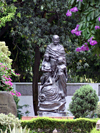




_small.jpg)
_small.jpg)

%202_small.jpg)
%202_small.jpg)
_small.jpg)
_small.jpg)
_small.jpg)

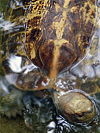
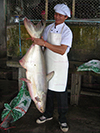
_small.jpg)
%202_small.jpg)
%20แมลงใบไม้ใหญ่_small.jpg)
%20กุ้งก้ามกราม_small.jpg)
%20ด้วงคีมฟันเลื่อย_small.jpg)
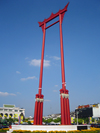
%20%20Lyssa%20zampa,%20Nyctalemon%20zampa_small.jpg)

_small.jpg)
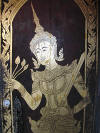
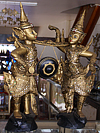
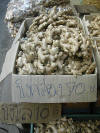
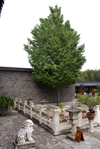
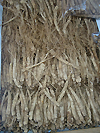
_small.jpg)
_small.jpg)
%202_small.jpg)


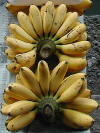
%201_small.jpg)
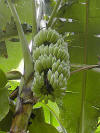
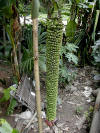
%201_small.jpg)
_small.jpg)
%20fried%20banana_small.jpg)
_small.jpg)


%201_small.jpg)
%20Chinese%20mascots_small.jpg)
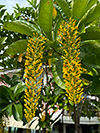
_small.jpg)
%201_small.jpg)
%203_small.jpg)
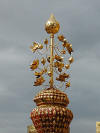
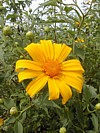
_small.jpg)
%20แมงมุมใยทองลายขนาน_small.jpg)
_small.jpg)
%20ไก่ฟ้าสีทอง%201_small.jpg)

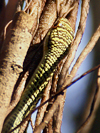
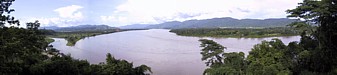
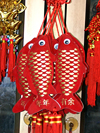
_small.jpg)
%203_small.jpg)

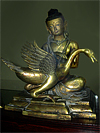
%201_small.jpg)
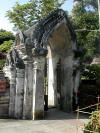


,%20youthful%20Krishna%20as%20cowherd_small.jpg)
_small.jpg)
%20นกกาน้ำใหญ่%202_small.jpg)
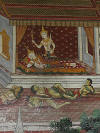
%201_small.jpg)
%20นกตะกราม%203_small.jpg)
%20India%202_small.jpg)
_small.JPG)
%201_small.jpg)
_small.jpg)
_small.JPG)
%202_small.JPG)
%201_small.JPG)
%202_small.JPG)
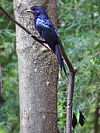
%20นกหัวขวานใหญ่หงอนเหลือง_small.jpg)
%202_small.jpg)
%20ผีเสื้อจ่าใหญ่สยาม_small.jpg)
_small.jpg)
_small.jpg)
%203_small.jpg)
%202_small.jpg)
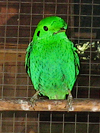
%20งูเขียวบอน_small.jpg)
%20นกลุมพูเขียว_small.jpg)
_small.jpg)
%201_small.jpg)
%201_small.jpg)
%202_small.jpg)
%20นกยูงอินเดีย%202_small.jpg)
%201_small.jpg)
%20แมลงปอบ้านเสือเขียว_small.jpg)
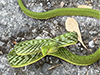
%20-%20fruit%202_small.jpg)
%20กระรอกปลายหางดำ%201_small.jpg)
%201_small.JPG)
%201_small.jpg)
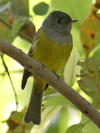
%20นกกะลิง_small.jpg)
%202_small.jpg)
%201_small.jpg)
%20ผีเสื้อแพนซีเทา%201_small.jpg)
%20นกกระทุง%203_small.jpg)
_small.jpg)
_small.jpg)
_small.jpg)
_small.jpg)
_small.jpg)
_small.jpg)
%20นกนางนวลแกลบปากหนา_small.jpg)
%20Chinese%20martial%20arts%20weapon_small.jpg)
,%20fifth%20Chief%20of%20Police_small.jpg)
