|
prahaan (ประหาร)
Thai for
to ‘Execution’. The carrying out of a sentence of death on a condemned person. The history of the death sentence in Thailand reflects broader transformations in the country’s legal system, political authority, and engagement with international norms, moving from ritualised corporal punishment to modern state-administered execution methods. In pre-modern
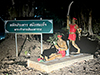
Siam, capital punishment was not governed by a unified legal code but was embedded within a cosmological and hierarchical worldview in which the king, as the supreme moral and judicial authority, maintained social order. Execution methods varied according to the nature of the crime and the social status of the condemned. Beheading was commonly employed for commoners
(fig.), while members of the nobility were sometimes executed by being struck with a
sandalwood club, a method intended to avoid the spilling of blood, which was considered inappropriate for persons of high rank. In particularly grave or symbolic cases, punishments could involve crushing, dismemberment, or execution by elephants. These acts were often carried out publicly and served both punitive and didactic functions, reinforcing royal power and deterring transgression. Significant changes occurred during the late nineteenth century, particularly under the reign of King
Chulalongkorn (fig.), when Siam undertook extensive legal reforms as part of a broader process of administrative modernisation and resistance to colonial pressure. Traditional and highly ritualised forms of punishment were progressively abolished, and a more standardised criminal justice system was introduced. Within this context, beheading was retained as the official method of execution but was now administered within a formal legal framework rather than as an expression of discretionary royal justice. Executions during this period became increasingly regulated, and although they were initially public, they gradually moved out of public view as concepts of penal discipline and state authority evolved. In the early twentieth century, further reforms reflected changing attitudes toward punishment and increasing sensitivity to international legal standards. In 1935, beheading was formally replaced by execution by firing squad, which came to be regarded as a more modern and orderly method of capital punishment. Executions were carried out by trained officials, typically within prison grounds, and were no longer public spectacles. For several decades, the firing squad was the standard method used in Thailand for capital crimes, including murder, treason, and later certain drug-related offences as narcotics legislation became more stringent in the latter half of the twentieth century. This method remained in use until the early twenty-first century and shaped public perceptions of the death penalty for much of the modern era. In 2003, Thailand adopted lethal injection as the sole method of execution, citing concerns about humaneness and alignment with prevailing international practices. The procedure involved the administration of a sequence of drugs designed to induce unconsciousness, paralysis, and cardiac arrest, and executions were conducted in highly controlled prison environments. While the death penalty remained part of Thai law, its application became increasingly rare. The last execution in Thailand took place in June 2018, after which no further executions have been carried out. Although capital punishment is still legally prescribed for certain serious offences, including aggravated murder and specific crimes against the state, Thailand is widely regarded as observing a de facto moratorium.
Also transliterated praharn.
回





|