|
Wat Sri Don Moon (วัดศรีดอนมูล)
Thai.
‘Temple of the Auspicious Raised Mound’. Name of a historic Buddhist temple located in
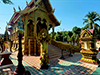
Chiang Mai and set in a lush tropical garden with plenty of artificial ponds and waterfalls (fig.), even the
naga balustrades flanking some of the staircases are enveloped in lush greenery, their sinuous forms cloaked by creeping foliage, while small cascading waterfalls add movement and a gentle, tranquil atmosphere to the setting. The garden is scattered with Buddhist imagery, such as . The temple, formerly known as Wat Phra Chao Kon Keung (วัดพระเจ้าก้นกึ่ง), i.e. ‘Temple of the Half-Overturned Buddha’ Images, has no surviving formal foundation record; however, local oral traditions and
Lan Na script evidence suggest that it may have originated during the reign of King
Phra Chao
Tilokarat (fig.). The earlier name reflects a period of abandonment, during which numerous
Buddha images lay scattered within the temple compound, reportedly overturned by wild
elephants, giving rise to the distinctive epithet. Following the decline of Chiang Mai during the Burmese incursions, the temple remained deserted for several centuries until the late eighteenth century, when King
Chao Kawila (fig.) re-established Lan Na authority and initiated population resettlement. Communities relocated from
Chiang Saen under the leadership of Phraya Chomphu, restored the site, renaming it Wat Sri Don Moon to reflect its elevated mound setting. From the early twentieth century onward, the temple underwent significant reconstruction and institutional development under successive abbots, including the construction of a
wihaan, named Maha
Wihaan Boon
Barami, that houses its principal
Buddha statue named
Luang Pho
Phet, which is seated in the
maravijaya pose, depicting his
victory over
Mara,
the destroyer and tempter.
The walls are adorned with
embossed silver and colourful
bas-reliefs of mythological figures and characters from
Buddhism, including of the demon
Mara, the personification of evil, who is depicted riding an
elephant. The back gable and wall of the temple's wihaan features a large staircase that descends from an heavenly abode and a
Buddha statue standing in the pose of disclosing the worlds, which is
known in Thai as
pahng peut lohk
(fig.). A plaque at the base reads:
Maha
Nakhon Sankassa (สังกัสส), referring to an ancient city in Buddhist tradition, renowned as the site where the
Buddha descended from the
Tavatimsa Heaven. In the centre of the compound stands a pedestal bearing a statue of
Brahma (fig.) encircled by four four
White Elephants, each carrying a different deity, including
Bo Bo Gyi (fig.),
Rahu (fig.),
Phra Witsanukam (fig.), and
Ganesha (fig.). Furthermore, the compound has a monastic school and associated religious structures, such as
Chedi Kao Khanajaan (เจดีย์ ๙ คณาจารย์), i.e. the ‘Stupa of the Nine Revered Teachers’. Royal patronage is evidenced by the ceremonial consecration of the principal Buddha image and relic enshrinement attended by the Thai monarchy. In 1996, a traditional Lan Na-style monastic residence, named
Kuti Song Lan Na Yanasangwararam (ญาณสังวราราม), which translates to ‘Wisdom and Restraint’, was established. In the contemporary period, Wat Sri Don Moon is recognised both for its historical continuity within the Lan Na religious landscape and as the residence of
Kruh Bah Noi Techapanyoh (น้อย เตชปฺโญ), a prominent
meditation monk associated with strict adherence to the
Thai Forest Tradition.
WATCH VIDEO.
回





|