|

|
|

|
Chinese. ‘Eight’. The number eight (8) is believed to be the most auspicious number in China because it is associated with wealth. It is a homonym with the word ba (巴), which means ‘to long for’ and ‘to wish’, whilst it also sounds similar to fa (发), i.e. ‘to make a bundle of money’, and occurs as a compound in words such as facai (发财), meaning ‘well-off’ or ‘becoming rich in a short time’. Furthermore, the loop of the number 8, similar to ∞, indicates perpetually and thus longevity. Being such an auspicious number, China in 2008 chose August 8th, i.e. 8/8/'08, as the date for the start of the 2008 Olympic Games in Beijing. The number 8 is also associated with the shape of calabashes, known in Thai as nahm tao, and refer to supernatural shielding and healing, as in the past physicians would carry medicine with them inside a calabash, which ever since has been regarded as a legendary symbol associated with healing. As an auspicious number it also frequently is chosen in religion and mythology, as in the Eight Great Bodhisattvas, the Eight Immortals, and the Eightfold Path, to name just a few. 回 baan burih leuang (บานบุรีเหลือง) See ban buri leuang. 回 baan burih muang (บานบุรีม่วง) See ban buri muang. 回 See Ban Kuti Jihn Museum. 回 baan mairoo rohy (บานไม่รู้โรย) Thai name for a flowering plant, with the botanical name Gomphrena globosa (fig.). This annual plant grows up to 60 centimeters in height and bears globular flowers. Though the flowers of true species have magenta bracts, cultivars may have colours such as purple, pink, lilac, red, white, etc. The flowers are in Thailand often used in the making of garlands (fig.) called puang malai, as well as in stringed flower arrangements known as kreuang khwaen, and in phum dokmai (fig.). They are also reproduced as artificial flowers in Japanese clay, known as din yipun (fig.). In English, the plant is commonly known as Globe Amaranth and Bachelor Button. In Thai, it is also known by a variety of other common names, such as ga-laum (กะล่อม) and t-alaum (ตะล่อม), used in the North, and dok sahm deuan (ดอกสามเดือน), which is used both in the North and the South. 回
baan mairoo rohy farang (บานไม่รู้โรยฝรั่ง) Thai designation for a dark red to purple plant or small shrub, that typically grows between one and two meters high, and with the scientific name Alternanthera dentata. It blooms year-round and has small, globular flowers, that are whitish in colour. In English it is commonly known by the names Dentata Ruby and Purple Knight. 回
See Ban Sukhawadih. 回 Thai for a Buddhist monk's alms bowl. The term derives from the Sanskrit word patra (पात्र), which means ‘bowl’, hence the unpronounced yet written r (ร) at the end of the Thai spelling. Thus, literally, the term baat should actually be transliterated baatr. Providing a kind of income to the clergy by using the baat to beg for food, the term baat is likely also etymologically related to the word baht, i.e. the currency unit of Thailand, which is used by laymen to buy food. 回 baat song hua seua (บาตรทรงหัวเสือ) Thai. ‘Tiger head (fig.)-shaped alms bowl’. Name for a style of Buddhist monk's alms bowl, with a shape similar to the original and traditionally rather angular shaped baat song thai deum, i.e. ‘old-shaped Thai alms bowl’, but with its base slightly cut back, so it can be placed on the floor. This style of alms bowl is the newest and has been in use for about 30 years. 回 baat song thai deum (บาตรทรงไทยเดิม) Thai. ‘Old-shaped Thai alms bowl’. Name for the original and traditionally rather angular shaped Buddhist monk's alms bowl. This style of alms bowl has been in use for centuries. 回 Bac De Tran Vo (Bắc Đế Trấn Vũ) Vietnamese name for the Chinese deity Xuanwu, though besides being the Emperor of the North or Northern Emperor, he is in Vietnam worshipped as a god in his own right, namely as the Vietnamese god of weather. Den Quan Thanh, a den in Hanoi (fig.), i.e. a Vietnamese temple dedicated to a deified hero, is devoted to him (fig.). He is depicted as a warrior in imperial robes and standing on a tortoise while holding a sword, which sometimes has a snake entwined on its blade. He is believed to control all kinds of weather changes and natural calamities and is also associated with the Chinese Tortoise General Gui Jiang (fig.). See also Zhenwu. 回
Vietnamese. ‘White Horse’, i.e. the name of a 220 km² National Park in central Vietnam. READ ON. 回 Thai. ‘Shoulder bouquet’. Name for the shoulder patch on the white service dress of civil servants, indicating their rank, and hence similar to Inthanu, though the term bacho is specifically used for the black shoulder pieces adorned with golden brocade on the white civil servant uniforms worn during official ceremonies, not for the epaulettes on their beige coloured uniforms (fig.) for daily use. It is also referred to as cho rachaphreuk. See also chut kha radjakaan and RANKS CIVIL SERVICE. 回 One of the only two remaining species within the genus Camelus still existing today. READ ON. 回 Another name for narok, meaning ‘hell’ as well as ‘subterranean world’, or ‘underworld’. 回 Chinese. ‘Eight big propitious good omens’ or ‘eight big good auspicious [things]’. Name for the Ashtamangala, which were brought from India to China by Buddhist missionaries. 回 Burmese. The modern transliteration used for Pagan. 回 Bagaya Kyaung (ဘားဂရာ ကျောင်း) Burmese-Mon. ‘Starflower Monastery’. Name of a wooden monastery in Inwa. READ ON. 回 Nepalese. ‘Moving tigers’. Name of a board game, that originates from Nepal. READ ON. 回 Burmese. The modern transliteration used for Pegu. 回 Chinese for ‘eight trigrams’. 回 Chinese name for a cupping glass or jar used in fire cupping, an acupressure technique used in traditional Chinese medicine and known as ba guan zi. 回 Chinese. ‘To pull [with] jars’ or ‘pot pulling’. Name for fire cupping, the cup being referred to as ba guan. 回 Persian. Name of a religion that teaches the essential worth of all religions, and the unity and equality of all people. The name derives from the Arabic word Bahá‘ (بهاء), which means ‘glory’ or ‘splendor’, and is usually transliterated Bahá'í. It claims to have over 5 million adherents worldwide. The Lotus Temple in Delhi (fig.) is a Baha'i temple. As such, it is not dedicated to one single religion, but instead invites people of all faiths to come in and pray. 回 1. Vietnamese. Name of an ethnic minority group, that lives in the Central Highlands of southern Vietnam and has an estimated population of around 190,000. They live in concentration in Gia lai and Kon Tum Provinces, as well as in western parts of Binh Dinh and Phu Yen Provinces. They live in houses on stilts, with extended families sometimes living in Longhouses. Their villages all have a communal house called rong, which stands out for its height (fig.) and is the symbol of the strength and skill of the villagers. Their language belongs to the Mon-Khmer group. 回 2. Vietnamese. Language of the Bahnar people of Vietnam, which belongs to the Mon-Khmer linguistic family and has about 190,000 native speakers. 回
1. Thai. Currency unit of
Thailand, made up of one hundred
satang.
The last coins during the reign of King
Rama IX
were those of 1 baht (fig.)
depicting
Wat Phra Kaew
(fig.),
2 baht (fig.)
depicting
Wat Saket (fig.),
5 baht (fig.)
depicting
Wat
Benjamabophit (fig.)
and 10 baht (fig.)
depicting
Wat Arun (fig.),
although coins with other denominations have also sometimes been issued.
Due to its similar size and confusingly same reverse side, the 2 baht
coin was reissued in a brass colour after just a short while in
circulation. Coins of the lowest denomination with a value less than one
baht are called satang and are also in a brass colour. Those exist as
coins of 25 satang (fig.)
depicting
Wat Mahathat Wora Maha
Wihaan
(fig.)
and 50 (fig.)
satang depicting
Wat Doi Suthep (fig.),
but also other denominations have been issued. On the reverse side all
coins depict HM the King, although some special issues may also depict
another member of the royal family or a king of the past, often together
with the then present king. These are usually issued for special
commemorations and are for many real collectors items. Thai people,
especially youth, can often be seen carrying a 5 or 10 baht coin in one
of their ears. This is usually the fare for the public bus, boat or
songthaew (fig.)
which is put in the ear for convenience. Obviously, there is no need to
search for it, easier to get out compared to the pockets of a tight
jeans, and allows the hands to be free. It is said amongst expats that
once one starts wearing the bus fare in ones ear, one has been in
Thailand for too long. Previously, until 1897 the Thai currency was
called
tical.
The word baht is likely etymologically related to
baat.
See also
gun pahk phi
and
photduang
2. Thai. A unit of weight used by apothecaries and jewelers in Thailand. For gold the unit of weight is equal to 15.16 grams for jewelry items and 15.244 grams for gold bars (fig.), ingots and bullion coins (fig.). See also Thai gold. 回
3. A line of a Thai verse. 回 4. Thai-Rajasap for ‘foot’, as in chalong phra baht. Also Phrabaht. 回 Chinese. ‘White’ or ‘Pure’. Designation of one of the 56 ethnic groups that are officially recognized by the People's Republic of China. They number almost 2 million and live in southern China's Yunnan province, especially in the Dali area, as well as in the Bijie area of neighbouring Guizhou province, and in Hunan's Sangzhi area. They are usually referred to as Baizu (白族), i.e. the ‘White Clan’ or ‘White Race’. The Bai people speak their own language, which is believed to be either a member or an independent branch of the Sino-Tibetan language family. 回
Thai. ‘Land lotus leaves’. Name for a common semi-aquatic plant, with the botanical designation Centella asiatica, and commonly known in English as Asiatic Pennywort. It grows in swampy areas and in low wet areas, e.g. along ditches. The plant consists of small, green, kidney-shaped leaves known in botany as reniform leaves, and are somewhat akin to miniature lotus leaves (fig.). The leaves are edible and can made into a drink called nahm bai bua bok (น้ำใบบัวบก), or eaten raw in a salad known as yam bai bua bok (ยำใบบัวบก), which has a Burmese variant called Myin Kwa Yuat Lethok - fig.). 回
Thai for ‘wild betel leaves’ (fig.), the leaves from a plant with the botanical name Piper sarmentosum. See also chaphlu. 回
Thai. The dried leaves of the nipa palm (fig.) are used for thatching, to make ngop nahm chiao (fig.), and to roll cigarettes, but fresh they are used to wrap sweetmeats called kanom jahk (fig.) and as an ingredient in alcohol. 回
Thai for ‘weather vane’ or ‘wind vane’. Often seen at rural houses, most commonly with fanciful shapes, e.g. decorated with puppets that move up and down through a handle when the vanes (blades) turn in the wind. Many of those wind vanes are not necessarily put up with the intend to find out the direction of the wind, but rather for sanook (fun). Also called bai kang han lom (ใบกังหันลม). See also silom. 回
1. Thai. ‘Palm leaves’. Name for the leaves of a kind of fan palm tree, known as ton bai lahn, which are used to make a variety of things, such as Buddhist manuscripts, which are likewise called bai lahn (fig.); artificial fish called pla taphian sahn bai lahn (fig.), traditional farmers' hats, which are known as ngop (fig.); etc. 回
2. Thai. ‘Palm leaves’. Ancient palm leaf manuscripts carrying Buddhist scriptures. The palm leaves were first trimmed into long sheets and then engraved by scratching the text into the leaf with a needle, the ink being rubbed in afterwards. They are sometimes elaborately decorated with engravings showing episodes from Buddhism (fig.) and are kept folded between two wooden covers, usually adorned with gold leaf and measuring around forty by eight cms. Because of their fragile nature they are preserved in specially designed scripture cabinets coated with protective lacquer. 回
Thai. The ornamental crest running along the ridge of the two sloping edges of a traditional gable roof, as seen on most Buddhist temples and palaces. On Buddhist temples it starts beneath the chofa (fig.) and at the lower end usually ends with an antefix (fig.) often in the form of a hang hongse (fig.), whereas in traditional houses it usually ends with a ngao (fig.). The bai raka also occurs in Thai palaces (fig.). Most temples show a combination of a chofa, bai raka and a hang hongse (fig.). 回
1. Thai. Stone boundary markers at the eight cardinal points around a bot. They demarcate the consecrated ground on which the bot is constructed. They are usually built as free-standing structures, though occasionally they are built-in on the outer wall of the ubosot of the temple (fig.), such as at Wat Bowonniwet Wihaan Racha. Bai sema may be erected singly, or in pairs. If in pairs it may signify that the temple was of royal origin (fig.), or that it has undergone major renovation, or is built on the site of a former bot. The bai sema often have the shape of a bodhi tree leaf and are sometimes sheltered under a small mondop-like structure (fig.). They are usually carved with decorative motives and are placed on top of the look nimit (fig.) which are buried in the ground. It is represented on the emblem of the Ministry of Education (fig.), in combination with the Wheel of Law (fig.). Also sema, and compare with wisung khama sima. 回
2. Thai. The merlons or crenellated parapet on battlements surrounding a city or temple. Also sema. 回
Thai. An offering of cooked rice under a conical arrangement of folded leaves and flowers, sometimes topped with a boiled egg like some kreuang bucha (fig.), and used during weddings (fig.) and other auspicious ceremonies. When placed in a bowl, it is also referred to as bai sri pahk cham (บายศรีปากชาม). Also bai si (บายสี). See also POSTAGE STAMPS. 回
Thai. The leaf of a pandanus. 回 Thai name used for a ‘banana leaf’, whereas ─in contrast─ a ‘banana’ is known as gluay and a ‘banana plant’ as ton gluay. 回 Chinese designation for any palm-leaf fan. READ ON. 回 See Phatchara Kitiyapha. 回 Chinese. ‘White Impermanence’. Name of a Chinese Hell Guard. READ ON. 回 Thai. ‘Blade of Jade’. Name for a high-rise that between 1999 and 2016 was Thailand's tallest tower. READ ON. 回 Khmer. Temple dedicated to the god Shiva and built by King Yasovarman I at the beginning of the 10th century AD in the Khmer capital Angkor. 回 Sanskrit-Khmer. Name of a talking, flying white horse, that rescues those who repent from their sins, as well as merchants from perils at sea. READ ON. 回 The older brother of Krishna and avatar of Vishnu. An ancient myth relates that Shiva took two of his own hairs, one black and one white, then created Krishna out of the black hair and Balarama from the white one. He is the god of ploughmen and is in art usually portrayed holding his ploughshare Hala. He is also sometimes depicted with a pestle named Musala. When he died, Sesha, the immortal serpent appeared from his mouth and flew away, back to the Ocean of Milk. He is also known as Balabhadra and Baladeva. 回
Thai. A king of the monkeys and a half-brother of the monkey king Sugriva, who usurped his throne, in the Thai epic Ramakien. In the Ramayana he is known by his Sanskrit name Vali and in Thai his name is pronounced ‘Phali’ (fig.). Though they had the same mother, the father of Bali was Indra. He is depicted as a monkey with green fur and usually wearing a chadah-style headdress with a conical peak of which the tip folds backwards. He was formerly known as Kakat/Kaakaat (กากาศ), in Sanskrit known as Kakatsa, and was the first ruler of Kheedkhin. He is represented on one of the Royal Barges, which is consequently named after him, i.e. Reua Phali Rang Thawihp. After the very strong, yet foolhardy buffalo Torapi challenged his father Torapa to a fight and slew him, and then went on to challenge the gods to fight him, Idsuan ordered the buffalo to fight Phali instead, but cursed the buffalo and condemned him to die at the hand of the monkey king (fig.). See also LIST OF RAMAKIEN CHARACTERS & NAMES. 回
Thai name for the island of Bali, Indonesia. 回 Another name for Bali Starling. Also spelled Bali Mynah. 回 Common name for a medium-sized myna, with the binomial name Leucopsar rothschildi. Both sexes are similar and are mostly white, with blue bare skin around the eyes, and black wingtips and tail tip. The legs are greyish-blue and the bill is light brown, with a pale, yellowish tip. This bird also has long, drooping crest feathers, which the males raise to attract females, whilst bobbing up and down. Also known as Bali Myna and Rothschild’s Myna (Rothschild’s Mynah), and in Thai as nok king krohng bali (นกกิ้งโครงบาหลี) or nok ihyang krohng bali (นกเอี้ยงบาหลี). In the wild, this endangered species only occurs on the Indonesian island of Bali, where it is called jalak bali. 回
Name of a non-poisonous arthropod found in Southeast Asia. This millipede has a dark brown to black body and rolls itself into a ball when it feels threatened or when resting. It lives in damp places in the forest, usually near water, and feeds on mushrooms and decaying plant material. Of the 105 species of millipedes on record in Thailand, there are at least 5 known species of Balled Millipedes. They belong to the family Glomeridae and are also known as Pill Millipedes (fig.). The dark kind is known by the scientific name Hyleoglomeris albicollis, the plain brown by the Latin designation Hyleoglomeris cremea. In Thailand, they occur mostly in the North, especially during the rainy season, and in Vietnam, they are considered to be living good luck charms (fig.). In Thai, they are known by the names king keuh krasoon (กิ้งกือกระสุน), i.e. ‘bullet millipede’, and krasoon phra in sih dam (กระสุนพระอินทร์สีดำ) or krasoon phra in sih nahmtaan (กระสุนพระอินทร์สีน้ำตาล), i.e. ‘Indra's black or brown bullet millipede’. WATCH VIDEO, VIDEO (EN) and VIDEO (TH). 回
Common name for a species of milkweed, with the botanical designations Asclepias physocarpa and Gomphocarpus physocarpus. The plant is recognized by its green hollow inflated balls with prickly hairs that stick out from the foliage like that consists of lanceolate leaves on otherwise bare stalks. It originates from Africa, but has been widely naturalized and is often used as an ornamental plant, both in gardens and in floral bouquets. Also commonly known as Balloon Cotton-bush and Swan Plant, and in Thai as hong heun (หงส์เหิร). 回
Burmese for an ‘ogre’ or ‘giant’. Hence, the term is the Burmese equivalent of the Thai yak. Many ogres are said to be flower-eating ogres, which are often depicted in iconography and known in Burmese as balu pan zwe when holding a garland with both hands and as balu pan gai when disgorging flowers and foliage (fig.). These ogres are usually benevolent. But the latter may also be malevolent, especially when depicted with straight fangs, which allows him to devour humans. In Ananda Phaya (fig.) in Bagan is a bas-relief of two simha (lions) that are sitting back-to-back, while their heads are facing each other. The top part of this relief is made in such a manner that is can be viewed separately as a balu face (fig.), which is reminiscent of Rahu (fig.), and similar to Taotie (fig.) and kirtimukha (fig.), i.e. a kala or kala face (fig.). Also transcribed belu and bilu. 回 Burmese term for ornamental motif on pagodas or in stucco, depicting an ogre head eating or disgorging flowers and foliage. This ogre may sometimes be malevolent, especially when depicted with straight fangs, which allows him to devour humans. The representation of this ogre in iconography is rather reminiscent of depictions of the demon Rahu (fig.). Compare also with balu pan zwe, Rahu (fig.), Taotie (fig.) and with the Sanskrit term kirtimukha (fig.). 回
Burmese term for an ornamental motif on pagodas or in stucco, depicting an ogre (balu) clutching a garland with both hands. It refers to the ogre's flower-eating habit and if disgorging flowers and foliage it is referred to as balu pan gai (fig.). This particular ogre is reminiscent of depictions of the demon Rahu (fig.) and of kirtimukha (fig.). 回 The Burmese name of the dominant ethnic group in Myanmar, from which derives the Thai designation Pa-mah. 回 Giant plant, that belongs to the family of grasses and with the botanical name Bambusa vulgaris. READ ON. 回 Common name for a species of beetle in the family Cerambycidae. It is also commonly known as Bamboo Tiger Longicorn and Bamboo Longhorn Beetle, and has the scientific designation Chlorophorus annularis. It is mostly black with a bright yellow tiger-like pattern and is very similar in appearance to Chlorophorus varius, a beetle which is commonly known as the Flower Longhorn Beetle. The Bamboo Borer is primarily a borer of cut, dry bamboo. 回
Name of a style of Buddha image found in Myanmar, which has entirely been woven from bamboo, similar to traditional basketry. Such an image can be seen in Nyaung Shwe (fig.), in Shan State. That particular one is ca. 3 meter tall and seated in the lotus position while performing a dhammachakka mudra. It was made in 2008 by craftsmen from Namhu, a village on Inle Lake (fig.) and is currently on display in the Nyaung Shwe Cultural Museum (map - fig.). Another such image (fig.) is found at Shwe Mawdaw Phaya, a Buddhist temple in Bago (fig.). The latter is also seated in the lotus position, yet is displayed with a different mudra and known as Mahalabamuni. Another Bamboo Buddha (fig.) is found in Thailand, i.e. at Wat Jong Klang (fig.) in Mae Hong Son (fig.), a provincial capital that borders Myanmar and which has many temples in a mixture of Burmese and Shan art styles, often displaying also artifacts from Myanmar. The latter, also seated in the lotus position, is displayed with a bhumisparsa mudra. 回
See hed yeua phai. 回 See Suan Phan Phai. 回 Any of the four species of rodent in the subfamily Rhizomyinae. READ ON. 回 See waiolin mai phai. 回 Name of a worm that inhabits the inside of bamboo stems. It is in fact the larva of a moth of the genus Omphisa and has quite a long larval stage that lasts for ten months, whilst its adult life as a moth is only less than a week. Therefore most of its lifespan is spent as a larva, inside the bamboo stem. Once becoming a moth it will fly out and try to mate immediately. When this is fulfilled the female moth will lay its eggs on the skin of a bamboo shoot, and dies. Once those eggs have hatched the small grubs will dig into the bamboo shoot peel and start feeding on flakes of bamboo, without actually doing harm to their host. Some -mainly hill tribe- people of Northern Thailand eat the larvae which are collected by cutting down the bamboo. Subsequently they are fried crisp in oil and sold on markets (fig.) for up to 500 baht per kilo. Due to its long train-like body the creature is in Thai nicknamed rot duan, meaning express train. 回
Indonesian-Thai for egg noodle, noodles made of wheat flour and eggs (in most cases). Bamih is a tick noodle usually of a yellowish colour, though also a pale green colour exist, and is sold only fresh (not dried). It can be eaten from a bowl with added broth or water (bamih nahm - fig.) or boiled -but dry- from a plate (bamih haeng - fig.), a form which may also be stir fried. A popular dish is bamih moo daeng (fig.). It might be compared to the English chowmein what derives from chao mian, Chinese for fried flour. See also TRAVEL PICTURES (1) and (2). 回
Thai. An old unit of capacity, officially called ban luang and equivalent to 1,000 liters. 回 An asura with thousand arms, that struggled with Krishna and who is a son of Bali. He is also called Banasura (बाणासुर). 回 Fruit of the banana plant which grows in clusters on an arched, overhanging inflorescence. Attached to this are several combs each numbering around a dozen bananas (fig.). They grow towards the light, making them curve and resulting in their typical shape. There are several kinds, both large, e.g. the plantain horn banana or pisang tanduk (fig.) that occurs from Sri Lanka to Indonesia and Malaysia; and small, e.g. gluay khai from Kamphaeng Phet, as well as the Pink Banana (Musa velutina), a species of seeded banana that grows in the mountainous regions of Myanmar. Bananas are frequently used in Thai cuisine (fig.), fresh as well as fried, boiled, dried or baked (fig.), and it is the daily food for about one billion people worldwide. Thailand produces about two million metric tons of bananas per year, ranking eighth on the world's list of mass producers which tops India with an annual production of 16.8 million metric tons. Thailand's production represent only around 2.74% of the worldwide crop and most of it is used for domestic consumption. In Thai, bananas are called gluay and in Indonesia and Malaysia pisang. The the word banana is often used interchangeably with plantain, a banana-like fruit of a kind of banana plant equally of the genus Musa and also grown for its fruit, but which fruit is firmer and starchier, and used for cooking. 回 A non-woody fruitbearing plant, with a soft herbaceous stem, that is made up of leaves that wrap round each other, forming what appears to be a trunk. READ ON. 回 ban buri leuang (บานบุรีเหลือง) Thai name of an evergreen climber, with yellow calyx flowers and with the botanical name Allamanda cathartica. In English it is known by a variety of common names, such as Golden Trumpet, Yellow Allamanda, Buttercup Flower, Yellow Bell and Common Trumpet Vine. Originally from the Americas, its a popular ornamental climber widely used in the tropics, especially grown over fences and along walls. Also transcribed baan burih leuang. See also POSTAGE STAMP. 回
Thai. Climber with the botanical name Allamanda violacea and commonly referred to as Violet Allamanda. Its flowers are red to purple coloured calyx flowers. Also baan burih muang. 回
Name of a traditional double-outrigger boat in The Philippines, consisting a narrow main hull with two attached outriggers. In Indonesia, a similar kind of canoe-like fishing boat is known as jukung. 回
A prehistoric civilization in northeast Thailand known for its early bronze metallurgy and clay pottery. Archeological finds of elaborate pottery with distinctive burnt ochre, rust coloured swirl designs painted onto a buff background provide evidence that the indigenous people of Ban Chiang were capable of producing sophisticated works of art. Some of the bronze objects found are thought to date from around 3000 BC, making it possibly the earliest Bronze Age culture in the world. See also Udonthani, POSTAGE STAMPS (1) and (2), TRAVEL PICTURES (1) and (2), and THEMATIC STREET LIGHT. 回
Thai. ‘Crystal Stairway’. Name of a kind of kreuang khwaen, i.e. net or frame-like, stringed flower arrangements, that are used to suspend at windows, doorways, gables, etc. This particular type is rather simple and is knitted of mainly jasmine buds (fig.), white dok rak (fig.), and white jampah flowers. It consists of three horizontal lines of white jampah flowers, that are conected with diagonal strings of jasmine buds in an X-shape, and has a tapering top and bottom. At the corners of each step are pink flowers, that are handmade from rose petals and finished with a real flower at its centre. 回
Thai. ‘Silver Stairway’. Name of a kind of kreuang khwaen, i.e. net or frame-like, stringed flower arrangements, that are used to suspend at windows, doorways, gables, etc. This particular type is rather simple and is knitted of mainly jasmine buds (fig.), white dok rak (fig.), and white jampah flowers (fig.). It consists of three horizontal lines of no more than three white jampah flowers, that are conected with diagonal strings of jasmine buds in a V-shape, and has a tapering top and bottom. At each connection there may be additional flowers in a different colour, often handmade from rose petals and finished with a real flower at its centre. It is similar to the Bandai Kaew (fig.), but with only three jampah flowers per horizontal step, and it is also akin to the Bandai Thong, but with white jampah flowers, rather than yellow ones (fig.). 回 Thai. ‘Golden Stairway’. Name of a kind of kreuang khwaen, i.e. net or frame-like, stringed flower arrangements, that are used to suspend at windows, doorways, gables, etc. This particular type is rather simple and is knitted of mainly jasmine buds (fig.), white dok rak (fig.), and yellow jampah flowers (fig.). It consists of three horizontal lines of yellow jampah flowers, that are conected with diagonal strings of jasmine buds in a V-shape, and has a tapering top and bottom. At the corners of each step there may be additional flowers in a different colour, often handmade from rose petals and finished with a real flower at its centre. The Bandai Thong is depicted on a Thai postage stamp issued in 1991 (fig.). 回 Thai. ‘Black House(s)’. Name of an somewhat outlandish museum in Chiang Rai that consists of a peaceful garden with a collection of buildings. Most of those are dark in colour and made of wood such as teak, though there are also some edifices constructed in brick. The museum is the brainchild of local artist Thawan Datchanee (ถวัลย์ ดัชนี), and it is considered to be his architectural masterpiece. Inside, the museum displays a collection of paintings and sculptures, including a few featuring the artist himself (fig.), as well as artifacts and furniture decorated with or made with animal bones, skulls, skins, and horns, such as several long tables lined with chairs made from buffalo and other animal horns, and a number of black crocodile skins. Besides Thai-style art and artifacts, the eccentric museum also features some Balinese and Burmese objects, including Bedogol (fig.), i.e. Balinese-style door guardians (fig.), and Burmese legged nagah (fig.), i.e. naga-like creatures, yet with legs (fig.), as well as Burmese mythological lions known as chintha (fig.). See MAP and WATCH VIDEO. 回
Thai. Non hereditary titles conferred by the sovereign mostly on government officers, such as Luang, Phra, Phrya and Chao Phrya. 回 Common name for a species of frog which is native to Southeast Asia and belongs to the family Microhylidae. READ ON. 回 A venomous and potentially deadly snake, with the scientific name Bungarus fasciatus, which occurs in India and Southeast Asia, including in Thailand, where it is the most commonly found krait. It has an elevated vertebral ridge, giving it a triangular body, and alternate black and pale yellow bands of almost equal width, that encircle the body and tail, though which are of a rather grey colour with hatchlings. The Banded Krait can grow up to about 2 meters in length and may have up to 37 black bands. Its broad and depressed head is predominantly black, with black eyes and a pale yellow throat and supralabials. Its habitat is diverse and ranges from forests to mangroves and agricultural areas. It is found in all parts of Thailand, often advancing along a waterway to find food. It is inert during the day, but active and dangerous at night. Also called Yellow-banded Krait (fig.) and in Thai known as ngu saam liam, literally ‘triangular snake’. In 1981, it was depicted on the second stamp of a set of four Thai postage stamps featuring venomous Thai snakes (fig.). 回
Common name of a species of civet, with the scientific name Prionodon linsang and found in Thailand, Malaysia, and Indonesia. The Banded Linsang is around 74 cm long, including the tail, and has a white base colour, with black cloud-like spots on its body and and black bands on the tail. The lower legs and paws are white and have sharp, retractable claws. This linsang is omnivorous and feeds on birds, squirrels, rats, and lizards. It is the rarest of the civets, and is sometimes referred to as Tiger Civet. The Banded Linsang is arboreal and spends the majority of its time in trees. In Thai, it is known by the names chamot plaeng laai thaeb (ชะมดแปลงลายแถบ) and ih-hen laai mek (อีเห็นลายเมฆ), the latter name meaning ‘cloud-patterned civet’. See also POSTAGE STAMPS. 回
Common name for a species of butterfly, with the scientific designation Lethe confusa and which can be found across Southeast Asia and in parts of South Asia, mainly in bamboo forests. It has a wingspan of up to 5.5 centimeters and the surface of the forewings is brown with a white band and two pale spots, whilst the underside of the wings is brown with whitish wavy lines and they have a series of ocelli along a whitish lined margin, i.e. the forewing has three ocelli, while the hindwing has six eye spots. Most ocelli are roundish and have a white dot in their centre, though some have two, i.e. a larger and a smaller one, and the sixth or last ocellus on the hindwing is an eight-shaped oval with two white dots, that looks like a two merger of two ocelli rather just one. This butterfly is very similar to the Straight-banded Treebrown (Lethe verma), but the latter has a darker underside. 回
1. Thai. A word derived from the Sanskrit word pandita, that usually is translated as ‘sage’, ‘wise man’, ‘philosopher’, or ‘pundit’, the latter being an English word derived from the same Sanskrit root word. See also Vithura Chadok. 回 2. Thai. A recipient of an academic bachelor degree. 回 Thai. A small handheld double-sided hourglass-shaped drum used in brahmin rites. It is played by swaying so that the two weights that are tied to it with short strings hit both drum sides. It is also found as an attribute to several Hindu deities and typical of Shiva (fig.) in his form of Nataraja (fig.). In this context, the drum represents the primordial sound and rhythm from which the universe emerged, and into which it will be reabsorbed. The triangular shape of the drum represents this concept of creation, i.e. the upward side symbolizes the male creative principle or linga (fig.), the downward side represents the female creative principle or yoni (fig.), and creation begins where the two triangles meet, whilst dissolution will occur when they are separated. The ‘o’ in bando is pronounced very short. In Sanskrit the drum is referred to as damaru or damru (डमरु) and in English a similar toy, but with a flat shape rather a triangular one, is known as a rattle drum. 回
Thai. ‘Village’. Name used for riverside settlements. Found in place names of both large cities and small villages, like Bangkok and Banglamung. 回 See boon bang fai. 回 bangfai phayanaag (บั้งไฟพญานาค) Thai. ‘Fireballs of the Naga’. Annual phenomenon on the Mekong river in Nong Khai, occurring at the end of ouk phansa, during the 15th full moon of the 11th lunar month. Soundless, smokeless and scentless fireballs shoot up from the deepest, Lao side of the river and float silently into the air, tens of meters and sometimes up to 300 meters high, finally evaporating in the inky blackness of the nightly sky. In some years there are only a few, but in 1999 nearly 3,500 fireballs were counted. Some claim them to be a natural phenomenon, others believe these fireballs are caused by a naga (fig.) that, according to legend, lives in the river, others allege they are man-created. Up to date no verified scientific explanation has been found for this strange phenomenon. An ancient legend tells that when the Buddha returned to earth after teaching his mother in the Tavatimsa heaven at the end of the Buddhist Lent, phayanaag and his followers welcomed him back by blowing fireballs into the sky. See also Boon Bang Fai. 回
Thai. Name of a khet or district in eastern Bangkok. READ ON. 回 1. Thai-Western name for Krung Thep Maha Nakon (fig.), the contemporary capital of Thailand on the estuary of the Chao Phrya river. READ ON. 回 2. An art style from the Rattanakosin period. 回 Museum of contemporary art (fig.), located at Pathumwan Intersection in Bangkok's Pathumwan District. READ ON. 回 Bangkok Butterfly Garden & Insectarium Museum of live butterflies, located within Chatuchak Park, in Bangkok's Chatuchak district. It consists of a huge domed enclosure with a garden that mimics these winged creatures' natural habitat. A footpath guides the visitor through the garden, which encompasses large shady trees, ferns, wild flowers, rockeries and a waterfall. Over 500 butterflies are said to dwell here, at any given moment, though one needs to look for them as many are hiding high-up in the trees and in the tropical vegetation. In Thai it is known as uthayaan phi seua lae malaeng Krung Thep (อุทยานผีเสื้อและแมลงกรุงเทพฯ). See MAP. 回
Name of a 60 meter high sky wheel erected at Asiatique (fig.) Night Bazaar, located along at the riverfront of the lower Chao Phraya River in Bangkok. READ ON. 回 Name of a casual night market with street-food and shopping, located on Phahon Yothin Road on the outskirts of Chatuchak District, east of Don Meuang Airport. WATCH VIDEO. 回
See Siriraj Hospital Museum. 回 Bangkok's elevated train system, usually referred to as BTS or Sky Train. It started its initial service in December 2000. The central terminal is at Siam Square from where lines go in four directions: there are eight stations to the North ending near Chatuchak (at the old Mo Chit bus station); six stations to the South with end station at the Thaksin Bridge; just one station at the National Stadium in the West; and nine stations to the East, stretching to On Nut (Sukhumvit soi 50). Later the southern line was expanded crossing the Chao Phraya River, on to Klong Sahn. It operates from 6.00 AM to midnight. See also Bangkok Metro, Airport Link, and MAP. 回
Name of a gigantic bridge near Bangkok, built as part of the Industrial Ring Road project. READ ON. 回 Name for Bangkok's underground train system. READ ON. 回 A three-storey museum located on the corner of Silom Soi 23 in Bangkok, but with a slightly deceiving name, as besides seashells, the museum also exhibits shells of land snails and freshwater molluscs, as well as the globular endoskeletons of sea urchins and a few other oddities, such as the tubular bivalves of Kuphus polythalamia, the longest bivalve mollusc in the world. The extensive and impressive exhibition, with over 3,000 specimens of about 600 selected species, comes from both the seas of Thailand and from those around the world, and is the childhood passion of Ms. Oraphin Sirirat (อรพิน ศิริรัตน์) and Mr. Somwang Patthamakhanthin (สมหวัง ปัทมคันธิน), who both gathered the collection. In Thai, the museum is officially known as Phiphithaphan Hoi Krung Thep (พิพิธภัณฑ์หอยกรุงเทพฯ), which translates as ‘Bangkok Museum of Shellfish’ or ‘Bangkok Museum of Shells’, though it may also more correctly be referred to as Phiphithaphan Pleuak Hoi Krung Thep (พิพิธภัณฑ์เปลือกหอยกรุงเทพฯ), i.e. ‘Bangkok Museum of Shells’. See also MAP, TRAVEL PICTURE, and THEMATIC STREET LANTERN. 回
Thai. Name of a khwaeng (subdistrict) in Bangkok's khet (zone) Phra Nakhon, famous for the backpacker's paradise around Khao San Road and Phra Ahtit Road. The name is a compound of the words bang and lamphoo, the first one referring to a riverside village, the latter being a variety of mangrove of the genus Sonneratia caseolaris. Also transcribed Banglamphu. 回 Thai. A municipal district (fig.) of Ayutthaya, which is home to an open air museum, approximately 20 kms from the city centre. It has a collection of palace buildings in various architectural styles, as well as well maintained topiary gardens. The name is derived from the fact that a former Ayutthaya king met (pa) a girl called ‘In’ at a riverside village (bang) in this area. In 1985, four of the Bang Pa-in palace buildings, i.e. Aisawan Thipphaya Asana (map - fig.), Varophaat Phimaan/Varophat Phiman (วโรภาษพิมาน, map - fig.), the Chinese pavilion (fig.) Wehaat Jamroon (เวหาศน์จำรูญ, map - fig.), and Ho Witoon Tatsanah (หอวิฑูรทัศนา, map - fig.), a lighthouse on the premises of the Summer Palace —not to be confused with the nearby Bang Pa-in Lighthouse which is located on a small island in the Chao Phraya River, opposite of the palace (map - fig.). The palace buildings were illustrated on a set of postage stamps to mark the occasion of the Thaipex'85 Stamp Exhibition (fig.), whereas the Bang Pa-in Lighthouse appears on a postage stamp issued in 2019 as part of a set of four stamps on lighthouses (fig.). Besides those, Bang Pa-in also features a number of other structures, such as Sapahkaan Rachaprayoon (สภาคารราชประยูร, map - fig.), Phra Thihnang Uthayaan Phumisethiyan (พระที่นั่งอุทยานภูมิเสถียร - map), the prang-shaped Ho Me Montien Thewaraat (หอเหมมณเฑียรเทวราช), Phra Tamnak Faai Nai (พระตำหนักฝ่ายใน), etc. In addition, the compound also has a memorial (fig.) to Queen Sunandha Kumariratana (fig.) and her daughter, who both drowned on 31 May 1880 when their boat (fig.) on way to the Royal Summer Palace capsized. See also POSTAGE STAMPS. 回
1. Thai. Name of a river in eastern Thailand, that originates at the confluence of the Nakhon Nayok River and the Prachinburi River at the tambon Bang Taen (บางแตน) in the amphur Ban Sang (บ้านสร้าง) of Prachinburi Province. The river is about 230 kilometers long and its estuary is home to dolphins (fig.), including the rare Irrawaddy Dolphin. In the Tambon Bang Kaew (บางแก้ว) in Chachengsao Province, the Bang Pakong River (fig.) temporarily splits and forms an island (map - fig.), on which the Buddhist temple Wat Samaan Rattanaraam is located (fig.). The river feeds a hydroelectric power plant, just before it mouths in the Gulf of Thailand at the northeastern tip of the Bay of Bangkok, South of the city of Chachengsao. See MAP. 回
2. Thai. Name of an amphur in the province of Chachengsao. 回 Name of a protected coastal wildlife area located in a military base in Samut Prakan and jointly run by the Royal Thai Army and the Thai World Wild Life Fund. It has a pier jutting out into the sea and is notable mostly for its mangrove forest and Charadriiform birds, such as Chinese Pond Herons (fig.), Great Egrets (fig.), and Black-naped Terns (fig.), as well as large flocks of wintering Brown-headed Gulls (fig.). See also bang and poo, TRAVEL PICTURES (1), (2), (3), (4) and (5), MAP, and WATCH VIDEO. 回
Thai. Name of a camp in Singburi,where in 1767, at the end of the Ayutthaya period, a handful of heroic warriors (fig.) reportedly offered resistance for five months against a superior force of Burmese troops. READ ON. 回 Thai. One of the royal regalia having the form of a fan. 回 Bang Sai Arts and Crafts Center Name of a royal arts and crafts centre located in Bang Sai District, Phra Nakhon Si Ayutthaya Province, established to preserve, transmit, and promote traditional Thai craftsmanship. It serves as a training and demonstration centre for rural artisans, supporting cultural heritage conservation, skill development, and sustainable livelihoods in accordance with royal initiatives. WATCH VIDEO. 回
Bangkok's newest Central Station (fig.), which was built from 2013 to 2021 and officially came into service in July 2021. READ ON. 回 Thai. One of the royal regalia serving as a sunshade. 回 1. Thai. A yellow robe placed on the coffin by a Buddhist monk just before lighting the pyre. Also the term for performing such a rite. 回 2. Thai. A requiem chanted by Buddhist monks. 回 banh bao banh vac (bánh bao bánh vạc) Vietnamese. ‘Cauldron dumpling’. Name of a culinary specialty and signature dish from Hoi An, somewhat similar to wonton noodles. READ ON. 回 Vietnamese. ‘Rice cake’. Name of a sweet snack or dessert, which consists of a sweetened paste made of green mung beans, which is wrapped in a chewy dough, made from pounded sticky rice and coloured green. It is typically sold wrapped in a transparent plastic film, and is sometimes packed additionally in a small, square, carton box. It is often part of the traditional Vietnamese pre-matrimonial wedding gifts called cuoi hoi tron goi (fig.). 回
Thai. ‘Iron Doll House’. Name of a factory and museum in Angthong. READ ON. 回 A group of nomadic people (fig.) from northern India, where they live mainly in Rajasthan (fig.), but in part also in Gujarat and Madhya Pradesh, and even in parts of Pakistan. Like many people in Rajasthan, they claim to be descendants of the Rajput, and are also known by a variety of other names and designations, including the epithet Indian Gypsies (fig.). Since they are a nomadic people, they can frequently be seen traveling along the road in carts with all their belongings and usually with some livestock (fig.), or camping in a field. 回
Ban Jim Thompsan (บ้าน จิม ทอมป์สัน) Thai name for the Jim Thompson House. 回 Thai. An ethnographic museum under royal patronage that consists of an old wooden teak house which was originally constructed in Chiang Mai over 150 years ago. It was donated to the Siam Society (fig.) by its owner, Mrs. Kimho Nimmanhaemin (กิมฮ้อ นิมมานเหมินท) who named it after her mother, i.e. Mrs. Kamthieng Anusarnsunthorn (คำเที่ยง อนุสารสุนทร), who was born in this house. It was then reconstructed in Bangkok in a garden adjacent to the Siam Society. It displays items and utensils used by Thai farmers and fishermen. The museum exhibits the Lan Na way of life. The space under the house on stilts displays two large klong aew (fig.) temple drums, tools used to make a living, such as a Jacquard loom (fig.) for weaving, agricultural tools, objects used for rice offerings and sacrificial offerings for the ancestors, wood carvings, fabric talisman, ancient jewelry, kitchenware, and items and utensils used by Thai farmers and fishermen. The garden in which the house is rebuilt features different varieties of Thai flowers, trees, shrubs and plants. The house on stilts is today over 175 years old and is made from teakwood. Being from the north, its roofs are decorated with the typical kalae (fig.), i.e. an V to X shaped, often flame-like ornament at the top of traditional gabled roofs in northern Thailand. It is situated in Soi Asoke off Sukhumvit Road (map). Also transcribed Ban Khamthiang and also known in Thai as (พิพิธภัณฑ์เรือนคำเที่ยง) Phiphithaphan Reuan Khamthiang, i.e. ‘Khamthiang [Traditional] House Museum’. The logo on the name board at the entrance to the museum consists of a talaew (fig.), i.e. strips of bamboo plaited into a star shaped object with five or seven points, found mainly in northern Thailand where the hill tribes especially place them at the entrance to their houses or villages to keep away the spirits of the deceased. WATCH VIDEO. 回
See Ban Kamthieng. 回 Common name for a species of starling with the scientific name Acridotheres ginginiamus, found in northern India and western Pakistan, and belonging to the family Sturnidae. This stocky bird has a bluish-grey plumage, with a deep orange bill and eye patches, while its legs and feet are yellowish-orange, and its hooded head, tail and wings are black, the latter with ginger wing patches. The sexes are alike, but juveniles are paler and browner. This bird inhabits towns, villages and cultivation. Also spelt Bank Mynah. See also WILDLIFE PICTURES. 回
Museum founded under the auspices of the Fine Arts Department, the Treasury Department and the Thai Coin Museum. It is situated at Wang Bang Khun Phrom, a former Royal Palace within the compound of the Bank of Thailand. It was restored and converted to a museum in 1992 and officially opened on 9 January 1993, by King Bhumipon Adunyadet. The museum features a large collection of coins, including ancient coins, photduang coins, Thai coins, etc. It also has a section on Thai banknotes and a room commemorating the 50th Anniversary of the Bank of Thailand in 1992, an event for which the Thai Post, nowadays called Thailand Post, issued a commemorative postage stamp (fig.). In Thai the Bank of Thailand Museum is called Phiphithaphan Thanakhaan Haeng Prathet Thai (พิพิธภัณฑ์ธนาคารแห่งประเทศไทย). See also Thai Bank Museum and MAP. 回
Museum in Thonburi, named after the community in which it is located. READ ON. 回 Thai. ‘Home & Life’. Name of a modern sculpture erected at Phuket Gateway (map - fig.) and which consists of a giant tortoiseshell, surrounded by large eggs. It was created by professor emeritus Thana Lauhakaikul (ธนะ เลาหกัยกุล) and reflects the turtle watching legend of Mai Khaw (Mai Kao) beach in the North of Phuket island. Besides this, the tortoiseshell is a symbol for any ‘house’ or ‘home’, whereas the eggs stand for ‘life’ and ‘development’. The sculptor intentionally did not create the tortoiseshell of any specific species of tortoise, thus referring to all homes in general, rather than to the distinctive Leatherback Turtle that occurs on Mai Khaw beach and which in Thai is known as tao ma feuang (เต่ามะเฟือง). The shape of the eggs also indicate generality, as their shape is round when seen from the back, like the round eggs of tortoises, but oval when seen from aside. The Ban Lae Chiwit Monument is similar to Sagittarius, another sculpture of the same sculptor in Lumphini Park, in Bangkok (map - fig.). See also POSTAGE STAMPS, WATCH VIDEO and VIDEO (E). 回
Thai name of a demon, giant or yak from the Ramakien, whose very name means ‘annihilate’, ‘ruin’, or ‘destroy’. He is the son of Thao Chakraphad, ruler of Maliwan, and Nang Watchanihsoon. He is the younger brother of Suriyapop (fig.) and the elder brother of Nonyuphak. Known for his strength and rough temperament, he wields the powerful Herapot arrow, as well as a chakra. After Suriyapop's death, Banlaichakra seeks revenge but is struck by an arrow from the Lord Buddha. He survives and performs a ceremony to enhance the Herapot arrow, but Phra Phrot, advised by Phiphek, disrupts the ceremony. Banlaichakra battles Phra Phrot's forces, using magical tactics like blocking the sun and capturing Satrud. Ultimately, Phra Phrot destroys Banlaichakra's weapons and kills him with the Brahmastra arrow. In iconography, Banlaichak has a purple complexion and wears a conical flame-like crown. See also LIST OF RAMAKIEN CHARACTERS & NAMES. 回 Thai. ‘Throne’. The state throne of a monarch. See also POSTAGE STAMPS. 回
Ban Lek Tih Neung (บ้านเลขที่ ๑) Thai. ‘House Number One’. Name of a two-storey, neoclassical building in Bangkok, that was built in the first quarter of the 20th Century AD on Privy Purse property. It is located adjacent to the old warehouses of the Louis T. Leonowens Company (fig.), founded by the son of Anna Leonowens, on today's Captain Bush Lane, in between the Chao Phraya River (fig.) and Charoen Krung, i.e. Bangkok's oldest road (fig.). The land was initially rented to the Société Française des distilleries de l'Indochine, i.e. the ‘French Society of Distilleries of Indochina’, which built this house to serve as its office, and which was later rented to the Department of Industrial Works, whose lease expired in 1994. In 1958, ownership of the land was transferred to the Crown Property Bureau. Over time, Ban Lek Tih Neung had fallen into disrepair and between 2012 and 2016 this historic building and ancient monument underwent extensive restoration, commissioned by the Crown Property Bureau. See MAP. 回
Thai. The official unit of capacity for measuring uncooked rice, equivalent to 50 thang or 1,000 liters. See also ban. 回 Thai. ‘Thai Cat House’. Name of a cultural and conservation site located in Amphawa District, Samut Songkhram Province. Established in 2001 by Kamnan Preecha Phukkabut (ปรีชา พุคคะบุตร), the centre is dedicated to the preservation and promotion of traditional Thai cat breeds once recorded in ancient manuscripts. Historically, 23 distinct breeds of Thai cats were documented, but only a few remain today. At Ban Maew Thai, visitors can see and learn about rare breeds such as Wichian Maat, a Siamese Cat whose name means ‘Golden Thunderbolt’ and that has blue, almond shaped eyes and a rather triangular head; the ‘Silver Blue’ Maew Korat (แมวโคราช), Maew Malet (แมวมาเลศ) or Maew Sih Sawaat (แมวสีสวาด); Maew Khao Manee (แมวขาวมณี) or ‘White Gem’; etc. The centre functions both as an educational resource and a sanctuary, reflecting Thailand’s cultural heritage through its native feline breeds. Also known as Soon Anurak Maew Thai Boraan (ศูนย์อนุรักษ์แมวไทยโบราณ), i.e. the ‘Thai Cat Conservation Centre’. See also POSTAGE STAMPS (1), (2) and (3), and WATCH VIDEO. 回
Ban Manang Khasilah (บ้านมนังคศิลา) Thai. Name of a mansion in Bangkok, that was built by King Vajiravudh as a gift to Phraya Udom Rrachaphak (อุดมราชภักดี), the former chief of the Royal Household. Later, the mansion was placed in mortgage with the Bank of Asia, until the government under premier Phibun Songkram paid the mortgage and had the place renovated to serve as the government's guesthouse to receive visitors, as well as a venue for meetings of the members of parliament who were in support of the government. When the premier together with Police General Phao Sri Yanon (เผ่า ศรียานนท์) in 1955 started a new political party, they named it Seri Manang Khasilah (เสรีมนังคศิลา) and the mansion became the party's head office, until its demise three years later. From 1975 onward, it has been the office of the Thai National Women's Council, and since 2008, part of it has been made into a centre of learning aiming at the development of political democracy, and features a hall of honour, with the history, legacies and pictures of all Prime Ministers that have ever served the nation. Also transcribed Ban Manangkhasila. See MAP. 回
Thai. ‘Water house’. In the old days each house on the countryside had a small platform with a wooden-tiled roof built to house water containers for guests and passer-bys. Prior to building this water house the landlord conducted a ritual, calling upon the earth goddess. In the past there were usually three or five water containers in one water house, representing the three parts of the Tripitaka or the five buddhas, the past four and one future Maitreya buddha. Nowadays these water houses can still be seen but their roofs are more often than not made with stone tiles and the number of water containers may vary, starting from just one. 回
Thai. ‘To enter the monkhood’. Thai term similar to buat. 回 Ban Phuttha Barami Nop Kao (บ้านพุทธบารมีนพเก้า) Thai. ‘House of the Ninefold Buddhist Virtues’. Name of the site that is home to Tham Chintamani, an artificial cave sanctuary in Chonburi (fig.), established by Ajaan Koh (คอ), a lay spiritual master, and located at the felicitous house number 999/99. The name refers to auspicious spiritual power and accumulated merit rooted in Buddhist belief. See also nine. 回 See Bang Rajan. 回 Ban Suan Phuttasin (บ้านสวนพุทธศิลป์) Thai. ‘Buddhist Art Garden House’. Name of a covered market located on Khlong Saen Saeb (fig.), adjacent to Talaat Nahm Khwan-Riam (fig.) and Wat Bang Peng Tai (fig.) in Minburi, Bangkok. It sells typical Thai artifacts and foodstuffs, and exhibits a number of sculptures made from sand, an international art form which in Thailand is practiced in Chachengsao and is known as pan saai lohk (fig.). See MAP. 回
Thai. ‘Eden's House’, ‘Paradise House’, or ‘Heaven's House’. Name of a rather pompous mansion located in the district Banglamung (บางละมุง) in Chonburi Province, near the seaside town of Pattaya and owned by billionaire Dr. Panya Chohtithewan (ด.ร. ปัญญา โชติเทวัญ), owner of Saha Farm (สหฟาร์ม), one of the biggest agricultural product exporters of Thailand. Described by some as a ‘luxurious castle’ it has by others been called a ‘place decorated with super bad taste’. It covers an area of 80 rai, i.e. ca. 128,000 square meters, with a 400 meter long beach. The complex consists of group of pink and pale blue contemporary buildings, including the Kuan Yin Building, which is also the residence of the Chohtithewan Family. Beside a reception room and the multi-function room for seminars that can accommodate up to 500 people, this building also houses a statue of Kuan Yin standing on a dragon and adorned with priceless gems. Another outstanding building is Buddha Tower which houses a collection of Buddha images and sacred things, including an 9.28 meter tall statue of the Buddha. Ahkaan Phutthabaramih (อาคารพุทธบารมี) is a luxuriously decorated convention hall that features murals painted by a team of Thailand's Fine Arts Department and of which the floor is covered by the largest carpet in the Asia Pacific region. This building consists of several meeting rooms used for activities of Saha Farm and affiliated companies. The garden of Ban Sukhawadih features a number of giant light trees, referred to as Miracle Trees. At night these colourful tree-like towers lit up the sky, becoming a landmark attraction in the area. Also transliterated Baan Sukhawadee or Ban Sukhavati. 回
Hindi. Name for an ancient, northern Indian style, transverse flute associated with cowherds and with the love story of Krishna, who was a master of this simple musical instrument, with which he is often portrayed (fig.). It consists of a single length of bamboo with open finger holes. The Hindi name has its roots in the Sanskrit words vamza (वंश) meaning both ‘flute’ and ‘bamboo’ or ‘bamboo cane’, and svara (स्वर) meaning ‘musical note’. Krishna's flute is also referred to by the name vamsi. See also pih. 回
Name for a breed of small-sized domestic chicken originally from Southeast Asia and named after the Javanese city of Bantam, a former major trading centre, from where European sailors restocked on live fowl for their long sea journeys, hence the etymology of its name. Whereas the roosters have a colourful plumage, the hens and chicks have a much duller brownish-buff plumage (fig.). Besides its bright and colourful plumage, this species is also appreciated for its economic value. In Thailand, it is known as kai jae, i.e. ‘dwarfed fowl’. See also kai betong and POSTAGE STAMPS (1) and (2), as well as TRAVEL PICTURES (1) and (2). 回
A Khmer temple with an important surrounding wall, a citadel. 回 Name of a species of wild bovine animal found in Southeast Asia, with the scientific designation Bos javanicus and also commonly known as Tembadau. They are divided into three subspecies, listed according to there distribution, i.e. the Java Banteng (Bos javanicus javanicus), the Borneo Banteng (Bos javanicus lowi), and the Burma Banteng (Bos javanicus birmanicus), with the latter being the subspecies found in mainland Southeast Asia, i.e. Myanmar, Thailand, Cambodia, Laos and Vietnam. Both males and females are usually orangey-brown to buff in colour, with whitish buttocks and whitish lower legs, though some bulls are darker, varying from chocolate brown to almost black. The Banteng is a large species of cattle, that stands up to 165 centimeters tall at the shoulder, may grow to over 3 meters in length, and can weigh up to 900 kilograms. The darker Banteng bulls strongly resemble the fierce looking Gaur (fig.). In Thailand, it is called hua daeng, literally ‘red cattle’. In 1976, a Banteng was depicted on a Thai postage stamp, as part of a series on wild animals (fig.). 回
Thai-Pali. ‘Yellowish-white royal lion’. Name of a mythological creature from Himaphan forest, that has the body of a true lion, but is sometimes depicted with claw-like feet. Its body has the size of an ox or buffalo, and is covered with yellowish-golden, flame-like manes. In ancient literature it has been described as a large lion, with a body the size of a young cow, with a yellowish colour like that of a fallen leaf. It is also called Bantu Suramareukin. 回 Bantu Suramareukin (บัณฑุสุรมฤคินทร์) Thai-Pali. Another name for Bantu Rajasih. The word bantu (บัณฑุ) means ‘yellowish-white’, sura (สร) is used as a prefix to other words and means ‘thep’, i.e. ‘angel’, whilst mareukin (มฤคินทร์) is another name for ‘singtoh’, meaning ‘lion’. 回 Thai-Chinese. ‘Wanglih House’. Name of a two-storey mansion in Bangkok, built in 1881 and which for a time was used as the family home of Tan Siew Wang, an influential Tae Chew businessman. READ ON. 回
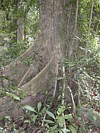
Generic name for a wide variety of sacred
tropical trees, usually with
many aerial roots that may develop into
additional trunks called aerial prop roots (fig.).
Its name often refers specifically to the species
Ficus bengalensis
or
Ficus indica,
and sometimes to Ficus
microcarpa, though the term has been generalized to include all figs that share
this unique life cycle, including also
Strangler Figs
(fig.),
and sometimes to other giant trees with wide branches.
The name banyan comes from the Gujarati word
bania, meaning ‘trader’ or ‘merchant’, and refers to the Indian
merchants that would meet underneath this tree to conduct their
business and sell their goods, as it provided a shaded place.
In
Hinduism,
it is
the tree under which the god
Vishnu
was born,
and in
Buddhism
it is
known as the tree under which the
Buddha
stayed for seven days, after
gaining
Enlightenment.
Hence, it
is often confused
with
the
bodhi
tree, the tree under which the Buddha sat at the moment he attained
bodhiyan or Enlightenment.
In mythology, the ogre
Alavaka lived in
a banyan tree.
In Thailand, the base of a banyan tree is also used to dispose of
old or damaged
spirit houses
(fig.).
Due to its long, hanging aerial roots, it is sometimes nicknamed
bearded fig-tree. However, some large trees also referred to as
banyan trees, such as the
Giant Rain Tree in
Kanchanaburi
(fig.)
and the Giant Banyan Trees in
Pindaya
(fig.)
do not posses
aerial prop roots yet consists of
spectacular trees with a very wide crown made up of large and thick
branches that spread out over tens of meters from the trunk.
In Thai, the banyan
tree is known by the names nikhoratha (นิโครธ) and
ton sai,
though the latter is also an abbreviation used for ton sai yoi (ต้นไทรย้อย),
another species of banyan
tree
commonly
known as Weeping Fig (Ficus benjamina), for its drooping leaves and
many aerial roots.
See also
Nyaung Shwe
Chinese. ‘Mottled waxy skin cicada’. Chinese common name for a kind of Planthopper, i.e. an insect in the family Fulgoridae, that is found in China and which has the scientific designation Lycorma delicatula. Its forewings are light brown with black spots at the front and a diffuse black scaling at the rear. Its hind wings are reddish with black spots at the front and black with a white bar at the rear. Its abdomen is yellow with black bars, which is best observed on the underside. It has dark eyes with tiny orangey spots underneath them. In general, it may also be referred to as hua da jie and hua xi fu. In English, it is commonly known as Spotted Lanternfly. See also WILDLIFE PICTURES. 回
See Chinese Massage Balls. 回 Baoding Jiang Shen Qiu (保定健身球) Chinese. ‘Baoding healty body balls’. See Chinese Massage Balls. 回 Chinese. ‘Precious Canopy’. The name of a ceremonial umbrella or parasol, typically attached to a long pole and decorated with a tubular cloth fringe featuring elaborate embroidery. It serves as a symbol of royal authority and spiritual protection. Along with representing the power of a monarch, it also signifies spiritual authority and provides shelter for all living beings. It is typically used in Mahayana Buddhism and Taoism, where it is carried along with statues of deities in processions, or placed at their altars. 回
baoli (बावली) Hindi. ‘Stepped well’. A rectangular well surrounded by steps in India. The steps are traditionally cut from rock and the oldest date from around 200 AD. They were constructed to facilitate access to the ground water. Also known as bawdi (बावड़ी). Compare with ghat (fig.) and sra (fig.). 回 Chinese. Mandarin for the Thai-Hokkien name Po Seng Tai Te, a god of medicine worshiped in Chinese folk religion and Taoism (fig.). WATCH VIDEO. 回 Chinese. ‘Leopard Tail’ or ‘Panther Tail’. Name of a guardian of the Underworld in Chinese mythology. READ ON. 回 1. Khmer. An 11th century Khmer temple in Angkor, located to the northwest of Bayon (fig.) and belonging to the Angkor Thom (fig.) group of monuments. It consists of a three-tiered temple mountain and was built as the state temple of King Udayadityavarman II (1050-1066 AD) and dedicated to the Hindu god Shiva. It is the archetype of the Baphuon style. The temple with its tower intanct stood circa 50 meters tall on a near sqaure base of 100 by 120 meters. Being a royal temple, it adjoins the southern enclosure of the royal palace. 回 2. Khmer. The 11th century AD school of Khmer art and style of architecture from Angkor, of which in the latter the Baphuon temple is the archetype. 回 Term for a colonnade, portico or pavilion with columns, in Indian architecture. The term is said to mean ‘twelve pillars’ and thus seems to derive from the Hindi word baraha (बारह), i.e. ‘twelve’. 回 Thai. Name of a roof-top finial or spire ornament in Thai traditional architecture. In architectural terms, the barali is a tapering, often lotus- or bell-shaped ornament placed at the peak of a roof, gable, or tiered spire of sacred or royal buildings, such as temples, ubosot (fig.), and chedi (fig.). It typically sits beneath the chattra (fig.), the multi-tiered umbrella finial. Symbolically, the barali represents spiritual ascent and the link between the human and divine realms. It is often used alongside other roof ornaments such as haang hong (fig.), chofa (fig.), and chattra. It serves both aesthetic and symbolic functions as a marker of sanctity and spiritual elevation. Also transliterated baralih and baralee, and sometimes incorrectly romanised as balali, balalih or balalee. See also TRAVEL PICTURE. 回
Thai. ‘Merit’ or ‘virtue’. The term is often used in relation to the ten virtues that the Buddha embodied before attaining Enlightenment, and which are also known as totsabarami. Also transliterated baramih and baramee. 回 Man-made reservoir, basin or lake. This artificial body of water is a common element in the ancient architecture of the Khmer, and is believed to have had both practical and spiritual purposes. In spiritual sense, it was used for ritual bathing, akin to the Indian ghats (fig.), and symbolizes the oceans that surround Mount Meru, the centre of the universe in Hindu and Buddhist cosmology, and as such it surrounds major temple complexes, such as Angkor Wat in Cambodia, which initially was a Hindu temple, and Prasat Phanom Rung in Buriram. In practical sense, it was used to irrigate the fields and provide water for the local populace during the dry season, in Angkor Wat especially because the dimensions of the nearby Tonlé Sap Lake annually shrink up to five times its original size in this season. See also srah. 回
Common name for a shrub or small tree with the botanical name Malpighia emarginata and known in Thai as Cherrih Spen (เชอร์รีสเปน), i.e. ‘Spanish Cherry’ and Cherrih Thai (เชอร์รี่ไทย), i.e. ‘Thai Cherry’. The name is also used for its edible fruit and it is also commonly known by a variety of other names, such as West Indian Cherry and Wild Crape Myrtle. Its flowers typically have five pink petals that are usually slightly different in size, fringed and somewhat spatula-shaped, whereas the stamens are pale with yellow anthers. It bears green to bright red drupes that are divided into three indistinct lobes. These acid fruits are circa 2 centimeters in diameter (fig.), thin-skinned, juicy and high in Vitamin C. Despite its common name and the cherry-like appearance of its drupes, this shrub is not listed in the cherry family, but is a member of the tropical and subtropical Malpighiaceae family. 回
A species of wild goose with the binomial names Anser indicus and Eulabeia indica. It has a pale grey body plumage with some dark tan shades and a white head with two black horizontal bars on the back (fig.). Its throat and neck-sides are also white, but the front and back of the neck, as well as the wingtips, are seal brown. The bill, legs and feet are orange. The Bar-headed Goose is one of the world's highest flying birds. They regularly migrate over the Himalayas (fig.) and have been spotted in flight at altitudes of over 10,000 meters. Generally, Bar-headed Geese spend the winter in the wetlands of Pakistan, India, Assam and northern Myanmar, and are but rare winter visitors to Thailand. In Thai, it is called haan hua laai. 回
Common name for a small deer with the scientific name Muntiacus muntjak, though the name is often used generically for any deer of the genus Muntiacus. The common name is derived from the bark-like sound that it makes when sensing danger, and not for its habit of ripping bark off of trees. There are 15 subspecies, of which eleven are spread across Asia, with two species residing it Thailand, i.e. Common Barking Deer (Muntiacus muntjak), also known as Red or Indian Muntjac, and in Thai it is called keng, ih- keng (อีเก้ง) or faan (ฟาน); and the darker coloured Fea's Muntjac or Fea's Barking Deer (Muntiacus feae), in Thai named keng moh (เก้งหม้อ), keng dam (เก้งดำ) or faan dam (ฟานดำ). The Indian Muntjac specifically is widespread throughout Southern Asia and the subspecies most commonly found in Thailand has the Latin-scientific designation Muntiacus muntjak curvostylis. Muntiacus muntjak has short, orange-brownish hair, with milky markings, dark brown ears with creamy hair on the inside, and a dark brown V-shaped bar on the face, above the eyes. Muntiacus feae is similar but darker and brown in colour (fig.). Barking Deer are omnivorous, feeding on anything from grasses, leaves, bark, twigs, fruit and shoots, to eggs, small mammals and even carrion. They possess a set of elongated lower canines, that protrude from the sides of the mouth, like fangs (fig.), and are used for defense. Barking Deer are solitary animals. The only known White Barking Deer (fig.) in the world is of the genus Muntiacus muntjak and can be found at Bangkok's Dusit Zoo. This albino was donated to the zoo by Queen Sirikit on 14 June 2002 and is named Phet (เพชร), meaning ‘Diamond’. See also WILDLIFE PICTURES and THAI STAG'S ANTLERS. 回
A widely distributed species of owl, with the binomial name Tyto alba. Its underparts are whitish pale with a varying amount of tiny grayish buff speckles. Its head and upperparts are a mixture of golden-brown, buff and gray with fine black and white speckles. The tail is short and broad, the legs bare and long, and the claws long and curved. It has black eyes and a distinctive, heart-shaped facial disk. As usual for owls, the Barn Owl is nocturnal (fig.), yet it stands a good chance of being spotted, as it often becomes active shortly before dusk. It grows to an average height of around 34 centimeters. It is a common resident throughout Thailand and can be found roosting in caves on the hillsides or hunting over open areas and marshes, by flying low and slowly over the ground. It feeds mainly on rodents, as well as on small vertebrates, such as amphibians, reptiles and birds, and on large invertebrates. Also known as Common Barn Owl and in Thai called nok saek (นกแสก), named after its call. 回
Common name for a species of swallow (fig.), a passerine bird, with the scientific name Hirundo rustica. Adult males have bluish-black upperparts, off-white underparts, and a rufous forehead, chin and throat, which are separated from the off-white underparts by a broad dark bluish-black breast band. It is about 17 to 19 centimeters long, including the elongated outer tail feathers of the deeply forked tail. Its wings are curved and pointed. Females are similar in appearance to the males, but the tail streamers are shorter, the blue of the upperparts and breast band is less glossy, and the underparts more pale. Juveniles are browner and have a paler rufous face, and whiter underparts. They also lack the long tail streamers of the adults. It is the most widespread species of swallow in the world, with at least six known subspecies, including Hirundo rustica gutturalis (fig.), which is found in much of eastern and southern Asia, breeding from the central and eastern Himalayas (fig.) to Japan and Korea, whilst it winters across tropical Asia, from India and Sri Lanka to Indonesia and New Guinea. Another regional subspecies is Hirundo rustica tytleri, which has deep orange-red underparts and an incomplete breast band, as well as a longer tail. The latter subspecies breeds from central Siberia to northern Mongolia and winters from eastern Bengal, to Thailand and Malaysia. In Thai, the Barn swallow is called nok naang aen baan (นกนางแอ่นบ้าน). See also WILDLIFE PICTURES (1) and (2). 回
A species of owl with the binomial name Bubo sumatranus, found in Southeast Asia, including in Thailand, where it is named nok khao yai pan sumatra. It is has black eyes, an orange-yellow beak, barred ear-tufts, dark brown upperparts and heavy dark barring on its underparts. Its natural habitat is subtropical or tropical moist lowland forests. Also called Malay Eagle Owl. 回
Common name for a species of small, up to 20.5 centimeter tall owl, with the binomial name Glaucidium radiatum. It is found in found from India southward to Sri Lanka, and eastward to Myanmar. It does not appear in Thailand, but is similar to the slightly larger Asian Barred Owlet (Glaucidium cuculoides), which may grow up to 23 centimeters tall and is found in northern South and northern Southeast Asia. Both the Barred Jungle Owlet and the Asian Barred Owlet are also know by the name Barred Owlet, whereas the former is also called Jungle Owlet. Besides size, the difference between the two species consists of the Barred Jungle Owlet being more densely barred and being all-barred below. Besides this, the Barred Jungle Owlet has prominent dull rufous colouring on the flight feathers, as well as smaller white scapular markings. 回
Common name for a species of forest pheasant, with the scientific designation Syrmaticus humiae and also commonly known as Hume's Pheasant or Mrs. Hume's Pheasant The male is up to 90 centimeters long, with a chestnut plumage, a greyish-brown head with metallic bluish-grey neck feathers and a bar in the same colour at the shoulders, a yellowish bill, and bare red facial skin underneath a white supercilium. Furthermore, it has two white wingbars finely lined with black at the top, and a black and greyish-white scaled lower rump, and a long greyish-white tail that is barred with black and brown. The female is overall chestnut, with at certain places some paler and some darker brown markings. This rather rare pheasant lives in forested habitats in China, India, Myanmar and Thailand, and is known in Thai as kai fah haang laai khwaang (ไก่ฟ้าหางลายขวาง). Both the male and female Bar-tailed Pheasant appear on a Thai postage stamp released in 1988 (fig.) as part of a set of four postage stamps issued to publicize the project of the Wild Animals Conservation. 回 Latin. Architectural term for any substantial Christian church building, except for minor basilica typically a cathedral (fig.), which is richly decorated, usually longitudinal, aisled, and with mosaic floors and large windows (fig.). The Latin name come from the Greek basiliké (βασιλικὴ), meaning ‘royal’, and derives from the basiliké stoa (βασιλικὴ στοά), meaning the ‘royal stoa’, i.e. the tribunal chamber of a king. An example of a basilica in Southeast Asia is the Notre Dame Cathedral Basilica in Ho Chi Minh City (map). See also POSTAGE STAMP. 回
Sculpture or cast in low relief, with the figures projecting slightly from a flat background. In contrast, high relief sculptures have figures that are significantly raised from the background, often extending out by more than half their natural depth. These pieces create a more pronounced three-dimensional effect and can often be viewed from multiple angles. The opposite, i.e. a relief carved into the surface, creating a design recessed below the surrounding area, is known as an intaglio relief or sunken relief. 回
Mouse-like, nocturnal, flying mammal in the order Chiroptera. There are two types, i.e. Megabats (fig.), which include the Flying Foxes (fig.) and are usually fruit-eaters, and Microbats (fig.), which are mostly insectivores. With lots of limestone caves and plenty of insects, Thailand is something of a bat paradise, home to 92 bat species (fig.) from ten different families, including the Large Flying Fox (Pteropus vampyrus), the world's largest bat; several species of Horseshoe Bats (fig.); the Wrinkle-lipped Free-tailed Bat (Chaerephon plicata), and the Hog-nosed Bat or Bumblebee Bat (Craseonycteris thonglongyai), in Thai known as kahng kahw kitti, the world's smallest bat, with a weight of less than 2 grams. At nightfall Microbats fly out from the limestone caves (map - fig.) in which they live during the day, in order to hunt for insects during the night. They typically leave their dwelling place simultaneously in large flocks (WATCH VDO). Often birds of prey await them at the cave as they fly out (WATCH VDO). In China, the bat is a symbol for good luck, as the pronunciation of fu, the Chinese word for ‘bat’, is homophonous with (i.e. echoes the sound of the word) foo, which means ‘good luck’. It therefore often appears in Chinese iconography as an auspicious sign, e.g. it is held by Zhong Kui, a powerful vanquisher of ghosts and demons (fig.), and the god Fu (Hok) is symbolized as a bat. It also appears in architecture, often above or on doorways (fig.), to wish good luck to those who enter or leave (fig.), as well as in art (fig.) and on furniture (fig.), both in its natural form and stylized as a logo (fig.). When five bats are displayed together (fig.) they stand for fortune, longevity, good health, love and death of natural causes (fig.). It may also be depicted with a yasui qian (fig.), i.e. a stringed ancient Chinese fang kong qian coin (fig.) in the mouth (fig.). Thus, bats are believed to bring happiness and peace into one's life. The Long Corridor (fig.) in the Beijing Summer Palace (fig.) is made in the form of bat's wings and among its rich decorations are plenty of bat figures, including on the painted ends (fig.) of the inclined roof support beams (fig.), inside the gazebos and on the roof fittings (fig.). In Thai, bats are called kahng kahw. See also THEMATIC STREET LIGHTS (1), (2), (3), (4), (5) and (6). 回
Indonesian term for, usually cotton, textiles painted with patterns in which the parts that need no colouring, are being covered with paraffin wax, made from dammar, or beeswax (fig.). The wax lines and dots are made either with a pen-like tool called a canting or by a copper stamping tool which is dipped into a pan of hot wax and pressed onto the fabric. On thicker fabrics the waxing is carried out on both sides. After the material has been painted or dyed, the layer of wax is removed through boiling. The parts that were covered in wax resisted the dye and remain in the original colour. This process (fig.) may be repeated to obtain a multi-colour design. Batik is known to exist throughout South, East and Southeast Asia, but it was on the Indonesian island of Java where it first emerged. When in the beginning of the 17th century the Dutch set up a permanent trading post in Banten, West Java, batik was also introduced to Europe. The term batik is believed to be a compound word that derived from the Javanese words amba and titik, meaning ‘to write’ and ‘to dot’ respectively. But also a Malay influence is often mentioned and the word amba may therefore perhaps refer to the Malay word ambah which means a ‘trade’ or ‘handicraft’. 回
Name of a genus of giant, hand-sized spiders, with the scientific name Nephila antipodiana. Females are much larger than males and have a body length of about 3 centimeters, whereas males are only about 90 millimeters. The black legs of females have yellow joints and its abdomen is decorated with yellow spots, that are scattered in batik style, hence its name. It is similar, yet less common than the Golden Orb-web Spider (Nephila maculata - fig.). It is found in many parts of Southeast Asia and in Thai it is named maengmoom sih thong laai phah batik. 回
Khmer. ‘Lost Stick’. Name of a province and its capital city in northwestern Cambodia. The origin of its name is related to the legend of Neak Tah Dambang Kranhoung and was prviously tranliterated as Bat Dambang, and sometimes is today sometimes spelled and pronounced Battambong. 回 Latin. Small tropical tree with the Thai name chongkho. 回 Common name for a widespread weaverbird, which is fairly commonly distributed across South and Southeast Asia. READ ON. 回 Name of a historically important Burmese King and military leader. READ ON. 回 Bayinnaung Kyawhtin Nawrahta (ဘုရင့်နောင် ကျော်ထင်နော်ရထာ) Full name of the Burmese King Bayinnaung. 回 The northern tip of the Gulf of Thailand, South of Bangkok, at the estuary of the Chao Phraya River (fig.), and extending more or less from Sattahip in the East to Hua Hin in the West. It is home to a number of medium-sized to small yet often inhabited islands, such as Koh Si Chang (เกาะสีชัง - fig.), off the coast of Sri Racha; Koh Lahn (เกาะล้าน), i.e. ‘Million Island’ or ‘Bald Island’, which in English has been nicknamed Coral Island, off the coast of Pattaya (fig.); the pestle-shaped private island Koh Saak and its mortar or C-shaped sister island Koh Krok, meaning ‘Pestle Island’ and ‘Mortar Island’, also off the coast of Pattaya; and Koh Phai (เกาะไผ่), i.e. ‘Bamboo Island’, which is located about 14 kilometers to the West of Koh Lahn. The Bay of Bangkok is also known as the Bight of Bangkok, and in Thai it is called Ahw Krung Thep. 回 1. Khmer temple in Angkor Thom, constructed during the reign of King Jayavarman VII (fig.). The temple has 37 standing towers, most of them with four gigantic stone faces oriented to the cardinal points. It is believed from old maps and the outlay of the temple complex that there once used to be a total of 54 towers. It is disputed who the faces represent but they might be Lokesvara, the bodhisattva of compassion from Mahayana Buddhism, or perhaps a combination of Jayavarman VII and the Buddha. Bayon was the state-temple of Jayavarman VII and in many ways it represents the pinnacle of his massive building campaign. It somehow appears to be an architectural muddle. This is to some extent due to the fact that its gradual construction lasted for over a century. The temple features bas-reliefs on its exterior walls of the lower level and on the upper level where the stone faces are located. The ones on the southern wall contain scenes from the historical sea battle between the Khmer and the Cham (fig.). It is not clear whether this represents the Cham invasion of 1177 AD or a later battle in which the Khmer were victorious. Other carvings show revealing scenes from everyday life such as markets, birth, cockfighting, etc. See also varman and TRAVEL PICTURES (1), (2), (3), (4), (5), and (6), as well as MAP. 回
2. Khmer school of art from the late 12th to the early 13th centuries AD. 回 Abbreviation for ‘Buddhist Era’. The Theravada tradition claims that the Buddha's parinirvana occurred in the year 544 BC, marking the beginning of the Buddhist era in Burma, Sri Lanka and India. In Thailand, Laos and Cambodia the era begins on the first anniversary of that event, in 543 BC. It initially followed the irregular lunisolar system in which the months are based on the lunar calendar while the years are based on the solar cycle, a system that often required intercalations. To align the Thai system with the Gregorian calendar, it was on 23 February 1912 decreed by King Mongkutklao that the use of the Buddhist Era would in the future track the Thai solar calendar, and the harmonization officially started on 1 April 1912. In Thai Phuttasakkaraht. See also RE. 回 Common name for a beetle of the genus Cicindela, with the scientific designation Cicindela dorsalis, of which certain subspecies are found in Southeast Asia. It is stilt-legged and about 1.5 to 1.8 centimeters in length, with large compound eyes and vicious-looking jaws. The elytra are creamy white. Also known as Sandy Beach Tiger Beetle. 回
Name for an upright, stone block, which is placed in pairs, one on either side, at the entrance of traditional Chinese temples, courtyard houses and important folk mansions. They are also known as door pillows, made from marble or carved stone, and are placed on the outside of the threshold, though sometimes they are incorporated in the handrails of staircases (fig.). The surface of this architectural feature is usually carved with decorative patterns, often floral motifs or deity animals, such as lions or dragons, and they have the same purpose as the Imperial Guardian Lions in front of palace entrances (fig.), i.e. to greet and bless visitors, and to protect against evil. Besides this, they also reflect the majesty of the building and its owner. They are generally about half a meter tall and their shape indicated the occupation of the resident of the house, and with temples, the person or clan who financed its construction. Round or drum-shaped bearing stones indicated that the occupant had a military background, whereas square or book-shaped bearing stones meant that the occupant was a scholar or an official of some sort. 回
Another name for the Stump-tailed Macaque. 回 Beautiful Garden in the Cemetery See Susahn Tae Chew. 回 Balinese name for a dvarapala, i.e. a door guardian (fig.). They are usually depicted fierce-looking, with bulging eyes and holding a gada, i.e. a ‘club’. See also TRAVEL PICTURE (1) and (2). 回
A kind of checkered beetle in the family Cleridae and with the scientific name Trichodes apiarius. These beetles are overall black, with two reddish-orange bands on the elongated elytra, as well as two reddish-orange spots near the front of the elytra. Underneath the elytra, and visible on take off or in flight, the abdomen is brownish-orange. Bee Beetles are typically found on blossoms, where they prey on other insects that they actively hunt, but also feed on pollen. The females lay their eggs in the nests of solitary bees. After hatching the larva feeds first on the eggs or the young larvae of the bees, and later on the pollen reserve. It is similar in appearance to the Blister Beetle (fig.). 回
Name of a species of small
colourful birds (fig.)
in the family of Meropidae, of which Thailand hosts six varieties,
being the Blue-throated Bee-eater, Red-bearded Bee-eater,
Blue-bearded Bee-eater (fig.),
Little Green Bee-eater (fig.),
Blue-tailed Bee-eater (fig.)
and
Chestnut-headed Bee-eater (fig.).
They are predominantly
aerial insectivores (fig.)
feeding on flying insects whilst still on the wing, especially honey
bees and
wasps
which are caught in the air by sallies from an open perch.
Remarkably, they ignore flying insects once they have landed. Before
eating their prey, they remove its sting by repeatedly hitting it on
a hard surface. The
Little Green Bee-eater (fig.)
is quite common in India
(fig.)
and southern Nepal (fig.),
though also occurs in
Common name for any species of fly in the family Bombyliidae, which has several subfamilies and genera. In Thai, they are known as malaeng wan pheung. 回
Common name for a species of true ginger. READ ON. 回 See duang and malaeng pihk khaeng. 回 See Peking Opera. 回 See Phetcharatana Rachasuda. 回 Sanskrit. A flat circular stone below the amalaka (fig.) in the finial of a temple in North Indian style. 回 Thai. Name of the war elephant used by Prince Ramkhamhaeng of Sukhothai at age 19. In ca. 1256, Poh Khun Sahm Chon (สามชน), the ruler of Chot (ฉอด), raided Tak. When his father, Poh Khun Sri Intaratit (fig.) went to fight the aggressor, Khun Sahm Chon charged from the the opposite direction, causing his father’s men to flee in confusion. Ramkhamhaeng however, quickly mounted his elephant, pushed it ahead in front of the opponent's elephant and beat it. Khun Sahm Chon consequently fled. It was because of this incident that King Sri Intaratit named his son Phra Ramkhamhaeng (fig.), which means ‘Rama the Brave’. 回 Name today given to a bell from the reign of King Ramkhamhaeng and that is described on Inscription Nº 1. READ ON. 回 Malay name for the Donax grandis, a small, up to 3 meter high, dark green, bamboo-like plant which in Thai is known as ton khlum. 回 Cambodian. ‘Pool’. 回 See monitor lizard. 回 Common name for an evergreen vine in the family Acanthaceae, with the botanical name Thunbergia grandiflora, and with orchid-like flowers, that are bluish lilac in colour and measure about eight centimeters across, with a circa four centimeter long pale yellow tube inside. It is found in southern and eastern Asia, from India to China and across Southeast Asia. This creeper can grow to around 20 meters long. Other common names include Blue Trumpet Vine, Clock Vine, Sky Flower and Sky Vine. In Thai, it is known as S(r)oi Inthanin (สร้อยอินทนิล), i.e. ‘Inthanin Necklace’, due to the similarity of its flowers, that grow as if on a chain. See also THEMATIC STREET LIGHT. 回
benjahngkhapradit (เบญจางคประดิษฐ์) Pali-Thai. A form of prostration in which five parts of the body, i.e. the head, hands and feet, touch the ground. See also kraab and aphiwaht. 回
Thai. Name of a public park in Bangkok's Khlong Toei (คลองเตย) District. READ ON. 回 See Wat Benjamabophit. 回 Benjamaraat Waranuson (เบญจมราชวรานุสรณ์) Thai. Name of a building in Wat Mahathat Yuwaraja Rangsarit (fig.) on Bangkok Rattanakosin Island and referred to in Thai as Ahkaan Benjamaraat Waranuson (fig.). Also transliterated Benchamarat Waranusorn. 回 Pali-Sanskrit-Thai. ‘Five Colours’. A type of enameled porcelain. READ ON. 回 Chinese name for a bamboo or wicker scoop, similar to the Thai bungkih (fig.) and used to transport fruit, vegetables, etc. Separately, the word ben (畚) refers to a basket or pan used to transport earth, whilst the word ji (箕) stands for a winnowing basket (fig.). 回
Japanese. ‘Box lunch’, i.e. a meal served in a box-shaped container, common in Japanese cuisine and reminiscent of the Burmese tea leaves bowl (fig.), which is known locally as laat hpaat khwat (fig.). The Thai term pintoh, a kind of lunch box consisting of a stack of typically three to five cylindrical containers (fig.), derives from it. The Japanese term itself is said to derive from the Chinese term bian dang (便當), meaning ‘convenient’ or ‘convenience’, and when imported into Japan, it via its initial transliteration in Ateji, became to be the current Japanese term. 回
Thai-Sanskrit. Demon daughter of Phiphek, the chief astrologer of Longka, and Drichada, in the Thai Ramakien (fig.). She has learned magical powers from her father, and with these she changes herself, at Totsakan's urging, into Sida. According to the plot she has to play dead near the monkey camp of Phra Ram, hoping that the latter would cease his quest for his beloved and end the battle against the demons. Benyagai visits the captured Sida to study her appearance (fig.) before changing herself into her. But, the plan fails nonetheless thanks to the sharp attentiveness of Hanuman, who notes that the alleged corpse, which was found at a river bank and apparently drowned, could not have floated to the location where it was found, as the demon's camp was in fact located downstream (fig.). Hence, Benyagai's deception is revealed and she is sent back to Longka. See also LIST OF RAMAKIEN CHARACTERS & NAMES. 回
Name for a kind of squirrel, with the scientific designation Menetes berdmorei. It has alternating brown and dark brown stripes on its back and is similar to the Himalayan Striped Squirrel (fig.). In Thai, it is known as kra-john (กระจ้อน). 回 Name of a museum in Bangkok's Chinatown. READ ON. 回 Malay, Generic name for ‘monkey’ and ‘macaque’, though in southern Thailand the word is also used specifically for the Southern Pig-tail Macaque (fig.), which is officially known in Thai as ling hang san. 回 The seed of the green to yellow-orange coloured fruit (fig.) of the areca palm (fig.). This acidulous seed is cut into pieces and mixed with lime paste, tobacco, and sometimes with spices for extra flavouring which is all wrapped in a glossy heart-shaped piper betel leaf called bai chaphlu (fig.) and slowly chewed on, releasing a mild stimulant. Note that the piper betel leaf is not botanically related to the betel palm which got its name only by association. The high fat seed contains alkaloids including areca, and tannins including a red colour named catechu. The tanning extracts improve the formation of saliva and the alkaloids have a stimulating effect. Catechu colours the saliva red and the substances in the seed speed up the functions of the heart and improve digestion. The lime is used as an agent that helps releasing the alkaloids. Furthermore evaporation via the skin is increased, the gums and palate are strengthened and possible intestinal worms are killed. A side effect however is that the teeth are coloured by a black lacquer-like substance (fig.). It is mainly used in less developed areas, such as among the hill tribes, who sometimes use leaves other than those of the piper betel (fig.), by older women in the Thai countryside, but also allover Myanmar, where it is widely on offer and usually prepared by the seller, who will wrap the ingredients in the leaf ready for chewing (fig.). In Thai, betel nut is called mahk. See also POSTAGE STAMPS (1), (2) and (3), and WATCH VIDEO (1) and (2). 回
A platter, plate or tray, often phaan-like with a pedestal (fig.), used as part of a betel set (fig.) and on which containers and tools used in the preparation of betel nut chewing, are placed (fig.). In Thai called yong. See also POSTAGE STAMPS (1), (2) and (3). 回 See areca palm. 回 Small containers usually with some instruments used to hold and prepare the ingredients for betel nut chewing, often on a stem-plate or tray with pedestal. The production of betel sets was very popular during the reign of Rama IV and Rama V, mainly in the northeastern provinces of Thailand, Maha Sarakham and Khon Kaen. A betel set was often donated as an offering to monks (fig.) and it was traditional for a groom to give the parents of the bride a betel set. Sets donated by the rich were often made from precious materials, such as silver, tropical hardwood inlayed with mother-of-pearl, bronze, etc., depending on the status of the donor. The ingredients for betel nut chewing are a piece of areca nut, a leaf of the betel palm and calcium carbonate lime paste. Amongst the instruments should be a cutter to slice the nut, which in Thai is called takrai nihb mahk (fig.) and a betel nut grinder, used to mash the ingredients. The betel nut in Malaysia is known as sirih or penang. In Thai khanmahk and chianmahk. See also POSTAGE STAMPS (1) and (2). 回
Thai. ‘Bored Not Descending’. Name of the fifth level in the series of seven falls of the Erawan Waterfall (fig.) at Erawan National Park (fig.) in Kanchanaburi Province. The rather strange name seems to suggest that this otherwise stunning place is somewhat boring when the water is not cascading, i.e. in the dry season. See MAP. 回
Thai general designation for giant ground spiders that live in burrows and which is usually translated as ‘tarantula’. READ ON. 回 Thai. ‘Black tarantula’. Local designation for a species of black tarantula (fig.), which is often used indiscriminately to refer to both the Thai black tarantula (Haplopelma minax), also known as beung dam thai, and the Thai zebra tarantula (Haplopelma albostriatum), also known as beung laai. See also beung. 回 Thai. ‘Thai black tarantula’. Name for the Haplopelma minax. See also beung dam and beung. 回 Thai. ‘Dark swamp’. Name of the provincial capital of the in 2011 newly created province (map) or jangwat of the same name. READ ON. 回 Thai. ‘Striped tarantula’. Name for the Thai zebra tarantula, Haplopelma albostriatum. See also beung dam and beung. 回 beung nahm ngeun (บึ้งน้ำเงิน) Thai. ‘Blue tarantula’. Name for the Cobalt Blue Tarantula, Haplopelma lividum. This eye-catching species of tarantula is endemic to Thailand. It has blue hairs on both its abdomen and legs, and is able to inject venom from its fangs. See also beung. 回
Bhad Gaule topi (भाद गाउले टोपी) Nepali name for a type of brimless hat (topi), which is part of the Newari national dress. It is completely black (fig.) and is worn especially by the Newa people of Nepal, i.e. the indigenous people of the Kathmandu Valley. It originates from the town of Bhaktapur (fig.), which is otherwise known as Bhadgaon (भादगाँउ), hence the name. Also known as Nepali topi, alongside the more colourful Dhaka topi (fig.). 回
Sanskrit. Name under which the followers of Shivaism from the 5th century AD in Cambodia worshiped the Hindu god Shiva. The king himself would bring honor to special ceremonies in which a sacred mountain was climbed at night and a rite was performed in which, according to rumours of Chinese inhabitants at Angkor, human sacrifices were also involved. 回 1. Sanskrit-Thai. Name of one of the eighteen arahats, who was a cousin of the Buddha and one of his great disciples. His Sanskrit name has many meanings, including ‘auspicious’, ‘kind’, ‘gracious’, ‘blessed’, ‘skillful’, etc. It is said that he was a proficient preacher, who could expound in clear and simple language. According to legend, he spread Buddhism to the East Indies, thus fording many rivers and crossing several seas, reportedly sailing from India to the island of Java. He is commonly portrayed with a beard and a sack on a stick, worn over his shoulder and in which he bears the sutras. In Thai, his name is pronounced Phatra, but he is also called Chatohloh (ชะโตโล). In Chinese, he is known as the luohan Guo Jiang (过江, or in traditional Chinese: 過江), literally ‘To Pass Through a Large River’. In English, he is referred to as the Oversea Lohan or the Arhat Who Crossed the River, a designation akin to the Jain leaders, who were called Tirthankara, meaning ‘ford-makers’ and a metaphor widely used for some exalted spiritual state. Bhadra is also known by the name Bodhidurma, a name reminiscent of Bodhidharma, as well as of the Sanskrit word Bauddhadharma (बौद्धधर्म) which means ‘Buddhism’, and a compound of bodhi meaning ‘perfect knowledge’, and druma (द्रुम) meaning ‘tree’, hence a bodhi tree. Some sources assert that this disciple was born underneath such a tree, the same as under which the Buddha attained Enlightenment, though it is likely that the name (also) is an allegory for his steadfastness in the Buddhist faith, like a tree (druma) of perfect knowledge (bodhi). Besides this, the Sanskrit name Bhadra is said to be a compound of bha and dra, with bha meaning ‘delusion’ or ‘maya’, and 'dra' being the Devanagari superlative maha. Hence, Bhadra can be translated to Hindi as Maha Maya. In Vietnam, he is called Qua Giang La Han (Quá Giang La Hán - fig.) and may be depicted seated on a mythical Rui Shi-like lion (fig.). 回
2. Sanskrit. Another name for Sumidha. 回 1. Sanskrit. ‘Blessed Kali’ or ‘auspicious Kali’. Hindu goddess who is the consort of Virabhadra, who was created along with her, and a gentle form of Kali. She arose from the wrath of Devi after Daksha, one of the sons of Brahma, mocked and dishonored a statue of Shiva, resulting in the suicide of Sati, another form of Devi. This daughter of Shiva was created from his third eye and liberated the world from the demon Daruka (fig.). This goddess is also referred to as Bhadrakali Amman, Kaliamman (fig.) or Kali Amman, especially in Tamil temples. See also Sri Mariamman. 回
2. Sanskrit. Tantric goddess who is the consort of Bhairava. 回 Sanskrit. ‘Auspicious seat’ or ‘blessed throne’. A rectangular pedestal for a deity, used in art. 回 Sanskrit. ‘Song of the divine Lord’, revealed by Krishna in the Mahabharata. Hindu religious text prescribing a moral and ethical code of behavior emphasizing the merit of selfless service and devotion. The text is in the form of a conversation between Krishna and Arjuna, taking place just before the battle of Kurukshetra. 回 Sanskrit. ‘Terrible’ or ‘gruesome’. The Hindu god Shiva in his more fearful appearance as a ten armed creature wearing a bone necklace, and a skull as a hair ornament. This fierce manifestation of Shiva is associated with annihilation. See also Mahakali (fig.). 回 Sanskrit. ‘Terror’. A goddess with evil and terrifying aspects, virtually indistinguishable from Kali, except for her particular identification as the consort of Bhairava. Due to her similarity with Kali, she is also associated with Devi, the consort of Shiva. Compare with Mahakali (fig.). 回 Bhaisajyaguru (भैषज्यगुरु, ไภษัชยคุรุ) Sanskrit-Thai. Name of a buddha from Mahayana Buddhism, who attained Enlightenment before the historical Sakyamuni Buddha, of whom he represents the healing aspect. He is therefore also known as the Master of Healing or Medicine Buddha (fig.). When he was still a bodhisattva he made twelve vows to always help all living beings to be free from illness once he would attain Enlightenment and thus became the embodiment of the wish to free all beings from all illnesses, both physically, mentally and spiritually. In Chinese tradition, he is often depicted together with the Sakyamuni and Amitabha Buddhas, a representation known as the Trikaya (fig.) or Trinity Buddhas (fig.). He is usually depicted seated, wearing monk's robes, holding a lapis-coloured jar of medicine nectar in his left hand, and with his right hand resting on his right knee, whilst holding some herbal plants, that represent healing (fig.). In Tibetan tradition, this buddha's hairline is sometimes painted blue to represent a peaceful manifestation. In Cambodia, he might be represented seated in the half lotus position, with both hands in his lap (as in the meditation pose pahng samahti), whilst holding a small jar with a tiered conical lid in the palm of his right hand, which contains medicine nectar and represents his healing aspect. His full name, Bhaisajyaguru Vaiduryaprabha, means ‘Medicine Guru Lapis Lazuli Light’ or ‘Medicine Teacher whose Light is that of Lapis Lazuli’. Lapis Lazuli is the name of a semi-precious stone of an intense blue colour and it refers here to Bhaisajyaguru's complexion which is dark blue (fig.). He is sometimes confused with Akshobhya (fig.), the buddha of the East and one of the five dhyani buddhas, who is also represented with a blue complexion. In China, he is called Yaoshi Fo (fig.). 回
Sanskrit. ‘Devotion’. A kind of worship in which one seeks unification with a personal god through intense devotion, thus hoping to free the soul. 回 Bhanubandhu Vongsevoradej (ภาณุพันธุ วงศ์วรเดช) See Bhanurangsi Savangwongse. 回 Bhanurangsi Savangwongse (ภาณุรังษี สว่างวงศ์)
Thai. A son of King
Rama IV and a
brother of King
Rama V, who is also known as Prince
Bhanubandhu Vongsevoradej.
Both names are here transcribed as they usually appear in English literature,
but are actually pronounced quite differently, i.e. Phanurangsih Sawaangwong (fig.)
and Phanuphanthu Wongworadet, respectively. The prince held the rank of Field
Marshal and during the reign of his brother, he was Commander-in-Chief of the
Royal Siamese Army (fig.).
He is however best remembered as the founder of the Thai postal service.
With the help of some his brothers, the
Prince wrote news about the court and had it published in a daily newspaper
titled Khao Rajakahn (ข่าวราชการ), literally
Bharadvaja (भारद्वाज, ภารัทวาช) 1. Sankrit-Thai. Name given to the arahat Pindola (fig.), leader of the Eighteen Arahats (fig.), often to distinguish him from one of the candidates for inclusion as the 17th or 18th arahat, who is also named Pindola. In the Sutta he is referred to as having a voice like the lion's roar. The Sanskrit name Bharadvaja, pronounced bhāradvāja and commonly spelled or transcribed Bharadvajo, Bharadwaja or Bharadhvaja, is said to mean ‘one bearing vigour’, and if so might rather be spelled Bharatvaja (भरत्वाज) and pronounced bharatvāja, a compound of bharat (भरत्) which derives from bharata (भरत) and means ‘to bear’, and vaja (वाज) meaning ‘vigour’. The name Bharadvaja is also used for another arahat, i.e. Kanaka Bharadvaja, as well as for one of the great sages (rishi) whose accomplishments are detailed in the Purana. However, though the name of the latter is usually pronounced bhāradvāja, the same as above, it may also be pronounced bharadvāja (भरद्वाज) which has a different spelling in Sanskrit. In Thai pronounced Pintohn Pharathawat. 回 1. Sankrit-Hindi. Name sometimes used for the Greater Coucal (fig.). 回 1. Sanskrit. The old and official name for India which derives from Bharat or Bharata. 回
2
1. Sanskrit.
‘Being maintained’. Half-brother of
Rama in the Indian epic
Ramayana.
2 A popular Javanese appearance of Shiva as a fat ascetic with a beard and plaited hair. His attributes can be a jar, rosary, or a fly whisk. At some stage worshiped in Java as the rishi Agastya. 回 Sanskrit. ‘Provider of life’. The female creator, one of the benevolent forms of Devi, consort to Shiva. 回 Pali. Term for a Buddhist monk who lives as an ascetic, without a dwelling place. An ordained Buddhist monk, a religious mendicant (fig.). In Sanskrit known as bhiksu. See also bintabaat. 回 Pali. Feminine form of a bhikku, a Buddhist nun. In Thailand they are called naang chi and mae chi, but are lay persons without official status. 回 Sanskrit. ‘Beggar’. Bhikku, the Pali word for a Buddhist monk, who lives as an ascetic, without a dwelling place, derives from it. 回 Sanskrit. ‘Dreadful’, ‘fearful’ or ‘terrible’. Important character and protagonist in the Indian epic Mahabarata, famous for his strength and bravery. He is the second son of Pandu and thus belongs to the tribe of the Pandavas. His mother is Kunti and his heavenly father is Vayu, the Vedic god of wind or air. He is of enormous size and involved in the battle of Kurukshetra. He is usually depicted carrying a club. He is also referred to as Bhimsena and in Indonesia, his story is known as Bhima Swarga. See also Wayubud. 回 Indonesian-Balinese. Name of the Balinese variant of Bhima, an episode of the Indian epic Mahabharata. READ ON. 回 Bhimsena (भीमसेन) Sanskrit. ‘Dreadful army’ or ‘fearful force’. Son of Vayu, the Vedic god of wind or air. An important character in the Indian epic the Mahabarata, famous for his strength and bravery. He is of vast size and usually depicted carrying a club. He is also called Bhima. 回 1. Sanskrit-Pali. ‘Earth’. 回 2. Term that refers to a horizontal molding running down the length of a shikhara, the spire of a North Indian temple. 回 Pali-Thai. ‘Goddess of the earth’. One of Vishnu's two consorts in Hindu mythology. In Buddhism the goddess of the earth is Mae Phra Thoranee. 回 See Bhumipon Adunyadet. 回 Bhumipol Adulyadej (ภูมิพลอดุลยเดช) See Bhumipon Adunyadet. 回 Bhumipon Adunyadet (ภูมิพลอดุลยเดช)
Ninth King of the
Chakri dynasty in Thailand,
with the crown title
Rama IX.
READ ON Pali. ‘Touching the earth’. The most common mudra (fig.) in Thai Buddhist sculpture, meaning ‘touching the earth’ and also known as maravijaya, ‘victory over Mara’. It symbolizes the episode in Buddha's legendary life story when he sat in meditation under a fig tree (fig.) in Bodh Gaya, and vowed not to move from the spot until he would have gained Enlightenment. Mara, the god of Desire and Death tried to interrupt by invoking a series of distractions and temptations, including young maidens. Reaching down to earth with his right hand (fig.), Buddha summoned the help of the earth goddess Mae Phra Thoranee, who rose to his aid, wringing water from her long hair and washing away Mara and his army. Buddha was hence saved from the temptation of desire whilst he called upon the earth to bear witness of his accumulated merits from former lives. Buddha images in Thailand usually make this mudra while seated in half lotus position (fig.), where as Buddha images in Burmese style are usually seated in (full) lotus position (fig.). In rare instances this mudra might be portrayed in combination with a pahng nahg prok position (fig.). A Buddha image in this pose is also used in the Phra prajam wan system as an additional image for those who do not know the day on which they were born. 回
Bhuridatta Chadok (ภูริทัตชาดก) Thai name for one of the ten jataka, i.e. life stories of the previous incarnations of the Buddha, in which the bodhisattva was born as Bhuridatta, Prince of the Nagas. READ ON. 回 Common name for a species of swallowtail butterfly, with the scientific name Bhutanitis lidderdalii. READ ON. 回 Bhutsaya Khiri Sri Suvarnabhumi (ปุษยคีรีศรีสุวรรณภูมิ) Thai. Name of a giant stone Buddha image in Suphanburi province that has been carved from natural rock at an abandoned quarry in the tambon and amphur of the same name, i.e. U-Thong, and that belongs to the nearby Buddhist temple Wat Khao Tham Thiam. The statue is also known as Luang Pho U Thong, whilst an alternative transliteration for Bhutsaya Khiri Sri Suvarnabhumi is Phutsayah Khiri Sri Suwannaphum, which is closer and more exact to the actual Thai pronunciation of the name. See also TRAVEL PICTURES, MAP, and WATCH VIDEO. 回
Chinese. Name for a circular disc-like artifact from ancient China, with a shape reminiscent of a flattened straight grinding wheel, i.e. a disc with hole in it, and usually made from jade or occasionally from glass, and reminiscent of the small circular jade tablets worn today as pendants (fig.). The earliest bi date back to the New Stone Age and were produced in the Liang Zhu civilization, that existed between 3400 and 2250 BC. Whereas the earliest bi are not bedecked, those of later periods are, often with a hexagonal pattern carved in its surface. The disc's round shape is associated with heaven, as in the ancient fang kong qian coins (fig.). Though the exact original function and meaning are unknown, it is acknowledged that bi were found in tombs, buried with the death of high social status, possibly as a symbol for heaven, and usually placed near the stomach and chest. Bi also remind of the smaller sized jade tablets, that in ancient China were sometimes placed in the mouth of deceased high officials and members of certain dynasties. The meaning of bi can also be derived from the structure of its Chinese character (璧), which is a compound of 𡰪 (with 尸, meaning ‘corpse’ + 口, meaning ‘mouth’, ‘gate’ or ‘entrance’); + 辛, which means ‘bitter’, but also represents the ‘8th heavenly stem’; + 玉, which means ‘jade’. Additionally, jade is associated with immortality and is believed by the Chinese to have the power to purify, and was hence perhaps placed on the dead in order to help purify their soles. See also jade tablet and cong. 回
1. Thai. Tropical mollusc with a bright shell, a cowrie. It was formerly used as money with an monetary unit equal to one-hundredth of an at. See also POSTAGE STAMPS (1) and (2). 回
2. Thai. A counter used in gambling. Compare with pih. 回 Chinese for ‘firecracker’. See also prathat fai. 回 Vietnamese. Name for a series of mountain pagodas dotted all along the flow of the Ngo Dong (Ngô Đồng) River in the Tam Coc scenic area of Ninh Binh (fig.) It is part of the Trang An eco-tourism area, which since 2014 is listed as a UNESCO World Heritage Site (fig.) under the name Trang An Scenic Landscape Complex and that also includes Hoa Lu and Chua Bai Dinh (fig.). It is often referred to as Tam Coc-Bich Dong. See MAP. 回
Common name for a species of coral reef-fish, with the scientific designation Labroides bicolor. READ ON. 回 Chinese for 'turtle'. See also gui and tao. 回 Name of a Chinese wealth god. READ ON. 回 Name of a venomous species of pit viper with the scientific names Cryptelytrops macrops and Trimeresurus macrops, that lives in Southeast Asia, including in Thailand, i.e. North of the Peninsula, Cambodia and southern Vietnam. This up to 72 centimeters long nocturnal snake is easy recognizable by its short, somewhat rounded, triangular head, with large yellow eyes. As with all pit vipers, it has heat-sensing organs, i.e. pits on the side of its head, located between its eye and nostril (fig.). Its head and body are green to bluish olive-green above with lighter on the abdomen, while its tail is reddish-brown, in Thai referred to as ‘burnt’. Although mostly arboreal, it can in the early hours of the morning be found on the ground, hunting for small animals. Sometimes spelled Big-eyed Pitviper and also known as Large-Eyed Pit Viper and Kramer's Pit Viper. In Thai it is called ngu khiaw hahng mai ta toh and ngu khiaw hahng mai sih makok. 回
Name of a semi-aquatic turtle, with the scientific name Platysternon megacephalum and found in China, Laos, Myanmar, Vietnam, and Thailand. As its name suggests, it has an enormous head, with a strong beak. The head is triangular in shape, but so large that it cannot be retracted in its shell for protection. Instead, its skull is solid bone and the top and sides of its head are covered with a large bony shield. Its powerful beak has a hooked upper jaw, which it uses to defend itself and sometimes as an aid to climbs trees. In addition, it has a remarkably long tail, which it uses for extra support when moving about on the bottom of streams, where it feeds on fish, snails and invertebrates. The big-headed Turtle is portrayed on one of a set of four Thai postage stamps issued in 2004, in order to publicize turtles and to promote their conservation (fig.). 回 Name of a Thai cultural event in which performers parade in the streets dressed in traditional clothes and wearing large human heads (fig.) with traditional hairstyles, both male and female, usually made from papier mâché. The heads often have red cheeks and young girls customary have hair that is tied in two tails, one on either side of the head, while young boys usually have a traditional topknot known as a juk (fig.). The festival coincides with the annual Songkraan Festival and is celebrated most famously in U-Thong, in Suphanburi Province. In Thai, it is called thetsakahn hua toh. 回
A farang nickname for Bangkok. It is a playful echo of New York's ‘Big Apple’, a term that originated in the 1920s jazz scene, symbolizing New York as a premier destination for musicians. Its roots, however, trace back to horse racing, where ‘Apple’ referred to large cash prizes. The phrase gained widespread popularity through journalist John J. Fitz Gerald in the 1930s, eventually becoming synonymous with New York’s vibrant culture and boundless opportunities. The term ‘Big Mango’ was coined as a lighthearted nod to this, linking Bangkok with its famed tropical fruit. It also draws from the Chinese name for Bangkok, Mangu (曼谷), due to its phonetic resemblance to both the English word mango and the Mandarin word for mango, mang guo (芒果). 回 Chinese. ‘Brush rack’ or ‘pen-holder’. Name for a frame or rack to hold Chinese writing brushes, called mao bi (fig.), or simply bi. The word is a compound of bi (笔), meaning ‘pen’, ‘pencil’, ‘writing brush’, ‘to write or compose’, ‘the strokes of a Chinese character’, ‘measure word for sums of money’, or ‘deals’; and jia (架), which translates as ‘frame’, ‘rack’, or ‘framework’. Traditional writing brush racks are often carved from wood and typically decorated with dragon heads. See also TRAVEL PICTURES. 回
An infection caused by small microscopic flatworm parasites that burrow through the skin. These move through the body via the blood towards the liver. There they produce eggs that travel further via the blood vessels and settle in the intestines and bladder where they cause serious abdominal pains. Swimming in contaminated water, eating poorly cooked fish or snails, as done by the local population, is the main cause of this infection, as the fish and snails are often carriers of this parasite. The region of Sakon Nakhon in Northeast Thailand is known as the place with the most registered cases of bilharzia in the world. 回 Bimba (बिम्ब/बिंब) Wife of prince Siddhartha, with whom he had his son Rahula at the age of twenty nine. She was the daughter of Suprabuddha, prince of Devadaha castle and a brother of the deceased queen Maha Maya. Also known as Gopa and Yashodhara. 回 Hindi-Sanskrit. A ‘dot’ or ‘drop’. Traditional decoration worn by Hindu women in the Indian Subcontinent and Southeast Asia. The word is derived from the Sanskrit word bindu, meaning a ‘point’ or ‘dot’, but also a ‘drop’. It refers to a kind of tilaka in the form of a dot applied between the eyebrows or on the forehead of Hindu women. In southern India, girls choose to wear a bindi, while in other parts of India it represents their marital status, i.e. a red dot is worn by married women and a black dot is worn by single girls. Applying the red dot is a tradition that derived from ancient Aryan society (fig.), when the groom used to apply a drop (bindu) of his blood on the dividing part of the hair of his bride (fig.), as seal and recognition of the matrimony (fig.). The vermilion dot symbolizes the drop of blood, as well as being a symbol of love and the end of virginity, and is traditionally –like the vermillion applied on the hairline (fig.)– made of a orange-red powder (fig.) called sindura, whereas the black dot is believed to ward off evil spirits. Nowadays, often prefab stickers are used (fig.), that replace the original bindi dot made with sindura and occasionally also other colours are used, even for married woman, usually a colour that is regarded as more fashionable (fig.). 回
1. Sanskrit. A ‘point’ or ‘dot’, but also a ‘drop’. It may refer to a kind of tilaka, in the form of a dot applied between the eyebrows or on the forehead of Hindu women, a custom nowadays usually called bindi. 回 2. Sanskrit. A ‘point’, ‘dot’ or ‘drop’. An aspect of the anatomy, also known as bindu chakra (‘circle of drops’), located at the back of the head, in the part where brahmins grow a small tuft of hair called codhumbi (fig.). It is believed that there a fluid is produced, composed of ‘drops’ which can become either amrita, the elixir of immortality, or the poison of death. 回 3. Sanskrit. A ‘point’, ‘dot’ or ‘drop’. The word bindu appears in the term chandrabindu, meaning ‘moon-dot’ (fig.), the name of a stroke (ँ) which is sometimes written above the top-line of vowels of the Devanagari script in order to nasalize their sound. 回 bintabaat (บิณฑบาต, บิณฑบาตร, ບິນທະບາດ) Thai-Lao. ‘To beg with an alms bowl’, a word referring to the alms begging round of Buddhist monks. READ ON. 回 See Asian Bearcat. 回 Chinese for ‘water chestnut’, in Thai known as somwang. 回 Name for a tropical and subtropical vine with the botanical name Momordica charantia and belonging to the family Cucurbitaceae. Its edible fruit is widely used in Asian cuisine as well as in Asian traditional medicine and its taste is among the most bitter of all vegetables. In Thai it has many different names depending on the region, but generally it is called ma-ra khee nok (มะระขี้นก) which literally means ‘bird droppings gourd’ or ma-ra lek (มะระเล็ก) meaning ‘small gourd’. In the North it is called phak hai (ผักไห่), ma hai (มะไห่), manoi (มะนอย), mahuay (มะห่วย) or phak sai (ผักไซ), is Mae Hong Son the Karen people call it suphasu (สุพะซู) or suphadeh (สุพะเด), in Central Thailand it is known as maroi roo (มะร้อยรู), in Songkhla as phak hey (ผักเหย), in Nakhon Sri Thammarat as phakhai (ผักไห), in the South as ra (ระ), and in Isaan as phak sa-lai (ผักสะไล) or phak sai (ผักไส่). Other names in English include balsam apple, balsam pear, bitter cucumber, bitter melon, carilla fruit, and in China it is known as ku gua (苦瓜) which is close to the southern Vietnamese dialect khổ qua, and in some places lai gua (癞瓜). Larger bitter gourds are in Thai is called ma-ra (มะระ), or ma-ra jihn (มะระจีน) which means ‘Chinese gourd’ (fig.), but many languages make no distinction between the two kinds. In English the smaller ones are sometimes called tiny bitter gourds. 回
Chinese. ‘Gigantic strength’. A stone tortoise in the form of a pedestal supporting a stele, initially used in funerary complexes of Chinese dignitaries, though later also to commemorate important events. It is believed by some that the tradition of using a tortoise as a pedestal may have derived from the Hindu legend of the Churning of the Ocean of Milk (fig.), in which Vishnu incarnated in the avatar of a tortoise and supported Mt. Meru with its shell (fig.). This idea could be supported by the meaning of the name Bi Xi, i.e. being capable to support great weight. Also known as Gui Fu (龟趺) and Ba Xia (霸下), which translates as ‘sitting tortoise’ and ‘under rule by might’, respectively. In English called Turtle Stele. 回
Chinese. ‘To ward off evil’. Besides bì, the first word can also be pronounced mi˘, pì, or pī, whilst xié, the second word, can also be pronounced xú, yá, yé, yú, or shé. Due to this Bi Xie is also transcribed Pi Xie and Pi Xu, whereas in Thai-Tae Chew it is called phisiw. Bi Xie is the name of a fierce but auspicious creature from Chinese mythology that resembles a winged lion. There is an ancient myth that tells the creature violated a celestial law and was consequently punished by the Jade Emperor by restricting its diet to gold. Besides this, he also prevented the creature from defecating, by sealing its anus. Thus it started a quest for the hard to get gold for survival. Since it can only absorb gold, but not expel it, Bi Xie is seen as a symbol of the acquisition and preservation of wealth. There are different types of Bi Xie: one without horns, the others with either one (fig.) or two horns. The one with one horn is also called Pi Chen or Tian Lu (天祿) and is in charge of wealth (fig.). The one with two horns is often depicted with hooves rather than paws, and is considered to ward off evil (fig.). Though in origin Chinese, Bi Xie has also invaded Thai culture, where it has taken on its own distinctive form (fig.). See also Rui Shi (fig.). 回
Common name for a flowering plant with the botanical name Tacca chantrieri. READ ON. 回 Common name for a species of insectivorous sac-winged or sheath-tailed bat in the family Emballonuridae and with the scientific designation Taphozous melanopogon. This widespread species ranges from the Indian subcontinent through mainland Southeast Asia and southern China, to Sumatra, Java and Borneo, and generally lives in colonies that roost in the better-illuminated areas of caves and rock crevices, such as cave entryways. It has a body length of around 9 to 10 centimeters, including the head, and a free slender tail which is up to 2.4 centimeters long, while its wingspan is between 37 to 40 centimeters. Its fur is pale buff to greyish-brown, while males also have a dark elongated patch on the throat. In Thai known as kahng kahw pihk thung khrao dam (ค้างคาวปีกถุงเคราดำ). 回
Name of a commonly found species of dragonfly, native to South, East and Southeast Asia. It has the scientific name Orthetrum pruinosum and belongs to the family Libellulidae. Males (fig.) have a red abdomen, a very dark grayish brown to black body, and greenish blue eyes. Its wings are transparent, with dark veins and a dark brown spot near the wing tips. Black-bodied Skimmers are sexually dimorphic and females (fig.) have a golden-yellow abdomen, ringed with grayish black, a dark grayish to black body with a yellow dorsal stripe and dark, greenish gray eyes. In Thai it is called malaeng poh ban sih mon thong daeng. 回
Name of a species of barbet , with the binomial name Megalaima oorti. It is between 21.5 to 23.5 centimeters tall and mainly green, apart from the head, which is green patterned with black, blue, yellow and red. In Manadarin, this bird is called wu se niao (五色鳥), meaning ‘five-coloured bird’, referring to these colours, and in Taiwan, this bird is allegedly nicknamed the ‘spotted monk of the forest’, referring to its call, which resembles the sound of a muyu, a wooden bell-like percussion instrument used by monks in Mahayana Buddhism. 回
Common name for a species of antelope found in India, which has been given the scientific designation Antilope cervicapra. It is the swiftest of all Indian antelopes and by many also considered the most beautiful. Whereas females have fawn upperparts, males are brown to dark brow above, and become black with age. All have a white underside, muzzle and eyering, while the legs are white on the inside and brown on the outside. Adult males wear extensive horns, that can grow up to 68 centimeters, which are ringed at the base and then spiral up to 5 turns (fig.). When alarmed, this slender antelope dashes off in quick bounds and then breaks into a graceful gallop (fig.). Its habitat being open plains, the Blackbuck was more vulnerable to hunting than other animals, and hence was once all but wiped out from India. Today, this near-threatened animal survives in protected areas. The Blackbuck grazes on grasses, including cereal crops. In Hindu mythology, the Blackbuck is the vahana of the lunar god Chandra and is believed to bestow prosperity to the areas where it dwells. In Thai, this animal is known as lamang dam, which translates as ‘black antelope’, a name also used in Thai for a kind of black stag beetle. See also WILDLIFE PICTURES (1) (2). 回
A species of passerine bird in the Bulbul family, which is listed under the scientific names Hypsipetes leucocephalus and Hypsipetes madagascariensis. It is about 25 centimeters in length, with a broad, long tail, of which the outer feathers are slightly curved outwards. Its plumage is all-black to slant grey, though two wintering subspecies have a white head (fig.) in adult plumage, of which one also has a white upper breast. It has a black, fluffy crest and its beak, legs and feet are reddish. Sexes are similar in plumage, but young birds lack the fluffy crest. It is found in South, East and Southeast Asia and in Thailand it is mostly restricted to the montane forests of the North and West, where it is a common resident, though winter visitors are reported to also reach Isaan. Also known as the Himalayan Black Bulbul and in Thai called nok parod dam. 回
Name of a bird with the binomial name Halcyon pileata. It is a kind of tree or wood kingfisher in the family Halcyonidae, which is widely distributed in tropical Asia, from the Indian subcontinent to China and Southeast Asia. It is a common species on coastal waters, especially in mangrove forests, as well as in various inland freshwaters and coastal wetlands, where it hunts for fish and frogs. The sides of its head and its crown are black, whilst its collar, throat and breast are white. Its bill is red and its legs and feet are dark orange. Its underparts are orange-buff, while the upperparts are mainly deep blue, with mostly black wing-coverts and a whitish wing-patch. In Thailand it is a common winter visitor and known by the name nok kra-ten hua dam. 回
Name of a bird with the scientific name Gracupica nigricollis or Sturnus nigricollis. It is found all over Thailand and in Thai it is known as nok king krohng ko dam (นกกิ้งโครงคอดำ) or nok ihyang krohng ko dam (นกเอี้ยงโครงคอดำ). It is a species of starling in the Sturnidae family and is outside Thailand also found in Brunei, Cambodia, China, Laos, Myanmar and Vietnam. Its natural habitat is subtropical or tropical dry forests, as well as urban, cultivated and deforested areas. They are very common throughout Thailand (fig.), except in the extreme South. They love dwelling on the ground and in the wild they are often seen in pairs (fig.). It has a grey-brown back and a white head with a black neck collar. It has a white rump and tail tip, pale yellow-grey legs and bare skin patches of a similar colour below the eyes (fig.). WATCH VIDEO. 回
Name of a medium-sized, passerine bird with the scientific name Pycnonotus melanicterus and which is found throughout Southeast Asia (fig.). It has olive upperparts and brilliant yellow or olive-yellow underparts, whilst there is only a tinge of yellow on the wings, and none on the relatively long tail, which is actually grey on the underside. It has white eyes that stand out on a glossy black head with a prominent crest and a black beak (fig.). The legs are dark grey. Sexes are similar in plumage, but juveniles are duller. There are several subspecies and the local subspecies, which is mostly found in the eastern provinces, has a red throat patch. This is a bird of forest and dense scrub, that feeds on fruit and insects. In Thai this bird is named nok parod leuang hua juk, meaning ‘yellow juk-headed bulbul’. See also WILDLIFE PICTURE. 回
Common name for an approximately 61-64 centimeters high, long-legged wading bird with the scientific designation Nycticorax nycticorax. This species is gregarious and largely nocturnal, except during the breeding season. Nycticorax actually means ‘night raven’ and like its common name, refers to this species' nocturnal habits, but also to its harsh crow-like call, which sounds somewhere between the call of a duck and a barking puppy. It has a distinctive dark bluish grey to black back and crown, and pale grey wings. Its underparts are greyish white-buff and its legs pale yellow. Its has red eyes and breeding adults (fig.) sometimes have 1-8 slender, long, white, occipital breeding plumes, hanging from the back of the head. Immature birds are brown, speckled with white and grey. These birds primarily feed on small fish, frogs, crustaceans and aquatic insects, but are known to also eat small mammals, as well as the eggs and young of other birds. They are patient hunters and often stand still at the water's edge, waiting to ambush prey that passes by, mostly at night. During the day they rest in trees or bushes. It is a common resident in the central plains of Thailand and a winter visitor in some other areas. Preferred habitats include swamps, rivers, streams, mud flats, marshes and the edges of lakes that have become overgrown with rushes. In Thai it is named nok khwaek. 回
Common name for a 28 centimeters tall passerine bird with the scientific designation Dicrurus macrocercus. It is a common resident breeder in much of tropical southern Asia, from Iran through to southern China and Indonesia. It is entirely glossy black with a distinctive 11 centimeters long, deeply forked tail (fig.). Sexes are identical, but first winter immature birds have brownish-black wings and diffuse greyish scaling on the fringes, lower breast, belly and rump, which near the vent becomes lighter in colour and may form whitish patches (fig.). The species is famous for its aggressive behaviour towards much larger birds that invade its territory, thus providing a safe haven for smaller birds that like to nest in its area. It feeds primarily on insects and frequently associates with cattle from which it picks parasites. It is commonly found in the wild (fig.), especially perching along telephone wires and power lines. Also known as King Crow (fig.) and in Thai called nok saeng saew haang pla, meaning ‘fish-tailed drongo’. See also WILDLIFE PICTURES. 回
Common name of one of eleven known bees in the genus Apis (honeybees). It is a very small-sized species of bee, which makes small, single comb nests. It has the scientific name Apis andreniformis, and is one of two species placed in the subgenus Micrapis (dwarf honeybees), the other one being the Red Dwarf Honeybee (Apis florea - fig.). Apis andreniformis has only recently been recognized as a species in its own right and was until 1991 listed along with Apis florea. It has been identified in India, Southeast Asia, Borneo, the Philippines (Palawan) and the southern Chinese peninsula, but may also occur elsewhere, where it was previously recorded as Apis florea. 回
Name of a 70 to 80 centimeter large bird of prey, with the scientific name Ictinaetus malayensis. READ ON. 回 Common name for a subspecies of the Black Kite (fig.), with the scientific name Milvus migrans lineatus. READ ON. 回 Common name for a species of leaf monkey in the Cercopithecidae family, with the scientific name Presbytis entellus, and found in India. It has a light greyish-buff fur, black hands and black facial skin, and a long tail − almost twice the size of its body (fig.). This species is also commonly known as Common Langur, Gray Langur or Grey Langur, and Hanuman Langur. See also WILDLIFE PICTURES. 回
Common name for a species of spittle bug, with the scientific name Callitetrix versicolor and belonging to the family Cercopidae, the largest family of froghoppers (fig.), named after the fact that in the nymphal stage, these insects fabricate a cover of frothed-up foam produced from plant sap, which resembles saliva and is referred to as frog spit (fig.). The Black Froghopper is overall black in colour with four white dots on the anterior part of its wings and four red spots towards the posterior part of the wings. In Thai, it is known as phlia kradohd dam jud khao daeng (เพลี้ยกระโดดดำจุดขาวแดง) or simply phlia kradohd dam (เพลี้ยกระโดดดำ). 回
A large species of rodent found in large parts of South, East and Southeast Asia, including China, India, Indonesia, and Thailand. It is one of four Asian species of Giant Squirrel, of which only two occur in the region, i.e. the Black Giant Squirrel, known by the binomial name Ratufa bicolor, and the Pale Giant Squirrel, also known as Cream-coloured Giant Squirrel or Sunda Giant Squirrel, which has the scientific name Ratufa affinis. The Black Giant Squirrel can grow up to one meter long and is almost entirely black, with the exception of the throat, the cheeks and sometimes also the belly, which are a pale yellowish orange. It has a large black tail, at least the size of its own body length (fig.). It is found mainly in the forest canopy, where it feeds on fruit, seeds and some leaves. In Thai it is called phaya krarok dam, literally ‘black squirrel king’. 回
Name of a medium-sized, fruit-eating bird with the scientific name Pycnonotus atriceps and which is found throughout Southeast Asia. It has a predominantly yellow to greyish olive plumage with a glossy bluish black head, blue eyes, a black beak, a broad black tail with a yellow tip and grey legs. There is also a greener variant, in which the olive-green colour of the breast and upper mantle is extended towards the belly, lower mantle and uppertail (fig.). In the wild often occur in small flocks, looking for fruiting trees in the forest. In Thai this passerine bird is named nok parod thong, meaning ‘golden bulbul’. 回
Common name for a small beetle with an elongated body and overall black in collour, with heavy serrated antenna, and a deep blood red thorax and elytra of the same colour. It has the scientific designation Pyrochroa coccinea and belongs to the family Pyrochroidae, i.e. the so-called ‘fire-coloured’ beetles. 回
Common name for a medium-sized gull, with the scientific designation Larus ridibundus and belonging to the family Laridae. Black-headed Gulls inhabits coasts, rivers and lakes, are gregarious, and often mix with Brown-headed Gulls (fig.), a similar yet somewhat larger species, with a body size of around 42 centimeters, against the 36 centimeters for adult Black-headed Gulls. The adult breeding plumage is white with light grey upperparts, a black head and black wing tips, and a white eye ring. Outside the breeding season the black hood of the head is reduced to two pale grey bars with a darker ear patch (fig.), and first year juveniles are similar to adults in non-breeding plumage, but with brownish colouring on the wings and black tail bars (fig.). See also THEMATIC STREET LIGHT. 回
Common name for a species of wading bird, with the scientific name Threskiornis melanocephalus, which belongs to the ibis family Threskiornithidae. It is found in South, East, and Southeast Asia, and occurs in inland mudflats, marshy wetlands (fig.), as well as near coastal areas, including mangroves. It is mainly white, with a bare, black head, neck, bill and legs. in flight, reddish skin shows through the underwing-coverts. In the breading season, adults have a yellowish-buff wash on the scapulars, mantle and breast, and a greyish wash on the tertials, which are longer than in the non-breading plumage, as well as white breeding plumes that extend from the lower neck (fig.). In Thai, it is known as nok chon hoi khao (นกช้อนหอยขาว), i.e. ‘white mollusk lifting bird’. See also WILDLIFE PICTURES. 回
Common name for an endangered species of leaf monkey, found only in southern China, though originally from northern Vietnam, from where it in the past migrated and where it is now extinct. With an estimated 800 animals found in the wild, they top the list of endangered species. It has an all-black fur, apart from a white moustache-like stripe above that extends to the cheeks. It is related to the White-headed Langur, a subspecies of the Black-headed Langur, with an all-black fur and an all-white head, that lives to the South of the former's territory, divided only by a river. 回 Common name for a species of bird with the binomial name Picus erythropygius. READ ON. 回 Name of a passerine bird, with the scientific name Oriolus xanthornus and found throughout South Asia. Males are bright to golden-yellow with a pinkish beak, grey legs, black wing tips and black tail feathers on the upperside, and are easily recognized by their black head and throat. Sometimes the black colour doesn't completely cover the hood, leaving the nape yellow (fig.). Females (fig.) similarly have the black hood, but their lower mantle to rump is washed olive, whereas the lower mantle of males is largely black. Overall, females are of a duller colour. Juveniles are also duller and have a whitish throat with blackish streaks, that change into yellow with fading blackish streaks on the breast. In addition, they have a yellowish-white orbital ring, a black-streaked yellowish forehead, and an olive-streaked crown. Their bill is blackish and their wing markings are generally fainter (fig.). The Black-hooded Oriole's natural habitat includes open woodlands, mangrove and cultivated areas, where it prefers the foliage of trees. It feeds on insects, fruit, berries and flower nectar. In Thai it is called nok khamin hua dam yai, literally ‘large, black-headed canary’. It is sometimes confused with the Dark-throated Oriole. 回
A species of hornbill, with the scientific name Anthracoceros malayanus. With a length of 76 centimeters it is medium-sized. Fully developed males have a mainly black plumage, a blackish facial skin, white outer-tail tips on the underside, and a plain yellowish-white bill and casque (fig.). Adult females are also black, with white outer-tail tips, especially visible on the underside (fig.), and a blackish bill and casque, which is somewhat smaller than that of adult males. They also have a pinkish red sub-moustachial patch and pinkish red orbital skin. There also exists a variant which has a broad, greyish white supercilium, that runs downward to the back of the neck (fig.). The Black Hornbill rather uncommon and is found in lowland primary forests, in Malaysia, Indonesia and Brunei. Though rare, it also occurs in southern Thailand. Its diet consists of fruit, grasshoppers, locusts, small reptiles and amphibians. Also known as Asian Black Hornbill and in Thai as nok ngeuak dam. 回
Common name for a medium-sized bird of prey, with the scientific name Milvus migrans. READ ON. 回 A subgroup of the Lahu people who are again divided into two clans, that are distinguished by different languages and traditions, one of which is known as Lahu Shehleh and the other as Lahu Na. The male dress consists of black culottes (fig.). The women wear a long black silk-like gown, trimmed with white and has sleeves with coloured bands, that indicate which tribe they belong to. They are also called Lahu Na and Mussur Dam. MORE ON THIS. 回
Common name for a species of seabird, with the scientific name Rissa tridactyla and belonging to the gull family Laridae. Adults are between 37 and 42 centimeters in length and with a wingspan of about one meter. Non-breeding adults of the subspecies Rissa tridactyla pollicaris, one of two existing races and the one which is prevalent in the northern Pacific and thus in Thailand, have relatively dark grey upperparts and upperwings, a grey nape and a vertical blackish bar behind the eye. The bill is yellow and despite its name, the legs and feet may vary in colour from dark brown to black or even tinged reddish to pinkish. The slightly notched tail is white. Its breeding plumage is the same, apart from the head which is all white. Yet, first winter plumage differs from the non-breeding adult by a black the tail tip, bill and nape, whilst its outer-primaries are broadly black and there is a black diagonal band across the coverts. In Thai, it is called nok kittiwehk kha dam. 回
Common name for a species of passerine bird in the Paridae family, with the scientific name Parus xanthogenys. Adults have a bright yellow upper body, faint olive-yellowish lower body, and a bright yellow head with a large black crest, that has a narrow bright yellow line that runs upwards along the back edge of the crest. It has a black bib that extends all the way down across the belly to the vent, as well as a black lores and a black posterior eye-stripe that ends in a black neck-patch. Its upperparts are greyish-olive, with a white bar on the lower part of the wings. The bill is black and the legs and feet are yellowish-grey. It is similar to the Yellow-cheeked Tit (fig.), but with black lores and a broader and more prominent eye-stripe. See also WILDLIFE PICTURES. 回
Common name of a medium-sized, black, freshwater turtle, with the scientific designation Siebenrockiella crassicollis. Juveniles are notably different from adults. Whereas adults have a single keel on the carapace and serrated posterior margins, juveniles may show three keels and have smooth margins. Adult males also have a comparatively longer and thicker tail, and a slightly concave plastron. Additionally, adult females retain the pale yellow to white patches on the head, while these markings fade away with growth in males, and the front legs of both sexes bear some enlarged scales. They are omnivores, feeding on frogs, freshwater prawns, worms and snails, as well as carrion. Black Marsh Turtles grow to about 20 centimeters. Its natural habitat consists of soft-bottomed, heavily vegetated, shallow bodies of slow-moving or stagnant waters in low elevations, such as marshes, ponds, canals, ditches, streams and lakes, where it spends most of its time at the bottom of the water or buried in the mud. Because of this it is rarely seen, though it is one of the more abundant species in the region. It is often kept around temples in Asia. It is also known as Malaysian Black Mud Turtle, Borneo Black Mud Turtle, Black Terrapin and Smiling Terrapin, due to its jaw line, which is curved upwardly into a permanent smile. In Thai it is called tao dam, meaning ‘black turtle’, and alternatively tao kaem khao, which translates as ‘white-cheeked turtle’. 回
Common name of a species of monarch flycatcher, which is also commonly known as Black-naped Monarch, and with the binomial designation Hypothymis azurea. READ ON. 回 Name of a passerine bird with the scientific name Oriolus chinensis and which is found throughout South and Southeast Asia (fig.). It is predominantly yellow with a pink beak, grey legs, black wing tips and black tail feathers on the upperside, and is easily recognized by its broad black eye-band, that runs across the nape, where it joins and which is reminiscent of a burglar's mask, though variously, the black colour may also cover the crown, looking like a black cowl mask that wraps the top of the head from eye level upwards. Because of this, it may easily be confused with the Black-hooded Oriole (fig.), which in turn is often confused with the Dark-throated Oriole. The female differs only slightly from the male, with the colour of her mantle being more yellowish-green to olive (fig.). Juveniles are also yellowish green above, though somewhat duller than females, while below they are creamy to yellowish white with thin blackish streaks (fig.). Immature birds have yellow head-sides but no eye-band. Instead, they have a faint eye-stripe. Their bill is mostly blackish with some pink and they have a yellow vent and flank-wash. Black-naped Orioles feed on fruit and insects. In Thai it is called nok khamin thaay thoy dam, literally ‘black occiput canary’ or ‘black nape canary’. 回
Common name for a typical tern, with the binomial designation Sterna sumatrana. READ ON. 回 Common name of a large bird in the crane family Gruidae, with the scientific name Grus nigricollis. It is found in China and India, breeding on the Tibetan Plateau and wintering in remote parts of India and Bhutan. It grows up to 139 centimeters tall, is mostly grey with a black tail, primaries and secondaries, a black naked head and neck, a dull red crown and lores, and a small patch of white feathers below and behind the eyes. In Thai, it is known as nok krarian kho dam (นกกระเรียนคอดำ), i.e. ‘Black-necked Crane’. 回
Common name for a species of stork, with the scientific name Ephippiorhynchus asiaticus and found across South and Southeast Asia. Adult birds of both sexes have a iridescent glossy bluish-black head, neck, secondary flight feathers and tail, a coppery-brown crown, and a bright white back and belly. They have a heavy bill, which is blackish, whilst their legs and feet are bright red. The sexes are identical apart from the iris, which is brown in males and yellow in females. These birds are usually seen alone, wading in shallow waters, where they feed mainly on fish, but also on frogs, reptiles and crabs. 回
Common name for a 15 centimeter tall, passerine bird, with the scientific designation Phoenicurus ochruros. Adult males have black or dark grey upperparts, a black breast, and rufous underparts, whereas females and first-year males are almost entirely dusky brown with a rufous-orange wash on the lower flanks and belly. Juveniles are as females, but additionally have diffuse dark scaling on both the upperparts and underparts, as well as a fine buff bar on the underside of the greater coverts. See also WILDLIFE PICTURES. 回
Name for a colourful and attractive species of leaf monkey native to Vietnam and Cambodia, and which has the scientific designation Pygathrix nigripes. It is reminiscent of the Red-shanked Douc Langur (fig.), but its colouration is somewhat different and, apart from the area of the eye sockets (which is white), it has a largely greyish-blue face (fig.). In Thai, it is known as kaang sahm sih, meaning ‘three-coloured langur’ and referring to its three main colours, i.e. a grey back, chest, inner legs and inner arms; a blackish-chestnut head, shoulders, outer legs and outer arms; and a white bottom, tail, neck and beard. 回
Common name for a kind of freshwater fish in the carp family, with the scientific designation Labeo chrysophekadion, and also commonly known as Black Shark and Black Labeo. It has a black body and large black fins, of which the dorsal fin is exceptionally large. It has a somewhat shark-like appearance. In Thai, it is called pla kah dam (ปลากาดำ). See also POSTAGE STAMP. 回 Common name of an elegant, medium-sized raptor with the scientific designation Elanus axillaris. READ ON. 回 Common name for a species of dragonfly, fairly commonly found in South and Southeast Asia. READ ON. 回 Common name for a large wading bird in the stork family, with the scientific designation Ciconia nigra. In Thailand and other parts of Southeast Asia it is a winter migrant. Its upperparts, head and neck are greenish to purplish-black, its underparts are white. The bill, orbital skin, legs and feet are red. It is about 95 to 100 centimeters tall and has a wingspan of about 180 centimeters. 回
Another name for Cave Dwelling Snake. 回 A bird with the Latin scientific name Garrulax chinensis, belonging to the Timaliidae family. It is mainly grey, with white cheeks and some tiny white feathers on the forehead, and a black bib, i.e. the patch covering the throat and upper half of the breast (fig.). It is found in northern, northeastern and central Thailand, as well as in Cambodia, Vietnam, Laos, eastern Myanmar and southern China. Its habitat is subtropical to tropical moist lowland forests and moist montanes, where it feeds on fruits and insects. In April, females lay 3-4 eggs in a clutch. It is valued for its beautiful song and thus often held as pet (fig.). In Thai it is also known as nok karaang kho dam. In Thai known as nok so hoo. 回
Common name for one of the two subspecies or races of the Dark-throated Thrush, the other one being the Red-throated Thrush. This large, plump thrush has the scientific designation Turdus ruficollis atrogularis and has a plain grey back, and rufous-buff underwings, with adult males having a black face, throat and upper breast, often speckled, whilst adult females and young birds lack the bib of adult males. Instead, adult females have a whitish throat, a black-streaked side-throat and black scaled mottling on the upper breast, as well as a whitish submoustachial. The bill is pale yellowish with a dark tip. In Thai, this bird is known as nok deun dong kho dam, i.e. ‘black-necked jungle-walking bird’. 回
Common name for a species of shark, with the scientific designation Carcharhinus melanopterus. READ ON. 回 See Xuanwu or tortoise-snake. 回 A monitor lizard of the genus Varanus salvator komaini, in Thai known as hia dam. It is mainly active in the morning, at dusk and during the night. They are good swimmers and can stay submerged for up to 30 minutes. In defense they will whip their tails and can inflict painful bites. With a length of up to 227 centimeters, males are slightly larger than females. Its prey is similar to that of other species of water monitor, including even those. They live in coastal areas, in particular in swamp forests and are mainly found in the South, near the Thai-Malaysian border area. Formerly considered a subspecies, it is now regarded as a synonym of Varanus salvator macromaculatus. 回
A species of small starling or myna, known by the scientific names Sturnus melanopterus and Acridotheres melanopterus. It is about 23 centimeters tall and mostly white, with black wings and bare yellow skin patches near the eyes. Its bill is yellow, yet slightly darker towards the base. The sexes are identical, while the crown and scapulars of juveniles is brownish-streaked grey. Though endangered, it is found from Indonesia to Singapore. This species is also known as White-breasted Starling, as well as by the names Black-winged Myna and White-breasted Myna. 回
A small, yet long-legged wading bird with an upward-curved bill (fig.) in the avocet and stilt family Recurvirostridae. Its body is white with black wings and sometimes a grey tinge on the neck. It has long pink to orange-red legs, that trail behind it during flight. They are usually found in small parties on freshwater marshes and in rice paddies. Occasionally, they may be found on the shore or at open ponds and lakes (fig.). They feed mainly on insects and crustaceans. This bird is a common resident in southern Thailand and a fairly common winter visitor in other parts of the country. It also known as Common Stilt and has the binomial name Himantopus himantopus. In Thai it is called nok teen thian. 回
Name for any wasp of the family Agaonidae, that pollinate fig trees. The wasps begin their life cycle with a female wasp entering a fig through a small natural opening that is covered in male flowers. Once inside she deposits her eggs in the cavity which is covered in female flowers. Whilst depositing her eggs she pollinates the flowers on the surface inside. The frig will provide a safe haven as well as nourishment for her future offspring. As the fig ripens, the wasp's eggs hatch and develop into larvae. Once the grubs have matured into wasps, they will mate. Then the wingless male digs out of the fig, only to die soon after. Females wasps however will leave the figs, thus picking up pollen and restart the cycle. Also called fig wasp. 回 Name of an evergreen vine also known as Bag Flower and Broken Heart and which belongs to the family Verbenaceae. It has deep crimson flowers that emerge from pure white, bell-shaped calyces. Its scientific name in Latin is Clerodendrum thomsoniae and in Thai it is known by several common names, including phuang kaew (พวงแก้ว) or ‘bunch of crystals’; phuang kaew manih (พวงแก้วมณี), meaning ‘bunch of crystal gems’; phuang ngun (พวงเงิน), which means ‘silver cluster’; hua jai taek (หัวใจแตก), which translates as ‘broken heart’; and mangkon khaap kaew (มังกรคาบแก้ว), i.e. ‘a dragon with a crystal in its mouth’. 回
A kind of checkered beetle in the family Meloidae and with the scientific name Mylabris pustulata. This beetle is about 2 centimeters long and overall black, with two reddish-orange bands on the elongated elytra, as well as two reddish-orange spots near the front of the elytra (fig.). These reddish-orange bands and spots are believed to be aposematic signals, i.e. a warning colouration to deter would-be predators. Also known as the Common Blister Beetle or Orange Blister Beetle, and similar in appearance to the Bee Beetle. See also Red-headed Blister Beetle. See also WILDLIFE PICTURES. 回
See hoi khraeng. 回 See hoi khraeng. 回 A non-venomous, heavily built snake, with the scientific name Python curtus brongersmai and found in southern Thailand, peninsular Malaysia and Singapore. With a length of up to 275 centimeters, it is the smallest and the least common python in the area. Its tail, as well as its head, which has the shape of a duck's bill, are proportionally small compared to the thick body, which is dark brown to brick or blood-red in colour, with irregular beige and beige-black-white blotches on the flanks. This snake is nocturnal and spends most of the day partly buried under mud, or hiding under vegetation and logs. It is fairly aquatic and occurs along riverbanks or shallow waters in forested areas. The Blood Python is popular as a pet, but it is also bred for its leather. In Thai it is known as ngu laam pahk pet, literally ‘duck-mouth python’. 回
Name for coagulated or curdled animal blood, especially of pigs, chickens, ducks or geese, which is eaten as food in Asia, especially in soups. The name derives from China, where it is known as xue dou fu (血豆腐), which translates as ‘blood tofu’. In Thai, it is called tom leuad (ต้มเลือด), which means ‘boiled blood’, or sometimes as khek leuad (เค้กเลือด), i.e. ‘blood cake’. See also tofu. 回
Name for a 30-36 centimeter tall, green parrot, with the binomial names Psittacula roseata and Psittacula cyanocephala, which is a resident breeder in South Asia (fig.) and mainland Southeast Asia. The male's face, head sides and forehead are pink to maroon (fig.). This pinkish red gradually changes to violet-grey towards the back of the crown and nape, which is bordered with a narrow black neck collar and chin stripe. There is a maroon, diagonal shoulder patch, and the tail is deep turquoise with pale yellow tips. Its upper mandible is yellowish, whereas the lower one is dark. Females have a violet-grey head and lack the black neck collar and chin stripe, making them very similar to the female Grey-headed Parakeet (fig.). Juveniles have a green head and no shoulder patch. Its habitat consists of mixed deciduous and open woodland, evergreen forest, as well as cultivation and temple groves. Also known as Plum-headed Parakeet and in Thai called nok kaew hua phrae (นกแก้วหัวแพร), i.e. ‘silk-headed parakeet’. See also WILDLIFE PICTURES. 回
See king kah hua sih fah. 回 Common name for a small parrot which is found in the canopy and middle stage of both primary and secondary forested lowlands. Its original habitat includes Thailand, Malaysia and Indonesia, stretching as far as the island of Kalimantan and Borneo. They have an overall green colour and adults have black beaks. Adult males have a blue spot or ‘crown’ on their heads, a crimson throat, a yellow neck and lower back and a red rump, whereas adult females usually lack the yellow neck and lower back, as well as the crimson throat, whilst the blue crown is often much less conspicuous. Juveniles are somewhat duller, with a gray forehead washed with blue and a horn coloured beak. The eyes are always dark brown and the legs can be brown or orange. They have a short tail and their length is about 12-14 centimeters, top to tail. They are social birds often travelling in pairs and they love climbing as much as flying, which they do with fast, whirring wing beats. Their diet includes small and soft fruits, such as bananas and berries, but also flowers, buds and even small insects. Certain seeds and rice can only be eaten when pre-boiled. They build their nests in tree cavities with the female carrying nesting materials tucked into their rump feathers. A clutch usually contains about three eggs, which are incubated by the female for about 3 weeks. The hatchlings will leave the nest after just over a month. The blue-crowned hanging parrot gets its name from the blue spot on its head and its peculiar sleeping habit, i.e. hanging upside-down (fig.). This strange roosting position gave it the nickname bat parrot or bat parakeet. In this position, it also likes to take a shower, hanging in the rain. Their calls are shrill and squeaky, and often made in flight. It scientific name is Loriculus galgulus and it belongs to the family of Psittacidae, but it is also known as blue-topped hanging parrot, sapphire-crowned hanging parrot, Malay hanging parrot and Malay lorikeet. In Thai it is named nok hok lek pahk dam (นกหกเล็กปากดำ), literally ‘small black-billed upside-down bird’. 回
Common name for a species of passerine bird with a variety of scientific names, including Entomyzon cyanotis, Turdus cyanous, Merops cyanops, Gracula cyanotis and Melithreptus cyanotis. It is also commonly known as the Bananabird, due to its tendency to feed on the flower and fruits of banana plants. In the wild, this species is found in southern New Guinea, as well as in northern and eastern Australia. 回
Common name for an up to about 40 centimeters large bird, with the scientific designation Phaenicophaeus viridirostris. READ ON. 回 Common name for a small butterfly with the scientific name Poritia erycinoides, and found in South Asia and parts of Southeast Asia. Five subspecies have been described. The male of the nominate race had blue upper forewings, with a black border and black spots, whilst the upper hindwing is also blue, but with a large grey area on the top and a lesser grey area at the bottom. In addition, the grey fields are separated from the blue by a black line. In 2001, this butterfly was depicted on one of a set of four Thai postage stamps featuring butterflies (fig.). 回 Name of a species of butterfly, with the binomial name Ideopsis similis persimilis or Radena similis persimilis. It has black wings with light blue spots and a wingspan between 6 to 7 centimeters. It is fairly common and very similar to Dark Blue Glassy Tiger (Ideopsis vulgaris macrina), the main difference being the shape of some of the spots on the forewings, which in the Blue Glassy Tiger are rounded and in the Dark Blue Glassy Tiger, rather wedge or block shaped. The latter is also slightly darker and smaller. Also known as Ceylon Blue Glassy Tiger and in Thai called phi seua non bai rak fah sih jaang (ผีเสื้อหนอนใบรักฟ้าสีจาง), with fah sih jaang referring to the ‘faded blue’ colour of the wing spots. See also WILDLIFE PICTURES. 回
Name of a medium-sized species of butterfly, with the binomial name Hypolimnas bolina and several subspecies. Above, the male's wings are blackish, with three pairs of whitish spots with a purplish-blue iridescence. Two of those spots, one larger and one smaller, are on each forewing, whilst a single spot is on each of the hind wings, which are edged with a series of small whitish dots and bars. In addition, the outer edges of the upperside of both wings are scattered with tiny whitish dots. The underside of the male's wings are brownish (fig.), with a small white outer edge and a broad white inner edge, bordered with tiny white dots. In addition, it has vague smudgy, white streak near the middle of the wings. The underside of the wings of the female (fig.) is similar to that of males, but above the female's wings are a brownish black and lack the larger spots of the male, though the edges bear similar white markings, yet bordered with larger white dots (fig.). This species is also commonly called Great Eggfly (fig.) and Common Eggfly, and in Thai it is known as phi seua pihk khai yai (ผีเสื้อปีกไข่ใหญ่), which translates as ‘large egg-wing butterfly’. See also WILDLIFE PICTURES. 回
Name of a medium-sized species of butterfly, with the binomial name Junonia orithya. READ ON. 回 Common name for a species of a small, stocky, up to 19.5 centimeters tall parrot, with the scientific name Psittinus cyanurus. It is found in the southernmost part of Myanmar, southern Thailand, Malaysia, Singapore, Borneo, and parts of Indonesia. Males have primarily greenish upperparts and yellowish-green underparts, with a greyish-blue head and rump, a blackish mantle, a reddish shoulder patch, yellowish fringes on the wing coverts, and a red bill with a blackish lower mandible. The body and wings of females are similar, but the head and bill are brownish, the rump is yellowish-green, the red wing-patch is smaller, and they lack the black mantle. In Thai called nok hok yai (นกหกใหญ่). 回
Common name for a colourful beetle of the genus Cicindela, with the scientific name Cicindela aurulenta, and which is a resident in certain countries of mainland Southeast Asia, including Thailand, Vietnam and Malaysia. It is stilt-legged and about 1.5 to 1.8 centimeters in length, with large compound eyes and vicious-looking jaws. The elytra are dark blue-green, with a brownish orangey-red band along the central edge, and six large pale yellowish to orangey golden spots, as well as an additional two spots on the shoulders. Also known as Golden-spotted Tiger Beetle (fig.) and in Thai called duang seua sahm jud (ด้วงเสือสามจุด), i.e. ‘three-spotted tiger beetle’, a term that refers to the large pale yellowish spots, that number three on each of the elytron. 回
See Wat Rong Seua Ten. 回 Common name for a species of coral reef-fish, with the scientific name Labroides dimidiatus. READ ON. 回 Common name for a species of barbet, with the scientific name Megalaima asiatica. It is mostly green, with a red forehead and crown, a pale blue throat and cheeks, and a black eyebrow, that extends over the crown. Its bill is black at the tip and above and pale yellowish-white below, at the base. This species of barbet is found across the Indian Subcontinent and Southeast Asia, including in Thailand, where it is known as nok prodok kho sih fah (นกโพระดกคอสีฟ้า). 回
Common name for a species of thrush, with the scientific name Myophonus caeruleas and belonging to the family Turdidae. With a body size of 35 centimeters, it is thought to be the world's largest known species of thrush. It is overall dark purple-blue bird, with vague to pale spangling, depending on the variety, and apart from adults of the subspecies Myophonus caeruleas caeruleas, which have a blackish bill, the bills of other subspecies may vary from yellow to near orange, sometimes with a blackish shine. Its feet and legs are dark grey. The Blue Whistling Thrush is found from South (fig.) to Southeast Asia, including in Thailand, where it is known as nok ihyang tham. Its natural habitat includes temperate forests, subtropical and tropical moist montane forests, and broadleaved forests, usually near streams or waterfalls. Also spelled Blue Whistling-thrush. WATCH VIDEO and VIDEO (E). 回
Common name for a species of passerine bird, with the binomial name Chloropsis cochinchinensis, and found in many parts of South and Southeast Asia. There are a few subspecies, but males are overall green, with a yellow to orange-tinged face, a black bib with a yellow rim, and a blue malar strip (fig.). Females (fig.) are similar to males, but have a greener head and do not have the black bib nor the yellow bib-surround (fig.). In turn, juveniles are similar to females, but also lack the blue throat patch and have a darker green head. Both sexes, as well as juveniles, have distinctive turquoise-blue colouring on the primaries and tail. Adults have a blackish bill, whereas that of juveniles is yellowish. It is somewhat similar to the Jerdon's Leafbird (Chloropsis jerdoni), though the latter lacks the turquoise-blue colouring on the primaries. In Thai it is called nok khiao kahn tong pihk sih fah. 回
Common name for a small terrestrial bird, with the scientific name Pitta moluccensis and belonging to the family Pittidae. It is one of twelve species of Pitta, that occur in Thailand, only migrating here to breed. It typically arrives in April or May, with the first rains. Blue-winged Pittas have plain pale buff underparts, with a reddish maroon vent, that may extend to the lower belly (fig.). Its head is black, with dark buff crown sides and supercilium, thus producing a black line on the centre of the crown. Its chin is whitish and the wings are overall green with bright blue coverts and primaries that change from black to white towards the tips. It has a bright blue rump and a short black tail, with a bright blue tip. Its legs and feet are pinkish-grey, and its bill is dark greyish (fig.). It is very similar to the Mangrove Pitta, which is a strictly resident bird, but differs by a longer bill and the near-absence of the black line on the centre of the crown. Its natural habitat includes relatively open broadleaved forests, as well as parks, gardens and mangroves, especially when on migration. They have a rather secretive character and prefer to remain hidden during the day. When disturbed, it hops or flies out of sight, making it a creature hard to observe or photograph. In Thai, it is known as nok taew laew thammada. 回
Common name for a species of kingfisher, with the binomial name Alcedo hercules. It is 22 to 23 centimeters tall and has a large, all-black bill, blue upperparts, orange-rufous underparts, and a white nape and throat. This species has a naturally low population size and is a very rare visitor to Thailand. In Thai called nok kra-ten hercules. 回
One of the avatars of the Hindu god Vishnu, incarnated in the form of a boar, known as Varaha. See also Wild Boar. 回 bo bia keo nha (bò bía kẹo nha) Vietnamese. Name of a Vietnamese candy that is typically sold as a street snack (fig.). It consists of a bed of sweet and crunchy, yellowish-brown barley sugar bars, that easily crumble when bitten into; slivers of grated coconut; and some black sesame seeds. Before serving, these ingredients are rolled into of a thin, crepe-like pancake, which is used as a wrapper, akin to the Vietnamese spring rolls. 回
Burmese. ‘Great Grandfather’. Name of a nat-like deity worshipped in Myanmar. He is a benevolent guardian spirit unique to each Buddhist temple and is classically depicted as a life-sized man, often holding a walking stick in one hand while pointing the index finger of his other hand in a direction away from him. Shrines in veneration of Bo Bo Gyi may also be found in some Buddhist temples in Thailand, especially in areas bordering Myanmar. In Thai he is known as Thep Than Jai (fig.), literally ‘Instant Deity’, and people who go their to worship typically first prostrate in front of the image and afterward place the forward pointing index finger of this guardian spirit between the eyebrows or on the forehead, for blessing and good luck (fig.). See also LIST OF BURMESE NATS. 回
Burmese. Name of the sixth king of the Konbaung Dynasty of Burma, who reigned from 11 February 1782 until his death on 5 June 1819, and who is also known as Badon Min (fig.). He was born as on 11 March 1745, as the fourth son of King Alaungpaya (fig.), and initially named Maung Shwe Waing. He was proclaimed king after deposing his nephew at Ava (fig.) and immediately moved the royal capital back to Amarapura. He was titled Hsinbyumyashin, which means ‘Lord of the White Elephants’. He fathered 62 sons and 58 daughters by about 200 consorts. In Thai, he is known as Padung (ปดุง). See also Nine Armies War. 回
Thai. The perfect knowledge or Enlightenment, which enables one to become a buddha. The word is derived from the Sanskrit terms bodha (बोध) and buddhi (बुद्धि), which are related to buddha, and has a number of meanings, including ‘insight’, ‘understanding’, ‘knowledge’, ‘realization’, etc. Also bodhiyan and bodhi, and in Thai pronounced poh. 回 Sanskrit. The place in Bihar state of North India where the Buddha attained bodh, near the town of Gaya. Now an important place of pilgrimage for Buddhist worshippers. The emperor Asohk erected a monument at this spot which was later destroyed and rebuilt as the Maha Bodhi pagoda. Many temples in Buddhist countries have been modelled after the Maha Bodhi pagoda in India, such as Wat Yahn in Chonburi (fig.) and Wat Wang Wiwekaram in Sangkhlaburi (fig.), both in Thailand; Maha Bodhi Phaya (fig.) in Old Bagan in Myanmar; Chua Huyen Khong in Hué (fig.) in Vietnam, etc. Also spelled Bodhgaya and Buddhagaya, and in Thai Phuttagaya. 回 Sanskrit-Thai. The perfect knowledge or Enlightenment which enables one to become a buddha. Also called bodh and bodhiyan. 回 Name of a Buddhist monk, who lived in China in the 5-6th Century AD and who is traditionally accredited with being the first Chinese patriarch, as well as the originator of the physical training of the Shaolin fighting monks. READ ON. 回 Sanskrit. ‘Bodhi tree’. Name for the Ficus religiosa, as well as a nickname for Bhadra, one of the eighteen arahats, who allegedly was born underneath such a tree (fig.). 回 Pali. ‘Pavilion of Enlightenment’. The exact and sacred spot at Bodh Gaya where the Buddha attained Enlightenment. See also Vachara Asana. 回 Pali. A buddha-to-be and one of the 550 incarnations that precede buddhahood, in Theravada Buddhism. Written with a capital letter, it is used as one of the former lives or chaht of the Sakyamuni Buddha. 回
Sanskrit.
‘One whose essence is perfect knowledge’. A being who has attained
Enlightenment
or
bodhi
but has postponed buddhahood in order to help others reach that
goal. In
Mahayana
Buddhism, many bodhisattvas are personifications of divine
qualities, such as compassion (Avalokitesvara)
or wisdom (Manjushri)
and are often depicted with multiple arms. In both
Theravada
and Mahayana Buddhism, the term is also applied to refer to a
buddha-to-be,
as well as the earlier lives
of the historical
Buddha called
chadok
and to his last life as prince
Siddhartha,
before his Enlightenment.
Also spelt bodhisatva and bodhisatwa. In Thai,
See bodhisattva. 回 See bodhisattva. 回 Sacred fig tree in Bodh Gaya with the scientific name Ficus religiosa, also known as the ‘tree of knowledge’, under which the Buddha sat (fig.) when he gained Enlightenment. Its leaves have the shape of a sacred lotus bud and are suspended upside down, that is with the tip of the leaf pointing almost straight downwards (fig.). Because of this the leaves actually function as a ventilating fan, causing a downward breeze when the wind blows through the treetop's foliage, so cooling the spot underneath it. It is supposed that this might have been a reason why Siddhartha chose to meditate under this particular tree. After the original bodhi tree was cut in 600 AD, cuttings were replanted wherever Theravada Buddhism was introduced and practiced. In literature it is often confused with a banyan tree, the tree to which the Buddha moved to stay, seven days after he had attained enlightenment. It is often seen in or near temples (fig.) and often portrayed in art (fig.). The leaves of the bodhi tree are depicted on the national flag of Sri Lanka (fig.). The term bodhi tree is also used as a generic name for any of the various trees under which all of the buddhas known to Theravada Buddhism attained Enlightenment, such as the Sacred Garlic Pear. In Thai, ton poh and in Sanskrit bodhidurma. See also POSTAGE STAMPS. 回
Sanskrit-Thai. ‘Enlightenment’. The perfect knowledge or enlightenment which enables one to become a buddha. Also bodhi and in Thai wipatsanah, bodh or poh. In Sanskrit pronounced bodhiyana, and in Thai photiyaan. 回 Thai. Name of a prominent ruler of the Rattanakosin period during the reign of King Rama III. READ ON. 回 See moonlaniti kep sop. 回 Japanese. ‘Armour’. Term for the protective gear as used in the Japanese martial art of kendo and otherwise known as kendogu, literally ‘kendo equipment’. It consists of a mask and breastplate, similar to those used by a catcher in baseball, though the kendo mask also hood-like helmet and shoulder protectors attached to it, making it somewhat reminiscent of a coal hood or the monastic hood worn by Christian monks. In addition, the combatants wear gauntlet-like hand and forearm protectors, as well as a skirt-like leg and groin protector. In kendo, bamboo swords known as shinai (竹刀) are used for both practice and in competition. 回
Bogyoke Aung San (ဗိုလ်ချုပ အောင်ဆန်း) Burmese. ‘General Aung San’. See Aung San. 回 Name of a market in Yangon, which was built in 1926 during British colonial rule and then known as Scott's Market. After independence from the British, it was renamed after Bogyoke Aung San. This indoor market is complemented by a number of colonial-style stores and shophouses along cobblestone streets around the main market hall, mostly with covered walkways in the front, in order to provide a shelter from the sun and rain. The market sells Burmese handicrafts, antiques, and art, but also foodstuffs, garments, medicine, as well as foreign goods, especially imports from China. There are even some jewelry stores, mainly offering homemade products from local jade and jadeite. It is also operates as a black market for foreign currency exchange. See also MAP. 回
Name of a 6 to 8 centimeter large grasshopper, with the scientific names Patanga succincta and Nomadacris succincta. It has a long, tapering body, which is overall pale brownish, with a yellowish-green shine and some dark brown colouring, especially on the flanks. It has three pairs of legs, the larger hind-legs with spines, similar to the Tatar Grasshopper (fig.). It is widespread in Southwest and Southeast Asia, from India to South China, Indonesia and the Philippines, usually appearing in big swarms that feed on more than 34 species of plants, including corn, sorghum, soybean, sugarcane, bamboo, coconut, rice, citrus, and grasses, and thus causing significant economic losses to agricultural crops. In Thai, it is known as takkataen pahthangkah (ตั๊กแตนปาทังก้า), a transliteration of this grasshopper's Latin designation. 回
Cantonese. ‘White vegetable’. Name for a Chinese cabbage, known in Mandarin as bai cai (白菜), and in Thai as phak kahd kiyaw kwahng tung, and which has been adopted as the common name for this leaf vegetable in English. It has broad green leaves and white petioles and stems with a crisp texture (fig.), whilst a variety referred to as Shanghai bok choy has pale green stems that have a less crisp texture (fig.). 回 Vietnamese. ‘Three-pins bomb’. Name of an anti-tank weapon designed by the Vietnamese Army and used as a suicide bomb against the invading Japanese Imperial Army during WW II. READ ON. 回 1. Thai name for a tropical plant with the botanical name Alocasia macrorrhizos, which typically grows near water. It belongs to the Araceae family, which includes various species, and bears a resemblance to the Giant Caladium (Caladium giganteum), a plant not native to Thailand. The latter includes varieties such as Angel Wings and Heart of Jesus. While Giant Taro features heart-shaped leaves (fig.) that can grow up to 3 meters in length and reach heights of 4-5 meters, Giant Caladium has large, arrowhead-shaped leaves that are thinner and often display variegated patterns in green, white, and pink, typically growing to 1-2 meters in height. Giant Taro is noted for its strikingly large foliage and robust stature. It is also similar to Alocasia indica (fig.), commonly known as Indian Taro or Indian Elephant Ear, and in Thai as ton kradaat, which has smaller, arrow-shaped leaves with a pronounced texture and darker coloration compared to Alocasia macrorrhizos. It generally grows to a height of 1-2 meters, making it smaller than Alocasia macrorrhizos. Giant Taro flowers bloom occasionally followed by reddish-orange berry-like fruits with seeds. Ton bon dam (ต้นบอนดำ), i.e. the ‘black taro plant’, resembles the Giant Taro in size and shape but stands out with its striking purplish to dark purple stems and leaves. In Chiang Mai, a restaurant located beneath a large banyan fig tree (sai) and adjacent to a pond with taro plants (bon) was given the witty name ‘Bonsai’. See also ton kradaat. See also POSTAGE STAMP and WATCH VIDEO. 回
2. Thai name used for the taro plant (Colocasia esculenta), a short-lived tropical plant of the Araceae family, and known in Thai as pheuak (fig.). Its water-repellent leaves have inspired designs in various technical applications. Rainwater that collects on the leaves provides a convenient drinking source for birds and insects. 回
Term indicating either the practice of fortunetelling by reading the future from the bones of animals, e.g. using pig's jaws (fig.) or practicing fowl bone prognostication (fig.), or using wooden pieces of wood, which are also referred to as bones and known in Thai as krab (fig.). 回
See bone prognostication. 回 Thai. A cut off section of a bamboo stem. See also bong gancha. 回 Thai. Another appellation for bang fai. 回 Thai word composed of the words bong and gancha, meaning water pipe, used for smoking marijuana. See also TRAVEL PICTURES (1), (2) and (3). 回
Japanese. ‘Potted plant’. Generic term for the art of growing miniature trees by trimming and pruning its root and branches (fig.). Although usually better known by its Japanese name, this art of aesthetic miniaturization of trees actually originated in China, where it is called penjing, meaning ‘miniature landscape’ (fig.). In Thai, it is known as khao mo, i.e. a form of a miniature garden arrangement with rocks and stones in potted plants. See also topiary (fig.). 回
A word often used in Europe for Buddhist monks. 回
Thai. Good deeds performed by Thai Buddhists to gain merit, such as offering food to monks and following religious precepts (jam sihn). Usually tamboon, to ‘make merit’. In Isaan the name may also refers to any kind of religious related tradition or ceremony, like those part of the hihd sip song. 回 boon bang fai (บุญบั้งไฟ, บุณบั้งไฟ) Thai name for the annual Rocket Festival (fig.), as held in many parts of Isaan and in a few places in the North, to celebrate the ending of the Hot Season. READ ON. 回 Thai. Name used in Isaan for the kathin ceremony as part of the hihd sip song. It is considered the tradition of the twelfth lunar month. It takes place shortly after the end of the Buddhist Lent, known as ouk pansa. Besides the rituals of the kathin ceremony people also engage in the ceremony of thod phah pah, to be held at any time of their own convenience. 回 Thai. ‘Boon of entering karma’. Ceremony held in Isaan during the first lunar month in which monks pray, meditate and fast for a better karma (kam) and to get rid of any kilet, unwholesome thoughts that bar the way to bliss, whilst lay people will uphold (jam sihn) the sihnha. The ceremony is part of the hihd sip song. 回 boon khao pansa (บุญเข้าพรรษา) Thai. Name used in Isaan for the khao pansa ceremony as part of the hihd sip song. It is considered the tradition of the eight lunar month and starts with the casting of thian pansa, large candles which are elaborately carved and entered into a procession in which neighbouring villages compete against each other for the most beautiful candle. Afterward the candles are offered to the local temple. 回 Thai. ‘Boon of placing rice near the fire’. Name of a ceremony held in Isaan during the middle of the third lunar month and in which sticky rice (khaw) balls are made, sometimes applied with egg to enhance the fragrance, and placed near a fire until they are well done. This action is called jih fai and means ‘to place near the fire’, hence the name of this tradition. Villagers will gather to do this at their homes and when ready they will offer them to the monks and novices, to be eaten together with other food. The ceremony is part of the hihd sip song. 回 boon khaw pradap din (บุญข้าวประดับดิน) Thai. ‘Boon of decorating the ground with rice’. Ceremony held in Isaan during the ninth lunar month as part of the hihd sip song and in which wrapped rice, sweets, betel pepper and cigarettes are placed in several places on the ground, as a sacrifice for deceased family members. Besides this, people will also practice tamboon by treating family and distribute food to friends and beloved ones. On this day one will also uphold (jam sihn) the sihnha and visit the temple to listen to a sermon on the dhamma. 回 Thai. Ceremony held in Isaan during the tenth lunar month as part of the hihd sip song and in which local people distribute cooked rice and sweets to each other during phen time of this day, as well as savories and gifts to the monks and novices in the temple. The term khaw sahk comes from khaw sahlak (or salahkkaphad) and means ‘presentation of food by lots’, with khaw being another spelling for khao, meaning ‘rice’. The names of the monks and novices are written down for each food dish or other item and put into the alms bowls at random, thus concealing who actually gave or received what from whom. 回 Thai. ‘Boon of the drumstick tree yard’. Ceremony held in Isaan during the second lunar month and in which blessings are asked for oneself, ones family and the village. It is celebrated after the rice has been threshed in the yards (lahn), but before bringing the harvest to the granaries. The ceremony is part of the hihd sip song. 回 Thai. ‘Official boon’. Name of an annual merit making ceremony in Loei which is held on the weekend after the full moon of the 6th lunar month and coincides with the annaul Phi Tah Khohn festival. 回 Thai. ‘Merit [has] come’. Birth name of Surasinghanat. 回 Thai. ‘Boon of Mahachaat’. Another name for the boon phrawet ceremony. 回 A Thai-Pali word meaning ‘full moon’. It is related to the word boon and in this way refers to the fact that days of the full moon are Buddhist holy days in Thailand, days on which people traditionally will make merit (boon) or tamboon in the temples. Also called wan phen. 回 Thai. Name used in Isaan for a three day ceremony as part of the hihd sip song during the eleventh lunar month. It is considered the official end of the rainy season, otherwise known as owk pansa (ouk pansa). The local people will join the monks and novices in a lamp parade which is carried up to the front of the ubosot of the local temple. It will next, together with incense and candles, be taken to lighten the Rattanatrai. 回 Thai. Ceremony held in Isaan during the fourth lunar month in which people gather in the temples to listened to a sermon on the story of Phra Wetsandorn. The tradition is also called boon mahachaat and is part of the hihd sip song. 回 Thai. Ceremony held in Isaan during the seventh lunar month in which bad and unlucky things are dispersed. It is part of the hihd sip song the Isaan version of the praphenih sip song deuan. The word sam-ha refers to chamra, meaning ‘to wash’, ‘to clean’, ‘to have an ablution’ or ‘to pay’. It is considered a general time for cleaning all dirt out of ones house and life. 回 Thai. ‘Boon of water bathing’. It is the name of the Songkraan festival in Isaan and the tradition celebrated during the fifth lunar month, as part of the hihd sip song. The term refers to song nahm phra, the tradition of respectfully sprinkling Buddha images (fig.), as well as chedis, monks and novices with water, a tradition upheld during Songkraan. During this one month period, between the 15th of the 5th lunar month to the 15th of the 6th lunar month, people will also join in the tradition of ko phra chedi saai, the building of sand chedis, a kind of local folk amusement which derived from the religious rite of khon saai khao wat. Besides this other forms of tamboon take place, including releasing live animals, such as fish, turtles, birds, etc. and the offering of food to the monks and novices at the time of phen, the hour between eleven and twelve in the morning, when Buddhist monks and novices have their last meal of the day. Afterward people feast and dance and throw water on each other. 回
Thai-Rajasap verb meaning ‘to decorate’, ‘to arrange’, ‘to design’, or ‘to adorn’, as well as ‘to build’, ‘to create’, or ‘to construct’, commonly used in the context of creating structures, e.g. Wat Rachabophit (วัดราชบพิธ) refers to a temple built by a king. 回 Thai-Rajasap term for ‘Majesty’ and also used as a pronoun in the second person when addressing or talking about a high-level monk or a member of the royal family, and as such is an equivalent to ‘Your Majesty’ or ‘His Majesty’. In another sense it may also mean ‘pure’ or ‘clean’, i.e. ‘immaculate’ or ‘without sin’. It may also appears in certain names to indicate majesty, as in Wat Benjamabophit. 回 Thai for ‘ancient’, ‘antique’, and ‘classic’. 回 Thai name for a herbaceous climber with the botanical name Tinospora cordifolia and which is commonly known as Heart-leaved Moonseed, Gurjo, Guduchi, and Giloy. It has been used in Ayurveda to treat various disorders, though its effectiveness is disputed. It has smooth green leaves that are shaped as hearts, gnarled woody vines, and reddish berry-like fruits. The stems are said to have anti-inflammatory, anti-arthritic, anti-allergic, as well as anti-diabetic properties. 回
See muan mayao. 回 Thai. The eight permitted articles Buddhist monks may have for daily life. These include an alms bowl or baat, their three-piece clothing called traijiewon, a needle, a razor, a water filter and an umbrella called klot. Each item individually is called atborikaan, at meaning ‘one-eighth’. The At Borikaan Museum (fig.) in Nong Bua Lamphu, founded by the Luang Pu Khaw Analayo, shows the eight necessities of a Buddhist monk. Also samanaborikaan. 回
Thai. Name of a bomber aircraft, designed and and built by the Royal Siamese Air Force in 1927, the first Thai-designed aircraft modeled after the French-made Breguet 14 biplane bomber and reconnaissance aircraft (fig.), which in the 1920's was license-built by the Siamese at Don Meuang (fig.), and fitted with Renault engines. However, when prices for the original engines soared, it was decided to investigate fitting the Breguet 14s with alternative engines. In order to research any possible substitutes, a test bed aircraft was built to try out the replacement engines and before anything, a new bomber was born. The Boriphat is named after Prince Boriphat Sukhumphan (fig.), who at that time was the Minister of Defence. The Boriphat never replaced the older Breguet 14 aircrafts, as the price of the Renault engines later fell back to its earlier level. Hence, only twelve Boriphats have ever been built, and although it was claimed to have had superior performance to the Breguet 14, only one of three Boriphats on a goodwill mission to Delhi in December 1929, reached its final destination, the other two crashed, one of them shortly after setting off. The Boriphat flying over the Yamuna River (fig.) and the Taj Mahal in Agra (fig.) is depicted on a postage stamp issued in 2012 as part of a series to commemorate the establishment of the Royal Thai Air Force (fig.). Sometimes transliterated Baribatra and Boripatra. 回
Boriphat Sukhumphan (บริพัตร สุขุมพันธุ์) Thai. The half-brother to King Prajadhipok, with the title Prince of Nakhon Sawan. He was born on 29 June 1881 as the 36th son of King Chulalongkorn with the King's half-sister Princess Sukhumahn Marasih, a daughter and former concubine of his father, i.e. King Mongkut. The prince was a highly influential military officer and served as Chief of Staff of the Royal Thai Army, and as Commander of the Royal Thai Navy. He was also the Executive Vice-president of the Siam Red Cross Society and initiator of the Thai Red Cross Youth. Until the 1932 coup d'état that ended the absolute monarchy, he had also been a government minister, including Defense Minister and Minister of Interior, and Privy Council to both King Rama VI and King Rama VII (fig.), his half-brother. After the coup, he was exiled to Dutch administered Indonesia, from where he during World War II cooperated with Phibun Songkram, but died in 1944 while still in exile in Japanese-occupied Indonesia. He is the younger brother of Princess Suttha Thipayarat. His name is also transcribed Paribatra Sukhumbhand. The Thai-made Boriphat bomber aircraft (fig.) was named after him. 回
Name of a Buddhist monument in Java, built by the Sailendra kings between 778 and 824 AD. Its structure is like a nine storey high mountain rising 34.5 meters. It is decorated with five kilometers of relief, ornamented with 500 Buddha images, and constructed of more than one million andesite stones (volcanic rock) mined from riverbeds. Symbolically Borobudur is simultaneously a stupa and mandala, and represents a stone replica of the cosmic Mt. Meru. 回 Thai. ‘Great’, ‘grand’, or ‘supreme’. If used as a prefix to a noun it indicates a connection with royalty or the Buddha. Often used after the prefix, Phra, thus becoming Phra Borom. In compound words and names it is often pronounced boromma. 回 Thai. Name of the 33th ruler of Ayutthaya and King of Siam, who reigned for 25 years, from 1733 to 1758 AD, with the title Somdet Phra Chao Yoo Hua. He was the third king of the Ban Phlu Luang dynasty, i.e. the fifth and last house to rule Ayutthaya, which in 1688 took over from the Prasat Thong dynasty. He is also known by the crown title Borommarachathirat V. See also list of Thai Kings. 回 Boromma Kru Maha Asuri Piyasoh (บรมครู มหาอสุรีย์ ปิยะโส) Thai. Name of a hermit or reusi, who is also an asura. He is said to have the power to elevate people over obstacles, akin to yet unlike Ganesha, who is said to eliminate difficulties all together rather than lifting people over them. Boromma Kru Maha Asuri Piyasoh is depicted with a third eye, while his attributes include a heavy chain and a set of golden keys. See also TRAVEL PICTURE. 回
Borommarachathirat II (บรมราชาธิราชที่ ๒) Thai. Crown title of the 8th ruler of Ayutthaya and King of Siam, who reigned for 24 years, from 1424 to 1448 AD. This ruler raided the Khmer city of Angkor Thom, which led to its final abandonment. See also list of Thai Kings. 回 Borommarachathirat V (บรมราชาธิราชที่ ๕) Crown title of King Borommakoht. 回 1. Thai. ‘Heaven’ or ‘castle in the air’. Palace building and throne hall in neo-classical French-European style within the Phra Rachawang complex (fig.). It was built by King Rama V as a residence for the crown prince and is nowadays still sporadically used to accommodate visiting dignitaries. It is also the palace building in which king Ananda Mahidol was found fatally shot through the head in his bed on the morning of June 9, 1946. Compare with Vimanmek. See also Borom, phiman and MAP. 回
2. Thai. Name for a style of female national dress of Thailand, fully known as Thai Boromphiman, and in 1972 depicted on a Thai postage stamp (fig.). 回
Thai-Sanskrit. The ordination hall of a Thai
wat or temple
centrally built on consecrated ground and marked with
bai sema marker
stones at each of the eight cardinal points. Also called
ubosot, a term derived from
the
Pali word
uposatha. The hall is used
for ceremonies and as an assembly hall for the monks, where they
pray and perform rites (
Name of a hybrid
establishment, officially known as the Botanist Activity Space & Café,
located in the Bang Chan district of the
Khet
Khlong Sahmwah
(Sam Wa) in
Bangkok, that combines
the qualities of a
botanical garden with those of a contemporary café environment.
Designed as both a leisure
and educational venue, it presents a curated display of tropical and
arid flora within landscaped grounds that include ponds, shaded
walkways, and a striking glasshouse devoted to cacti and succulents. The
garden also houses various animals, from fish and caged birds to small
mammals and reptiles, enriching its natural ambiance. As a modern
reinterpretation of the tropical garden within an urban setting, the
Botanist Activity Space & Café harmonises horticultural appreciation,
recreation, and design, offering visitors a serene retreat that promotes
both environmental awareness and aesthetic enjoyment.
WATCH VIDEO.
Bot Samai Sukhothai (โบสถ์สมัยสุโขทัย)
Thai. Name of a replica
ubosot or
ordination hall, the name
often shortened to
bot, inspired by the
architectural and artistic style of
Sukhothai's
Wat Mahathat (fig.),
which dates from the 13th–15th century Sukhothai period, considered the
golden age of Thai
Buddhism and art. At
Na Satta in
Ratchaburi, this Sukhothai-style ubosot is brought to
life through a mesmerizing light display, using modern projection
mapping to tell the story of
Buddhism's arrival and flourishing in
Thailand.
WATCH
VIDEO.
Name of a small private
museum in
Pattaya
(fig.),
which exhibits art that consists mainly of wooden or sculpted edifices
of houses and boats inside see-through glass bottles (fig.),
thus creating a cultural landscape. The exhibition includes replica
landmarks and historical buildings in Thailand, as well as some
iconographic structures from abroad, such as the Thai Buddhist temple in
London, for example.
Epithet for a small ornamental evergreen tree or shrub that grows up to six meters high, named after its red showy flowers that are are arranged in spikes on the ends of its branches, reminiscent of glass washer brushes, and with the scientific names Callistemon lanceolatus, Callistemon citrinus, Metrosideros citrina, and Melaleuca citrina. In Thai, it is known as phraeng lahng khuat sih daeng (แปรงล้างขวดทั่วไปสีแดง), a translation of the English common name and the epithet discussed here, though it is in English also know by the the common names Common Red Bottlebrush, Crimson Bottlebrush, and Lemon Bottlebrush. 回
Common name for a marine mammal of the genus Tursiops, which are the most common oceanic dolphins of the family Delphinidae, with the scientific name Tursiops truncatus. READ ON. 回 Common name for the Hyophorbe lagenicaulis, a palm of the genus Hyophorbe, in the family Arecaceae, to which also the betel palm belongs. The bottle palm owes its name to the large swollen base of its trunk which resembles a large bottle. In Thai, it is known as paam chaempane (ปาล์มแชมเปญ/ปาล์มแฌ็มเพน), literally Champagne Palm (fig.). It has no more than six leaves open at any given time and its inflorescence arises from under the crown shaft. Bottle palms originate from the Mascarene Islands of Mauritius and are very cold sensitive. They can survive only in subtropical to tropical climate and are now disappearing in the wild, though due to its unique features it is a popular ornamental plant throughout the tropics. 回
1. French-Latin-English. Common name for a species of tropical evergreen climbers, bushes, shrubs and small trees, with the scientific botanical name Bougainvillea spectabilis. It has tiny white flowers and each cluster of three flowers is surrounded by three or six bracts in bright colours, that vary according to its kind and may be white, pale green, yellowish-orange, pink, red or purple. In Thai, this shrub is known as feuang fah and nicknamed ton tarut jien. It is named after Louis Antoine de Bougainville, a French navigator, explorer, and military commander, who led the first French circumnavigation of the globe in the 18th century. Although he did not discover the plant himself, the genus was named in his honour by botanist Philibert Commerson, who was a member of Bougainville's expedition and who first described the plant in Brazil. WATCH VIDEO. 回
2. French. Name of the largest island in the Solomon Islands archipelago, named for the French admiral and explorer Louis Antoine de Bougainville, a contemporary of the British explorer James Cook, who in 1768 arrived on the main island and named it the after himself. On April 18, 1943, during the Pacific War, Japanese Admiral Isoroku Yamamoto, the commander-in-chief of Japan’s Combined Fleet, died here when his plane was attacked by US fighter planes and crashed into the jungle. Oddly, Soi Yamamoto, a street in Pattaya, is named after this Admiral. 回 Burmese. The guardian deity of the earth. 回 Thai for ‘excellent’, ‘superb’, ‘sublime’ or ‘glorious’. It sometimes appears in titles, as a prefix with names, e.g. Somdet Phra Bowon Maha Surasinghanat. It is especially used to precede nouns related to the royal palace, such as royal commandments, and with royal directives from the palace, such as a royal order. It is a synonym for the word prasert (ประเสริฐ). 回 Treaty signed on 18 April 1855 between the United Kingdom and Siam, which renewed an earlier accord of 1926 and further liberalized foreign trade between those nations. READ ON. 回 A former type of Thai money, which shape resembles that of bracelets, though they are too small to be worn as such and should rather be seen as a kind of signet rings. A variation of this type of money is called ngun keuak mah, and is made in the shape of two horseshoes joined together (fig.). This kind of money was used only in northern Thailand, sometime in the Lan Na Period. In Thai, it is known as ngun chieng, and the it would have the name of the meuang where it was issued stamped on it. 回
Sanskrit. ‘Prayer’ or ‘worship’. As the Puranic creator god, he is one of the three prominent gods of the Trimurti, the Hindu pantheon, together with Shiva, the destroyer and Vishnu, the preserver. He is often described as the director of the universe, the balance between the opposing forces of Vishnu and Shiva. He is brought forth from the golden lotus, which grows from the navel of Vishnu during his cosmic sleep, in order to begin each new round of creation (fig.). Since he is born directly from the lotus flower that grows from the navel of Vishnu he is considered an abhava. In art, usually depicted with four heads (fig.) and four arms (fig.), but may have as many as eight arms. The four faces are said to represents the four Vedas. Though generally depicted in a seated position, he is occasionally portrayed in a standing pose (fig.). His attributes are a disc, ladle, sceptre, a string of beads which he uses to keep track of the universe's time and symbolizes the substances used in the progress of creation, a bow, water jug, fly whisk and the Vedas. His mount is the Hamsa, a sacred swan, and his consort Sarasvati, the goddess of learning. In Buddhist art he is frequently depicted with one head and two arms along with Indra as an attendant of the Buddha (fig.). With a linga Brahma is symbolized in the cube shaped base. He is one of three creator gods found in Hindu tradition, alongside the Vedic god Prajapati and Vishvakarma. His symbol as the creator is the Ohm sign (fig.). In Thailand, he is called Phra Phrom and in the Ramakien he is depicted with a khon mask of a white human-like face wearing a golden chadah-like crown (fig.) of which at the centre of the peak are another four, smaller, white human-like faces, which are positioned back-to-back, as if one for every direction of the compass (fig.). Compare with Malihwaraat (fig.). See also LIST OF RAMAKIEN CHARACTERS & NAMES, and WATCH VIDEO (1) and (2), and VIDEO (EN). 回
2. The name for a type of exalted, passionless deity (deva) in Buddhism, of which there are several in Buddhist cosmology, known in plural as Brahmas. 回 Sanskrit. ‘Meditation in Brahma’. Practice in which a person dedicates his life to the quest for a personal realization of brahman, the Universal, absolute, eternal and pervading spirit in Hindu philosophy. This involves going to live with a guru or spiritual teacher (acharya) under whom the apprentice practices a life of moral restraint and strict celibacy, whilst dedicating himself to the learning of the dharma. The Thai word for acharya is ajaan (achan), a word reminiscent of the Sanskrit word ajaani which means ‘having no wife’, whereas Brahmacharya is in Thai called Phrommachan, a term also used for celibacy. In Hindu tradition it is considered a stage of life known as the first ashram. The term Brahmacharya is sometimes also translated as ‘chastity’. See also Four Stages of Life and vrata. 回 The sixteen heavens, without sensory perception, that exist above the six lower heavens in Buddhist mythology. These heavens are believed to contain in a superior degree all the various splendors of the heavens of the other gods. 回 1. Sanskrit. Universal, absolute, eternal and pervading spirit in Hindu philosophy. It is the source of all creation, animate and inanimate, from which all things emanate and to which all return. The supreme divine Hindu reality. Compare with Tao. 回 2. Follower of Brahmanism prior to the development of Hinduism. In Thai phraam. 回 3. Hindi-Sanskrit. Highest social caste (varna) in Hinduism, which –according to the hiranyagarbha myth– was born from the last breath of Svayambhu (Pan Gu), and the only caste from which a priest can come. In Hindi-Sanskrit pronounced brahmana. In Thai phraam. 回 4. A priest of Brahma. These priests, also known as brahmins, take on their holy occupation as brahmin novices at an early age (fig.) by becoming versed in sacred knowledge and through profound study of the Vedas. In Thailand, they are responsible for leading state ceremonies (fig.) and transitional rites for the royal family. Sometimes spelled with a capital letter. In Thai phraam. 回
5. Another name for Zebu Cattle. 回 Brahmanaspati (बृहस्पति) 1. Sanskrit. A composite animal combining features of the mounts of the three main Hindu gods, thus having the beak of Vishnu's Garuda, the horns of Shiva's bull, and the wings of Brahma's hamsa. The Buddha depicted mounted on this creature represents the ascendancy of Buddhism over Hinduism, and such a statue is known as Phra Phanatsabodih, which translates as ‘King of the Forest’ or ‘Lord of the Jungle’. The name Brahmanaspati is assumed to mean ‘Lord of Brahmanism’, which would be appropriate for a creature that is a combination of the three most important brahman mounts. Others have claimed that this creature may represent Panaspati, who emerged in pre-Buddhist Vedic times, as the lord of the jungle. Also transcribed Brahmnaspati. TRAVEL PICTURE and WATCH VIDEO (1) and (2). 回
2. Sanskrit. Another name for Brihaspati, i.e. the ‘Lord of prayer’. 回 A simple, thin, white, cord made from cotton and worn over the left shoulder by brahman priests, crossing their chest. It is the outward and visible mark that the wearer dedicates his life to the quest for a personal realization of brahman, the Universal, absolute, eternal and pervading spirit in Hindu philosophy. However, if worn over the right shoulder, it signifies that the wearer is performing death rites. This sacred thread has three strands, which symbolize purity in thought, word and deed. In Hindi, the brahman cord is referred to as yajnopavitam and may officially only be worn by brahman priests, and by laity Dvija on certain religious occasions. The brahman cord is also found worn by deities in Hindu iconography, sometimes even in the form of a snake (fig.). A similar simple white cord, referred to as a Brahmacharya cord, is worn around the waist by Hindu devotees when taking a vow known in Hinduism as vrata, and reminds the wearer to keep the mind centreed above the waist in thought, word and deed. See also saivite cord (fig.) and compare with the Thai sai sin and the takrut, as well as with the Burmese salwe. 回
An early form of Hindu religion during the Vedic period in India, based on faith in Brahma. It was brought to India by the Aryan migrants during the second millennium BC and later Hinduism and Buddhism emanated from it. In Thai Sahtsanah Phraam. 回 Brahmaputra (พรหมบุตร, ब्रह्मपुत्र) 1. Thai-Sanskrit. ‘Son of Brahma’. Designation for the ten mind-born sons of Brahma, who preside over the secondary process of creation. They are also known as Brahmarishi and Prajapati, and are the progenitors of the humans (Manu), the gods, the minor gods, the natural phenomena, and animal life. 回 2. Thai-Sanskrit-Hindi. ‘Son of Brahma’. Name of a river in India. 回 Brahmarishi (ब्रह्माऋषि, ब्रह्मऋषि) Sanskrit. ‘Seer of Brahma’. Another designation for the ten mind-born sons of Brahma, which are originally known as Brahmaputra and also referred to as Prajapati, and who preside over the secondary process of creation. The term Brahmarishi is a compound of rishi and Brahma. 回 Sanskrit. Name for an astra, i.e. a supernatural weapon in Hinduism, that is known for its immense destructive power and is considered one of the most formidable weapons. Created by Brahma, it has several potent variants. Only a few legendary figures, such as Parasurama, Rama, and Arjuna, had the knowledge to invoke it. The Brahmastra is described as a fiery weapon that generates a massive fireball, causing severe environmental disruption. Its discharge causes nature to tremble, melting glaciers, shattering mountains, and enveloping the sky in flames. Yet, the powerful arrows used by Rama are also known as Brahmastra and are in Thai called Phrommat (fig.). See also LIST OF RAMAKIEN CHARACTERS & NAMES. 回 Sanskrit. ‘Vihara of Brahma’, i.e. the [Four] Sublime Attitudes or Sublime States of Mind, known in Thai as Phrommawihaan. 回 Modern name given to an ancient script that belongs to the Brahmic family of scripts. This elegant script has been described as one of the most important writing systems in the world by virtue of its time, depth and influence. It represents the earliest post-Indus corpus of texts, and some of the earliest historical inscriptions found in India. Most importantly, it is the ancestor to hundreds of scripts found in South, East and Southeast Asia. The Brahmi script appeared in India most certainly by the 5th century BC, but early texts suggests that its origin lies even further back in time. The Asoka pillars (fig.) and the Asoka rock-cut edicts found in northern and central India are among the more famous inscriptions in the Brahmi script. 回 See Thevasathaan. 回 Name for a medium-sized bird of prey, with the scientific name Haliastur indus. READ ON. 回 Common name for a kind of bird in the starling family Sturnidae, with the scientific designation Sturnia pagodarum, and also commonly known as Brahminy Starling. It is found on the Indian subcontinent. Its head is buff with a black crown (fig.), that ends in elongated black neck feathers. The bill is yellow with a blackish base and the wings are grey. The underside is buffish-grey to pale grey towards the vent, and the legs and feet are yellow. See also WILDLIFE PICTURES (1) and (2). 回
Common generic name for any species of coral in the family Mussidae, which are overall stony corals, hemispherical in shape and with a grooved surface, reminiscent of the folds of a mammal's brain. There are many species, some with their own specific designations, such as the Moon Coral, which is sometimes used along its generic name, i.e. the Moon Coral is also referred to as Brain Coral, whilst other species may be referred only by their generic name, which in such cases is used specifically as well as generally. See also pa-kahrang. 回
Common name for a ornamental shrub with the botanical name Megaskepasma erythrochlamys. This striking flowering plant can grow to 3 meters tall and has bright green leaves and large upright flowers that grow as erect spikes of crimson bracts and two-lipped white flowers. In Thai, it is known as Daeng Phan Thip (แดงพันธุ์ทิพย์). 回
Name of a stone bridge in Buddhist belief, over which the souls of the newly deceased must cross on their way to Diyu, i.e. the realm of the dead. The bridge is guarded by demons (fig.), who either allow or forbid passage. The souls of the kind and benevolent dead are allowed to pass and are guided across by Bai Wu Chang (fig.), a servant of Diyu, whereas the souls of the evil and wicked people will be pushed into the water below, known as the Lake of the Doomed (fig.). However, in another version, those who do not know how to cross the slippery bridge fall in, a metaphor for not keeping a good balance between yin and yang during ones past life. Since the bridge is considered a test for Good and Evil, a stone bridge with three arches was built at Fengdu Ghost City (fig.) during the Ming Dynasty. These bridges are individually also referred to as the Bridge of Love (in the centre), which when crossed successfully means those crossing it will stay together in the next life, the Bridge of Health (to the left) and the Bridge of Prosperity (to the right). If successfully crossed, the first will bring good health, while the latter promises prosperity in the next life. Visitors and pilgrims to this place can test themselves to find out their future. According to others, crossing the middle arch of this bridge (fig.) may also be a trial to see what will happen to them after they die, i.e. a test to see if one is kind enough in this life. The mythological Bridge of Troubled Water is also referred to as the Bridge of Helplessness or the Bridge of No Return (fig.). In Chinese, it is known as Naihe Qiao, literally ‘Bridge of No Avail’, and in Vietnamese as Cau Nai Ha (Cầu Nại Hà). 回
Sanskrit. ‘Lord of prayer’. An Arian deity in the Vedic period. He was worshiped as a great sage and served as a teacher and model to other gods. He is regarded as the divine brahmin, who sanctifies the rites of the priests, thus mediating between mankind and the supernatural. He is associated with the planet Jupiter and rides a chariot drawn by eight horses. Also transliterated Brihashpati and sometimes called Brahmanaspati. In the Brahmanas, commentaries on the four Vedas, describing the proper implementation of rituals, he is known as Prajapati. 回 Name for a marine invertebrate that belongs to the class Ophiuroidea within the phylum Echinodermata. They have a distinct central disc and long, slender, flexible arms, which they use for locomotion. Brittle stars are named for their tendency to break off their arms as a defense mechanism, which can later regenerate. Due to their serpent-like arms, brittle stars are also referred to as serpent stars or ophiuroids, a term derived from the Greek words óphis (ὄφις), meaning ‘serpent’, and ourá (οὐρά), meaning ‘tail’. They inhabit various marine environments, from shallow reefs to deep-sea floors, and feed on detritus and small organisms. 回 Heavy silk cloth with a warp of gold and/or silver thread and embossed relief patterns, as worn by dancers during khon performances. In Thai pah yok. 回
Latin. Name of the paper mulberry tree, a tree from which bark paper is made. In Thai ton sah, ton poh sah and ton poh krasah. 回 Name for a species of hawk moth, with the scientific name Theretra clotho, and in Thai it is known as mot yihaw bon leuang dam. This species is 7.5 to 8.5 centimeters in length and is mostly beige to pale brown in colour. In addition it has a small black spot in the centre of each wing, and one in the middle on the neck. Also spelled Brown Arum Hawk Moth. 回
See Asian Forest Tortoise. 回 See malaeng saab. 回 Common name for a species of hawk moth (fig.), with the scientific designation Theretra silhetensis. READ ON. 回 Common name for a species of Barbet, with the scientific name Caloramphus fuliginosus. Unlike most other species of Barbet, it is not placed in the family Megalaimidae, but in the family Ramphastidae, together with the the Fire-tufted Barbet (fig.). The Brown Barbet is found in Myanmar, Malaysia, Singapore, Indonesia, Brunei and in Thailand, where the subspecies Caloramphus fuliginosus hayii is prevalent and of which adults have brown upperparts, with a lighter vent, chin and throat, and a whitish breast. They have a thick, black bill and orange legs and feet. In Thai, it is known as nok jok pah hua toh. Its natural habitat includes subtropical and tropical moist lowland forests. 回 Brown-chested Jungle Flycatcher Common name for a bird, with the scientific name Rhinomyias brunneata. It is 16 centimeters tall, has olive-brown upperparts, and greyish-white underparts with faint throat mottling and pale buffish-brown colouring on the breast and flanks. It has a black beak, with a pale yellowish, lower mandible, though in its first winter, the lower mandible becomes also dark. This bird breeds in southeastern mainland China, but outside the breeding season, it also occurs in Thailand, peninsular Malaysia and Singapore, as a rare passage migrant and winter visitor. In Thai it is named nok jab malaeng ok sih nahm tahn(นกจับแมลงอกสีน้ำตาลอ่อน), i.e. ‘pale brown-chested insect-catching bird’. 回
Common name for an owl with the binomial name Bubo zeylonensis or Ketupa zeylonensis. It is a large owl, measuring on average between 50 and 55 centimeters in length when fully grown, with males being smaller than females, though except for size, sexes do not differ in appearance. Their upperparts are reddish brown and heavily streaked with black or dark brown, whilst the underparts are buff to whitish, with dark streaks and finer brown barring. The feet are greyish yellow. It has prominent ear tufts, a greyish bill and yellow eyes. Its throat is a somewhat lighter buff and can be visibly puffed, whilst the facial disk is indistinct. In Thai it is known as nok theud theu phan neua. 回
Common name for a species of Barbet, with the scientific name Megalaima zeylanica, and also commonly known as Large Green Barbet. Adults have a streaked brown head, neck and breast, with a yellowish-orange eye patch. The bill is thick and brownish-red and its upperparts are green from the nape down (fig.). It is very similar to the Lineated Barbet, but its face is darker and the bill is reddish-orange rather than yellowish-orange (fig.). See also WILDLIFE PICTURES. 回
Common name for a species of gull, with the scientific name Larus brunnicephalus. READ ON. 回 Common name for a rodent, with the scientific designation Rattus norvegicus, which translates as ‘Norwegian rat’. Despite this name, it did not originate from Norway, but is thought to have come from northern China, from where it accidentally spread to most parts of the world through commercial shipping and soon became the dominant species, making it the world's most successful mammal. The Brown Rat has a coarse and usually brown or dark grey fur, with lighter underparts, and an all dark tail. It has a body length of up to 25 centimeters, and an equally long tail. Their feet and inner ears are pinkish, and they can have a body length of up to 25 centimeters, and an equally long tail. They are poor climbers, but dig well and may excavate extensive burrow systems. It is also known as Common Rat, Wharf Rat, Sewer Rat, Norwegian Rat, Norway rat, Brown Norway Rat, and Hanover Rat. In Thailand it is found only in ports and large cities, and called noo (หนู), a designation that also means ‘mouse’ and is generally used for any rodent, It may hence sometimes be specified as noo yai (หนูใหญ่), i.e. ‘large mouse’. See also rat and Bamboo Rat. 回
Common name for a passerine bird, with the scientific name Cercomela fusca and also commonly known as Indian Chat (fig.). It is endemic to India and Pakistan, and is often found on old buildings and rocky areas. This circa 17 centimeter tall passerine bird is rufous-brown, with a slightly darker tail and wings, whilst the underside is brown that gradually changes into dark grey-brown towards the vent. Adult males and females are very alike in appearance, though in the sunlight some individuals may appear more uniformly rufous-brown than others (fig.). 回
Common name for a bird in the shrike family, with the scientific name Lanius cristatus. It has mainly brown upper parts, a creamy underside, with rufous flanks and a rufous belly, and a black eye-mask, with a whitish brow over it. Females and juveniles (fig.) have fine scalloping on the underside. Their are several subspecies. The nominate race breeds in northern Asia from Mongolia to Siberia and winters in South and in parts of mainland Southeast Asia, i.e. Myanmar and the Malay Peninsula. 回
Common name for a venomous species of snake, with the scientific binomial name Trimeresurus venustus. It has strongly keeled dorsal scales and a dull green base colour with brown spots, a diffuse thin white line near its belly, and a brown prehensile tail. Its head is large, triangular shaped and distinct from the narrow neck, while its eyes are a yellowish golden-copper with vertically elliptical pupils. It is typically somewhere between 37 and 55 centimeters long, with a maximum recorded length of 67 centimeters. This eye-catching snake is endemic to southern Thailand and northern Malaysia, where it is found in hilly terrain, especially in bamboo vegetation and tropical wet forest. This mainly arboreal and nocturnal snake will descend to the ground in search of prey, which consists of frogs, lizards, birds, and small mammals. It uses an hemotoxic venom, which to humans has an unknown lethality rate, though its lethal potential cannot be excluded and its bite may lead to severe swelling, bruising, blistering and necrosis. It is also commonly known as Beautiful Pit Viper and in Thai called ngu hahng haem tai (งูหางแฮ่มใต้), i.e. ‘southern ham-tailed snake’. 回
Common name for a passerine bird, with the scientific name Anthreptes malacensis. Adult males have iridescent green and purple upperparts, with a brownish throat and head-sides, chestnut on the wing-coverts and scapulars, and mainly yellow underparts. Females have a yellowish orbital ring, olive-green upperparts and yellowish underparts. The bill of both sexes is dark and only slightly curved, and is used to pierce fruit (fig.). This is a somewhat larger species of sunbird, with a body size of about 14 centimeters. Also known as the Plain-throated Sunbird and in Thai called nok kin plih kho sih nahm tahn (นกกินปลีคอสีน้ำตาล). See also WILDLIFE PICTURES (1) and (2). 回
Common designation for an owl belonging to the earless owl genus Strix, and with the binomial name Strix leptogrammica. There are several subspecies and it occurs in South Asia and Southeast Asia, from India and Sri Lanka to southern China and western Indonesia. This medium-sized, nocturnal bird of prey, with an average size of around 47 to 53 centimeters, has buff brown facial discs, with a dark border and dark eyes. Its upperparts are dark brown, with faint white spotting on the shoulders, whilst the underparts are buff with dark brown bars. The breast is often dark brown. The sexes are similar, but juveniles are whitish buff with fine dark bars, and contrasting dark and rufous bars on the wing. The Brown Wood Owl is an uncommon resident bird of dense forests. Also spelled Brown Wood Owl and in Thai called nok khao pah sih nahm taan. 回
Common name for a wader, with the scientific designation Metopidius indicus. This species occurs in South and Southeast Asia. Both sexes are similar, but with a body size of up to 30 centimeter females are larger than males, which grow up to about 27 centimeter. Its head, neck and underparts are green-glossed black, while the lower hindneck is purplish-glossed. The wing coverts to lower mantle are are bronze-olive, and the back to upper-tail are chestnut-maroon. It has a distinctive white supercilium, a yellow bill and yellow legs, which like the Pheasant-tailed Jacana, have huge feet, enabling it to walk on floating vegetation. Juveniles have white underparts, brown upperparts, and a buff throat (fig.). In 1997, the Bronze-winged Jacana was depicted on the second stamp of a set of four Thai postage stamps featuring waterfowl (fig.). In Thai, it is known as nok phrik (นกพริก), which literally translates as ‘chili bird’. 回
Name of a genus of large flowering ornamental shrubs in the nightshade family Solanaceae, that are grown for their large trumpet-shaped flowers known as Angel's Trumpets. They are semi-evergreens, with large soft leaves, similar to those of tobacco, but smaller. All parts of this shrub are either narcotic or poisonous. See also THEMATIC STREET LIGHT. 回
Thai name for the water lily. 回 Thai. ‘Amazon lily’. Name for an aquatic plant with the botanical designation Echinodorus cordifolius and commonly known as Spade-leaf Sword or Creeping Burhead, and by some this large swamp plant is nicknamed Mud King, as it grows in dense clumps in ditches and along waterways. This robust plant can grow up to around 120 centimeters in height and has large, glossy leaves, that are green in colour. The plants produce long slender flowering stalks that bear clusters of white flowers with yellow centers, at intervals. It originates from South and Central America. 回
A general Thai name for gourds, including the luffa. 回 Thai. ‘Angled gourd’. A cucumber-like vegetable, with deep ridges and a dark green skin (fig.). It has a mild flavour and is typically prepared cutting off the outer ridges and skin, and cutting the vegetable at an angle, while twisting it a quarter turn after each cut, thus creating some odd shaped pieces. Its scientific name is Luffa acutangula and in English it is called ridge gourd luffa (loofa/loofah), ridged luffa, vegetable gourd, silk squash, angled gourd and angle luffa (fig.). 回
1. Thai. ‘Snow lotus’. Name for a tuber-like rhizome, originally from Latin America and known in English by its Spanish name yacon (fig.). On the outside it has a thin, brown skin and on the inside an apple-like texture with a colour reminiscent of that of a peeled potato. Its taste is slightly sweet and it is said to have medicinal qualities for people with diabetes and high blood pressure, and beneficial for the digestive system and the liver, i.e. both hepatoprotective and as a hepatotonic. It also kills bacteria and fungi. In Thailand it is found in particular on markets in the North, often hill tribe markets. The root is of a perennial plant, which has the scientific name Smallanthus sonchifolius. In Thai it is also known by the name sewiya lian kwo (เสวี่ยเหลียนกว่อ) and in Chinese as ju shu (菊薯), which literally translates as ‘chrysanthemum potato’. Yacon is sometimes confused with jicama (Pachyrhizus erosus), which in Thai is called man kaew (มันแกว). 回
2. Thai name for ‘kefir’, a fermented milk drink, made from grains that contain a combination of bacteria, which are left to yeast. 回 1. Thai. ‘Floating lotus’. A kind of Thai sweetmeat made of sticky rice powder, and often with some food colouring. It is eaten mixed with sugar and boiled in coconut milk. One variety also adds an egg and some other ingredients (fig.), such as sliced pumpkin (fak thong) and sliced Chinese water chestnuts (somwang), and is known as bua loi khai wahn (บัวลอยไข่หวาน), literally ‘sweet egg floating lotus’. The egg is added raw and becomes hard as the coconut milk is boiled. 回
2. Name of a Thai tune. 回 Thai. ‘Sanctuary worship’. Name of a ritual in which angels, deities or holy things are worshiped with sacrifices of flowers, incense, candles, etc. Compare with bucha. 回
Thai name for the Rafflesia. 回 Thai name for a watering can or sprinkling can, i.e. a container for water, typically of metal or plastic and having a spout with a perforated nozzle, for watering plants, etc. A popular version in Thailand is a plastic watering pot in the form of an elephant with its trunk being the spout (fig.) and which is called bua rod nahm chang. See also THEMATIC STREET LIGHT. 回
Thai. ‘Heavenly lily’. Nickname for the krajiaw. 回 Thai. To be ordained as a monk or novice (fig.). The ordination of a boy or man, who then enters a temple for an undefined period. Before the ordination the candidate wears a white gown called seua kruy (fig.) and during the procession towards the temple he is not allowed to touch the ground, a symbolic reference to prince Siddhartha (the later Buddha) who abandoned his secular life on horseback (fig.). The buatnaag is hence transported to the temple in the back of a pick up truck (fig.), on the shoulders of a stronger elder (fig.) as the look kaew (fig.) in the Poi Sang Long ordination festival, on horseback (fig.), or on top of an elephant (fig.) as in Buat Chang Had Siew ordination ceremony (fig.). After the ordination ceremony the naag will receive the traijiewon or pahkahsahwapad (the monk's habit) which symbolizes the protection one enjoys as a monk. Also material things may sometimes be ordained to enjoy this benefit, such as trees which are thus protected from being cut down (fig.). The felling of an ordained tree would be similar to killing a monk, a capital sin and bad for one's karma. In Mae Hong Son, the ordination of young Shan boys is annually celebrated during the local Poi Sang Long festival. Prior to the ordination ceremony, the naga, i.e. the candidate novice or monk, has his hair and eyebrows shaved off, an act known as plong phom naak or ‘shaving the head of the naga’ (fig.) and goes back to a story where a naga, i.e. a mythical serpent, transformed himself into human form and was ordained as a monk, but when his identity was discovered, the Buddha summoned told the naga that while it was not possible for the naga to be ordained, it could guard the temple and temple doors. From that time onwards candidate Buddhist monks are called naga and the the serpent can be seen coiled around the outer walls of temples and slithering on roof edges and stair handrails of temple buildings. To prevent any serpents from ever again ordaining as monks, during the ordination ceremony, and as part of it, the abbot conducting the ritual will reportedly inquire three times whether each candidate monk is truly human and not a serpent in disguise. During the pre-ordination ritual the shaved hair of the naga is usually collected in a lotus leaf (fig.) and afterward the shaving of the head of novices and monks will be repeated once every month during wan kohn (fig.), for as long as this person remains ordained. The first time however this is done by close relatives of the person being ordained. Often, the candidate monk or novice and his close relatives will hold a monetary donation called prooythaan (fig.), a folkloric tradition in which coins wrapped in colourful packages known as riyan prooythaan (fig.) are thrown into the crowd of visitors. See also buat nah fai, banpacha and buatnaag. See also TRAVEL PICTURE, POSTAGE STAMPS and WATCH VIDEO (1), (2) and (3), and VIDEO (EN). 回
Buat Chang Had Siew (บวชช้างหาดเสี้ยว) Name of an annual ordination ceremony (buat) in Sri Satchanalai, Sukhothai province. It is conducted in April by an ethnic group named Thai Phuan that lives in the village of Had Siew, where elephants are raised to be hired out to haul logs in Phrae and Lampang. The buatnaag, that is te boy who is to be ordained, rides on the back of an elephant all dressed up in princely attire, similar to the dress used in Mae Hong Son's Poi Sang Long ordination ceremony and akin to the shinpyu ordination ceremony of some of the boys of the more affluent in Myanmar, who sometimes will hire an elephant for the occasion (fig.). The boy will wear sunglasses to symbolize his lack of knowledge of the dharma, the Buddhist teachings. The ordination on elephant back refers to the legend of Wetsandorn in the Buddhist sutra, the Buddha's tenth and last incarnation as bodhisattva before his final incarnation as Buddha and which emphasizes the merit of ‘giving’. In this story Wetsandorn gave Patchainakhen, a sacred white elephant with powers to bring rain, to some brahmins of a neighbouring kingdom (fig.), after which he was forced into exile in the Himaphan forest. The ordination of the Thai Phuan novices includes some offerings that serve to remind the boys of the things their parents have brought them up with. Sometimes transcribed Buat Chang Hat Siao. Compare with buat and Poi Sang Long (fig.). 回
Thai. Candidate Buddhist novice (fig.) or monk in Thailand (fig.). Also naag and naga. See also buat nah fai and WATCH VIDEO. 回 Thai. ‘To be ordained in front of a fire’. To be ordained as a monk for a short period, as a way of merit making for a deceased close relative or a benefactor. The name refers to the fact that one enters the monkhood while the body of the deceased loved one is being cremated. See also buat. 回 Bua Thong Flower Blooming Season Annually, from the beginning of November to early December, Mae Hong Son celebrates its Bua Thong Flower Blooming Season. During this period, a small kind of sunflower known as the Japanese Sunflower, Tree Marigold, Nitobe Chrysanthemum and Mexican Sunflower (Tithonia diversifolia) and ubiquitous in this province, starts to bloom, especially on Mae U Ko (แม่อูคอ) mountain in the amphur Khun Yuam (fig.). During the festival the local Hmong people may also grow fields with spider-shaped, white to pink-purple phak siang farang flowers (fig.), there is entertainment and the local population competes in sports and games, and in a ‘Bua Thong Flower Daughter’ beauty contest. There is also a market with local produce and a display of local artifacts. In Thai called Thetsakahn Bua Thong Bahn. Bua thong (บัวทอง) literally means ‘golden lotus’, though apart from the name the flowers are not related to the lotus. The Tithonia diversifolia is the provincial flower of Mae Hong Son. See also POSTAGE STAMPS (1), (2) and (3), and MAP. 回
Thai name for the Victoria regia. 回 Thai name for the Japanese apricot, the fruit of a tree with the botanical name Prunus mume, and which is also commonly known as Chinese plum. The trees flower, commonly described as plum blossom, is a favorite subject in the traditional painting of East Asia and Vietnam, while in Thailand its fruit is made into powder, called phong buay (ผงบ๊วย) and used to season certain fruits, such as tamarind and guava, i.e. makhaam khluk buay (fig.) and farang chae buay (fig.), respectively. 回 Thai. ‘To worship’, specifically for gods. See also puja, Asaanha Bucha, Makha Bucha, and Visakha Bucha. Compare with buang sra-wang. 回 Chinese. ‘Cloth Bag’. According to tradition, Budai was a Chinese monk who lived during the Later Liang Dynasty (907 - 923 AD). He is represented as carrying a large purse (cloth sack or cloth bag) which never empties and is filled with precious items, as well as with the woes of the world which he removes. He is often depicted accompanied by children, whereof he is the patron (fig.). Besides this he is also the benefactor of the weak and the poor. In Chinese he is also known by the name is Huan Xi Fo which translates as happy buddha, also referred to as smiling buddha (fig.) as well as the Loving One, the Friendly One, Maitreya or Mi Le Fo, and as the Budai Luohan, which associates him with Angaja (fig.) or Ingada (อิงคท), one of the original eighteen arhats of Buddhism, who in Chinese art is often portrayed as Budai. Due to his benevolent nature he is often worshipped as an informal Chinese wealth god. In Thailand he is often confused with Phra Sangkatjaai (fig.). Sometimes transcribed Pu Tai or Pu-Tai and also pronounced Hotei. See also Cai Shen and TRAVEL PICTURE. 回
Sanskrit. ‘The one who is enlightened’ or ‘the awakened one’. One who has achieved the highest knowledge of truth and is thereby freed from all further rebirth and has passed into nirvana. According to the Buddhavamsa, a Theravada Buddhist text, there have lived 28 buddhas in total, i.e. the historical Buddha Siddhartha Gautama and 27 buddhas who preceded him, while the 29th buddha, called Maitreya, is described as the future buddha, who is yet to come. In Thai called Phra Phut. See also Buddha. 回 Sanskrit. ‘The One who is Enlightened’ or ‘the Awakened One’. Name for the Shakyamuni or historical Buddha known as Siddhartha Gautama, who gained Enlightenment in 543 BC (544 BC according to Theravada doctrine - see BE) at the age of 35, and founded Buddhism as a religion. He was born as a prince of the Shakya clan and his father Suddhodana ruled over the kingdom of Kapilavasthu in present day Nepal. The basis of his teachings are the Four Noble Truths of which the last one is the revelation of the Eightfold Path that results in nirvana. In Hinduism, he is the ninth incarnation of Vishnu. His vehicle is a white ox and the four stages in his life are represented by four animals, i.e. an elephant, a lion, a bull and a horse (fig.). He died from food poisoning at the age of 80. In Thai, Phra Phutta Chao and in Chinese Fo. See also buddha. 回 Thai-Sanskrit. Festival celebrating 2600 years of the Buddha's Enlightenment, which took place on Visakha Bucha Day of the year 2555 BE or 2012 AD, since the Buddha attained Enlightenment at the age of 35 and died 45 years later at the age of 80, which started the Buddhist Era. Thus counting the number of years since his Enlightenment to be 2600, one has to deduct 45 years, making it the year 2555 BE. The term is a compound of the Thai word Phutta (พุทธ) and a word that derives from Sanskrit, i.e. chayantih (ชยันตี/जयंती), and could be translated as ‘Buddha's full circle’ or ‘Buddha's anniversary’. Also transcribed Buddha Chayantee, Phutta Chayantih, Buddhajayanti, or similar, and also known by the term Sambuddha jayanthi (สัมพุทธชยันตี). To commemorate the event, a Thai postage stamp was issued on Visakha Bucha Day 2555 BE, which fell on 2 June 2012 AD (fig.). 回 Pali for Phuttathaat. 回 See Bodh Gaya. In Thai Phuttagaya. 回 A name sometimes given to a whorl of hair between the eyebrows of some deities and usually known as urna. It emits rays of light that illuminate the world and represent great wisdom. It is one of the signs of an enlightened being. In oriental iconography often indicated as a round mark, sometimes called a third eye. See also tilaka. 回
Image of the historical Buddha known as Siddhartha Gautama after his Enlightenment. Any image of the Buddha is subject to strict significant iconographic rules, requiring to show the lakshana or physical characteristics of a buddha or great man, especially the 32 major marks described in Buddhist literature, from which the predestination of a buddha may be recognized at birth. These include an ushnisha (fig.), sometimes a flame (fig.), a lotus bud (fig.) or halo (fig.), long fingers and full shoulders, long earlobes, curled hair, etc. Tradition later added several more characteristics such as an urna or Buddha eye (fig.) and 108 signs on the foot soles (fig.). The position of the hands, in Sanskrit called mudra's (fig.), as well as certain poses or iryapatha (fig.), are used to relate to certain episodes in the Buddha's life. Different interpretations led to minor deviations on some characteristics and usually indicate a different origin, style or period. Buddha images can not be sold or bought, they are literally ‘rented’ or ‘rented out'. Many Buddhists also believe that every Buddha image possesses a fraction of energy of the Enlightened One. The more images that are gathered together (fig.), as in Wat Phra Thamma Kaay, or the bigger the image, as in Wat Phra Chetuphon, the more energy will be radiated. That is why very large images are made or many smaller images are placed next to each other. The inner walls of Chinese temples are often decorated with hundreds, if not thousands of small Buddha images (fig.). It is said that they represent the words spoken by the Sakyamuni Buddha. Alternatively, and especially if displayed in a cone-shaped, pagoda-like structure in Chinese temples (fig.), they may symbolize the ten thousand bodhisattvas of the Three Ages of Buddhism, as known in Mahayana Buddhism. Certain styles of Buddha images may themselves have countless embossed imprints (fig.) of smaller Buddha images on them (fig.), such as the ca. 45 cm tall and allegedly 2,000 years old Buddha image of the Lawkananda Zedi in Sittwe, in Myanmar's Rakhine State, previously known as Arakan. These imprints are believed to represent the Buddha's chadok or previous incarnations, said to total 550 (fig.), and such a style is akin to a certain form of the bodhisattva Avalokitesvara, which is known as Radiating Avalokitesvara (fig.). Some Buddha images are represented with one of the hands having six fingers (fig.). Though the meaning behind this mysterious and peculiar iconographic feature is unknown, fact is that there are several Buddha images worldwide that have been depicted with six fingers, as well as with six toes, such as a seated Buddha image at Wat Yai Suwannarahm (วัดใหญ่สุวรรณาราม) in Phetburi, and it is unlikely to be due to negligence on the part of the craftsmen. In many places, a Buddha image bathing ceremony is held annually on the occasion of Visakha Bucha Day. In Thai Buddha images are called Phra Phuttaroop. See also POSTAGE STAMPS. MORE ON THIS. 回
1. Museum in Bangkok's Thawi Watthana district. It houses 200 large and 3,000 smaller images of the Buddha, from the Indian Gupta period to the Rattanakosin period. Some images are highly esteemed, such as the rare Phra Kring Suriyaworaman. 回 2. Museum in Bangkok's Wat Prayun Wongsahwaht (fig.), that displays all sorts of images of the Buddha, including votive tablets. It is located in Thonburi District, adjacent to the Memorial Bridge (fig.). It has a main hall and two smaller side halls, that besides Buddha images also contain some Buddhist relics. The museum is known as the Prayun Phantakhaan Buddha Images Museum, which is also transcribed Prayoon Bhandakharn, and in Thai referred to as Phiphithaphan Phra Prayun Phantakhaan (พิพิธภัณฑ์พระ ประยูรภัณฑาคาร). See MAP. 回
Sanskrit. ‘One Who Enjoys Knowledge’. Name used in Vietnam for the 8th Patriarch, i.e. Phat Da Nan De, who is associated with and sometimes depicted as the arahat Nagasena (fig.). See also Buddha, buddha and Nandi. 回
Sanskrit. ‘Footprint of the Buddha’. According to legend these footprints actually show where the Buddha walked on earth. In Thailand they are called Phraphutthabaht and are found in temples all over the country where they are worshipped as a reminder of his doctrine. It is usually a large, horizontal sculpture resembling a footprint with iconographic symbols on its sole, which can also be seen on the bottom of some reclining Buddha images (fig.) and represent the 108 signs of a buddha (fig.). Though footprints of the Buddha tend to be larger-than-life, they are understood to represent the physical presence of the historical Buddha, and hence are especially venerated in Theravada Buddhist countries, such as Thailand. Whereas the oldest footprints were marked by just a few symbols, called Mangala, over time more auspicious symbols were added, and today footprints may have 21, 108 or even 132 symbols, although the vast majority have 108 Mangala. The symbols usually include 7 of the eight the Ashtamangala, i.e. the Chattra, parasol or umbrella (fig.); the Conch (fig.); the Kalasa or sacred vase; the Royal Banner or victory banner; the Dhammachakka or wheel of life; a Pair of Fish (fig.); and the Lotus (fig.); whilst a crown or chadah, such as the Crown of Victory, replaces the usual Endless Knot or Chinese Knot (fig.). Typically, the wheel is larger than the other symbols and placed at the centre of the sole, yet it may alternatively be a large lotus flower or –in some instances– a swastika, though the list of symbols and their position on the sole varies from school to school. The remaining symbols are always good omens, and may include rabbits, the three-headed elephant Erawan (fig.), deer, books, fans, different kinds of water lilies, lotuses, golden bees, hongse (fig.), geese, alms bowls, as well as some other auspicious animals and royal insignia. The symbols are said to represent the three positive realms one can be born into, i.e. the Brahma realms, of which there are 16; the deva realms, of which there are 6; and the human realms, of which there are 86. In Myanmar, there usually are 108 marks on the soles, which are said to represent the Triloka, i.e. the Three Worlds, with 59 of them indicating Okasaloka, the inanimate ‘World of Location’ or ‘Sphere of Existence’; 21 indicating Sattaloka, the inanimate ‘Corporeal World’ or ‘World of Beings’; and 28 indicating Sankharaloka, the ‘World of the Conditioned’ or ‘World of Formations’. The essence here is to indicate that the Buddha is greater than all the Three Worlds. One story relates the legend of a footprint of the Buddha found in Thailand: A group of Thai monks visiting Sri Lanka were surprised to learn from their Singhalese counterparts that, according to scriptures, a footprint of the Buddha existed in Thailand. They ordered a search and it was eventually found by a hunter. The hunter had chased a wounded deer that after drinking from a well was suddenly healed. On investigation the hunter found a pool in the shape of a footprint, filled with water. When he drank from it he also was miraculously cured from a skin disease. In Myanmar, the Buddha's footprint is in some Buddhist temples, such as in Gu Byauk Gyi Zedi Wetkyi-in (fig.) in Bagan, painted on the ceiling, and refers to the idea that visitors to the temple are protected by the Buddha while remaining under his feet. See also Phraphutthabaht. 回
See phai nahm tao. 回 1. Nickname for the fingered citron (fig.). 回 2. A Buddhist art style of a single, often feminine-like hand with long and elegant fingers, showing a certain mudra and sometimes decorated with a lotus flower or dhammachakka on the palm. Sometimes, Buddha hands are represented with six fingers. Though the meaning behind this mysterious and peculiar iconographic feature is unknown, fact is that there are several Buddha images worldwide that have been depicted with six fingers, and it is unlikely to be due to negligence on the part of the craftsmen. Amongst those are: the left hand, which is resting in the lap with the palm upward, of the Buddha image at the eastern hall of the Soon Oo Pon Nya Shin Pagoda in Sagaing (fig.); the right hand, touching the earth, of an image in the maravijaya pose at the Phra Pathom Chedi in Thailand (fig.), and the left hand, with the fingers pointing downward, of an image with a varada mudra in the Huang Fu Gong Cave at the Longmen Grottoes (fig.) in China. 回
See Buddha image. 回 Name of a Buddhist religious site in Nakhon Sri Thammarat. READ ON. 回 The Buddha Tooth Relic Temple and Museum is a Mahayana (महायान) Buddhist temple and museum located in Singapore's Chinatown district. READ ON. 回 Pali. ‘Words of the Buddha’. The term refers to the original sayings of the Buddha but is sometimes used to simply refer to the works accepted within tradition as being the teachings of the Buddha, including any sacred writing of the various Buddhist traditions. In Theravada Buddhism, the standard collection of Buddhavacana is the Pali Canon, whereas the oral tradition of the revised edition of these Buddhist texts dates back to the time of the Buddha and was arranged in its current form around 100 BC. Buddhavacana is used in discussions and analysis to distinguish between teachings dating back to the historical Buddha versus later teachings and texts, such as the Commentaries. In Thai known as Buddhawajana. See also POSTAGE STAMPS. 回 Sanskrit. ‘Buddha lineage’. Mythological chronicles relating the story of the 27 buddhas that preceded the historical Buddha, Siddhartha Gautama, and announce the coming of the Maitreya Buddha. 回 Thai pronunciation of Buddhavacana, a Pali term that literally means the ‘Words of the Buddha’. 回 Religion based on the dhamma or teachings of the historical Buddha, Siddhartha Gautama. It emphasizes compassion for all sentient beings, non-attachment, and release from suffering through the attainment of Enlightenment, which can be achieved by following the Four Noble Truths and the Eightfold Path. Buddhism stood against the social class order as described in the Rig Veda and which was practiced in pre-Buddhist, Vedic India. As such, it opposed the authority of the Brahmans, the priests and learned class, the highest class of the four castes or varna. Buddhism rejects the idea of atman, i.e. an eternal self which is reborn in different bodies, either on earth, in some heaven or hell, through the process of reincarnation, and instead postulates nirvana, i.e. liberation of all suffering, desire, delusion and future rebirths, through knowledge or Enlightenment. After the Buddha's death two main directions of Buddhism evolved: the school of Mahayana and the school of Theravada or Hinayana. In response to the rise of the Buddhist religion and its challenge, the religion that could be defined as Hinduism, as a distinct form of the Vedic religion, started to develop. Whilst Buddhism gradually spread to other parts of Asia with the support of the Indian-Mauryan emperor Asoka, after the dissolution of the Mauryan Empire the Buddhist religion in India started to decline. Under new royal patronage of later Hindu dynasties a resurgence of Brahmin powers took place and in India Hinduism became and remained the main religion. In Thai Phutta Sahtsanah and in Sanskrit Bauddhadharma (बौद्धधर्म). MORE ON THIS. WATCH VIDEO and VIDEO (EN). 回 A form of incantation in both Hinayana and Mahayana Buddhism, in order to prepare the mind for meditation. Whereas the source for most Hinayana Buddhist chants is the Pali Canon, for the Hinayana Buddhist chants a wider range of sources are used, whilst they are often accompanied by musical instruments, such as the muyu or wooden fish (fig.), drums, bells, and singing bowls (fig.). In Tibetan and Vajrayana Buddhism, also a bell known as Vajraghanta (fig.) may be used. Chanting first developed as an aid to memorize oral texts, before script was invented. 回
Three month period during the rainy season when monks retreat to their temples to study and meditate, and refrain from travelling. Young men are ordained for short periods during this time. In Thailand, it starts off with the festival of khao pansa (fig.), literally ‘entering the rainy season’, and in Myanmar it usually starts in July and is referred to as Watwin. 回 See Tripitaka, Vinay, Sutra, Aphitam, pahtimohk, sihnha, jam sihn, sa-mee, abat and Thai Buddhism. 回 Chinese. ‘Immovable’. Name of a Hindu deity that in the late 7th century was incorporated into esoteric Buddhism as a servant of the Buddha, and during the Tang Dynasty also became popular in China (fig.), where he is nowadays deemed the protector or guardian deity of those born in the Year of the Rooster. He is also referred to as Budong Ming Wang (不动明王), i.e. the ‘Immovable King of Light’ or ‘Immovable Wisdom King’. See also Acalanatha. 回
See Water Buffalo. 回 Common name of a non-aggressive and to humans non-venomous snake. READ ON. 回 A species of leaf warbler with the binomial name Phylloscopus subaffinis, found in China, India, Laos, Myanmar, Vietnam and Thailand, where it is known as nok krajid thong sih nahm tahn. It has pale yellow underparts with a clearly lighter throat, vent and undertail-coverts. Its upperparts are olive to greenish brown. It has a pale supercilium that runs from the nostrils to behind the eyes. The bill is dark, slender and pointed. The legs are also dark. Its preferred habitat includes forest and open space, sometimes in mountainous areas. 回
A species of owl with the binomial name Ketupa ketupu, found in Southeast Asia, including Malaysia, Brunei, Singapore, Indonesia, Myanmar, Cambodia, Vietnam, Laos, India and Thailand. It is has dark brown upperparts, barred with buff, as well as buff underparts, some white eyebrow-like plumage above the bill, yellow eyes, and upward pointing ear-tufts. It legs are bare with long curved claws, making it easy to snatch fish from the water surface. Its is found in subtropical and tropical moist montanes, mangroves, freshwater swamps and plantations. It is a nocturnal bird of prey which is active and hunts at night (fig.), preying on fish, small birds, large insects, invertebrates, amphibians and reptiles. It is often found in pairs alongside rivers and roosting in trees near to water. Also known as Malay Fish-owl and in Thai called nok theud theu malayoo. 回
Thai. ‘Moon trapped in the clouds’ or ‘the moon breaks through the clouds’. Name of a traditional hand-made Thai sweet that originated at the royal court in the reign of King Rama II. could best be described as a steamed rice cake. This jelly-like desert is blue with an orange centre, symbolizing the the clouds surrounding the moon. The blue colour is obtained by soaking crushed Butterfly Pea flowers (fig.), which have purplish blue petals, and using the extract as a natural food colouring agent. The orange colour is made from egg yolk mixed with granulated sugar and palm sugar. Other ingredients for the blue part include rice flour, sugar, jasmine water, tapioca flour, and mung bean flour. This desert is depicted on a postage stamp issued in 2018 as part of a set of six stamps on traditional Thai sweets (fig.). 回 1. Vahana or vehicle of the Hindu god Shiva known as Nandi, the symbol of male strength, virility, and potency. This is symbolized in the hump on the back of Zebu bulls (fig.), which is said to represent a linga (fig.), i.e. an ancient Hindu fertility symbol in the form of a phallus. The latter is also known as Shivalinga and is a symbol of the creative power of Shiva. Furthermore, the bull is also found in pre-Arian iconography and art of the Indus Valley civilization. Together with the elephant, the lion and the horse, it is also one of the four animals, that represent the four stages in the life of the Buddha (fig.). The Zebu or Holy Cow is the first creature that surfaced during he Churning of the Ocean of Milk (fig.) and is hence sometimes depicted on waves of milk (fig.). 回
2. Name of a painting by the Thai artist Thawan Duchanih (ถวัลย์ ดัชนี). It was depicted on a Thai postage stamp issued on 2 August 2013 (fig.) as part of a set of eight stamps on contemporary art in the third series of commemorative stamps to mark the 2013 World Stamp Exhibition, which was held at the convention hall of Siam Paragon in Bangkok between 2 and 14 August 2013. 回
3. The informal icon of the stock exchange, represented as a large bronze sculpture of a charging bull. It is found in many large cities of the Orient, from Singapore to the Bund in Shanghai, and is coined on the 3,200 kilogram bronze sculpture by Arturo Di Modica that stands in Bowling Green Park near Wall Street, and which is known as the Wall Street Bull. Though originally meant to symbolize the strength and power of the people, it over time became the symbol of the aggressive financial market. It stands for success as when the market is upward, it is known as the Bull Market coined on the bull's posture when it fights and gores up. Hence, if the stock market is in a bullish state, it means that all factors look good and confidence is high. The opposite, when the stock price soars and confidence drops, the stock market term for such an economic downturn is Bear Market, as the bear fights by pawing down. See also TRAVEL PICTURES (1) and (2). 回
Another name for the Star Flower Tree. 回 Common name for an aquatic or semi-aquatic, reed or sedge-like plant, that is found in a variety of wetland habitats. READ ON. 回 See kahng kahw kitti. 回 Thai name for a northern-style, bulbous vessel used to keep vegetable seeds. There are different sizes, the larger generally one about 30 centimeters high. It is made from bamboo and coated with black lacquer, and has a square wooden base, and a round closure, so it can be sealed to prevent insects from infesting the content. It is usually ornamentally painted, and has additional bamboo strips all around, that run vertically from the neck to the base. Since it originates from the North, it often has northern Thai script calligraphically painted on it. In addition, it sometimes has a string for carrying over the shoulder and if so, the cover is usually attached to this string, to prevent it from falling off or getting lost. It is rather attractive and due to this it is also used decoratively. Topped with a lampshade they make for a nice lamp (fig.). Sometimes called phung (พุง). 回
Thai name for a hod, a shovel-shaped, trough-like vessel which is usually woven in a rather rough manner from thin bamboo strips or rattan, with a framed ridge and two handles. It is used to scoop up loose materials such as earth, sand, rocks, etc., or carried over the shoulder to move a load of bricks or other construction materials, such as mortar, etc. It is also used by Thai farmers, e.g. to bring seedlings or crops, such as shallots, to the field in order to plant or set them out. Also transcribed bungkee. In China, a similar bamboo or wicker scoop is called benji (fig.). 回
Bung Supachalasai (บุง ศุภชลาศัย) Thai. Name of a Navy Captain with the title of Luang. READ ON. 回 See Surasinghanat. 回 Name of a prominent Thai family of Persian origin, who have played an important role on the course of Thailand's history, especially during the Ayutthaya and early Rattanakosin Periods, and many of them still hold influential positions in Thai public life today. Sheikh Ahmad Qomi, a merchant from Persia who is said to have arrived at Ayutthaya in the beginning of the 17th century (1602 AD), features as the ancestor of the Bunnag family in 19th century Thai works on the genealogy of Siam's nobility. He is said to have risen to favour with King Song Tham, who appointed him to the highest administrative positions and put him in charge of Siam's entire trade with the Middle East and Muslim India. He became the first holder of the title of Chularachamontrih, a Thai adaptation of the Muslim office of Sheikh al-Islam, and rose to the rank of Chao Phraya Bowon Racha Nayok (เจ้าพระยาบวรราชนายก). His Shi'ite descendants, who became known as the Bunnag Family, continued to be appointed to this position up to 1945, after which Sunnites took over this office. From around 1750 onwards, the majority of his descendants is said to have converted to Buddhism, to be allowed permanent presence at court. The Bunnag Family featured prominently in court society during the Bangkok Period, especially under the Chakri Dynasty, which has ruled in Thailand since 1782. Though mostly invisible, their role was influential to the highest levels, its advisory power matching and at times even exceeding that of the Throne itself, such as their alleged influence on whom would should occupy it. As such, their authority is reminiscent −albeit on a far smaller scale− to that of the Rothschild Family in 19th century Europe, of whom it is said that they peered above kings and rose higher than emperors, and that not a cabinet moved without their advice. Sometimes transcribed Bunnaak, Boonnaag or Bunnaag. 回 Burmese. ‘Gourd Pagoda’. Name of a Buddhist stupa in Bagan, located on the east bank of the Irrawaddy River. READ ON. 回 Buppha Nimmaanhemin (บุปผา นิมมานเหมินท์) Thai. Name of an early 20th century female novelist of royal descend, who held the title of momluangying. READ ON. 回 Burachat Chaiyakon (บุรฉัตรไชยากร) Thai. Name of the 38th child of King Rama V, with the title Prince of Kamphaeng Phet (fig.). He was born in Bangkok on 23 January 1881. He first attended Suan Kulaab College (fig.) in Bangkok and in his youth went on to study engineering in Cambridge, as well as in France and the Netherlands, where he learned about dam-making and canal-digging. After his return to Siam in 1904, he worked as a military engineer with the Royal Siamese Army, and became involved in railway and bridge construction, as well as in aviation, especially with regards to the flight operation systems. In 1911, he and his half-brother Prince Chakraphong Phuwanaht (fig.) both took a ride as a passenger (fig.) in the airplane Henri Farman (fig.) of the Belgian pilot Charles Van den Born (fig.) during his flight demonstration at the Royal Bangkok Sports Club's (fig.) and thus became the first Siamese in history to embark an aircraft. In 1926, he was appointed Minister of Commerce and Transport, and got involved in telegraphy and radio, establishing the first Thai radio broadcasting station, called Phaya Thai (พญาไท). For his work in the above fields he was given the titles Father of Thai Railways and Father of Thai Radio. He is also the Founding President of the Thai Rotary Club (fig.). He lived in Wang Ban Dokmai (fig.), his palace in Ban Baat (บ้านบาตร) area, i.e. Bangkok's ‘Alms Bowl Village’. After the 1932 coup, he retired to Singapore, where he died on 14 September 1936, at the age of 55. His name is also transcribed Purachatra Jayakara. See also POSTAGE STAMPS (1), (2) and (3). 回
Buranathai Buddha Image Foundry Foundry in the city of Phitsanulok, that specializes in the casting of bronze Buddha images (fig.), in particular reproductions of the Phra Phutta Chinnarat image (fig.) from Wat Phra Sri Rattanamahathat (fig.). It is named after the founder and owner, Master-Sergeant 1st Class (i.e. Rank of Non-Commissioned Officer), Thawee Buranakhet (จ่าสิบเอก ทวี บูรณเขตต์), who in 1967 left his Army career to fully devote himself to his foundry. It is today the only known production line of its kind in the province. In Thai called rohng loh phra burana thai and the process is known as kaan loh phra. See MAP and WATCH VIDEO (1) and (2), and VIDEO (E). 回
Thai. ‘East’, ‘eastern’. The quarter guarded by the lokapala Phra In (Indra). See also Udon, Isaan, Taksin, Ahkney, Horadih, Prajim and Phayap. It appears in the name of the Burapha University in Chonburi, located to the East of Bangkok (fig.). Also transliterated Burapah. See MAP. 回
Name of the agency in charge of all the administrative and ceremonial responsibilities of the institute of the monarchy, i.e. the King and other members of the royal family, as well as for the promotion and maintenance of the different royal palaces. READ ON. 回 Bureng Nong Kayodin Norathah (บุเรงนองกะยอดินนรธา) Thai name for the Burmese King Bayinnaung Kyawhtin Nawrahta (fig.). 回 Thai. ‘City’ or ‘town’. Usually as a suffix in ancient city names, sometimes as a prefix. It is derived from the Sanskrit word puri (पुरि), which also means ‘city’ or ‘town’, but also ‘river’ and is related to the similar term puri (पुरी), i.e. ‘citadel’. It is related to the Pali term pur or pura, which may also refer to a fortified city, though in Sanskrit the term durgapura (दुर्गपुर) is commonly used for the latter, which in turn is related to Durga. 回 Thai-Khmer. ‘Cheerful city’. Capital of a modern province (map) in Isaan with approximately 30,000 inhabitants, bordering Cambodia and situated at 410 km northeast of Bangkok. READ ON. 回 Thailand's neighbouring country to the Northwest, bordering the Andaman Sea and the Bay of Bengal, roughly between Bangladesh and Thailand. It covers an area of 678,500 km² and has a land border of 5,876 km with Bangladesh, China, India, Laos and Thailand. Its coastline is 1,930 km long and its highest point is Hkakabo Razi with 5,881 meters. On 6 November 2005, the military regime announced that it was moving its capital from Yangon to Naypyidaw, an artificial luxury town built in secret in the middle of nowhere, that since 27 March 2006 officially became the new seat of government. Its name means the ‘King's Residence’, and no one is allowed to visit it. Yet, if one needs to communicate with them, one may send a fax and they'll have a look when they get a chance. Burma, officially called the Union of Myanmar, has a population of around 42 and a half million. About 68% of the population is Burmese, also known as Bamar, from whom derives the name of Burma. Besides this group there are many ethnical groups, including Shan, Karen, Rakhine, Chinese, Indian, Mon, and some other minorities. Burmese is the official language, but all the minority ethnic groups also have their own languages. Between 1824 and 1886 Britain conquered Burma over a period of 62 years and incorporated it into its Indian Empire. Burma was administered as a province of India until 1937 when it became a separate, self-governing colony. Independence outside of the Commonwealth was attained in 1948. General Ne Win dominated the government from 1962 to 1988, first as military ruler, then as president and later as political kingmaker. Despite multiparty elections in 1990 which resulted in the main opposition party winning a decisive victory, the ruling military junta refused to hand over power. Its natural resources are petroleum, timber, tin, antimony, zinc, copper, lead, coal, some marble, limestone, precious stones such as jade, natural gas and hydropower. the city of Mandalay (fig.) is regarded as the nation's cultural centre (fig.). Theravada Buddhism is with 89% the main religion, but there are also Christians, Muslims, animists and some other religions. The currency is the Kyat. In Thai, Burma is called Pa-mah. See also Thailand's Neighbours & Beyond. 回
Common name for a large, deciduous tree, with the botanical designation Pterocarpus macrocarpus. It grows to 30 meters or more, and has a majestic, dome-shaped crown, with spreading branches. It has 15-25 centimeter oval leaves, with an abruptly pointed tip, and young leaves are densely hairy. Its fruit consists of 2-3 seeds that sit in a capsule, with a circular, broad, wavy wing, 4-7 centimeters in diameter. Its wood is durable and used for furniture, sometimes as a substitute for rosewood. In Thai it is called pradoo pah (ประดู่ป่า), i.e. ‘wild padauk’, which is similar to a tree with the botanical designation Pterocarpus indicus, which in Thai is known as pradoo baan (ประดู่บ้าน), i.e. ‘domesticated padauk’, and commonly known as Malay Padauk. Both are easily confused, but the latter is a somewhat larger tree, growing up to 40 meters tall, and with completely smooth leaflets, whereas it fruits are smaller, usually less than 5 centimeters in diameter. 回
Burmese alphabetical naming system System used in Myanmar to determine the first name of a newborn, based on the day of the week on which one is born and thus related to the Burmese animal-per-day chart (fig.). READ ON. 回 Common name for a medium-sized deer, indigenous to Southeast Asia and with the scientific name Cervus eldi thamin, one of three recognized subspecies of Cervus eldii, the others being Cervus eldi eldi (Manipuri Brow-antlered Deer) and Cervus eldi siamensis (Siamese Brow-antlered Deer - fig.). The Burmese Brow-antlered Deer is only found in Myanmar and in westernmost Thailand. In summer it has short, orange-red to golden-brown hair, with pale patches and a dark brown dorsal line (fig.), though its fur turns dark brown in winter. Its legs are long and thin, and males have strongly curved antlers, of which the main beams grow more backwards than upwards and with a long brow tine, which gave this species its name. Generically the three subspecies are also known as Eld's Deer and in Thai as la-ong and lamang, as well as la-ong lamang, and the specific name for the Burmese Brow-antlered Deer is la-ong phan pa-mah (ละองพันธุ์พม่า) or lamang phan pa-mah (ละมั่งพันธุ์พม่า). 回
A species of mammal, with the binomial name Melogale personata and known in Thai as mah ring (หมาหริ่ง) or mah ring pa-mah (หมาหริ่งพม่า). It is also known as the Large-toothed Ferret-badger (fig.) and is distributed from Nepal to South and Southeast Asia, where it lives in forested areas, savannas and grasslands. It is mainly nocturnal, sleeping in burrows or crevices during the day. It feeds both on insects and fruit, which it grabs mostly from the ground, though it can climb trees as well. The Burmese Ferret-badger has a long, greyish brown body and tail, and distinctive black and white facial markings. Females give birth to a litter of up to three cubs. Burmese Ferret-badgers belong to the Mustelidae family, which includes three other species, i.e. the Chinese Ferret-badger (Melogale moschata), which is also known as the Small-toothed Ferret-badger and in Thai called mah ring jihn (หมาหริ่งจีน); the Bornean Ferret-badger (Melogale everetti), which is also known as Everett's Ferret-badger or Kinabalu Ferret-badger, and in Thai as mah ring kinabaloo (หมาหริ่งคินาบาลู); and the Javan Ferret-badger (Melogale orientalis), which in Thai may be referred to as mah ring chawah (หมาหริ่งชวา). All species are similar in colour and differ mainly in size and shape of the teeth. 回
Common name for the fruit (fig.) of a tree with the botanical name Baccaurea ramiflora (fig.), and which in Thai is known as ma fai (fig.). 回
Traditional stringed instrument from Myanmar (fig.). It has a graceful looking boat shape and is in Thailand often used as a decoration (fig.). The bowl of the instrument is made of padauk wood covered with deer hide and the curved stem for the harp strings is of shar wood, both amongst the hardest wood sorts in Burma. The Burmese harp is based on seven-tone scales and has 13 strings, although the most ancient harps had seven strings and some expanded to have sixteen. On the top of the bowl are two holes on either side forming the sound box. The harp traditionally leads the Myanmar oboe, which in turn leads the kong wong, followed by the klong wong. Since this harp is found in bas-reliefs at some 11th century pagodas in Bagan, it is safe to assume that the Burmese harp may be among the oldest known musical instruments from Burma. Due to its elegance it is frequently found as a decorative item in hotel lobbies and restaurants, both in Thailand and in Myanmar, and as such alternate shapes, often in the form of real or mythological animals (fig.), have over time developed (fig.). In Myanmar, it is called saung-gauk, which may also be spelled without the hyphen, i.e. saung gauk or saunggauk. 回
A kind of preserved egg from Myanmar, usually a duck's egg, that is prepared by soaking it in a mixture of clay, ash, salt, quicklime (fig.) and rice straw for several weeks to months, akin to the Chinese century egg (fig.), and with a similar taste. Inside it is a beautiful golden amber, with a deep ochre-coloured yolk, in contrast to Chinese century eggs, which have a greyish-green yolk, whilst the egg-white has turned into a transparent brown jelly. Burmese jelly eggs are typically used in salads. 回
A kind of —usually elongated— traditional trinket box from Myanmar, typically carved from wood and designed in the form of an animal. At the top of the box, i.e. on the back of the animal, is a rectangular lid that comes off by sliding it backward, thus opening the box and revealing the cavity where the objects can be stored (fig.). The kind of jewellery kept in such a box is that worn by the indigenous people, often from minority groups and hill tribes, usually small trivial objects or worthless ornaments, that at best are made from silver or jade. 回
English nickname for an edible aquatic plant that in Burmese is known as hin yam (fig.) and which at first glance is somewhat similar to the Inle Lake Lily (fig.). Burmese Lilies are gathered (fig.) and sold on local fresh markets for use in cuisine. 回
Another name for the Burmese Rock Python. 回 Common name for a snake with the scientific name Python molurus bivittatus, also known by the common English names Asiatic Rock Python, Burmese Python, Tiger Python and Boa Constrictor, yet often simply referred to as Python or Boa. It is the largest subspecies of the Indian Python, with the scientific name Python molurus bivittatus and one of the six largest snake species in the world (fig.). It is native to rainforest areas of Southeast Asia. There exist several variations in colour and pattern, including an albino form, which is white with patterns in butterscotch yellow and burnt orange (fig.). In Thai called ngu laam and ngu leuam. 回
Name of an art form in Myanmar, especially in the area of Bagan, in which a kind of painting is created (fig.) with sand of the Irrawaddy River. Popular themes are Buddhist novices, monks and nuns, Buddha, the plains of Pagan with its countless pagodas (fig.), and Burmese animal-per-day charts (fig.), akin to the Thai sat prajam wan. The art is somewhat reminiscent of the jade sand paintings (fig.) found in China. See also TRAVEL PHOTOS. 回
Common name for a species of tortoise from Central Myanmar with the scientific name Geochelone platynota. It grows to a size of around 26 centimeters and has a domed, oval carapace, which is dorsally flattened, assisting the animal to return to a upright position after it has been turned over. In the back the margins of the carapace are slightly expanded and softly serrated. The carapace has dark brown or black triangular to diamond shaped patterns against a contrasting pale yellow background, forming yellow radiating stripes that have star-like designs. Typically, it has six or less yellow radiating stripes, different from the Indian Star Tortoise (fig.), which has six to twelve yellow radiating stripes. Its notched plastron is yellow, with a dark brown or black blotch on each scute. The Burmese Star Tortoise is mostly herbivorous, feeding on grasses and fallen fruit, but also on insects. It is a forest dweller and in the wild it can be found in dry areas of both deciduous and evergreen forests, but it is nowadays a rare sight, as it is critically endangered due to overconsumption by the Burmese, as well as the Chinese. In Thai it s called tao dao pa-mah. 回
Thai. Name for a small elaborate pavilion throne, i.e. a square, open structure, with four posts supporting a tapering roof with a spire, which is usually carved from wood and gilded. It can be large enough for a person to be seated inside, or crafted in miniature form. The busabok is classified as a regalia of rank. If the busabok has two extensions, one on each side, structures known as kreun (เกริน) and which make the seat-level boat-shaped, it is referred to as busabok mala (บุษบกมาลา). Each kreun extension usually supports a multi-layered parasol called a chattra. It is found in palaces, but also in Buddhist temples. The name derives from the Sanskrit word Pushpaka (पुष्पक), a reference to the Pushpaka Vimana (पुष्पकविमान), a mythical self-moving flying chariot described in the Hindu epic Ramayana. Pronounced and also transliterated butsabok. See also vimana, POSTAGE STAMPS (1) and (2), and WATCH VIDEO. 回
Common designation for a flowering plant with the botanical name Passiflora foetida, known in Thai as katokrok (กะทกรก) and tamleung thong (ตำลึงทอง), with the latter name reminiscent of tamleung (ตำลึง), i.e. the Thai name for snake cucumber (fig.). See also POSTAGE STAMPS. 回 A species of hornbill, with the scientific name Anorrhinus galeritus and which lives in Indonesia, Malaysia, Brunei, Myanmar and Thailand. Its natural habitat consists of subtropical and tropical moist lowland forests, where it mainly feeds on fruit and insects, but also on small mammals such as mice. Its name comes from a hairy crest at the back of the head (fig.). Apart from silvery white bare skin patches around the eyes and throat, and a grayish brown tail with an olive tinge and a black wide terminal bar, the plumage of this arboreal bird is entirely black, i.e. head, neck and upperparts black with a green gloss and underparts blackish brown. Its legs and feet are also black, and the bill of the male is black, but that of females, which is usually somewhat smaller, is black with ivory. In Thai it is named nok ngeuak pahk dam, meaning ‘black-billed hornbill’. 回
A protagonist of the Javanese-Thai story Inu Panyee Karatapati, where she is appears as the legendary Princess of Krung Daha (fig.), the wife-to-be of Prince Inao (fig.), after whom the story is named in Thai. Sometimes transliterated Budsaba or Bussaba. 回
A traditional, wooden, household tool from Tibet, which is used to make yak butter tea. READ ON. 回 Common name for an edible legume (fig.), that is also commonly known as Lima Bean and Madagascar Bean, and which grows from a plant with a number of botanical names, including Phaseolus lunatus and Dolichos tonkinensis (fig.), among others. The plant bears yellow flowers, and fruits that consist of elongated green pods which contain large kidney-shaped seeds (fig.). There are several varieties, mostly yellowish and green in colour, though is some regions there exist white and speckled varieties. In culinary use the name Butter Beans is usually reserved for the large, pale yellow beans, whereas the small, green beans are generally called Lima Beans or Baby Lima Beans (fig.). Though nutritious and a good source of dietary fiber with high-quality protein, the beans are toxic if consumed without boiling for at least 10 minutes. Butter Beans are grown as a food crop in many parts of the world. 回
Common name for a vine in the Fabaceae family, with the botanical designation Clitoria ternatea. READ ON. 回 Enlarged root bases (fig.) of certain trees in tropical and subtropical rainforest. Many though not all emergent trees that rise above the upper canopy may develop wide-buttressed roots as a result of the vertical development of their main lateral roots. This phenomenon possibly occurs due to the fact that high rising trees are subject to intense winds during tropical storms, yet they have root systems of dangerously little depth. Since there is plentiful water near the surface and nutrients are concentrated in the upper layers of the soil the tree has no need to send down deep tap roots and instead spreads wide and shallow roots. Besides this, gradually widening roots greatly expand the surface area of the bark at the base of the tree, tissue essential to the flow of water and nutrients to the massive foliage of the tree crown. The tallest trunks of the largest buttressed-rooted trees may rise 30 meters from their base with the top of the crown extending more than 65 meters. These wide-buttressed roots have a great acoustic resonance and in the past they were kicked as a way to send signals and messages across large distances in the forest. However impressive, most trees of this height are never more than 150-300 years old. Compare with mangrove buttress roots (fig.). 回
Byar Deik Paye Phaya (ဗျာဒိတ်ပေးဘုရား)
Burmese. ‘Buddha of Revelation’. Name of a standing Buddha image that performs a unique mudra in which the Buddha is pointing his finger with an outstretched arm, a pose found only in Myanmar and which refers to a local story in which the Buddha is said to point out the land where a future kingdom was to be established. Pronunciation Bya Dek Pay Phuya. See also Phaya and TRAVEL PICTURE. 回 |
%20บานไม่รู้โรย_small.jpg)
%20บานไม่รู้โรยฝรั่ง_small.jpg)
_small.jpg)
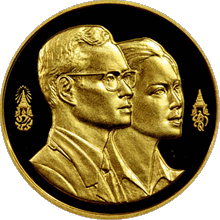
%20ใบบัวบก_small.jpg)
,%20piper%20sarmentosum,%20wild%20betel_small.jpg)
_small.jpg)
_small.jpg)
_small.jpg)
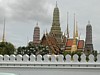
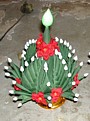
%20Vali_small.jpg)
%20นกกิ้งโครง%201_small.jpg)
_small.jpg)
%20หงส์เหิร_small.jpg)
_small.jpg)
_small.jpg)
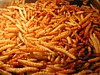
_small.jpg)
%201_small.jpg)
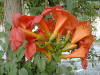
_small.jpg)
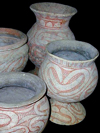
_small.jpg)
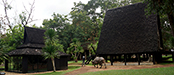
%20งูสามเหลี่ยม_small.jpg)
_small.jpg)
%201_small.jpg)
%20a%20small%20handheld%20double-sided%20drum%20used%20in%20brahmin%20rites_small.jpg)
,%20Nong%20Kai%20(หนองคาย)_small.jpg)
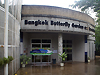

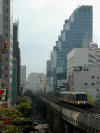
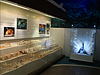
%201_small.jpg)
_small.jpg)
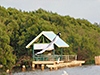

%201_small.jpg)
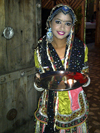
%201_small.jpg)
_small.jpg)
_small.jpg)
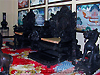
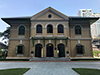

%20A_small.jpg)
_small.jpg)
_small.jpg)
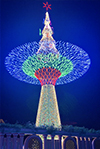
_small.jpg)
_small.jpg)
%201_small.jpg)
%203_small.jpg)
_small.jpg)

%201_small.jpg)
%20ห่านหัวลาย%202_small.jpg)
_small.jpg)
%20นกแสก_small.jpg)
%201_small.jpg)
%20นกเค้าใหญ่พันธุ์สุมาตรา_small.jpg)
%201_small.jpg)
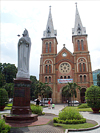
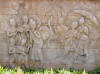

_small.jpg)
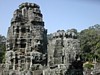
%201_small.jpg)
_small.jpg)
%201_small.jpg)
_small.jpg)
_small.jpg)
%201_small.jpg)
_small.jpg)
_small.jpg)
_small.jpg)
%201_small.jpg)
%201_small.jpg)
_small.jpg)
%20งูเขียวหางไหม้ตาโต,%20งูเขียวหางไหม้สีมะกอก_small.jpg)
_small.jpg)
_small.jpg)
%201_small.jpg)
,%20Bi%20Xie,%20without%20horn_small.jpg)
%203_small.jpg)
%202_small.jpg)
%20นกโพระดกคิ้วดำ_small.jpg)
%201_small.jpg)
%20นกปรอดดำ%202_small.jpg)
_small.jpg)
%20Sturnus%20นกกิ้งโครงคอดำ%20(นกเอี้ยงโครง)_small.jpg)
%20II_small.jpg)
%20นกแขวก%202_small.jpg)
%202_small.jpg)
_small.jpg)
_small.jpg)
%20พญากระรอกดำ%202_small.jpg)
%20นกปรอดทอง_small.jpg)
_small.jpg)
%201_small.jpg)
%20in%20flight_small.jpg)
%202_small.jpg)
%201_small.jpg)
%20นกคิตติเวกขาดำ_small.jpg)
%202_small.jpg)
%20นกขมิ้นท้ายทอยดำ_small.jpg)
_small.jpg)
%20India_small.jpg)
%201_small.jpg)
%201_small.jpg)
_small.jpg)
%205_small.jpg)
,%20Black-throated%20Thrush%201_small.jpg)
%20เหี้ยดำ_small.jpg)
%201_small.jpg)
%20นกตีนเทียน_small.jpg)
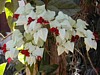
%202_small.jpg)
%20งูหลามปากเป็ด%202_small.jpg)
_small.jpg)
%20นกแก้วหัวแพร_small.jpg)
%20นกหกเล็กปากดำ%206_small.jpg)
%20Bananabird_small.jpg)
_small.jpg)
_small.jpg)
%20นกหกใหญ่_small.jpg)
_small.jpg)
%20นกเอี้ยงถ้ำ%201_small.jpg)
_small.jpg)
%20นกแต้วแล้วธรรมดา%205_small.jpg)
_small.jpg)
%204_small.jpg)
_small.jpg)
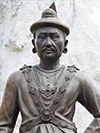
_small.jpg)
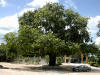
_small.jpg)
,%20Yangon_small.jpg)
_small.jpg)
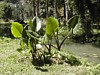
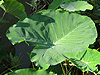

%204_small.jpg)
%201_small.jpg)
%20A_small.jpg)
%20Prince%20of%20Nakhon%20Sawan_small.jpg)
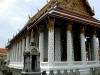


%20B_small.JPG)
%202_small.jpg)
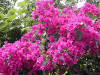
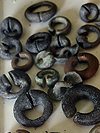
_small.JPG)
_small.jpg)
_small.jpg)
_small.jpg)
%20มอธเหยี่ยวบอนเหลืองดำ%202_small.jpg)
%201_small.jpg)
%20นกทึดทือพันธุ์เหนือ_small.jpg)
%201_small.jpg)
%20หนูใหญ่%201_small.jpg)
%201_small.jpg)
,%20Vietnam_small.jpg)
_small.jpg)
%201_small.jpg)
_small.jpg)
%204_small.jpg)
%20buab%20liam_small.jpg)
%20yacon_small.jpg)

_small.jpg)
%202_small.jpg)
,%20Happy%20or%20Chinese%20Smiling%20Buddha_small.jpg)
_small.jpg)
_small.jpg)
_small.jpg)
%20นกกระจิ๊ดท้องสีน้ำตาล_small.jpg)
%20นกทึดทือมลายู_small.jpg)
%20phung%20(พุง)%20northern%20Thai%20bulbous%20vessel%20with%20vertical%20bamboo%20strips%201_small.jpg)
_small.jpg)
%20Prince%20of%20Kamphaeng%20Phet_small.jpg)
%202_small.jpg)
%202_small.jpg)
%201_small.jpg)
_small.jpg)
%20หมาหริ่งพม่า_small.jpg)
_small.jpg "ma fai")
_small.jpg)
_small.jpg)
%20นกเงือกปากดำ%202_small.jpg)
_small.jpg)